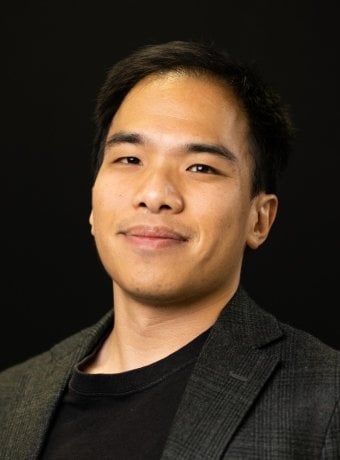
Vinh Nguyen is an Assistant Professor in the Department of Mechanical and Aerospace Engineering at Michigan Technological University, where he directs the Michigan Tech Center for AI and coordinates the NIST-PREP program. His research focuses on advanced manufacturing through Industry 4.0, human-robot-machine interaction, and physics-based/data-driven modeling. He has developed solutions for machining, additive manufacturing, metal forming, and robotic assembly to promote smart and sustainable manufacturing. Prior to joining Michigan Tech in 2022, he was a National Research Council Postdoctoral Fellow at NIST (2020–2022). Dr. Nguyen earned his PhD (2020), MS in Mechanical Engineering (2017), and MS in Electrical & Computer Engineering (2017) from Georgia Institute of Technology. He received dual bachelor’s degrees in Electrical and Mechanical Engineering from Rensselaer Polytechnic Institute (2014). His research portfolio spans Advanced Manufacturing Industry 4.0 and 5.0 Human-Robot Interaction Physics-Based/Data-Driven Modeling Industrial Automation based on his lab’s interdisciplinary focus on human-centric, resilient solutions. His recent publications address trends in Machine Learning for Manufacturing Autonomous Vehicle Sensors Hybrid Additive/Subtractive Manufacturing Augmented/Mixed Reality Interfaces Industrial Robot Diagnostics Material-Specific Machining with keywords spanning Robotics, Data Science, and Industrial Engineering.
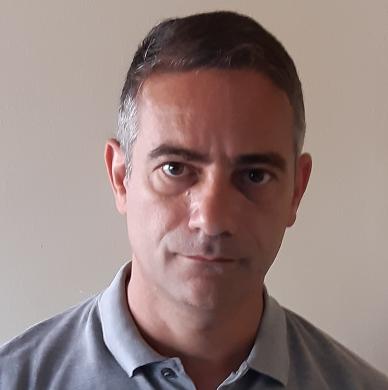
Isak Samsten is a Senior Lecturer at Stockholm University's Department of Computer and Systems Sciences (DSV), specializing in data science and machine learning. He leads research in temporal machine learning, counterfactual explanations, and interdisciplinary applications in healthcare and environmental science. His work includes developing the wildboar Python module for time series analysis. Current research projects focus on AI for insurance fraud detection and environmental remediation. Samsten is affiliated with the Data Science Research Group, which bridges algorithmic innovation with practical decision-making. He holds an ORCID identifier (0000-0002-3056-6801) and is active in publishing influential papers on topics like time series classification, ESG performance prediction, and clinical decision support systems. Education: Unspecified in text (assumed doctoral degree given academic rank) Affiliations: DSV, Stockholm University; Data Science Research Group Research Interests: Time series analysis, interpretable machine learning, healthcare informatics, environmental sustainability metrics, and AI ethics. Key contributions include shapelet-based classification methods (e.g., Castor algorithm) and counterfactual explanation frameworks (e.g., Glacier system). Grants & Awards: None explicitly listed in provided text. Labs/Teams: Leads the Data Science Research Group, collaborating on projects like AI to detect unclear insurance claims and Toxicity guided inverse design of materials .
Viktar Asadchy is an Assistant Professor in the Department of Electronics and Nanoengineering at Aalto University . His research focuses on electromagnetic wave control , photonic time crystals , and metasurface engineering , with applications in nonreciprocal optics , reconfigurable intelligent surfaces , and terahertz technology . He has published extensively on dynamic metamaterials and spatiotemporal modulation. Email: viktar.asadchy@aalto.fi His recent work explores terahertz frequency conversion , inverse-designed time-varying nanostructures , and nonreciprocal metasurfaces . Trends in his publications emphasize harnessing temporal modulation and quasi-bound states to achieve extreme electromagnetic control, including perfect anomalous reflection and energy accumulation in photonic systems.
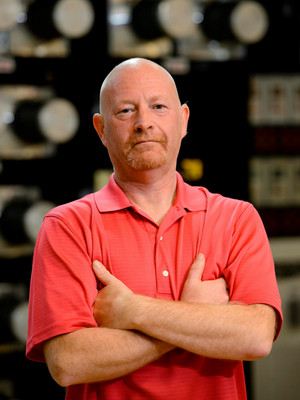
Carlo Alberto Avizzano serves as Associate Professor in Robotics and Automation at the University of Pisa's School of Engineering, Department of Information Engineering. He coordinates the Department of Excellence in Robotics & Artificial Intelligence (MUR) and leads the Intelligent Automation System Research Group. Research spans robotics, human-robot interaction, computer vision, and control systems Specializes in creating intelligent automation systems with cognitive capabilities Integrates AI, machine learning, and mechatronics for robust autonomous systems His research focuses on developing robots that learn from human examples, adapt to changing environments, and interact through advanced perception systems. Current work emphasizes wearable robotics, UAVs, and industrial automation solutions with applications in medical rehabilitation, firefighting, and manufacturing. He employs distributed computing architectures integrating sensors, real-time control, and knowledge transfer algorithms. Publications reveal strong emphasis on practical implementations: 15 recent works cover exoskeleton design (2024), UAV firefighting systems (2024), industrial bin-picking datasets (2024), and haptic interfaces (2012-2023). Key trends show progression from virtual reality systems (2006-2008) toward modern AI-integrated robotics with industrial and medical applications. Teaching responsibilities include PhD courses in Sensors for Construction, Python Programming for HealthScience, and Digital Perception; plus undergraduate Mechatronics and Computer Vision labs. He serves on PhD boards for Emerging Digital Technologies and Health Science Technology. Extensive patent portfolio including haptic interfaces (2012), sailing simulators (2006), and UAV systems (2024) Research directly translated to commercial products and spin-off companies
Iliyan Georgiev is a research scientist at Adobe, specializing in advanced computer graphics and physically based rendering. He holds a Bachelor's degree in Computer Science from Sofia University, Bulgaria, and a Master's degree from Saarland University, Germany, supported by a fellowship from the Max-Planck Institute. His work focuses on improving rendering efficiency through Monte Carlo methods, light transport simulation, and neural rendering techniques. Georgiev's research bridges the gap between theoretical and applied graphics, with contributions to bidirectional rendering algorithms, importance sampling, and 3D scene modeling. His publications highlight innovations in variance reduction, path sampling, and material-aware rendering. He has collaborated with leading institutions and companies, including Intel Visual Computing Institute, Disney Research Zürich, Weta Digital, Chaos Group, and Autodesk. Notable scientific awards include the Best Student Paper Award at ICPRAM 2025 and the Best Paper Award at EGSR 2024.
Dr. Thi Phuong Khanh Nguyen is a researcher at the Ecole Nationale d'Ingénieurs de Tarbes (ENIT) , affiliated with the College of Engineering and Department of Systems . Her work focuses on Prognostics and Health Management (PHM) , predictive maintenance, and industrial data analytics, combining machine learning with physics-informed modeling to address uncertainty in system degradation. Teaching: Mathematics for engineers, Probability, Statistics, Operating safety Research: Health indicators, diagnostics, prognostics, multimodal data fusion Methods: Data mining, physical and data-driven models, decision support systems Tools: FAST, Petri nets, UML, HMM, RNN, CNN, Transformer architectures Her recent publications highlight advancements in explainable AI , physics-informed neural networks , and multimodal learning for fault detection, battery RUL prediction, and robotic inverse dynamics. She also explores blockchain and federated learning for decentralized prognostics.
Philip J. Brown serves as a Professor in Clemson University's School of Materials Science and Engineering, where he has held a faculty position since January 2002. His academic career spans fiber science, membrane technology, and textile engineering with significant contributions to advanced material fabrication. His educational foundation includes: Ph.D. from the University of Leeds, England, UK (1991) B.S. from the University of Leeds, England, UK (1987) Dr. Brown's research focuses on cutting-edge fiber and membrane technologies, with primary expertise in polymer membranes, textile chemistry, and photonic fibers. His work encompasses deep groove capillary surface channeled fibers, polymeric photonic crystal fibers, hollow fiber membranes (including phase inversion analysis), electrospinning of nanofibers, and UV laser applications for self-cleaning fabrics. His investigations extend to dry jet wet spinning, melt spinning of multi-component materials, and synthetic fiber crosslinking. His early-2000s publications reveal consistent emphasis on industrial applications of fiber science, particularly in membrane characterization for gas separation, chemical modification of acrylic fibers, and optical monitoring systems for liquid coatings. This work bridges fundamental material properties with practical textile manufacturing solutions. His scientific recognition includes: Young Fiber Scientist of the Year, The Textile Institute (1989) No information was found regarding student advising or research grants. His professional activities appear centered on individual research contributions within materials science rather than team-based laboratory operations.
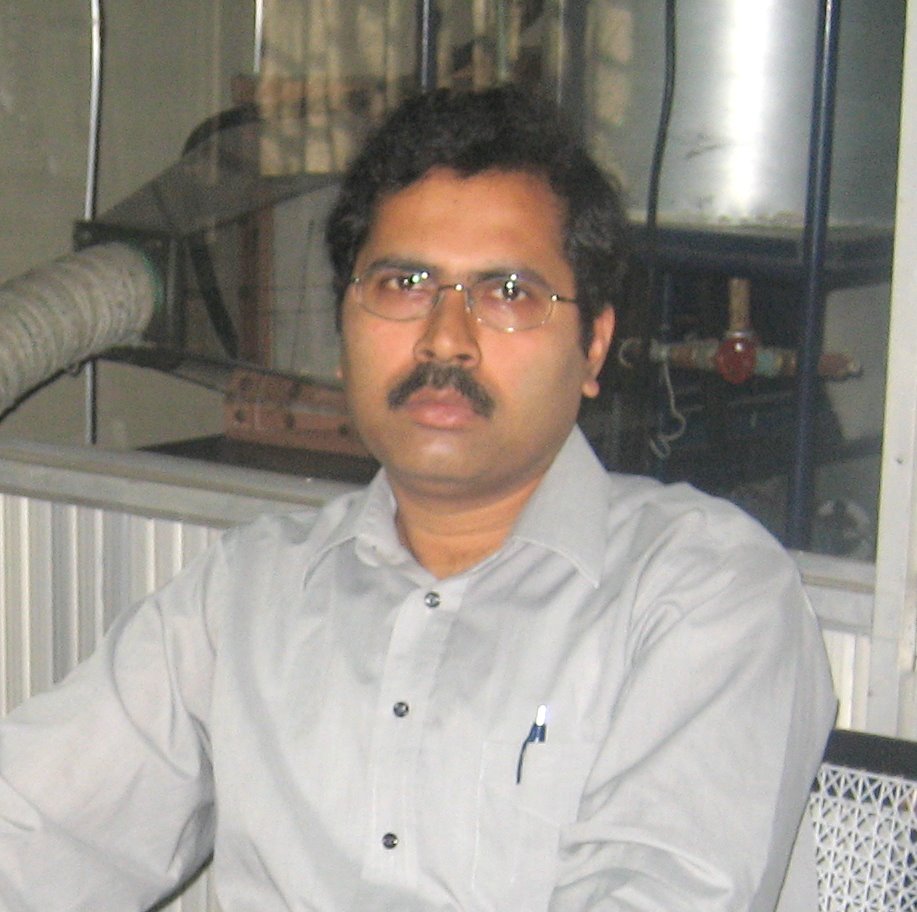
Malay K. Das is a Professor in the Department of Mechanical Engineering at the Indian Institute of Technology Kanpur . With a PhD from PennState, his career spans advanced research in thermofluid science, focusing on energy systems, carbon capture, and battery thermal management. B. E. (University of Calcutta), M. Tech. (IIT Kanpur), PhD (PennState) Teaches graduate-level courses like Machine Learning for Engineers and Mathematics for Engineers Leads two research laboratories: Energy Conservation and Storage Laboratory and Gas Hydrate Research Laboratory Research Interests: Computational Fluid Dynamics (CFD) applications in energy systems Physics-informed machine learning for thermofluid applications CO2 Sequestration and Methane Hydrate Reservoirs Thermal Management of Batteries and Fuel Cells Modeling Transport Phenomena in Porous Media Recent Publication Trends: His work focuses on energy conversion , gas hydrate dynamics , and advanced materials for electrochemical systems . Key areas include Lattice Boltzmann Methods , viscoelastic flow analysis , and nanofluid applications in carbon capture. Advising: Currently supervising PhD students Sourav Dhawan (CO2 Hydrates), Randeep Ravesh (Methane Recovery), Ayaj A. Ansari (Coalbed Methane), and Pawan K. Pandey (Cerebral Aneurysm Flow). Labs and Teams: Leads the Energy Conservation and Storage Laboratory (8 PhD graduates, 3 in progress) and Gas Hydrate Research Laboratory (2 PhD graduates, 1 in progress). Research teams work on fuel cells , CO2 sequestration , and graphene-based nanomaterials for energy applications.
Ryoma Hattori is an Assistant Professor at the University of Florida, based at the UF Scripps Biomedical Research campus in Jupiter, FL. His laboratory, the Hattori Lab, focuses on neural mechanisms underlying cognitive functions, learning, and their disruption in autism. Dr. Hattori received his educational degrees from prestigious institutions: Ph.D. in Molecular and Cellular Biology from Harvard University (2016) A.M. in Molecular and Cellular Biology from Harvard University (2012) B.S. in Biophysics and Biochemistry from the University of Tokyo (2010) His research interests center on decision making, reinforcement learning, and number sense, using systems and computational approaches. The lab employs techniques such as in vivo 2-photon imaging, optogenetics, virtual reality behaviors, and machine learning to investigate neural activity and plasticity dynamics in mice. A significant focus is understanding how these processes are impaired in autism spectrum disorder. Analysis of his recent publications reveals a strong emphasis on computational neuroscience and neural circuit mechanisms. His work spans from developing advanced imaging and analysis tools to uncovering fundamental principles of value coding and meta-reinforcement learning, with applications in both basic neuroscience and artificial intelligence. Dr. Hattori has received numerous scientific awards, including: Outstanding Mentor Award 2025 from Society of Research Fellows, UF Scripps SFARI Bridge-to-Independence Award 2022-Current from Simons Foundation Warren Alpert Distinguished Scholar Award 2021-2024 from Warren Alpert Foundation Postdoctoral Grant Award 2021-2022 from The KANAE Foundation And several fellowships during his postdoctoral and graduate training. As a principal investigator, Dr. Hattori leads multiple active grants, including the Shenoy Undergraduate Research Fellowship in Neuroscience (2025-2026) and a project on "Neural activity and plasticity dynamics for reinforcement learning in autism" funded by the Simons Foundation. His mentorship has been recognized with the Outstanding Mentor Award. The Hattori Lab is a dynamic research group utilizing cutting-edge technologies to explore the neural basis of cognition, with a particular interest in translational implications for autism and related disorders.
Sarah L. Swisher is the Russell J. Penrose Professor in Nanotechnology and Associate Director for Research Advancement at the Minnesota Nano Center. She is an Associate Professor in the Department of Electrical and Computer Engineering at the University of Minnesota, leading the Swisher Research Group. B.S., Electrical Engineering, University of Nebraska-Lincoln M.S. and Ph.D., Electrical Engineering and Computer Sciences, University of California, Berkeley Her research spans semiconductor device physics, materials science, and bioengineering, focusing on nanomaterial synthesis, flexible electronics, and biomedical sensors. Key applications include wearable medical devices, graphene-based neural interfaces, and photonic curing processes for high-performance thin-film transistors (TFTs) on plastic substrates. The 15 most recent publications highlight trends in flexible electronics (e.g., graphene arrays, polymer skulls with transparent electrodes), biomedical sensors (e.g., microneedle ion-selective sensors, impedance monitoring), and advanced fabrication methods (e.g., photonic curing, inkjet printing). Subfields include device layout optimization, thermal management, and high-κ dielectrics. Swisher's lab actively recruits graduate students for PhD research in semiconductor materials, flexible sensors, and smart biomedical devices. She collaborates with interdisciplinary teams at the Minnesota Nano Center and has received funding from undisclosed sources.
Matthias Heil is a Professor of Applied Mathematics at The University of Manchester, specializing in Fluid-Structure Interaction, Continuum Mechanics, and Numerical Analysis. His research focuses on fluid dynamics, solid mechanics, and computational methods, with contributions to the OOMPH-LIB software library. He is affiliated with the Continuum Mechanics and Numerical Analysis research groups, and his work aligns with UN Sustainable Development Goals through initiatives like Digital Futures and the Christabel Pankhurst Institute. Education details are available on his personal webpage. Research interests include fluid-structure interaction in physiological systems, elastic-walled channel flows, and microfluidic applications. His recent work explores sedimentation dynamics, wake instabilities, and multiphysics modeling. He has supervised 20 research works and contributed to projects like the Föppl–von Kármán equations for MEMS membranes. Labs/Teams: Continuum Mechanics Group, OOMPH-LIB developers, Fluid-Structure Interaction research cluster.
Mark Edward Borsuk is the James L. and Elizabeth M. Vincent Professor in the Department of Civil and Environmental Engineering at Duke University’s Pratt School of Engineering. He leads the Borsuk Lab, which specializes in interdisciplinary modeling of coupled social, environmental, and technical systems. His research spans climate change, ecosystem services, water resources, land use, and environmental health, using advanced methods such as Bayesian networks, agent-based modeling, game theory, and risk analysis. He co-directs the Center on Risk within Duke’s Science & Society Initiative and is an Associate of the Duke Initiative for Science & Society. B.S.E. in Civil Engineering and Operations Research, Princeton University, 1995 M.S. in Statistics and Decision Sciences, Duke University, 2001 Ph.D. in Environmental Science and Policy, Duke University, 2001 Postdoctoral Training, EAWAG (Swiss Federal Institute for Aquatic Science and Technology), Systems Analysis, Integrated Assessment, and Modelling (SIAM) Dr. Borsuk’s research focuses on integrating scientific data across disciplines to support decision-making under uncertainty. He is a leading expert in Bayesian network modeling applied to environmental and human health regulation. His work combines risk analysis, game theory, and agent-based modeling to assess climate change and environmental policy. He has developed novel frameworks for valuing ecosystem services, modeling landowner behavior, and assessing geoengineering risks. His lab emphasizes interdisciplinary collaboration, stakeholder engagement, and quantitative decision support. His recent publications reflect a strong trend toward integrating machine learning, causal inference, and spatial modeling into environmental assessment. Topics include solar radiation modification governance, land-use policy forecasting, invasive species impacts, and urban green space valuation. His work increasingly leverages big data (e.g., Zillow, remote sensing) and probabilistic programming to enhance model transparency and predictive accuracy. Chauncey Starr Distinguished Young Risk Analyst Award, Society for Risk Analysis, 2013 Early Career Research Excellence Award, International Environmental Modelling and Software Society, 2008 Earl I. Brown Outstanding Civil Engineering Faculty Award, Duke University, 2018 Best Paper, Integrated Environmental Assessment and Management Journal, 2012 Excellence in Mentoring Award, Dartmouth College Postdoctoral Association, 2010 Best Paper in Integrated Modelling, Environmental Modelling & Software Journal, 2008 Dr. Borsuk has been a principal investigator on grants from NSF, EPA, NIH, NIEHS, and USFS. He mentors a diverse group of graduate students and postdoctoral fellows, including Kim Bourne, Jon Holt, Chris Krapu, and Ryan Calder. He teaches courses such as Risk and Resilience Engineering, Engineering Economics, and Independent Study in Civil and Environmental Engineering. He is actively involved in advising and curriculum development through the Bass Connections Energy & Environment Research Team. He leads the Borsuk Lab, a dynamic research group focused on systems, risk, and decision analysis. The lab is a key contributor to the Bridge Collaborative—a partnership between Duke, The Nature Conservancy, IFPRI, and PATH—where it develops quantitative models to support cross-sectoral decision-making. The lab also investigates landowner decision-making in New England forests and the governance of solar geoengineering, using agent-based and deliberative modeling approaches.
Sergey Samarin is a Senior Honorary Research Fellow at The University of Western Australia's School of Physics, Maths and Computing. His academic roles include teaching undergraduate courses on Solid State Physics and supervising postgraduate and honours students. He holds a Doctor Habil. Science from St. Petersburg State University, with thesis work on electron spectroscopy of surfaces. His research focuses on surface science, electron scattering dynamics, and quantum entanglement in electron pairs generated at solid surfaces. Key experimental techniques include spin-polarized two-electron spectroscopy and positron annihilation studies. Research interests span surface electronic structure, magnetic nanostructures, plasmon excitation, and spintronics. He has secured multiple ARC grants, including leadership roles in the ARC Centre of Excellence for Antimatter-Matter Studies ($7M). Notable achievements include first observations of radiative electron capture by surfaces (1992), plasmon-assisted inverse photoemission (1996), and spin-resolved (e,2e) experiments on ferromagnetic surfaces (1998). Current projects aim to explore electron entanglement via complete scattering experiments. Education: M.Sc. (1972), PhD (1976), Doctor Habil. (1995) - all from St. Petersburg State University Grants: Over $9M in ARC funding since 2001, including leadership roles in 6 major projects Supervision: Guided 17+ students through PhD, Master's, and undergraduate research projects Labs/Teams: CAMSP (Centre for Atomic, Molecular and Surface Physics) collaborator. Instrumentation expertise includes design of spin-polarized (e,2e) spectrometers and UHV systems. Languages: English, French, Russian (native).
Petar Radanliev is a part-time academic and project supervisor at the Department of Computer Science, University of Oxford. He is actively involved in teaching and research, focusing on AI security, cybersecurity, and emerging technologies such as quantum computing and blockchain. His work bridges academic rigor with practical industry applications, and he supervises professional masters students. His research interests center on the security and ethical implications of artificial intelligence. Key areas include AI attack surfaces, agentic AI, quantum AI, malware analysis, and responsible AI practices. He explores vulnerabilities in machine learning systems and develops frameworks for secure and resilient AI deployment. His recent publications and courses reflect a strong trend toward interdisciplinary integration of AI with blockchain and quantum computing, emphasizing real-world threats, ethical considerations, and future-proofing digital systems. These works highlight a consistent focus on proactive defense, red teaming, and the societal impact of emerging technologies. Fulbright Fellowship Prince of Wales Innovation Scholarship Petar Radanliev has supervised numerous professional masters students and contributes to academic discourse through extensive publications, books, and public lectures. He is affiliated with major research platforms including ORCID, Google Scholar, and the Alan Turing Institute. His teaching includes advanced courses on AI security, quantum AI, and red teaming, often delivered through recorded events and online platforms. He is associated with research themes in Security, Artificial Intelligence, and Machine Learning at Oxford, and has contributed to projects such as SOCIAM. His work emphasizes practical, actionable insights for professionals and academics navigating the evolving landscape of AI and cybersecurity.
Dr. Hannah Smith is an Independent Researcher at the Department of Materials Science and Engineering, Friedrich-Alexander-Universität Erlangen-Nürnberg (FAU), specializing in organic semiconductors and solar energy technologies. She joined FAU in October 2022, bringing expertise in molecular doping and charge transport from her PhD at Princeton University under Prof. Antoine Kahn. Education: PhD in Materials Science, Princeton University Prior research experience at Wake Forest University with Dr. Oana Jurchescu Research Focus: Electrical doping of organic semiconductors using molecular dopants Enhancing charge transport properties in wide bandgap materials Applications in solar cells, LEDs, and photovoltaic devices Expertise in photoelectron spectroscopy (UPS/IPES) for band structure analysis Publication Trends: Hannah's work spans organic electronics, renewable energy, and materials engineering, with a focus on molecular design, doping mechanisms, and interface optimization for solar cell and LED applications. Scientific Awards: National Science Foundation Graduate Research Fellowship Francis Robbins Upton Fellowship in Engineering Dean’s Grant from Princeton University