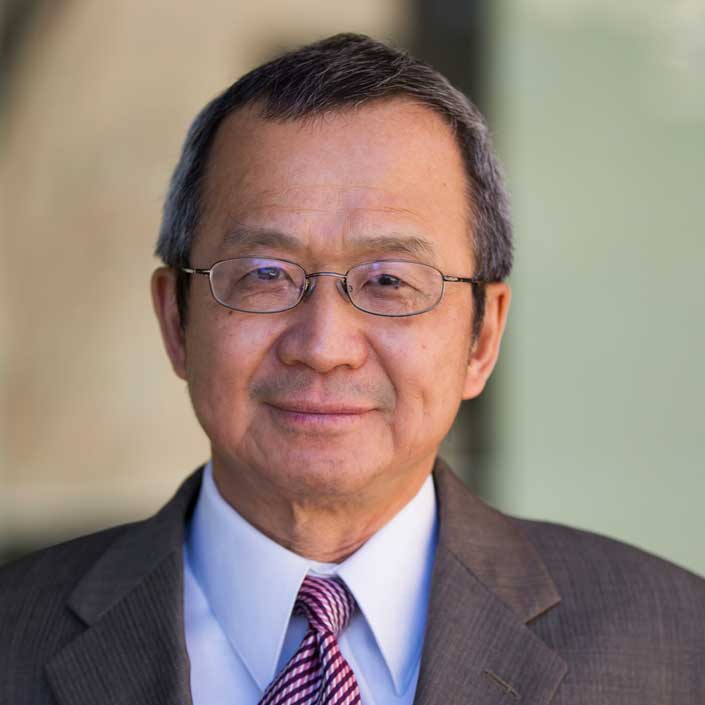
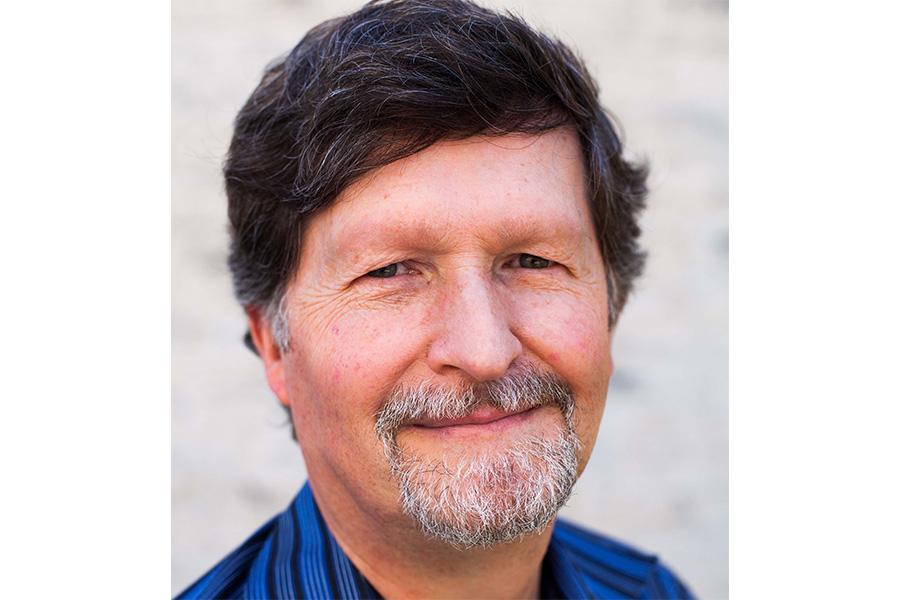
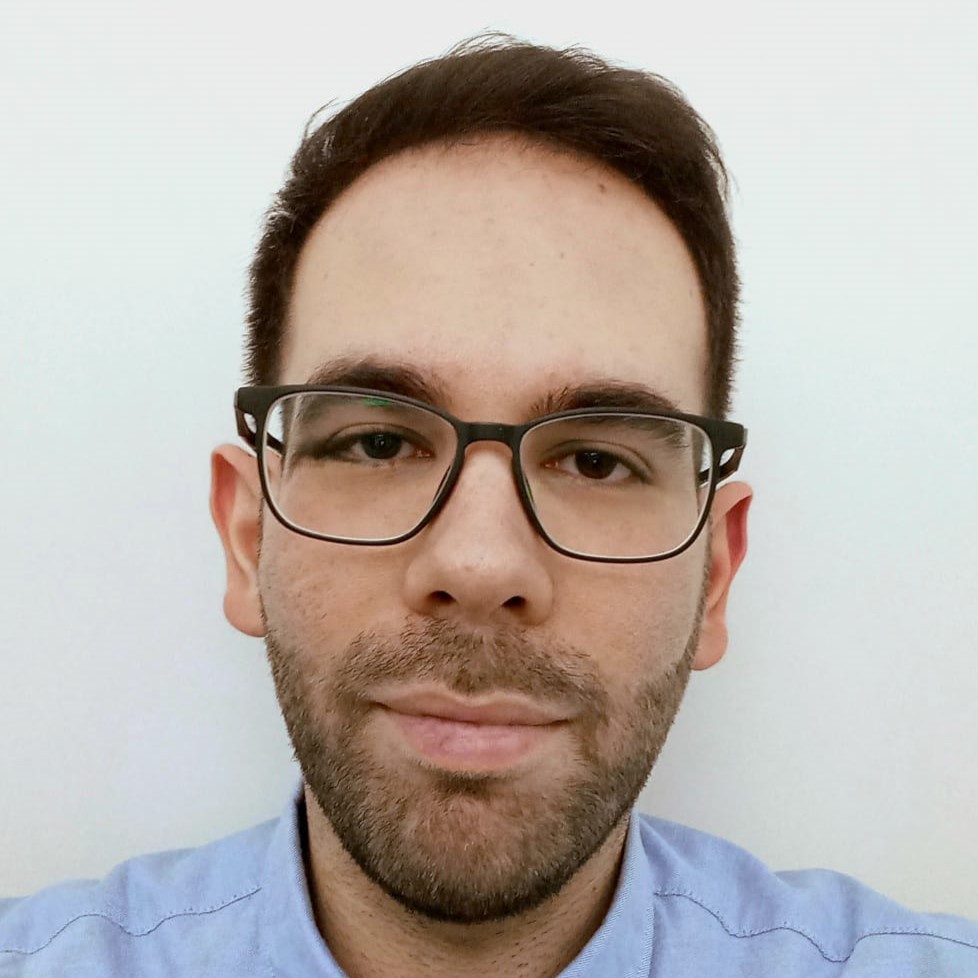
Matthias Heil is a Professor of Applied Mathematics at The University of Manchester, specializing in Fluid-Structure Interaction, Continuum Mechanics, and Numerical Analysis. His research focuses on fluid dynamics, solid mechanics, and computational methods, with contributions to the OOMPH-LIB software library. He is affiliated with the Continuum Mechanics and Numerical Analysis research groups, and his work aligns with UN Sustainable Development Goals through initiatives like Digital Futures and the Christabel Pankhurst Institute. Education details are available on his personal webpage. Research interests include fluid-structure interaction in physiological systems, elastic-walled channel flows, and microfluidic applications. His recent work explores sedimentation dynamics, wake instabilities, and multiphysics modeling. He has supervised 20 research works and contributed to projects like the Föppl–von Kármán equations for MEMS membranes. Labs/Teams: Continuum Mechanics Group, OOMPH-LIB developers, Fluid-Structure Interaction research cluster.
H. Metin Aktulga is an Associate Professor in the Department of Computer Science and Engineering at Michigan State University's College of Engineering. His research focuses on high-performance computing, parallel algorithms, and numerical methods for large-scale scientific applications. He leads interdisciplinary projects involving collaborations with computational physicists and materials scientists to develop scalable software systems. His work includes the development of PuReMD, a reactive molecular dynamics code, and DOoC+LAF, a task-based middleware for data analytics. He explores parallel computing on emerging architectures, emphasizing energy efficiency and performance optimization. His research spans applications in molecular modeling, nuclear physics, and computational biology. Awards and grants are not explicitly listed, but his contributions are highlighted through collaborations with projects like MFDn (nuclear structure) and SHINES (electronic structure computations). He advises students in computational methods and leads efforts to automate force field optimization using machine learning and big data analytics. Labs and teams include the High-Performance Computing group at MSU, with active participation in interdisciplinary initiatives to bridge simulation and data-driven discovery in materials science and quantum systems.
Alexander Goncharov is the Philip Schuyler Beebe Professor of Mathematics at Yale University's Department of Mathematics. His research focuses on arithmetic algebraic geometry, geometry, representation theory, and mathematical physics. He has received the European Mathematical Society Prize for his contributions to mathematics. His work spans topics such as motives, moduli spaces, polylogarithms, and quantum geometry. Education: Ph.D. 1987 (USSR). His research explores connections between algebraic geometry, number theory, and physics, with a focus on motivic cohomology, Hodge theory, and geometric representation theory. He has contributed to the understanding of scattering amplitudes, cluster varieties, and quantum invariants of moduli spaces. Research highlights include studies on Hodge correlators, motivic fundamental groups, and the geometry of moduli spaces. His recent work integrates quantum geometry with algebraic structures, such as cluster algebras and non-commutative systems. Key publications address exponential volumes of hyperbolic surfaces, spectral descriptions of non-commutative systems, and quantum aspects of moduli spaces. He has authored over 100 papers and is a leading figure in the field, with contributions to both pure mathematics and its intersections with theoretical physics. His lab or team collaborations are not explicitly detailed in the provided texts.
Fadil Santosa is a Professor and the Yu Wu and Chaomei Chen Department Head of Applied Mathematics and Statistics at Johns Hopkins University (JHU). He is also affiliated with the Ralph S. O’Conner Sustainable Energy Institute, SNF Agora Institute, and the Data Science and AI Institute. His research focuses on inverse problems, wave phenomena, photonics, optimal design, and mathematical modeling. He holds a BS in Mechanical Engineering from the University of New Mexico (1976) and MS/PhD in Theoretical and Applied Mechanics from the University of Illinois at Urbana (1977/1980). Recent research projects include optimizing experiment design for inverse problems, developing models for direct air capture of CO 2 , and studying plasmons in graphene. He has pioneered work on bar code decoding algorithms and multifocal optical device design, with two patented innovations. Santosa has been honored with the 2023 SIAM Distinguished Service Award and the 2023 JHU Diversity Award. His work bridges academia and industry through initiatives like the Math-to-Industry Boot Camp. He actively mentors students via community-based projects, such as applying applied math to optimize Baltimore’s food distribution systems. Current technical interests span photonic band gaps, EIT imaging, and machine learning applications in biological systems. Key Affiliations: Applied Mathematics & Statistics Department Head, Sustainable Energy Institute Researcher Patents: Multifocal optical device design, Symbol-based bar code decoding Labs/Teams: Leads multidisciplinary teams in inverse problem research and sustainability modeling
Leung Tsang is a Professor of Electrical Engineering and Computer Science at the University of Michigan, Ann Arbor, holding the Robert J. Hiller Professorship of Engineering. He received his SB, SM, EE, and Ph.D. from MIT. His academic career includes positions at Texas A&M University (1980-1983), University of Washington (1983-2014) as Professor and Department Chair (2006-2011), and a visiting Professorship at City University of Hong Kong (2001-2004). He has served as Editor-in-Chief of IEEE Transactions on Geoscience and Remote Sensing and President of the Electromagnetics Academy and IEEE Geoscience and Remote Sensing Society. His research focuses on microwave remote sensing , multiple scattering theory , electromagnetic wave propagation in random media , photonic crystals , and signal integrity . His work spans theoretical advancements (e.g., radiative transfer theory, UV multi-level methods) and practical applications (e.g., snow parameter retrieval, ocean foam modeling, via coupling analysis). Key trends include Development of computational techniques for large-scale scattering problems Integration of neural networks for inversion in remote sensing Investigation of backscattering enhancement and polarimetric signatures Notable awards include Fellow of IEEE and Optical Society of America William T Pecora Award (2012) Van De Hulst Light Scattering Award (2018) Membership in the National Academy of Engineering (2020) His group utilizes high-performance computing resources, including the Flux HPC cluster at the University of Michigan and XSEDE allocations, with specialized nodes for electromagnetic modeling. Current students include Ruoxing Gao (electromagnetic theory), Firoz Borah (snow remote sensing), Jongwoo Jeong (forest scattering), and Zhenming Huang (snow modeling).
Professor Kirill V Horoshenkov (FREng) is a leading academic at the University of Sheffield , holding a Personal Chair in Acoustics within the School of Mechanical, Aerospace and Civil Engineering . With a MEng in Electro-Acoustics and Ultrasonic Engineering from Moscow University and a PhD in Computational and Experimental Acoustics from the University of Bradford, he transitioned to Sheffield in 2013 after a distinguished career at Bradford. Acoustic sensors for water infrastructure Physical acoustics and wave propagation Acoustic material characterization Pipe condition monitoring systems Research Focus : Horoshenkov's work bridges acoustic engineering with water industry applications , developing innovative solutions for pipeline diagnostics and monitoring. His team has pioneered acoustic vector receivers , MEMS hydrophones , and Bayesian acoustic models for material analysis. Notable projects include the Pipebots Programme Grant and EPSRC Acoustics Network . Scientific Leadership : A Fellow of the Royal Academy of Engineering, he serves as Editor-in-Chief of the Nature Portfolio Journal npj Acoustics . His research has yielded 12 patents and over 200 publications , including commercialization through spin-offs like Acoutechs Limited (licensed to Armacell) and Acoustic Sensing Technology Limited .
Erhan Kudeki is a Professor in the Department of Electrical and Computer Engineering at the University of Illinois at Urbana-Champaign. He holds a PhD (1983) and BS (1978) in Electrical Engineering from Cornell University. His research focuses on ionospheric physics and radar remote sensing, including incoherent scatter radar theory, equatorial electrodynamics, atmospheric turbulence, and space science applications. He mentors undergraduate students in ionospheric radar signal processing projects. Education: PhD, Electrical Engineering, Cornell University (1983) BS, Electrical Engineering, Cornell University (1978) Research Interests: Professor Kudeki investigates ionospheric phenomena using radar techniques, specializing in plasma instabilities, equatorial electrodynamics, and atmospheric wave interactions. His work bridges experimental radar diagnostics with theoretical modeling of space weather phenomena, including 150-km echoes and spread-F development. Recent Publications: His 15 most recent articles (2020-2023) demonstrate evolving focus areas: ionospheric irregularities detection using advanced radar systems, quantum physics education for engineers, and immersive STEM pedagogy. Recurring themes include Jicamarca radar experiments, equatorial plasma dynamics, and innovations in engineering education. Awards: Teaching : George Anner Excellence Award (2018), Ronald W. Pratt Teaching Award (2013), College of Engineering Advisor recognition Research : NASA Group Achievement Awards (2004 Equis II, 1998 Cocqui II), NSF CEDAR Prize Lecture (2006) Consistently ranked excellent by students since 1987 Courses: Teaches core electrical engineering courses including ECE 210 (Analog Signal Processing), ECE 329 (Fields and Waves), ECE 350 (Fields and Waves II), and ECE 458 (Radio Wave Propagation).
Prof. Jan De Beenhouwer is a faculty member at the University of Antwerp, affiliated with the Department of Physics and the imec Vision Lab. His research focuses on advanced computational imaging techniques, particularly in X-ray tomography, phase contrast imaging, and reconstruction algorithms for medical and industrial applications. His primary research interests include: Development of novel X-ray imaging methodologies like edge illumination phase contrast Advanced CT reconstruction algorithms for sparse-view and dynamic systems Integration of deep learning with tomographic reconstruction Industrial applications including defect detection and material characterization Biomedical imaging such as bone structure analysis and tissue modeling Analysis of recent publications (2024-2025) reveals strong emphasis on: Innovations in phase contrast imaging hardware and simulation tools Advanced reconstruction techniques for motion compensation and sparse data AI-powered approaches for industrial inspection and biomedical research Development of open-source tools (CAD-ASTRA) for the tomography community He leads research at imec Vision Lab, focusing on both fundamental imaging physics and practical applications. The lab collaborates extensively with industrial partners on non-destructive testing solutions.
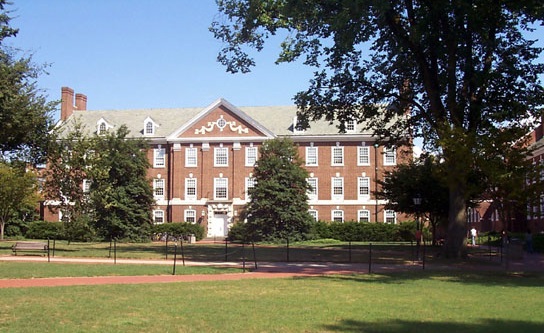
Mohsen Badiey , Professor in the Department of Electrical and Computer Engineering at the University of Delaware's College of Engineering, leads the Ocean Acoustics & Engineering Laboratory (OAELab) with facilities at Evans Hall and STAR campus. His interdisciplinary work spans applied physics, mechanical systems, ocean sensing, and computational signal analysis. Research Focus: Geoacoustic inversion, waveguide physics, machine learning for seabed classification, and underwater communication challenges. Key Projects: Shallow Water 2006 (SW06) and Shallow Water Acoustic in Random Media (SWARM95) experiments analyzing nonlinear internal wave dynamics. Scientific Contributions include developing dictionary learning techniques for sound speed profile analysis, advancing graph neural networks for underwater signal processing, and studying acoustic propagation through intense internal waves. His work emphasizes both fundamental and applied research with field data collection and computational modeling. Recent Publications demonstrate expertise in physics-based machine learning for source localization, seabed classification, and time-varying signal reconstruction. His team's 2024 studies on transiting ocean observers and Sobolev graph networks highlight cutting-edge methodologies. Laboratory: OAELab employs specialized instrumentation for broadband acoustic signal analysis, combining experimental data with computational approaches to solve real-world oceanographic problems.
Fatemeh Babaeian is a Research Fellow in the Department of Electrical and Computer Systems Engineering at Monash University. She holds a PhD from Monash University (2016–2020), focusing on advanced electromagnetic systems. Her expertise spans applied electromagnetics, high-power microwave systems, RF sensing, antenna design, and signal processing, with notable contributions to chipless RFID technologies and cascaded oscillator modeling. Research interests include high-power RF systems, antenna-oscillator interaction modeling, and innovative RFID applications for sensor networks and secure communications. Her work addresses challenges in microwave engineering, terahertz systems, and inverse scattering problems, leveraging hybrid optimization algorithms and metamaterial principles. Fatemeh has published over 29 peer-reviewed articles, including seminal works on switched oscillator performance evaluation and phase shifter designs. She received the Postgraduate Publications Award (2020) for her impactful contributions. Current research emphasizes antenna-circuit co-design methodologies and high-data-capacity RFID systems for emerging IoT and industrial applications. Collaborations span global institutions, with active projects in high-power microwave systems, THz antenna arrays, and orientation-insensitive RFID tag innovations. She actively supervises PhD students and contributes to interdisciplinary research bridging electromagnetic theory and practical engineering solutions.
Stephen Pistorius is a Professor in the Department of Physics and Astronomy at the University of Manitoba's Faculty of Science. He serves as Associate Head and Director of the Medical Physics Program, focusing on interdisciplinary research at the intersection of medical physics, biomedical engineering, and artificial intelligence. Role : Professor, Associate Head, Director of Medical Physics Program Contact : Office 205 Allen Building, Stephen.Pistorius@umanitoba.ca , +1 204-474-6205 Research Interests Medical Imaging : Development and optimization of radar-based microwave sensing systems for breast cancer detection. Image Reconstruction : Innovation in computational algorithms for PET and microwave imaging. Artificial Intelligence : Application of machine learning to tumor detection and signal analysis. Publication Trends His recent work emphasizes microwave imaging hardware (antenna arrays, phantom materials), machine learning integration for tumor detection, and image quality metrics across modalities. Key subfields include radar systems , stochastic optimization , and clinical translation of microwave sensing . Additional Contributions He contributes to radiation oncology via EPID-based positioning automation and dose verification systems, while also addressing technical challenges in 3D-printed phantom modeling and microwave propagation in biological tissues.
Dr. Sven Burger is a leading Researcher at the Zuse Institute Berlin (ZIB) within the Modeling and Simulation of Complex Processes department. His work focuses on Nanophotonics , Quantum Technologies , and Optical Resonance Computation , particularly in photonic crystals, plasmonic systems, and quantum light sources. Key projects: NanoLab GRIPS 2024 , MATH+ TES QT , MATH+ PaA-1 (perovskite solar cells), Colour Impression of Solar Cells Collaborations: MATH+ , BIFOLD , Research Campus MODAL His research spans Bayesian optimization for quantum systems, quasinormal mode expansions , chiral plasmonics , and terawatt-scale photovoltaics . Recent work emphasizes RPExpand software for resonance analysis and AAA algorithm applications in photonic design. He contributes to quantum key distribution via plug&play single-photon sources, hot carrier dynamics in plasmonic nanocrystals, and high-efficiency light extraction for deep-UV LEDs. His computational methods address non-Hermitian systems , exceptional points , and self-interference nanoparticle tracking .
Salvatore Ivan Trapasso is a Fixed-term Assistant Professor at the Department of Mathematical Sciences "GL Lagrange" (DISMA) , Polytechnic University of Turin , and a member of the SmartData@PoliTO - Big Data and Data Science Laboratory . His research focuses on Applied Harmonic Analysis , Fourier Analysis , Machine Learning , and Quantum Theory , with expertise in Mathematical Analysis (MATH-03/A) and Theoretical PDEs (PE1_11). Education : Implied PhD in Mathematics. Research Areas : Phase Space Analysis, Time-Frequency Methods, and Applications to Quantum Mechanics. His recent publications investigate phase space techniques for Feynman Path Integrals , Twisted Laplacian , Compressed Sensing , and Stability of Scattering Transforms . His work bridges Harmonic Analysis with Machine Learning and Quantum Dynamics . Notable scientific awards include the Axioms Young Investigator Award (2022) , Best Paper Award (ICGF 2020) , and the Quality Award 2019 from Polytechnic University of Turin. He serves on the Editorial Board of Advances in Operator Theory and as Associate Editor for University Texts in the Mathematical Sciences . Teaching roles include Lecturer for Mathematical Principles in the College of Architecture and Design , Collaborator for Mathematical Analysis I/II in Biomedical and Aerospace Engineering, and Contributor to advanced mathematical methods in Computer Science Engineering.
Krishna Agarwal is a Professor in Ultrasound, Microwaves and Optics at the Department of Physics and Technology, UiT The Arctic University of Norway. His research spans multiple interdisciplinary fields including optical nanoscopy, quantitative phase imaging, and computational imaging techniques. He is an active member of the Ultrasound, Microwaves and Optics research group, with specialized focus on Optical Nanoscopy, and participates in research projects including VirtualStain and NanoAI. Professor Agarwal's research interests center on advanced imaging techniques, particularly in optical nanoscopy and quantitative phase imaging. His work bridges physics, computer science, and biology, developing novel computational methods for microscopy enhancement. His research focuses on applying deep learning to improve imaging resolution, developing frameworks for quantitative phase reconstruction, and creating new methodologies for 3D imaging of biological specimens. His work has significant applications in biomedical imaging, cellular analysis, and diagnostic technologies. Recent publications demonstrate a strong trend toward integrating artificial intelligence with traditional optical techniques, with increasing emphasis on computational approaches to solve longstanding challenges in microscopy. His research shows consistent progression from theoretical optical methods toward practical applications in biological imaging and medical diagnostics, with numerous publications in high-impact optics and imaging journals. Professor Agarwal teaches Optisk nanoskopi (Course FYS-3029) at UiT, contributing to advanced optics education. His research group appears to collaborate extensively with international researchers across multiple institutions, suggesting active grant funding and collaborative research efforts. Based at Teknologibygget Tromsø 3.058, Professor Agarwal leads research in the Optical Nanoscopy group, focusing on developing next-generation imaging technologies that combine optical physics with computational methods. His team appears to work at the intersection of physics, computer science, and biology, developing tools that push the boundaries of what's possible in cellular and sub-cellular imaging.
Taavi Repän is an Associate Professor of Computational Photonics at the Institute of Physics, Faculty of Science and Technology, University of Tartu. He has held this position since December 2021, with his current appointment running until December 2025. Prior to this, he worked as a Post-Doc at Karlsruhe Institute of Technology from 2019 to 2021. Repän earned his Doctoral Degree in Physics from the Technical University of Denmark (DTU) in 2019, with his dissertation titled 'Dark-field hyperlens: High-contrast subwavelength imaging in optics and acoustics' supervised by Andrei Lavrinenko and Morten Willatzen. He received his Master's Degree in Physics from the University of Tartu in 2014, with a thesis on 'Sub-wavelength imaging with hyperbolic metamaterials' supervised by Siim Pikker and Sergei Zhukovsky. His educational background also includes a Bachelor's Degree in Physics from the University of Tartu (2009-2012). His research focuses on computational photonics, metamaterials, inverse design, and the application of neural networks to optical simulations. He leads the project 'Inverse design methods for integrating nanophotonic structures with gas sensors' (2022-2026) and participates in several other research initiatives related to wood valorization and structural optimization. His work bridges theoretical physics, computational methods, and practical applications in optical sensing and imaging. His publication record shows a consistent trajectory in computational photonics, with recent work heavily emphasizing the integration of machine learning techniques with electromagnetic simulations. The most recent publications demonstrate a strong focus on neural network applications for inverse design problems in nanophotonics, hyperbolic metamaterials, and plasmonic structures, indicating his leadership in applying AI to complex optical design challenges. Repän currently leads or participates in multiple research projects funded by the Estonian Research Council and other institutions, demonstrating his active role in the research community. His work spans fundamental theoretical investigations to applied research with potential industrial applications. His laboratory work appears to focus on computational modeling of photonic structures rather than experimental setups, with emphasis on numerical methods for designing and analyzing optical systems. His collaborations span multiple institutions across Europe, reflecting the international nature of his research.