Markus Haltmeier is a Professor in the Department of Mathematics at the University of Innsbruck. His research focuses on inverse problems, image reconstruction, and deep learning with applications in medical imaging, photoacoustics, and computational mathematics. He leads a group dedicated to advancing theoretical and practical solutions for challenges in non-destructive testing and medical diagnostics. His work integrates mathematical analysis with machine learning, addressing issues such as high-resolution imaging in scattering media and automated segmentation of cardiac structures. Key research areas include regularization techniques for inverse problems, self-supervised learning approaches for limited data scenarios, and computational methods for photoacoustic tomography. His contributions span both theoretical developments (e.g., inversion formulas for Radon transforms) and applied solutions (e.g., algorithms for cylinder liner wear assessment and myocardial infarct segmentation). Publications highlight advancements in neural network-based regularization, 3D medical image synthesis, and unsupervised learning frameworks for segmentation and registration. His research emphasizes bridging the gap between mathematical theory and real-world applications in healthcare and engineering.
Prof. Dr. Irwin Yousept is a Full Professor of Mathematics at Universität Duisburg-Essen, leading the research group AG Optimal Control of Partial Differential Equations. His work focuses on the mathematical analysis and numerical solutions of electromagnetic problems, particularly in superconductivity and inverse problems. He holds a PhD from TU Berlin (2008) and has held academic positions at TU Darmstadt and TU Berlin. His research includes PDE-constrained optimization, numerical analysis, and applications in high-temperature superconductivity and electromagnetic shielding. Affiliations: Universität Duisburg-Essen, Fakultät für Mathematik Education: Diplom (2005), PhD (2008) in Mathematics from TU Berlin Research interests span Maxwell's equations, numerical methods for PDEs, and optimal control, with applications in superconductivity, electromagnetic shielding, and induction heating. He has authored over 40 publications and received awards including the Richard-von-Mises-Preis GAMM (2014). Current grants include DFG-funded projects on inverse problems and superconductivity.
Horváth Miklós Tibor is a University Professor at the Department of Mathematics, Budapest University of Technology and Economics. His research focuses on inverse spectral problems for linear differential operators, particularly Schrödinger and Dirac operators, and topics such as inverse scattering theory and eigenvalue distribution. Research Interests: Inverse spectral problems, Schrödinger operators, Sturm-Liouville theory, inverse scattering, measure theory. Teaching: Courses include Analysis 2, Functional Analysis, and Distribution Theory. Contact: horvath@math.bme.hu
Nathan Garland is a Lecturer in Applied Mathematics and Physics at Griffith University, Australia. He is affiliated with the Queensland Quantum and Advanced Technologies Research Institute (QUATRI) and the Centre for Quantum Dynamics. Prior to joining Griffith, Garland conducted postdoctoral research at Los Alamos National Laboratory and served as sessional teaching staff at James Cook University. Education: PhD in Electrical and Electronic Engineering and Mathematics from James Cook University B.Eng (Hons) and B.Sc in Electrical and Electronic Engineering and Mathematics from James Cook University His research focuses on computational plasma modeling, with applications in low-temperature plasmas, tokamak fusion, electron transport in liquids, and deep learning integration for plasma simulations. He combines advanced numerical methods with experimental validation to address challenges in energy systems and plasma medicine. Recent publications highlight trends in plasma physics, machine learning-driven cross-section determination, and electron transport across gas-liquid interfaces. Garland contributes to fusion energy discourse through media appearances and peer review roles in journals like Plasma Sources Science and Technology and European Physical Journal D . Grants: Quantum Mechanics: The Missing Link? - $1.2M LANL LDRD grant (2019-2021) Digitally Disrupted Demos - $7.5K Griffith Sciences grant (2022) Supervision: Principal Supervisor for PhD project 'Better Modelling of Solvents' Associate Supervisor for PhD projects on landscape evolution modeling and non-equilibrium electron scattering Collaborations: Member of Tokamak Disruption Simulation (TDS) SciDAC Center IAEA Fusion Energy Conference Program Committee member
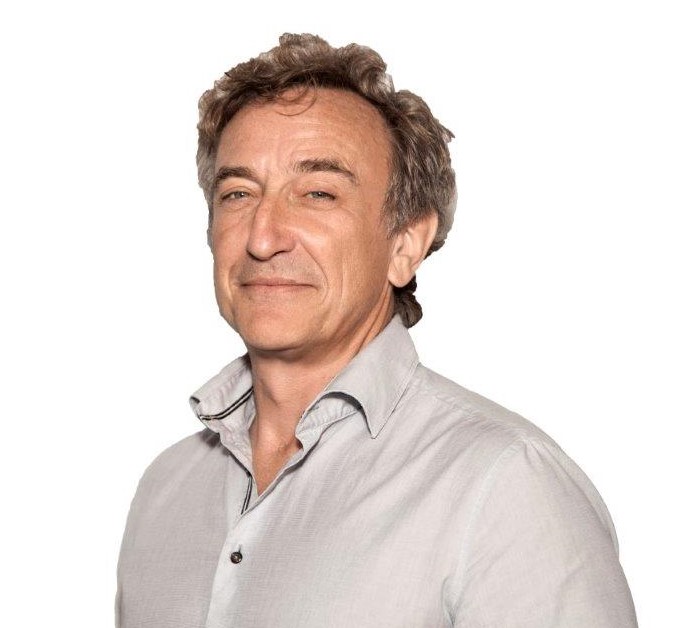
Claire Prada is a CNRS Research Director at the Institut Langevin , specializing in laser ultrasound , guided wave propagation , and time-reversal acoustics . Her work bridges fundamental wave physics and applied nondestructive testing. Research Pillars : Zero-group-velocity (ZGV) Lamb modes for material characterization Anisotropic wave propagation and negative refraction phenomena Time-reversal operator decomposition for structural monitoring Passive acoustic defect localization with ambient noise Technological Innovations : Fourier-domain reconstruction algorithms for 3D imaging Single-pixel photoacoustic microscopy Adaptive projection methods for rib-cage ultrasound focusing Wave Physics Discoveries : Documentation of power flux skewing in anisotropic plates Identification of beating resonance patterns in elastic media Experimental validation of negative reflection in chaotic waveguides Medical & Industrial Applications : Quantitative elastography for tissue stiffness measurement Jet engine blade damage detection Cortical bone femoral neck assessment Thin layer thickness measurement via ZGV resonance shifts
Kyle T Spikes is an Associate Professor in the Department of Earth and Planetary Sciences at the Jackson School of Geosciences, The University of Texas at Austin. His research focuses on integrating geologic data with quantitative tools for seismic reservoir characterization, emphasizing forward and inverse problems in rock physics, stochastic modeling, and seismic inversion. He works across scales from sub-micron rock samples to surface seismic data, developing effective medium models and numerical techniques to estimate heterogeneous and anisotropic rock properties. His work spans applications in carbonates, shales, and fractured reservoirs, with a strong emphasis on Bayesian methods, stochastic inversion, and machine learning for data analysis. Recent studies include fluid flow effects in porous media, distributed acoustic sensing (DAS), and rock physics modeling of unconventional reservoirs like the Haynesville Shale. He has contributed to CO2 sequestration monitoring through inversion of 3D VSP data at the Cranfield site. Notable trends in his publications include advancements in Bayesian-based rock physics modeling, integration of multi-scale data (laboratory to field scale), and innovative applications of DAS technology for seismic monitoring. His research bridges geophysics, petrophysics, and reservoir engineering, addressing challenges in reservoir characterization and monitoring under varying fluid and stress conditions. Dr. Spikes advises postdoctoral researchers and graduate students in the Jackson School, though specific advisee names are not listed. His work is supported by collaborative projects with industry and academic partners, focusing on practical solutions for subsurface reservoir challenges.
Sergei V. Shabanov is a Professor of Mathematics and Affiliate Professor of Physics at the University of Florida, College of Liberal Arts and Sciences. He holds offices in LIT 464 (Mathematics) and NPB 2180 (Physics), with phone contacts (352) 392-0281 and (352) 392-8714. His research focuses on mathematical physics, including bound states in the continuum, quantum field theory, Navier-Stokes equations, and laser-induced plasma dynamics. He co-authored monographs on Hamiltonian mechanics of gauge systems and textbooks on calculus. Research Interests : • Quantum field theory (Yang-Mills theories, path integrals) • Wave scattering and plasma physics (laser-induced plasmas, tomography) • Mathematical methods (partial differential equations, operator theory) His work bridges theoretical physics and applied mathematics, with emphasis on constrained systems and interdisciplinary applications. Recent Publications : Shabanov’s recent work includes studies on elastic wave scattering (2024), bound states in elasticity (2021), and plasma chemistry modeling (2019-2016). His research often explores theoretical frameworks with practical implications in spectroscopy and material science. Academic Contributions : - Director of the John R. Klauder Memorial Conference - Associate Director of the Institute for Fundamental Theory (Physics) - Adviser to the University Math Society - Taught advanced courses like Mathematical Methods for Physics and Partial Differential Equations.
Dean Baskin is an Associate Professor in the Department of Mathematics at Texas A&M University, affiliated with the College of Arts & Sciences. His research focuses on partial differential equations, mathematical physics, and geometric analysis, with particular emphasis on scattering theory, wave propagation, and spectral analysis. He holds an office in Blocker 614B and can be reached at dbaskin@tamu.edu. His work integrates advanced analytical techniques with geometric insights to study phenomena such as radiation fields, singularities in wave equations, and resonance structures on non-Euclidean spaces. Key research interests include the mathematical theory of scattering resonances, asymptotic behavior of solutions to wave equations on various manifolds (e.g., asymptotically Minkowski spaces), and microlocal analysis. His articles explore topics such as diffraction effects in Dirac-Coulomb systems, quantum ergodicity on Riemann moduli spaces, and the propagation of singularities in hyperbolic PDEs. While no specific awards or grants are listed in the provided materials, his publication record reflects sustained contributions to theoretical aspects of mathematical physics and analysis. No advisees or laboratory affiliations are explicitly mentioned, though his work likely involves collaboration with international research networks in geometric analysis and PDEs.
Sonia Fliss is a Full Professor at ENSTA Paris , affiliated with the Department of Applied Mathematics and the POEMS laboratory (UMR CNRS-INRIA-ENSTA) . She teaches applied mathematics courses on partial differential equations (PDEs) , finite element methods , and periodic homogenization to undergraduate and graduate students. Doctor in Applied Mathematics (2009) Authorized to supervise research (2019) Research Interests : Sonia Fliss specializes in the modeling and numerical analysis of wave propagation in periodic, quasi-periodic, and random media . Her work includes transparent boundary conditions , guided waves , and asymptotic methods for acoustic, electromagnetic, and elastic wave phenomena . Recent Publications highlight her contributions to the Half-Space Matching Method , edge states in honeycomb structures , and scattering problems in unbounded domains . Her numerical techniques address multi-scale waveguides and time-harmonic propagation . Laboratory : As a member of the POEMS team, she collaborates on interdisciplinary projects involving mathematical analysis , computational physics , and engineering applications in domains like defence, energy, and transport .
Lei Tian is an Associate Professor in the Department of Electrical and Computer Engineering and the Department of Biomedical Engineering at Boston University's College of Engineering. He leads the Computational Imaging Systems Lab and maintains affiliations with the Neurophotonics Center, Photonics Center, Center for Information & System Engineering, Rafik B. Hariri Institute for Computing, and Nanotechnology Innovation Center. His educational background includes: PhD, Massachusetts Institute of Technology, 2013 MS, Massachusetts Institute of Technology, 2010 Professor Tian's research integrates optics and computation to overcome physical limitations in imaging systems. His work spans computational imaging and sensing, computational microscopy, imaging in scattering media, phase retrieval, and neurophotonics. He develops next-generation imaging systems with applications in biomedical microscopy, neuroscience, semiconductor metrology, and advanced vision applications, emphasizing the joint design of optical components and computational algorithms. His publication record shows a strong progression from fundamental computational imaging techniques to practical applications, with increasing integration of deep learning approaches to solve challenging imaging problems in scattering media and neural environments. His work consistently bridges theoretical advances with real-world applications. Professor Tian has received numerous prestigious awards: Boston University Provost's Scholar-Teacher of the Year Award (2025) Optica Fellow (2025) Early Career Excellence in Research, BU College of Engineering (2021) NSF CAREER Award (2019) Dean's Catalyst Award (2018) The Fumio Okano Best 3D Paper Prize (2018) As an advisor, he has successfully mentored at least 10 PhD students to completion as of mid-2025, with recent graduates including Jeffrey Alido, Jiabei Zhu, Chang Liu, Hao Wang, and Joseph Greene. His research is supported by substantial funding including a $2 million NIH grant for the Computational Miniature Mesoscope (CM2), a $1.75M grant from NIBIB for cancer cell metabolism research, and funding from the Chan Zuckerberg Initiative. His Computational Imaging Systems Lab pioneers innovative imaging techniques that synergistically combine optical hardware with computational algorithms, making significant contributions to computational microscopy, intensity diffraction tomography, neural imaging systems, and deep learning applications in optical imaging for both biomedical and industrial applications.
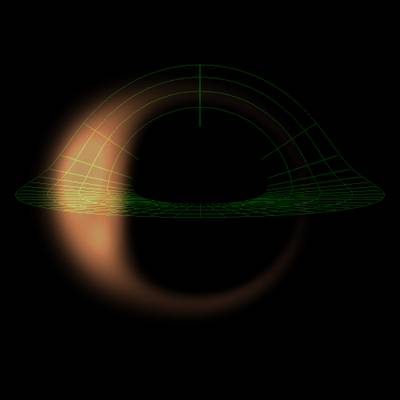
Avery E. Broderick is an Associate Professor in the Department of Physics & Astronomy at the University of Waterloo and an Associate Faculty Member at the Perimeter Institute for Theoretical Physics. His research focuses on theoretical astrophysics, particularly studying compact objects like black holes and testing general relativity through astronomical observations. He is a key member of the Event Horizon Telescope (EHT) collaboration, which produced the first direct images of black hole horizons in M87* and Sagittarius A*. Broderick’s work emphasizes relativistic astrophysical phenomena such as accretion flows, jet formation, and polarization signatures. He collaborates extensively with observational astronomers and computational physicists to model black hole environments using general relativistic magnetohydrodynamic simulations. His recent research includes analyzing EHT data to constrain black hole spin, test spacetime metrics, and study photon ring dynamics. He also explores next-generation EHT (ngEHT) capabilities for higher-resolution imaging and multi-wavelength studies. Broderick has delivered invited lectures globally, including at Harvard-Smithsonian CfA, MIT, and the Aspen Center for Physics, reflecting his leadership in the field. Broderick’s contributions span over 135 refereed publications and conference proceedings, with a focus on black hole astrophysics, VLBI techniques, and relativistic plasma physics. His work bridges theoretical predictions with observational data, advancing our understanding of extreme gravitational regimes in the universe.
Annalena Albicker is a Researcher at the Institute of Applied and Numerical Mathematics within the Faculty of Mathematics at the Karlsruhe Institute of Technology (KIT) . Her work focuses on Numerical Analysis and Inverse Problems , particularly in the context of Partial Differential Equations and Mathematical Physics . She is affiliated with the KIT's Institute of Applied and Numerical Mathematics Working Group 4: Inverse Problems . Her research explores the application of monotonicity methods to inverse scattering problems, including studies on Maxwell's equations and unbounded domains . Recent publications highlight her contributions to computational approaches for electromagnetic scattering and obstacle detection. Scientific Awards: No specific honors or awards are mentioned in the provided texts.
Nils Sponheim is an Associate Professor at Oslo Metropolitan University (OsloMet) in the Faculty of Technology, Art and Design, Department of Mechanical, Electrical and Chemical Engineering. His research focuses on ultrasound, medical imaging, and signal processing, with particular emphasis on contrast agents, Doppler imaging, and biomedical engineering applications. He has contributed extensively to ultrasound transducer design and problem-based learning pedagogy. Academic Affiliation: OsloMet – Faculty of Technology, Art and Design Research Areas: Ultrasound physics, contrast agent development, Doppler signal analysis, medical imaging instrumentation Education Focus: Problem-Based Learning (PBL) in engineering His publications span transient ultrasonic fields, synchronization techniques for contrast agents, and clinical applications in cardiology and oncology. Key subfields include pulse shaping, frequency resolution limitations, and transducer design. Sponheim's work bridges engineering and clinical diagnostics, with collaborations in cardiology and oncology imaging. Current projects focus on pulsed ultrasonic fields and practical measurement systems.
Martin Skovgaard Andersen is an Associate Professor in the Department of Applied Mathematics and Computer Science at the Technical University of Denmark (DTU), where he specializes in Scientific Computing. His research integrates numerical methods, optimization, and machine learning to solve complex computational problems in engineering and data science. Education: Ph.D., University of California, Los Angeles (2006–2011) M.Sc., Aalborg Universitet (2001–2006) Postdoc, Linköping University, Sweden (2011–2012) His research interests include optimization (particularly conic and stochastic programming), numerical algorithms, signal processing, system identification, and fast solvers for integral equations. He works extensively on matrix analysis, regularization, and low-rank approximations, contributing to both theoretical and applied advancements in computational mathematics. The recent publications highlight a strong trend in developing efficient numerical algorithms for large-scale optimization and solving integral equations. His work emphasizes preconditioning, matrix truncation, and Bayesian inversion, with applications in electromagnetics, structural health monitoring, and network identification. There is a consistent focus on improving computational efficiency and scalability of solvers. Scientific Awards: No specific awards mentioned in the provided text. Andersen actively supervises PhD students and leads multiple research projects, including those on non-symmetric conic optimization, data-sparse models, and fast direct solvers. He is the Principal Investigator (PI) on projects related to physics-informed structural health assessment. His collaborative network spans Denmark and international institutions, particularly in computational mathematics and engineering. Labs and Research Teams: He is affiliated with the Scientific Computing section at DTU, which focuses on high-performance computing, numerical algorithms, and mathematical modeling. His work is embedded in a collaborative environment involving researchers in optimization, control theory, and computational electromagnetics.
Yoann Altmann is Professor in the School of Engineering & Physical Sciences at Heriot-Watt University and a member of the Institute of Sensors, Signals & Systems. Since 2024 he holds the Chair in Electrical, Electronic & Computer Engineering (EECE), directing a research programme that bridges statistical signal processing, computational imaging and quantum & neuromorphic sensing. Education & career: 2010 – Eng. degree (Electrical Engineering), ENSEEIHT, Toulouse, France 2010 – M.Sc. (Signal Processing), National Polytechnic Institute of Toulouse 2013 – Ph.D. (Signal & Communications), IRIT Laboratory, Toulouse 2014-2017 – Post-doctoral Research Fellow, Heriot-Watt University 2017 – Royal Academy of Engineering Research Fellow & Assistant Professor, HWU 2024 – promoted to Professor, School of Engineering & Physical Sciences, HWU Research interests: Prof. Altmann develops mathematical and algorithmic tools for Bayesian inverse problems, with emphasis on single-photon LiDAR, low-illumination imaging, neuromorphic computational sensing, variational inference and sparse reconstruction. His work combines principled statistical modelling with efficient computational schemes to enable imaging in extreme scenarios such as underwater scattering, photon-starved environments, quantum metrology and real-time 3-D scene reconstruction. Publication trends: Across 160 outputs (2011-2025) his recent articles reveal a clear trajectory toward integrating modern machine-learning paradigms—variational autoencoders, diffusion generative models, spiking neural networks—with rigorous physics-based forward models. Applications span quantum parameter estimation, multimode-fiber endoscopy, hyperspectral & Compton imaging, nuclear safeguards and cultural-heritage spectroscopy, demonstrating both methodological breadth and high-impact interdisciplinary deployment. Honours & recognition: Royal Academy of Engineering Research Fellowship – competitively awarded (2017) Grants & datasets: He has generated four open datasets supporting reproducible research in quantum sensing, variational autoencoders, underwater single-photon LiDAR and multispectral fluorescence imaging, reflecting sustained funding and commitment to open science. Continuous peer-review service for IEEE and Elsevier journals since 2013 underlines his standing within the signal-processing community. Labs & teams: He leads the Bayesian Imaging & Sensing Computing (BISC) group ( https://bisc.site.hw.ac.uk ) which hosts post-docs, PhD researchers and international visitors working on statistical machine-learning for imaging, sensing and quantum technologies.