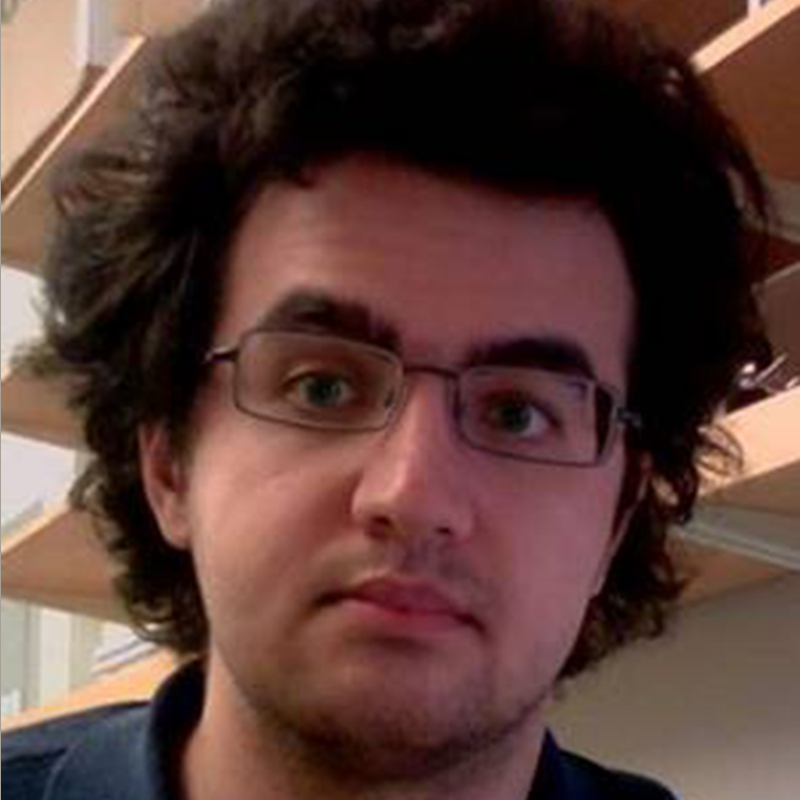
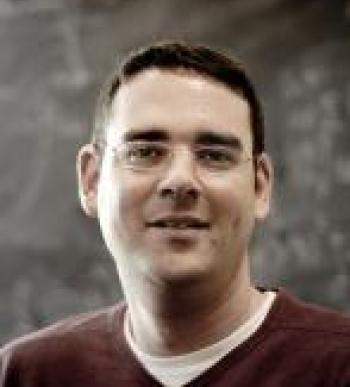
Ioannis Gkioulekas is an Assistant Professor at the Robotics Institute within Carnegie Mellon University's School of Computer Science, with a courtesy appointment in Electrical and Computer Engineering. He leads the Computational Imaging Lab at CMU, focusing on joint hardware-software approaches to develop advanced imaging systems. His research spans computational imaging, computer vision, and graphics, addressing challenges like non-line-of-sight imaging, 3D sensing, and adaptive optics. Research interests include: Computational imaging systems design Non-line-of-sight and single-photon imaging LiDAR, SONAR, and interferometry applications Physics-based and differentiable rendering Probabilistic modeling and Monte Carlo methods Recent publications (2019-2021) demonstrate strong focus on waveguides, light transport simulation, 3D sonar reconstruction, and computational tomography. Common themes include inverse problems, wave-based imaging, and differentiable simulation techniques bridging graphics and sensing. Current advising includes Master's student Neham Jain and affiliates Bakari Hassan, John Liu, Bailey Miller, Sreekar Ranganathan, and Arjun Teh. Past students include PhD graduates Arpit Agarwal and Shumian Xin, and Master's student Shirsendu Halder.
Amit Singer is a Professor of Mathematics at Princeton University, specializing in computational methods for structural biology and cryo-electron microscopy (cryo-EM). His work focuses on developing mathematical frameworks and algorithms for analyzing large-scale microscopy datasets, particularly in 3D reconstruction and heterogeneity analysis of molecular structures. He leads research in manifold learning, optimal transport, and harmonic analysis, with applications to cryo-EM, signal processing, and inverse problems. Research interests include: (1) Mathematical methods for cryo-EM, including particle alignment, density map analysis, and subspace-based reconstruction techniques; (2) Development of rotation-invariant representations for imaging problems; (3) Application of machine learning and optimization to biomedical imaging challenges. His contributions bridge pure mathematics (e.g., harmonic analysis, manifold theory) with applied computational techniques for real-world microscopy data. Key trends in his recent articles (2023–2025) include advancements in multi-reference alignment methods, Wasserstein distance-based image registration, and overcoming particle detection limitations in cryo-EM. He also explores sparsity constraints, autocorrelation analysis, and novel algorithms for handling heterogeneous datasets. These methods improve resolution and reduce computational costs in analyzing molecular structures at atomic scales. Notable contributions include the ASPiRE software package for steerable PCA, and foundational work on synchronization problems in cryo-EM orientation estimation. His research often addresses algorithmic scalability and robustness to noise in experimental setups.
Yu Sun is an assistant professor in the Department of Electrical and Computer Engineering at Johns Hopkins University with a joint appointment at the Data Science and Artificial Intelligence (DSAI) Institute. His research integrates machine learning, computer vision, optimization, and physics to advance computational imaging frameworks for reliable AI-driven imaging systems. He earned a BEng in electronics and information from Sichuan University (2015) and a PhD in computer science from Washington University in St. Louis (2022), where his dissertation received the Turner Dissertation Award. His academic journey includes a postdoctoral fellowship at Caltech's Department of Computing and Mathematical Sciences. Dr. Sun's research spans biomedical imaging, computational imaging, inverse problems, and machine learning, focusing on interpretable AI integration for next-generation imaging. His work bridges theoretical foundations with practical applications in medical and scientific imaging domains. Recent publications reveal a dominant trend in diffusion models for scientific imaging problems, including plug-and-play priors for reconstruction (NeurIPS 2024) and benchmarks for diffusion-based scientific problem-solving (ICLR 2025 Spotlight), demonstrating cross-disciplinary impact from biomedical engineering to cell biology. Key honors include: Turner Dissertation Award for doctoral contributions Rising Star Award from the Conference on Parsimony and Learning (CPAL, 2025) He serves as a consultant associate editor for the IEEE Open Journal of Signal Processing and actively participates in the IEEE Signal Processing Society’s Computational Imaging Technical Committee. His research is supported by institutional funding through the Hopkins Computational Imaging Group. The Hopkins Computational Imaging Group, which he leads, unites AI, mathematics, and data science to develop principled algorithms for imaging systems, with emphasis on biomedical applications and novel computational frameworks.
Prof. Abbas Samani is a Professor at the Department of Electrical and Computer Engineering and holds a joint appointment in the Department of Medical Biophysics at Western University . He is a core faculty member of the Biomedical Engineering Graduate Program and an Associate Scientist at Imaging Research Laboratories of Robarts Research Institute . His academic journey includes a Ph.D. from the University of Waterloo, an M.Sc. from the University of Tehran, and a B.Sc. from Amirkabir University of Technology. His research focuses on biological tissue computational modeling and its applications in medical imaging, intervention, and image analysis . He develops computer/image-assisted tools for minimally invasive disease diagnosis and therapy , targeting heart disease, cancer, and lung disease . Key projects include myocardium biomechanical modeling , handheld medical devices for breast cancer screening , and lung disease diagnostics via CT image segmentation . His recent publications emphasize ultrasound elastography , finite element modeling , and inverse problems in biomechanics , primarily in journals like IEEE Transactions on Computational Imaging and Translational Oncology . His work spans both computational modeling and medical device development . Selected Graduate Supervision : Ph.D. Candidates : Seyed Hassan Haddad, Elham Karami, Seyed Mohammad Hesabgar Graduated Ph.D. Students : Ali Sadeghi Naini, Seyed Reza Mousavi M.Sc. Students : Cristian Linte, Patrick Courtis, Joseph O'Hagan, Hatef Mehrabian, Hirad Karimi, Hosein Amooshahi, Seyed Mohammad Hesabgar, Nastaran Ghadarghadr, Shadi Shavakh, Ehsan Salamati, Ehsan Omidi Teaching Contributions : Graduate: BME9519B/CAMI9519B/ECE9202B/ECE9022B - Advanced Image Processing and Analysis , MBP9530A - Human Biomechanics and Biomedical Applications Undergraduate: ECE4438B - Advanced Image Processing and Analysis , ES1050 - Introductory Engineering Design and Innovation Studio , MBP3330F - Human Biomechanics and Biomedical Applications Research Affiliations : Robarts Research Institute - Associate Scientist at Imaging Research Laboratories Western University - Core Faculty, Biomedical Engineering Graduate Program
Charles A. Bouman is the Showalter Professor of Electrical and Computer Engineering and Biomedical Engineering at Purdue University, with a courtesy appointment in Mathematics. He is a leading researcher in computational imaging, integrating statistical signal processing, physics, and computation for applications in healthcare, scientific, and industrial imaging. Education: B.S.E.E., University of Pennsylvania, 1981 M.S., University of California at Berkeley, 1982 Ph.D. in Electrical Engineering, Princeton University, 1989 His research focuses on computational imaging , including statistical image models, multiscale techniques, tomographic reconstruction, and fast algorithms. Key areas include Model-Based Iterative Reconstruction (MBIR), Plug-and-Play priors, document processing, and multiscale segmentation. His work has led to foundational contributions in total variation regularization and sparse-view reconstruction. The recent publications highlight a strong trend in integrating machine learning with physical models for image reconstruction, particularly through Plug-and-Play methods. His work spans optical tomography, halftoning, image scaling, and document compression, demonstrating consistent innovation in both theory and practical software implementation. Scientific Awards and Honors: Member, National Academy of Inventors Life Fellow, IEEE Fellow, IS&T; Honorary Member (2022); Service Award (2023) Fellow, SPIE and AIMBE IEEE Signal Processing Society Claude Shannon-Harry Nyquist Award (2021) Electronic Imaging Scientist of the Year (2014) SIAM Imaging Science Best Paper Prize (2020) Founder, IS&T Computational Imaging Conference (2003) Co-Founder, IEEE Transactions on Computational Imaging Vice President, IS&T; Former VP of Publications (2000–2004) Bouman has advised numerous graduate students and leads a vibrant research group developing open-source tools like MBIRJAX , SVMBIR , and OpenMBIR . His research has been supported by the National Science Foundation, General Electric, Intel, Xerox, Hewlett-Packard, and the State of Indiana 21st Century Fund. He maintains an active presence through tutorials, conference leadership, and educational resources including video lectures and a textbook on Foundations of Computational Imaging. Labs and Research Teams: His group develops cutting-edge software for tomographic reconstruction, clustering, segmentation, and dynamic sampling. Projects include Gaussian Mixture modeling (GMCluster), Plug-and-Play implementations, Sparse Matrix Transforms, and UAV sensing datasets. The research is highly interdisciplinary, bridging engineering, mathematics, and biomedical applications.
Rima Alaifari is an Assistant Professor for Applied Mathematics at ETH Zürich, specializing in inverse problems, applied harmonic analysis, and scientific machine learning. She is an associated member of the ETH AI Center and will assume a full professorship at RWTH Aachen University in 2025. Her work focuses on stability analysis, regularization, and operator learning, with applications in phase retrieval and robustness of neural networks. Alaifari holds a Ph.D. in Mathematics from Vrije Universiteit Brussel (2014), where she studied under Prof. Ingrid Daubechies and Prof. Michel Defrise. She completed her M.Sc. in Applied and Industrial Mathematics at Johannes Kepler University, Linz (2010). Her academic career includes postdoctoral fellowships at ETH Zurich (2014–2016) and a Marie Curie-funded position (2016). Her research interests span inverse problems, phase retrieval, stability in machine learning, and operator learning. Notable projects include SNF-funded work on phase retrieval (2019) and collaborations on adversarial robustness in medical imaging (e.g., CT reconstruction). She has mentored PhD students Tandri Gauksson and Matthias Wellershoff, and postdocs Francesca Bartolucci (now at TU Delft) and Jesse Railo (Finnish Inverse Prize winner). Teaching includes courses on inverse problems, time-frequency analysis, and robustness of deep neural networks. She actively participates in international conferences, delivering plenary talks at venues like the International Conference on Computational Harmonic Analysis (2022) and ICERM (2023). Her work bridges mathematical foundations and practical applications, emphasizing stability and robustness in computational methods.
Vladimir Kazeev is an Assistant Professor at the Faculty of Mathematics, University of Vienna , where he has held a faculty position since 2019. He also held previous academic appointments as a Szegő Assistant Professor at Stanford University (2017–2019), a postdoctoral researcher at the University of Geneva (2015–2017), and research positions at ETH Zurich (2011–2015), Russian Academy of Sciences (2008–2011), and Moscow Institute of Physics and Technology (2009). His research focuses on adaptive, data-driven numerical methods for differential equations, nonlinear low-parametric approximation, and numerical linear algebra. His work intersects computational mathematics, tensor methods, and high-dimensional problem-solving, particularly in the context of partial differential equations (PDEs) and stochastic modeling. The 15 most recent publications reveal a strong emphasis on quantized tensor-structured methods for PDEs, low-rank approximations, and high-dimensional numerical analysis. His research spans theoretical advancements in tensor decomposition, practical applications in chemical reaction networks, and novel discretization techniques for multiscale and degenerate diffusion problems. Scientific awards include the prestigious ETH Medal for outstanding doctoral theses (2016) Russian Academy of Sciences Medal for outstanding student works in mathematics (2011) Advising and teaching activities include supervising Jason Zhu (Stanford, 2019) and Simon Etter (ETH Zurich, 2014), as well as teaching advanced courses in tensor methods, numerical analysis, and PDEs at the University of Vienna, Stanford University, and the University of Geneva. His service to the community includes peer review for 15+ journals and co-organizing minisymposia at SIAM meetings.
Per Christian Hansen is a Professor at the Department of Applied Mathematics and Computer Science (DTU Compute), Technical University of Denmark (DTU), where he leads the Section for Scientific Computing. He is a VILLUM Investigator and heads the CUQI (Computational Uncertainty Quantification for Inverse Problems) research initiative, aiming to develop accessible computational platforms for uncertainty quantification in inverse problems. His expertise lies in numerical analysis, numerical linear algebra, iterative reconstruction methods, and computational inverse problems, with applications in tomography, signal analysis, and plasma physics. His research integrates theoretical analysis—such as perturbation and convergence analysis—with the development of robust, adaptive, and efficient computational methods. He has co-authored five books, over 100 scientific papers, and several widely used MATLAB software packages, including IR Tools and Regularization Tools. His recent work (2023–2025) emphasizes uncertainty quantification, Bayesian inversion, and high-dimensional tomography in fusion plasmas, reflecting a strong trend toward probabilistic and robust modeling in inverse problems. He is a SIAM Fellow (2015) for his contributions to computational methods for rank-deficient and discrete ill-posed problems and regularization techniques. His scientific leadership is evident in both theoretical advances and practical software implementations. He actively collaborates across disciplines, particularly in nuclear fusion and medical imaging, and continues to supervise PhD students and publish in top-tier journals such as Inverse Problems , SIAM Journal on Scientific Computing , and Nuclear Fusion . SIAM Fellow (2015) VILLUM Investigator He advises PhD and Master’s students in computational mathematics and inverse problems, and his research is supported by major grants, including the VILLUM Investigator award. He leads the CUQI team, which develops open-source tools for non-experts to apply uncertainty quantification in inverse problems. His lab focuses on creating modeling frameworks that bridge theory, computation, and real-world applications in materials science, imaging, and plasma diagnostics.
James R. Fienup is the Robert E. Hopkins Professor of Optics at the University of Rochester's Institute of Optics, with additional appointments as Distinguished Scientist at the Laboratory for Laser Energetics, Professor at the Center for Visual Science, Professor of Electrical and Computer Engineering, and Affiliated Faculty at the Goergen Institute for Data Science and Artificial Intelligence. His office is located at Wilmot 410, 275 Hutchison Rd., Rochester, NY. Education PhD in Applied Physics from Stanford University (1975) MS in Applied Physics from Stanford University (1972) BA in Physics & Mathematics (magna cum laude) from Holy Cross College (1970) Research Focus Professor Fienup's research specializes in imaging science , with emphasis on phase retrieval algorithms, unconventional imaging techniques, and wavefront sensing. His work spans computational methods for image reconstruction, sparse-aperture systems, and synthetic-aperture imaging. Recent innovations include applying machine learning to wavefront control and developing advanced digital holography techniques for 3D imaging through atmospheric turbulence. Publication Trends His recent articles (2018-2024) demonstrate a strong focus on computational imaging techniques, particularly phase retrieval algorithms applied to optical metrology and wavefront correction. Key themes include multi-plane digital holography, coronagraphic wavefront control for astronomical applications, machine learning-enhanced sensing, and novel approaches for segmented-aperture systems. His work consistently bridges theoretical optics with practical instrumentation challenges. Awards and Honors Lifetime Achievement Award, Hajim School of Engineering (2019) Emmett N. Leith Medal, Optical Society of America (2013) National Academy of Engineering Member (2012) Distinguished Visiting Scientist, JPL (2009) Fellow of OSA and SPIE International Prize in Optics (1983) Rudolf Kingslake Medal (1979) NSF Graduate Fellow (1970-1972) Professional Activities Professor Fienup has served as Editor-in-Chief of the Journal of the Optical Society of America A (1998-2003) and held editorial roles at Applied Optics and Optics Letters . He consults for NASA (James Webb Space Telescope, Hubble), national laboratories, and aerospace companies, and holds five patents in optical systems design.
Arkadi Nemirovski is the John P. Hunter, Jr. Chair and Professor at the H. Milton Stewart School of Industrial and Systems Engineering, Georgia Tech. He holds a Ph.D. in Mathematics (1974) from Moscow State University, a Doctor of Sciences in Mathematics (1990) from the USSR Supreme Attestation Board, and an honorary Doctor of Mathematics from the University of Waterloo (2009). Ph.D. in Mathematics, Moscow State University (1974) Doctor of Sciences in Mathematics, USSR Supreme Attestation Board (1990) Doctor of Mathematics (Honoris Causa), University of Waterloo (2009) His research focuses on Optimization Theory and Algorithms , with emphasis on complexity analysis, efficient methods for nonlinear convex programs, robust optimization, optimization under uncertainty, and applications in engineering and nonparametric statistics. He has pioneered advancements in interior-point methods, semidefinite programming, and stochastic approximation, shaping modern convex optimization. His article trends highlight a trajectory from foundational interior-point algorithms (1990s) to robust optimization (2000s) and recent works on first-order methods, polyhedral estimates, and applications in machine learning, signal processing, and tomography. Key subfields include matrix norms , large-scale optimization , and stochastic uncertainty handling . Scientific awards include: 1982 Fulkerson Prize (joint with L. Khachiyan and D. Yudin) 1991 Dantzig Prize (joint with M. Grotschel) 2003 John von Neumann Theory Prize (joint with M. Todd) 2017 Member, National Academy of Engineering 2018 Fellow, American Academy of Arts and Sciences 2020 Norbert Wiener Prize (joint with M. Berger) He has supervised students like Dmitry Gabelev (polynomial-time cutting plane algorithms), Daureen Steinberg (matrix norms in robust optimization), and Eitan Rubinstein (SVMs via advanced optimization), with their works later formalized in academic journals.
Peter Doerschuk is a Professor in the Department of Electrical and Computer Engineering at Cornell University's College of Engineering. He joined Cornell in July 2006 after serving on the faculty at Purdue University in both Electrical and Computer Engineering and Biomedical Engineering. His educational background includes: B.S. in Electrical Engineering, MIT (1977) M.S. in Electrical Engineering, MIT (1979) Ph.D. in Electrical Engineering, MIT (1985) M.D., Harvard Medical School (1987) Peter Doerschuk's research focuses on biological and medical systems through the lens of computational nonlinear stochastic systems. His work spans biomedical imaging , signal and image processing , statistical modeling , and computational inverse problems in biophysics . He develops high-performance algorithms and software systems that integrate accurate physical models with computational efficiency. His research addresses problems across multiple spatial scales—from 3D virus reconstruction using electron microscopy to modeling whole-body ethanol pharmacokinetics. The recent publications highlight a strong trend in computational biomedical imaging and physiological modeling . Key areas include 3D reconstruction of heterogeneous biological structures, cryo-EM dynamics analysis, and physiologically based pharmacokinetic modeling. The work consistently combines advanced statistical and machine learning methods with domain-specific physical models, particularly in virology and neurovascular physiology. His scientific awards and honors include: Fellow, American Institute for Medical and Biological Engineering (AIMBE) University Faculty Scholar, Purdue University Motorola Excellence in Teaching Award Ernst A. Guillemin Thesis Prize (MIT) Department of Biomedical Engineering Faculty Service Award (Purdue) Dr. Doerschuk has advised graduate students, including Keyuan Xu, whose M.Eng. thesis at MIT received the prestigious Ernst A. Guillemin Thesis Prize. His research has been supported through academic grants and collaborations with institutions such as The Scripps Research Institute and Indiana University School of Medicine. He has developed parallel software systems for high-performance computing applications in biophysics and biomedical signal processing. His research has involved collaboration with multiple labs and teams, including work with Professor J. E. Johnson at The Scripps Research Institute on virus structure determination and with Professor S. J. O’Connor at Indiana University on ethanol pharmacokinetics modeling. These interdisciplinary teams integrate expertise in engineering, medicine, and computational science to solve complex biomedical problems.
Faez Ahmed is an Associate Professor at the Department of Mechanical Engineering, Massachusetts Institute of Technology (MIT), where he serves as the Doherty Chair in Ocean Utilization. He leads the Design Computation and Digital Engineering (DeCoDE) Lab, focusing on integrating machine learning and optimization with engineering design to enhance human-AI collaboration and accelerate design processes. Ph.D., Mechanical Engineering, University of Maryland College Park (2019) B.Tech.-M.Tech., Mechanical Engineering, Indian Institute of Technology Kanpur (2012) His research interests include generative design methodologies, AI-driven optimization techniques, and the development of algorithms that facilitate collaboration between human designers and artificial intelligence systems. This interdisciplinary work spans applications in automotive design , ship hull synthesis , and wind turbine optimization , with a strong emphasis on creating open-source tools and datasets for the engineering community. Recent publications demonstrate his lab's leadership in fields such as 3D CAD generation , multimodal design datasets , and constraint-aware generative models . These works often address challenges in design space exploration , performance prediction , and data-driven design frameworks . Scientific Awards NSF CAREER Award (2025) ASME Young Investigator Award (2024) Google Research Scholar Award (2024) 3M Non-Tenured Faculty Award (2022) University of Maryland Alumni Research Award (2022) Faez Ahmed's lab has trained numerous Ph.D. candidates and postdoctoral researchers, fostering a collaborative research environment that bridges mechanical engineering , artificial intelligence , and computational methods . The DeCoDE Lab actively engages with industry partners and academic institutions, contributing to large-scale datasets and benchmarks that power the next generation of engineering design research.
Stella Yu is a Professor specializing in computer vision, machine learning, and AI applications across medical imaging, robotics, and wildlife recognition. She emphasizes adaptive advising tailored to individual student strengths, with regular one-on-one and group meetings to discuss research progress and paper presentations. Yu's research group focuses on unsupervised learning, deep learning workflows, and interdisciplinary applications such as MRI reconstruction, meibography analysis, and aerial wildlife monitoring. Her work bridges theoretical advancements with practical tools like DeepInPy for inverse problems. She strongly advocates for teaching experience through GSI roles and ensures students have conference funding to present findings at top venues. Education Expectations: Regular literature review, lab presence for junior students, and clear authorship protocols. Key Research Themes: Feature learning, medical AI, computational optics, and wildlife population surveys. Her lab promotes a collaborative environment with structured feedback loops, emphasizing both technical rigor and creative problem-solving. Current projects include BatVision for 3D spatial navigation using audio signals, and AI-driven solutions for dry eye diagnosis and building information modeling.
Yuri Bazilevs is the E. Paul Sorensen Professor of Engineering at Brown University's School of Engineering and Co-Director of the Mechanics of Undersea Science and Engineering Center. His research focuses on computational mechanics, isogeometric analysis, fluid-structure interaction, and high-performance computing. Prior to Brown, he held positions at UC San Diego, where he advanced to Full Professor in 2014 after a rapid tenure. He earned his PhD in 2006 and postdoc training in computational engineering at UT Austin's ICES. Research interests span computational fluid dynamics, solid mechanics, and advanced discretization methods like isogeometric analysis (IGA) and meshfree approaches. He has developed novel formulations for complex phenomena such as underwater explosions, composite material failure, and hypersonic flow dynamics. His work integrates cutting-edge numerical methods with practical engineering applications in aerospace, energy, and biomedical systems. Recent publications highlight advancements in IGA for architected materials, RKPM-based crack modeling, and stabilized formulations for compressible flows. His contributions bridge theoretical mechanics with computational innovation, addressing challenges in multiphysics coupling and large-scale simulations. Collaborations span academia and industry, emphasizing practical validation and real-world impact. Bazilevs' expertise includes variational multiscale methods, peridynamics for fracture mechanics, and immersive particle methods for fluid-structure interaction. His work has been applied to wind turbine aerodynamics, gas turbine optimization, and cardiovascular flow analysis. He actively contributes to computational infrastructure development, such as the tIGAr software framework for IGA automation.
Jonathan Shihao Ji is an Associate Professor in the School of Computing at the University of Connecticut (UConn), leading the Intelligent Systems Lab. He holds a Ph.D. in Electrical and Computer Engineering from Duke University and previously served as an Associate Professor at Georgia State University and Director of the DoD Center of Excellence (CiARE). His research focuses on deep learning applications in computer vision, NLP, robotics, and high-performance computing, with over 50 publications in top venues like CVPR, NeurIPS, and IEEE journals. He has secured grants from NSF, NIH, DoD, and industry partners including VMware and Nvidia. His work emphasizes efficient algorithms for large-scale data processing, parameter-efficient model fine-tuning (e.g., VB-LoRA), and 3D perception benchmarks for UAVs (UAV3D). Notable contributions include sparse network optimization (Dep-L0), energy-based models (M-EBM), and robust defenses against adversarial attacks (Defense-VAE). He is a Senior Member of IEEE and has developed open-source tools like Parallel Word2Vec and WordRank. Recent projects include accelerating Llama2 models on FPGAs (LlamaF) and improving text-to-image synthesis via contrastive learning. His research spans theoretical advancements and practical applications, with industry collaborations in healthcare, robotics, and embedded systems.