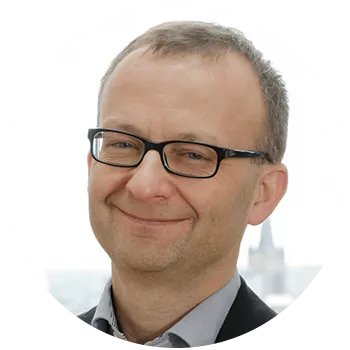
Prof. Wojciech Sobieski is a faculty member at the Department of Mechanics and Fundamentals of Machine Design within the Faculty of Technical Sciences at the University of Warmia and Mazury in Olsztyn . His research focuses on fluid mechanics, numerical modeling, and porous media analysis, with applications in environmental engineering, hydraulic systems, and 3D printing. Academic Rank: Professor Scientific Discipline: Mechanical Engineering Key Research Areas: Tortuosity Analysis, Multiphase Flow, DEM Simulations His recent publications highlight advancements in computational methods for granular porous media, fluid flow modeling, and thermodynamic applications. Notable trends include the use of the Waterfall Algorithm for geometric analysis and sensitivity studies of numerical models like the Eulerian multiphase approach. He has contributed to understanding Forchheimer's laws and cavitation phenomena in hydraulic systems. Prof. Sobieski oversees the PathFinder Project , a research initiative focused on numerical modeling of porous media. His laboratory maintains infrastructure for multiphase flow simulations and particle-scale modeling. He has supervised 2 doctoral students to completion but currently has no active advisees.
Marek Miśkowicz serves as a Professor at the Department of Metrology and Electronics within the Faculty of Electrical Engineering, Automatics, Computer Science and Biomedical Engineering at AGH University of Science and Technology in Kraków, Poland. His primary institutional contact is miskow@agh.edu.pl, with physical location in building B-1, room 212. His research spans signal processing, biomedical engineering, and electronics, specializing in event-based sampling methodologies, time-to-digital conversion techniques, and reconstruction of bandlimited signals from nonuniform samples. Key contributions include QRS detection algorithms for ECG monitoring, POCS-based reconstruction frameworks, and event-driven control systems for industrial IoT applications. His work emphasizes resource efficiency in embedded systems and mobile health monitoring through approximate computing and adaptive sampling strategies. Recent publications (2022-2025) demonstrate consistent focus on signal reconstruction from irregular samples, with growing emphasis on spiking neural networks for event classification and industrial IoT optimization. Biomedical applications (particularly ECG analysis) and industrial control systems represent dominant application domains, while methodological innovations center on iterative reconstruction algorithms and temporal accuracy evaluation in noisy environments. No scientific awards were referenced in the source materials. No information regarding student advising or research grants was available in the provided documentation. The source texts contained no details about laboratory facilities, research teams, or collaborative groups associated with Professor Miśkowicz.
Marco Giometto is an Assistant Professor of Civil Engineering and Engineering Mechanics at Columbia University, affiliated with the Columbia School of Engineering and Applied Science. His research focuses on fluid dynamics and turbulence, particularly in environmental flows, atmospheric boundary layers, and wind engineering. He employs supercomputing and physics-data-driven methods to advance understanding of natural systems and urban infrastructure resilience. Education: PhD in Civil Engineering (Braunschweig TU University and University of Florence, 2014); PhD in Mechanical Engineering (École Polytechnique Fédérale de Lausanne, 2016, EDME Award recipient). Experience: Postdoctoral roles at UBC and the Center for Turbulence Research (Stanford/NASA Ames); Amazon Visiting Academic (2020–present). Research Interests: Environmental Engineering, Wind Engineering, Smart Cities, Sustainable Infrastructure, and Computational Mechanics. His work bridges fundamental fluid dynamics with applied challenges in urban sustainability and climate resilience. Awards/Grants: NSF CAREER Award (2024), NSF Physical & Dynamic Meteorology Program grant (2024), Army Research Office DURIP Award (2023). Collaborations include Amazon Prime Air and field campaigns like CoURAGE. Lab & Outreach: Leads the Environmental Flow Physics Laboratory, advancing computational tools and field experiments. Teaches at Columbia and mentors students like Gurpreet Hora (PhD Teaching Fellow).
Bydgoszcz University of Science and TechnologyPoland
Prof. Janusz Frączek is a faculty member at Warsaw University of Technology, holding the academic rank of Professor. His research focuses on computational mechanics, kinematics and dynamics of multibody systems, robotics, and biomechanics. University: Warsaw University of Technology Academic Rank: Professor Contact: janusz.fraczek@pw.edu.pl | New Aviation Building, room 322 Research Interests: Computer methods in mechanics Kinematics and dynamics of multibody systems Robotics Biomechanics Teaching Activities: Dynamics of Multibody Systems Surveying and experimental techniques Theory of Machines and Mechanisms I Article Trends: The 15 most recent publications emphasize computational mechanics, robotics, Hamiltonian frameworks, and optimization. Topics include redundant constraints, parallel computing, nonholonomic systems, and augmented Lagrangian methods.
Cardinal Stefan Wyszyński University in WarsawPoland
Second Bwanakare serves as a Professor at Cardinal Stefan Wyszyński University in Warsaw within the Faculty of Social and Economic Sciences. Their academic profile shows active engagement with consultation hours listed for Wednesdays from 15:00-16:30 in building 23 room 411. Research interests span multiple domains within economics and finance, with particular focus on econometrics, power law analysis, stochastic inverse problems, and economic efficiency metrics. Additional research areas include toxicology applications in economic contexts and carbon dioxide emissions analysis. The researcher maintains an active publication record with 4 documented publications showing bibliometric indicators including an h-index of 1 in both Scopus and Web of Science databases, a Total SNIP of 3.156, and a ministerial score of 440. Professional identification includes ORCID 0000-0003-0574-1302 with presence in major academic databases including Scopus, Web of Science, Crossref, and EuropePMC.
Marek Kojdecki is a Professor at the Military University of Technology, specializing in materials engineering with a focus on crystalline microstructure analysis, liquid crystals, and advanced material characterization. His work bridges applied physics and materials science, particularly in semiconductor materials, nanomaterials, and ceramic composites. He has published over 100 peer-reviewed articles, supervised 1 promoted thesis, and led 6 research projects. His research employs cutting-edge techniques such as X-ray diffraction, mobility spectrum analysis, and composite method measurements. Key achievements include studies on mullite microstructure in ceramics, quantum transport in topological heterojunctions, and optical properties of liquid crystals. Research Interests: Liquid crystal dynamics, nanocrystalline materials, semiconductor epilayers, X-ray diffraction modeling, and material characterization. Technical Expertise: Advanced microscopy, thin film fabrication, and computational material modeling. His work has contributed to advancements in electronic materials, optoelectronic devices, and ceramic processing technologies. Notable methods developed include the complementary interference wedge method for liquid crystal analysis and regularization techniques for inverse problems in material characterization.
Bydgoszcz University of Science and TechnologyPoland
Dr. Karol Pietrak is an Assistant Professor at Warsaw University of Technology's Institute of Heat Engineering, where he leads research in thermodynamics and heat transfer. He serves as Editor of the WUT Base of Knowledge and teaches courses including Thermodynamics and Computer Science laboratories. His research focuses on inverse thermal problems, numerical methods, and thermal measurement techniques applied to composite materials and energy systems. Pietrak's research explores heat transfer in heterogeneous media, thermal conductivity modeling, and inverse problem-solving using computational methods. Key investigations include: Development of AI-assisted laser diagnostics for thermal characterization Experimental analysis of anisotropic thermal properties in building materials Novel measurement techniques for interfacial thermal resistance Computational modeling of composite material behavior His publications demonstrate consistent focus on thermal transport phenomena, with recent work emphasizing AI applications in inverse thermal problems and advanced characterization of composite materials. Research spans fundamental heat transfer mechanisms to applied building physics solutions. Pietrak has led significant research projects including: HEMP4NZEB (2021-2023): Eco-composite development for near-zero energy buildings Innovative geothermal systems (2021-2023): Enhanced heat exchange probes DryWall (2017-2020): Insulation and drying technology INNOOS (2013-2016): Protective equipment testing systems He advises student projects on MATLAB engineering applications, neural networks, and thermal system design, while serving as peer reviewer for multiple thermal science journals.
Dr. Mateusz Krukowski is an Assistant Professor in the Department of Mathematical Modeling at Lodz University of Technology. His research spans functional analysis, harmonic analysis, and applied mathematics, with a focus on metric spaces, integral transforms, and forensic engineering applications. Email: mateusz.krukowski@p.lodz.pl Research Affiliation: Lodz University of Technology Dr. Krukowski's research interests include: Characterization of integral transforms (Fourier, Laplace, Gelfand) Compactness in function spaces (Lp-spaces, uniform spaces) Applications to dynamical systems and differential equations Forensic science modeling for vehicle crash analysis His recent publications (2018–2025) demonstrate expertise in functional analysis, mathematical physics, and computational forensic methods. Articles explore topics like Möbius transformations, CAR-T cell therapy dynamics, and thermodynamic process modeling. Collaborative work with Adam Mrowicki and Filip Turoboś highlights interdisciplinary applications. Dr. Krukowski supervised Filip Turoboś's PhD thesis on semimetric spaces and their applications. His methodological innovations include genetic algorithms, tensor products, and artificial neural networks for forensic velocity determination.
Artur Siemaszko is a Professor in the Faculty of Mathematics and Computer Science at the University of Warmia and Mazury in Olsztyn. He serves as a promoter for doctoral candidates and specializes in topological dynamical systems, ergodic theory, and classical/quantum stochastic processes. Department: Department of Analysis and Differential Equations Email: artur@uwm.edu.pl Research Interests: Topological Dynamical Systems Ergodic Theory Classical and Quantum Stochastic Processes Group Theory (Modular Groups) Scientific Contributions: His research spans integrability in geometric structures, spectral quantization of random walks, and the interplay between algebraic and topological properties in dynamical systems. Articles highlight applications in mathematical physics, computer science, and epidemiology. Grants & Resources: He confirms funding availability and infrastructure support for doctoral projects through the Department of Analysis and Differential Equations.
Dariusz Borkowski serves as an Assistant Professor in the Department of Computer Science at the Faculty of Mathematics and Computer Science, Nicolaus Copernicus University in Toruń, Poland. Dr. Borkowski's research spans computer and information sciences with specialized expertise in: Image processing and denoising techniques Artificial intelligence applications in image analysis Statistical methods and probability theory Stochastic processes including fractional Brownian motion Numerical methods and random fields analysis Addressing JPEG artifacts and inverse problems His scholarly output comprises 25 publications with a total impact factor of 3.513, accumulating a ministerial score of 391. Dr. Borkowski has completed 1 research project and received 1 notable achievement in his academic career. Total Impact Factor: 3.513 Total Ministerial Score: 391 Publications: 25 Projects: 1 He maintains professional presence through ORCID (0000-0002-7034-2263) and major academic databases including Scopus, Web of Science, and Europe PMC. Dr. Borkowski can be contacted via email at dbor@mat.umk.pl or by phone at +48 56 611 34 44 from his office in room E311.
Anna Fabijańska is a Professor at the Institute of Applied Computer Science within the Faculty of Electrical, Electronic, Computer and Control Engineering at Lodz University of Technology, Poland. Her research focuses on computer vision, medical image analysis, and machine learning applications in biomedical engineering and environmental science. Her primary research interests include developing advanced algorithms for image segmentation, 3D reconstruction, and neural network applications in medical diagnostics (especially ophthalmology and pulmonology) and forestry research. She specializes in techniques like graph convolutional networks, hyperspectral imaging, and generative adversarial networks for data augmentation. Through analysis of her recent publications, Fabijańska demonstrates consistent focus on improving computational efficiency and accuracy in image-based diagnostics and monitoring systems. Her work spans industrial tomography, corneal endothelium analysis, timber identification, and glacial sediment studies. Her laboratory develops practical computer vision pipelines for healthcare and environmental applications, demonstrating interdisciplinary collaboration between computer science, medicine, and ecology.
Bydgoszcz University of Science and TechnologyPoland
Tomasz Gradowski is an Assistant Professor at the Faculty of Physics of Warsaw University of Technology. His academic work focuses on interdisciplinary research at the intersection of statistical physics, computational modeling, and network science. Role : Assistant Professor Institution : Warsaw University of Technology School : Faculty of Physics Gradowski’s research explores collective phenomena in complex systems, including models of social dynamics (voter models, majority vote models), physical systems (Ising models on networks), and urban planning applications (pedestrian evacuation and movement). His work frequently employs agent-based modeling and computational simulations to analyze emergent behaviors in diverse systems. The article trends highlight his focus on network dynamics, with publications ranging from machine learning applications in biomedical engineering (2025) to foundational studies on social dynamics (2005–2015). Key themes include modeling opinion formation, pedestrian behavior, and cooperation mechanisms using statistical physics frameworks and computational approaches.
Dr. Dorota Pylak is an Assistant Professor at the Department of Mathematical Modeling, Institute of Mathematics, Informatics and Landscape Architecture, within the Faculty of Natural and Technical Sciences at John Paul II Catholic University of Lublin, Poland. Her office is located at Konstantynów 1H, 20-708 Lublin. She can be contacted via email at dorota.pylak@kul.pl and her ORCID identifier is 0000-0003-3220-3841. Her research focuses on Applied Mathematics , specializing in: Analytical and numerical solutions of singular integral equations Cauchy kernel transformations and approximation methods Application of orthogonal polynomials (particularly Jacobi polynomials) Finite-difference schemes for partial differential equations Functional analysis in bounded and unbounded domains Her publications demonstrate a consistent focus on developing novel computational methods for singular integral equations, with recent work expanding into quasilinear parabolic equations. Key trends include spectral methods using orthogonal polynomials, analytical solutions for Cauchy-type equations, and stability analysis of numerical schemes. Dr. Pylak actively contributes to academic peer review, serving as a referee for journals including Computational Methods in Applied Mathematics , Mathematical Reviews , and International Journal of Computer Mathematics . She has presented research at international conferences such as CASTR'2017 and the Modern Computational Methods symposium in Będlewo.
Dr. Magda Joachimiak is affiliated with the Thermal Power Institute at Poznań University of Technology, working in the Fuel and Renewable Energy Department. Her research focuses on mathematical modeling of heat flow processes in thermal machines, inverse heat conduction problems, and thermochemical treatment furnace analysis. She has conducted industrial internships at SECO/WARWICK and Filen, addressing heat flow in engine components and gasifier walls. Her work emphasizes numerical methods like Chebyshev polynomials for solving heat-related engineering challenges. Key publications span 2019-2021, addressing regularization techniques, furnace thermodynamics, and heat transfer analysis. Research Projects: Includes heat transfer coefficient determination in cylinders, Laplace equation solutions, and condenser heat flow analysis. She leads student laboratory activities and contributes to academic-industrial collaborations.
Professor Marek Behr is a Universitätsprofessor (C4/W3) at the Chair for Computational Analysis of Technical Systems (CATS) in the Faculty of Mechanical Engineering at RWTH Aachen University, Germany. He serves as founding director of the Center for Simulation and Data Science (JARA-CSD) since 2018, President of the German Association for Computational Mechanics since 2021, and is an Adjunct Professor of Chemical and Biomolecular Engineering at Rice University since 2005. Professor Behr's research focuses on computational mechanics with particular emphasis on physiological model development and numerical methods for complex fluids. His work spans Computational Fluid Dynamics (CFD) , High-Performance Computing (HPC) , Fluid-Structure Interaction (FSI) , and 4D Finite Element Methods . His research group at CATS develops advanced computational techniques for engineering and biomedical applications, with recent focus on cardiovascular modeling including hemolysis prediction, stent restenosis, and left ventricular dynamics under assist device support. The publication record of Professor Behr shows a strong trajectory in computational biomechanics, particularly in cardiovascular applications. His recent work (2023-2025) demonstrates increasing focus on multiphysics modeling of blood flow, stent-artery interactions, and computational approaches to understanding hemolysis and restenosis mechanisms. His research integrates advanced numerical methods with physiological modeling to address clinically relevant problems in cardiovascular medicine. Professor Behr has received significant recognition for his contributions to computational mechanics: Elected Fellow of the International Association for Computational Mechanics (IACM) in 2014 Recipient of the Leading Scientist Award (3.6 M€) from St. Petersburg, Russian Federation in 2010, described as "the largest individual scientific award in the world" Google Scholar h-Index of 45 and ISI h-Index of 30, based on approximately 3,600 citations Professor Behr serves as speaker of the International Research Training Group 2379 Modern Inverse Problems in collaboration with the Oden Institute at the University of Texas at Austin. He has established significant research collaborations across institutions and has supervised numerous PhD and Master's students. His work is supported by substantial research funding, including the 3.6 M€ Leading Scientist Award. The Chair for Computational Analysis of Technical Systems (CATS) under Professor Behr's leadership forms part of the Center for Simulation and Data Science (JARA-CSD), a collaboration between RWTH Aachen University and Forschungszentrum Jülich. CATS focuses on developing and applying advanced computational methods to solve complex engineering problems, with particular expertise in fluid dynamics, solid mechanics, and their interaction in biological systems.