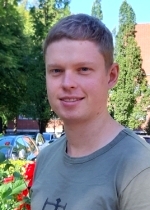
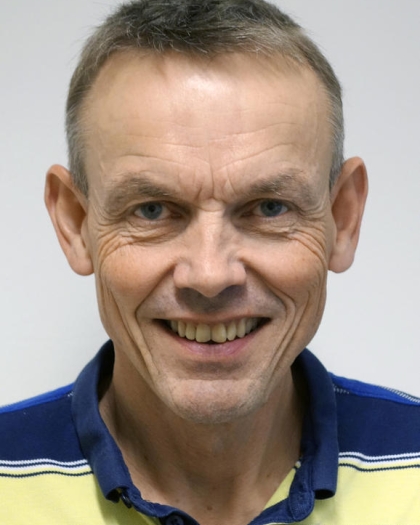
Yuriy Rogovchenko is a Professor in the Department of Mathematical Sciences at the University of Agder. His research spans differential equations, mathematical modeling, and education innovation, with applications in biology, social sciences, and engineering. Rogovchenko has contributed extensively to mathematics education through projects like PLATINUM (Erasmus+ Strategic Partnership) and CPEA-ST-2019/10067 (Eurasia project). PhD in differential equations (Institute of Mathematics, Kyiv, 1987) Regular Associate at Abdus Salam ICTP, Trieste (2004-2011) Editor for 11 international journals Referee for over 70 journals Research Interests: Qualitative theory of differential equations, perturbation methods, mathematical modeling in interdisciplinary contexts. He focuses on enhancing conceptual understanding through inquiry-based learning and nonstandard problems. Publications: Recent works include advancements in linear system observability, parameter identification methods, and educational studies on exact differential equations. His collaborations with Svitlana Rogovchenko and Matthias Pätzold highlight applications in engineering and biology. Awards: Sørlandet kompetansefonds research award (2016).
Elena Celledoni is a Professor in the Department of Mathematical Sciences at the Norwegian University of Science and Technology (NTNU). She has been employed at NTNU since 2004 and has held the position of professor since 2009. She is a member of the Differential Equations and Numerical Analysis Group at the Department of Mathematical Sciences and serves as its leader. Her educational background includes: Master's degree in Mathematics from the University of Trieste (1993) Ph.D. in Computational Mathematics from the University of Padua, Italy (1997) Elena Celledoni's research focuses on numerical analysis, particularly structure preserving algorithms for differential equations and geometric numerical integration. Her work bridges theoretical mathematics with practical computational methods, developing algorithms that maintain the geometric properties of the systems they approximate. She has made significant contributions to Lie group integrators, energy-preserving methods, and the application of these techniques to mechanical systems and shape analysis. In recent years, her research has expanded to include the intersection of numerical methods with machine learning, exploring how structure-preserving approaches can enhance neural networks and data-driven modeling. Her publications demonstrate a clear trend toward integrating traditional numerical analysis with modern machine learning techniques while maintaining a strong foundation in geometric integration and structure preservation. This interdisciplinary approach has led to innovations in neural ODEs, structure-preserving neural networks, and physics-informed machine learning models that respect the underlying mathematical structures of the systems they model. Elena Celledoni has received recognition for her work through the following honors: Member of the Royal Norwegian Society of Sciences and Letters Member of the European Consortium of Mathematics in Industry Council Member of the board of the International Council of Mathematics in Industry and Applications Editorial board member for SIAM Review, Journal of Computational Dynamics, Journal of Geometric Mechanics, Calcolo, and Networks and Heterogeneous Media As an advisor, she has mentored several students including Torbjørn Ringholm who completed his doctoral dissertation on 'Discrete gradient methods in image processing and partial differential equations on moving meshes.' Her research has been supported by various grants enabling her to lead projects on geometric numerical integration, collaborate internationally, and organize significant academic events such as the special semester at Isaac Newton Institute of MS in 2019 on 'Geometry, compatibility and structure preservation.' She leads the Differential Equations and Numerical Analysis Group at NTNU, which focuses on developing and analyzing numerical methods that preserve the geometric structure of differential equations. The group maintains active collaborations with researchers worldwide and has made substantial contributions to advancing the field of geometric numerical integration and its applications to real-world problems.
Morten Hovd is a Professor in the Department of Engineering Cybernetics at the Norwegian University of Science and Technology (NTNU). His research focuses on advanced control systems, model predictive control (MPC), power electronics, and optimization algorithms. He has contributed significantly to the development of robust control strategies for uncertain systems and has published extensively in leading journals and conferences in the field of control engineering. His research interests span several key areas in control systems engineering, including model predictive control, nonlinear control systems, optimization under uncertainty, and applications in power systems and energy efficiency. He is particularly known for his work on discrete-time bilinear systems, modular multilevel converters (MMCs), and the integration of machine learning techniques with control theory. His contributions address both theoretical advancements and practical implementations in industries such as energy and petroleum engineering. Hovd's recent publications highlight advancements in energy-efficient control systems, stochastic surrogate modeling for subsurface flows, and optimization algorithms tailored for complex engineering problems. His work often combines rigorous mathematical frameworks with real-world applications, such as improving the reliability of power systems and enhancing reservoir management through data-driven methods. He is actively involved in teaching courses such as TTK4210 (Advanced Control of Industrial Processes) and TK8118 (Mini-seminar in Cybernetics). His research has led to innovations in fault detection for power systems, energy-efficient building climate control, and robust MPC strategies for uncertain systems.
Nils Sponheim is an Associate Professor at Oslo Metropolitan University (OsloMet) in the Faculty of Technology, Art and Design, Department of Mechanical, Electrical and Chemical Engineering. His research focuses on ultrasound, medical imaging, and signal processing, with particular emphasis on contrast agents, Doppler imaging, and biomedical engineering applications. He has contributed extensively to ultrasound transducer design and problem-based learning pedagogy. Academic Affiliation: OsloMet – Faculty of Technology, Art and Design Research Areas: Ultrasound physics, contrast agent development, Doppler signal analysis, medical imaging instrumentation Education Focus: Problem-Based Learning (PBL) in engineering His publications span transient ultrasonic fields, synchronization techniques for contrast agents, and clinical applications in cardiology and oncology. Key subfields include pulse shaping, frequency resolution limitations, and transducer design. Sponheim's work bridges engineering and clinical diagnostics, with collaborations in cardiology and oncology imaging. Current projects focus on pulsed ultrasonic fields and practical measurement systems.
Henk Keers is an Associate Professor at the Department of Geosciences of the University of Bergen (UiB). His research focuses on geophysical modeling, seismology, and ocean acoustics, with contributions to seismic wave analysis, teleseismic tomography, and educational innovations in sedimentology. He actively collaborates on projects such as SEDucate, promoting active learning in geoscience education. Key research themes include: Body wave modeling for regional seismology Acoustic inversion techniques for ocean turbulence Tomographic imaging of crustal structures Development of efficient numerical methods for geophysical problems Recent work includes presentations at events like the AdriaArray Workshop (2023) and Nordic Seismology Seminar (2022) , addressing topics such as elastic isotropic modeling and waveform inversion. His research has been funded by institutions including the Research Council of Norway.
Elena Celledoni is a Professor of Mathematics at the Department of Mathematical Sciences, Norwegian University of Science and Technology (NTNU), where she has been employed since 2004. She leads the research group on differential equations and numerical analysis. Her academic background includes a Master’s degree (1993) and Ph.D. (1997) in mathematics from the Universities of Trieste and Padua, Italy, respectively. She has held postdoctoral positions at the University of Cambridge (UK), the Mathematical Sciences Research Institute (MSRI, Berkeley, CA), and NTNU. Her research focuses on numerical analysis, particularly structure-preserving algorithms for differential equations and geometric numerical integration. Recent work includes applications of neural networks in computational mechanics and data-driven modeling. She has co-authored over 100 peer-reviewed articles in journals such as Journal of Computational Physics , SIAM Journal on Scientific Computing , and Physica D . Her research interests span computational methods for dynamical systems, machine learning integration with numerical analysis, and geometric algorithms for shape analysis. She actively collaborates with international researchers, including contributions to conferences like NeurIPS and workshops on theoretical aspects of computational dynamics. Elena is a member of the editorial boards of Journal of Computational Dynamics and has organized workshops on structure-preserving integrators. Her work emphasizes preserving geometric properties in numerical methods, with applications in fluid dynamics, mechanical systems, and image processing.
Krishna Agarwal is a Professor in Ultrasound, Microwaves and Optics at the Department of Physics and Technology, UiT The Arctic University of Norway. His research spans multiple interdisciplinary fields including optical nanoscopy, quantitative phase imaging, and computational imaging techniques. He is an active member of the Ultrasound, Microwaves and Optics research group, with specialized focus on Optical Nanoscopy, and participates in research projects including VirtualStain and NanoAI. Professor Agarwal's research interests center on advanced imaging techniques, particularly in optical nanoscopy and quantitative phase imaging. His work bridges physics, computer science, and biology, developing novel computational methods for microscopy enhancement. His research focuses on applying deep learning to improve imaging resolution, developing frameworks for quantitative phase reconstruction, and creating new methodologies for 3D imaging of biological specimens. His work has significant applications in biomedical imaging, cellular analysis, and diagnostic technologies. Recent publications demonstrate a strong trend toward integrating artificial intelligence with traditional optical techniques, with increasing emphasis on computational approaches to solve longstanding challenges in microscopy. His research shows consistent progression from theoretical optical methods toward practical applications in biological imaging and medical diagnostics, with numerous publications in high-impact optics and imaging journals. Professor Agarwal teaches Optisk nanoskopi (Course FYS-3029) at UiT, contributing to advanced optics education. His research group appears to collaborate extensively with international researchers across multiple institutions, suggesting active grant funding and collaborative research efforts. Based at Teknologibygget Tromsø 3.058, Professor Agarwal leads research in the Optical Nanoscopy group, focusing on developing next-generation imaging technologies that combine optical physics with computational methods. His team appears to work at the intersection of physics, computer science, and biology, developing tools that push the boundaries of what's possible in cellular and sub-cellular imaging.
Joakim Sundnes is a Chief Research Scientist and Research Professor at the Department of Scientific Computing, Simula Research Laboratory. He specializes in computational physiology, cardiac biomechanics, and mathematical modeling of cardiovascular systems. Key Research Areas: Cardiac electromechanics, computational fluid dynamics in cardiology, uncertainty quantification in cardiac models, and mechano-electric feedback mechanisms Recent Trends: Focus on patient-specific modeling, left atrial flow dynamics, right ventricular mechanics in pulmonary hypertension, and personalized treatment simulations Scientific Contributions: Active participant in international conferences and editorial work. Co-author of multiple benchmark studies and educational texts on physiological modeling.
Hennes Alexander Hajduk is a Research Fellow at the University of Oslo's Section for Meteorology and Oceanography, part of the Department of Geosciences. He holds a PhD in Applied Mathematics from TU Dortmund University (2022). His work focuses on physical oceanography, numerical methods for fluid dynamics, and the influence of bottom topography on ocean flows. He develops property-preserving numerical schemes for conservation laws and shallow-water equations, with applications in geophysics and computational fluid dynamics. Education: PhD in Applied Mathematics (TU Dortmund University, 2022). Research Interests: Physical Oceanography: Investigating jet formation in stratified fluids and topographic effects on oceanic flows. Numerical Methods: Specializing in algebraic flux correction schemes, discontinuous Galerkin methods, and entropy-stable algorithms. Geophysical Modeling: Developing tools like FESTUNG for DG-based simulations in MATLAB/Octave. His publications emphasize stability, accuracy, and computational efficiency in simulating complex fluid systems. He collaborates on projects such as The Rough Ocean Research Group, advancing understanding of fluid dynamics in geophysical contexts. Affiliations: Section for Meteorology and Oceanography, University of Oslo Rough Ocean Research Group
Gaute Einevoll is a Professor in the Department of Physics at the Norwegian University of Life Sciences (NMBU), Faculty of Science and Technology. His academic work bridges the disciplines of physics and neuroscience, with a strong focus on computational and mathematical modeling of brain function. Position: Professor of Physics Institution: Norwegian University of Life Sciences (NMBU) Department: Department of Physics Research Focus: Brain Physics, Computational Neuroscience His research interests lie at the intersection of physics and neuroscience, particularly in understanding the biophysical mechanisms underlying neural signals such as local field potentials (LFPs), EEG, and spike trains. He develops and applies mathematical models to interpret experimental data from multielectrode arrays and laminar recordings. His work includes modeling cortical circuits, thalamocortical networks, and the transition from grid cells to place cells in spatial navigation. He also investigates the biophysical basis of signal propagation and filtering in neural tissue. The 15 most recent publications reflect a consistent focus on computational modeling of neural activity, with strong emphasis on biophysical realism, data analysis methods, and tool development. Articles span topics from single-neuron contributions to EEG, astrocytic ion dynamics, and large-scale neural recordings. Keywords across these works include Computational Neuroscience, Biophysics, Neural Modeling, and Electrophysiology, with subfields covering LFPs, spike-train analysis, cortical circuits, and network dynamics. A recurring theme is the development of analytical and computational tools to bridge experimental data with theoretical understanding. No scientific awards are mentioned in the provided text. Gaute Einevoll has supervised research and taught courses such as FYS388/488 Computational Neuroscience and FYS102 Thermal Physics and Electromagnetism. He has contributed to major collaborative efforts like the Human Brain Project. While specific grants are not listed, his extensive publication record in high-impact journals suggests sustained research funding. He has also authored educational materials, including a textbook on physics and an edited volume on natural sciences. He is associated with research groups focused on computational neuroscience and brain physics. He has developed the LFPy tool for simulating extracellular potentials, indicating leadership in neuroinformatics tool development. His team likely involves interdisciplinary collaboration between physicists, neuroscientists, and computational biologists working on modeling neural systems.
Ingve Simonsen is a Professor in the Department of Physics at the Norwegian University of Science and Technology (NTNU), specializing in surface physics and light scattering phenomena. His research focuses on the theoretical and experimental characterization of randomly rough surfaces, electromagnetic wave interactions, and nanoscale optical phenomena. Affiliated with NTNU's Faculty of Natural Sciences, he maintains an active research program with extensive collaborations across international institutions. His research interests center on surface physics and light scattering , particularly the inversion of scattering data for surface characterization, plasmonics in nanostructures, and statistical properties of rough surfaces. His work bridges theoretical modeling with experimental validation, applying techniques like Mueller matrix ellipsometry and reduced Rayleigh equations to solve complex problems in optical metrology and nanomaterial characterization. Analysis of his recent publications reveals strong emphasis on multi-scale surface topography , polarized light interactions with disordered systems, and nanophotonic applications . His research demonstrates consistent innovation in developing computational frameworks for surface characterization and exploring novel optical phenomena in two-dimensional materials. Professor Simonsen actively mentors students and researchers, evidenced by frequent co-authorship with junior researchers on complex projects. His collaborative approach spans disciplines including condensed matter physics, materials science, and biomedical optics, as seen in his work on graphene-based virus detection sensors.
Einar Iversen is a Professor at the Department of Earth Science, University of Bergen (UiB), affiliated with the Geophysics research group. His work focuses on advanced computational methods in geophysics, including seismic modeling, wave propagation in anisotropic media, and dynamic ray tracing. He has contributed to developments in numerical simulation techniques for multiphysics processes in porous media and higher-order Hamilton-Jacobi perturbation theories. Research interests emphasize applications of mathematical physics to geophysical problems, such as full-waveform inversion, traveltime extrapolation, and geometrical spreading analysis. His studies often involve collaborations with institutions like NTNU, Rice University, and international researchers in seismology and applied mathematics. Key contributions include advancing ray-centred coordinate systems for dynamic ray tracing, improving finite-difference modeling accuracy in discontinuous media, and reconstructing metrics from boundary diffraction data. His work bridges theoretical developments with practical seismic data processing techniques, contributing to reservoir simulation and imaging technologies. Funding includes grants from the Research Council of Norway (e.g., projects 294404, 267769). His research outputs span journals like Geophysical Journal International , Computer Methods in Applied Mechanics and Engineering , and Geophysical Prospecting , reflecting a strong focus on computational and theoretical geophysics.
Markus Grasmair is a Professor at the Department of Mathematical Sciences at the Norwegian University of Science and Technology (NTNU). His research focuses on inverse problems, mathematical methods in image processing, and optimization. He has contributed to nonsmooth variational methods and Lavrentiev regularization for ill-posed problems. Education: Habilitation in Mathematics (University of Vienna, 2011), PhD in Mathematics (University of Innsbruck, 2006), MSc in Mathematics (University of Innsbruck, 2003). Markus's research spans mathematical imaging, biomedical applications, and PDE-based modeling. He has developed regularization techniques for inverse problems, including Lavrentiev and L1 methods, and applied these to medical imaging and cervical cancer risk stratification. His work integrates sparse optimization, shape analysis, and data-driven approaches. Recent publications highlight interdisciplinary trends, combining inverse problems with medical imaging (X-ray calibration, cervical cancer prediction) and extending variational methods to PDEs, multiscale modeling, and graph-based systems. Key subfields include monotone operators, matrix factorization, and elastic shape analysis. He teaches courses in optimization and has held academic positions at the University of Vienna, Catholic University of Eichstätt-Ingolstadt, and University of Innsbruck. Contact: markus.grasmair@ntnu.no. Current Role: Professor (NTNU) Past Roles: Substitute Professor (Catholic University of Eichstätt-Ingolstadt, 2012-2013), Assistant Professor (University of Vienna, 2009-2012)
Ketil Hokstad serves as a Professor within the Department of Geosciences at the Norwegian University of Science and Technology (NTNU), where he contributes to advanced research in geophysical exploration and subsurface characterization. His academic role involves developing computational methodologies for interpreting complex geophysical datasets in energy resource assessment and environmental studies. Hokstad's research spans marine geophysics, geothermal systems, and geophysical inversion techniques with emphasis on thermal properties-seismic velocity relationships, crustal heat production modeling, and Arctic subsurface characterization. His work integrates gravity, magnetic, and electromagnetic data to solve geological problems in challenging environments like the Barents Sea, contributing significantly to sustainable energy exploration methodologies. Analysis of Hokstad's 2016-2018 publications reveals a concentrated focus on innovative marine electromagnetic inversion approaches and thermal-geophysical correlations. His collaborative research demonstrates consistent advancement in subsurface imaging techniques for Arctic regions, with strong interdisciplinary connections between theoretical geophysics, computational modeling, and practical energy resource management applications.
Yu Zhong is an Associate Professor in the Department of Physics and Technology at UiT The Arctic University of Norway. His research focuses on electromagnetic inverse problems, ultrasound, microwaves, and optics, with a particular emphasis on computational methods and imaging techniques. Research Interests Inverse problems in electromagnetics and wave propagation Integration of machine learning with inversion algorithms Multiscale methods for scattering analysis Applications in microwave, ultrasound, and optical imaging Publications Overview Recent work highlights advancements in nonlinear inverse scattering, combining traditional computational physics with learning-assisted approaches. Key contributions include methods for handling inhomogeneous media and trends in electromagnetic inversion algorithms. Contact Email: zhong.yu@uit.no