Ajit Rajwade is a Professor at the Department of Computer Science and Engineering , Indian Institute of Technology Bombay. His research spans Artificial Intelligence , Compressed Sensing , and Medical Imaging , with affiliations to the Centre for Machine Intelligence and Data Science and the Koita Centre for Digital Health . Education : PhD in Computer and Information Science and Engineering, University of Florida (2010) MSc in Computer Science, McGill University (2004) BTech in Computer Engineering, University of Pune (2002) His research interests focus on intelligent data acquisition, particularly in neural network analysis , graph signal processing , and medical imaging . He develops compressed sensing algorithms for inverse problems like tomography and MRI reconstruction , alongside applying group testing to pandemic response. Scientific awards include the Prof. S. P. Sukhatme Award (2024) and Departmental Teaching Excellence (2019). His publications demonstrate expertise in image restoration , noise modeling , and epidemiological algorithms . He has advised PhD students like Sabyasachi Ghosh and Jerin Geo James , with a focus on computationally efficient methods in medical imaging and machine learning .
Naren Naik is a Professor in the Department of Electrical Engineering at the Indian Institute of Technology (IIT) Kanpur, specializing in computational tomographic reconstructions and analysis for subsurface imaging and shape/target tracking. His educational background includes: PhD from the Indian Institute of Science (IISc) Bangalore in 2000 M.E. in Electronics and Communication Engineering from IISc Bangalore in 1992 B.Sc. from Bangalore in 1988 Professor Naik's research focuses on development and analysis of reconstruction algorithms for nonlinear tomography , with particular emphasis on shape-based and dynamic tomography, tracking and battlefield surveillance, and numerical solutions to partial differential equations in electromagnetics. His work spans multiple imaging modalities including subsurface imaging with Ground Penetrating Radar (GPR), fluorescence optics, electrical impedance tomography, and photoacoustic tomography. His research bridges theoretical mathematics with practical applications in electromagnetic imaging and target tracking systems, addressing complex inverse problems in computational imaging. His publication record shows a clear progression from electromagnetic tomography to advanced Kalman filtering techniques for target tracking applications. The most recent works focus on wireless sensor networks and maneuvering target tracking, demonstrating his ability to adapt theoretical frameworks to evolving technological contexts while maintaining mathematical rigor in solving inverse problems. His professional recognition includes: Invited presentation at the special session on advances in model based inversion at the 2011 IEEE AP-S International Symposium on Antennas and Propagation Professor Naik maintains an active research program with consistent publication output in high-impact journals and conferences. His work demonstrates strong interdisciplinary collaboration, particularly with researchers in electromagnetics, signal processing, and imaging sciences. His research has significant applications in defense technology (battlefield surveillance), medical imaging, and subsurface exploration systems, contributing to both theoretical advances and practical implementations in these fields. He is based in Office 303A ACES (Advanced Centre for Electronic Systems) at the Department of Electrical Engineering, IIT Kanpur, where he leads research activities in computational imaging and tomographic reconstruction.
Indian Institute of Technology Hyderabad (IITH)India
Professor Subrahmanya Sastry Challa is affiliated with the Department of Mathematics at Indian Institute of Technology Hyderabad. His academic journey includes a PhD from IIT Kanpur under Prof. P. C. Das, an M.Sc(Tech) from JNT University, and a B.Sc from Hindu College, Machilipatnam. Research Focus: He specializes in Wavelets and Sparse Optimization Theory Frame Theory and Data-driven Learning Methods Applications in Medical Imaging and Signal Processing His recent work explores sparsity-driven optimization techniques with applications in tomography, ECG signal recovery, and machine learning algorithms. Publications & Collaborations: He has contributed to advancements in compressive sensing, inverse problems, and numerical linear algebra through collaborations with researchers like Dr. Phanindra Jampana and Dr. Praveen Pradhan. Key journals include IEEE Transactions on Signal Processing , Inverse Problems , and Neurocomputing . Teaching: Courses taught include Wavelets & Applications, Compressive Sensing, Numerical Linear Algebra, and Mathematics Behind Machine Learning, emphasizing both theoretical and applied aspects. Administrative Roles: Served as Associate HoD/HoD (2010-2014), Chief Vigilance Officer (2015-2019), and participated in policy-drafting committees during IIT Hyderabad's formative years.
Malay K. Das is a Professor in the Department of Mechanical Engineering at the Indian Institute of Technology Kanpur . With a PhD from PennState, his career spans advanced research in thermofluid science, focusing on energy systems, carbon capture, and battery thermal management. B. E. (University of Calcutta), M. Tech. (IIT Kanpur), PhD (PennState) Teaches graduate-level courses like Machine Learning for Engineers and Mathematics for Engineers Leads two research laboratories: Energy Conservation and Storage Laboratory and Gas Hydrate Research Laboratory Research Interests: Computational Fluid Dynamics (CFD) applications in energy systems Physics-informed machine learning for thermofluid applications CO2 Sequestration and Methane Hydrate Reservoirs Thermal Management of Batteries and Fuel Cells Modeling Transport Phenomena in Porous Media Recent Publication Trends: His work focuses on energy conversion , gas hydrate dynamics , and advanced materials for electrochemical systems . Key areas include Lattice Boltzmann Methods , viscoelastic flow analysis , and nanofluid applications in carbon capture. Advising: Currently supervising PhD students Sourav Dhawan (CO2 Hydrates), Randeep Ravesh (Methane Recovery), Ayaj A. Ansari (Coalbed Methane), and Pawan K. Pandey (Cerebral Aneurysm Flow). Labs and Teams: Leads the Energy Conservation and Storage Laboratory (8 PhD graduates, 3 in progress) and Gas Hydrate Research Laboratory (2 PhD graduates, 1 in progress). Research teams work on fuel cells , CO2 sequestration , and graphene-based nanomaterials for energy applications.
Gurunath Gurrala serves as an Associate Professor in the Department of Electrical Engineering at the Indian Institute of Science (IISc), Bangalore. His research focuses on power systems dynamics, high-performance computing applications, and renewable energy integration. He maintains active collaborations with international institutions including Oak Ridge National Lab and Texas A&M University. His research interests center on Power Systems Analysis and Control , with specialization in High Performance Computing Applications, Nonlinear and Intelligent Control, Weak Grid Integration of Renewables, Microgrid Protection, and Smart Grid Stability. His work bridges theoretical control systems with practical power grid challenges, particularly for renewable-rich grids. His recent publications demonstrate a strong interdisciplinary trend, spanning power systems (35%), control theory (25%), renewable integration (20%), and emerging applications in biomedical engineering and environmental systems (20%). Key recurring themes include grid stability under high renewable penetration, advanced protection schemes for microgrids, and computational methods for power system analysis. IEEE Power and Energy Society (PES) Outstanding Engineer Award 2018 Young Engineer Award 2015, Indian National Academy Engineers Best Conference Paper, IEEE PES General Meeting 2015 Best Ph.D Thesis Award (Prof.D.J.Badkas Medal) 2010 Elevated to Senior Member IEEE (2016) Professor Gurrala has secured competitive research funding including the Young Scientist Grant from DST (2015) and International Travel Support from SERB (2017). He actively mentors students through PhD and Master's programs while teaching advanced courses including Power System Dynamics and Control (E4 231), Computer Control of Power Systems (E4 233), and Selected Topics in Integrated Power Systems (E4 237). His research group collaborates with power utilities and international research labs on grid modernization challenges.
Muthuvel Arigovindan serves as an Associate Professor at the Indian Institute of Science (IISc), Bangalore, specializing in advanced imaging techniques and computational methods. His work bridges theoretical mathematics with practical biomedical applications. Educational Background: Ph.D. from École Polytechnique Fédérale de Lausanne (EPFL), Switzerland (2005) M.Sc. (Engineering) from Indian Institute of Science, Bangalore (1999) B.Tech from Pondicherry Engineering College (1995) Research Focus: Dr. Arigovindan's pioneering work addresses multidimensional image restoration and biomedical image reconstruction , particularly tackling inverse problems in microscopy . His methodologies enhance resolution in medical imaging systems through sophisticated computational algorithms, contributing significantly to quantitative biomedical diagnostics and tomographic imaging. Professional Recognition: HFSP Cross Disciplinary Fellowship (2007-2009) for interdisciplinary neuroscience research EPFL Best Doctoral Thesis Award (2005) recognizing exceptional contributions to imaging science Academic Contributions: He teaches advanced courses including Computer Aided Tomographic Imaging (E9 243), Linear and Nonlinear Optimization (E1 251), and specialized Biomedical Imaging (E9 285), training next-generation engineers in cutting-edge reconstruction techniques. His current laboratory work focuses on real-time microscopy enhancement systems.
Indian Institute of Technology Hyderabad (IITH)India
Phanindra Varma Jampana is an Associate Professor in the Department of Chemical Engineering at Indian Institute of Technology Hyderabad, India. His research focuses on compressed sensing, system identification, and stochastic differential equations, with applications to industrial process control and tomography. Education: Ph.D. in Process Control, University of Alberta (2004-2010) B.Tech. in Chemical Engineering, IIT Madras (2000-2004) His work spans electrical resistance tomography, image processing, and control systems optimization, with key contributions to particle filtering and homotopy optimization. Recent publications highlight applications in hydrocyclone air-core measurements and sparse-view tomography. Contact: pjampana@che.iith.ac.in
Chandra Sekhar Seelamantula is a Professor in the Department of Electrical Communication Engineering at the Indian Institute of Science (IISc), Bangalore, leading the SPECTRUM LAB. His research spans signal and image processing, computational imaging, and AI applications in healthcare, with expertise in Speech Processing, Biomedical Image Processing, Compressed Sensing, and Neuromorphic Imaging. He teaches core courses including Digital Signal Processing and Time-Frequency Analysis. His educational background includes: Postdoctoral fellow, Ecole polytechnique fédérale de Lausanne (2006-2009) Ph.D., Indian Institute of Science, Bangalore (2005) B.E., Osmania University College of Engineering, Hyderabad (1999) Professor Seelamantula's work focuses on advancing Sampling Theory and solving Inverse Problems in Computational Imaging through AI-driven approaches. His research bridges theoretical foundations with practical applications in Digital Healthcare, particularly in Biomedical Image Analysis and Neural Signal Processing, contributing to innovations in medical diagnostics and assistive technologies. His scientific awards and honors include: Outstanding Editorial Board Member Award 2022, IEEE Transactions on Image Processing Digital Health prize at NBEC 2018 Prof. Priti Shankar Teaching Award 2013 Intellectual Ventures Invention Awards (2010, 2011) IBM India Research Labs Research Student Fellowship Award (2001-2004) Multiple IEEE student paper contest prizes Undergraduate honors including Srinivasa Ramanujam Gold Medal (1997-1999) He has advised graduate students and secured research support through prestigious fellowships. His professional service includes leadership roles in IEEE Signal Processing Society chapters and technical committees. He directs the SPECTRUM LAB at IISc, which pioneers research in computational imaging, neuromorphic systems, and AI-driven healthcare solutions.
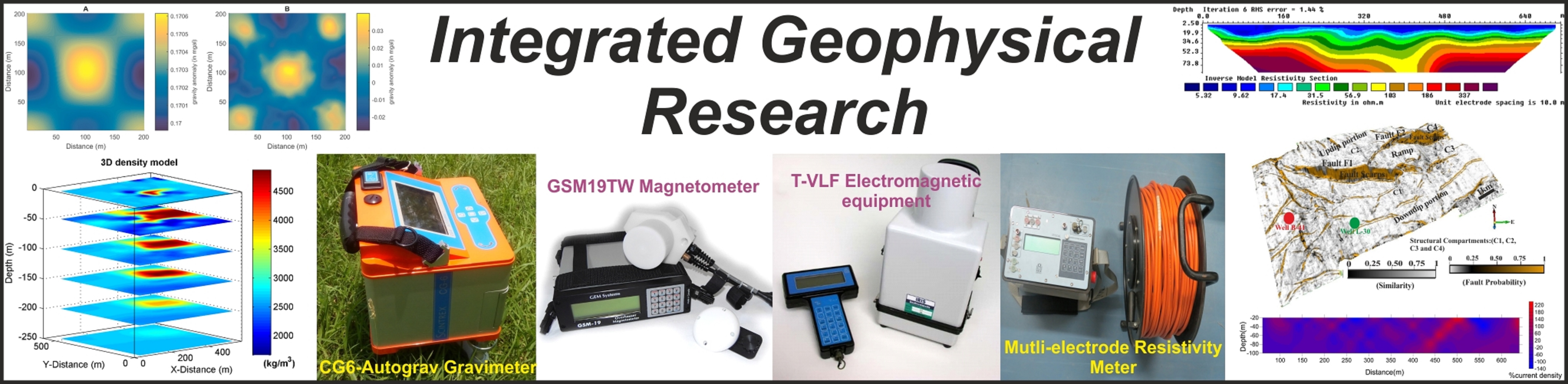
Animesh Mandal serves as an Associate Professor in the Department of Earth Sciences at Indian Institute of Technology Kanpur (IITK) , where he has been a faculty member since April 2015. His academic journey includes a B.Sc. in Physics from University of Calcutta (2005), M.Sc. in Physics from IIT Delhi (2007), and Ph.D. in Geophysics from IIT Kharagpur (2013). Prior to joining IITK, he worked as a Project Scientist at the National Geophysical Research Institute (NGRI). Research Interests : Dr. Mandal specializes in near-surface geophysical studies , geophysical data enhancement , and subsurface modeling . His work focuses on integrated geophysical approaches to understand shallow crustal configuration and delineate natural resources, utilizing gravimeter, magnetometer, electrical, and EM equipment. He has pioneered research in machine learning-assisted interpretation of geophysical data, particularly in seismic impedance inversion, reservoir characterization, and geothermal system analysis. His recent publications demonstrate expertise in applying deep learning techniques to solve complex geophysical problems. Research Trends : Analysis of his recent publications reveals a strong focus on geothermal energy systems , particularly non-volcanic hot springs in the Eastern Ghats Mobile Belt. His work combines gravity-magnetic studies with advanced computational methods to understand crustal configuration and thermal structure. Another major trend involves machine learning applications in seismic data processing, where he develops novel deep learning architectures for impedance inversion and reservoir characterization. His research bridges traditional geophysical methods with cutting-edge AI techniques, creating innovative approaches to subsurface imaging. Scientific Awards : Supervised students who received Prime Minister's Research Fellowship (PMRF) Advisees awarded FARE Fellowship, ONGC-IGU Best Poster Presentation Award, and EAGE PACE grants Students received FULL sponsorship to attend major international conferences like IMAGE 2024 Mentored students who secured postdoctoral positions at prestigious institutions including KAUST and University College Dublin Academic Leadership : Dr. Mandal has successfully supervised multiple Ph.D. and M.Tech. students to completion, with recent graduates securing positions at institutions like University College Dublin, Queen's University, and industry roles at companies including Verisk Analytics and ONGC. His research group maintains active collaborations with international institutions and regularly presents at major geoscience conferences including EAGE, SEG, and AOGS. The group has secured competitive research funding that supports field studies, laboratory work, and student training in advanced geophysical techniques.
Indian Institute of Technology Hyderabad (IITH)India
Prabhat Kumar is an Assistant Professor in the Department of Mechanical & Aerospace Engineering at the Indian Institute of Technology Hyderabad. He holds a Ph.D. from IIT Kanpur and is actively engaged in research areas such as Topology Optimization, Structural Optimization, and Computational Contact Mechanics. Research Interests: Topology Optimization, Structural Optimization, Compliant Mechanisms, Inverse Problems, Computational Contact Mechanics, Additive Manufacturing, Multiscale Modelling, AI/ML Design, Innovation Design Office Address: Room C-610, Academic Block C, Indian Institute of Technology Hyderabad, Kandi-502284, Sangareddy, Telangana, India Contact: Office Phone: (040) 2301 - 6681