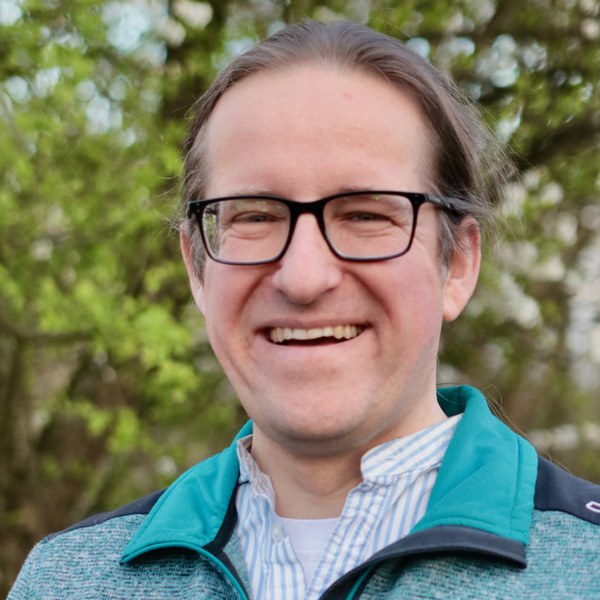
William Holderbaum is a Professor at the Department of Electrical Engineering, School of Engineering, University of Reading. His research spans control systems, energy management, functional electrical stimulation, robotics, and wireless power transfer, with over 95 publications since 2002. Research Interests: His work integrates theoretical control theory with practical applications in renewable energy, biomedical engineering, and smart systems. He has made significant contributions to microgrid protection, energy storage control, optimal power management for electric cranes, and FES for paraplegia rehabilitation. His recent work explores soft robotics using electroactive polymers and intelligent sensing for environmental and health monitoring. Publication Trends: His recent articles (2021–2025) reflect a multidisciplinary focus, combining engineering, materials science, and healthcare. Key themes include sustainable energy systems, intelligent control, wearable sensors, and novel computing paradigms using smart materials. Scientific Awards: No awards mentioned in the provided text. Advising and Grants: He has collaborated extensively with researchers such as F. Alasali, T. Yunusov, M. Alkowatly, and V. Becerra, suggesting a strong mentoring role. His work on energy storage, smart grids, and FES implies involvement in funded research projects, though specific grants are not listed. Labs and Teams: He is part of research teams focused on control systems and energy at the University of Reading, collaborating with the group led by B. Potter and V. Becerra. His work with biomedical applications suggests ties to interdisciplinary health-tech initiatives.
Dr. Alice Allen is a Project Leader at the Max Planck Institute of Polymer Research , specializing in machine learning methods for molecular simulations. She holds a PhD in Physics from the University of Cambridge and completed her undergraduate degree in Physics at Imperial College London. Allen previously worked as a research associate at the University of Cambridge and the University of Luxembourg, followed by a postdoctoral position at Los Alamos National Laboratory. Education: BSc in Physics (Imperial College London) PhD in Physics (University of Cambridge) Her research focuses on developing machine learning models for interatomic potentials , enabling accurate and efficient simulations of reactive processes, biological molecules, and material properties. She has published extensively on topics such as permutationally invariant polynomials, data-driven force fields, and meta-learning approaches for foundation models in interatomic potential development. Recent publications highlight her work on integrating experimental data into machine learning potentials, enhancing the transferability of empirical valence bonds, and creating meta-learning frameworks for foundational interatomic models. These studies span applications in molecular dynamics , thermodynamics , and multi-scale simulations . Research Themes: Machine Learning for Atomistic Simulations Reactive Process Modeling Transferable Force Fields Interpretable Models for Material Properties Collaborative Meta-Learning Frameworks Alice Allen leads the Gräter Groups at the institute, where her team advances predictive methodologies for chemical reactions and material science applications. No specific scientific awards or student advisees are mentioned in the provided text.
Dan Steinberg is a senior research scientist and team leader of the Decisions & Statistical Learning team at CSIRO Data61 in Canberra, Australia. His expertise lies in probabilistic machine learning, variational inference, Bayesian deep learning, causal inference, and their application to domains spanning synthetic biology, geospatial analytics, and algorithmic fairness. Education PhD in Computer Vision / Machine Learning (2013) – University of Sydney, Australian Centre for Field Robotics Bachelor of Engineering (Mechatronics, First-Class Honours) – University of Sydney (2008) Bachelor of Commerce (Finance) – University of Sydney (2008) Research Interests Steinberg’s core research agenda revolves around building scalable probabilistic models that can learn efficiently from limited or noisy data and provide principled uncertainty estimates. Key themes include: Variational Inference & Bayesian Deep Learning: developing lightweight yet powerful algorithms for approximate posterior inference in complex models (e.g., Aboleth, Revrand). Active Learning & Experimental Design: creating methods that decide which experiments or measurements will maximise information gain, with recent focus on in-silico protein engineering via Variational Search Distributions (VSD). Causal Inference: leveraging machine-learning tools to perform robust observational causal studies for evidence-based policy, including work on youth well-being and academic outcomes. Algorithmic Fairness: translating normative notions of equity into quantifiable objectives for regression-based decision systems. Large-scale Spatial Analytics: Landshark—an open-source TensorFlow toolkit for supervised learning on massive geospatial raster datasets. Notable Software & Tools Aboleth: A minimal-overhead TensorFlow framework for Bayesian deep learning. Landshark: Command-line tools for large-scale spatial inference. Revrand: Scalable Bayesian generalised linear models with non-conjugate likelihoods. libcluster: Extensible C++ library for hierarchical Bayesian clustering. Scientific Awards Oral Presentation Award – ICML 2025 Workshop on Scaling up Intervention Models (SIMS) Oral Presentation Award – NeurIPS 2024 Workshop on Bayesian Decision-making and Uncertainty (BDU) Oral Presentation Award – NeurIPS 2023 Workshop on Adaptive Experimental Design and Active Learning Spotlight Paper Award – NeurIPS 2014 (Extended and Unscented Gaussian Processes) Research Team & Collaborations As Team Leader – Decisions & Statistical Learning at CSIRO Data61, Steinberg directs a multi-disciplinary group that partners with government agencies (e.g., Jobs and Skills Australia, Australian Institute of Health and Welfare) and industry to deploy machine-learning solutions at scale. He has previously held roles as Principal Researcher at Gradient Institute (2019-2023), Senior Research Engineer at CSIRO Data61 (2016-2019), Researcher at NICTA (2013-2016), and Research Associate at the University of Sydney (2012-2013).
Lukas Arnold is a Professor and Head of the Fire Dynamics Division at Forschungszentrum Jülich GmbH, affiliated with the Institute for Advanced Simulation (IAS) and its Civil Safety Research Group (IAS-7). He holds a chair in Computational Civil Engineering at the University of Wuppertal and leads major research initiatives in fire safety science using computational methods. Research Focus: Fire Dynamics Simulation Academic Rank: Professor Key Collaborations: University of Wuppertal, DFG, BMBF His research spans fire dynamics simulation, visibility modeling in smoke environments, and flame spread prediction. He develops advanced numerical methods like CFD-based models and inverse modeling techniques for pyrolysis kinetics, smoke propagation, and material decomposition analysis. His work integrates experimental data from real-scale fires with computational tools to improve evacuation safety and risk assessment. Recent publications highlight his expertise in smoke visibility, PMMA pyrolysis, and GPU-accelerated fire simulations. He supervises PhD students in projects involving TGA experiments, multi-scale modeling, and emergency management systems. Arnold's work has been supported by third-party grants from BMBF, DFG, and State NRW, focusing on AI-driven fire modeling, high-performance computing, and disaster resilience. He organizes bi-annual summer schools on fire modeling and contributes to open-access scientific resources.
Prof. Simon Adrian holds the Chair of Theoretical Electrical Engineering at the Institute of General Electrical Engineering, University of Rostock, Germany. His research focuses on computational electromagnetics with critical applications in antenna design, electromagnetic compatibility, and medical technology. He serves as Associate Editor for the IEEE Transactions on Antennas and Propagation and contributes to the IEEE Antennas and Propagation Society Education Committee, demonstrating significant academic leadership in the global electromagnetics community. His primary research addresses low-frequency instability challenges in electromagnetic integral equations through innovative numerical techniques. Key areas include Calderón preconditioners, quasi-Helmholtz projectors, B-spline discretizations, and adaptive cross approximation methods. These approaches enable robust simulations across diverse applications from radar systems and antenna design to biomedical problems like deep brain stimulation and electroencephalography. Recent work emphasizes broadband stability and efficient solvers for multiply-connected geometries. Analysis of Prof. Adrian's publication trends (2023-2025) reveals a concentrated effort on overcoming fundamental limitations in electromagnetic modeling. His work consistently targets low-frequency regimes where traditional methods fail, developing mathematically rigorous stabilization techniques while expanding into biomedical applications. The integration of isogeometric analysis with specialized discretization strategies represents a cutting-edge direction in computational electromagnetics. Professional engagement includes active membership in the Institute of Electrical and Electronics Engineers (IEEE), IEEE Antennas and Propagation Society, and Union Radio-Scientifique Internationale (URSI), reflecting his commitment to advancing the field through collaborative research and scholarly communication.
Chen Pan is an Assistant Professor in the Department of Electrical and Computer Engineering at the University of Texas at San Antonio's Klesse College of Engineering and Integrated Design. His research focuses on energy-harvesting embedded systems, low-power computing, and IoT network optimization through machine learning techniques. Ph.D. from University of Pittsburgh Specializes in transient computing for batteryless devices Develops reinforcement learning solutions for UAV-assisted IoT systems Chen's recent publications emphasize energy-aware scheduling, non-volatile memory optimization, and sustainable communication protocols. His work intersects spatiotemporal modeling, fault tolerance, and resource-constrained AI execution across heterogeneous architectures.
Jiajia Sun is an Associate Professor of Geophysics in the Department of Earth and Atmospheric Sciences at the University of Houston. Her research focuses on advancing subsurface imaging, uncertainty quantification, and mineral exploration through interdisciplinary approaches combining geophysics, machine learning, and computer vision. Education : PhD in Geophysics (2015, Colorado School of Mines); BS in Geophysics (2008, China University of Geosciences, Wuhan). Research Interests : Jiajia specializes in deep learning for geophysical inversion, multi-physics data integration, and probabilistic geological modeling. Her work leverages computational resources like GPUs and clusters to solve inverse problems and tackle magnetic remanence challenges. Recent Publications : Her research includes applying Bayesian frameworks, deep generative models, and joint inversion algorithms to airborne geophysics for critical mineral mapping and hydrogen reservoir detection. She emphasizes open-source tools like SimPEG for reproducibility. Awards : J. Clarence Karcher Award (SEG) Advising & Collaborations : She mentors PhD students in geophysics and collaborates with institutions like Amazon’s Generative AI Innovation Center, Stanford University, and University College Dublin. Her team also tests drones and magnetometers at the UH Coastal Center.
Mark Edward Borsuk is the James L. and Elizabeth M. Vincent Professor in the Department of Civil and Environmental Engineering at Duke University’s Pratt School of Engineering. He leads the Borsuk Lab, which specializes in interdisciplinary modeling of coupled social, environmental, and technical systems. His research spans climate change, ecosystem services, water resources, land use, and environmental health, using advanced methods such as Bayesian networks, agent-based modeling, game theory, and risk analysis. He co-directs the Center on Risk within Duke’s Science & Society Initiative and is an Associate of the Duke Initiative for Science & Society. B.S.E. in Civil Engineering and Operations Research, Princeton University, 1995 M.S. in Statistics and Decision Sciences, Duke University, 2001 Ph.D. in Environmental Science and Policy, Duke University, 2001 Postdoctoral Training, EAWAG (Swiss Federal Institute for Aquatic Science and Technology), Systems Analysis, Integrated Assessment, and Modelling (SIAM) Dr. Borsuk’s research focuses on integrating scientific data across disciplines to support decision-making under uncertainty. He is a leading expert in Bayesian network modeling applied to environmental and human health regulation. His work combines risk analysis, game theory, and agent-based modeling to assess climate change and environmental policy. He has developed novel frameworks for valuing ecosystem services, modeling landowner behavior, and assessing geoengineering risks. His lab emphasizes interdisciplinary collaboration, stakeholder engagement, and quantitative decision support. His recent publications reflect a strong trend toward integrating machine learning, causal inference, and spatial modeling into environmental assessment. Topics include solar radiation modification governance, land-use policy forecasting, invasive species impacts, and urban green space valuation. His work increasingly leverages big data (e.g., Zillow, remote sensing) and probabilistic programming to enhance model transparency and predictive accuracy. Chauncey Starr Distinguished Young Risk Analyst Award, Society for Risk Analysis, 2013 Early Career Research Excellence Award, International Environmental Modelling and Software Society, 2008 Earl I. Brown Outstanding Civil Engineering Faculty Award, Duke University, 2018 Best Paper, Integrated Environmental Assessment and Management Journal, 2012 Excellence in Mentoring Award, Dartmouth College Postdoctoral Association, 2010 Best Paper in Integrated Modelling, Environmental Modelling & Software Journal, 2008 Dr. Borsuk has been a principal investigator on grants from NSF, EPA, NIH, NIEHS, and USFS. He mentors a diverse group of graduate students and postdoctoral fellows, including Kim Bourne, Jon Holt, Chris Krapu, and Ryan Calder. He teaches courses such as Risk and Resilience Engineering, Engineering Economics, and Independent Study in Civil and Environmental Engineering. He is actively involved in advising and curriculum development through the Bass Connections Energy & Environment Research Team. He leads the Borsuk Lab, a dynamic research group focused on systems, risk, and decision analysis. The lab is a key contributor to the Bridge Collaborative—a partnership between Duke, The Nature Conservancy, IFPRI, and PATH—where it develops quantitative models to support cross-sectoral decision-making. The lab also investigates landowner decision-making in New England forests and the governance of solar geoengineering, using agent-based and deliberative modeling approaches.
Dr. Da Chen is an Honorary Research Fellow at the School of Civil Engineering, The University of Queensland. His research focuses on composite structures, material mechanics, and structural analysis with applications in mechanical and civil engineering. Key Research Areas: Functionally graded porous materials, graphene reinforcement, multiscale modeling, thermal buckling, vibration analysis, and additive manufacturing. Publications: 28 journal articles, 4 book chapters, and 4 conference papers since 2014. Recent work includes machine learning applications for structural analysis and inverse design of porous systems. Email: d.chen@uq.edu.au
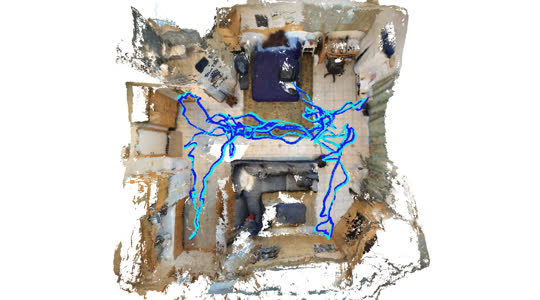
Ganlin Zhang is a PhD researcher at the Technical University of Munich (TUM) within the Computer Vision Group (Informatics 9). His work focuses on 3D Vision , Visual SLAM , and 3D Reconstruction using deep learning and geometric processing techniques. Key research areas: 3D Vision, Visual SLAM, Structure from Motion, 3D Reconstruction, Deep Learning Recent publications highlight advancements in RGB-only SLAM systems with implicit encodings, dynamic scene bundle adjustment, and robust rotation averaging methods. His work bridges classical geometry processing with modern AI approaches for spatial AI applications. He collaborates with leading researchers in the field, including Luc Van Gool and Michael R. Oswald , and contributes to cutting-edge developments in computer vision through active participation in conferences like CVPR and ICCV . The Computer Vision Group at TUM provides a vibrant research environment for his work, with access to state-of-the-art facilities at Boltzmannstrasse 3, Garching, Germany.
Richard E. Wendell is a Professor of Business Administration at the Joseph M. Katz Graduate School of Business, University of Pittsburgh. His academic focus spans Management Science , Decision Analytics , and Data Envelopment Analysis (DEA) , with expertise in Sensitivity Analysis , Facility Location , and Project Management . He has held faculty positions at Ohio State University, Carnegie-Mellon University, and Rensselaer Polytechnic Institute, alongside research fellowships at institutions like the Center for Operations Research and Econometrics in Belgium and Argonne National Laboratory. Education : PhD in Operations Research (Northwestern University, 1971), MS in Industrial Engineering (University of Pittsburgh, 1966), BS in Industrial Engineering (University of Pittsburgh, 1965) His research, supported by National Science Foundation grants, includes over 60 papers in journals such as Management Science , Operations Research , and Mathematical Programming . Key publication trends include DEA methodology , linear programming sensitivity , and global optimization techniques . Scientific Awards : Distinguished Professor award (Executive MBA), University of Pittsburgh Faculty Honor Roll, multiple Katz Excellence-in-Teaching awards Wendell has advised numerous academic and industry projects, with consulting engagements at companies like Johnson Matthey Inc., Promistar Financial Corporation, and Duquesne Light. His work bridges theoretical advancements in operations research with practical applications in business analytics and risk management. Outside academia, he enjoys traveling, making wine, working out, and dancing.
Dr. Andrés Modesto Alonso is an Associate Professor in the Department of Statistics at Universidad Carlos III de Madrid, affiliated with the Energy Analytics research group and Flores de Lemus Institute. His work spans computer science, economics, and statistics through advanced time series analysis and energy forecasting methodologies. Primary affiliation: Department of Statistics, UC3M Research groups: Energy Analytics, Flores de Lemus Institute His research focuses on time series analysis , energy forecasting , and statistical clustering with applications in electricity markets, smart grids, and environmental data. Recent publications emphasize deep learning models for energy prediction, dynamic factor models, and market-based distance metrics. Scientific output trends show 15 recent articles (2018-2024) covering topics like: Electricity market price forecasting Smart grid optimization through clustering Adaptive control charts for industrial processes Precision matrix estimation in high-dimensional statistics Extreme value analysis for environmental monitoring Dr. Alonso has supervised multiple theses on time series modeling and classification techniques, while collaborating on grants related to stochastic optimization and responsible AI applications in economic forecasting.
Leon Bungert is a Professor of Mathematics of Machine Learning at the University of Würzburg, working in applied analysis and numerics with a particular focus on data science and machine learning. His research investigates PDEs and variational models on graphs, adversarial robustness of machine learning, variational regularization, and nonlinear optimization. Dr. Bungert serves as a guest editor for the European Journal of Applied Mathematics, an associate editor for Advances in Continuous and Discrete Models: Theory and Applications, and is a member of the program committee at SSVM 2025. He is also an ELLIS member and actively organizes conferences and workshops, including "MIA'25" at IHP in Paris (January 13-15, 2025), "Synergies of Machine Learning and Numerics" in Osaka (March 11-13, 2025), and "Mathematical Analysis of Adversarial Machine Learning" in Oaxaca (August 17-22, 2025). Research Interests Dr. Bungert's primary research areas include: PDEs on graphs Adversarial robustness in machine learning Inverse problems Optimization Variational problems in L-infinity Nonlinear eigenvalue problems Image reconstruction with structural priors His work bridges theoretical mathematics with practical applications in machine learning, particularly focusing on the mathematical foundations of deep learning and developing robust algorithms that can withstand adversarial attacks. He has made significant contributions to understanding the connections between partial differential equations and machine learning algorithms. Research Trends Analysis of Dr. Bungert's recent publications reveals a strong focus on the intersection of machine learning and mathematical analysis. A key theme is the application of variational methods and partial differential equations to machine learning problems, particularly in understanding and improving the robustness of neural networks against adversarial examples. His work on Lipschitz learning on graphs has established important theoretical foundations for graph-based semi-supervised learning. Additionally, his research on the infinity Laplacian and p-Laplacian equations provides deep insights into the mathematical structure of machine learning algorithms. The development of Bregman learning frameworks for sparse neural networks represents a significant contribution to efficient deep learning model training. Professional Activities Dr. Bungert is actively involved in the academic community through editorial roles and conference organization. His current professional activities include: Guest editor for the European Journal of Applied Mathematics Associate editor for Advances in Continuous and Discrete Models: Theory and Applications Member of the program committee at SSVM 2025 ELLIS member Co-organizer of multiple international conferences and workshops Technical Contributions Dr. Bungert has developed several open-source software packages that implement his theoretical contributions, including: Code for convergence rates of Lipschitz learning on graphs A Bregman training framework for sparse neural networks CLIP: Cheap Lipschitz Training of Neural Networks Nonlinear Power Method for Proximal Operators and Neural Networks Robust Image Reconstruction with Misaligned Structural Information These implementations are primarily in Python and MATLAB, demonstrating his commitment to making theoretical advances accessible for practical applications.
Raji Susan Mathew is an Assistant Professor at the School of Data Science, Indian Institute of Science Education and Research Thiruvananthapuram (IISER TVM). Her research focuses on regularization techniques, compressed sensing, and deep learning for medical image reconstruction, particularly in magnetic resonance imaging (MRI) and quantitative susceptibility mapping (QSM). Current affiliation: School of Data Science, IISER TVM Prior appointments: C. V. Raman Postdoctoral Fellow and Research Associate III at Indian Institute of Science, Bangalore Education: Ph.D. in MR image reconstruction from IIIT-Kerala, M.Tech in Signal Processing from Cochin University of Science and Technology, B.Tech in Electronics and Communication Engineering from Mahatma Gandhi University Her recent publications highlight expertise in AI-driven medical imaging solutions, including QSM optimization , vision transformers for nerve tracking , and unsupervised learning for corrosion analysis . She has also contributed to book chapters on parallel MRI theory and regularization frameworks. Scientific awards include the C. V. Raman Postdoctoral Fellowship and Maulana Azad National Fellowship , supporting her work on efficient algorithms for medical image processing. Dr. Mathew advises Ph.D. and BS-MS students on topics like spiking neural networks in imaging , uncertainty-aware QSM reconstruction , and lightweight AI models for disease classification . She actively reviews for journals like IEEE Transactions on Medical Imaging and conferences like ISBI and ICASSP.
Daniel Cameron Campbell is a Researcher at the Department of Mathematical Analysis , Faculty of Mathematics and Physics , Charles University , Prague. He teaches advanced courses on Sobolev spaces and calculus, focusing on nonlinear elasticity and geometric function theory. Research Interests: Ball-Evan's approximation, mappings of finite distortion, nonlinear elasticity, Sobolev embeddings Teaching: Derivatives and Integrals for Advanced Levels (NMMA437), Mathematical Analysis I (NOFY151) Research Trends: His recent work addresses approximation of Sobolev and BV homeomorphisms, focusing on diffeomorphic and piecewise affine methods. He explores topological constraints, Jacobian sign preservation, and applications to nonlinear elasticity and metric measure spaces. Scientific Contributions: Principal Investigator for GAČR grant 20-19018Y (2020–2022) on analytical tools for variational problems. Organized workshops: GeoCa 20 (2020), Per Partes (2021), GeoCa 22 (2022). Contact: Email daniel.campbell@mff.cuni.cz or campbell@karlin.mff.cuni.cz .