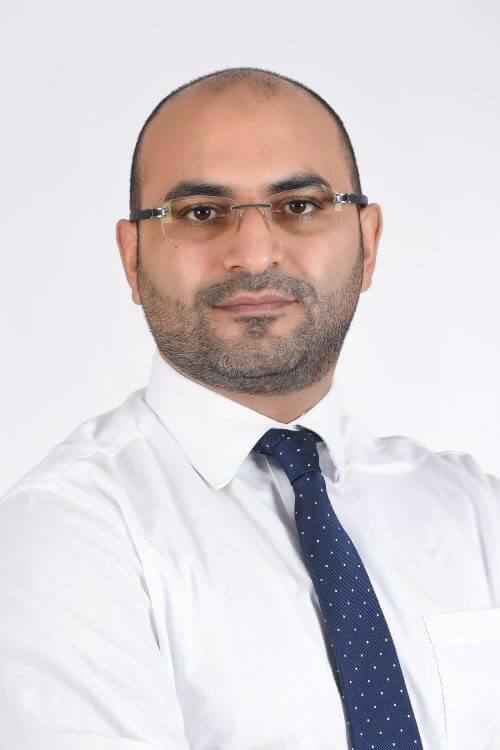
Dr. Mohamed Kamel Riahi is an Associate Professor in the Department of Mathematics at Khalifa University, specializing in computational mathematics, artificial intelligence, and quantum computing. His research focuses on high-performance computational solutions for complex systems in nuclear energy, fluid dynamics, and electromagnetism, with a particular emphasis on integrating advanced mathematical models and quantum-inspired algorithms. Education: MSc in Applied Mathematics from Paris Dauphine University; PhD in Mathematical Sciences from Pierre and Marie Curie University. Research Interests: Quantum Computing and Physics-Informed Machine Learning Computational Algorithms for High-Performance Computing Optimal Control of Partial Differential Equation (PDE)-Governed Systems Domain Decomposition & Parallel Time Methods Tensor Computations and Reduced Order Modeling Nonlinear Numerical Optimization Dr. Riahi actively mentors PhD and MSc students in areas like seismic wave modeling and AI-driven optimization, while serving on editorial boards for journals such as Applied Numerical Mathematics and PLOS ONE . His recent grant projects include quantum-inspired algorithms for fluid mechanics and reactor physics, funded by collaborations with ENTC-TII-ENEC. Scientific Awards: Inverse Problems Outstanding Reviewer Award Affiliated Centers: Emirates Nuclear Technology Center
Jarmo Malinen is a Lecturer at the Department of Mathematics and Systems Analysis, Aalto University , School of Science. He leads the speech modeling group and participates in the Comspeech consortium, collaborating with institutions like the University of Helsinki and Turku University Hospital. His research spans mathematical systems theory, numerical analysis, and computational speech science, focusing on MRI-based vocal tract modeling, glottal flow dynamics, and speech acoustics. He develops physical models for speech production and contributes to educational technologies like the STACK system. Key publication trends include applications of finite element methods to vowel formants, inverse filtering for glottal flow estimation, and eigenvalue problem solutions for coupled systems. His work intersects applied mathematics, biomedical imaging, and speech physiology. Malinen advises master's and PhD students in mathematical modeling and speech research, though specific student names are not listed in the provided texts. He has developed tools for MRI data post-processing and vocal tract resonance optimization.
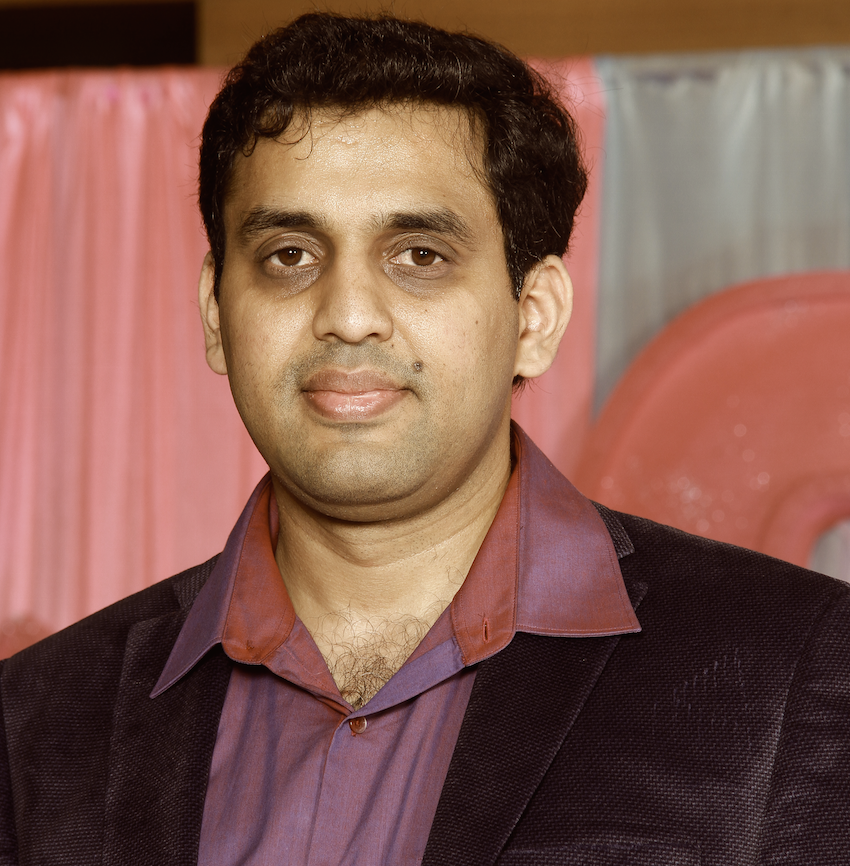
Pradeep Reddy VARAKANTHAM is a Professor of Computer Science and Director of CARE.AI Lab at the School of Computing and Information Systems, Singapore Management University (SMU) . He serves on the AISingapore Scientific Committee, acts as a visiting faculty at Harvard Teamcore Research Group, and collaborates with Google's AI for Social Good team. His research focuses on collaborative and trustworthy intelligent agent systems , particularly trustworthy Reinforcement Learning methods. Applications span urban environments including Transportation, Emergency Response, Entertainment, Energy, and Security , with contributions at the intersection of Artificial Intelligence, Operations Research, Machine Learning, and Behavioral Economics . Recent publications highlight advancements in Constrained Reinforcement Learning (ICLR 2025), Safe LLM Applications (ICLR 2025), and Multi-Agent Robust Decision Making (AAAI 2025). Collaborations include Akshat Kumar, Arunesh Sinha, and Mai Anh Tien in CARE.AI Lab projects. Scientific awards include: Best Application Paper (ICAPS 2019) Best Demo Award (AAMAS 2018) Lee Kong Chian Fellowship (2016) Best Dissertation Award (ICAPS 2022) Best Paper Runner-Up (PRICAI 2024) Grants: ~6.1 million SGD for trustworthy AI training (Principal Investigator) and ~1.2 million SGD for collaborative AI projects. Current advisees include Pallavi Manohar (Research Fellow) , Pritee Agrawal (PhD student) , and Meghna Lowalekar (PhD student) .
Sarah L. Swisher is the Russell J. Penrose Professor in Nanotechnology and Associate Director for Research Advancement at the Minnesota Nano Center. She is an Associate Professor in the Department of Electrical and Computer Engineering at the University of Minnesota, leading the Swisher Research Group. B.S., Electrical Engineering, University of Nebraska-Lincoln M.S. and Ph.D., Electrical Engineering and Computer Sciences, University of California, Berkeley Her research spans semiconductor device physics, materials science, and bioengineering, focusing on nanomaterial synthesis, flexible electronics, and biomedical sensors. Key applications include wearable medical devices, graphene-based neural interfaces, and photonic curing processes for high-performance thin-film transistors (TFTs) on plastic substrates. The 15 most recent publications highlight trends in flexible electronics (e.g., graphene arrays, polymer skulls with transparent electrodes), biomedical sensors (e.g., microneedle ion-selective sensors, impedance monitoring), and advanced fabrication methods (e.g., photonic curing, inkjet printing). Subfields include device layout optimization, thermal management, and high-κ dielectrics. Swisher's lab actively recruits graduate students for PhD research in semiconductor materials, flexible sensors, and smart biomedical devices. She collaborates with interdisciplinary teams at the Minnesota Nano Center and has received funding from undisclosed sources.
Christophe Grova is an Associate Professor at the Department of Neurology and Neurosurgery at McGill University , with adjunct status in the Department of Biomedical Engineering . He leads the Multimodal Functional Imaging Laboratory , focusing on integrating EEG, MEG, fMRI, and fNIRS to study brain mechanisms in epilepsy and sleep disorders. Expertise in multimodal neuroimaging techniques Develops advanced source localization algorithms Key applications in epilepsy diagnosis and sleep physiology His research bridges neuroimaging and clinical translation , with a focus on: EEG-fNIRS integration for whole-night sleep monitoring Validation of MEG and fMRI connectomes with intracranial EEG Computational modeling of neuron-astrocyte interactions Development of open-source tools like NIRSTORM The lab collaborates across institutions, including the McConnell Brain Imaging Centre and Concordia University . Current projects emphasize glymphatic system dynamics , epileptogenic zone localization , and neurovascular coupling mechanisms.
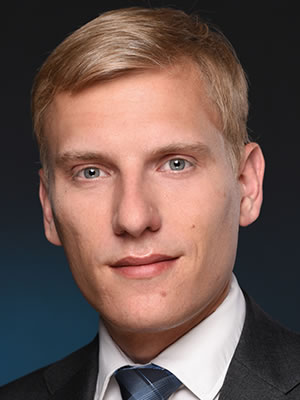
Prof. Dr.-Ing. Stefan Lechner has been full Professor of Energy Economics and Energy Systems at the Technical University of Central Hesse (THM) , Giessen, since March 2015. He is affiliated with the Department of Mechanical Engineering and Energy Technology and the Institute THESA – Institute of Thermodynamics, Energy Process Engineering and Systems Analysis . Additionally, he leads the Laboratory for Energy Economics and is a core member of the Competence Center for Energy Technology and Energy Management (etem.THM) . Education & Career Dr.-Ing., Brandenburg University of Technology (BTU) Cottbus, 2012 – Dissertation on steam-fluidized-bed drying of lignite. Dipl.-Ing. (FH) Mechanical Engineering, Georg Agricola University of Applied Sciences Bochum, 2002 – specialising in Future Energies. Supplementary doctoral studies & economics coursework at BTU Cottbus and FernUniversität Hagen. Professional experience at Vattenfall (plant management, power-plant planning & R&D) and Kreisel Umwelttechnik (Head of Development) before entering academia. Research Interests Prof. Lechner’s work centres on the techno-economic analysis and optimisation of energy systems in transition . Core themes include renewable energy integration , thermal energy storage (particularly Carnot batteries using ceramic high-temperature stores), sector coupling between electricity, heat and mobility, and 5th-generation cold district-heating networks (5GDHC). Methodologically, he combines experimental thermal engineering with open-source simulation frameworks , agent-based demand modelling , and electricity-market modelling . Recent activities expand into waste-heat recovery from data centres and transcritical CO₂ heat-pump systems for low-temperature district heating, always targeting cost-effective, grid-friendly and sustainable solutions . Publication Trends Between 2017 and 2024 his output highlights a clear evolution from fundamental studies on pressurized steam fluidized-bed drying and lignite heat-transfer toward system-level analyses of storage-based sector coupling . A dominant cluster addresses Carnot batteries , covering high-temperature storage materials, gas-turbine re-conversion concepts, and demonstration results. Parallel streams examine GIS-based rooftop PV potential , agent-based settlement energy-demand modelling , and regulatory frameworks for cross-sector energy markets. Scientific Awards & Honours No specific awards are mentioned in the provided material. Research Funding & Teams Prof. Lechner has secured and coordinates projects worth > €10 million (THM share ≈ €6.5 million) funded by BMBF, BMWK/BMWi, Hessian ministries (HMWK, HMWEVW), WI-Bank and ERDF : LOEWE 3 DUWä (2025-2027) – transcritical CO₂ dual-use heat pumps for cold district heating. EnEff:Stadt FlexQuartier2 (2023-2027) – hybrid storage optimisation in Giessen’s Philosophenhöhe district. KNW-Plus (2022-2023) – design & online tool for cold local heating networks. Innovative waste-heat use from data centres (2022-2023). FlexQuartier Gießen (2018-2023) – integrated hybrid storage & sector coupling in a new-build district. Kommun:E (2018-2022) – municipal energy-supply transformation under Germany’s Energiewende. High-T-Stor (2017-2019) – cross-sector high-temperature storage for renewable balancing. FES (2019-2021) – Research Center for Energy Storage and Sector Coupling. These projects involve interdisciplinary consortia including municipalities, grid operators, SMEs, and research partners across Germany. Teaching & Academic Leadership He lectures in Energy Economics and Sector Coupling, Energy Markets, Heat Transfer, Renewable Energy Technology and Energy System Analysis . He also serves as Programme Manager for the part-time continuing-education M.Sc. Energy Efficiency Management (StudiumPlus, Wetzlar) and contributes to advanced master’s courses on energy law and thermodynamics.
Prof. Simon Adrian holds the Chair of Theoretical Electrical Engineering at the Institute of General Electrical Engineering, University of Rostock, Germany. His research focuses on computational electromagnetics with critical applications in antenna design, electromagnetic compatibility, and medical technology. He serves as Associate Editor for the IEEE Transactions on Antennas and Propagation and contributes to the IEEE Antennas and Propagation Society Education Committee, demonstrating significant academic leadership in the global electromagnetics community. His primary research addresses low-frequency instability challenges in electromagnetic integral equations through innovative numerical techniques. Key areas include Calderón preconditioners, quasi-Helmholtz projectors, B-spline discretizations, and adaptive cross approximation methods. These approaches enable robust simulations across diverse applications from radar systems and antenna design to biomedical problems like deep brain stimulation and electroencephalography. Recent work emphasizes broadband stability and efficient solvers for multiply-connected geometries. Analysis of Prof. Adrian's publication trends (2023-2025) reveals a concentrated effort on overcoming fundamental limitations in electromagnetic modeling. His work consistently targets low-frequency regimes where traditional methods fail, developing mathematically rigorous stabilization techniques while expanding into biomedical applications. The integration of isogeometric analysis with specialized discretization strategies represents a cutting-edge direction in computational electromagnetics. Professional engagement includes active membership in the Institute of Electrical and Electronics Engineers (IEEE), IEEE Antennas and Propagation Society, and Union Radio-Scientifique Internationale (URSI), reflecting his commitment to advancing the field through collaborative research and scholarly communication.
Selin Aslan serves as an Assistant Professor in the Department of Mathematics at Koç University, Istanbul, Turkey, where she conducts research at the intersection of computational mathematics and imaging science. Her academic appointments and research activities are centered within the university's mathematics department, contributing to both undergraduate and graduate education in mathematical sciences. Her educational qualifications include: PhD in Mathematics from Virginia Polytechnic Institute and State University (2018) Master's in Mathematics from Rochester Institute of Technology (2013) B.A. in Mathematics from Ege University (2010) Dr. Aslan's research program focuses on developing advanced computational methods for solving inverse problems in imaging, with particular expertise in phase retrieval, tomographic reconstruction, and ptychography. Her work bridges theoretical mathematics with practical applications in medical imaging, microscopy, and materials science, emphasizing algorithmic innovation and computational efficiency. She integrates techniques from deep learning, optimization theory, and high-performance computing to address challenges in image reconstruction under physical constraints. Analysis of her publication record reveals a consistent trajectory toward solving complex imaging problems through hybrid approaches that combine physics-based models with data-driven techniques. Her recent work demonstrates increasing emphasis on scalability for large datasets, robustness in photon-limited scenarios, and real-time processing capabilities, with applications spanning biomedical imaging to advanced microscopy. No scientific awards were documented in the available sources. Information regarding student advising and research grant activities was not specified in the provided materials, though her publication record suggests active research collaboration. Her computational focus implies engagement with high-performance computing resources for large-scale image reconstruction tasks. While specific laboratory infrastructure details were unavailable, her research on multi-GPU implementations and distributed computing indicates utilization of advanced computational facilities for handling large-scale imaging datasets.
James R. Wilcox is an Assistant Professor of Computer Science at the University of Washington , where he teaches courses like Introduction to Programming , Foundations of Computing , and Operating Systems . His research focuses on programming languages , formal methods , and distributed systems verification . PhD, University of Washington BS, Williams College (2013) Wilcox's research bridges software engineering and formal verification , with applications to distributed systems, concurrent programming, and tools like mypyvy for verification. He has published extensively in top venues such as POPL , PLDI , and CAV , emphasizing compositional techniques and proof assistants like Coq. He has received two Distinguished Paper Awards (PLDI 2015, PLDI 2020) and contributes to frameworks like Verdi for verifying distributed systems. Outside academia, he is a baritone in Seattle's choral ensembles and an avid long-distance cyclist.
Ludovic Sacchelli is an Inria researcher (CR) affiliated with the McTAO team at the Centre Inria d'Université Côte d'Azur and the Laboratoire J.A. Dieudonné of Université Côte d'Azur. His research spans control theory, sub-Riemannian geometry, and mathematical neuroscience, focusing on optimal control, observers, and estimation problems. His work on sub-Riemannian manifolds and control systems includes stabilization techniques for non-uniformly observable systems and applications to UAV control, neural fields, and bioprocess modeling. He has contributed to heat kernel analysis, line fields interpolation, and geometric models for sound processing. His recent publications address topics like distributed state estimation in neural models, polynomial state-affine control systems, and geometric algorithms for orientation field interpolation. He has also explored observability singularities in bilinear systems and stabilization of weakly contractive systems. Teaching roles include instructing Measure Theory , Stochastic Processes , and applied mathematics at institutions such as Université Côte d'Azur, Polytech Nice, Lehigh University, and École Polytechnique. His mentorship includes supervising a Masters research project on numerical implementation of line fields interpolation in 2019.
Alexandros Savvaidis is a Research Professor at the Bureau of Economic Geology, part of the Jackson School of Geosciences at The University of Texas at Austin. He serves as the Manager of the Texas Seismological Network (TexNet) and has over 30 years of experience in seismology and applied geophysics. His expertise spans earthquake physics, induced seismicity, engineering seismology, and geophysical data modeling. Savvaidis leads real-time seismic monitoring efforts across Texas, managing a network of 210 stations, and previously managed Greece's largest seismographic network. His research focuses on causal factors of induced seismicity linked to oil/gas operations, geothermal projects, and wastewater disposal, alongside developing machine learning tools for seismic data analysis. His technical work includes advanced inversion algorithms for crustal modeling using Texas Advanced Computing Center (TACC) resources, and he has pioneered methods like EQCCT for earthquake detection and phase picking. Savvaidis is also involved in disaster risk reduction initiatives and contributes to the Center for Collective Impact in Earthquake Science (C-CIES), emphasizing interdisciplinary approaches to earthquake science. Recent research trends highlight his focus on integrating AI into seismology, including earthquake forecasting datasets (AEFA), deep learning for seismic event classification, and real-time monitoring systems. His work bridges academic research with industrial applications, collaborating on projects funded by European and U.S. agencies. He advocates for improved seismic monitoring infrastructure in regions like New Jersey and Texas, emphasizing the need for precise data-driven strategies to address anthropogenic seismic hazards.
Professor Dennis Kristensen is a faculty member at the Department of Economics, University College London (UCL). He holds affiliations with prominent institutions including CeMMAP, the Institute for Fiscal Studies, Aarhus Center for Econometrics (ACE), and the Centre for Macro and Financial Econometrics at Essex University. His research focuses on econometric theory, applied microeconomics, and quantitative finance. Key areas include structural dynamic models, nonlinear econometrics, and financial econometrics. His work integrates advanced computational methods and nonparametric techniques to address complex economic problems. Research interests span stochastic volatility models, demand inversion in consumer behavior, and indirect estimation methods. He has contributed to methodologies for handling unobserved heterogeneity and time-varying parameters in economic models. Prof. Kristensen's publications emphasize methodological innovation, with recent work addressing continuous-time Markov models, diffusion copulas, and dynamic discrete choice frameworks. His articles often bridge theoretical econometrics with applied contexts, such as corporate defaults and financial market analysis. He is actively engaged in the academic community, contributing to journal editorials and interdisciplinary collaborations. His affiliations reflect a commitment to advancing econometric theory and its applications in policy and finance.
Angelica Cueto is an Associate Professor in the Department of Mathematics at The Ohio State University, affiliated with the College of Arts and Sciences. Her research focuses on Tropical Geometry, Algebraic Geometry, Combinatorics, and Non-Archimedean Geometry. She explores topics such as moduli spaces, surface singularities, and degenerations of classical varieties, with a particular emphasis on tropical methods and their applications. Her work bridges algebraic geometry with combinatorial structures, addressing problems like the Milnor fiber conjecture, tropicalizations of curves, and faithful tropicalizations of Grassmannians. Recent publications (2023–2024) highlight advancements in splice-type surface singularities and real lifts of bitangents. She maintains a professional website detailing her research and collaborations. No scientific awards or grants are explicitly listed in the provided text. Her academic contributions are centered on foundational research in tropical and algebraic geometry, with a focus on geometric combinatorics and moduli theory.
Srinivasa G. Narasimhan is the U.A. and Helen Whitaker Professor of Robotics at Carnegie Mellon University's Robotics Institute within the School of Computer Science. He directs the Illumination and Imaging Laboratory (ILIM) and leads the Computational Imaging group, focusing on the physics of computer vision and graphics. His research develops novel imaging technologies for applications in robotics, transportation, medical imaging, and environmental sensing. Research interests span computational imaging, light transport modeling, and active perception systems. Key areas include: Physics-based vision for atmospheric and material interactions Novel camera designs and programmable lighting systems Robust perception for autonomous vehicles and medical diagnostics Non-line-of-sight imaging and computational scatterography Publications demonstrate strong emphasis on 3D reconstruction, computational optics, and vision systems for intelligent transportation. Recent works leverage self-supervised learning for dynamic scene understanding and develop novel sensors for medical and automotive applications. Awards and honors include: Best Paper awards at CVPR (2019, 2022), IV (2021), and ICCP (2020) Marr Prize Honorable Mention (ICCV 2013) Multiple demo awards at CVPR/ICCP Current advising includes 5 PhD students and 1 master's student. Major grants include NSF EXPEDITIONS (Computational Photo-Scatterography), DARPA REVEAL, and industry support from Ford, GM, Adobe, and Zillow. Manages multiple labs developing technologies like adaptive headlights, thermal imaging systems, and MHz-rate light steering devices.
Niels Aage is an Associate Professor in the Department of Civil and Mechanical Engineering at the Technical University of Denmark (DTU). His research focuses on topology optimization, biomechanics, and multiphysics modeling, with applications in acoustic devices, biomedical implants, and microelectromechanical systems (MEMS). He holds roles such as Vice President of the International Society for Structural and Multidisciplinary Optimization (2023–2027). Education and Professional Background: Conducted a 5-month research visit at the University of Colorado, Boulder (USA) in 2010. Specializes in giga-scale numerical modeling, finite element methods, and topology optimization algorithms. Research Interests: Develops novel methods for topology optimization of fluidic, thermal, and acoustic systems. Explores applications in patient-specific spinal implants, metamaterials with vibroacoustic bandgaps, and nonlinear dynamic substructuring. His work integrates machine learning and reduced-order modeling for efficient simulation. Publications: Over 100 peer-reviewed articles, including recent contributions on connectivity promotion in topology optimization (2025), vibroacoustic metamaterial design (2025), and anatomically conforming spinal fusion cages (2024). Research emphasizes high-resolution modeling and bridging computational design with additive manufacturing. Scientific Awards: ISSMO Haftka Young Investigator Award (2021), Equinor Prize 2020, and Hyperion Innovation Excellence Award (2017). Recognized for contributions to structural optimization and computational mechanics. Advising and Grants: Supervises multiple PhD projects, including work on vibroacoustic shape optimization, quantum-opto-mechanical systems, and smart hearing aid modeling. Engages in collaborative projects funded by industry and academia. Labs/Teams: Collaborates with DTU’s Solid Mechanics group and industry partners on projects involving topology optimization, multiphysics simulation, and biomedical engineering. Active in international conferences and serves on editorial boards.