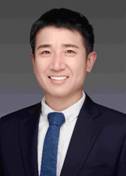
Shunxiang Cao is an Assistant Professor at Tsinghua Shenzhen International Graduate School in China, where he has worked since July 2022. He earned his Ph.D. in Aerospace Engineering from Virginia Tech (United States) between August 2014 and August 2020 and completed his B.S. in Aerospace Engineering at Beihang University (China) from September 2010 to May 2014. Prior to his current role, he served as a Postdoctoral Scholar at the California Institute of Technology (United States) from November 2019 to May 2022. Teaches courses such as Advanced Numerical Analysis, Numerical Methods for PDEs, and Fluid-Structure Interaction simulations. Research Interests include fluid-structure interaction, computational fluid dynamics, shock/bubble dynamics, material failure analysis, embedded-boundary methods, resolvent-based optimization, Kalman inversion, high-intensity focused ultrasound, and digital twin technology. His work focuses on numerical modeling, optimization, and fluid-solid coupling mechanisms in diverse applications like underwater propulsion, energy storage membranes, and medical acoustics. Scientific Awards include the USNCCM16 Conference Award (2021), Graduate Fellowship at Virginia Tech (2014-2015), Merit Undergraduate Student in Beijing (2014), and Singapore Technology Engineering Fellowship (2010-2013).
Daohong Qiu is an Associate Professor and Master Tutor at the Geotechnical and Structural Engineering Center, School of Civil Engineering, Shandong University. His research focuses on advanced geological prediction in tunnels, surrounding rock stability, structural health monitoring for urban rail transit, and TBM tunneling performance optimization. Position: Associate Professor Affiliation: School of Civil Engineering, Shandong University Email: qiudh@sdu.edu.cn Research Interests: He specializes in geotechnical engineering challenges related to underground construction, including rock burst prediction , disaster control , and machine learning applications in geological modeling. His work emphasizes integrating advanced computational methods like quantum genetic algorithms and RBF neural networks with field data to improve tunnel safety and efficiency. Publication Trends: His recent 2019 studies address subsea tunnel risk assessment , rock burst prediction in underground caverns, and machine learning-driven surrounding rock classification . Earlier works (2014-2015) explore SVM/GA-SVM for geological disaster forecasting, while pre-2010 papers focus on optimization theory and stress field analysis. Patent Contributions: He holds multiple invention patents for geological prediction devices, including three-dimensional geological network modeling , seismic signal detection , and concrete elevation control systems .
Fu Zongmei is a Professor at the School of Environmental Science and Engineering of Southern University of Science and Technology (SUSTech) since 2019. She previously held academic positions at Peking University (2010-2019) and Hong Kong Polytechnic University (2008). Her research focuses on atmospheric chemistry , air pollution , and chemistry-climate interactions , with expertise in inverse modeling of emissions, secondary organic aerosol formation, and air-sea exchange processes. Education: Ph.D. in Earth & Planetary Sciences (Harvard University, 2007), S.M. in Engineering & Applied Sciences (Harvard University, 2005), M.S. and B.S. in Atmospheric Sciences (National Taiwan University) Her research combines ground-based , aircraft , and satellite observations to study pollutant transport, cloud-aerosol interactions, and climate impacts on air quality. Recent work includes assessing haze mitigation strategies in Northern China and analyzing PM2.5 health risks through spatiotemporal modeling. Key honors include the National Natural Science Foundation of China Outstanding Young Scientist Fellowship (2012), the Tu Chang Wang Meteorological Science and Technology Award (2013), and the Ministry of Education Natural Science Award (Second Prize) (2019). She serves as an associate editor for Atmospheric Environment and contributes to major international conferences as session co-chair and organizer. Notable grants: NSFC General Project on Organic Nitrogen Aerosols (2020-2023, PI), National Key R&D Program on Air Quality Modeling (Co-I), and 973 Program on Chemistry-Climate Interactions (Co-PI)
Yongshun Chen is a Chair Professor at Southern University of Science and Technology (SUSTech), where he serves as the founding director of the Department of Marine Science and Engineering. Previously, he was a Professor at Peking University's School of Earth and Space Sciences and an Associate Professor at Oregon State University's Institute of Oceanography. He is currently the President of InterRidge, the international association for mid-ocean ridge studies. Chair Professor, Southern University of Science and Technology (2013-present) Professor, Peking University, School of Earth and Space Sciences (2001-2013) Associate Professor, Oregon State University, Institute of Oceanography (1990s-2001) PhD in Geophysics, Princeton University (1989) Bachelor's degree in Geophysics, University of Science and Technology of China (1982) Professor Chen's research focuses on marine geophysics and seismotectonics, with particular emphasis on the dynamics of oceanic spreading plate boundaries and the formation mechanisms of the oceanic crust. His pioneering work has provided explanations for seismic observations of mid-ocean ridges and continental ophiolite suites. After returning to China in 2001, he pioneered the field of "seismic geotectonics" in mainland China, conducting mobile seismic array observations and developing seismological methods to study the three-dimensional structure of the crust and upper mantle in key tectonic regions. His research has led to several significant contributions, including the "corner flow" model for the asthenosphere in southern Tibet, a new model of Indian lithosphere subduction beneath Tibet, and a "local upper mantle convection model" to explain intraplate volcanism in Northeast China. His work has had substantial impact on the international geoscience community, with his oceanic crust formation model being widely adopted by marine geologists. Professor Chen has published over 130 academic papers with more than 2,038 citations, including a single paper with 270 citations. His research spans marine geophysics, seismic tomography, crustal and mantle structure, plate tectonics, and volcanic processes, with a particular focus on the Tibetan Plateau and Northeast China. National Science Fund for Distinguished Young Scholars (2002) Editor-in-Chief of Marine Geophysical Researches (2004-2008) Editor of Journal of Geophysical Research-Solid Earth Reviewer for the Earth Science Department of the National Natural Science Foundation of China Professor Chen has supervised numerous graduate students and postdoctoral researchers. He has led more than ten major research projects, including those funded by the National Natural Science Foundation of China, 973 and 863 programs of the Ministry of Science and Technology, and special projects for earthquake research. His research group utilizes advanced seismic techniques and collaborates with international institutions to study Earth's structure and dynamics. As the founding director of the Department of Marine Science and Engineering at SUSTech, Professor Chen has established research teams focusing on marine geophysics, ocean dynamics, and seafloor exploration. His department conducts field observations using mobile seismic arrays and collaborates on international ocean drilling programs to advance understanding of Earth's structure and evolution.
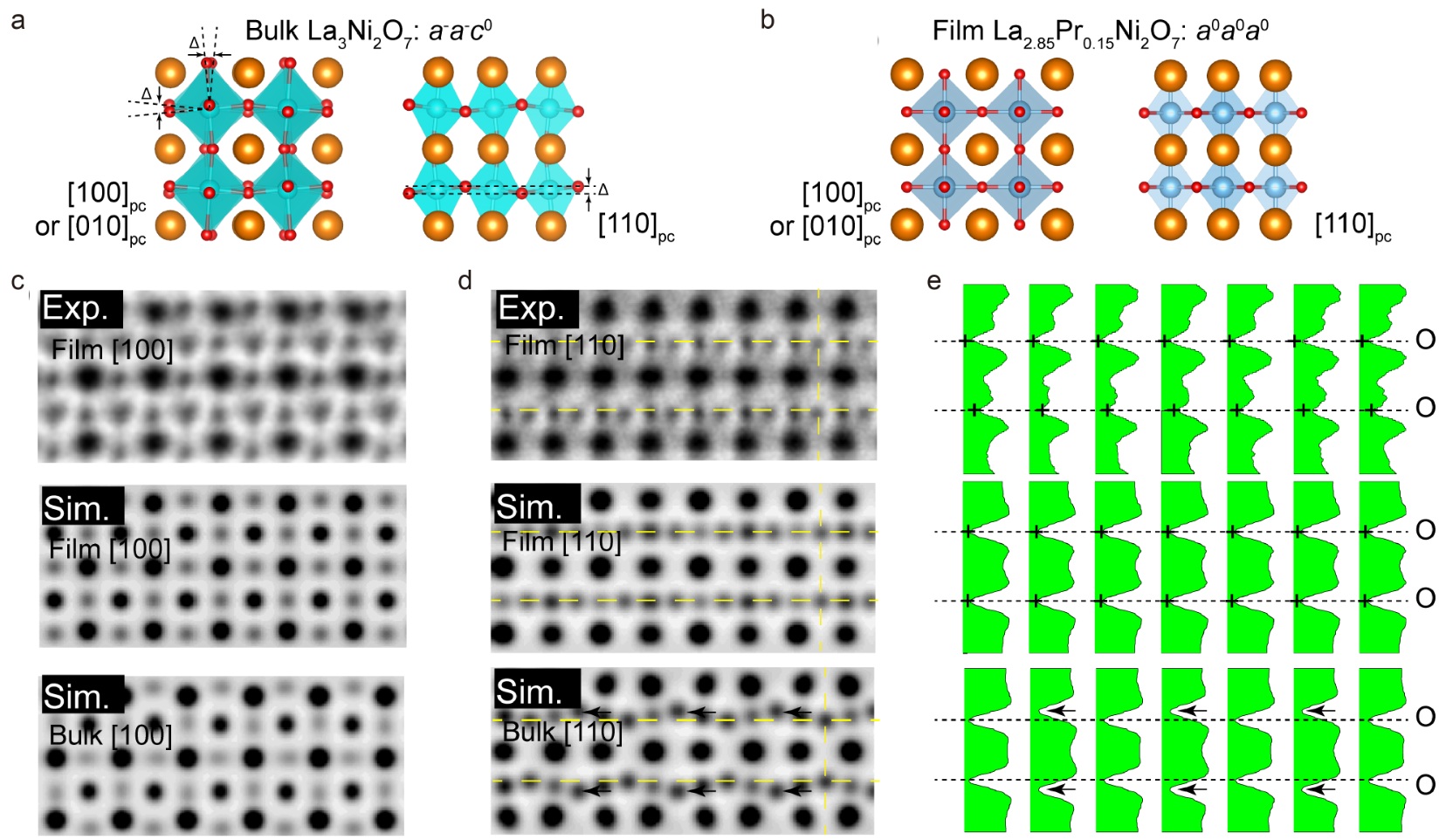
Prof. Junhao Lin is a tenured Full Professor at the Department of Physics, Southern University of Science and Technology (SUSTech). With a dual background in experimental and theoretical physics, he specializes in atomic-scale characterization of 2D materials, combining aberration-corrected STEM, EELS spectroscopy, and density functional theory calculations to study defect-structure-property relationships. Ph.D. (2015) from Vanderbilt University Postdoctoral work at National Advanced Institute of Science and Technology (Japan) under Kazu Suenaga Research Interests : Atomic-scale defect engineering in 2D materials In-situ high-resolution electron microscopy under external stimuli High-energy-resolution EELS for optical property characterization Quantum material structure-property correlations Publication Trends : Over 130 high-impact publications (Nature, Science, PRL) focusing on 2D material defects, phase transitions, and atomic engineering. Recent works explore nickelate superconductivity, magnetic phenomena in topological materials, and energy storage applications. Scientific Recognition : MIT Technology Review TR35 China (2021, Visionary category) Elsevier 2024 Highly Cited Researcher (China) Multiple international conference awards 8+ million RMB investment in glove-box interconnected lab systems Lab Overview : The Advanced Low-Dimensional Materials Laboratory at SUSTech (10+ members) integrates atomic-resolution STEM, in-situ TEM, and computational modeling. Collaborations span Oak Ridge National Lab, Peking University, and Singaporean/Japanese institutions.
Dr. Feng Xingya is an Assistant Professor at the Department of Marine Science and Engineering , Southern University of Science and Technology (SUSTech), Shenzhen, China. He obtained his Ph.D. in Ocean Engineering from the National University of Singapore (NUS) in 2016 and held postdoctoral positions at NUS and the University of Oxford before joining SUSTech in 2019. His research focuses on marine hydrodynamics , nonlinear wave-structure interactions , and computational fluid dynamics , with applications in offshore renewable energy and oil & gas platforms. Ph.D., Ocean Engineering (2016), National University of Singapore B.Eng., Hydraulic Engineering (2011), Hohai University His work includes developing nonlinear potential flow models , numerical wave tank codes , and boundary element methods for analyzing wave interactions with floating systems. Recent projects involve marine renewable energy and machine learning tools for intelligent marine environment monitoring. Scientific contributions include the 2014 Outstanding Young Researcher Award at the KKHTCNN conference. He supervises Ph.D. students and leads a research group focused on marine hydrodynamics , offering opportunities for postdocs and doctoral candidates.
Kejie Chen is an Associate Professor (Full Research Fellow) and Doctoral Supervisor at the Department of Earth and Space Sciences, Southern University of Science and Technology , with concurrent part-time doctoral supervision at Qinghai Normal University . He holds degrees in Geophysics (PhD, GFZ/University of Potsdam), Geodesy (MS, Wuhan University), and Surveying & Mapping (BS, Chang'an University). Selected as National Overseas High-level Young Talent (2021), China Association for Science and Technology Young Talent Support Program (2020) Key participant in developing NASA JPL's real-time tsunami early warning system His research focuses on precise GNSS/InSAR data processing , multi-source earthquake rupture inversion , and AI-driven disaster prediction systems. This work spans earthquake/tsunami early warning, global change geodetic responses, and Earth observation satellite applications. Recent publications include work in Water Resources Research (2025) analyzing groundwater through satellite geodesy, demonstrating his expertise in integrating observational techniques for hydrological studies. His team's research has established novel perspectives in satellite-based water monitoring. Scientific awards include: 2023 Fu Chengyi Youth Science and Technology Award 2023 Li Shanbang Young Earthquake Science Award 2023 SUSTech Outstanding Tutor Award As an educator, he teaches Space Geodesy Applications (graduate), Geophysics Advances (graduate), and Earth Science Big Data & AI (undergraduate). His research group actively recruits PhD candidates and research assistants for Earth observation studies. Current affiliations: Correspondence reviewer for National Natural Science Foundation of China Editorial board member for Satellite Navigation and Acta Geodaetica et Cartographica Sinica Guest editor for Remote Sensing and Sustainability journals
Dr. Li Ying is an Associate Professor and Doctoral Supervisor at the Department of Marine Science and Engineering, Southern University of Science and Technology (SUSTech), where she directs the Center for Marine Atmospheric Sciences. Her research focuses on atmospheric aerosol remote sensing , secondary pollution numerical modeling , and ocean-atmosphere interaction studies under climate change contexts. She holds a PhD in Atmospheric Environmental Science from the Hong Kong University of Science and Technology (2011), MSc in Atmospheric Science from Peking University (2006), and BSc in Physics from Bohai University (2002) with joint study at Tsinghua University. Her professional journey includes roles as Research Assistant Professor at HKUST (2015-2016) and Postdoctoral Fellow at HKUST (2011-2015), with visiting scholar experience at the University of Tennessee (2008-2009). Her research group develops satellite-based remote sensing algorithms for aerosol components (PM2.5, black carbon), studies ozone formation mechanisms in the Pearl River Delta, and creates novel emission control evaluation methods . She leads major projects including Shenzhen Smart City Atmospheric Monitoring and Guangdong-Hong Kong-Macao Air Quality Research Team . Scientific achievements include 60+ SCI publications in journals like Remote Sensing of Environment and Environmental Science & Technology Over 2,400 citations and H-index 24 Two ESI Highly Cited Papers Recipient of Shenzhen Overseas High-level C Talent (2017)
Siteng Fan is an Associate Professor in the Department of Earth and Space Sciences at Southern University of Science and Technology. His research focuses on planetary atmospheres, exoplanet observations, and Martian atmospheric dynamics, combining observational data from missions like TGO and EMM with climate models such as Mars PCM. Education: B.S. in Space Science and Technology from Peking University (2015), Ph.D. in Planetary Science from Caltech (2020). Research Interests: Dynamics of planetary atmospheres (Mars, Titan, Pluto), photochemistry, microphysical processes, and light curve analysis for exoplanet surface inversion. Scientific Awards: Xie Yibing Young Scientist Award (2023), Marie Skłodowska-Curie Postdoctoral Fellowship (2022), NSFC Excellent Young Scientists (Overseas) (2022). Publication Trends: Recent work spans Mars climate modeling, Pluto/Titan atmospheric haze, exoplanet proxy studies, and radiative transfer algorithms.
Dr. BAO Fangwen is a Researcher at the Department of Ocean Science and Engineering, Southern University of Science and Technology (SUSTech). He holds a PhD in Cartography and Geographic Information Systems from the Chinese Academy of Sciences (2018) and a BSc in Surveying and Mapping Science and Technology from China University of Geosciences (Wuhan) (2013). His research focuses on marine-atmospheric parameter inversion using remote sensing, environmental pollution monitoring, and multi-scale pollution source analysis. Education: PhD, Cartography and GIS, Chinese Academy of Sciences (2013-2018) BSc, Surveying and Mapping Science and Technology, China University of Geosciences (Wuhan) (2009-2013) Dr. Bao has published extensively in top-tier journals such as Remote Sensing of Environment , Environmental Science & Technology , and IEEE Transactions on Geoscience and Remote Sensing , with research spanning aerosol optical properties, black carbon concentration estimation, and pollution transport dynamics. His work combines satellite data analysis with environmental modeling. He has conducted research projects funded by the Guangdong Provincial Basic and Applied Basic Research Fund and the China Postdoctoral Science Foundation. From 2016-2017, he was a visiting scholar at the Laboratory of Atmospheric Optics, University of Lille I, France.
Song Liu is a Research Assistant Professor at the School of Environmental Science and Engineering, Southern University of Science and Technology (SUSTech). She obtained her PhD in atmospheric remote sensing from Technical University of Munich and has worked at German Aerospace Center before joining SUSTech. Her research focuses on satellite remote sensing retrieval and chemical model simulation of atmospheric trace gases, with expertise in monitoring nitrogen dioxide and other trace gases using satellite observations. Education PhD in Atmospheric Remote Sensing, Technical University of Munich (2015-2019) MSc in Aerospace and Geodesy, Technical University of Munich (2012-2015) MSc in Remote Sensing and Information Engineering, Wuhan University (2011-2015) BEng in Remote Sensing and Information Engineering, Wuhan University (2007-2011) Research Interests Dr. Liu's research primarily focuses on Satellite Remote Sensing Monitoring of Trace Gases and Atmospheric Chemical Modeling and Emission Inversion . Her work involves developing advanced satellite remote sensing techniques to monitor atmospheric pollutants and understanding the chemical processes that govern air quality across different spatial and temporal scales. Her research has important implications for environmental policy and air quality management, as it provides critical data for understanding emission sources, tracking pollution trends over time, and evaluating the effectiveness of emission control measures. Dr. Liu's work bridges the gap between satellite observations and ground-level air quality through innovative data processing techniques and modeling approaches. Research Trends Dr. Liu's publications demonstrate a consistent focus on advancing satellite-based monitoring of atmospheric trace gases, particularly nitrogen dioxide. Her work spans methodological improvements in satellite data processing, analysis of long-term pollution trends, and investigation of specific emission sources including power plants, shipping, and urban areas. A notable aspect of her recent work is the application of satellite observations to study the impacts of extraordinary events like the COVID-19 pandemic on air quality, as well as the effects of extreme weather events like heatwaves on pollution patterns. Research Projects Dr. Liu has secured competitive research funding including: National Natural Science Foundation of China Youth Project: "Driving Mechanism of Nitrogen Oxide Emission Evolution in China Based on Long-Term Satellite Inversion" Guangdong Natural Science Foundation General Project: "Monitoring of Glyoxal Emissions in the Guangdong-Hong Kong-Macao Greater Bay Area Based on Geostationary Satellite GEMS" These projects highlight her expertise in using satellite data to address critical environmental challenges in China and the Greater Bay Area, with direct applications to regional air quality management and environmental policy.
Deqiang Mao is a Professor of Hydrogeology at the Department of Hydraulic Engineering, School of Civil Engineering, Shandong University, Jinan, China. He holds a PhD in Hydrology from The University of Arizona (2012), with prior academic appointments at New Mexico Institute of Mining and Technology (Assistant Professor, 2016-2017) and postdoctoral positions at Colorado School of Mines and The University of Arizona. His research focuses on hydrogeophysics, inverse modeling, and groundwater system characterization. Education: PhD (The University of Arizona), MS (China University of Geosciences), BS (China University of Mining and Technology) His work integrates geophysical methods like induced polarization and resistivity tomography with hydrological modeling to solve subsurface characterization challenges, including contaminant transport, coal seam fires, and aquifer heterogeneity. He actively collaborates with international researchers and serves on AGU committees for hydrogeophysics and groundwater. As a reviewer for major journals, he emphasizes quantitative approaches in hydrogeology and geophysics. Deqiang Mao's research has driven innovations in bioelectrochemical remediation of hydrocarbon-contaminated soils, time-domain induced polarization tomography, and high-performance computing applications in subsurface hydrology. He has co-authored numerous peer-reviewed articles in Geophysics , Water Resources Research , and Journal of Hydrology , advancing field and laboratory techniques for groundwater monitoring. He maintains an open research group at Shandong University, seeking students with quantitative backgrounds in hydrogeology or geophysics. His work bridges theoretical developments in inverse modeling with practical applications in mining hydrology, contaminant remediation, and geophysical survey optimization.
Jiashun Hu is an Associate Professor at the Department of Earth and Space Sciences, Southern University of Science and Technology (SUSTech), Shenzhen, China. He obtained his Bachelor’s degree (2013) from Peking University and Ph.D. (2018) from the University of Illinois at Urbana-Champaign. From 2018 to 2020, he conducted postdoctoral research at the Seismological Laboratory, California Institute of Technology. Education: B.Sc., Earth Physics, Peking University (2013) Ph.D., Earth and Planetary Science, University of Illinois at Urbana-Champaign (2018) His research focuses on subduction zone dynamics , global plate motion , craton evolution , and earthquake-volcano distribution , using high-resolution numerical models integrated with geophysical-geological observations. His work explores mantle flow, slab-plume interaction, and climate-tectonic feedback mechanisms. Recent publications highlight his expertise in mantle convection simulations and dynamic Earth modeling , addressing topics like the Tarim Large Igneous Province, Andean growth, and Tethys subduction remnants. Key journals include Nature Geoscience , Nature Communications , and EPSL . Scientific Awards: 2022 AOGS SE Kamide Lecture (Young Scientist) 2021 Chinese Young Talent Program 2019 Chinese Government Award for Outstanding Self-Finance Students Abroad 2018 Kirkpatrick Award, UIUC Jiashun Hu mentors students including Wang K., Zhou H., Li K., Zhang J., and Wu X., with research group projects focusing on data assimilation and geodynamic modeling . He actively recruits graduate students and postdocs in geodynamics and computational geophysics.
Dr. HE Lipeng is a Research Associate Professor at the Department of Ocean Science and Engineering of the Southern University of Science and Technology . He holds a Ph.D. in Structural Geology from the Guangzhou Institute of Geochemistry, Chinese Academy of Sciences (2019) and completed postdoctoral research at the same institution (2019-2022). His work focuses on fine-scale crustal structure, induced earthquakes, and microseismic detection through seismic and geodynamic modeling. B.Sc. in Geology, Lanzhou University (2014) Ph.D. in Structural Geology, Guangzhou Institute of Geochemistry, Chinese Academy of Sciences (2019) Research interests include seismic imaging of crustal structures, induced seismicity mechanisms, and tectonic evolution in East Asia. His publications highlight applications of ambient noise tomography, joint inversion techniques, and studies of magma chambers and lithospheric dynamics. Recent publications (sorted by year) reveal a focus on fault zones (e.g., Prague, Oklahoma; Xinfengjiang reservoir), lithospheric modification (e.g., Jiuyishan, South China), and volcanic systems (e.g., Datong volcanoes). These works employ seismic tomography, geodynamic modeling, and multi-method data inversion to address crustal deformation and seismic hazards. He leads the NSFC-funded project Determining Lithosphere and Upper Mantle deformation and Melting beneath East Asia: An Integrated Seismic/Geodynamic Model Approach (2021-2024), which aligns with his expertise in seismic structure analysis and lithospheric dynamics.
Yufeng Lin is an Associate Professor in the Department of Earth and Space Sciences at Southern University of Science and Technology's School of Science. He holds a B.S. in Geophysics from Wuhan University (2007), M.S. from Peking University (2010), and Ph.D. from ETH Zurich (2015), followed by postdoctoral research at the University of Cambridge. His research spans planetary dynamos , fluid dynamics of planetary interiors , and tidal interactions in exoplanetary systems . Key focus areas include magnetic field generation mechanisms, convection in rotating celestial bodies, and tidal dissipation processes. His work integrates theoretical modeling, numerical simulations, and experimental approaches to address fundamental questions about Earth and planetary evolution. Recent publications reveal strong trends in geomagnetic field analysis (using dynamic mode decomposition), Jovian system dynamics , and core-mantle interactions . His research consistently bridges geophysics and astrophysics, with increasing emphasis on computational methods for modeling complex fluid systems. IUGG SEDI Doornbos Memorial Prize (2022) National Special Expert (Youth) (2020) Pearl River Talents Plan Young Top Talent (2019) Swiss NSF Postdoctoral Fellowships (2014, 2016) Dr. Lin advises multiple graduate students (including J. Li and J.Y. Xu) and leads significant research initiatives including an NSFC Original Exploration Project (2023-2027) and a key sub-project in China's National Key R&D Program on Martian processes. His laboratory focuses on computational geodynamics and planetary fluid mechanics, with ongoing collaborations across international institutions.