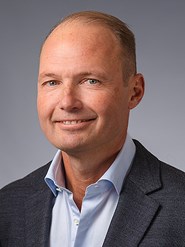
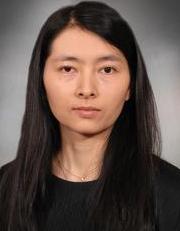
Dr. Frank L Lewis is a Professor and Moncrief-O'Donnell Endowed Chair in Electrical Engineering at The University of Texas at Arlington (UTA), where he has been since 1990. His research focuses on autonomous systems control, optimal control, reinforcement learning, and neural networks. He holds a PhD from Georgia Institute of Technology (1981), an MS in Aeronautical Engineering from the University of West Florida (1977), and a BS/ME in Physics/Electrical Engineering from Rice University (1971). His research has been ranked #1 globally in Optimal Control and Reinforcement Learning, and #2 in Control Theory by ScholarGPS. He has authored 527 journal papers, 30 books, and graduated 65 PhD students. Notable recognitions include the IEEE Neural Networks Pioneer Award (2012), AIAA Intelligent Systems Award (2016), and Texas Regents Outstanding Teaching Award (2013). Dr. Lewis has secured $17M in research grants, including from NSF, ONR, and ARO. He serves on numerous editorial boards and is a Fellow of IEEE, IFAC, and the National Academy of Inventors. His work spans robotics, autonomous systems, and industrial control, with applications in unmanned aerial vehicles (UAVs), distributed control systems, and renewable energy.
Euclides Almeida is an Assistant Professor in the Department of Physics at Queens College, City University of New York (CUNY). He leads the Almeida Lab, focusing on experimental nanophotonics and metamaterials. His research involves nanofabrication and characterization to manipulate nanoscale matter and develop next-generation photonic devices for applications in energy efficiency, bio-sensing, and miniaturization. Education: D. Sc. in Physics, Federal University of Pernambuco (2012) B. Sc. in Physics, Federal University of Pernambuco (2006) Research Interests: Almeida's work explores electromagnetic wave interactions at the nanoscale, with a focus on nonlinear optics, metasurfaces, and plasmonic systems. His lab develops compact photonic devices capable of innovative optical beam shaping and strong coupling phenomena. Recent projects include tunable graphene-gold plasmons and inverse-designed plexcitonic systems. Publications: Over 20 peer-reviewed articles since 2012, with recent emphasis on nonlinear optical components, broadband light sources, and room-temperature strong coupling. Key themes include metasurface design, nanofabrication, and applications of 2D materials. Advising & Recruitment: Actively recruiting post-doctoral researchers with expertise in photonics and nanofabrication. Teaches PHYS 675: Microfabrication & Growth Techniques. Labs & Teams: The Almeida Lab utilizes state-of-the-art facilities at QC-CUNY to advance nanoscale optical technologies. Current efforts target novel optoelectronic devices and energy-efficient photonic systems.
Dr. Changhua Bao is a postdoctoral researcher at the University of Regensburg since 2024, previously affiliated with Tsinghua University (2022-2024) and its Department of Physics. His research focuses on ultrafast dynamics in quantum materials, Floquet engineering, and advanced spectroscopic techniques. Education: PhD in Physics, Tsinghua University (2016-2022) B.Sc. in Mathematics and Physics, Tsinghua University (2012-2016) Research Interests center on condensed matter physics and quantum materials , particularly exploring light-induced phenomena in 2D materials, topological materials, and Dirac semimetals. His work often combines ultrafast spectroscopy with advanced instrumentation. Selected Publications span high-impact journals like Nature , Physical Review Letters , and Nano Letters , emphasizing Floquet band engineering , Dirac fermion dynamics , and time-resolved ARPES innovations. Scientific Awards: Editor's Suggestion, Physical Review Letters 131 (2023) Featured in Physics, Physical Review Letters 126 (2021) Editor's Suggestion, Review of Scientific Instruments 92 (2021) Contact: changhua.bao@physik.uni-regensburg.de
Christino Tamon is a Professor of Computer Science at Clarkson University's Coulter School of Engineering & Applied Sciences. He holds a Ph.D. from the University of Calgary (1993-1996), an M.S. from the University of Toronto (1990-1992), and a B.Sc. in Computer Science and Applied Mathematics from the University of Calgary (1986-1990). His research focuses on theoretical computer science, quantum computing, graph theory, and machine learning, with notable contributions to quantum state transfer and quantum walks on graphs. Recipient of the Clarkson University Distinguished Teaching Award (2009) and New Teacher Award (2000). Principal Investigator on multiple NSF grants, including quantum computing and REU mathematics programs. Visiting appointments at institutions like the Institut Henri Poincaré and the University of Waterloo. Research interests include quantum algorithms, graph spectral theory, and the application of algebraic methods to discrete systems. His work on quantum walks explores perfect state transfer, fractional revival, and spatial search optimization. Recent grants support quantum advantage in algorithm design and interdisciplinary research in quantum dynamics. Advised numerous graduate students and mentors undergraduate research through REU programs. Active in professional service, including organizing workshops on quantum mathematics and algebraic graph theory.
Dr. Stuart S. Egan is a Senior Lecturer in Geology at Keele University's School of Life Sciences, where he has been a faculty member since 1989. He earned his undergraduate degree in Geography and Geology from Keele (1981-1985) and a PhD from the University of Liverpool (1985-1987) focusing on 'Rheological, Thermal and Isostatic Constraints on Continental Lithosphere Extension and Compression'. His research specializes in numerical and computer modeling of geological processes, particularly continental lithosphere extension/shortening mechanisms driving sedimentary basin subsidence and mountain belt uplift. Key domains include: Geodynamic modeling of basin and mountain evolution 3D numerical simulations for tectonic regime analysis Geothermal energy potential in UK basins Structural controls on Carboniferous stratigraphy Egan's recent publications (2018-2025) demonstrate strong emphasis on: Geothermal reservoir modeling in the Cheshire Basin Tectonic influences of granite bodies on basin formation Carboniferous magmatism and sedimentology Integration of sustainability in geoscience education Honors include: Fellow of the Geological Society of London Chartered Geologist status European Geologist accreditation He leads modules across undergraduate and postgraduate programs including Structure and Geodynamics, Palaeoclimatology, and Geological Mapping. As PhD supervisor, he mentors students researching basin evolution (e.g., L. Al-Madhachi on Mesopotamian Basin, Louis Howell on Carboniferous systems) and geothermal resources (Stuart Campbell on Karoo Basin). Egan co-leads the Basin Dynamics Research Group, applying numerical modeling to field data from global sites including the North Sea, Black Sea, and Laramide Province.
Harry Gingold is a Professor in the Department of Mathematics at West Virginia University, part of the Eberly College of Arts and Sciences. His research focuses on Applied Analysis, Celestial Mechanics, Mathematical Physics, Dynamical Systems, and Factorization of Power Series. He has contributed to foundational aspects of Geometry and Nonlinear Differential Equations. His research interests include the mathematical consistency of celestial mechanics equations, traveling wave solutions, symmetric nonlinear systems, and factorization methods for Taylor series. Recent work explores time-symmetric orbital dynamics and the implications of Newtonian mechanics in cosmological models. Key contributions span over four decades, with publications addressing differential systems, matrix factorization, and geometric approaches to inner product spaces. His work bridges pure mathematics with applications in physics and engineering. Dr. Gingold has advised no formally listed students but has authored over 100 publications. His research has been supported through institutional affiliations without explicit mention of grants. He is affiliated with the School of Mathematical and Data Sciences at WVU.
Dr. Aly Fathy is a Professor in the Department of Electrical Engineering and Computer Science at the University of Tennessee, Knoxville. He is affiliated with the Tickle College of Engineering and holds a PhD in Electrical Engineering from the Polytechnic Institute of New York (1984). His research focuses on antenna design, microwave engineering, phased arrays, and biomedical radar applications. He has led the development of advanced radar systems for non-invasive health monitoring and contributed to innovations in UWB, MIMO, and millimeter-wave technologies. Education: PhD in Electrical Engineering, Polytechnic Institute of New York, 1984 MS in Electrical Engineering, Ain Shams University, Cairo, Egypt, 1980 BS in Pure & Applied Mathematics (Honors) and BS in Electrical Engineering (Honors), Ain Shams University, Cairo, Egypt, 1979 Research Interests: Dr. Fathy's work bridges theoretical electromagnetic analysis and practical applications. He has pioneered reconfigurable antennas, radar systems for vital sign detection, and microwave heating technologies. His research includes: Development of compact, high-performance antennas for 5G and satellite communications Ultra-Wideband (UWB) radar for through-wall imaging and non-contact health monitoring Biomedical applications, such as heart rate and respiration detection using Doppler radar Advanced phased array designs and microwave circuit optimization Publications & Trends: His recent work emphasizes multi-subject vital sign monitoring, millimeter-wave radar systems, and AI-driven signal processing. Key themes include improving radar accuracy in cluttered environments and enhancing biomedical sensor reliability. Awards: Sarnoff Team Award (1999) for DBS antenna development Outstanding Achievement Awards (1989–1997) for contributions to superconductors, embedded filters, and antenna innovation Best Paper Award at IEEE-MTT Symposium (1988) Grants & Advising: Dr. Fathy has advised over 10 graduate students and secured significant industry partnerships, including grants from Agilent and Ansoft. He established state-of-the-art labs for antenna testing, microwave circuit fabrication, and high-frequency simulations. Labs & Teams: His research group collaborates with biomedical departments on cross-disciplinary projects, such as fiber-optic communication systems and electromagnetic biological effects analysis.
Hong Qin is a Full Professor (with tenure) in the Department of Computer Science at Stony Brook University, where he is also a member of the Center for Visual Computing. He holds a B.S. and M.S. from Peking University, and a Ph.D. from the University of Toronto. His research focuses on computer graphics, geometric modeling, physics-based simulation, and scientific visualization. Education: B.S. (1986) and M.S. (1989) in Computer Science from Peking University; Ph.D. (1995) in Computer Science from the University of Toronto. Research interests include geometric modeling, computer-aided design, scientific visualization, medical imaging, and robotics. He has received notable awards like the NSF CAREER Award (1997), Alfred P. Sloan Fellowship (2001-2005), and multiple NSF grants. Qin has organized major conferences such as Computer Graphics International 2005 and chairs editorial boards for IEEE TVCG and The Visual Computer.
Shannon D. Blunt is the Roy A. Roberts Distinguished Professor of Electrical Engineering & Computer Science (EECS) at the University of Kansas (KU), where he also serves as Director of the KU Radar Systems Lab (RSL) and Director of the Kansas Applied Research Lab (KARL). With a distinguished career spanning over two decades, Prof. Blunt has established himself as a leading expert in radar signal processing and waveform design. Dr. Blunt earned his B.S., M.S., and Ph.D. degrees in Electrical Engineering from the University of Missouri, completing his doctorate in 2002 under the supervision of K.C. Ho. After working at the U.S. Naval Research Laboratory from 2002-2005, he joined the University of Kansas faculty, where he has remained ever since, advancing to his current distinguished professorship. Prof. Blunt's research focuses on sensor signal processing and system design with particular emphasis on waveform diversity and spectrum sharing techniques. His work has made significant contributions to radar and sonar systems that have been deployed operationally. His research spans radar waveform design, spectrum coexistence, cognitive radar, and the integration of radar and communication systems. The 15 most recent publications demonstrate his continued leadership in random FM radar waveforms, spectrum sharing techniques, and experimental validation of novel radar concepts, with numerous papers appearing in top journals like IEEE Transactions on Radar Systems and presented at major radar conferences. His scientific achievements have been recognized with numerous prestigious awards including the IEEE/AESS Nathanson Memorial Radar Award (2012), IEEE Fellowship (2016), IET Radar, Sonar & Navigation Premium Award (2020), and the IEEE/AESS Warren D. White Award (2025). In 2019, he was appointed to the U.S. President's Council of Advisors on Science & Technology (PCAST), and in 2024 he was named Fellow of the MSS. Prof. Blunt has successfully mentored numerous graduate students, with many of his former PhD students now holding positions at prestigious institutions including MIT Lincoln Laboratory, Johns Hopkins University Applied Physics Lab, Naval Research Laboratory, and academic positions at the University of Kansas. His research has been supported by over $30M in funding from organizations including NRL, DARPA, AFRL, ARL, ARO, DoE, NAVSEA, and ONR. He has served in significant editorial roles including Founding Editor-in-Chief of IEEE Transactions on Radar Systems and editorial board member for IET Radar, Sonar & Navigation. As Director of both the KU Radar Systems Lab and the Kansas Applied Research Lab, Prof. Blunt leads research teams focused on advancing radar technology and applying it to real-world problems. His labs have developed numerous innovative radar techniques that address spectrum congestion challenges while maintaining radar performance.
Mats G Larson is a Professor at the Department of Mathematics and Mathematical Statistics at Umeå University. He holds the research qualification of Docent and specializes in computational mathematics, numerical analysis, and finite element methods. His work focuses on advancing numerical techniques for partial differential equations, including CutFEM, Isogeometric Analysis (IGA), and hybridized methods for complex geometries and multiphysics problems. Research interests include error estimation, stabilized finite element methods, computational mechanics, and applications in engineering and fluid-structure interaction. Larson leads projects such as the 2022–2025 'Multi-shell CutFEM for problems with mixed dimensions' and the 2017–2021 project on computational methods for elliptic problems. His publications appear in top journals like Computer Methods in Applied Mechanics and Engineering . Key contributions include developments in CutFEM for embedded surfaces, augmented Lagrangian methods for contact problems, and geometric modeling with CAD integration. His research bridges theoretical analysis and practical applications, addressing challenges in mesh generation, stability, and high-performance computing.
Dr. Brendan Hayes is an Assistant Professor at the School of Electronic Engineering, Dublin City University. His research focuses on power electronics, RF engineering, and nonlinear dynamics, with particular emphasis on high-efficiency power amplifiers, DC-DC converter stability, and renewable energy systems. He has contributed to advancements in ultra-wideband amplifier design, fractional element applications in nonlinear systems, and control strategies for PV-fed converters using Filippov methods. His work integrates theoretical analysis with practical circuit design, addressing challenges in broadband signal processing, energy conversion efficiency, and nonlinear system dynamics. Recent projects include optimizing power amplifier performance through novel load design spaces and exploring hybrid differential-algebraic equation models for renewable energy applications.
Dr. Thomas Cubaud is an Associate Professor in the Department of Mechanical Engineering at Stony Brook University, where he has been since 2007. His research focuses on microfluidics, interfacial phenomena, hydrodynamics, and nanotechnologies, with particular emphasis on developing microfluidic systems for diagnostic and manufacturing applications. He holds a Ph.D. from Paris-Sud University/ESPCI (2001), an M.S. (1998), and a B.S. (1997) from Paris-Sud University, France. Education: Ph.D., Paris-Sud University/ESPCI, France (2001) M.S., Paris-Sud University, France (1998) B.S., Paris-Sud University, France (1997) Dr. Cubaud's research explores the manipulation and control of microscale interfaces in complex fluid systems. His work includes studies on droplet dynamics, interfacial tension effects, and multiphase flow instabilities in microfluidic environments. He investigates applications such as controlled emulsification, nanoemulsion dissolution, and high-viscosity fluid behavior in microchannels. His recent publications highlight advancements in understanding viscous fluid thread dynamics, solvent miscibility effects, and interfacial tension-driven phenomena in multiphase systems. He is a recipient of the 2012 Francois Naftali Frenkiel Award for Fluid Mechanics. His work often bridges fluid mechanics with materials science, addressing challenges in nanotechnology and soft matter physics. Dr. Cubaud collaborates with academic and industrial partners to advance microfluidic technologies, emphasizing applications in energy, environmental science, and biomedical engineering. He has contributed to the design of novel microfluidic devices and surface engineering techniques for wettability control.
Rabia Djellouli is a Professor in the Department of Mathematics at California State University Northridge (CSUN), where she has been since 2003. Previously, she held academic positions at institutions including the University of Colorado Boulder (1996–2003) and Tunisian universities such as Ecole Supérieure des Télécommunications de Tunisie (1995–1996). She earned her Ph.D. in Mathematics from the University of Paris-XI and École Polytechnique (France) in 1988, following degrees from the University of Paris-Sud and University of Algiers. Research Interests focus on wave propagation phenomena, inverse problems, computational mechanics, and biomedical engineering. Her work spans mathematical physics, numerical analysis, and bio-mathematics, with applications in optical fibers, fluid-structure interactions, and medical imaging. Her publications emphasize solutions to acoustic and elastoacoustic scattering problems, numerical methods for partial differential equations, and applications in biomedical engineering such as fibrous capsule growth modeling. She has secured grants from NSF and industry partners like Medtronic, supporting research in computational methods and medical device innovation. Service & Mentoring includes roles as Department Graduate Committee Chair, organizer of student research symposia, and mentor for over 20 undergraduate and graduate students. She has led NSF-funded programs like PUMP (Preparing Undergraduates through Mentoring toward Ph.D.s), fostering student research in mathematics. Affiliations include the College of Science and Mathematics at CSUN, and collaborations with institutions like INRIA (France) through international research initiatives.
Dongmei Feng serves as an Assistant Professor in the Department of Chemical and Environmental Engineering within the College of Engineering and Applied Science at the University of Cincinnati. Her research focuses on terrestrial hydrology, specializing in river systems through innovative integration of satellite remote sensing, process-based models, and machine learning to address freshwater resource challenges. Dr. Feng earned her Ph.D. (2018), M.S. (2013), and B.S. (2010) in Environmental Engineering from Northeastern University and Tongji University. Her research interests span terrestrial hydrology, river dynamics, satellite remote sensing applications, machine learning in hydrological modeling, freshwater ecosystem health, inland water carbon cycling, and harmful algal blooms monitoring. She develops cutting-edge methodologies to quantify river water quantity and quality while advancing understanding of complex river dynamics under changing environmental conditions. Her publication portfolio demonstrates strong focus on satellite-based river monitoring, with recent work analyzing global river discharge changes, Arctic hydrology, suspended sediment quantification, and phosphorus cycling using machine learning. This research trajectory reflects increasing integration of NASA's SWOT mission data with traditional hydrological models to address continental-scale water challenges. 2023 CEAS Faculty Development Award 2024 NASA Early Career Investigator Award 2024 CEAS Distinguished Researcher Award 2025 CEAS Research Award for Early Career Faculty As Principal Investigator, Dr. Feng has secured over $2.2 million in federal research funding since 2022, including multiple NASA grants (totaling $1.9M), USGS projects, and University of Cincinnati initiatives. Her current portfolio includes lead roles in pan-Arctic sediment mapping, Ohio River Basin phosphorus monitoring, and global inland water carbon emission studies. She directs the Terrestrial Hydrology Lab, which employs UAVs, satellite data, and machine learning to study Earth's water systems with emphasis on river dynamics and ecosystem health.
Sean Holman is a Senior Lecturer in Applied Mathematics at The University of Manchester, specializing in inverse problems, geometry, and partial differential equations. His research focuses on advancing theoretical frameworks and computational methods for imaging and material analysis, with applications in medical imaging, geophysics, and engineering. He is affiliated with the Industrial and Applied Mathematics and Inverse Problems research groups, contributing to the Digital Futures research beacon. His work integrates advanced mathematical techniques such as Radon transforms, tensor field analysis, and microlocal analysis to solve challenging inverse problems. Recent collaborations include studies on elastic strain reconstruction, electromagnetic parameter recovery, and agent swarm coordination under communication constraints. Dr. Holman has organized significant academic events like the 'Rich and Nonlinear Tomography' conference (2023) and the 'Microlocal Analysis meets Data Science' workshop (2018), fostering interdisciplinary research. His contributions span theoretical developments and practical applications in imaging modalities like SPECT and proton therapy range verification.