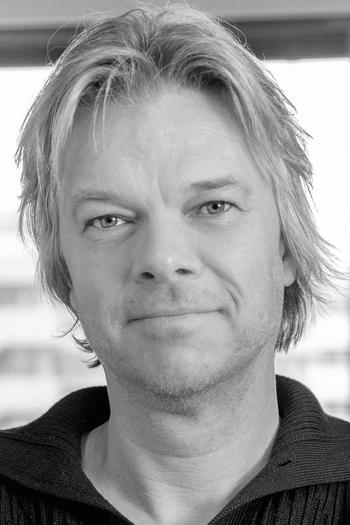
Prof. Frank Postberg is a University Professor for Planetary Sciences at Freie Universität Berlin, leading the Planetary Sciences and Remote Sensing group. He specializes in astrobiology and the exploration of icy ocean worlds such as Enceladus and Europa, using data from missions like Cassini-Huygens and Europa Clipper. Education: PhD (2007) in Physics from Heidelberg University, followed by postdoctoral research at the Max Planck Institute and University of Stuttgart. He habilitated in cosmochemistry (2012) and received a Heisenberg Fellowship (2014). Research focuses on the composition of plumes and subsurface oceans of icy moons, with projects like Habitat-OASIS exploring habitability. He co-leads experiments on interstellar dust (Destiny+ mission) and serves on ESA’s strategic mission teams. Awards include the ERC Consolidator Grant (2017) for studying ocean world habitability. His lab develops advanced instrumentation like SUDA for compositional analysis of planetary materials.
Dr. Annette M. La Greca is a **Distinguished Professor of Psychology and Pediatrics** at the University of Miami, affiliated with the **College of Arts and Sciences** and the **Department of Psychology**. She holds titles as Cooper Fellow and Provost Scholar. Her research focuses on risk and resilience in children and adolescents, particularly in the context of trauma, natural disasters, peer relations, and chronic illnesses like diabetes. She leads the **Youth Risk and Resilience Lab**, developing interventions to support families during crises. **Research Interests**: Her work spans child mental health, trauma responses, peer victimization, and pediatric health psychology. She has authored evidence-based guides like *After the Storm* and *Helping Children Cope with COVID-19*. **Awards & Honors**: Cooper Fellow, Provost Scholar, and recognition for contributions to clinical psychology. **Advising & Grants**: Mentors numerous graduate and undergraduate students, with former advisees pursuing leadership roles in academia and clinical practice. Active in securing grants for disaster-related mental health research. **Lab & Teams**: The lab emphasizes translational research, focusing on interventions for trauma-exposed youth and families. Collaborates with institutions like the Miller School of Medicine and Children’s Mercy Hospital.
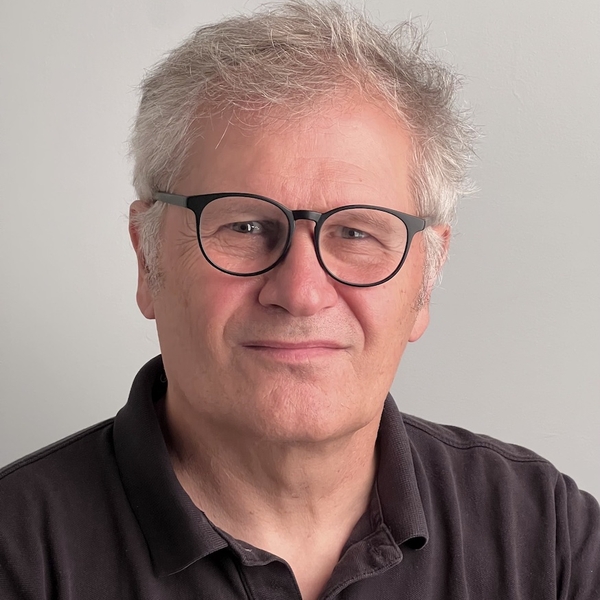
Aleksandr Stolyar is a Professor in the Department of Industrial and Enterprise Systems Engineering and the Department of Electrical and Computer Engineering at the University of Illinois at Urbana-Champaign, with additional affiliation at the Coordinated Science Lab. His research bridges theoretical and applied aspects of stochastic modeling across multiple engineering domains. Stolyar's work centers on Queueing Theory, Applied Probability, and Stochastic Systems, with significant contributions to asymptotic analysis, optimality frameworks, and resource allocation problems. His fingerprint reveals deep expertise in service time optimization, packing constraints, and server system dynamics, reflecting a career-long focus on mathematical foundations of complex systems. Recent publications demonstrate consistent innovation in large-scale system analysis, particularly in infinite-server configurations with packing constraints, particle systems exhibiting mean-field behavior, and inventory models incorporating lead time randomness. His methodological approach consistently leverages asymptotic techniques to derive provably optimal or near-optimal policies. Scientific recognition includes: INFORMS Fellow (2021) for contributions to telecommunication systems and queueing theory At the Coordinated Science Lab, Stolyar contributes to interdisciplinary research advancing information technology through rigorous mathematical frameworks. His collaborative work spans theoretical developments with practical implications for telecommunications infrastructure and supply chain optimization, maintaining active engagement with both academic and industry partners.
David A. Paige is a Professor in the Department of Earth, Planetary, and Space Sciences at the University of California, Los Angeles (UCLA). He leads multiple high-profile NASA missions, including serving as Principal Investigator for the Diviner Lunar Radiometer Experiment on NASA's Lunar Reconnaissance Orbiter (LRO) and Deputy Principal Investigator for the RIMFAX Ground Penetrating Radar on NASA's Mars 2020 Rover. His research group at UCLA comprises graduate students, researchers, and technical staff focused on planetary surface processes. Paige's research centers on planetary science, with emphasis on thermal processes, volatile stability (especially water and CO 2 ), and subsurface characterization using radar and radiometry. Key interests include: Thermal stability of lunar and Martian volatiles Radar subsurface mapping of Mars' Jezero Crater Lunar regolith properties and impact cratering effects Polar cold trap dynamics on the Moon and Mercury His work leverages orbital instrument data (e.g., Diviner, RIMFAX) to model surface-subsurface interactions. Recent publications (2021-2024) demonstrate a strong focus on lunar and Martian subsurface analysis, volatiles, and instrument data interpretation. Over 75% of his last 15 papers address: Lunar thermal/volatile processes (9 papers) Martian subsurface geology/radar (4 papers) Instrumentation/exploration concepts (2 papers) This reflects sustained leadership in lunar/Martian mission science and data exploitation. Paige received the NASA Exceptional Scientific Achievement Medal (2013) for discoveries on lunar/Mercurian volatiles. He advises 6+ graduate students and collaborates with international teams (e.g., Korean Pathfinder Lunar Orbiter). His group develops instrumentation (e.g., penetrators, radar systems) for future missions, emphasizing subsurface access and in-situ analysis.
Maria Paz Linares Herreros is a Senior Lecturer at the Universitat Politècnica de Catalunya (UPC) in the Department of Statistics and Operations Research within the Faculty of Mathematics and Statistics (FME). She is affiliated with the IMP - Information Modeling and Processing research group and inLab FIB. Her educational background includes a Licenciada en Matemáticas, a Doctorate from UPC, and a Master's in Logistics, Transportation, and Mobility. Licenciada en Matemáticas Doctorat from Universitat Politècnica de Catalunya Máster en Logística, Transporte y Movilidad Her research focuses on urban mobility , traffic simulation , and smart city technologies . She develops data-driven models for transportation systems and parking management, integrating deep learning techniques for real-time predictions. Her work addresses environmental impact assessment of traffic policies and inclusive mobility solutions . Recent publications analyze urban mobility trends through macroscopic and microscopic traffic models , deep learning applications for parking predictions, and dynamic ride-sharing systems . She explores IoT interoperability and data integration in transportation. Scientific awards include the IV International Award on Transport Infrastructure Management Research (2014). She participates in competitive R+D+I projects like ALGORAE and Virtual Mobility Lab, focusing on transportation innovation and smart city policy evaluation . She contributes to multimodal transport simulation frameworks such as CitScale and Barcelona Virtual Mobility Lab, which evaluate emerging mobility concepts and city policies using integrated modeling approaches .
Özalp Özer is a leading academic and industry executive specializing in Operations Management , Supply Chain Strategy , and Behavioral Operations . Currently, he serves as Director of Fulfillment by Amazon (FBA) Science & Innovation and as a Visiting Professor at MIT Sloan School of Management . He has held prestigious academic roles at The University of Texas at Dallas (George and Fonsa Brody Professor), Columbia University , and Stanford University , where he was a Consulting Associate Professor and Hellman Faculty Fellow . PhD, MS, Columbia University (Operations Research) BS, Bilkent University (Industrial Engineering) Özer's research spans end-to-end global supply chains , behavioral operations , pricing management , and inventory coordination . His work integrates Operations Research , Machine Learning , and Behavioral Economics to solve real-world business challenges. He pioneered the concept of Genuine Intelligence (GI) , combining analytical tools with human insights. His publications in top journals like Management Science and Operations Research address topics such as trust in supply chains , dynamic pricing , and RFID technology . Özer has received numerous accolades, including the Wickham Skinner Early-Career Award , NSF Grants , and teaching honors from MIT, Columbia, and Stanford. Özer actively contributes to editorial boards of major journals and has advised industry leaders like General Motors, IBM, and Amazon. His work bridges academic research and practical implementation , focusing on optimization algorithms , seller recommendation systems , and resource management .
Dr. Bevan Smith is a Senior Lecturer at the School of Mechanical, Industrial & Aeronautical Engineering at the University of the Witwatersrand (Wits), where he also completed his BIng(Mech), MSc(Eng), and PhD. His research bridges machine learning and engineering systems, with a focus on optimization through simulation and AI. His research interests include: Machine Learning and Reinforcement Learning Causal Machine Learning and Causal Discovery Graph Neural Networks Explainable AI (XAI) Digital Twins Application of AI in Education and Industrial Systems His recent publications demonstrate a strong trajectory in applying causal inference and machine learning to both industrial optimization (e.g., inventory management, air quality monitoring) and educational challenges (e.g., at-risk student prediction, online video interventions). He utilizes simulation-based methods and counterfactual reasoning to evaluate treatment effects and improve decision-making. His work spans journals in industrial engineering, artificial intelligence in education, and computational applications. Notable scientific contributions include: Developing AI-driven solutions for low-cost air quality monitoring (AI_r) Evaluating X-Learner performance under confounding and non-linearity Applying Pearl’s counterfactual framework to assess explanation validity Designing personalized interventions for engineering students using model-agnostic explanations Dr. Smith has contributed to curriculum development through the creation of online educational videos and has explored structural design in mechanical engineering, notably in carbon fibre swingarm development. While no formal advising or grant information is available, his work reflects an interdisciplinary approach combining mechanical engineering principles with cutting-edge AI methodologies. He is actively publishing and remains engaged in both technical and educational research domains.
Chi-Wing Robert Fok is a Professor in the Business Department at the University of Wisconsin-Parkside. He earned his Ph.D. in Finance from the University of Alabama in 1992 and has held a full-time faculty position at the university. His areas of expertise include Corporate Finance, Financial Institutions, and International Financial Management. His research focuses on Initial Public Offerings (IPOs), efficiency of financial institutions, banking relationships, international financial markets, and pedagogical research in finance. His work spans topics like IPO underpricing, market anomalies in Asia, financial systems in China and Taiwan, and behavioral finance. Professor Fok has received notable scientific awards, including the Milton Mills Faculty Research Award (2001) and the Best Paper Award at the First Annual Conference on Empirical Economics, Taiwan (2000). He has also been nominated multiple times for the Advising Excellence Award at the University of Wisconsin-Parkside. He has actively contributed to the university through various service roles, such as chairing the Search and Screen Committee for finance faculty positions and participating in curriculum development and assessment committees. At the professional level, he has reviewed for academic journals and engaged with the Midwest Financial Association.
Prof. Dr. Tamer Eren is a full-time professor in the Department of Industrial Engineering at the Faculty of Engineering and Natural Sciences, Turkish Aeronautical Association University. His academic work focuses on operations research, fuzzy logic applications, and disaster management optimization. Research Areas: Operations Research, Multi-Criteria Decision Making, Fuzzy Logic, Integer Programming, Disaster Logistics, Sustainable Development Institutional Affiliation: Turkish Aeronautical Association University, Department of Industrial Engineering His recent research explores bibliometric analyses of graduate theses across diverse fields including green logistics, project scheduling, forest fire resource allocation, and wearable technology in industrial safety . Key methodologies include fuzzy decision-making frameworks, integer programming, and systematic literature reviews. Notably, he has developed optimization models for disaster response logistics, healthcare personnel scheduling, and mining sector safety technologies. Publications reveal interdisciplinary contributions spanning emergency surgical care , healthcare operations , and smart city planning using advanced computational techniques like spherical fuzzy AHP and Pythagorean fuzzy TOPSIS. His work emphasizes practical applications in Turkey, addressing regional challenges in urban infrastructure, water resource management, and industrial safety.
Koray KILIÇ is an Assistant Professor in the Department of Coach Education at Kırşehir Ahi Evran University's Faculty of Sports Sciences. He holds a PhD in Physical Education and Sports from Middle East Technical University (METU), where he also completed his master's and bachelor's degrees. His academic career spans over 15 years, including postdoctoral research at the University of Ottawa's School of Human Kinetics (2021-2022). PhD: Physical Education and Sports (METU, 2019) MA: Physical Education and Sports (METU, 2013) BA: Physical Education and Sports (Ankara University, 2009) Research focuses on Physical Education and Sports Pedagogy , with particular emphasis on coach professional development, teaching styles, and holistic athlete development. His work explores needs-focused learning communities and technology-supported training programs for coaches. Articles analyze teaching methods in youth sports, athlete-initiated learning, and para sport coach education, demonstrating interdisciplinary engagement with sports psychology, pedagogy, and inclusive training frameworks. Design Thinking in Para Sport Coaching Social Learning Spaces for Coach Development Teaching Style Evaluation Tools Relative Age Effects in Team Sports Scientific recognition includes: 2024: Outstanding Journal Publication of the Year (The Spectrum Institute for Teaching and Learning) 2020: ODTÜ Doctoral Thesis Award (2018-2019) Advising highlights: Gamze Saatçi (2025): Social Learning Spaces in Nursing Education Rabia Öztürk Kızılkaya (2024): Coach Development for Para Sport Current projects include TÜBA/TÜBİTAK-supported initiatives on long-term athlete development and technology-enhanced coach training in competitive youth sports (2024). His work has been presented at international venues like CRIC International Coaching Conference (UK, 2013) and SCRI Conference (Canada, 2023).
Rob Basten is an Associate Professor in the Department of Industrial Engineering and Innovation Sciences at Eindhoven University of Technology (TU/e). He has been with TU/e since October 2014, initially as an Assistant Professor before being promoted. His work focuses on operations management and behavioral operations management, with particular expertise in maintenance, spare parts supply, and after-sales services for high-tech equipment. Basten's research is highly applied, often conducted in collaboration with industry partners such as ASML, NXP, Canon Production Printing, Marel Poultry, and the Ministry of Defence. Dr. Basten's educational background includes: Master's in Industrial Engineering and Management (2004) from University of Twente Master's in Computer Science (2005) from University of Twente PhD in Operations Management (2010) from University of Twente Rob Basten's research centers on improving after-sales services for high-tech equipment, with a focus on incorporating new technologies such as 3D printing and IoT. His work spans both analytical and empirical approaches, with increasing emphasis on behavioral operations management as human decision-makers interact with AI-based decision support systems. Basten investigates how to design and control after-sales service supply chains when spare parts can be 3D printed, and how to optimize maintenance policies for complex systems. His interdisciplinary research bridges operations management, maintenance engineering, and human behavior. Analysis of Basten's recent publications reveals a strong focus on the application of new technologies in after-sales services. Key trends include the integration of additive manufacturing in spare parts supply chains, condition-based and predictive maintenance driven by Industry 4.0 technologies, and the behavioral aspects of human-AI collaboration in maintenance decision-making. His work frequently addresses challenges in high-tech manufacturing contexts, particularly semiconductor equipment, with a growing emphasis on Industry 5.0 concepts that integrate human-centered approaches with advanced technologies. Dr. Basten has received recognition for his work, including: Finalist for the 2020 Daniel H. Wagner Prize for Excellence in Operations Research Practice ISIR Best Student Paper Award 2018 Rob Basten actively supervises numerous PhD students and has led several major research projects. He currently supervises nine PhD students including Maryam Azani, Ragnar Eggertsson, Bibi de Jong, Zhao Kang, Niccolò Maccarini, Aran Nasiri, Bas van Oudenhoven, İpek Tanıl, and Alireza Yazdani. He has successfully guided six PhD students to completion. Basten has been project leader and work package leader in significant research initiatives including ProSeLoNext (funded by NWO with industry co-funding), PrimaVera, SINTAS, and OCPROM projects. His research is consistently supported by both public funding agencies and industry partnerships, reflecting the practical relevance of his work. Basten is an active member of the Operations, Planning, Accounting & Control group at TU/e and contributes to the EAISI High Tech Systems initiative. He has organized key academic events including the first two editions of the Maintenance Research Day and the Behavioral Operations Conference 2019. His work connects academic research with industry practice through ongoing collaborations with leading high-tech companies, creating a dynamic research environment focused on solving real-world challenges in maintenance and service logistics.
Gerry Tsoukalas is an Associate Professor in the Information Systems Department at Boston University's Questrom School of Business . He is also a Visiting Professor at IMD Switzerland , Senior Fellow at the Wharton School , and Research Fellow at Cornell University's FinTech Initiative . PhD, Stanford University (2013) His research focuses on digital platforms , blockchain economics , and AI/ML applications in operations and finance. He co-founded the Crypto and Blockchain Economics Research Forum (CBER) , exploring topics like decentralized governance, tokenomics, and supply chain innovation. Recent publications examine blockchain scalability , privacy-preserving analytics , and tokenized financial systems . Awards include Dean’s Research Scholar and recognition by Thinkers50 Radar 2025 . He teaches business analytics at executive, graduate, and undergraduate levels . Affiliated with labs/teams: CBER Forum , Luohan Academy , and Harvard Business School research collaborations.
Jan C. Fransoo is Professor of Operations and Logistics Management at the Tilburg School of Economics and Management, Tilburg University. He maintains significant affiliations with MIT's Center for Transportation and Logistics as a Research Affiliate and with Technische Universiteit Eindhoven as a Visiting Professor. His research bridges academic rigor and practical application through extensive collaborations with multinational corporations, technology startups, and intergovernmental organizations including the World Bank and Interamerican Development Bank. His educational background includes: PhD in Production Control and Demand Management in Capacitated Flow Process Industries, Technische Universiteit Eindhoven (1989-1993) Master's Degree in Industrial Engineering and Management Science, Technische Universiteit Eindhoven (1984-1989) Professor Fransoo's research focuses on supply chain and operations management , with pioneering work on "nanostores" - his term for the 50 million mom-and-pop stores serving populations in developing regions. He also conducts significant research in urban logistics, omnichannel retail, and human-AI collaboration in supply chain decision-making. His methodology combines model-based and empirical quantitative approaches with practical field research, often developed in close partnership with industry stakeholders across multiple continents. His recent publications reveal a strong trend toward addressing real-world supply chain challenges in developing economies, particularly focusing on nanostore operations, financial constraints affecting small retailers, and the role of technology in enhancing supply chain resilience. His work consistently bridges theoretical innovation with practical applicability, as evidenced by his leadership in the Dutch national COVID-19 vaccination program deployment. Among his notable recognitions: M&SOM Journal Meritorious Service Award (2016) Salzberg Medallion (2022) University Medal from Eindhoven University of Technology (2017) Paper selected for virtual special issue in Transportation Science (2021) Professor Fransoo has supervised over 30 PhD students throughout his career, with current advisees researching nanostore logistics, human-AI decision making, and public health operations. His research is supported by collaborations with major organizations including ASML, ABInbev, Grupo Bimbo, and the World Bank. Notably, in 2021 he led a volunteer team that significantly accelerated the Dutch national vaccination campaign. He actively contributes to national logistics policy through Dinalog (the Dutch Institute for Advanced Logistics) and serves on the Independent Advisory Committee for the National Mobility Vision 2050. His current research continues to explore the complex dynamics of retail supply chains in developing economies and the transformative potential of digital technologies in global logistics operations.
Douglas M. Lambert is an Academy Professor at The Ohio State University within the Max M. Fisher College of Business. He contributes to the Department of Marketing & Logistics and is renowned for his expertise in supply chain management, strategic partnerships, and logistics performance. Education: PhD, Fisher College of Business, The Ohio State University MBA, Ivey Business School, Western University BA, Ivey Business School, Western University Professor Lambert's research focuses on supply chain management , vendor relations , and strategic logistics . His work emphasizes measuring and selling the value of logistics, integrating customer service with marketing, and assessing profitability in business segments. He has co-authored foundational texts such as Supply Chain Management: Processes, Partnerships, Performance and Strategic Logistics Management . Recent trends in his publications reveal a shift toward societal value measurement , service-oriented supply chain frameworks , and value co-creation in B2B relationships . His studies also explore cross-functional integration, SKU rationalization, and strategic service management. He has delivered over 200 presentations globally and participated in more than 500 executive education programs, addressing topics like supply chain partnerships , customer and supplier relationship management , and implementing cost trade-offs in logistics . He co-founded the International Journal of Logistics Management and has contributed extensively to SCM literature.
Christian Bierwirth is a Professor of Business Administration, specializing in Production and Logistics, at the Faculty of Law, Economics and Business, Martin Luther University Halle-Wittenberg. He holds the Chair of Production and Logistics and has been in this role since 2003. His academic journey includes a PhD (1992) and Habilitation (1999) in Logistics from the University of Bremen, and prior teaching roles at TU Dresden, University Rennes I, and as Acting Professor in Halle-Wittenberg (2002-2003). Education: Mathematics and Philosophy (1981-1988) at Heidelberg University Key Research Areas: Scheduling Algorithms, Port Logistics, Vehicle Routing, Optimization, Production Management Current Contact: christian.bierwirth@wiwi.uni-halle.de | Office: Room 312, Große Steinstraße 73, Halle (Saale) His research focuses on operational optimization in logistics systems, including container terminal operations , green transportation , and job shop scheduling . Recent work addresses environmental sustainability through emission-minimizing routing and eco-labeling of freight services. He pioneered GRASP and genetic algorithm applications in dynamic manufacturing environments. Publications span maritime logistics (berth allocation, crane scheduling), intermodal transport networks, and supply chain design under constraints. Notable contributions include integrated planning frameworks for production-distribution networks and synchronization models for logistics vehicles. Since joining Halle-Wittenberg, he has led teaching and research initiatives in logistics, contributing to national and international academic discourse through publications and conference participation.