Courtney Handman is an Associate Professor in the Department of Anthropology at the University of Texas at Austin, specializing in linguistic anthropology and Melanesian studies. With a Ph.D. from the University of Chicago, she explores intersections between language, religion, and infrastructures. Research Trajectory : From analyzing Protestant Christian translation projects in Papua New Guinea to examining decolonization-era circulation infrastructures, her work now investigates AI's role in redefining human-nonhuman communication. Teaching : Offers courses like Humans and AI , Culture and Communication , and Language and Posthumanism , exploring themes from invented languages to non-human communication systems. Her recent publications address algorithmic translation, colonial infrastructures, and cross-species communication frameworks. Connect through email for office hours or course inquiries.
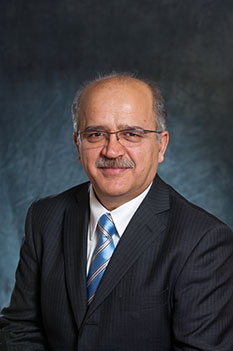
Dr. Ali Ghorbani is a Professor and Tier 1 Canada Research Chair in Cybersecurity at the University of New Brunswick's Faculty of Computer Science, where he served as Dean from 2008-2017. He is the founding Director of the Canadian Institute for Cybersecurity (CIC), established in 2016. Ghorbani holds BSc (Tehran), MSc (George Washington University), and PhD (UNB) degrees. With 42+ years in academia, his research spans cybersecurity, machine learning, adaptive systems, and critical infrastructure protection. Ghorbani has co-founded three cybersecurity startups (Sentrant Security, EyesOver Technologies, Cydarien Security) and co-invented four awarded patents. He has published 300+ peer-reviewed papers and supervised 250+ researchers. Professional roles include co-founding the National Cybersecurity Consortium (NCC) and serving as co-editor-in-chief of Computational Intelligence journal. Awards & Honors: Canada Research Chair in Cybersecurity Startup Canada Senior Entrepreneur Award (2017) RBC Top 25 Canadian Immigrants (2019) CAIAC Lifetime Achievement Award (2024)
Dr. Emily Jones is a Lecturer in Modern History at the University of Manchester since 2018. She holds a DPhil from the University of Oxford, funded by the AHRC. Her research focuses on the intellectual and political history of 19th- and 20th-century Britain, particularly the evolution of conservatism and constitutionalism. Notable works include Edmund Burke and the Invention of Modern Conservatism (OUP, 2017), which won the Longman-History Today Prize, and her forthcoming monograph One Nation: The Disraeli Myth and the Making of a Conservative Tradition (Princeton UP). She is a fellow of the Royal Historical Society and the Higher Education Academy. Teaching includes courses on modern British history, intellectual history, and historical research methods. Current research explores the role of Benjamin Disraeli in shaping conservative traditions and the origins of political terminology like 'left' and 'right'. Jones has contributed to media outlets such as the Financial Times and BBC Radio 4, and her expertise spans transnational conservatism, political mythmaking, and constitutional thought. Education: DPhil (Oxford), MPhil/BA (University of Cambridge) Affiliations: Royal Historical Society Fellow, Higher Education Academy Fellow Media Engagements: BBC Radio 4, ABC Australia, ORF Austria Her work bridges academic scholarship and public discourse, with a focus on reinterpreting historical figures and movements to inform contemporary debates. Current projects emphasize the interplay between political ideology and national identity in modern Britain.
Dr. Mirela Ivanova serves as Lecturer in Medieval History at the Department of History, School of History, Philosophy and Digital Humanities, University of Sheffield since 2021. Her research centers on Byzantine intellectual and social history with particular focus on Central and Eastern European medieval contexts, examining written culture, multilingualism, and cultural transmission across political boundaries. Her scholarship operates at two interconnected levels: analyzing medieval textual production as a tool for socio-political change, and critically examining how 19th-20th century nationalist projects shaped Byzantine historiography and heritage practices. Current projects investigate how historiographical frameworks influence contemporary heritage management in Eastern European states, bridging medieval studies with postcolonial theory. Recent publications including the monograph Inventing Slavonic: Cultures of Writing between Rome and Constantinople (2024) and co-edited volume Is Byzantine Studies a Colonialist Discipline? (2023) demonstrate methodological innovation through combining manuscript analysis with critical heritage studies. Her work consistently explores the tension between medieval textual creation and modern identity politics. Scientific recognition includes: BBC/AHRC New Generation Thinker (2021) Junior Research Fellowship, University of Oxford Research Fellowship, Koç University Residential Fellowship, Centre for Advanced Study in Sofia Dr. Ivanova actively engages public audiences through History Today, Los Angeles Review of Books, and BBC Radio 3 appearances. She develops university access initiatives for UK schools while teaching undergraduate courses including Byzantine Intersectionality and postgraduate Presenting the Past , emphasizing critical approaches to historical narratives and heritage.
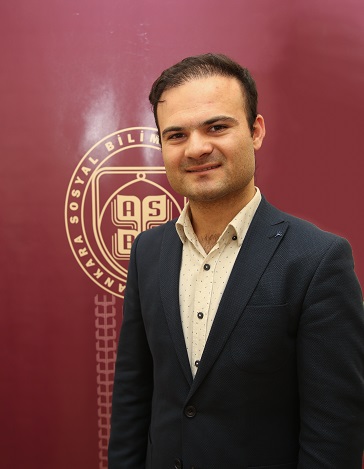
Dr. Hakan KOÇAK serves as Assistant Professor in the Department of Commercial Law at Ankara Social Sciences University's Faculty of Law. Holding dual bachelor's degrees in Law and International Relations from TOBB University of Economics and Technology, he earned his Master's from Ankara University with thesis on patent law and completed his PhD at Hacettepe University focusing on reinsurance contracts. PhD in Private Law (2023), Hacettepe University Master's in Private Law (2019), Ankara University Bachelor of Laws (2016), TOBB University Bachelor of International Relations (2017), TOBB University Specializing in Commercial Law, Insurance Law, Corporate Law, and Intellectual Property Law, Dr. KOÇAK's research examines critical intersections between regulatory frameworks and commercial practice. His work on reinsurance contracts addresses conceptual ambiguities in risk transfer mechanisms, while his patent law studies analyze compulsory licensing provisions under TRIPS agreements with focus on pharmaceutical access in developing economies. Current research explores war risk insurance in maritime contexts and earn-out arrangements in corporate share transfers. His publication analysis reveals consistent focus on legal harmonization challenges, particularly in intellectual property regimes and insurance contract standardization. Recent works demonstrate increasing specialization in reinsurance mechanisms and pharmaceutical patent regulation, reflecting evolving global commercial challenges. TÜBİTAK BİDEB 2214-A International Doctoral Research Fellowship (Zurich University, 2021-2022) Multiple WIPO certification courses in intellectual property systems (2018-2019) YÖKDİL English Proficiency (95/100, 2021) As Dean's Assistant and Scientific Award Committee Member at ASBU, Dr. KOÇAK oversees academic evaluations while teaching Insurance Law, Commercial Paper Law, and Marine Insurance courses. His editorial roles include serving on the boards of Ankara Social Sciences University Law Faculty Journal (2019, 2024). Active in professional associations including AIDA Turkey and European Law Institute, he contributes to national legal discourse through comparative commercial law research.
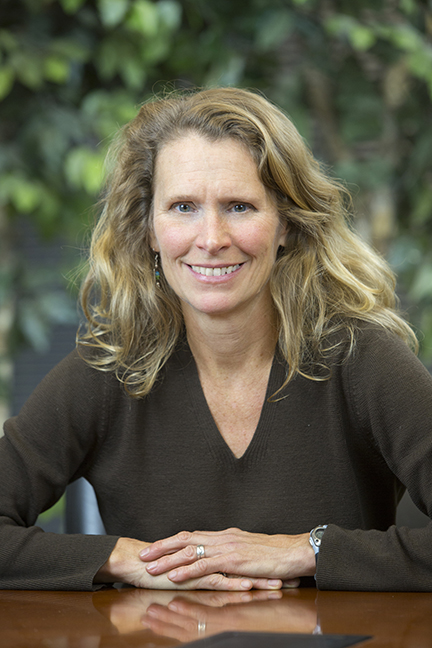
Susan K. Cohen serves as Associate Professor of Organizations and Entrepreneurship at the University of Pittsburgh's Katz Graduate School of Business, where her research investigates how firms achieve innovation success through organizational capabilities, social networks, alliance structures, and ecosystem strategies. Her work integrates resource-based theory, social network analysis, and complex contagion frameworks to advance knowledge in innovation commercialization. Her academic credentials include a PhD in Strategic Management from the University of Minnesota (1998) and a BS in Management Information Systems from Clarkson University (1986). Professor Cohen's research spans innovation dynamics, entrepreneurial ecosystems, knowledge management, and strategic alliance formation. She examines firm-specific language in life science business model transformation and analyzes how regional entrepreneurial ecosystems influence new venture resource acquisition strategies. Her current work emphasizes practical applications for improving innovation outcomes in complex technological environments. Analysis of her recent publications reveals consistent focus on innovation barriers and enablers across industries including biotechnology, machine tools, and wireless communications. Her work demonstrates evolving emphasis on ecosystem-level factors and cross-sector collaboration, with increasing attention to assistive technology translation and regional economic development. Scientific recognition includes: Distinguished Reviewer Award, Academy of Management Discoveries (2018) She has secured over $4.5 million in research funding through grants from NSF, NIDILRR, PPG Foundation, and University of Pittsburgh initiatives. Key projects include IMPACT Grant on community development ($4.5M), Pitt Seed Grants for entrepreneurial ecosystem diversity ($48,972), pharmaceutical R&D productivity studies ($7,000), and global innovation conferences sponsored by Bayer/Alcoa/PPG. Her editorial leadership includes Associate Editorship at Academy of Management Discoveries and TIM Division Program Chair-Elect role at the Academy of Management. Professor Cohen directs experiential learning initiatives including Commercializing New Technologies and Leading Organizations to Innovate courses, while co-organizing industry-academic partnerships like the Global Collaboration for Technological Innovation conference series.
Peter Swaab serves as Professor of English Literature in the Department of English Language and Literature at University College London, where he has maintained continuous faculty service since 1990. His academic career includes visiting professorships at the University of Turin, University of Zürich, Dartmouth College, and the University of Tübingen, alongside significant contributions to literary scholarship through editorial work and public intellectual engagement. His educational foundation includes undergraduate studies in English at the University of Cambridge, followed by a Harkness Fellowship at Harvard University and New York University. He completed his PhD at Cambridge in 1984 with a dissertation on 'Wordsworth and Patriotism,' subsequently holding research and teaching positions at Queens' College and Corpus Christi College, Cambridge, where he served as Director of Studies in English for four years. Swaab's research centers on the intersections of Romantic and Victorian poetry traditions, with specialized expertise in nonsense poetry (particularly Edward Lear's work) and 20th-century British literature, notably the writings of Sylvia Townsend Warner. His scholarship frequently examines biographical approaches to literary figures and the evolution of poetic forms across historical periods, reflecting deep engagement with both canonical and marginalized voices in English literary history. Analysis of his recent publications reveals sustained focus on literary continuity between Romanticism and modernism, with particular attention to how Victorian nonsense traditions influenced 20th-century experimental writing. His work consistently addresses gender dynamics and political dimensions in literature, aligning with UN Sustainable Development Goal 5 (Gender Equality). Swaab actively contributes to academic discourse as editor of The Journal of the Sylvia Townsend Warner Society and through media appearances including BBC Radio 4's In Our Time , demonstrating commitment to public scholarship despite no documented grant activity or doctoral student supervision in the provided materials.
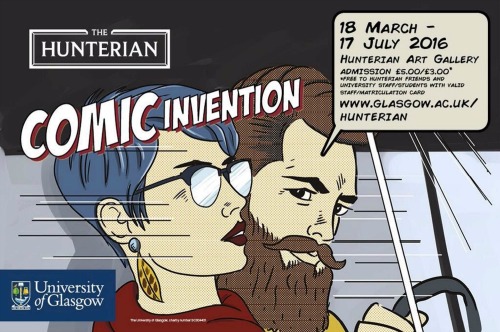
Laurence F Grove is Professor of French and Text/Image Studies at the University of Glasgow, where he serves as Director of the Stirling Maxwell Centre for the Study of Text/Image Cultures. He holds significant leadership roles as President of the International Bande Dessinée Society and Vice-Président of Les Amis de Tristan L'Hermite. Grove also serves as general editor of Glasgow Emblem Studies and co-editor of European Comic Art, establishing himself as a leading figure in interdisciplinary text/image scholarship. Professor Grove's research focuses on word/image interaction spanning from early printing to contemporary visual culture. His work bridges historical and modern approaches, specializing in emblem books from the pre-industrial period and bande dessinée (comics) in the present day. His scholarship explores how visual and textual elements interact across different historical periods and cultural contexts, with particular interest in the evolution of visual storytelling forms. Grove has made significant contributions to understanding comics as a legitimate art form and cultural phenomenon, challenging traditional literary hierarchies. His extensive publication record reveals consistent engagement with transnational comics studies, emblem research, and text/image theory. Grove's work demonstrates a clear trajectory from historical emblem studies to contemporary comics analysis, highlighting the continuity of visual-verbal communication across centuries. His research often examines national identity through visual culture, with particular attention to French and Scottish comics traditions. GUSRC Student Teaching Award nomination for Most Organised Course GUSRC Student Teaching Award nomination for Most Innovative Teaching University of Glasgow's Most Innovative Teaching recognition Professor Grove actively supervises PhD and MPhil students from around the world (including USA, France, Scotland, Brazil and England) working on various aspects of comics studies and text/image culture. His supervision covers diverse topics from emblem vogue and stereotypes to superhero narratives and video game studies. Grove has organized ten international conferences and co-curated major exhibitions including 'Breaking the Renaissance Code,' 'Comic Invention,' and 'Frank Quitely: The Art of Comics,' demonstrating his commitment to bridging academic research with public engagement. As Director of the Stirling Maxwell Centre, Grove oversees one of the world's premier collections for text/image culture research, leveraging the extensive holdings of Glasgow University Library and the Hunterian Museum and Art Gallery. His current projects include developing the Comic Invention exhibition for worldwide venues, working toward establishing a National Comics Centre for Scotland, and creating 'The Collapse of the Canon,' a multimedia project examining the evolution of cultural canons since the advent of personal computing.
Ari Larissa Heinrich (he/they) serves as Professor of Chinese Media and Literature and Director of the Gallery at the Australian Centre on China in the World within the School of Culture, History & Language at Australian National University. A Fellow of the Australian Academy of Humanities, Heinrich holds advanced degrees from Harvard University (MA in Chinese Literature) and UC Berkeley (PhD in Chinese Studies). Heinrich's research centers on experimental visual cultures from China, Taiwan, and Hong Kong, with distinctive focus on biological materials including body parts, pathological specimens, and organic chemicals. Their work intersects queer theory, medical illustration, and transnational art practices, examining phenomena like the exhibition of Chinese cadavers in global anatomical displays and the use of melanin in posthuman art. Key research areas include cyborg aesthetics, modern Chinese literature, and queer visual culture as evidenced by fingerprint analysis showing 100% China Arts/Humanities concentration. Research outputs reveal significant scholarly impact with 43 publications since 2004, including books, translations of Taiwanese queer literature, and peer-reviewed articles. Recent work trends show intensified activity since 2020, particularly in posthuman studies and queer Chinese art. Heinrich's 2024-2022 publications demonstrate methodological innovation blending medical humanities with experimental media. Fellow of the Australian Academy of Humanities ARC Future Fellowship recipient Andy Warhol Foundation Arts Writers Grant awardee Heinrich leads research projects including the 2023 ARC-funded "Team Translation of Ta-wei Chi's A Queer Invention in Taiwan," supervises research students in Chinese visual culture, and directs gallery exhibitions at the Australian Centre on China in the World. Current work engages with Lu Yang's digital art transformations and melanin-based posthuman aesthetics through international collaborations.
John McNamara is an IBM Master Inventor and Advanced Visiting Research Fellow at the University of Sheffield, holding Honorary Professorships at University College London (UCL) and Sheffield Hallam University. He specializes in interdisciplinary innovation across cybersecurity, transportation systems, and artificial intelligence, leveraging technologies like Cloud and Watson for Tech for Good initiatives. His roles include IBM Technical Specialist, IBM Thought Leader, and Open Group Distinguished Technical Specialist, with industry expertise spanning defense, finance, and healthcare sectors. Education: BSc (Hons) in Information Systems from the University of Hull. Research focuses on patentable inventions addressing complex event processing, automated systems optimization, and regulatory compliance. Key innovations include intelligent fuel management systems, automated style-checking frameworks, and goal-directed simulation tools for business processes. His work bridges academic research with real-world industry applications. Awards: IBM Master Inventor IBM Thought Leader Technical Specialist Open Group Distinguished Technical Specialist Collaborates with IBM UK University Programs to develop socially impactful technologies. Active in creating solutions for disease control, banking systems, and defense applications through cross-disciplinary partnerships.
Deoksoon Kim is a Professor in the Department of Teaching, Curriculum, and Society at Boston College. Her research focuses on second language literacy, socioculturally diverse learners, and integrating technology into education. She previously taught in Korea and Florida, emphasizing culturally responsive pedagogy for immigrant students. Her work includes developing STEM curricula for English Language Learners (ELLs) and exploring digital tools like virtual reality and digital storytelling for educational innovation. Education: Ph.D., University of New Mexico M.A., University of New Mexico Research Interests: She investigates bilingualism, technology-enhanced learning, and holistic education approaches, particularly for marginalized student populations. Key areas include translanguaging practices, formative assessment, and STEM education equity. Notable Contributions: Recent projects include the Waltham School District’s invention-based science curricula, the hydroponic Green House initiative, and collaborations with MIT and CityConnects. Her work on pandemic-era EdTech leadership and online whole-person education has influenced global teaching practices. Awards: 2016 Best Article Award (Journal of Second Language Writing) AERA Online Teaching and Learning SIG Best Paper Award Florida Outstanding Educator Award Labs/Teams: Active in interdisciplinary teams at Boston College, MIT, and Waltham schools, focusing on culturally relevant curricula and ELL support systems. Her research bridges educational technology, teacher training, and sociocultural dynamics in learning environments.
Shlomo Sand is an Israeli historian and Professor at Tel Aviv University. He is best known for his critical historical analyses of the origins and myths of Israel, including his 2012 book The Invention of the Land of Israel: Myth and Truth . Sand has held visiting positions at prestigious institutions such as the École des Hautes Études en Sciences Sociales in Paris and the University of California, Berkeley. His research spans the history of cinema, intellectuals, and nationalism, often sparking political and academic debates. His work engages with the reinterpretation of historical narratives, particularly regarding the Israeli-Palestinian context, while maintaining a scholarly stance that avoids overt ideological labels like Zionism or anti-Zionism. In 2013, he participated in an English-language discussion event at the Center for Intercultural Studies (ZIS) in Mainz, Germany, alongside Noam Zadoff, a scholar in Israel and Near Eastern Studies.
Molly Flaherty is an Assistant Professor of Psychology at Davidson College. She joined the faculty in 2020 after previously serving as a Visiting Assistant Professor at Swarthmore College and a British Academy Newton International Fellow at the University of Edinburgh. Education: B.A. in Psychology from Columbia University M.Sc. in Psychology from The University of Edinburgh Ph.D. in Psychology from The University of Chicago Research Interests: Flaherty investigates the structure of language and its relationship to cognitive development, focusing on Nicaraguan Sign Language (NSL) as a case study for understanding language emergence and evolution. She examines how early language environments influence language acquisition and cognition, particularly in the invention and learning of numerical concepts. Her methodologies include developmental tabletop paradigms and motion tracking technology applied during fieldwork in Nicaragua. Teaching: At Davidson, she teaches courses in Child Development (PSY 2410), Nature vs. Nurture (PSY 363), Research Methods in Child Development (PSY 315), and Language Development, emphasizing critical perspectives on structural biases in developmental psychology and language sciences.
Dr Yaji Sripada is a Senior Lecturer in the School of Natural and Computing Sciences at the University of Aberdeen. His research integrates artificial intelligence, machine learning, natural language generation (NLG), and information visualization to enhance human-machine communication, particularly in automating data science workflows and ensuring model transparency. His research interests are centered on Natural Language Generation , Explainable AI , Human-Computer Interaction , and Fairness, Accountability, and Transparency in AI . He has pioneered work in generating textual summaries from complex data, especially in healthcare and environmental monitoring. His research bridges technical AI development with real-world applications in public transport, neonatal care, and digital governance. His recent publications (2023–2025) reflect a strong trend towards AI ethics , regulatory policy , and the integration of large language models (LLMs) in public infrastructure and automated verification. He also holds multiple patents in NLG and data processing technologies, underscoring his translational research impact. Dr Sripada is a co-founder of Arria NLG, a leading company in data-to-text technology, and has advised numerous researchers and students in AI and NLG. His collaborative work spans disciplines including computer science, environmental science, transportation, and law. He has contributed to policy discussions on AI regulation and copyright, demonstrating engagement with societal implications of AI. His work on bias amplification in generative AI highlights his commitment to responsible innovation. His research has been applied in diverse domains, including neonatal intensive care (e.g., BT-Nurse system), rural transport systems (e.g., TravelBot), and environmental data communication (e.g., river level reporting). He continues to lead innovative projects at the intersection of AI, data science, and human-centered design.
Michael Kifer is a Professor in the Department of Computer Science at Stony Brook University . His research focuses on declarative languages, logic programming, semantic web, and integration of object-oriented and deductive paradigms. He has received multiple prestigious awards including three ACM-SIGMOD 'Test of Time' awards, SUNY Chancellor's Award, and Stony Brook's Research Excellence Award. Ph.D. in Computer Science, Hebrew University of Jerusalem (1985) M.S. in Mathematics, Moscow University (1976) Dr. Kifer's research interests span over 30 years, with major contributions to databases, knowledge representation, and semantic web technologies. He co-invented F-logic, HiLog, Annotated Logic, and Transaction Logic, which are widely cited in computer science literature. His recent publications focus on hybrid logic programming, multilevel modeling (MLM), and knowledge authoring systems like Flora-2. These works bridge rule-based reasoning, controlled natural language, and semantic web technologies. Scientific Awards : Department Research Excellence Award (2014) ACM-SIGMOD 'Test of Time' Awards (1999, 2002) SUNY Chancellor's & Stony Brook President's Awards (2008) Association for Logic Programming 'Test of Time' Award (2013) Plumer Fellowship at Oxford (2006) Dr. Kifer has served on editorial boards and chaired conferences in logic programming and semantic web. He developed the Flora-2 knowledge representation system and contributed to standards like RIF (Rule Interchange Format).