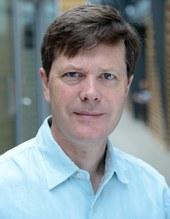
Maude Baldwin is the Director of the Evolution of Sensory and Physiological Systems department at the Max Planck Institute for Biological Intelligence. Her research focuses on the molecular and physiological mechanisms underlying sensory receptor evolution in vertebrates, particularly in birds. Education : Ph.D. from Harvard University (Department of Organismic and Evolutionary Biology, 2007-2014); B.A. from New York University (Gallatin School of Individualized Study, 2005). Research Interests include: Evolution of taste receptors, such as the repurposing of savory receptors for sweet detection in hummingbirds. Convergent evolution in sensory systems across vertebrates. Integrative approaches combining molecular methods, cell culture, and behavioral studies. Impact of dietary shifts on ecological and physiological adaptations. Publication Trends reveal a focus on comparative genomics , protein evolution , and sensory system adaptation , with specific attention to bird taste receptors , gene loss , and echolocation genetics . Labs & Teams : Baldwin leads a multidisciplinary team at the Max Planck Institute, recruiting researchers in comparative genomics , organoid technology , and vertebrate natural history . The group investigates sensory-diet coevolution and physiological trade-offs.
Eric J. Gangloff is an Assistant Professor in the Department of Biological Sciences at Ohio Wesleyan University (OWU). His research focuses on understanding how organisms adapt to environmental changes, particularly in reptiles and amphibians, using integrative approaches combining field studies, lab experiments, and molecular techniques. He holds a B.A. from Cornell University, an M.A. from the University of Denver, and a Ph.D. from Iowa State University. Dr. Gangloff leads a lab investigating physiological and ecological adaptations in species such as the common wall lizard, garter snakes, and red-backed salamanders. Notably, his work on Ohio’s invasive wall lizards has been funded by the NSF, exploring their evolutionary success in urban environments. Collaborations span institutions worldwide, including France, Canada, and Australia. His recent studies examine how temperature, oxygen availability, and urbanization influence lizard physiology, behavior, and survival. Key themes include thermal biology, ecological traps, and resilience to pollutants like lead. The lab actively involves undergraduate students in field and lab research, emphasizing hands-on learning. Gangloff’s lab website (https://glare-owu.wixsite.com/glare) showcases ongoing projects and publications. His work bridges basic science and applied conservation, addressing global challenges in biodiversity and climate change.
Professor Lindsay Turnbull is a Professor of Plant Ecology at the University of Oxford's Department of Biology. Her research focuses on understanding the evolutionary and ecological basis of plant trait diversity and its consequences for ecosystems. Key interests include seed size variation, plant-soil interactions, and the impact of organic farming on biodiversity. She leads a research group exploring topics such as mutualism stability, species coexistence, and island conservation genetics. Turnbull's work integrates experimental, observational, and computational approaches to address fundamental questions in ecology. Her lab, based at the Department of Biology (Mansfield Road and South Parks Road campuses), has contributed to global understanding of biodiversity-ecosystem functioning relationships and plant-microbe symbioses. Notable projects include studies on Aldabra giant tortoises and coral reef connectivity in the Seychelles, highlighting her commitment to applied conservation science. Her research spans multiple scales—from molecular interactions in legume-rhizobia systems to large-scale biodiversity patterns in grasslands and tropical ecosystems. Recent work emphasizes the role of trait-based approaches in predicting ecological responses to environmental changes such as eutrophication and climate variability. Her publications frequently bridge theoretical and applied ecology, offering insights into both natural and human-managed ecosystems.
Dr. Silu Wang is an Assistant Professor in the Department of Biological Sciences at the University at Buffalo. Her research focuses on speciation, adaptation, and forest evolutionary genomics, particularly in avian species. She leads the Forest Speciation Lab, studying the genomic and ecological mechanisms underlying species divergence in North American and global forest ecosystems. Her work integrates field studies, genomic analyses, and computational modeling to address biodiversity conservation challenges under climate change. Education: BS in Behavior Genetics and Neurobiology, University of Toronto MA in Ecology, Evolution and Behavior, University of Texas, Austin PhD in Zoology, University of British Columbia Postdoctoral Research at University of California Berkeley and UC Davis Research Interests: Dr. Wang investigates how hybridization, climate adaptation, and reproductive isolation shape avian biodiversity. Her lab uses old-growth forest bird species as models to study early-stage speciation processes, including mate choice, genetic incompatibilities, and mitochondrial-nuclear interactions. Key themes include understanding organismal responses to environmental changes and developing genomic tools for conservation prioritization. Lab and Teams: The Forest Speciation Lab collaborates with institutions globally, focusing on fieldwork in temperate and tropical forests. Current projects include studies on warbler hybrid zones, tinamou speciation, and the genomic architecture of mitonuclear coevolution. Teaching: Dr. Wang teaches courses on Speciation, Tropical Ecology, and Evolutionary Biology, emphasizing hands-on research training for students.
John Wakeley is a Professor of Organismic and Evolutionary Biology at Harvard University's Faculty of Arts and Sciences. He leads the Wakeley Lab, focusing on theoretical population genetics, mathematical models of genetic variation, and evolutionary processes. His research integrates analytical and computational methods to study contemporary and historical factors shaping genetic diversity. As of 2023, he is not accepting new graduate students for the academic year 2023-2024. Wakeley's work emphasizes coalescent theory, population structure, and evolutionary game theory. Notable contributions include developing statistical tools for analyzing ancient DNA and advancing models of ancestry reconstruction. Recent projects explore topics such as recurrent mutation in rare variants and the implications of big family effects on coalescence patterns. His lab members include researchers like Louis Fan, Jack Edwards, and Erin Ciccone, collaborating on diverse projects in theoretical and applied population genetics. Key scientific outputs include studies on iterated survival games and genomic analyses of butterfly radiation.
Zechuan Lin is a Lecturer at the Department of Neurology , Yale School of Medicine, and a member of the Adams Center for Parkinson's Disease Research . He previously held a postdoctoral research fellowship at Harvard Medical School/Brigham and Women's Hospital in 2023 and earned his PhD from Peking University, College of Life Sciences in 2019. His research bridges computational biology , genomics , and plant genetics , focusing on genetic improvement in crops like rice and maize. Key methodologies include heterosis analysis , transcriptomic profiling , and QTL mapping to dissect agronomic traits and environmental adaptation. Lin's publications highlight advancements in hybrid rice breeding , genome-wide selection , and computational tools for allelic imbalance and daylength-sensing models. His work integrates bioinformatics and genetic networks to address both fundamental and applied biological questions. He is affiliated with Scherzer's Lab , which employs interdisciplinary approaches to neurogenomics and personalized medicine for neurological disorders like Parkinson's disease. His contributions to big data analysis and cross-species genetic studies reflect a unique intersection of plant and neurogenomics.
Richard Crooijmans is an Associate Professor at Wageningen University & Research in the field of Animal Breeding and Genetics. With over 363 research outputs and 50 datasets, his work spans genomics, genetic divergence, and livestock breeding. Research interests include: Genomics and Whole Genome Sequencing Animal Genetics and Breeding Programs Genetic Variability and Marker-Assisted Selection Recent publications in 2025 focus on probiotic effects on broiler breeders, pig mutation rates, and genomic selection in Holstein cattle. His projects involve advising PhD candidates in areas like ethical egg industry development and milk composition genetics. Current advising : Fotowatikha Someeserai (PhD, ethical egg industry) Zhuang Z. (PhD, epigenomic regulatory elements) Gao J. (PhD, genomic data analysis) Media contributions include genetic research on Dutch chicken breeds and aurochs extinction.
April Wei is an Assistant Professor in the Department of Computational Biology at Cornell University, where she leads the Wei Lab in Computational Genetics. Her research focuses on developing scalable computational methods to analyze massive genomic datasets, addressing fundamental questions in evolutionary processes and human genetics. B.Sc. in Biology, Fudan University (2013) Ph.D. in Computational Biology, University of Michigan (2018) Postdoctoral Research at UC Berkeley and UCLA Joined Cornell in January 2022 The Wei Lab explores diverse areas such as population genetics , computational genetics , and natural selection , with applications in human evolution , gene conversion , and complex traits . Their work leverages graph-based data structures and deep learning to improve genomic analysis scalability. April's research trajectory, as reflected in her publications, emphasizes genomic data compression , selective sweep detection , and ancestral recombination graph (ARG) analysis . Her lab's outputs span algorithm development for biobank-scale data, evolutionary modeling of overlapping genes, and statistical frameworks for gene conversion landscapes. April mentors a team of Ph.D. students and postdoctoral researchers, including current advisees Ziqing Pan, Meera Chotai, Jinmin Li, Aditya Girish, and Lin Yuan, with notable alumni such as Siddharth Avadhanam (2023). The lab is supported by NIH and NSF grants. Lab culture prioritizes collaboration , inclusivity , and scientific curiosity , with social activities like lab barbecues, game nights, and group hikes. April is also a passionate fan of Star Wars and water sports.
Lauren Schroeder serves as Associate Professor and Associate Chair of Graduate Anthropology in the Department of Anthropology at the University of Toronto Mississauga (UTM). A South African palaeoanthropologist specializing in hominin cranial and mandibular diversity, she employs quantitative methods including 3D morphological modeling and quantitative genetics. Dr. Schroeder maintains research affiliations with the Royal Ontario Museum, Human Evolutionary Research Institute, and Evolutionary Studies Institute at the University of the Witwatersrand. Her academic credentials include: PhD, University of Cape Town, 2015 BSc (Hons), University of Cape Town Dr. Schroeder's research spans Biological Anthropology, Palaeoanthropology, and Evolutionary Anthropology with emphasis on hominin variability, evolutionary theory, and quantitative genetics. Her work integrates statistical analyses of 3D morphological data with quantitative genetic approaches to investigate evolutionary processes underlying morphological variation. Current projects examine primate skeletal evolution, skeletal signatures of hybridization for detecting gene flow in fossil records, and the relative contributions of genetic drift versus natural selection in hominin evolution. Analysis of her 2016-2020 publications reveals consistent focus on paleoanthropological research centered on Homo naledi and other hominin fossils. Her scholarly output demonstrates integration of evolutionary theory, quantitative genetics, and morphological integration to explore hominin diversity and evolutionary mechanisms. Recurring themes include Bayesian phylogenetic methods, hybridization studies in human evolution, and critical reflections on ethics and decolonization within anthropological practice. No scientific awards were documented in the provided materials. Information regarding graduate student advising and research grant funding was not specified in available sources. The Schroeder Lab, situated in UTM's Terrence Donnelly Health Sciences Complex, advances morphological evolution research in humans and primates through innovative quantitative methodologies. Dr. Schroeder has contributed significantly to major paleoanthropological projects including the Malapa excavation (Australopithecus sediba) and Rising Star Cave (Homo naledi) as core research team member analyzing fossil hominins.
Dr. Henry Streby is an Associate Professor of Ecology in the Department of Environmental Sciences at the University of Toledo, where he leads the Streby Lab. He also holds an appointment as Adjunct Assistant Professor and is recognized as a Fellow of the American Ornithological Society. Education: Ph.D. in Ecology from University of Minnesota Research Focus: Dr. Streby's research spans avian ecology , wildlife ecology , evolutionary biology , and quantitative science . His work particularly emphasizes organismal ecology with applications to conservation and management of migratory songbirds. Key research areas include: Migratory connectivity and seasonal interactions Conservation biology of declining songbird populations Behavioral ecology of breeding and migratory birds Quantitative methods in wildlife research Effects of environmental change on bird populations Research Impact: Dr. Streby's work has significantly advanced understanding of songbird migration, particularly in Vermivora warblers and golden-winged warblers. His 2015 Current Biology paper on tornado avoidance behavior in songbirds received extensive international media coverage and reached the 99th percentile of all articles tracked by Altmetric. His recent research continues to explore migratory connectivity, hybridization patterns, and conservation strategies for North American migratory birds. Awards and Recognition: 2021 President's Award for Excellence in Scholarly Activity (University of Toledo) Elected Fellow of the American Ornithological Society (2021) 2013 Cooper Ornithological Society Young Professional Award Multiple best presentation awards at professional conferences Student Mentorship and Lab: Dr. Streby has successfully mentored numerous graduate students who have gone on to prestigious positions. Notable former students include: Gunnar Kramer (PhD 2021) - now Assistant Professor at Iowa State University Silas Fischer - recipient of multiple awards and fellowships Sean Peterson - pursued PhD at UC Berkeley Kyle Pagel - Environmental Scientist with California Department of Fish and Wildlife Annie Lindsay - active in migration research The Streby Lab continues to be highly productive, with ongoing research on Gray Vireos, migration ecology, and conservation applications. The lab maintains active field sites and collaborates extensively with other institutions and agencies.
Professor David Macdonald CBE, FRSE is a leading academic in wildlife conservation, currently serving as the Professor of Wildlife Conservation at the University of Oxford and founding director of the Wildlife Conservation Research Unit (WildCRU). He holds a visiting professorship at Imperial College and chairs key committees including the Darwin Advisory Committee and Natural England’s Science Advisory Committee. His research integrates behavioral ecology with interdisciplinary approaches, addressing human-wildlife conflict through ecological, economic, and social science lenses. Notable areas include carnivore conservation (e.g., lions, tigers, and Ethiopian wolves) and the impacts of resource distribution on social structures. Awards include the CBE and FRSE. His work emphasizes policy-relevant science, leveraging long-term datasets and innovative tools like CARACAL acoustic monitoring. He advises on global conservation strategies, including responses to illegal wildlife trade and habitat loss. Education details are not explicitly stated, but his academic trajectory reflects advanced training in biological sciences. Research interests span from felid behavior to the socio-economic dimensions of conservation. Key collaborators include Earthwatch and the Wildfowl and Wetlands Trust. Students include Adjany Costa (Graduate Student). His contributions extend to policy via roles in advisory boards and advocacy for evidence-based conservation.
Irby Lovette serves as the Fuller Professor of Ornithology at Cornell University and directs the Fuller Evolutionary Biology Program, Cornell Museum of Vertebrates, and Cornell Lab’s Academic Affairs. His work integrates cutting-edge genomic approaches to explore avian biodiversity, evolution, and conservation. Dr. Lovette's research centers on deciphering the genetic basis of bird traits and evolutionary history through whole-genome analyses, which he describes as the "Hubble Telescope" for evolutionary biology. His expertise spans ornithology, evolutionary genomics, conservation genetics, speciation mechanisms, and climate-driven adaptations in avian populations, with emphasis on how genomic tools reveal biodiversity origins. His recent publications demonstrate a cohesive focus on genomic dissection of avian speciation, adaptation, and conservation challenges. Key themes include genetic structuring in endangered species, plumage evolution in raptors, hybrid zone dynamics, and climate-responsive genomic selection across diverse bird lineages from Australian finches to North American warblers and flycatchers. As an educator, Dr. Lovette actively mentors undergraduates, graduate students, and postdocs drawn to Cornell's ornithology programs. He leads The Lovette Lab, which cultivates collaborative research at the intersection of evolutionary biology, genomics, and bird conservation through hands-on student engagement and interdisciplinary partnerships.
Jochen Wolf is Chair of the Evolutionary Biology Division at Ludwig-Maximilians-Universität München (LMU) and a Max Planck Fellow of the Max Planck Institute for Biological Intelligence since 2022. His research integrates evolutionary biology, genomics, and ecology to address fundamental questions about speciation, adaptation, and biodiversity across multiple biological systems. Dr. Wolf's research program applies an integrative approach to understand microevolutionary processes and genetic mechanisms underlying species divergence. His work combines large-scale genomic analyses with laboratory and field experiments to characterize genomic divergence across populations and species. Key empirical systems include natural populations of birds (particularly corvids, swallows, and cuckoos), marine mammals (pinnipeds and killer whales), plant communities, and experimental evolution in fission yeast. His research spans multiple scales from immediate microevolutionary processes to broader evolutionary patterns across time. His recent publications reveal a sophisticated integration of genomic, epigenetic, and ecological perspectives. A notable trend shows increasing focus on structural genomic variation, chromosomal rearrangements, and epigenetic mechanisms as drivers of evolutionary processes. His work demonstrates how these molecular mechanisms interact with ecological factors to shape patterns of biodiversity and adaptation. Dr. Wolf's research has gained significant recognition through publications in top-tier journals including Nature, Science, and Nature Ecology & Evolution. His groundbreaking studies on crow hybrid zones, killer whale ecotypes, and experimental evolution of speciation have been featured in prominent media outlets such as The New Yorker, The Guardian, Scientific American, and Der Spiegel, demonstrating the broad impact of his work. As Principal Investigator, Dr. Wolf actively mentors doctoral students and postdoctoral researchers, fostering the next generation of evolutionary biologists. His lab maintains strong international collaborations, particularly through affiliations with SciLifeLab in Uppsala. Research in his group is supported by multiple funding sources including German Research Foundation grants and European Union programs, enabling both fundamental research and applications to conservation biology. The Wolf lab operates within LMU's Division of Evolutionary Biology, which provides access to state-of-the-art facilities including the Leibniz Supercomputing Centre. The lab maintains strong connections with the Max Planck Institute for Biological Intelligence and SciLifeLab in Uppsala, creating a rich collaborative environment for interdisciplinary research in evolutionary genomics. This network enables comprehensive studies spanning from molecular mechanisms to ecological and evolutionary consequences across diverse biological systems.
Hernan Eduardo Morales Villegas is an Associate Professor at the Section for Hologenomics within the Globe Institute of the University of Copenhagen, holding dual affiliations with the Faculty of Science and Faculty of Health and Medical Sciences. His research bridges evolutionary biology and conservation science through genomic approaches to biodiversity crises. Dr. Morales specializes in genomic erosion—the loss of genetic diversity during population collapse—and its implications for extinction risk and species recovery. Leading the Evolutionary and Conservation Genomics Group, he integrates paleogenomics, evolutionary modeling, and quantitative analyses to study endangered species, museum specimens, and simulated evolutionary dynamics. His work spans adaptation mechanisms, speciation processes, and conservation genetics, with emphasis on how anthropogenic pressures alter genomic landscapes across taxa. Recent publications (2019-2025) reveal a cohesive research trajectory applying genomic tools to urgent conservation challenges. Studies on the kākāpō, woolly mammoth, and Iberian wolf demonstrate how genetic load, adaptive introgression, and habitat fragmentation influence species resilience. His work increasingly focuses on predictive modeling of genomic erosion dynamics, with methodologies evolving from single-species analyses toward cross-taxon comparative frameworks that inform conservation prioritization. As director of the Evolutionary and Conservation Genomics Group, Morales fosters international collaborations evidenced by multi-institutional publications in high-impact journals. His research attracts significant scientific attention, with studies covered by hundreds of news outlets and cited extensively in policy discussions, highlighting the translational impact of genomic insights for biodiversity conservation in the Anthropocene.
Professor Richard Durbin (FRS) is a computational biologist at the Department of Genetics , University of Cambridge, and Associate Faculty member at the Wellcome Trust Sanger Institute . His work spans computational methods development, large-scale genomics projects, and evolutionary studies. Academic Affiliation: Professor of Genetics (University of Cambridge) Research Institute: Associate Faculty (Wellcome Sanger Institute) Key Projects: 1000 Genomes Project, UK10K Project, Gorilla Genome Sequencing Research Interests Durbin's group focuses on: Evolutionary Genomics: Human population history through modern and ancient DNA, Malawi cichlid fish speciation with adaptive introgression Computational Methods: Burrows-Wheeler transform algorithms (BWA), variant call format (VCF), variation graph mapping (vg package) Genome Assembly: Long-read sequencing techniques for high-contiguity reference genomes across vertebrates Scientific Contributions Co-author of Biological Sequence Analysis (HMM methods for gene finding) Co-developer of ACeDB software and founding contributor to WormBase, Pfam, TreeFam, Ensembl Scientific Awards Fellow of the Royal Society (FRS) - Recognized for outstanding contributions to computational biology