

Martin T. Wells is the Charles A. Alexander Professor of Statistical Sciences at Cornell University, with joint appointments in the Department of Statistical Science, Department of Biological Statistics and Computational Biology, Department of Social Statistics, and as Professor of Clinical Epidemiology and Health Services Research at Weill Medical School. He serves as Editor-in-Chief of the ASA-SIAM Book Series and Co-Editor of the Journal of Empirical Legal Studies. Cornell University, Ithaca, NY Weill Cornell Medical College Research Interests span applied and theoretical statistics, Bayesian methods, biostatistics, clinical epidemiology, and computational biology. His work bridges disciplines like finance, legal studies, and health services research. Article Trends highlight advancements in Bayesian modeling, quantum cognition machine learning, tensor analysis, and misclassification correction, with applications in genomics, finance, and public health. Fellow of the American Statistical Association Fellow of the Royal Statistical Society Contributions include developing statistical software (e.g., rTensor), methodological innovations in clinical trials, and empirical legal studies on civil rights and the death penalty.
جستجوی استاد راهنمای دانشگاهی
برای مسیر پژوهشیتان، استاد راهنما، استاد دانشگاه و پژوهشگر مناسب را پیدا کنید و با آنها ارتباط بگیرید.
نمایش ۱-۱۵ از ۱۵۴ استاد راهنما
اطلاعات پروفایلها از صفحات عمومی دانشگاهها گرفته شده و ممکن است بهروز نباشد.
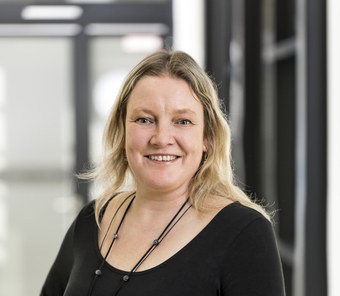
Susanne Weisمشاهده پروفایل
استاد پژوهش
Susanne Weis is a Research Professor and Group Leader of the 'Variability of the Brain' group at the Department of Brain and Behavior (INM-7), part of the Institute of Neuroscience and Medicine (INM) at Research Center Jülich GmbH. Her work focuses on understanding brain variability through advanced neuroimaging techniques and machine learning, with particular emphasis on sex differences, hormonal influences, and clinical applications in mental health. Her research interests include neuroimaging methodologies, machine learning applications in cognitive neuroscience, and the structural-functional relationships underlying brain variability. She investigates how factors like sex hormones and naturalistic stimuli (e.g., movies) affect brain connectivity and cognitive performance, aiming to improve diagnostic and predictive tools for disorders such as schizophrenia and Alzheimer’s disease. Publications highlight her contributions to developing datasets (e.g., SpEx), analyzing confound leakage in ML models, and exploring meta-analytic networks during naturalistic viewing. Her work bridges basic science and clinical impact, addressing challenges in interpreting neuroimaging data and advancing personalized medicine approaches. In her role as a group leader, Weis oversees research projects and collaborates with interdisciplinary teams. She is affiliated with the Helmholtz Association and contributes to the broader scientific community through her research in neuroimaging and computational neuroscience.

Tanja Käserمشاهده پروفایل
استادیار
Tanja Käser is a Tenure Track Assistant Professor at EPFL's School of Computer and Communication Sciences (IC), leading the Machine Learning for Education Laboratory (ML4ED). Her interdisciplinary research bridges machine learning, data mining, and educational technology, focusing on personalized learning systems and human behavior modeling. PhD in Computer Science (ETH Zurich, 2015) - honored with Fritz Kutter Award Former Senior Data Scientist at Swiss Data Science Center (ETH Zurich) Postdoctoral Researcher at Stanford University's Graduate School of Education Research Focus Explainable AI for education Adaptive learning environments Behavioral pattern recognition Generative AI applications in pedagogy User modeling and personalization Learning analytics in unstructured settings Recent Publication Trends Her 2024-2023 work demonstrates: Interpretable clustering of learners Transformer-based language learning prediction GAN applications for creative education Teacher-AI collaboration frameworks Explainability validation methods Modular network architectures Scientific Recognition Fritz Kutter Award for best Swiss computer science thesis (2015) Advising & Collaborations Currently supervises multiple PhD students including: Cock Jade Maï L Glandorf Dominik Güres Fatma-Betül Neshaei Seyed Parsa Radmehr Bahar Shibu Abhinand Shved Ekaterina Research Infrastructure Operates from EPFL's ML4ED laboratory with hybrid on-site and digital educational systems research capabilities.

Anne E. White is the School of Engineering Distinguished Professor of Engineering and associate vice president for research administration at the Massachusetts Institute of Technology (MIT). She serves in the Department of Nuclear Science and Engineering within MIT's School of Engineering and is a key researcher at the Plasma Science and Fusion Center (PSFC). White has held significant leadership roles including NSE department head from 2019 to 2023 and co-chair of the MIT Climate Nucleus from 2021 to 2024. She currently chairs the Fusion Energy Sciences Advisory Committee (FESAC), providing federal advisory input to the U.S. Department of Energy Office of Science. White received her PhD in physics from UCLA, where she conducted research at the Electric Tokamak. Her early career included research positions at the National Spherical Torus Experiment at Princeton Plasma Physics Laboratory and the DIII-D National Fusion Facility at General Atomics before joining MIT as a faculty member. Her educational background laid the foundation for her expertise in plasma physics and fusion energy research. Professor White's research focuses on magnetic fusion energy, specifically on understanding turbulent transport in magnetically confined fusion plasmas. Her work spans diagnostic development, novel experimentation, and validation of nonlinear gyrokinetic codes. She aims to demonstrate nuclear fusion as a practical part of the world's sustainable energy future. Her group develops and uses radiometers, reflectometers, and interferometers to measure fluctuations in plasma density, temperature, and flows in tokamaks. This research is critical for improving predictive capabilities of turbulent transport models, which is essential for developing viable fusion reactors. Analysis of Professor White's recent publications reveals a strong focus on plasma diagnostics and turbulence measurements across multiple tokamak facilities. Her work spans experimental measurements on ASDEX Upgrade, Alcator C-Mod, NSTX, and DIII-D tokamaks, with particular emphasis on electron temperature fluctuations, turbulence characterization, and transport model validation. A significant theme is the development and application of novel diagnostic techniques for simultaneous measurements of multiple plasma parameters. Her research increasingly incorporates computational approaches, including gyrokinetic simulations and machine learning methods, to interpret experimental data and advance predictive capabilities in fusion plasma physics. Professor White has received numerous prestigious awards throughout her career: Fellow, American Physical Society Division of Plasma Physics (2019) Cecil and Ida Green Career Development Professor, MIT (2014) American Physical Society Katherine E. Weimer Award (2014) Fusion Power Associates Excellence in Fusion Engineering Award (2014) Junior Bose Award for Excellence in Teaching, MIT (2014) PAI Outstanding Faculty Award from MIT student chapter of the American Nuclear Society (2013) Norman C. Rosenbluth Career Development Professor, MIT (2012-2014) Department of Energy Early Career Award (2011-2016) Marshall N. Rosenbluth Outstanding Doctoral Thesis Award (2009) As an educator and mentor, Professor White has advised numerous students through MIT's Department of Nuclear Science and Engineering. She has taught courses including Principles of Plasma Diagnostics, Seminar in Fusion & Plasma Physics, and Introduction to Plasma Physics. Her leadership extends to developing educational resources, notably leading a team in 2018 to create a free MITx MOOC focused on nuclear science and engineering for global high school learners. Professor White has secured significant research funding through Department of Energy awards, including the Early Career Award (2011-2016) and various fusion energy fellowships throughout her career. Her research group at MIT's Plasma Science and Fusion Center has contributed to multiple major fusion facilities and has been instrumental in advancing understanding of plasma turbulence and transport. Professor White leads the Fusion and Plasmas Lab at MIT, which focuses on diagnostic development and turbulence measurements in fusion plasmas. Her team has made significant contributions to research on four major tokamaks: Alcator C-Mod, ASDEX Upgrade, DIII-D, and National Spherical Torus Experiment Upgrade. At MIT's Plasma Science and Fusion Center, she previously served as assistant division head for magnetic fusion energy collaborations and ran the Gyrokinetic Simulation Working Group and the Alcator C-Mod Transport Group. Her lab maintains close collaboration between experimental work, theoretical modeling, and computational simulation to advance the understanding of plasma turbulence and transport phenomena critical for fusion energy development.

Anand Bhattadمشاهده پروفایل
استادیار
Anand Bhattad is an Assistant Professor in the Department of Computer Science at Johns Hopkins University, starting Fall 2025. Previously, he held positions as a Research Assistant Professor at the Toyota Technological Institute at Chicago (TTIC) and a visiting scholar at UC Berkeley. His research focuses on the intersection of computer vision, generative modeling, and physical reasoning, aiming to develop perception-driven and physics-aware visual models. His academic journey includes a PhD in Computer Science from the University of Illinois Urbana-Champaign under David Forsyth, with mentorship from Derek Hoiem, Svetlana Lazebnik, Greg Shakhnarovich, and Shenlong Wang. Prior to his PhD, he earned dual master’s degrees in Computer Science and Civil and Environmental Engineering at UIUC and a bachelor’s in Civil Engineering from NITK Surathkal, India. Research interests center on how generative models encode physical and perceptual knowledge, with key contributions in intrinsic image emergence, projective geometry limitations, and physics-aware relighting techniques. His work bridges classical computer vision concepts with modern deep learning, producing state-of-the-art methods for 3D scene synthesis and image editing. Articles span topics like 3P Vision , diffusion models, and 360° video datasets, reflecting interdisciplinary approaches in computer graphics and computational photography. Scientific awards include Outstanding Reviewer at ICCV 2023, CVPR 2022 Best Paper Finalist, and multiple conference service roles as workshop organizer and area chair. He designed the TTIC course Past Meets Present: A Tale of Two Visions , teaching connections between historical and modern computer vision research.
Bruno Echauri Galván serves as Associate Professor in the Department of Modern Philology at the University of Alcalá (UAH), Spain, teaching core translation courses including Introduction to Translation Theory and English-Spanish Translation across multiple degree programs in Alcalá de Henares and Guadalajara. His research centers on Translation Studies and Reception Theory, with significant contributions to intersemiotic translation (particularly in children's literature), healthcare interpreting, and film adaptation reception. As an active member of the Research Group on Interdisciplinary Reception Studies, he investigates cultural reception, literary reception, and translation through frameworks including cultural mediation, censorship studies, and myth reception. Recent publications (2021-2024) demonstrate consistent innovation in translation pedagogy, including color-based translation assessment tools, service-learning translation projects, and pandemic-era teaching adaptations. His work on collaborative writing projects, mental health communication, and Carver-Lish translation controversies reveals methodological diversity across literary, audiovisual, and healthcare domains. Dr. Echauri Galván has participated in multiple research initiatives including the JOB AND MOVE student network project (2018), Homopoly strategic partnership (2016), and InterMed healthcare mediation project (2011), where he contributed expertise in intercultural communication and translation standards. He maintains active research leadership through the Interdisciplinary Reception Studies group, examining reception phenomena across cultural, literary, musical, and translational contexts while addressing contemporary issues like censorship and myth criticism.

Jenn Brophyمشاهده پروفایل
استادیار
Jenn Brophy is an Assistant Professor of Bioengineering at Stanford University, developing technologies for genetic engineering of plants and microbes to address environmental stress resilience and agricultural sustainability. Her lab focuses on synthetic genetic circuits for plant root reprogramming and stress response optimization. B.S. in Bioengineering, UC Berkeley (2010) Ph.D. in Biological Engineering, MIT (2016) Postdoctoral Fellow, Stanford University (Biology) Research spans synthetic biology, plant genetics, and microbiome engineering, emphasizing climate adaptation and sustainable biotechnology. Current projects include: Plant-microbe interaction engineering Stress-responsive biosensors High-throughput genetic tool development Plant cell atlas integration Sustainable laboratory practices Her recent publications highlight advances in recombinase circuits, root architecture engineering, and plant cell mapping, with applications in climate resilience and microbiome design. Collaborators include José Dinneny (Stanford) in plant synthetic biology research.
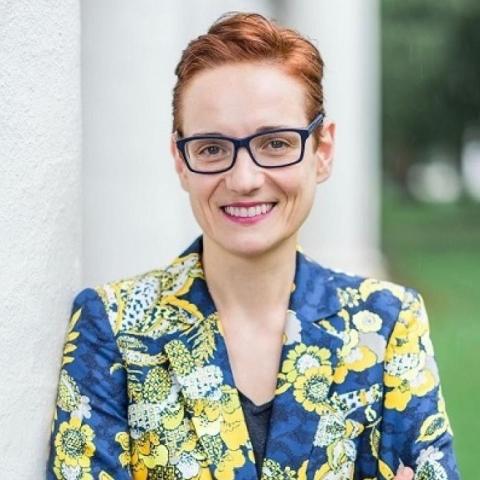
Ivana Petrovic is the Hugh H. Obear Professor of Classics at the University of Virginia. She specializes in Ancient Greek religion, Hellenistic poetry, and the interplay between texts and their historical, social, and religious contexts. Her research focuses on the role of belief in Greek religion, particularly the concepts of inner purity and pollution, challenging traditional views of Greek ritualism. Petrovic holds a Diploma in Classics from Belgrade, Serbia, and a PhD from Giessen University (2004). She has taught at Giessen University, Durham University, and joined UVA in 2016. She is the editor of the journal Greece and Rome and has co-edited major volumes such as Archaic and Classical Greek Epigram (2010), Inner Purity and Pollution in Greek Religion (2016), and Greek Epigram from the Hellenistic to the Early Byzantine Era (2019). Her current research with Andrej Petrovic explores the diachronic study of belief in Greek religion, emphasizing the significance of intrinsic faith-based elements. She has published extensively on topics including Greek epigram, sacred regulations, and religious interactions in the ancient Mediterranean. Petrovic has contributed to interdisciplinary discussions on the materiality of texts and the cultural poetics of Hellenistic poetry. Her work bridges literary and epigraphic analysis, examining how religious and social contexts shaped literary production.
Jim Crutchfield is a Distinguished Professor of Physics at the University of California, Davis, where he also serves as Director of the Complexity Sciences Center. He holds additional affiliations as President and Scientific Director of the Art & Science Laboratory in Santa Fe, External Faculty at the Santa Fe Institute, General Member of the Telluride Science Research Center, and Visiting Scholar at the Redwood Center for Theoretical Neuroscience. His work bridges physics, computation, and complex systems. Education: B.A. summa cum laude in Physics and Mathematics, University of California, Santa Cruz (1979) Ph.D. in Physics, University of California, Santa Cruz (1983) Crutchfield's research centers on computational mechanics , a framework he pioneered to quantify how natural systems store, process, and transmit information. His interests span nonlinear dynamics, evolutionary dynamics, information engines, quantum computation, and pattern discovery. He explores how structure emerges in complex systems, from cellular automata to biological evolution and neural networks. His recent work focuses on thermodynamic computing, causal inference, and the physics of intelligence. His publications reveal a consistent focus on the interplay between information, energy, and computation in physical systems. Themes include the thermodynamics of information engines, causal architecture in time series, emergent organization, and intrinsic computation in quantum and classical domains. These works span disciplines such as physics, computer science, biology, and cognitive science. Scientific Recognition: Postdoctoral Fellow, Miller Institute for Basic Research in Science IBM Postdoctoral Fellow, Condensed Matter Physics Distinguished Visiting Research Professor, Beckman Institute Bernard Osher Fellow, San Francisco Exploratorium NSF Graduate Fellow UCB Chancellor’s Fellow Crutchfield has advised over two dozen PhD students in physics, computer science, and mathematics, contributing significantly to the next generation of complexity scientists. He has led major interdisciplinary initiatives, including NSF-funded museum exhibits and workshops on network dynamics, collective cognition, and evolutionary dynamics. He has also been active in public discourse through talks, films, and publications on the philosophy of complexity. He leads research groups exploring the dynamics of learning, pattern discovery, and distributed intelligence, often in collaboration with institutions like the Santa Fe Institute and Caltech. His work continues to shape the theoretical foundations of complex systems science.
- Protein function prediction
- Intrinsically disordered proteins (IDPs)
- Machine learning in bioinformatics
- +۵ مورد دیگر
Damiano Piovesan is Associate Professor in Bioinformatics (SSD BIO/10) at the Department of Biomedical Sciences , University of Padua , Italy. Since March 2022 he has held this rank, having previously served as Assistant Professor (2022) and PostDoc researcher (2019) in the same department. Education 2013 – PhD in Biotechnology, Pharmacology and Toxicology, University of Bologna 2009 – MSc in Bioinformatics, University of Bologna 2007 – BSc in Biotechnology, University of Bologna Research Focus Piovesan’s research integrates machine-learning approaches with structural bioinformatics to advance understanding of intrinsically disordered proteins (IDPs) and protein function prediction . He develops widely used resources such as MobiDB for disorder annotation, DisProt for functional curation of disordered regions, and RING for residue interaction networks. Additional interests include tandem repeat proteins , cancer-related IDP targets , and community benchmarking initiatives (CAFA, CAID, CAGI). Publication Trends His 2024–2025 output is dominated by updates to flagship databases ( InterPro , DisProt , MobiDB ), next-generation disorder predictors leveraging deep learning ( PredIDR , MobiDB-lite 4.0 ), and large-scale genomics challenges ( CAGI6 ). Across the decade, recurring themes include methodological advances in disorder prediction, creation of interoperable bioinformatics platforms, and rigorous benchmarking to ensure community-wide reliability. Scientific Awards No specific awards are listed in the provided materials. Advising & Grants No individual students or grant details are explicitly supplied; however, his leadership in multi-institutional consortia (e.g., InterPro, DisProt, CAFA) implies substantial supervisory and funding coordination roles. Labs & Teams Piovesan is affiliated with the BioComputingUP Lab ( https://biocomputingup.it/ ) at the University of Padua, a hub for computational biology and bioinformatics tool development.
Jörg Stober is a research associate at the Max Planck Institute for Plasma Physics (IPP) and a private lecturer at the Ludwig Maximilian University of Munich (LMU), where he has been actively involved in teaching and research since completing his habilitation in 2007. He co-teaches core plasma physics courses including Plasma Physics I and Plasma Physics II , contributing to academic education in fusion science. Education: Habilitation in Physics, year 2007 Doctorate (Dr.), institution not specified His research focuses on experimental plasma physics, particularly transport phenomena in H-mode plasmas, electron cyclotron resonance heating (ECRH), and optimization of heating and current profiles in tokamak devices. He investigates thermal insulation, pressure limits, and intrinsic scenarios with small edge-localized modes (ELMs). A significant part of his work involves the expansion and real-time control of ECRH systems on the ASDEX Upgrade tokamak, including the detection and interpretation of scattered radiation for both heating control and vessel protection. His work supports the advancement of nuclear fusion as a sustainable energy source. The available publications suggest a strong focus on experimental fusion research, particularly in the domains of plasma heating, transport dynamics, and control systems in magnetic confinement devices. His expertise bridges engineering applications and theoretical plasma physics, with implications for the development of future fusion reactors. Scientific Awards: No awards mentioned in the provided text. Dr. Stober advises university interns and contributes to academic mentoring through teaching and research supervision, though no formal PhD or Master’s students are listed. He has not received any explicitly mentioned grants, but his long-standing position at IPP suggests sustained funding support. He is involved in organizing and participating in seminars, workshops, and public outreach events related to fusion energy and plasma physics. He is part of the research team at the Max Planck Institute for Plasma Physics in Garching, working on the ASDEX Upgrade experiment, one of Europe's leading tokamak devices for fusion research. His work integrates closely with experimental operations, diagnostics, and control systems development.
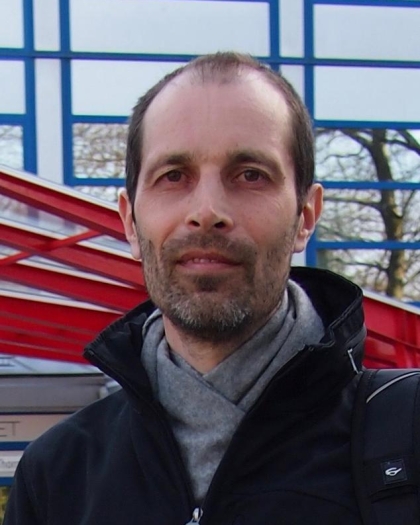
Jaakko Timo Henrik Järvi is a Professor in the Department of Informatics at the University of Bergen, Norway, with additional affiliations at the University of Turku, Finland. His research focuses on programming language design, generic programming, and human-computer interaction, particularly in GUI frameworks and software reuse. His research interests include generic programming, programming language design (especially the Magnolia language), high-performance computing, array programming, and GUI engineering. He emphasizes formal methods and algebraic specifications to build reusable and efficient software systems. His work bridges theoretical foundations with practical applications in software development and education. The recent publications highlight a strong trend in declarative GUI frameworks, multi-selection models, and generic programming. His work explores domain-specific languages for GUI structure manipulation, reusable selection semantics across platforms, and optimizing array computations using the Mathematics of Arrays. These efforts reflect a consistent focus on software abstraction, correctness, and reusability. Jaakko Järvi has supervised doctoral students, including Tetiana Yarygina, whose dissertation explored microservice security. While no specific grants are detailed, his work on VisAST was supported by the Research Council of Norway (Project 250683), indicating active external funding. He frequently collaborates with researchers like Magne Haveraaen, Knut Anders Stokke, and Sean Parent. He contributes to tools and frameworks such as the MultiselectJS library and the VisAST educational tool. These are outcomes of collaborative research teams focused on improving software development practices and computer science education.
Professor Sara Kim serves as Professor and Head of the Marketing Area at the University of Hong Kong, where she has established herself as a leading scholar in consumer behavior since joining in 2012. Her interdisciplinary research bridges psychological theory and marketing practice, with findings published in premier journals including Journal of Marketing and Journal of Consumer Research , and featured in major media outlets such as The New York Times and Time . Her academic credentials include: Ph.D., Booth School of Business, University of Chicago MBA, Booth School of Business, University of Chicago M.S., KAIST Business School, Korea B.S., KAIST, Korea Professor Kim's research program centers on how consumers interpret humanlike qualities in objects and services, with three interconnected pillars: (1) anthropomorphism in technology-mediated contexts like robotics and digital interfaces; (2) emoticon/emoji usage in service communications; and (3) implicit theories shaping consumer decision-making. Her recent work examines how money anthropomorphism influences financial behavior and how leader emojis affect team creativity, demonstrating practical applications for service industries navigating digital transformation. Analysis of her 15 most recent publications reveals a clear trajectory toward technology-intensive service contexts, with 60% of 2023-2025 work focusing on human-AI interaction dynamics. Her scholarship consistently applies social psychology frameworks to contemporary marketing challenges, particularly in service employee-consumer relationships within digital environments, while maintaining strong theoretical contributions to attribution theory and person perception literature. Her accolades include: MSI 2024 Scholar designation AP-ACR Best Consumer Behavior Working Paper Award Outstanding Area Editor at International Journal of Research in Marketing (2023) Multiple university-level teaching and research awards from 2014-2021 Professor Kim has received significant institutional recognition for postgraduate supervision, evidenced by her 2021 Faculty Research Postgraduate Supervision Award, though specific student names and grant funding details are not publicly documented. Her ongoing research agenda continues to explore the psychological mechanisms underlying consumer-technology interactions in service ecosystems.
Rob Voigtمشاهده پروفایل
استادیار
Rob Voigt Assistant Professor of Linguistics and courtesy faculty in Computer Science at Northwestern University, affiliated with the Institute for Policy Research and Cognitive Science Program. Specializes in computational linguistics, focusing on natural language processing (NLP) applied to social science questions including policing, mental health, and immigration. Director of the Linguistic Mechanisms Lab, exploring how language reflects and shapes societal structures. Education PhD in Linguistics (2019), Stanford University Postdoctoral Scholar (2019-2020), Stanford University M.A. in East Asian Studies (2013), Stanford University B.A. in Chinese (2008), Vassar College Research Interests Combines computational methods with sociolinguistics to study: Police-community interaction through body-worn camera data Linguistic markers of procedural justice and racial disparities Language in marginalized communities and social movements LLM applications to clinical language analysis (autism spectrum disorders) Historical discourse analysis of immigration policies Recent Work Recent projects include analyzing 140 years of political immigration rhetoric (PNAS 2022), evaluating officer communication training via bodycam NLP (PNAS Nexus 2024), and developing stereotype analysis pipelines (EMNLP 2024). Active in policy-relevant research through grants on police training (NIJ) and mental health language analysis (NIH). Awards & Recognition Holds Cozzarelli Prize (2017) for groundbreaking policing research and Cialdini Prize for field methods innovation. Recipient of interdisciplinary fellowships from Stanford and NIH grants totaling $8M+. Teaching Current courses include Text Processing for Linguists . Known for ungrading pedagogy emphasizing intrinsic motivation and collaborative learning. Develops open-access computational linguistics curricula using Unix/Python. Labs & Collaborations Linguistic Mechanisms Lab focuses on socially responsible NLP. Collaborates with criminologists, cognitive scientists, and sociologists on projects like the Media Accountability Project (racial disparities in gun violence reporting).
Eric Scarffeمشاهده پروفایل
استادیار
Eric Scarffe is an Assistant Professor in the Department of Philosophy at Florida International University (FIU), with a PhD from Boston University (2020). He is actively engaged in teaching, research, and academic service, including serving as President and lead negotiator of the United Faculty of Florida's FIU chapter from 2022 to 2024. Areas of Specialization: Philosophy of Law Social and Political Philosophy Biomedical Ethics International Law Value Theory His research explores human rights, particularly gay and abortion rights, dignity in law and ethics, the philosophy of biology, and the conceptual foundations of disease in medicine. He critically engages with legal theory, constitutional interpretation, and the role of values in science and healthcare. His recent publications span journals such as Journal of Medical Ethics , American Journal of Bioethics , Journal of Applied Philosophy , and Philosophy of Science . Themes across his work include the moral and institutional dimensions of law, the critique of quantification in higher education, and the epistemology of social knowledge as seen in pop culture. His scholarship demonstrates a strong interdisciplinary orientation, bridging philosophy, law, and social justice. Selected Scientific Contributions: Critical analysis of Justice Kennedy’s jurisprudence of dignity Development of a dignity-based account of international law Amended hybrid theory of disease in medicine (with Russell Powell) Exploration of collective bargaining and the rule of law in academia Eric has also contributed to public discourse through articles on liberal arts education and philosophical interpretations of cultural phenomena. He has no listed scientific awards or formal advisees in the provided texts. He is affiliated with the College of Arts, Sciences & Education at FIU and continues to publish on pressing ethical and philosophical issues in contemporary society.