Dr. Arathy Menon is a researcher at the University of Reading, specializing in climate science and meteorology with a focus on Indian monsoon dynamics, climate change impacts, and extreme weather events. She has contributed to major field campaigns like INCOMPASS and collaborates with institutions globally to study monsoon processes, atmospheric interactions, and hydrological extremes. Her work addresses monsoon onset/withdrawal mechanisms, midlatitude influences, and climate model validation. Key contributions include analyses of the 2018 Kerala floods, INCOMPASS field campaign findings, and investigations into monsoon moistening and variability. Expertise spans mesoscale meteorology, climate teleconnections, and interdisciplinary climate research. Research highlights include: predicting East Asian precipitation patterns via Silk Road oscillations, modeling monsoon progression mechanisms, and evaluating CMIP-5 projections for monsoon rainfall variability. Her work underscores the role of atmospheric moisture dynamics, land-surface interactions, and midlatitude air masses in shaping monsoon behavior and climatic extremes.
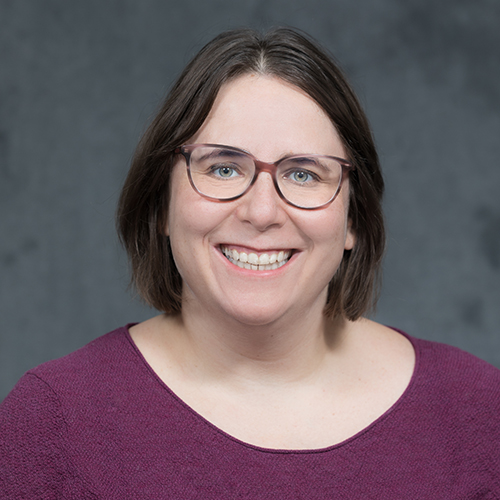
Claudia Stephan is a researcher specializing in climate science and atmospheric dynamics. Her work focuses on understanding precipitation patterns, moisture flux dynamics, and climate variability across East Asia. She collaborates extensively with institutions on global climate modeling and analysis. Research Interests: Climate modeling and simulation East Asian precipitation mechanisms Moisture transport dynamics Interannual/intraseasonal climate variability Stratospheric-atmospheric interactions Her publications consistently analyze rainfall variability drivers, moisture sources, and model performance (e.g., MetUM configurations). Recent work emphasizes horizontal resolution impacts on climate simulations and Silk Road Pattern variability mechanisms.
Nicolas Rubido Obrer is a Lecturer in the Department of Physics at the School of Natural and Computing Sciences, University of Aberdeen, UK. He is affiliated with the Institute for Complex Systems and Mathematical Biology (ICSMB) and previously served as an Adjunct Professor at the Physics Institute, Universidad de la República (UdelaR), Uruguay, and as a Research Fellow at the Aberdeen Biomedical Imaging Centre (ABIC). He earned his PhD in Physics from the University of Aberdeen in 2014, with a thesis on energy transmission and synchronization in complex networks. PhD in Physics – University of Aberdeen (2014) MSc in Physics – Universidad de la República (2010) BSc in Physics – Universidad de la República (2008) His research focuses on complex systems, employing network theory, dynamical systems, numerical modeling, and data analysis to study emergent behaviors such as synchronization and chaos. He applies these methods across interdisciplinary domains including brain networks (Alzheimer’s disease, sleep-wake cycles), climate modeling, and power-grid stability. He is particularly interested in network inference and reverse engineering system connectivity from observational data. The recent trend in his publications reflects a strong emphasis on interdisciplinary neuroscience, with high-impact contributions in Nature Medicine , NeuroImage , and Scientific Reports , focusing on brain aging, neurodegeneration, and neuroimaging. His work also spans climate dynamics and foundational network theory, demonstrating both applied and theoretical depth. His scientific awards include the prestigious Springer Theses Award (2015) and the Young Researchers Award at Dynamics Days Europe (2016), as well as the SUPA Studentship Prize (2011). Nicolas supervises PhD and MSc students in Physics, Mathematics, and Applied Health Sciences, and is actively involved in international collaborations with institutions in Uruguay, Brazil, Spain, Argentina, and the UK. He has led and contributed to projects on EEG-based biomarkers for aging, functional ultrasound imaging, and climate forecasting. His research integrates theoretical modeling with experimental and clinical data, advancing methodologies in network science and complex systems analysis. He is a member of the Non-Linear Physics group at UdelaR and associated with the Laboratory of Instabilities in Fluids. His ongoing work includes developing data-driven models for complex systems and exploring the role of network structure in synchronization and information transmission.
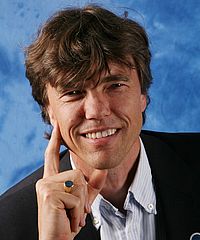
Martin Visbeck is a Professor of Physical Oceanography at Kiel University and Head of the Research Unit 'Physical Oceanography' at GEOMAR Helmholtz Centre for Ocean Research Kiel. He also serves as an Adjunct Senior Research Scientist at the Lamont-Doherty Earth Observatory, Columbia University. Visbeck has held leadership positions including President of The Oceanography Society (2019-2020) and Speaker of the Kiel Excellence Cluster 'The Future Ocean' (2007-2017). His research spans physical oceanography and climate dynamics, with a focus on ocean circulation and its role in climate variability. Visbeck's research interests focus on the role of the ocean in climate variability across multiple timescales, regional ocean circulation dynamics, deep water formation processes, and sustained ocean observations. His work particularly examines the North Atlantic Oscillation, Tropical Atlantic Climate Variability, Antarctic Bottom Water formation, and oxygen minimum zones. Through his leadership in major international projects like AtlantOS and the SFB754 research center, Visbeck has advanced our understanding of climate-biogeochemistry interactions in the tropical ocean and contributed significantly to the development of global ocean observing systems. Henry Stommel Research Medal (2019) AGU Fellow (2015) Member of the European Academy of Sciences (2015) CIMAS Visiting Scientist Award (2009) DEES Outstanding Teacher at Columbia University (1999) Visbeck leads significant research initiatives including AtlantOS (Optimizing and Enhancing the Integrated Atlantic Ocean Observing System), RACE (Regional Atlantic Circulation and Global Change), and the SFB754 research center on Climate-Biogeochemistry Interactions in the Tropical Ocean. His work has been supported by major funding agencies including the European Union, German Research Foundation (DFG), and German Federal Ministry of Education and Research (BMBF). He has served as Chief Scientist on numerous research expeditions in the Atlantic Ocean, focusing on tropical and South Atlantic dynamics. As Head of the Physical Oceanography Research Unit at GEOMAR, Visbeck oversees a team conducting observational and modeling research on ocean circulation and climate dynamics. His leadership extends internationally through roles in the World Climate Research Programme's CLIVAR project, the Joint Scientific Committee of WCRP, and the UN Decade of Ocean Science for Sustainable Development, where he has been instrumental in shaping the global ocean research agenda.
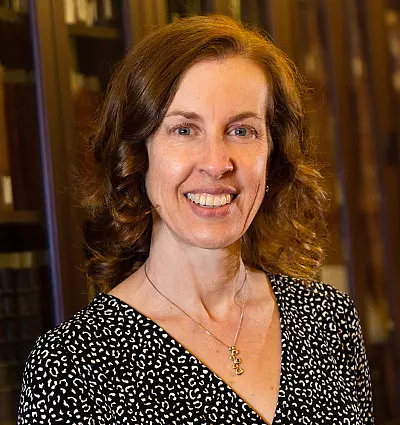
Larissa Back is a Full Professor and Associate Chair of Graduate Studies in the Department of Atmospheric and Ocean Sciences at the University of Wisconsin-Madison, College of Letters & Science. Her research focuses on fundamental processes in tropical atmospheric dynamics and climate systems. Her primary research interests include: Tropical rainfall patterns and deep convection mechanisms Vertical structure of precipitation systems Land-ocean differences in convective intensity Precipitation extremes under climate change Large-scale tropical circulation dynamics Simple theoretical modeling of atmospheric processes Analysis of her 15 most recent publications reveals consistent focus on tropical convection, moist static energy frameworks, and climate change impacts on precipitation. Her work integrates satellite observations, cloud-resolving models, and theoretical approaches to understand fundamental atmospheric processes, with particular emphasis on tropical oceanic regions and land-ocean contrasts. Professor Back teaches advanced courses including Tropical Meteorology (AOS 522), Dynamics of Atmosphere and Ocean I & II (AOS 310/311), and specialized seminars on convection and future climate dynamics.
Irene Polo is a researcher affiliated with the University of Reading, focusing on climate science and oceanography. Her work emphasizes the Atlantic Meridional Overturning Circulation (AMOC), tropical Atlantic variability, and decadal climate prediction using high-resolution models like HiGEM and ECMWF. She explores teleconnections between tropical Atlantic and Indo-Pacific systems, SST dynamics, and climate model biases. Her research bridges oceanography and meteorology, addressing long-term climate trends and observational analysis. Key themes include the interplay of wind and buoyancy forcing in ocean circulation, intermodel comparisons of climate simulations, and the impact of AMO phases on climate modes. Her contributions highlight methodological advancements in climate reanalysis and decadal forecast evaluation. Collaborations with institutions like ECMWF and co-authors such as Dr. Robson and Dr. Rodríguez-Fonseca underscore her role in collaborative climate research networks.
Pete Inness is an Associate Professor in the Department of Meteorology at the University of Reading. He serves as the Undergraduate Programme Director and specializes in Tropical Variability, focusing on phenomena such as the Madden-Julian Oscillation (MJO) and monsoon systems. His research explores intraseasonal variability, coupled ocean-atmosphere interactions, and climate modeling. He has supervised postgraduate student Fadzil Mohd Nor, who studied diurnal storms in Malaysia. His work includes contributions to climate models like HadGEM1 and the ECMWF model, emphasizing model validation and process-based diagnostics. In education, he co-authored textbooks on operational weather forecasting and teaches meteorology courses. Inness has organized international workshops, such as the UK-Russia collaboration on climate change preparedness. His research spans over two decades, with notable studies on monsoon dynamics, El Niño triggers, and the role of sea surface temperatures in weather systems. His office is located in BH 2L37, and he can be reached at p.m.inness@reading.ac.uk.
Dr. Sam Smith is a Reader in Anthropology at the School of Law and Social Sciences, Oxford Brookes University. His research focuses on the Terminal Pleistocene and Early Holocene archaeology of South West Asia, with particular emphasis on the emergence of sedentary, food-producing societies and chipped stone tool analysis. University: Oxford Brookes University School: School of Law and Social Sciences Academic Rank: Professor (mapped from 'Reader') Sam specializes in typological, technological, and use wear analysis of stone tool assemblages, with fieldwork experience in the UK, Middle East, and Sub-Saharan Africa. He collaborates with geographers, hydrologists, and meteorologists to explore human-climate interactions in semi-arid regions. His projects include the Barqa Epipalaeolithic initiative and sedaDNA, Environmental Changes and Demography in Oman , funded by the Society of Antiquities of London (£14,907). Recent publications highlight his interdisciplinary work spanning Climate Science , Archaeology , and Ontology , with a focus on the Southern Levant Neolithic, atmospheric dynamics, and occupational data standards. He has supervised research students Sophie Edwards and Jon Gorrie. Sam's work integrates human origins , palaeoenvironmental reconstruction , and multidisciplinary methodologies , reflecting his leadership in the Human Origins and Palaeo Environments (HOPE) group and contributions to understanding early human societies in Jordan's Wadi Faynan.
Simon Peatman is a climate researcher with a focus on tropical meteorology and climate dynamics. He holds a PhD from the University of East Anglia (2014), where his doctoral work examined interactions between the Madden-Julian Oscillation (MJO) and the diurnal cycle over the Maritime Continent. His research interests include air-sea coupling, monsoon systems, tropical cyclones, and high-resolution climate modeling. Peatman has contributed to studies on the Indian summer monsoon, intraseasonal variability in the Bay of Bengal, and the impact of the MJO on regional rainfall patterns in Papua New Guinea. Education: PhD in Meteorology/Climate Science, University of East Anglia, 2014 Research Focus: Peatman's work emphasizes understanding climate processes such as MJO propagation, the role of diurnal cycles in tropical convection, and the effects of horizontal resolution in climate models. His studies often involve collaboration with operational forecasting centers like the Met Office, focusing on improving model simulations of tropical weather systems. Key Contributions: His recent work evaluates convection-permitting atmosphere-ocean simulations over the Maritime Continent and explores air-sea coupling impacts on monsoon forecasts. He has also investigated tropical cyclone precipitation patterns and the influence of moisture entrainment on equatorial waves. Collaborations & Grants: Peatman has collaborated with international teams on projects such as BoBBLE (Bay of Bengal Ocean-Atmosphere-Biogeochemistry-Biosphere Linkages Experiment), studying ocean-atmosphere interactions affecting South Asian monsoons. Labs/Teams: Affiliated with climate modeling groups focused on tropical meteorology, though specific lab affiliations are not explicitly stated.
Katherine Straub is a tenured faculty member at Susquehanna University, where she serves as Dean of the School of Natural & Social Sciences and holds the rank of Professor in Earth & Environmental Sciences . With a PhD from Colorado State University, her research focuses on tropical weather systems, climate change, and environmental ethics, integrating scientific and societal dimensions in her teaching. She is actively involved in interdisciplinary sustainability initiatives and has collaborated with leading atmospheric scientists on the Madden-Julian Oscillation (MJO) and equatorial wave dynamics. Her research interests span: Tropical Weather Systems : Specializing in the MJO and convectively coupled Kelvin waves through field experiments and climate modeling Climate Change : Analyzing the science, politics, and economics of global climate challenges Environmental Justice : Advocating for food security, organic agriculture, and campus sustainability Energy Policy : Monitoring natural gas fracking, renewable energy transitions, and the Keystone XL pipeline Dr. Straub has secured significant grants , including multiple NSF awards for collaborative research and institutional support for sustainability workshops. Her scientific awards include prestigious honors from the American Meteorological Society and Harvard University. She maintains active collaborations with researchers at Yale University and Colorado State University.
Lei Wang is an Assistant Professor in the Department of Earth, Atmospheric, and Planetary Sciences at Purdue University. His expertise lies in large-scale atmospheric dynamics, climate change, extreme weather events, and jetstream dynamics. He holds a Ph.D. in Geophysical Sciences from the University of Chicago and a B.S. in Atmospheric Sciences from Ocean University of China. Prior to his current position, he served as a Post-doctoral Fellow at Harvard University's Department of Earth and Planetary Sciences. Wang teaches courses on Physics of Climate and Geophysical Fluid Dynamics. His research investigates mid-latitude atmospheric wave dynamics, particularly extreme weather and climate events. He leads the Weather and Climate Dynamics Laboratory and actively recruits graduate students focusing on theoretical and numerical models of atmospheric processes. His work emphasizes geophysical fluid dynamics applications, including jetstream dynamics and the weather-climate continuum. Key research themes include moisture's role in mid-latitude circulation and interdisciplinary education through Purdue's Computational Interdisciplinary Graduate Programs. Wang collaborates on projects involving computational modeling and data-driven analysis of atmospheric phenomena. Recent publications span heavy-ion collision dynamics, QCD matter properties, and experimental methods in particle physics, reflecting a unique intersection of atmospheric and high-energy physics methodologies. His contributions address fundamental questions in both atmospheric science and relativistic nuclear physics.
Dr. Sergey Kravtsov is a Professor of Atmospheric Sciences at the University of Wisconsin-Milwaukee's School of Freshwater Sciences. He holds a PhD in Physical Oceanography from Florida State University and an MS from the Moscow Institute of Physics and Technology. His research centers on Earth's climate variability, investigating interactions across spatial scales from synoptic to global phenomena. Key focus areas include attribution of surface temperature trends, decadal variability in Pacific and Southern Ocean systems, and intraseasonal atmospheric jet stream dynamics. Kravtsov employs hierarchical climate modeling and advanced statistical analyses. His recent publications examine multidecadal climate patterns through model-observation comparisons, precipitation prediction methodologies, and extratropical storm track evolution under climate change scenarios.
Dr. Youmin Tang is a Professor in the Department of Geography, Earth, and Environmental Sciences at the University of Northern British Columbia. His research utilizes sophisticated numerical models and mathematical tools to predict seasonal climate variability, with particular focus on ENSO (El Niño Southern Oscillation) dynamics. His work aims to improve climate predictions critical for sectors like agriculture, forestry, fisheries, and energy production. Research interests center on climate modeling, prediction systems, and understanding ocean-atmosphere interactions. His work combines traditional numerical methods with emerging machine learning techniques to enhance forecast accuracy and understand multidecadal climate patterns. Publication analysis reveals strong focus on tropical climate phenomena (ENSO, IOD, monsoons), prediction methodology development (ensemble systems, machine learning approaches), and ocean-atmosphere interactions. Recent works increasingly incorporate AI techniques to address prediction challenges. Active in graduate education, Dr. Tang supervises students in Natural Resources and Environmental Studies (NRES) programs with focus areas in Environmental Science and Geography.
Maria Valdivieso Da Costa is an academic researcher specializing in oceanography, climate dynamics, and atmospheric science. She is affiliated with institutions focusing on coupled modeling frameworks, air-sea interaction, and reanalysis systems. Her work emphasizes the Indian monsoon, North Atlantic circulation, and Arctic sea ice dynamics. Key contributions include regional coupled modeling for the Indian Ocean and validation of ocean reanalysis systems. Focus areas: Climate variability, ocean heat/salinity content, and energy fluxes between atmosphere and ocean. Recent research highlights include analysis of wintertime mixed layer depths in the North Pacific and evaluation of global net surface energy flux estimates. She collaborates extensively with international teams on projects like ORA-IP and MyOcean.
Andy Turner is a Professor at the University of Reading, specializing in climate science and meteorology. His research focuses on monsoon dynamics, climate change impacts, and atmospheric processes, particularly in South and East Asia. He has contributed to over 130 publications, including studies on monsoon variability, aerosol effects, and extreme weather events. Turner's work explores mechanisms governing monsoon systems, climate model biases, and future projections under global warming scenarios. He collaborates extensively on initiatives like the INCOMPASS field campaign and contributes to IPCC assessments. Despite no explicit mention of awards or students in the provided texts, his research emphasizes interdisciplinary approaches to understanding climate systems and their societal implications.