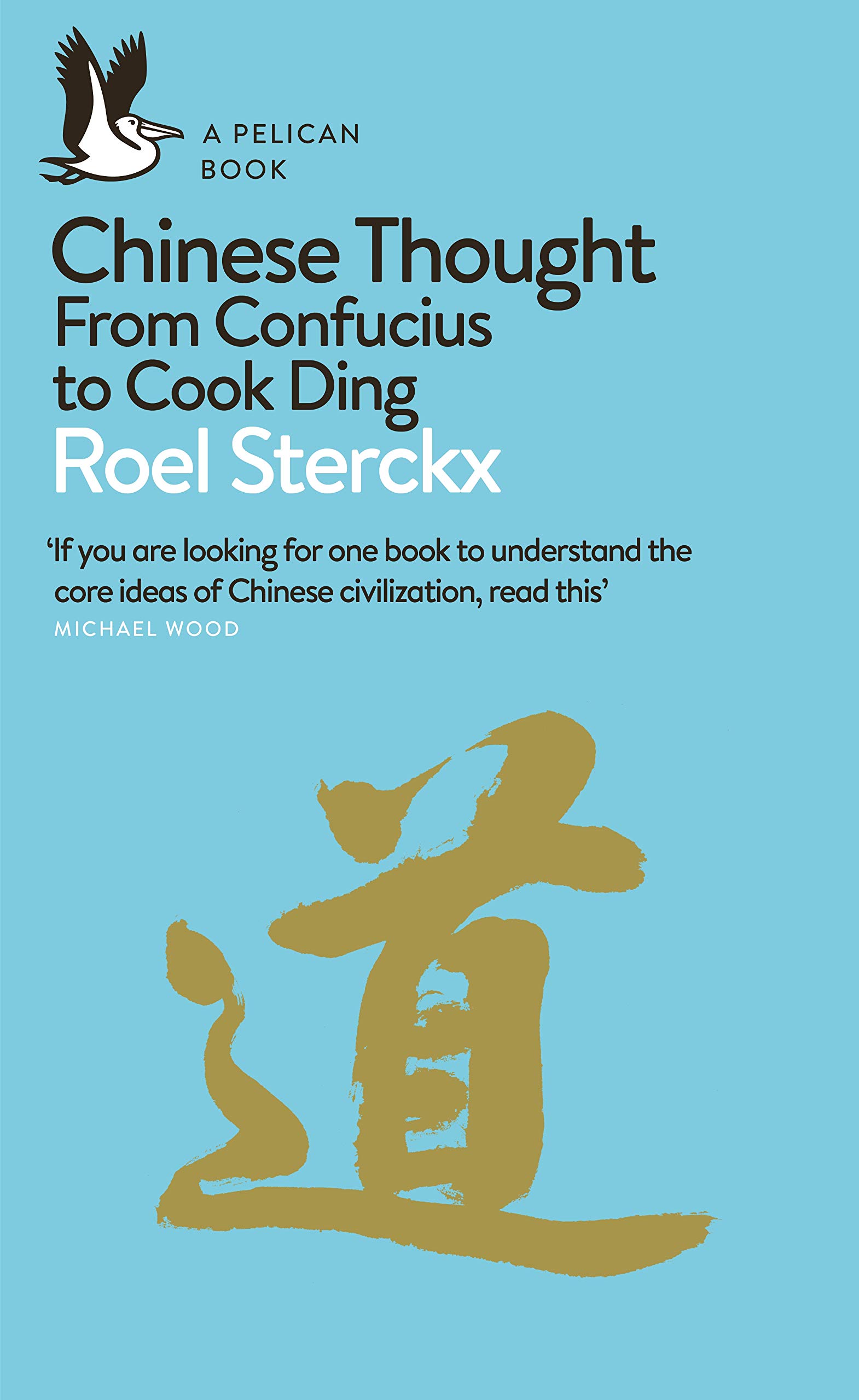
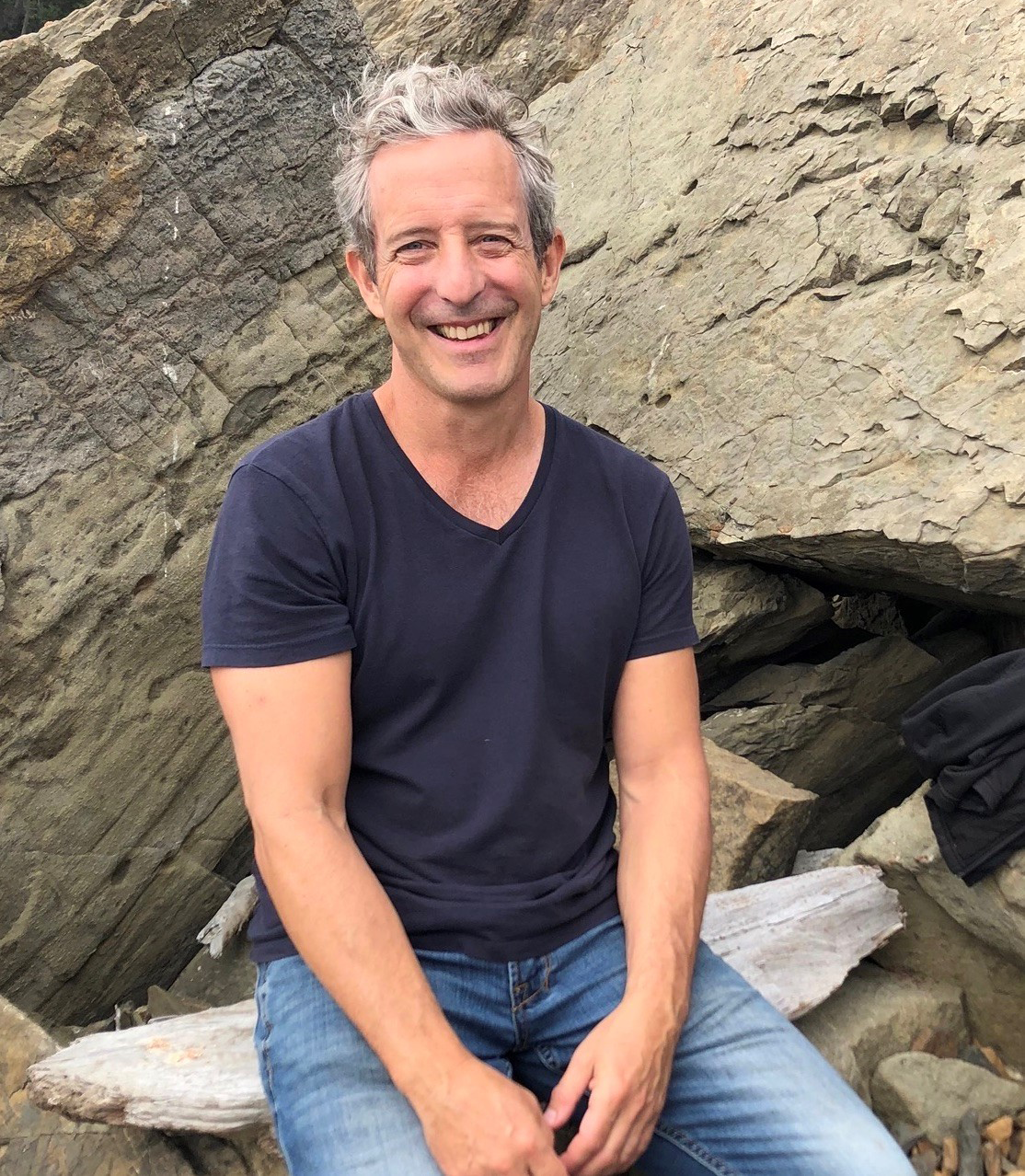
Professor Roel Sterckx is the Joseph Needham Professor of Chinese History, Science, and Civilization at the University of Cambridge, affiliated with Clare College. He specializes in pre-imperial and early imperial Chinese thought, classical Chinese language, and natural history. His research bridges anthropology and the history of science, focusing on topics like ritual, economic thought, and animal studies. He has authored influential books including Food, Sacrifice, and Sagehood in Early China and Animals through Chinese History . Sterckx is a Fellow of the British Academy (since 2013) and holds leadership roles at the Needham Research Institute. He supervises PhD students on subjects ranging from Warring States rhetoric to Han Dynasty apocrypha. Education: BA/PGCE in Sinology and History, Katholieke Universiteit Leuven Masters in Classical Chinese and Philosophy, National Taiwan University PhD in Chinese History, University of Cambridge Research Interests: Early Chinese cultural ecology, ritual economy, and the interplay of moral and material values. His work analyzes texts like the Rites of Zhou , Mozi , and Huainanzi , emphasizing agricultural thought and animal symbolism. Awards: British Academy Fellowship (2013) Grants and Labs: Directs the Cambridge-based Needham Research Institute, focusing on East Asian science and technology history. Current projects include studies on Han perceptions of southern regions and the economics of ritual in early China.
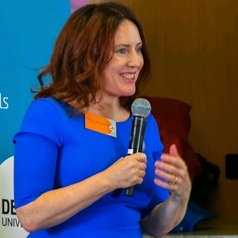
Dr Rachel O’Neill is an Assistant Professor in the Department of Media and Communications at the London School of Economics and Political Science (LSE). Her research focuses on gender and sexuality, media and cultural studies, and qualitative methods. She holds a PhD in Gender and Cultural Studies from King’s College London and previously served as a Research Fellow in Sociology at the University of Warwick. Academic Role: Assistant Professor, LSE Department of Media and Communications Research Expertise: Gender studies, media ethnography, feminist theory, wellness industry critique, and financial feminism Her work examines intersections of gender, capitalism, and cultural practices. Key publications include Seduction: Men, Masculinity and Mediated Intimacy (2018) and articles on wellness influencers, financial feminism, and masculinity studies. Her research often critiques patriarchal structures and neoliberal logics in contemporary society.
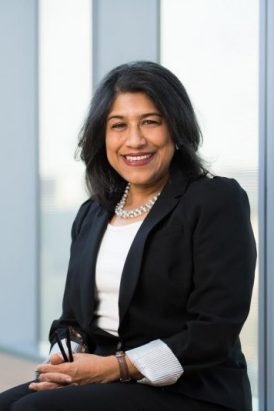
Aradhna Krishna is the Dwight F. Benton Professor of Marketing at the Stephen M. Ross School of Business, University of Michigan. She holds affiliations with the International Institute and the Center for South Asian Studies. Her research focuses on sensory marketing, health and nutrition, corporate social responsibility, and political decision-making. She has authored influential books like Customer Sense: How the 5 Senses Influence Buying Behavior and edited collections on sensory marketing. Education: PhD in Marketing, New York University (1989) MBA, Indian Institute of Management Ahmedabad (1984) B.A. in Economics, University of Delhi (1982) Research Interests: Her work explores how sensory cues (sight, sound, touch, smell, taste) shape consumer perceptions and behaviors. Key areas include food marketing, health decision-making, and the impact of political identity on risk perceptions. She has pioneered studies on sensory marketing’s role in persuasion and product design. Awards & Recognition: Fellow of the Society of Consumer Psychology (highest honor) Recognized by HBR as 'foremost expert in sensory marketing' Consulting & Expertise: Advised organizations like Procter & Gamble, General Mills, and the World Food Program. Served as expert witness for legal cases involving Hallmark Entertainment. Engages with policy boards for global health initiatives. Labs & Teams: Active in interdisciplinary collaborations at the Ross School, focusing on consumer behavior and sensory research.
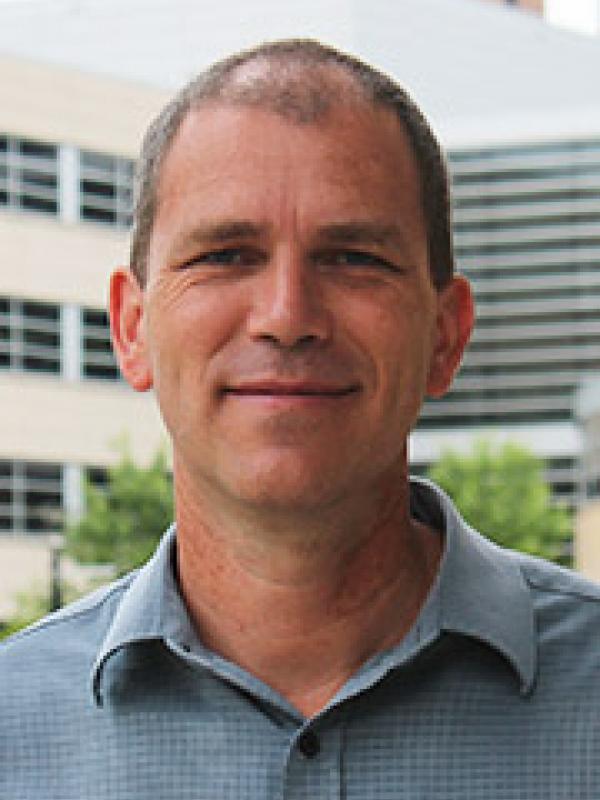
Geoffrey Hunt is a Professor at the Centre for Alcohol and Drugs Research, Aarhus University, Denmark, and Director of the Institute for Scientific Analysis in San Francisco, USA. He co-edited the comprehensive Routledge Handbook of Intoxicants and Intoxication (2022), which synthesizes multidisciplinary perspectives on global intoxication practices across 34 chapters and eight thematic sections. His research spans dual domains: (1) alcohol and drug studies examining social/cultural dimensions of intoxication (evident in his editorial work on global intoxicant practices across 19+ countries), and (2) special educational needs with focus on evidence-based interventions for intellectual disabilities, autism spectrum disorders, and language impairments. Key interests include ethical frameworks for European psychologists, mediation in educational disputes, and historical policy analysis since the Warnock Report. Recent publications (2020-2025) reveal strong methodological emphasis on randomized controlled trials (E-PAtS program), cost-effectiveness analysis of mediation services, and systematic reviews of inclusive education practices. The work consistently addresses UK policy contexts while maintaining international relevance through European psychology ethics frameworks and cross-cultural intoxication studies.
Professor Beat Kümin is a leading scholar in early modern European history at the Department of History, University of Warwick, where he also serves as Director of Postgraduate Research. His work bridges social, cultural, and religious history with a focus on local communities in German-speaking Europe and England (c.1400–1800). He has held visiting positions at Bielefeld, Greifswald, Konstanz, McGill, Brussels, and Frankfurt, and is deeply engaged in interdisciplinary collaboration. University of Bern (History and English) Corpus Christi College, Cambridge (PhD) Habilitation, University of Bern (2005) His research explores parish communities , food and drink cultures , public houses , and local memory practices , notably through the innovative Tower Capsules project, which examines the deposition of chronicles and objects in building structures. He investigates rural self-government in the Holy Roman Empire, particularly in imperial villages like Gersau, and the cultural dimensions of taverns and communal life. The 15 most recent publications reflect a sustained engagement with themes of local governance , memory , alcohol , migration , and religious practice . His work spans monographs, edited collections, and journal articles, often combining archival depth with broad cultural analysis. Scientific honors include: Fellow of the Royal Historical Society Fellow of the Higher Education Academy Member of the conseil scientifique, European Institute for the History and Cultures of Food Gerda Henkel Foundation funding Swiss National Science Foundation fellowship Alfried Krupp Wissenschaftskolleg fellowship Kümin has supervised numerous PhD and MA students on topics ranging from almshouses to witchcraft and the cultural history of the tomato. He has been involved in major research grants and collaborative projects, including ERC-funded initiatives and international summer schools. He co-edits the Bloomsbury series Cultures of Early Modern Europe and serves on the editorial boards of Food & History , Brewery History , and Food and Drink in History . He is a key figure in the Drinking Studies Network and the Warwick Network for Parish Research , and has directed Warwick’s Food & Drink Cultures research strand (2020–2023) and the Centre for the Study of the Renaissance (2014). His lab-like structures include the My-Parish digital platform, the annual Warwick Symposium on Parish Research, and the Summer Universities in Tours on food and drink history. He is also involved in the HOLYLAB and ALPINNKONNECT ERC projects, and the PASSION workshop series.
Bryan DE NOTARIIS is a Research Fellow in the Department of Asian and North African Studies at Ca' Foscari University of Venice. His research focuses on ancient Indian and Buddhist literature, Gandhāran culture, and the ritual use of wine in South Asian religious traditions. He is actively involved in interdisciplinary projects bridging philology, history, and religious studies. His research interests include: Philology of Pāli and Gandhāri Buddhist texts Hellenistic-Indian cultural interactions The role of wine in ancient Gandhāran rituals Comparative studies between Buddhist and Hellenistic philosophical traditions Cross-cultural transmission of religious ideas The Milindapañha and its textual variants across languages The most recent publications reflect a strong trend in comparative and philological scholarship, particularly in the areas of Buddhist textual criticism, ritual symbolism, and ancient cross-cultural exchange. His work often combines close reading of primary sources with historical and anthropological analysis, especially in the context of the Gandhāran region. He frequently collaborates with scholars like Claudia Antonetti and Marco Enrico on wine in ancient South Asia. Scientific contributions include: Co-editing and contributing to Wine Cultures. Gandhāra and Beyond (2024) Curating the Wine in Gandhara Bibliography (2023) Authoring multiple peer-reviewed articles in journals such as Journal Asiatique and Annali di Ca’ Foscari Providing scholarly prefaces to major works on Buddhism Bryan DE NOTARIIS is involved in the MALIWI research project, funded by Ca' Foscari University of Venice, which investigates the social, ritual, and ceremonial use of wine in Gandhāra from the Achaemenid to the Kushan periods. He collaborates with Claudia Antonetti and Marco Enrico. While no formal students are listed, his editorial and research leadership suggest mentorship roles. No grants beyond MALIWI are detailed, but his project indicates institutional funding support. He is associated with the research group focused on: Languages and literatures of the Indian subcontinent History of ancient civilizations Sanskrit studies The MALIWI project website is publicly accessible at https://mizar.unive.it/venicepigraphy/maliwi/public/ .
Joseph Gabriel is an Associate Professor of History with joint appointments in the Department of History and the Department of Behavioral Sciences and Social Medicine at the Florida State University College of Medicine. His work spans the history of medicine, pharmaceuticals, and intellectual property in the United States, with a focus on 19th-20th century developments. Dr. Gabriel's research centers on the history of drugs and pharmaceuticals, intellectual property, medical ethics, and the cultural dimensions of healing. He explores the early modern circulation of medicinal goods, aesthetics of medical practice, and the dual experiences of pleasure and suffering. Current projects include two books examining drug addiction in early America and intellectual property's role in shaping the pharmaceutical industry between World Wars I and II. His recent scholarship reveals consistent thematic threads: the evolution of clinical trial ethics, pharmaceutical regulation history, cultural narratives of intoxication, and intellectual property's impact on medical innovation. Publications demonstrate interdisciplinary rigor, merging historical analysis with bioethics, legal studies, and cultural theory to address contemporary pharmaceutical policy debates.
Prof. Dr. Angelika Braun is a full Professor of Phonetics at the University of Trier since October 2009, with a career spanning forensic phonetics, sociophonetics, and cross-cultural speech analysis. She previously held roles at the Bundeskriminalamt (Wiesbaden/Düsseldorf) and Philipps-Universität Marburg, where she habilitated in Phonetics and Speech Processing (2000). Her work bridges academic research with forensic practice. Research Focus: Her Sociophonetics (language and emotions, gender-specific speech) Forensic Phonetics (speaker identification, voice analysis) Contrastive and Hawaiian Phonetics Speech prosody and toxin effects (smoking, alcohol) Intercultural dubbing studies Academic Contributions: Over 15 recent articles explore voice quality, emotional speech, forensic age estimation, and cross-cultural dubbing effects. Key conferences include Interspeech, International Congress of Phonetic Sciences, and ISCA. Her work appears in journals like Forensic Linguistics and The Phonetician . Scientific Honors: Fellow of the American Academy of Forensic Sciences (AAFS) Founder Member and former Chairperson of the International Association for Forensic Phonetics (IAFP) Life-Member of the International Phonetic Association (IPA) Leadership roles in ISPhS and GAL Practical Impact: Developed the Almeida-Braun Transcription System for dialect analysis and contributed to forensic audio enhancement protocols (e.g., Rodney King case). Serves as reviewer for Language and Speech , Forensic Linguistics , and JIPA . Collaborates on longitudinal studies of vocal aging and speaker identification.
Associate Professor Maria O'Sullivan is a legal scholar at Deakin Law School , Deakin University , where she is affiliated with the Faculty of Business and Law , the Deakin Cyber Research and Innovation Centre , and the Centre for Law as Protection . She specializes in public law, human rights law, refugee law, and the legal implications of artificial intelligence and automation. Her educational background includes a PhD in Law from Monash University and a Master of Laws in International Human Rights Law from the University of Essex (UK). She also holds a Bachelor of Laws (Hons I) from the Australian National University. Maria O'Sullivan's research focuses on the intersection of law, technology, and human rights. Key areas include AI and government decision-making , automated welfare systems , refugee protection , protest rights , electoral integrity , and national security law . Her work emphasizes transparency, accountability, and the protection of vulnerable populations in the digital age. Her recent scholarly output reveals a strong trend toward analyzing the legal and ethical challenges posed by emerging technologies. Articles examine AI's impact on freedom of information, the right to an effective remedy, and automated decision-making in social security. She also investigates pseudolaw, disinformation, and the legal frameworks governing protests and online content moderation. Her publications appear in leading journals and edited collections, demonstrating interdisciplinary engagement with technology and governance. Publications and Impact : Her research has been cited in the High Court of Australia, by the Advocate General of the Court of Justice of the European Union, and in parliamentary and law reform reports. Media and Public Engagement : She is a regular contributor to The Conversation , providing expert commentary on current legal issues. Grants and Professional Activities : She is involved in a Public Intoxication Reform Evaluation funded by the Victorian Department of Justice. Maria O'Sullivan supervises higher degree research students and welcomes PhD, Masters, and Honours candidates in public law, human rights, and refugee law. She is actively engaged in research collaboration and consulting, contributing to both academic and policy debates on the future of law in a technological society.
Edward Slingerland is a Professor and Director of the Database of Religious History at the University of British Columbia's Department of Philosophy (Faculty of Arts). He holds additional appointments in Psychology and Asian Studies. With a Ph.D. from Stanford University, his research spans Warring States Chinese thought, cognitive science of religion, and science-humanities integration. His notable works include Drunk: How We Sipped, Danced, and Stumbled Our Way to Civilization and Trying Not to Try , exploring topics like intoxication's role in civilization and early Chinese virtue ethics. Research interests include cognitive linguistics, virtue ethics, cultural evolution, and mind-body dualism in early texts. He leads the Database of Religious History, a large-scale project analyzing cultural evolution through historical data. Awards include Fellow of the Royal Society of Canada and Distinguished University Scholar. Teaches courses like Foundations of Chinese Thought and Comparative Conceptions of the Self . Developed MOOCs on Chinese Thought and the Science of Religion for edX. Active in public engagement, featured on The Joe Rogan Experience and in media discussions on his books. His work bridges humanities and sciences, emphasizing interdisciplinary methods to understand cultural and cognitive evolution.
Nicholas Sinclair-House is an Assistant Professor in Criminology within the School of Law, Politics and Sociology at the University of Sussex. His interdisciplinary research bridges psychology, law, and neuroscience, focusing on criminal responsibility, addiction, and neuroethics. He is Co-Director of the Sussex Crime Research Centre (CRC) and affiliated with the Sussex Addiction Research and Intervention Centre (SARIC), the Ministry of Justice Expert Academic Network, the British Psychological Society (BPS), and the International Neuroethics Society (INS). Assistant Professor in Criminology (Sociology and Criminology) School of Law, Politics and Sociology, University of Sussex Co-Director, Sussex Crime Research Centre (CRC) Member, Sussex Addiction Research and Intervention Centre (SARIC) Member, Ministry of Justice Expert Academic Network Member, British Psychological Society (BPS) Member, International Neuroethics Society (INS) His research explores how addiction, intoxication, and mental disorders influence perceptions of blame and mitigation in criminal justice. Key interests include drug policy reform, the philosophy of justice, and the ethical implications of neuroscience in law. His work critically examines whether framing addiction as a brain disease leads to more lenient sentencing, concluding that perceived prior choice remains a dominant factor in judicial reasoning. The recent publications reflect a strong engagement with neuroethics and criminology, particularly in how cognitive biases, environmental factors, and neurological conditions affect legal responsibility. Themes include the impact of the pandemic on addiction, AI in education, and psychedelic therapy in fictional AI. His work combines empirical psychology with legal theory, often using experimental methods to study magistrates’ and public perceptions. While no formal scientific awards are listed, his active participation in high-profile academic networks and conferences underscores his recognition in the field. Nicholas Sinclair-House supervises students in criminology and psychology, particularly in neurocriminology and cognitive aspects of criminal behaviour. Though specific advisees are not named, his research collaborations—especially with Child, Crombag, and Osborn—suggest active mentorship and grant-funded projects. His teaching portfolio includes courses such as Thinking Like a Criminologist , Understanding the Criminal Justice System , and various psychology modules, indicating a strong commitment to interdisciplinary education. He is a core member of the Sussex Crime Research Centre (CRC) and the Sussex Addiction Research and Intervention Centre (SARIC), where he contributes to collaborative research on addiction, criminal responsibility, and policy reform. These teams engage in interdisciplinary projects combining neuroscience, psychology, and legal scholarship to inform justice policy and practice.
Kajie Liang is a Pharmacy Researcher at Erasmus MC, focusing on pharmacological and clinical research. Her work primarily involves therapeutic drug monitoring, clinical pharmacokinetics, and the study of antipsychotic medications in pediatric and adult populations. Dr. Liang's research spans several key areas in pharmacology and toxicology. She has a strong focus on therapeutic drug monitoring, particularly for antipsychotic drugs such as risperidone and aripiprazole. Her work also examines the pharmacokinetics of these drugs in children and adolescents, as well as the metabolic effects including weight gain and alterations in appetite-regulating hormones. Additionally, she has contributed to research on frailty in COVID-19 patients and barriers in multi-center drug trials. Her recent publications (2023-2025) demonstrate a consistent focus on clinical pharmacology, with an emphasis on antipsychotic medications and their effects. She has conducted studies on weight gain and hormonal changes in pediatric patients, case reports on drug intoxication, and reviews on dosing regimens. Her work also extends to geriatric pharmacology, investigating the relationship between frailty and mortality in hospitalized patients.
Dr. Nicole Niebuhr is an Assistant Professor in the Department of Criminology, Criminal Justice, and Legal Studies at the University of West Florida. She joined UWF in 2019 after earning her doctoral degree from Sam Houston State University. Her academic appointments include teaching courses in Research Methods and Victimology. Education Bachelor's degree in Sociology from University of Wisconsin La-Crosse Master's and Doctoral degrees in Criminal Justice and Criminology from Sam Houston State University Research Focus Dr. Niebuhr's research spans criminal careers, corrections systems, criminological theory development, and program evaluation methodologies. Her work examines desistance patterns, the psychological impact of punishment on risk perception, employment-related stress among formerly incarcerated individuals, and comparative criminal decision-making between offenders and college populations. She has conducted empirical evaluations of specialized courts including juvenile drug courts and mental health probation systems. Her methodological expertise includes correctional officer attrition analysis, recidivism prediction modeling, and experimental designs in offender behavior studies. Geographic focus areas include Texas and Florida criminal justice systems. Publication Trends Recent publications demonstrate her focus on recidivism predictors, deterrability stability across offender populations, employment-corrections linkages, and criminal justice system processing of marginalized groups. Methodologies emphasize longitudinal analysis, comparative offender sampling, and program effectiveness metrics. Professional Activities Dr. Niebuhr maintains research partnerships with correctional agencies including the Texas Department of Criminal Justice, focusing on evidence-based policy development. No awards, grants, research labs, or supervised students were documented in the source material.
Dr. Iain Long is a Senior Lecturer in Economics at Cardiff Business School, Cardiff University. He serves as the Director of Undergraduate Economics Programmes, responsible for approximately 23 different degree programmes containing modules taken by around 900 students from across the University. His academic background includes: PhD in Economics from the London School of Economics and Political Science M.Res. in Economics from the London School of Economics MSc in Econometrics and Mathematical Economics from the London School of Economics BSc in Mathematics and Economics from the London School of Economics Dr. Long is an applied microeconomic theorist with particular interests in the economics of crime and conflict. His research spans topics from how informal work alters the incentives to search for work whilst receiving unemployment insurance to how unanticipated changes in behavior due to intoxication can explain alcohol-fuelled violence. He conducts both theoretical modeling and experimental studies, including lab-in-the-field experiments to test behavioral hypotheses related to crime and conflict. His work frequently examines how environmental factors and psychological states influence decision-making in contexts involving risk, violence, and economic incentives. Analysis of Dr. Long's publications reveals a consistent focus on the intersection of behavioral economics, crime, and conflict, with a notable thread examining alcohol's role in altering behavior and increasing violence using innovative experimental methods that combine laboratory precision with real-world contexts. His scientific recognition includes: Senior Fellow of the Higher Education Academy Former winner of the Economics Network's National Outstanding Teaching Prize Academic Fellow of Cardiff University's Crime & Security Institute Associate of the Economics Network Dr. Long has secured research funding as both Principal Investigator and Co-Investigator. Notably, he led a British Academy/Leverhulme Trust Small Research Grant (SG162643, £4,330) titled "Assessing the causes of alcohol-fueled violence" in 2017, and was a Co-Investigator on a Crime and Security Research Institute Academic Fellowship Fund (£9,000) in 2016 for "A novel insight into alcohol-fueled violence among Emergency Department patients." He is available for postgraduate supervision in economics of crime, economics of conflict, unemployment protection, and applied microeconomic theory. Dr. Long is actively involved in the academic community through his role as an Associate of the Economics Network, where he has delivered training to PhD students across nine UK universities and trained new lecturers in teaching methodologies.
Oana Birceanu is an Assistant Professor at Western University, specializing in environmental toxicology and science education. She holds a BSc and MSc from Wilfrid Laurier University and a PhD in Animal Biology from the University of Waterloo, followed by postdoctoral training at McMaster University focusing on metformin’s mode of action and teaching leadership. Her research explores the effects of pesticides, pharmaceuticals, and environmental contaminants on aquatic organisms, emphasizing generational impacts and stress physiology in fish like rainbow trout and sea lamprey. She integrates teaching innovations, such as GenAI applications in lab courses, to enhance student engagement. Education: BSc, Wilfrid Laurier University MSc in Integrative Biology, Wilfrid Laurier University PhD in Animal Biology, University of Waterloo Research Interests: Pesticide toxicity in non-target species Metformin’s environmental impact Maternal transfer of contaminants Stress physiology in fish Invasive species control Dr. Birceanu has received prestigious awards, including the NSERC Postdoctoral Fellowship and McCall MacBain Teaching Fellowship, supporting her work on lampricide efficacy and curriculum integration. She emphasizes mentorship and fostering a collaborative research environment, aiming to inspire students to pursue science with confidence. Awards: NSERC Postdoctoral Fellowship McCall MacBain Postdoctoral Fellow in Teaching NSERC CGS-D Scholarship Teaching Contributions: Physiology 1021, PhysPharm 3000E, Physiology 3120 GenAI integration in undergraduate labs