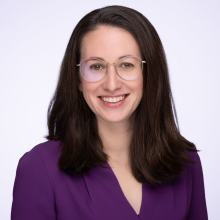
Jocelyn Saidenberg is a Lecturer specializing in comparative literature, ancient poetry, and interdisciplinary studies. She holds a doctoral degree in Comparative Literature from the University of California, Berkeley. Her research integrates linguistics, social anthropology, and psychoanalysis to analyze didactic poetry’s transformative potential, as seen in her dissertation Echo Otherwise on Lucretius’s atomic poetics. Her creative work includes multiple poetry collections and essays exploring themes like displacement, existential inquiry, and interdisciplinary art. Key publications span academic interviews and poetry anthologies, with notable works such as kith & kin (2018), Dead Letter (2015), and Shipwreck (2013). Dr. Saidenberg has received prestigious awards including the Frances Jaffer Award and the American Academy of Poets Greenwald Prize (2001). Her creative and critical outputs reflect a sustained engagement with language’s capacity to interrogate human experience across historical and cultural contexts.
Dr. Shanna Williams is an Assistant Professor in the Department of Educational and Counselling Psychology at McGill University's Faculty of Education. She holds clinical licensure in Quebec and Ontario, with expertise in forensic child psychology and maltreatment-related research. Her work focuses on child lie-telling, commercial sexual exploitation, moral development, and eyewitness testimony. Prior roles include a postdoctoral fellowship at the University of Southern California’s Gould School of Law and forensic law enforcement collaboration in Los Angeles. Education: Ph.D., McGill University: School/Applied Child Psychology M.A., McGill University: Educational Psychology B.A., McGill University: Psychology Postdoctoral Visiting Fellow, University of Southern California Research Interests: Lie-Telling Dynamics: Investigating how cognitive and social factors influence children's deception across contexts. Child Maltreatment: Developing trauma-informed forensic interview protocols and assessing maltreatment impacts on memory and disclosure. Legal Systems: Enhancing child-witness support through improved questioning techniques and cross-cultural legal practices. Publications Trends: Her recent work emphasizes pandemic-era challenges in child protection, digital exploitation, and legal system adaptations. Over 20 peer-reviewed articles address topics like forensic interviewing methods, maltreatment detection, and interdisciplinary collaboration. Awards: SSHRC Postdoctoral Fellowship (2016-2017) SSHRC Joseph-Armand Bombardier CGS Doctoral Fellowship (2010-2013) Advising & Grants: Supervises graduate students in child psychology and maltreatment studies. Research funded by SSHRC, NSF, and NIH grants focusing on forensic child development. Labs/Teams: Child Interviewing & Witness Lab Canadian Child Interviewing Research Team
Sunny Stalter-Pace serves as the Hargis Professor of American Literature in Auburn University's College of Liberal Arts, English Department. A specialist in modernist performance, literature, and urban space, she authored Imitation Artist: Gertrude Hoffmann's Life in Vaudeville and Dance (2020) and is currently completing a cultural history of the New York Hippodrome. Her work bridges academic research with public engagement through blogs, interviews, and collaborations with institutions like the Library of Congress. Her educational foundation includes: Ph.D. in English, Rutgers University (2007) M.A. in English, Rutgers University (2003) B.A. in English and French, Loyola University Chicago (1997), magna cum laude Stalter-Pace's research interrogates intersections of mobility, gender, and performance in 20th-century American culture. She examines how vaudeville, subway systems, and theatrical spectacles shaped public identity, with particular attention to women's experiences and spatial politics. Her methodology combines literary analysis, archival research, and visual studies to reveal how imitation and movement function as cultural forces. Current projects explore aquatic performances at the New York Hippodrome and the legacy of vaudeville producer Gertrude Hoffmann. Her 15 most recent publications demonstrate an evolving trajectory from subway systems ( Underground Movements , 2013) toward aquatic spectacles and vaudeville legacies, consistently centered on New York City's infrastructure. This body of work establishes mobility studies as a critical lens for understanding modernism, revealing how transportation networks and performance venues structured social interactions. Her interdisciplinary approach connects theater history, gender studies, and urban theory to uncover marginalized narratives in American cultural production. Key recognitions include: Harry Ransom Center Fellowship (2020) New York Public Library Short-Term Research Fellowship (2020) Alabama Humanities Foundation Grant (2014) College of Liberal Arts Excellence in Teaching Award nomination (2011) Multiple research fellowships from 2003-2017 Stalter-Pace has secured substantial funding for archival research through fellowships from the NEH, MLA, and university grants. She serves on Biographer’s International Organization's program committee and curated the 'Common Grounds' exhibition at Auburn's Jule Collins Smith Museum. Her teaching innovations include the first-year seminar 'Thinking Through the Arts' and courses on contemporary drama that integrate Hamilton into American literature pedagogy. As Book Review Editor for Transfers: Interdisciplinary Journal of Mobility Studies , she shaped scholarly discourse in mobility studies. Through her Hippodrome research blog and collaborations with the New York Public Library, Stalter-Pace transforms specialized scholarship into accessible public history. Her Library of Congress presentation on Albertina Rasch and the Hippodrome exemplifies her commitment to bridging academic research with community engagement, while ongoing interviews and blog posts extend her work beyond traditional academic boundaries.
Gavin Oxburgh is a Professor of Police Science at Northumbria University and an HCPC-registered Consultant Forensic Psychologist. He holds Chartered Psychologist and Chartered Scientist statuses, and serves as Assistant Director of The Northern Hub for Veteran and Military Families Research. With 22 years in the Royal Air Force Police as a senior detective specializing in child protection and sexual offenses, he now advises globally on legal psychology and human rights. His work includes collaboration with the International Criminal Court (ICC) and contributions to the UN-led Mendez Principles on Effective Interviewing. Research focuses on legal/criminological psychology, including international human rights, non-coercive interviewing, false memories, and veterans' issues. He has secured over £5M in grants from ESRC, EPSRC, and defense-related funds. Key roles include editorial positions for Journal of Investigative Psychology and Torture Journal , and Associate Investigator status with EPSRC/GCHQ's Academic Centre of Excellence in Cyber Security Research (ACE-CSR). Professional activities include founding ETICA (Global) for ethical investigative practices and co-founding the International Investigative Interviewing Research Group (iIIRG). He trains investigators worldwide, including UN agencies, European institutions, and South African law enforcement. His qualifications include a PhD in Psychology (2011), PGCLTHE (2008), and Fellow of the British Psychological Society (FBPsS). Notable projects include studies on remote forensic interviewing during the pandemic, veteran suicide prevention, and capacity-building in counter-wildlife crime. His work emphasizes ethical interviewing techniques, cross-cultural challenges, and technology's role in modern investigations.
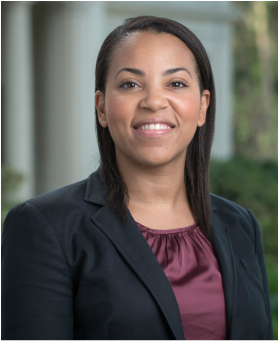
Krystale Littlejohn is an Associate Professor in the Department of Sociology at the University of Oregon’s College of Arts and Sciences. Her research focuses on race, gender, and reproduction, examining how cultural categories shape intimate relationships and health outcomes. She employs mixed methods across disciplines such as reproductive justice, health and medicine, social cognition, and intersectionality. B.A. in Sociology and Spanish Language and Culture, Occidental College (2007) Ph.D. in Sociology, Stanford University (2013) Her work interrogates the social underpinnings of reproductive processes, including projects on contraceptive use, abortion access, and the embodiment of biomedical technologies. She has secured grants from the Society of Family Planning, American Association of University Women, and NIH, including a K01 award for research on risk tolerance in contraceptive use among couples. Recent publications explore themes like mental and emotional health in reproductive care (2025), gendered heterosexuality and mixed feelings about sex (2024), and disparities in contraceptive dissatisfaction by race and education (2012). These works span subfields including reproductive justice, intersectionality, and social cognition. ASA Minority Fellowship Program American Association of University Women Fellowship Society of Family Planning Funding NIH K01 Award Professor Littlejohn mentors graduate and undergraduate researchers, though specific advisees are not listed. She also provides productivity consulting and performance coaching to academics, reflecting her commitment to interdisciplinary collaboration and public health advocacy.
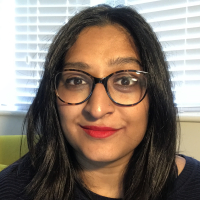
Dr. Rishita Nandagiri is a feminist researcher and academic currently serving as a Lecturer (Assistant Professor) in the Department of Global Health & Social Medicine at King's College London. She previously held research and teaching positions at the London School of Economics (LSE), including an ESRC Postdoctoral Fellowship and an LSE Fellow in Health and International Development. Her work is deeply rooted in reproductive justice, gender, and global health, with a focus on the Global South. PhD in Social Policy, London School of Economics (2019) ESRC Postdoctoral Fellow, LSE Department of Methodology (2020-2021) LSE Fellow in Health and International Development (2019-2020) Research Assistant, LSE Department of Media and Communications (2018-2019) Dr. Nandagiri’s research centers on reproductive (in)justices, interrogating how power and politics shape abortion access, self-managed abortion, care trajectories, and reproductive governance. Her work is interdisciplinary, drawing on feminist theory, qualitative and participatory methods, policy analysis, and co-production with communities and organizations. She has extended her research to examine the impact of the COVID-19 pandemic on abortion and the role of lay health providers in care delivery. Her methodological interests include multi-method designs that integrate interviews, archival research, and community engagement. The 15 most recent articles reflect a strong trajectory in reproductive justice, with increasing engagement with feminist economics, carceral systems, and global policy. Themes include structural violence, legal pluralism, care ethics, and transnational advocacy. Her publications span high-impact journals in public health, social policy, gender studies, and media, indicating a broad interdisciplinary reach. Scientific awards and recognitions include: ESRC Postdoctoral Fellowship (2020-2021) LSE Class Teacher Award (2020) LSE Research Investment and Infrastructure Funds (2020) Best PhD Poster Prize, British Society for Population Studies (2018) LSE PhD Studentship (2015-2019) Dr. Nandagiri has advised on and contributed to numerous research grants, particularly those related to reproductive health, digital privacy, and pandemic response. She has collaborated with major institutions such as UNFPA, the Women’s Global Network for Reproductive Rights, and FRIDA. She co-founded the Abortion Book Club and serves on editorial and advisory boards, including BMJ Sexual & Reproductive Health and the International Union for the Scientific Study of Population’s Abortion Research panel. She also co-convenes the Development Studies Association’s Women and Development Study Group, demonstrating strong leadership in academic and advocacy networks. She is actively involved in public engagement, contributing to LSE blogs, media outlets like Women's Health Magazine UK, and platforms such as the Oxford Human Rights Hub and Harvard’s Bill of Health. Her lab and team affiliations are not explicitly named, but her collaborative projects suggest strong ties to interdisciplinary research groups focused on global health, reproductive justice, and digital rights.
Dr Bela Bonita Chatterjee is a Senior Lecturer in Law at Lancaster University School of Law , with a focus on teaching and scholarship since 2020. Her work bridges cyberlaw , artificial intelligence , robotics , and gender/sexuality in legal contexts. She has received multiple teaching accolades, including the 2023 Blue Plaque Award and the 2018 FASS Dean’s Senior Teaching Award . Dr Chatterjee’s research interrogates the interdisciplinary intersections of law and technology , particularly cybercrime , AI and criminal law , and widening participation in legal education . Her recent scholarship explores robotics in criminal law and business attire/fashion as legal subjects. 2025 : 'The Speakeasy' conference paper 2023 : Invited discussant on child sex dolls/robots 2022 : Workshops on assessment design and audio-visual feedback 2020 : Decolonizing the curriculum and digital teaching practices 2019 : Robotics in family law, child protection, and Lex Robotica 2018 : Robotics and sexual violence Scientific Awards: 2023 Blue Plaque Award 2022 Highly Commended Award 2018 FASS Dean’s Senior Teaching Award 2006 Sir Alistair Pilkington Prize Nominee/Shortlisted for HEA NTFS and OUP Law Teacher of the Year Awards Dr Chatterjee has supervised and examined numerous PhD and LLM dissertations , served on editorial boards of journals like Frontiers of Legal Research , and co-organized conferences such as the British Association for Canadian Studies Legal Studies Group Annual Conference . She contributes to committees including the CREST Security Research Ethics Committee and EPSRC Fellowship Advisory Board .
Veronika Settele is a historian specializing in 19th-20th century societal transformations, currently serving as a Visiting Professor and junior research group leader at the University of Bremen since 2023. Her work bridges History of Sexuality , Food History , and Animal Studies , examining intersections between economic systems, technological shifts, and cultural norms. Education : PhD in History (2015-2020), Freie Universität Berlin MSc in European Politics and Society (2011-2014), University of Innsbruck Magister in History (2007-2012), University of Innsbruck Research Focus : Her scholarship interrogates how sexuality , animal husbandry , and food systems reflect and shape societal structures. Current projects like "Hinter der Norm" analyze sexuality's secularization through religious practice lenses, while her publications explore industrial agriculture's moral and economic dimensions. Article Trends : Spanning 2012-2024, her work traces industrial agriculture (1945-1990), animal labor dynamics , and sexuality as cultural practice , with keywords spanning Capitalism , Technological History , and Environmental Ethics . Scientific Recognition : Opus Primum Preis der Volkswagen Stiftung Deutscher Studienpreis Friedrich-Meinecke-Preis Fonds Deutscher Studienpreis der Körber-Stiftung Gerald D. Feldman-Reisebeihilfen Academic Leadership : She co-organized conferences like "Beyond Norms and Categories" , serves on the editorial board of Zeithistorische Forschungen , and has taught seminars on transnational reform movements, Holocaust studies, and capitalism history at the University of Bremen and Sorbonne Université.
Dr. Marianne Mason is an Associate Professor of Translation/Interpreting Studies and Forensic Linguistics at James Madison University (JMU), where she also coordinates the SETI minor and contributes to Linguistics and Legal Studies programs. Holding a Ph.D. in Linguistics from the University of Georgia, along with a BBA in Statistics and an MA in Translation, her expertise spans interdisciplinary research areas including language and law, discourse analysis, and translation studies. She is a 2018–2019 ACLS Fellow for her project on linguistic analysis in the American justice system. Her research focuses on police-layperson interactions, Miranda rights invocation, and interpreter-mediated legal discourse. Notable works include Police Interrogation, Language, and the Law (Cambridge UP, 2024) and co-editing The Discourse of Police Interviews (U Chicago Press, 2020). She has provided expert testimony in criminal cases and serves on editorial boards for journals like Translation and Interpreting Studies . Educations: Ph.D. Linguistics, University of Georgia MA Translation, [institution not specified] BBA Production Management/Statistics, [institution not specified] Research Projects: ACLS-funded study on language in the American justice system Custodial interrogation reform analysis Affiliations: International Association for Forensic and Legal Linguistics National Association of Judiciary Interpreters & Translators (NAJIT)
A.J. Bellido de Luna is the Assistant Dean for Advocacy and Conflict Resolution Programs, Hardy Law Professor, and Professor of Practice of Law at St. Mary’s University School of Law. He oversees the Advocacy Program National Team, including Moot Court and Trial Teams, and teaches Trial Advocacy and Arbitration. Previously, he served as Managing Director of the Clinical Law Program at the University of Maryland School of Law and held leadership roles in Baltimore City governance and law enforcement. Education: J.D., University of Maryland School of Law (2004) B.S., Johns Hopkins University (2000, with Honors) His expertise spans legal advocacy, dispute resolution, and clinical legal education. He has directed nationally competitive trial teams and developed innovative curricula in remote advocacy techniques. Key research interests include cross-examination strategies, arbitration frameworks, and the integration of technology in legal practice. Awards: 2014 Staff Member of the Year (University of Maryland School of Law) 2013 Faculty of the Year Community Award (Homeless Person’s Representation Project) 2010 Impact Award (Black Law Students Association) 2004 Order of the Barrister His career combines academic leadership with practical experience in criminal justice, having served as a retired police lieutenant and Marine. He currently advises the Board of Advocates and oversees intergovernmental affairs at St. Mary’s University.
Charles R. Rice is a Lecturer at Berkeley Law School and Senior Counsel at Shartsis Friese LLP, where he has practiced since 1981. He specializes in securities litigation, business disputes, and complex legal cases, with extensive experience in arbitration and court proceedings. Rice also teaches legal writing to foreign LL.M. students, emphasizing practical litigation skills. Education: A.B. in English from University of Chicago (1975), J.D. from UC Berkeley School of Law (1980) Rice's research and practice focus on litigation strategy , arbitration , and legal writing . His recent publications explore courtroom dynamics, deposition techniques, and methods for creating reader-friendly legal documents. His articles highlight trends in trial advocacy , including oral argument structure, cross-examination tactics, and ethical responses to opponent misconduct. These works span subfields like evidence law , conflict resolution , and judicial communication . Accolades include recognition as a Northern California Super Lawyer and founding the ABTL Report for Northern California. He has served as Department Chairman at Shartsis Friese LLP and remains active in legal education and professional speaking engagements.
Mariano Siskind serves as the Smith Professor of Romance Languages and Literatures and Comparative Literature within Harvard University's Faculty of Arts and Sciences. Currently on academic leave for the 2025-2026 cycle, he maintains an active scholarly profile with recent publications including the 2025 monograph Desejos cosmopolitas . His academic foundation includes: B.A. in Letras from Universidad de Buenos Aires, Argentina M.A. and Ph.D. in Comparative Literature from New York University Siskind's research interrogates the intersections of Latin American literary production with global theoretical frameworks. His primary focus spans nineteenth and twentieth century Latin American literature through lenses of travel writing, globalization histories, and cosmopolitan theory, while actively engaging Marxist and psychoanalytic traditions. Recent work critically examines how Latin American modernismo participates in global literary systems, challenging Eurocentric narratives of world literature through concepts like 'cosmopolitan distance' and 'dislocation of the French signifier'. Analysis of his fifteen most recent publications reveals persistent engagement with cosmopolitanism's theoretical evolution, world literature's institutional frameworks, and Latin America's role in global modernity. His scholarship consistently deconstructs universalist claims while tracing transnational literary circuits, with increasing attention to decolonial perspectives in works like the 2024 article on cosmopolitan rights. Siskind maintains significant editorial leadership through projects including the 2022 Routledge Companion to Latin American Literature and the 2019 World Literature, Cosmopolitanism, Globality volume, shaping contemporary discourse in comparative literary studies.
Dr. Lindsay C. Malloy is an Associate Professor in Forensic Psychology at Ontario Tech University's Faculty of Social Science and Humanities. Previously, she held faculty positions at Florida International University (2011–2017) and completed postdoctoral training at the University of Cambridge (UK). Her research focuses on children's disclosure of traumatic experiences, memory suggestibility, investigative interviewing techniques, and legal implications of such findings. She has been supported by grants from the U.S. National Science Foundation, National Institute of Child Health and Human Development, and Department of Health and Human Services. Notable awards include the Saleem Shah Award and Diane J. Willis Early Career Award. Malloy teaches courses such as The Child Witness and Children and the Law . Education: PhD (Psychology and Social Behavior, University of California, Irvine, 2008); MA (Social Ecology, UC Irvine) Research Interests: Developmental psychology and law, child maltreatment disclosure, investigative interviewing, and legal system impacts. Her work bridges psychological research and legal practice, emphasizing ethical interviewing methods and improving legal outcomes for youth. Recent grants include studies on ADHD-related memory challenges and child recantation dynamics. Malloy collaborates on projects addressing confessions, juvenile justice perceptions, and forensic methodologies. Awards: Saleem Shah Award (APA Division 41), Diane J. Willis Award (APA Division 37). Grants: Over $364,000 in funding from NSF, NIH, and HHS for projects on child memory, disclosure patterns, and forensic interviewing. Malloy's publications span journals like Developmental Psychology and Law and Human Behavior , with co-edited works on children’s testimony. Her lab focuses on applied research to inform policy and practice in forensic settings.
Daniel Cardoso Llach is an Associate Professor at Carnegie Mellon University's School of Architecture , where he chairs the Master of Science in Computational Design program and co-directs the CoDe Lab . His scholarship merges history, science and technology studies (STS), and computational design , focusing on the cultural and socio-technical dimensions of design automation. Education: PhD and MS in Architecture: Design and Computation from MIT , BArch from Universidad de los Andes Research Grants: Supported by the Graham Foundation for historical CAD exhibitions and by the Alexander Von Humboldt Foundation for postwar computational design research in Germany His work interrogates the politics of software, the materiality of computational systems , and the ethical implications of AI/robotics in architectural practice. Recent projects include reconstructing early CAD systems and analyzing data-driven urban technologies. Scientific awards include: Alexander Von Humboldt Fellowship (2024–2025) ACM CSCW Methods Mention for emulation-based software research (2021)
Felix Pinkert is an Associate Professor in the Department of Philosophy at the Faculty of Philosophy and Education, with active research contributions to UN Sustainable Development Goals related to climate action and human rights. His work bridges ethical theory and real-world crises through rigorous philosophical analysis. His core research interests include: Procreation Ethics: examining moral implications of childbearing through consequentialism, harm principles, and the non-identity problem. Climate Ethics: addressing demandingness considerations, individual responsibility, and collective action failures in environmental crises. Political Philosophy: analyzing citizens' liability for state wrongdoing, ultra vires actions, and deep state secrets within legal frameworks. Human Rights and Consequentialism: exploring tensions between rights-based approaches and outcome-focused ethical theories. Pinkert's recent publications (2024-2025) demonstrate a clear trend of applying moral philosophy to existential threats like climate change while interrogating procreation ethics. His work consistently challenges conventional boundaries between individual agency and systemic crises, emphasizing the moral weight of insignificant effects and demandingness in consequentialist frameworks. He leads the externally funded research project 'Knowledge in Crisis' (2023-2028) investigating epistemic challenges in legal/political philosophy, with international collaboration across Austria and Europe. His academic activities include organizing conferences on knowledge in political philosophy (December 2024) and delivering talks on climate ethics (June-July 2024), reflecting active engagement in scholarly discourse. Pinkert maintains a strong public profile through 18 press/media contributions, including interviews on climate-procreation dilemmas and radio commentary on scarcity/abundance themes, demonstrating commitment to translating philosophical research into accessible public dialogue.