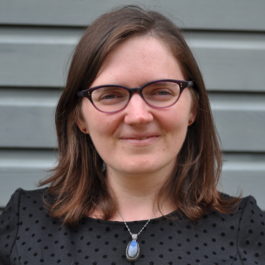
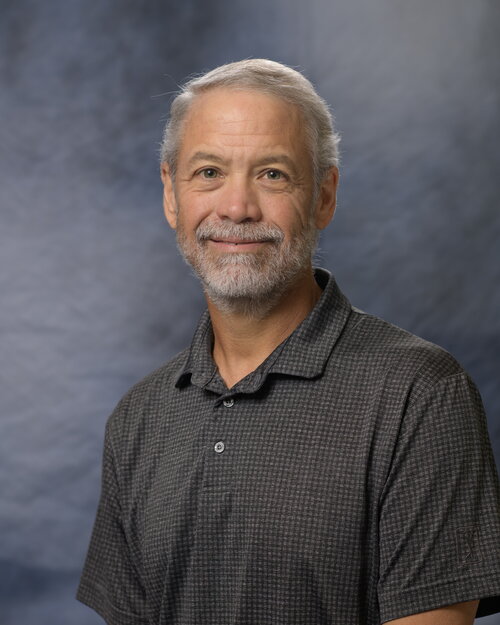
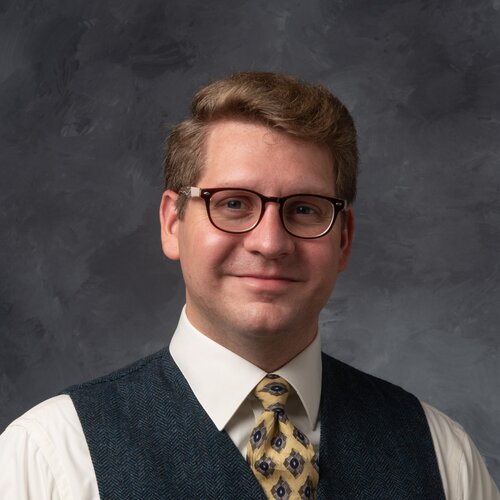
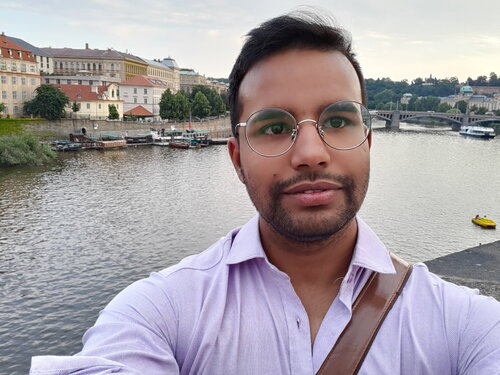
Laura Fissel serves as an Assistant Professor in the Department of Physics, Engineering Physics and Astronomy within Queen's University's Faculty of Arts and Science. Her research focuses on the physical processes governing star and planet formation, specifically investigating why star formation from interstellar gas remains highly inefficient. Her primary research interests include: Role of magnetic fields in regulating gravitational collapse during star formation Development and deployment of stratospheric balloon-borne telescopes Submillimeter polarimetry of star-forming regions Very Long Baseline Interferometry (VLBI) applications for balloon telescopes She employs both ground-based observatories (ALMA in Chile, Mopra in Australia, Large Millimeter Telescope in Mexico) and high-altitude balloon platforms to study cosmic phenomena above 99.5% of Earth's atmosphere. Laboratory and project leadership: Principal Investigator for BLAST-TNG telescope project (launched from Antarctica in January 2020) Lead for Balloon VLBI Experiment (BVEX) pathfinder mission scheduled for 2025 Collaboration with international teams on stratospheric telescope development Academic advising and recruitment: Actively recruiting Master's and PhD students for star/planet formation research Projects involving telescope design, balloon missions, and observational astrophysics
Arto Heikkilä is a Senior Lecturer in the Department of Astronomy and Plasma Physics at Chalmers University of Technology. He dedicates 100% of his work to education, serving as a teacher in electromagnetism, electronics, and space technology courses while also holding the role of vice-dean for undergraduate education within the department. Research focus on interstellar molecular gas in Magellanic Clouds Specialization in molecular abundance variations and isotopic ratios Contributions to submillimeter astronomy and plasma physics His publication record spans from 1993 to 2008, with key trends in astrophysical spectroscopy, interstellar chemistry, and magnetic plasma dynamics. Notable works include studies of DCO+ in the Large Magellanic Cloud, molecular isotope ratios, and ion-temperature-gradient-driven drift modes. He has authored multiple articles in Astronomy and Astrophysics and Physics of Fluids B , alongside doctoral and licentiate theses.
Geoffrey Blake is a Professor of Cosmochemistry and Planetary Sciences and Professor of Chemistry at the California Institute of Technology (Caltech). He received his B.S. from Duke University in 1981 and his Ph.D. from Caltech in 1986. His academic career at Caltech progressed from Assistant Professor of Cosmochemistry (1987-93) to Associate Professor of Cosmochemistry and Planetary Sciences (1993-97), to Professor (1997-99), and finally to his current dual appointment as Professor of Cosmochemistry and Planetary Sciences and Professor of Chemistry (1999-present). He also served as Deputy Director of the Owens Valley Radio Observatory (2000-06) and Master of Student Houses (2009-14). Professor Blake's research focuses on applying innovative spectroscopic tools to investigate chemical and physical processes in natural environments ranging from the interstellar medium to living cells. His work aims to understand the evolution of molecular diversity from atoms in the interstellar medium to complex molecules throughout the solar system and in life. He conducts both remote sensing and laboratory studies, with active research in three major scientific areas. His group is actively developing new spectrometers across the Terahertz (THz, 30-1000 μm) region of the electromagnetic spectrum. Analysis of Professor Blake's recent publications reveals a strong focus on advanced spectroscopic techniques, particularly in the terahertz range, and their application to both astrochemistry and physical chemistry problems. His work spans from laboratory studies of molecular clusters and water structure to astronomical observations of protoplanetary disks and exoplanet atmospheres. There is a clear interdisciplinary approach, connecting chemistry, physics, and astronomy to address fundamental questions about molecular evolution and cosmic processes. Professor Blake has mentored numerous graduate students who have gone on to successful careers in academia, national laboratories, and industry. His students have received prestigious awards, including the 2024 ACS Astrochemistry Dissertation Award (Olivia Wilkins). He has also secured research funding that supports his group's development of advanced spectroscopic instrumentation and related research activities. The Blake Group operates state-of-the-art laboratories for terahertz and microwave spectroscopy at Caltech. They have developed innovative instrumentation including decade-spanning high-resolution terahertz time-domain spectrometers and frequency comb systems. The group collaborates with researchers across multiple disciplines and institutions, contributing to major astronomical observations with facilities like JWST and ground-based observatories.
James J. Bock is the Marvin L. Goldberger Professor of Physics at the California Institute of Technology and a Senior Research Scientist at the Jet Propulsion Laboratory. He earned his B.S. from Duke University (1987), M.A. (1990) and Ph.D. (1994) from the University of California, Berkeley. His career spans roles at JPL (1994-2012) and Caltech (1994-24), including Visiting Associate, Senior Faculty Associate, and Professor. Current affiliations include leading the Observational Cosmology group at Caltech and contributing to the BICEP Array and SPHEREx projects. B.S., Duke University, 1987 M.A., University of California, Berkeley, 1990 Ph.D., University of California, Berkeley, 1994 Dr. Bock specializes in observational cosmology and instrumentation development for space missions. His research focuses on studying the cosmic microwave background (CMB), galaxy evolution, and designing cryogenic systems for infrared and millimeter-wave telescopes. Key projects include SPHEREx, SPIDER, and BICEP Array, addressing questions about cosmic inflation, gravitational lensing, and dust polarization. His recent publications highlight advancements in CMB polarization analysis, cryogenic engineering for space telescopes, and extragalactic background light studies. Collaborative work spans institutions and journals like the Astrophysical Journal and IOP Conference Series. Marvin L. Goldberger Professor of Physics (current title) Dr. Bock contributes to lab groups developing novel instrumentation for cosmological studies, including teams working on the BICEP Array and SPHEREx brassboard models. His work bridges theoretical cosmology and experimental space mission execution.
Leslie W Looney is a Professor in the Department of Astronomy at the University of Illinois at Urbana-Champaign and serves as Director of the Laboratory for Astronomical Imaging. His research focuses on the formation of protostars and planetary systems, utilizing advanced observational techniques with instruments like ALMA, JWST, and VLA. College of Liberal Arts & Sciences National Center for Supercomputing Applications (NCSA) His work examines protostars (10,000–100,000 years old), their dust/gas envelopes, and circumstellar disk evolution, including dust grain growth and polarization mechanisms. Recent studies explore magnetic fields in Orion, ice composition in protostellar systems, and disk substructures using millimeter/submillimeter observations. Notable awards include 20 recognitions since 2004 in the "List of Teachers Ranked as Excellent." His research group includes current graduate students Spencer Hulsey and Austen Fourkas, and has mentored 11 PhD graduates since 2008. Collaborations span international teams using SOFIA, ALMA, and JWST for star formation and galactic studies.
Jeffrey P. Filippini is an active Associate Professor of Physics and Astronomy at the University of Illinois, with a joint appointment in both departments within the College of Liberal Arts & Sciences. He serves as Associate Head for Research and Facilities in the Physics Department and leads significant research initiatives in cosmology and instrumentation development. Education: Ph.D. in Physics, University of California, Berkeley (2008) A.B. in Chemistry and Physics summa cum laude, Harvard University (2002) Filippini's research focuses on the intersection of cosmology and particle physics, specifically studying the universe at both its largest and smallest scales. His work spans observational cosmology with the cosmic microwave background (CMB), particle astrophysics, and advanced instrumentation development. He leads major projects including SPIDER (a balloon-borne CMB polarimeter), the BICEP/Keck Array program at the South Pole, and the Terahertz Intensity Mapper (TIM), which studies star formation history through far-infrared spectroscopy. His instrumentation work often involves detectors operated at sub-Kelvin temperatures. His recent publications reveal a strong focus on CMB polarization measurements, millimeter-wave instrumentation, and terahertz detector development. The research spans both balloon-borne and ground-based experiments, with significant emphasis on instrumentation challenges and data analysis techniques needed to probe fundamental cosmological questions. Filippini actively mentors graduate students, with Ph.D. candidates like Elle Shaw and Sho Gibbs contributing to his SPIDER and TIM projects. His teaching portfolio includes undergraduate physics courses such as Thermal Physics and Quantum Physics, where he has been recognized as an Excellent Teacher by students. He plays a key role in major collaborations including SPIDER, BICEP/Keck Array, and CMB-S4, directing instrumentation development and data analysis efforts. His Antarctic expeditions for the SPIDER project demonstrate hands-on leadership in experimental cosmology, where he has overseen complex instrument deployment and operation in extreme environments.
Arran Gross is a Postdoctoral Research Associate in the Department of Astronomy at the University of Illinois Urbana-Champaign, affiliated with the College of Liberal Arts & Sciences. His research focuses on compact objects, galaxies and the interstellar medium (ISM), and observational astronomy. Research Areas: Compact Objects, Galaxies and ISM, Observation
Kacper Kowalik is a Research Scientist in the Department of Astronomy at the University of Illinois' College of Liberal Arts & Sciences. Contactable at kowalikk@illinois.edu, Kowalik contributes to observational and computational astrophysics research, aligning with the department's focus areas in compact objects, cosmology, and instrumentation. The department's research opportunities span stars, planets, galaxies, and theoretical astrophysics, with resources including the campus observatory and Kaler Classroom.
Samaresh Mondal is a Postdoctoral Research Associate at the Department of Astronomy, College of Liberal Arts & Sciences, University of Illinois. His research interests span multiple domains in astronomy, including compact objects, cosmology, galaxy formation, instrumentation development, observational techniques, and theoretical astrophysics. Contact details: 215 Astronomy, 1002 W. Green St., Urbana, IL 61801 Phone: (217) 333-3090 Email: samaresh@illinois.edu Research interests include Compact Objects Computational & Data Analysis Cosmology Galaxies & Interstellar Medium Instrumentation Development Observational Techniques Stellar & Planetary Systems Theoretical Astrophysics
Srinivasan Raghunathan is a CAPS Postdoctoral Fellow at the Department of Astronomy , University of Illinois at Urbana-Champaign . He is affiliated with the College of Liberal Arts & Sciences and contributes to research in astrophysics, focusing on observational and theoretical studies. Research areas: Compact Objects, Cosmology, Galaxies & ISM, Instrumentation, Observation, and Theory. Contact: srinirag@illinois.edu , 1205 W. Clark St, Urbana, IL 61801.
Cynthia Trendafilova is a CAPS Postdoctoral Fellow in the Department of Astronomy at the University of Illinois at Urbana-Champaign, affiliated with the College of Liberal Arts & Sciences. Her role involves research and academic collaboration within a department recognized for its work in astrophysics, cosmology, and observational astronomy. Research Interests: Dr. Trendafilova's work aligns with the department's focus areas, including Cosmology and galaxy formation Stellar and planetary systems Instrumentation development Computational astronomy and data analysis Observational techniques Contact Information: Email - ctrendaf@illinois.edu | Office - 1205 W Clark St, Urbana, IL 61801 | Phone - (217) 333-3090
Gabriele Cescutti is an Associate Professor in the Department of Physics at the University of Trieste, specializing in Astrophysics, Cosmology and Space Science. He holds multiple leadership positions including membership on the Executive Board, Department's Board, and Boards of Studies. His primary research focus is Galactic Archaeology, which studies the formation process of our Galaxy and its satellites through the analysis of chemical abundances in stars. His work centers on developing and applying chemical evolution models to understand galactic formation history. Professor Cescutti leads significant research initiatives including the COSMIC-POT project investigating the nucleosynthesis of heavy elements through observations, models, and innovative instrumentation. He actively participates in major national research infrastructure projects related to high-performance computing. Scientific Manager of COSMIC-POT project (2023-2025) Participant in National Centre for HPC, Big Data and Quantum Computing Member of research group focusing on Stellar Populations and Interstellar Medium His research combines observational data from surveys like Gaia-ESO, MINCE, and WEAVE with sophisticated galactic chemical evolution models to address fundamental questions about element formation in the universe.
Francesco Longo is an Associate Professor in the Department of Physics at the University of Trieste, specializing in Experimental Physics of Fundamental Interactions and Applications. He holds significant leadership roles including Coordinator and Vice-Coordinator of the Doctoral Studies Boards for multiple cycles (XXXIV-XXXIX), Scientific Delegate for the Third Mission, and Delegate for Scientific Dissemination in the Head's Office. Position: Associate Professor Department: Department of Physics University: University of Trieste Email: francesco.longo@ts.infn.it Professor Longo's research spans multiple areas at the intersection of fundamental physics and medical applications. His primary research interests include: Astroparticle Physics and High-Energy Gamma Astrophysics (AGILE, FERMI, MAGIC, eASTROGAM and CTA missions) Medical Physics with focus on Photoneutron Sources for Neutron-Capture Treatment Boron Neutron Capture Therapy (BNCT) development Experimental Physics of Fundamental Interactions His work on the PSIHO (Photoneutron source for in-hospital BNCT treatment) project represents a significant contribution to making neutron capture therapy more accessible in hospital settings. This research involves optimizing neutron photoproduction using high-energy electron accelerators already available in hospital radiology units. His astrophysics research contributes to our understanding of cosmic phenomena through analysis of data from multiple space and ground-based observatories. Professor Longo's publications demonstrate a consistent focus on both theoretical and applied aspects of high-energy physics, with recent work emphasizing medical applications of particle physics and multi-wavelength analysis of cosmic phenomena. His research bridges fundamental physics with practical medical applications, particularly in cancer treatment technologies. As a dedicated educator and mentor, Professor Longo supervises numerous doctoral students across multiple cycles of the Physics Doctoral Program. His leadership extends to coordinating the Doctoral Studies Boards and serving on the Department's Board. Coordinator of Doctoral Studies Boards for Physics Cycles XXXV, XXXVI, XXXVIII, XXXIX Vice-Coordinator for Physics Cycles XXXIV and XXXVII Member of Boards of Studies for Medical Physics, Physics Master's, and Physics Doctoral Programs Professor Longo is actively involved in multiple research projects funded by the Italian Ministry of University and Research (MUR), the INFN (Italian Institute for Nuclear Physics), and participates in the National Centre for HPC, Big Data and Quantum Computing. His work with doctoral students spans various specialized areas within physics, demonstrating his broad expertise and commitment to training the next generation of physicists. His research group focuses on two main areas: High-Energy Gamma Astrophysics (AGILE, FERMI, MAGIC, eASTROGAM and CTA) and Photo-Neutron Sources for Neutron-Capture Treatment. These teams collaborate with international research institutions including INFN, Elettra Sincrotrone Trieste, and the International Centre for Theoretical Physics (ICTP).
Alessandro Sala is a Lecturer in the Department of Physics at the University of Trieste. His role primarily involves teaching activities within the department, as indicated by his "Teaching assignment" status. He is affiliated with the Astrophysics research strand, focusing on theoretical and observational studies of cosmic phenomena. Research Interests : Sala's work aligns with the department's core areas, including Theoretical Physics Astrophysics Supernovae Progenitors and Rates Gamma-Ray Burst connections Stellar Populations Interstellar Medium dynamics These fields are inferred from the department's research strands and group activities.
Vadim Semenov is a NASA Hubble and ITC Postdoctoral Fellow at the Institute for Theory and Computation, part of the Harvard-Smithsonian Center for Astrophysics at Harvard University. His research focuses on galaxy formation and evolution through computational methods. His research interests include galaxy formation and evolution, computational astrophysics, star formation processes, interstellar medium dynamics, and cosmological simulations. Semenov specializes in running and analyzing supercomputer simulations of galaxies to understand phenomena such as inefficient star formation, scaling relations between star formation rates and gas content, interstellar turbulence, and various forms of stellar feedback. His scientific recognition includes the prestigious NASA Hubble Fellowship. Semenov received his PhD from the University of Chicago in 2019 before joining the Institute for Theory and Computation. NASA Hubble Fellowship Semenov's work involves designing and analyzing supercomputer simulations to investigate cosmological galaxy formation, formation of galactic disks, the origin of star formation scaling relations, and cosmic rays. His computational approach provides insights into fundamental astrophysical processes that shape galaxies across cosmic time.