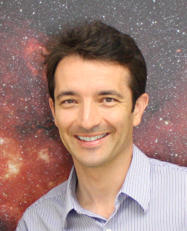
Dr. Ramesh Bhat is a Senior Research Fellow at Curtin University's School of Electrical Engineering, Computing and Mathematical Sciences (EECMS), affiliated with the Curtin Research Institute and Curtin Institute of Radio Astronomy (CIRA). His primary affiliation is with the Faculty of Science and Engineering. He is based at Curtin Perth Campus in Brodie Hall, Room 161. His research focuses on astrophysics and radio astronomy, particularly pulsar timing, gravitational wave detection using pulsar timing arrays, and the study of transient phenomena such as fast radio bursts (FRBs). He contributes to major projects like the High Time Resolution Universe (HTRU) survey, MeerTime, and the Murchison Widefield Array (MWA). Key research interests include pulsar population studies, interstellar medium interactions, signal processing for radio astronomy, and instrumentation development for next-generation telescopes like the Square Kilometre Array (SKA). His work spans theoretical models of pulsar emission mechanisms to observational studies of pulsar nulling, subpulse drifting, and gravitational wave backgrounds. Recent publications highlight advancements in pulsar survey techniques (e.g., GPU-accelerated analysis), discovery of new pulsars and FRBs, and constraints on cosmological models via pulsar timing arrays. His research often involves international collaborations, leveraging facilities like the Parkes radio telescope and the MWA. He actively contributes to radio interferometry, transient detection algorithms, and pulsar timing array data analysis. His work bridges observational astronomy with computational methods, aiming to advance understanding of compact objects and gravitational physics.
Sam McSweeney is a Researcher at Curtin University's School of Electrical Engineering, Computer and Mathematical Sciences (EECMS), part of the Faculty of Science and Engineering. His work focuses on pulsar astrophysics, subpulse drifting phenomena, and radio transient detection using instruments like the Murchison Widefield Array (MWA). Key research areas include magnetar-like radio transients, nulling pulsars, and multiwavelength studies of neutron stars. He has contributed to major surveys like the SMART pulsar survey and developed advanced data processing pipelines for transient detection. Publications since 2023 highlight discoveries of long-period radio transients, emission state-switching phenomena, and multi-instrument follow-up strategies. His work bridges observational astronomy with computational techniques, emphasizing high-time resolution observations and GPU-based imaging for FRB searches.
Stella Ocker is a Brinson Prize Postdoctoral Fellow at the California Institute of Technology (Caltech) and the Carnegie Observatories, affiliated with the Division of Physics, Mathematics, and Astronomy in the Astronomy Department. Her research focuses on using pulsars, fast radio bursts (FRBs), and multi-wavelength observations to study the interstellar and intergalactic medium. She is part of the NANOGrav Collaboration, the DSA-110 science team, and the pulsar working groups for DSA-2000 and the Square Kilometer Array (SKA). Her work addresses the distribution and dynamics of ionized gas in the Galaxy and beyond, with a particular emphasis on radio surveys like DSA-2000 and CHORD. Key research areas include probing circumgalactic turbulence via FRBs and pulsars, analyzing scattering variability in FRB environments, and studying plasma structures around neutron stars. She has contributed to projects like the NE2001p electron density model implementation and investigations of non-radiative shocks in stellar bow shocks. Ocker has also explored the heliosphere-interstellar medium interaction, leveraging Voyager 1 data to study plasma waves in interstellar space. Her awards include the Brinson Prize Postdoctoral Fellowship. Ocker collaborates extensively with international teams and contributes to major initiatives like NANOGrav’s gravitational wave detection efforts and the DSA-2000 survey. Her research bridges observational astronomy with theoretical modeling, addressing fundamental questions about cosmic plasma dynamics and the structure of the Galactic and extragalactic medium.
Enrique Lopez Rodriguez is an Associate Professor in the Department of Physics and Astronomy at the University of South Carolina, affiliated with the McCausland College of Arts and Sciences. He specializes in extragalactic magnetism and active galactic nuclei, focusing on the role of magnetic fields in galaxy evolution and AGN dynamics. His research uses advanced infrared and radio polarimetric observations from instruments like SOFIA/HAWC+, ALMA, and MMT-Pol. Education: Ph.D. in Astronomy from the University of Florida (2013), Master's in Astrophysics, and Licenciatura in Physics from the University of La Laguna, Spain. Prior to USC, he held roles including Assistant Research Professor at the University of Texas at San Antonio (UTSA) and postdoctoral positions in the U.S. and abroad. Research emphasizes magnetic fields in starburst galaxies, AGN torus structure, and the impact of cosmic rays. He leads the SALSA Legacy Program (SOFIA), exploring magnetic fields in the interstellar medium. Key projects include contributions to the Thirty Meter Telescope (TMT) science cases and instrument development for future telescopes. Advising & Grants: Leads the SALSA program and collaborates on TMT initiatives. His work is supported by grants focusing on polarimetric instrumentation and extragalactic magnetism studies. He advocates for underrepresented students, fostering an inclusive academic environment. Labs/Teams: Extragalactic Magnetism Group and instrumental collaborations (e.g., HAWC+, MMT-Pol). Media highlights include NASA press releases and astronomy outreach features.
Franco Gianturco is a distinguished Senior Research Professor at the University of Innsbruck's Department of Ion Physics and Applied Physics, with a secondary affiliation at University of Rome "La Sapienza". With a career spanning over five decades since receiving his Laurea in Chemistry from the University of Bologna in 1961 and his D. Phil. in Applied Mathematics from Oxford University in 1967, he has established himself as a leading figure in quantum chemistry and molecular physics. His research interests span an impressive breadth of theoretical and computational chemistry, focusing on elementary processes in molecular gases, both neutral and ionized. He specializes in computational modeling of energy transfers in molecular discharges, nonequilibrium behavior in molecular mixtures, and quantum/classical treatments of molecular inelastic cross sections. His work extends to electronic structure calculations, potential energy surfaces for protonation and ionization, quantum modeling of rare gas clusters, microsolvation in helium droplets, and molecular processes at ultralow energies relevant to astrophysics. His research bridges fundamental quantum mechanics with applications in interstellar chemistry, radiation damage, and ultracold molecular systems. Gianturco's recent publications (2020-2021) reveal a strong focus on rotational and vibrational dynamics of molecular ions in cold environments, particularly examining collisions involving CN-, C2H-, HeH+, and OH- with helium and other buffer gases. His work demonstrates sophisticated quantum dynamical calculations applied to problems in interstellar chemistry, cold ion trap physics, and early universe chemical processes. The consistent theme across these publications is the precise quantum mechanical treatment of state-to-state transitions in molecular systems under extreme conditions. Humboldt Research Prize (1991) Fellow of the American Physical Society (1988) Fellow of the New York Academy of Sciences (1989) Fellow of the Institute of Physics (U.K.) (1994) Fellow of the European Physical Society (2005) Fellow of the Royal Society of Chemistry (U.K.) (2008) Fellow of the Academia Europea (London) (2009) Fellow of the Acadèmie de Stalinslas (France) (2014) Research Prize of the Max-Planck Society for Chemical Physics (1995) P.O. Lowdin Lecture (1996) MOLEC Award (1998) Throughout his career, Gianturco has coordinated numerous European research networks and COST projects, served on editorial boards of major physics and chemistry journals including Editor-in-Chief of Europhysics Letters and European Journal of Physics D, and held leadership positions in international scientific organizations such as Chairman of the Division of Atomic and Molecular Physics of the European Physical Society. His research has been supported by extensive funding from European and Italian research agencies, with over 590 publications to his name. His work is conducted within the Molecular Systems research group at the Department of Ion Physics and Applied Physics at the University of Innsbruck, where he collaborates with an international team of researchers investigating quantum phenomena in molecular systems under extreme conditions. His theoretical approaches provide critical insights for experimental groups working with cold ion traps, helium nanodroplets, and interstellar chemistry simulations.
Dr. Thomas White is an Associate Professor and Clemons-Magee Endowed Professor in Physics at UNR, directing research in laboratory astrophysics and high-energy-density physics. His group uses high-powered lasers to recreate extreme conditions found in planetary cores and fusion experiments. Research explores: Material behavior at megabar pressures relevant to gas giant interiors Supersonic plasma turbulence analogous to interstellar medium dynamics Transport properties in degenerate matter Recent publications demonstrate advances in X-ray scattering techniques for warm dense matter characterization. Experimental campaigns utilize facilities including NIF, Omega Laser, and European XFEL. The group maintains collaborations with SLAC, Oxford, and international plasma physics consortia. Honors include NSF CAREER and Culham Thesis awards. Current projects focus on thermal conductivity measurements in iron alloys under exoplanet core conditions (NASA-funded) and magnetic field amplification in turbulent plasmas.
Prof. Pradeep Thalappil is an Institute Professor at the Indian Institute of Technology Madras (IIT Madras), holding the Deepak Parekh Institute Chair Professorship since 2017. His academic journey includes roles as Professor (2004–present), Associate Professor (2000–2004), and Assistant Professor (1995–2000), with a Visiting Faculty stint (1993–1995). His research focuses on instrumentation, molecular surfaces, low-energy ion scattering, nanoscale materials, nanoscience, and water purification. Notable contributions include pioneering work on atomically precise nanoclusters and environmental nanotechnology solutions. He has received over 20 prestigious awards, including the 2024 US National Academy of Engineering Fellowship, 2023 Eni Award, and Padma Shri (2020), India’s fourth-highest civilian honor. Research Interests: Prof. Thalappil’s work bridges chemistry and nanotechnology, addressing global challenges like water purification and sustainable material synthesis. His innovations include developing nanocluster-based technologies for environmental remediation and advanced materials. Recent studies explore plasmonic nanomaterials, interstellar clathrate hydrates, and selective metal extraction using green chemistry approaches. Awards & Recognition: His accolades span international and national honors, reflecting global recognition of his scientific impact. Key awards include the Shanti Swarup Bhatnagar Prize (2008), B.M. Birla Science Prize (2003), and multiple fellowships from prestigious academies. His research has led to patents and industry collaborations, emphasizing translational science. Grants & Advising: Prof. Thalappil has led numerous research grants, though specific funding details are not listed. His mentorship has shaped many students’ careers, though no named advisees are explicitly mentioned in the texts. His lab focuses on nanotechnology applications in energy and environment, collaborating with global institutions like Karlsruhe Institute of Technology and the Materials Research Society of India. Publications & Outreach: Over 400 publications span high-impact journals such as ACS Nano and Angewandte Chemie . Recent works highlight advancements in nanocluster assembly, plasmonic materials, and environmental nanotechnology. He actively engages in science communication through media and public lectures, advocating for sustainable innovation.
Martin Fournier is a Researcher at Heriot-Watt University's School of Engineering & Physical Sciences, affiliated with the Institute of Chemical Sciences. His work focuses on experimental and theoretical studies of molecular collisions, inelastic scattering processes, and reaction dynamics. Key research areas include differential cross sections, rotational energy transfer, and astrochemical modeling. Recent research contributions include studies on HC₅N gas-phase formation mechanisms (Monthly Notices of the Royal Astronomical Society, 2025), inelastic scattering dynamics of NO-A states with CO₂ (Faraday Discussions, 2024), and rotational quenching in NO collisions (Journal of Physical Chemistry A, 2023). These studies combine advanced spectroscopic techniques with computational modeling. He collaborates widely across chemical physics disciplines and maintains an active publication record in top-tier journals. Current research emphasizes understanding fundamental molecular interactions with applications in astrochemistry and materials science.
Zhang Ming is a Professor in the Department of Aerospace, Physics and Space Sciences within the College of Engineering and Science at the Florida Institute of Technology. His office is located in F.W. Olin Physical Sciences (Room 349), and he can be contacted via email at mzhang@fit.edu or phone at (321) 674-8891. Professor Zhang's research centers on space physics phenomena spanning from the Sun to the local interstellar medium. His primary expertise includes cosmic radiation dynamics, energetic particle interactions with plasmas and magnetic fields, wave-particle coupling mechanisms, solar energetic particle acceleration, and cosmic ray modulation processes. He employs advanced computational techniques such as data-driven transport models, 3D numerical simulations, and machine learning to investigate these areas. His recent publications (2023–2025) demonstrate a strong focus on solar particle events, heliospheric boundary physics, and cosmic ray transport. Key trends include the development of machine learning frameworks for space weather prediction, high-fidelity modeling of coronal mass ejection shocks, and innovative studies on turbulence in the interstellar medium. This body of work integrates multi-spacecraft observations with theoretical approaches to advance understanding of particle behavior in complex plasma environments.
Marianne Vestergaard is a Professor at the Niels Bohr Institute, University of Copenhagen, specifically affiliated with the Dark Cosmology Centre (DARK). She has been a faculty member since returning to the University of Copenhagen in 2009 as a Freja Fellow. Her research focuses on distant, young galaxies called quasars, particularly studying the physics of supermassive black holes at their centers. Dr. Vestergaard earned her PhD in Astrophysics from the Niels Bohr Institute in 1999 with a dissertation titled "Are Radio-loud Quasars Rebellious or Are Radio-quiets Just Plain Untalented? A Study of the Ultraviolet Broad Emission Line Profiles in High-Redshift Radio-loud and Radio-quiet Quasars." Prior to her PhD, she completed her Master of Science at the University of Copenhagen in 1992. She conducted research at the Harvard-Smithsonian Center for Astrophysics during her PhD studies and subsequently worked at Ohio State University, University of Arizona, and Tufts University before returning to Copenhagen. Marianne Vestergaard's primary research interest is in the physics of distant, young galaxies called quasars. These objects emit powerful radiation due to material falling onto supermassive black holes at the centers of galaxies. She specializes in determining the mass of these black holes and investigating how the powerful energy emission from the central active nucleus affects their surroundings. Her work employs a wide array of telescopes both in space and on Earth, sensitive to X-ray, ultraviolet, visible, infrared, sub-millimeter and radio radiation. Recently, she has utilized data from the Very Large Telescope at the European Southern Observatory in Chile, Atacama Pathfinder Experiment (APEX), Atacama Large Millimeter Array (ALMA), Hubble Space Telescope, and Swift X-ray and UV-optical telescope. Analysis of Dr. Vestergaard's recent publications (2024-2025) reveals a strong focus on active galactic nuclei (AGN) physics, particularly through the AGN STORM 2 project. Her work examines accretion disk dynamics, black hole mass measurements, reverberation mapping techniques, and the relationship between central black holes and their host galaxies. She frequently collaborates on multi-wavelength observational campaigns, combining data from X-ray through radio wavelengths to build comprehensive models of AGN structure and behavior. A significant portion of her recent work involves studying specific AGN like Mrk 817 and NGC 7469 to understand accretion physics in detail. Året Harald (2016) KIF (Women in Physics) Honorary Award (2024) Jens Martin Prisen (2015) Dr. Vestergaard has been actively involved in numerous international collaborations and research projects throughout her career. Her work has generated significant interest in the scientific community, with her publications being referenced by multiple news outlets, blogged about, and shared across social media platforms. She has participated in public outreach activities, giving lectures at institutions like Folkeuniversitetet in Aarhus and Copenhagen on topics including "Giant black holes, quasars and baby galaxies." Her research has been featured in media outlets such as Videnskabernes Verden ("World of the Sciences"). As a member of the Dark Cosmology Centre at the Niels Bohr Institute, Dr. Vestergaard is part of a research environment dedicated to understanding the dark components of the universe - dark matter and dark energy. The center combines observational, theoretical, and computational approaches to cosmological research, with particular strengths in high-redshift astronomy, galaxy formation and evolution, and the physics of active galactic nuclei.
Professor Ralph Sutherland is a renowned astrophysicist affiliated with the Research School of Astronomy & Astrophysics at The Australian National University (ANU), within the ANU College of Science. His primary research focuses on theoretical astrophysics, including interstellar medium (ISM) physics, supernova remnants, massive star evolution, active galactic nuclei (AGN), and atomic physics. He holds a professorial position and has contributed extensively to photoionization modeling and galaxy evolution studies. His work involves advanced computational models, such as the MAPPINGS code for three-dimensional photoionization simulations. Notable projects include investigating AGN feedback mechanisms, jet-ISM interactions, and chemical enrichment in galaxies. Ralph has published over 120 peer-reviewed articles and has been a key figure in international collaborations like the Siding Spring Southern Seyfert Spectroscopic Snapshot Survey (S7). Ralph's research spans topics such as Lyman-alpha dependence in high-redshift galaxies, metallicity relations in AGN-host galaxies, and the role of radiation pressure in narrow-line regions. His contributions to understanding stellar feedback, supernova remnant dynamics, and interstellar medium interactions have advanced fundamental astrophysical concepts.
Paddy Leahy is Senior Lecturer in Radio Astronomy at the University of Manchester. His research centers on cosmic microwave background anisotropies and radio galaxy physics. Research specialties: Synchrotron emissions from radio galaxies Jet dynamics and lobe evolution in active galaxies Magnetic field structures in galaxy clusters eMERLIN interferometric imaging techniques Faraday rotation studies with POSSUM survey Contributes to major surveys including C-BASS all-sky mapping and POSSUM polarization studies.
François Lique is a University Professor at the Université de Rennes, affiliated with the Institut de Physique de Rennes (UMR 6251, CNRS-Université de Rennes) and the prestigious Institut Universitaire de France. He works within the Department of Molecular Physics Theory and simulation, focusing on theoretical and computational approaches to molecular physics problems with applications in astrophysics. His research interests center on molecular collisional processes in astrophysical environments, particularly quantum scattering calculations, rotational and vibrational excitation of molecules, and astrochemical modeling. Professor Lique specializes in creating accurate collisional rate coefficients essential for interpreting astronomical observations of interstellar and circumstellar media. His work bridges theoretical quantum chemistry with observational astrophysics, providing critical data for understanding molecular processes in space. Analysis of his recent publications reveals a strong focus on collisional excitation processes involving various molecules (HCN, PO+, C2O, H2O) with collision partners like H2, CO, and He. His research employs advanced quantum scattering methods, including the Hibridon program suite he has contributed to. The work spans multiple astrophysical contexts from planetary nebulae to pre-stellar cores and cometary comae, demonstrating the broad applicability of his fundamental molecular physics research. Professor Lique has successfully supervised PhD students including Amélie Godard and Paul Pirlot, who recently defended their theses. His research group at the Institut de Physique de Rennes contributes significantly to BASECOL and other databases that provide essential collisional data for the astrophysics community. His work on potential energy surfaces, rate coefficients, and non-LTE modeling approaches has become integral to modern astrochemical analyses.
Sebastian Heinz serves as an Adjunct Professor in the Department of Physics at the University of Wisconsin-Madison. His research focuses on high-energy astrophysical phenomena, including active galactic nuclei (AGN), black hole jets, and X-ray transients. He employs numerical simulations and observational data to investigate AGN-jet interactions, galaxy cluster dynamics, and interstellar dust properties. Key research interests include the morphology and environmental impacts of AGN jets, the role of AGN feedback in galaxy evolution, and the application of X-ray dust tomography to map galactic structures. His work spans topics from gamma-ray bursts to the thermal regulation of galaxy clusters. Recent studies highlight trends in jet dynamics, AGN environmental interactions, and dust-scattering echoes from X-ray transients. These investigations aim to uncover fundamental processes in astrophysical systems, such as energy transfer mechanisms and the evolution of cosmic structures. No scientific awards or grants are explicitly mentioned in the provided materials. Dr. Heinz’s contributions include collaborations on missions like the X-ray Surveyor and analyses of data from instruments such as NICER and Chandra.
Maxwell Andrew Millar-Blanchaer is a leading researcher in astronomical instrumentation, polarimetry, and exoplanet imaging. His work focuses on high-contrast imaging techniques, debris disk analysis, and observational astrophysics. He collaborates with major observatories like JWST , Keck , and Gemini Planet Imager . Research Interests: Millar-Blanchaer specializes in polarimetry for mapping interstellar magnetic fields and high-contrast imaging to study exoplanetary systems . His work includes instrumentation development for next-generation telescopes and debris disk characterization to understand planetary formation. Scientific Awards: NSF Collaborative Research Grant (2024) Projects & Collaborations: He contributes to JWST , Gemini , and Keck programs, developing pipelines like spaceKLIP and PIRATES for data reduction. His work spans SCExAO/VAMPIRES and KPIC teams for polarimetric and interferometric studies.



.jpg)