Jason E. Ybarraمشاهده پروفایل
استادیار
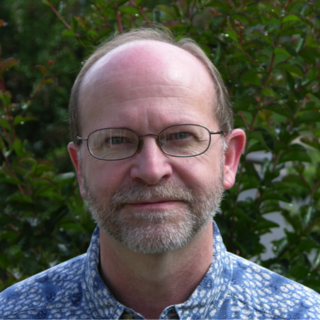
Jason E. Ybarra serves as a Teaching Assistant Professor and Director of the WVU Planetarium and Observatory at West Virginia University. His academic home resides within the Astronomy and Astrophysics department, where he integrates observational astronomy with innovative educational practices. As coordinator for the Sloan Digital Sky Survey (SDSS-V) Faculty and Student Team (FAST) program, he bridges research infrastructure with undergraduate development. Dr. Ybarra's educational background includes: Ph.D. in Astronomy from University of Florida (NASA GSRP Fellow) M.S. in Physics from San Francisco State University (co-discoverer of precessing jet evidence) His research spans galactic star formation in regions like the Rosette Molecular Cloud, protostellar outflow dynamics , and physics education with special focus on neurodiversity inclusion . Historical astronomy investigations feature prominently, particularly in rediscovering early variable star observations. His educational philosophy emphasizes neurodivergent accessibility, reflected in publications on inclusive STEM pedagogy. Recent publications reveal interdisciplinary trends merging astronomical research with computational methods (CNN analysis of historical records) and social sciences (neurodiversity studies). The Sloan Digital Sky Survey serves as a unifying thread across observational, educational, and historical investigations. Scientific recognition includes: NASA Graduate Student Researchers Program (GSRP) fellowship NASA Florida Space Grant Consortium fellowship As an educator, Dr. Ybarra has taught across diverse settings from Davidson College to Drepung Loseling Monastery in India through the Emory-Tibet Science Initiative. His FAST program coordination creates sustained undergraduate research pathways within SDSS-V. Current projects integrate planetarium outreach with neurodiversity-aware instructional design. The WVU Planetarium and Observatory serves as his primary research and educational hub, while SDSS-V provides large-scale collaborative infrastructure. His work uniquely connects historical astronomical practices with modern neuroinclusive education frameworks.