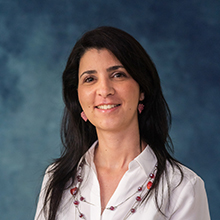
Mehmet Öztürk is an Assistant Professor at Bingöl University's Faculty of Islamic Sciences, serving as Deputy Director of the Institute of Social Sciences since 2023. He holds a PhD in Turkish-Islamic Literature from Necmettin Erbakan University (2021), preceded by a Master's from Atatürk University (2016) and a B.A. from İnönü University's Faculty of Theology (2013). He served as a research assistant from 2013-2021 before becoming an academic staff member. His research focuses on Ottoman and classical Turkish-Islamic literary traditions, including Sufi poetry, manuscript studies, and the analysis of historical texts. Key interests include the works of poets like Bâkî, Ömer Necmî, and Müstakîm-zâde, with emphasis on textual criticism, cultural preservation, and the evolution of literary canons. His publications (2019–2025) explore topics such as Sufi poetry analysis, manuscript editions, and the historical context of Ottoman literary works. Notable works include studies on Bâkî’s pilgrimage letters and the transmission of Kânûnu’l-Edeb. He has contributed to critical editions of classical texts and explores the intersection of mysticism and literature.
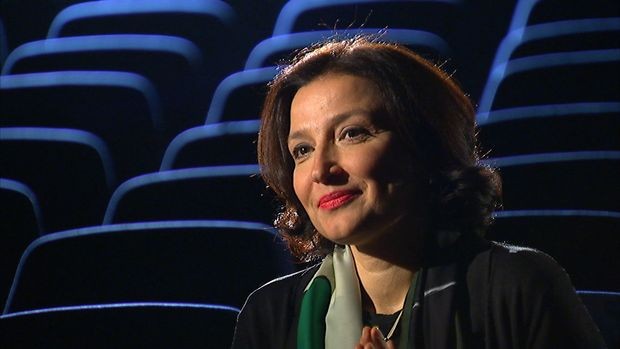
Catalina Iliescu Gheorghiu is a Professor in the Department of Translation and Interpreting at the University of Alicante's Faculty of Philosophy and Letters. Her academic role focuses on translation studies, intercultural communication, and specialized interpreting. She teaches in English and Romanian, with a research emphasis on theatre translation, medical interpreting, and migration narratives. Research Interests: Dr. Iliescu Gheorghiu's work bridges translation theory and practice, particularly in performing arts and healthcare contexts. She investigates how translation mediates cultural identities in diasporic communities and explores the socio-political dimensions of translation during historical periods like Romania's communist era. Her recent studies highlight the role of humor in children's theatre across cultures and the challenges of multilingual healthcare communication for migrant populations. Professional Contributions: She has pioneered educational projects such as TRAUTOROM and collaborated in EU-funded initiatives addressing interpreter-mediated healthcare access. Her work on Romanian literature's global presence and Equatorial Guinean migration discourse demonstrates interdisciplinary reach. She actively contributes to curriculum development for interpreting programs and has published extensively in translation pedagogy and cultural diplomacy.
Peeter Torop is a Professor of Semiotics of Culture at the University of Tartu, holding the National Professorship in Semiotics of Culture since 2017. He leads the Institute of Philosophy and Semiotics and co-leads the transmedia research group with Maarja Ojamaa. His research focuses on cultural semiotics, intersemiotic processes, and the Tartu-Moscow School of Semiotics. Education: PhD in Philology (1995, Helsinki University), Russian Philology (University of Tartu, 1969–1974). Administrative roles include Head of the Institute of Philosophy and Semiotics (2013–2019) and membership in numerous editorial boards (e.g., Sign Systems Studies , Punctum ). Research interests include semiotics of translation, Dostoevsky studies, and cultural autocommunication. Notable awards: 2023 Lifetime Achievement Award from the Cultural Endowment of Estonia, 2001 National Science Prize. His recent publications explore transmediality, intersemiotic theory, and Lotmanian semiotics. Grants include the Estonian Research Council-funded projects on transmediality and biocultural diversity. Collaborations span international institutions, including the University of Toronto and Kharkiv National University.
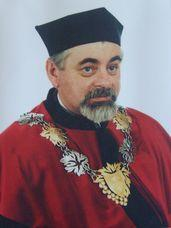
Prof. Ryszard Tokarski is a full professor at the Faculty of Philology, Maria Curie-Skłodowska University, with a habilitation degree and extensive contributions to lexical semantics, cultural linguistics, and linguistic worldview studies. He has held leadership roles including Head of the Department of Lexicology and Pragmatics, Director of the Institute of Polish Philology, and Rector of the Higher School of Humanities and Natural Sciences in Sandomierz. Key research areas: anthropological linguistics, semantic frameworks, media language, and cognitive modeling of lexical fields. Major grants: National Science Foundation projects on Violence in Media Language (2000-2003) and Alternative Worldview Construction (2013-2016). International collaborations: Visiting professor at Stockholm University (1996-1997), Visegrad Fund projects at Prešov University. Scientific impact : 2017 UMCS Rector's Lifetime Achievement Award 2014 Academia Best Publication Award for Światy za słowami Corresponding member, Polish Academy of Arts and Sciences (since 2016) Mentorship : Supervised 10+ doctoral theses on topics ranging from somatic terms in worldview analysis to media manipulation and fairy-tale axiology. His work bridges semantic theory, cultural analysis, and discourse pragmatics.
Maria Elisa Fina is a Researcher (RtdB) at Ca' Foscari University of Venice, affiliated with the Department of Comparative Linguistic and Cultural Studies and the Interdepartmental School of Economics, Languages and Entrepreneurship for International Exchanges. Her work focuses on multimodal analysis of cultural heritage communication, translation studies, and audiovisual translation. She teaches courses in translation technologies, post-editing, and audiovisual translation at both undergraduate and master's levels. Education: Bachelor's in Literary and Technical-Scientific Translation (University of Salento, 2011) PhD in Linguistic, Historical-Literary, and Intercultural Studies (Ca' Foscari University, 2016) Research Interests: Multimodal analysis of audio guides, intersemiotic translation, museum communication for children, digital storytelling, and accessibility in cultural mediation. She has contributed to projects like DIETALY (PRIN 2020) and iNEST Tourism, exploring translation in cultural heritage contexts. Notable Achievements: Winner of the AIA/Carocci PhD Prize 2017 for best PhD thesis in Anglistica Published Investigating Effective Audio Guiding (Carocci, 2018) Recipient of the 2021 Ca' Foscari Excellence Award Teaching: Courses include Translation and Post-Editing Technologies , Audiovisual Translation and Audiodescription , and Translation Technologies: Tools and Methods . She emphasizes practical skills in translation technology and digital tools. Lab/Team Affiliations: Collaborates with research groups on accessibility in cultural heritage, digital humanities, and language mediation. Active in editorial boards of Trans-Kata and Le Simplegadi .
Károli Gáspár University of the Reformed ChurchHungary
Dr. Johanna Domokos is an Associate Professor at the Department of Theatre Studies, Faculty of Humanities and Social Sciences, Károli Gáspár University of the Reformed Church in Hungary. With a distinguished academic career spanning several institutions including University of Bielefeld and UCLA, she has established herself as a leading scholar in multilingualism, Sámi literature, and Finno-Ugric studies. Her educational background includes a PhD in Comparative Literary Studies (1999) from József Attila University with a dissertation on Translation-semiotic analysis of Lapp poetry , multiple MA degrees in Finno-Ugric Studies, Hungarian Language and Literature, and English Language and Literature (1994, 2000), and the prestigious Dr. Habil degree from Eötvös Loránd University (2011). Domokos's research focuses on multilingualism in the arts , particularly examining literature, theatre, and visual arts in Northern and Central Europe, with special emphasis on Finland, Estonia, Sámi/Lapland, and the Carpathian Basin. Her work explores artistic rituality, mystical poetry, and interlingual and intersemiotic translation. She has led numerous research projects including the 'International Mediation of Sámi Literature' (2016-2019) and 'Rituality, Theater, Literature' (2018-2020). Her recent scholarly output reveals a strong trend toward Anthropocene studies and code-switching research , with publications examining multilingual creativity, Sámi literature, and the intersection of theatre with ecological concerns. Her work demonstrates growing interdisciplinary connections between literary studies, environmental humanities, and performance theory. Scientific Awards: Faludy-Díj (1992) Karriert Támogató Díj and Kutatói Díj from UCLA (2005, 2007) Kulturális Szervezői Kitüntetés from Los Angeles Hungarian Embassy (2008) Inger Sjöberg Prize from Scandinavian Society, USA (2022) Dr. Habil degree from Eötvös Loránd University (2011) Domokos has supervised doctoral students including Molnár Attila (on multimedia in contemporary art), Miklós Krisztina (on multilingualism and corporeality in Tompa Andrea and Sofi Oksanen's novels), and Bilibok Apollónia (on streamed theatre performances during the pandemic). She has served on numerous doctoral committees, most recently examining Balázs Renáta's work on contemporary Hungarian and Finnish national literary history constructions (2025). Her research has been supported by prestigious Humboldt Scholarships at Bielefeld University (2010-2011, 2018). She leads the Translation Workshop at Károli Gáspár University and has been instrumental in establishing the university's translation laboratory. Her international research group 'Kódváltás a kortárs művészetben' (Code-Switching in Contemporary Art) continues to produce significant scholarly work bridging linguistic and artistic disciplines.
Fabrizio Impellizzeri is Full Professor of French Literature (FRAN-01/A) at the Department of Humanities (DISUm) of the University of Catania, based at the Special Teaching Structure in Ragusa. He is a member of the PhD program in Interpretation Sciences and the Euro-American Languages, Literatures, and Cultures Research Section within the same department. He holds leadership roles in multiple research initiatives, including serving as Director of the Interuniversity Research Center 'Visages' and co-director of the 'Mercures – Studi Mediterranei di Francesistica' book series. His research focuses on 19th to 21st-century French and Francophone literatures, exploring themes such as the sublimation of erotic desire, self-representation, postmigration, banlieuepoétique, dandyism, intersemiotics, and the relationship between literature and cinema. He has published extensively on authors including Jean Genet, Pierre Klossowski, Samuel Benchetrit, Colette, and André Téchiné, employing psychoanalytic and sociological frameworks. His scholarly output includes three monographs and numerous articles in high-ranking journals such as RIEF , Elephant & Castle , and Francofonia . His recent publications reveal a sustained engagement with autobiographical and socio-biographical writing, cinematic adaptation, and the representation of marginal identities in contemporary French literature. Director, Interuniversity Research Center 'Visages' (2023–2026) Vice-Director, Illuminazioni. Rivista di Lingua, Letteratura e Comunicazione Co-Director, 'Mercures – Studi Mediterranei di Francesistica' book series (Mucchi Editore) Member of editorial boards: RIEF , TICONTRE , Quêtes littéraires Referee for national and international journals and research programs, including UIF VINCI and Label projects He has supervised doctoral students, including Martina Guccione, and has been actively involved in academic service, organizing international conferences and participating in evaluation committees for PhD theses and research projects. His leadership in the PRIN2022JELMNK project on war trauma and antimimetic representation underscores his role in shaping current research agendas in literary studies. He is affiliated with several research centers, including ÉcriSoi (Paris-Sorbonne, Rouen, Lorraine) and Argo (University of Naples 'L’Orientale'), reflecting his strong collaborative network across Italian and European institutions.
Nicola Maria Dusi is an Associate Professor in the Department of Communication and Economics at the University of Modena and Reggio Emilia (UNIMORE). She specializes in semiotics of cinema and media, with a focus on contemporary television series, intermediality, and transmedia storytelling. Her academic work bridges theoretical frameworks with practical analysis of audiovisual media products. Dr. Dusi's research interests encompass multiple dimensions of media studies. She investigates how contemporary television series construct narrative meaning through complex storytelling techniques, with particular attention to the interplay between fiction and documentary elements. Her work on intermediality explores how different media forms interact and transform content across platforms. She has conducted extensive research on the representation of historical events in television miniseries, notably analyzing the Chernobyl TV series as a case study of cultural memory construction. Her scholarly contributions also include studies on biopics, autism representation in media, and the semiotics of cinema archives. She approaches these topics through socio-semiotic frameworks that examine both textual structures and audience reception. Her recent publications reveal a consistent focus on contemporary media phenomena, particularly the evolution of television seriality in the streaming era. She examines how modern TV series negotiate between factual and fictional elements, creating complex narrative ecosystems that extend beyond the screen through paratexts and fan engagement. Her work on Chernobyl demonstrates how a TV miniseries functions as both historical representation and cultural commentary, blending documentary approaches with dramatic storytelling. She also explores more technical aspects of media representation, such as the aesthetics of blurred vision and data moshing in digital media, analyzing how these techniques affect meaning construction and viewer experience. Dr. Dusi is actively involved in teaching courses directly related to her research expertise. She teaches 'Semiotics of Cinema and Media' for Communication Sciences students, covering theoretical frameworks and analytical methods for examining audiovisual texts. Her course includes modules on basic semiotic theories, analysis of cinema and media, and specialized topics in contemporary media studies. She also teaches 'Intermediate Languages' for the Master's Degree in Advertising, Digital Communication, and Business Creativity. Her teaching emphasizes both theoretical knowledge and practical application, incorporating current media examples to illustrate concepts and encouraging students to develop critical analytical skills for understanding complex media phenomena.
Laura Gonzalez is a Professor of Research and Interdisciplinary Work at the Royal Conservatoire of Scotland and an Athenaeum Research Fellow. She serves as a summer faculty member, advisor, and supervisor for the MFA and PhD residency program at Transart Institute. Her work spans performance art, medical humanities, psychoanalysis, and embodied practices, with a particular focus on hysteria studies and breathwork. Her educational background includes: PhD in Cultural Communication and Computing Research Institute (C3RI), Art and Design Research Centre, Sheffield Hallam University (2005-2010) Postgraduate Certificate in Learning and Teaching in Art, Design and Communication (2004-2005) Master of Fine Art: Drawing, Wimbledon School of Art (2000-2001) Licenciada en Bellas Artes (BA equivalent), Universidad del Pais Vasco, Spain (1995-2000) Gonzalez's research explores the intersections of performance, psychoanalysis, and medical humanities, with particular emphasis on hysteria as a cultural and embodied phenomenon. Her work investigates how knowledge is produced through the body, especially through 'illegitimate forms of knowledge' such as intuition, magic, and oracles. She examines the relationship between breath, performance, and consciousness, developing practices that connect somatic awareness with artistic expression. Her research also engages with feminist theory, exploring how women's bodies have been historically pathologized while simultaneously serving as sites of resistance and creative transformation. Her recent publications reveal a consistent trajectory exploring embodiment, hysteria, and breath as artistic and scholarly concerns. She has increasingly focused on the medical humanities, examining historical medical texts and case histories through performance. Her work demonstrates a movement from theoretical analysis of seduction in art toward practical applications of breathwork and embodied knowledge in performance contexts. The interdisciplinary nature of her scholarship bridges art practice, psychoanalytic theory, and medical history. Her notable awards and recognitions include: Shortlisted for the Adrian Howells Award For Intimate Performance (2019) Athenaeum Award – Knowledge Exchange Route (2023) Glasgow Medical Humanities Network Foundation Award (2023) Athenaeum Award for research (2021) Multiple Research Development Funds from The Glasgow School of Art (2012-2016) AHRC Collaborative Doctoral Awards (2005, 2006, 2013) Gonzalez has supervised numerous doctoral students across institutions including the Royal Conservatoire of Scotland, Glasgow School of Art, and Transart Institute. Her supervision focuses on interdisciplinary projects at the intersection of performance, visual arts, and embodied research. She has secured significant grant funding for projects exploring the relationship between imitation and dance, breath practices, and hysteria studies. Her collaborative projects often involve partnerships with medical humanities scholars, performance practitioners, and community organizations. She is actively involved in several research collectives including The Workroom (since 2017), where she develops collaborative performance projects. She co-founded @TheGlasgowJam (2015-2018), creating space for multidisciplinary arts exploration. In 2021, she created the Scottish Breath Network, fostering interdisciplinary research on breathing practices. She also co-founded the Dialectical Materialist Book Group with Ian Macbeth, exploring Marxist theory through collective reading.
Zorica Bečanović Nikolić is an Associate Professor at the University of Belgrade's Faculty of Philology, specializing in Comparative Literature. She holds a PhD from the University of Belgrade (2005) and has held visiting research positions at University Pompeu Fabra (Barcelona) and University College London (UCL). Her academic career includes roles as a Research Fellow, Assistant Professor, and Junior Lecturer at Belgrade University, alongside prior work as a media advisor (1992-1995) and freelance journalist (1989-1992). **Education**: Bachelor of Arts in English Language & Literature, University of Belgrade (1988) Bachelor of Arts in Comparative Literature, University of Belgrade (1988) MPhil in Comparative Literature, University of Belgrade (1998) PhD in Comparative Literature, University of Belgrade (2005) **Research Interests**: Her work focuses on hermeneutics, Shakespeare studies, Renaissance literatures, and modern/postmodern literary theory. She explores Shakespeare's reception in European contexts, narrative identity in early modern texts, and Serbian literature within broader European frameworks. Current research includes studies on Laza Kostić's Shakespeare translations and the 'Citizen Shakespeare' project. **Awards & Grants**: Recipient of the British Academy Visiting Research Fellowship (2009) for her project on Shakespeare in the Balkans. Active in organizing international academic events, including lectures by leading scholars like Stephen Greenblatt and Stanley Wells. **Editorial & Leadership**: Co-edited major works such as Knjiženstvo (2015) on Serbian women's literature and Komparativna književnost (2015) on comparative literary theory. Member of the Centre for British Studies Council at Belgrade's Faculty of Political Science. **Public Engagement**: Promoted public understanding of Shakespeare through lectures, masterclasses, and collaborations with cultural institutions like Caixa Forum in Barcelona/Madrid.
Jeroen Vandaele is a Professor at Ghent University's Department of Translation, Interpreting and Communication , where he teaches Literary Translation and Hispanic Literatures. Previously, he served as a professor of Spanish at the University of Oslo (2008-2017), and held visiting positions at the Universitat Autònoma de Barcelona (2012) and the Universidad Autónoma de Madrid (doctoral guest researcher). In 2023, he was a Mare Balticum Fellow at Rostock University. His research spans ideology in translation under Francoism, comedy and humor studies , cognitive literary theory , and narratology (including film). He explores how textual details and cultural context intersect in translation, particularly in politically sensitive works. Recent publications (2024) focus on transmedial humor, part-whole thinking in translation, and fascism's impact on film translation. His work bridges theoretical and practical translation studies , emphasizing human agency over mechanical approaches. Notable projects include DELIAH (Democratic literacy and humor, 2025-2029) and HACIDA (Humor in digital conflicts, 2022-2024). Editorial roles include the Target International Journal of Translation Studies and advisory positions for journals like Actio Nova and Textus . He supervised Miguel Ángel Guerra Blázquez's PhD (2024) on literary translation reception in Francoist Spain.
Lian Duan is a Teaching Professor in Chinese at Concordia University, holding dual Ph.D.s in Chinese Literature (2007, China) and Art Education (2012, Canada). With over three decades of academic experience, he has taught at institutions including Sichuan University (China), Williams College (USA), SUNY Albany (USA), and the University of Vienna (Austria as a guest professor). His expertise spans Chinese literature, art, critical theory, and translation studies. Research Focus: Semiotics, Narratology, Iconology, Teaching Chinese as a Second Language, Visual Culture Education: Ph.D. in Chinese Literature (2007), Ph.D. in Art Education (2012) Publications include 18 Chinese-language books and international English-language scholarly works with Routledge and Cambridge Scholars. Current projects involve semiotics-focused art history trilogy and travel-writing-based studies. Teaching and research emphasize interdisciplinary approaches bridging literature, art, and pedagogy. No awards explicitly listed, though his prolific publication record reflects academic recognition.
Cara Berger is a Senior Lecturer in Theatre and Performance at the University of Manchester's School of Arts, Languages and Cultures (SALC). From August 2025, she will serve as Associate Director for e-Learning and Teaching Innovation, focusing on digital pedagogy and inclusive education. Her research explores intersections between ecology, feminism, queer theory, and contemporary European theatre. Key projects include the Greening the Arts Curriculum initiative, which addresses climate crisis through arts education, and the upcoming MA Arts, Culture and the Environment programme. She holds a Senior Fellowship of the Higher Education Academy (SFHEA) and collaborates with cultural organizations like dancer Chris Brown on eco-somatic workshops. Her research monograph Feminism, Performance, Ecology: Challenging Western Capitalist Modernity 1962–2020 and co-edited volume The Cambridge Companion to Curating Performance reflect her expertise in ecofeminism and postdramatic theatre. She serves as External Examiner in Performing Arts at the University of East London (2025–2029) and previously led the Theatre and Performance Research Association's Directing and Dramaturgy Working Group (2017–2020). Areas of Expertise: Ecocriticism, feminist theory, performance pedagogy, postdramatic theatre Collaborations: Dance artist Chris Brown, SALC interdisciplinary projects Awards: Senior Fellow of HEA Her teaching innovations include integrating environmental sustainability into arts curricula and developing blended learning strategies. Current projects bridge performance studies with urgent ecological and social justice concerns.
Katerina Perdikaki is an Associate Teaching Fellow at the University of Surrey's Centre for Translation Studies, part of the School of English and Languages within the Faculty of Arts, Business and Social Sciences. She holds a PhD in Translation Studies (2016), an MA in Audiovisual Translation (2013), and a BA in English Language and Literature (2012). Her research focuses on audiovisual translation, semiotics, film adaptation, and the interplay between cultural transformation and creative translation. Notable works include studies on subtitling sensitive content, the emotional impact on subtitlers, and case analyses of film adaptations like Baz Luhrmann’s The Great Gatsby and Silver Linings Playbook . She teaches advanced modules in audiovisual translation and professional translation practice. Her empirical research bridges theoretical frameworks with practical challenges in translation, emphasizing interdisciplinary methodologies. Education: PhD: 'Adaptation as Translation: Examining Film Adaptation as a Recontextualised Act of Communication' (University of Surrey, 2016) MA: Audiovisual Translation (University of Surrey, 2013) BA: English Language and Literature (National and Kapodistrian University of Athens, 2012) Research Interests: Audiovisual translation, intersemiotic translation models, film adaptation as cultural transformation, translation of humor, and the emotional dimensions of translation work. Future research includes exploring subtitlers’ psychological experiences with sensitive material. Teaching: Leads MA modules on Audiovisual Translation and Professional Translation Practice (Greek), and has taught undergraduate courses on translation and interpreting skills. Awards & Grants: None explicitly listed, but her extensive publication record reflects sustained academic engagement. Labs/Teams: Active in the Centre for Translation Studies, contributing to interdisciplinary research on translation in the creative industries.
Dr. Cherilyn Elston is an Associate Professor in the Department of Languages and Cultures at the University of Reading. Her research focuses on memory activism, transitional justice, and cultural production among Colombian refugees, migrants, and exiles. She has conducted participatory research projects supported by AHRC and Research England, collaborating with Colombian diaspora communities in London. Current work examines how exiles challenge invisibility in Colombia’s conflict narratives. She previously contributed to the UK and Ireland Hub supporting Colombia’s Truth Commission. Her academic interests span feminist studies, post-conflict literature, and oral history methodologies. She has published widely on Colombian literature and conflict narratives, with notable works analyzing memory politics, ex-combatant testimonies, and poetic resistance. Research grants include National Science Foundation funding for environmental contaminant studies (though this appears unrelated to her primary research focus). Professional responsibilities include supervising postgraduate students and serving on interdisciplinary networks like the Reading Latin America and Caribbean Network. Her publications consistently address intersections of conflict, memory, and cultural expression, emphasizing marginalized voices in post-conflict societies. Recent work explores hauntology in Colombian literature and the role of art in truth-seeking processes.