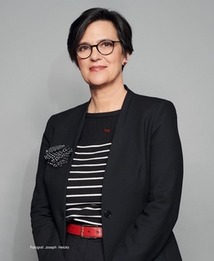
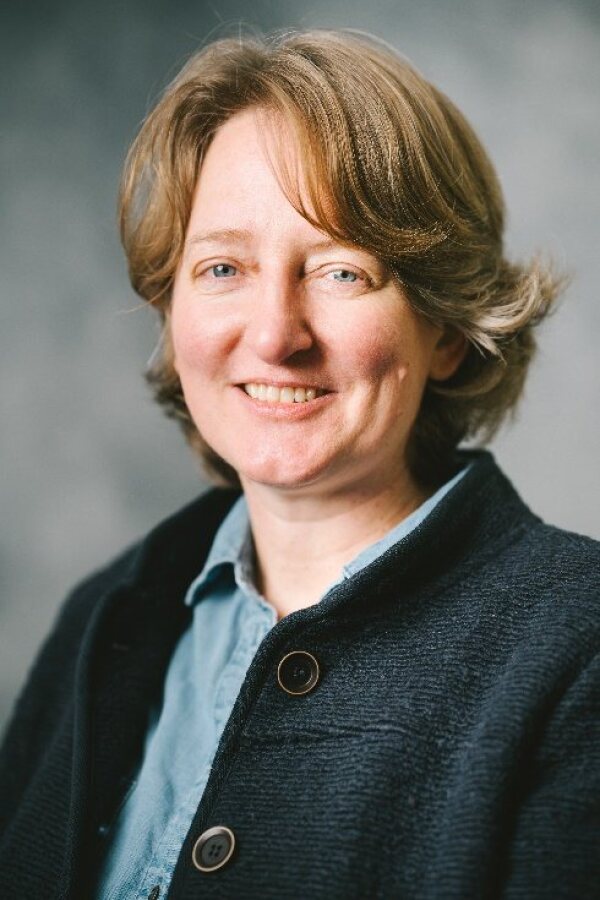
Prof. Paula-Irene Villa Braslavsky holds the Chair of Sociology/Gender Studies at Ludwig Maximilian University of Munich (LMU), Faculty of Social Sciences. She is on sabbatical during Summer Semester 2025 but continues research supervision and colloquia. Her research focuses on intersections of racism, sexism, and neoliberalism, with notable works like The Future of Difference and Top Girls . She co-edits the journal Gender Salon and leads projects on gender studies, queer theory, and postfeminism. Her academic contributions span monographs, anthologies, and journal articles addressing global social movements, anti-genderism, and body politics. Key themes include critical analysis of contemporary gender regimes, decolonial theory, and the sociocultural implications of neoliberalism. Her work frequently bridges theory and activism, emphasizing intersectional approaches to systemic oppression. Publications include edited volumes on #MeToo, fat studies, and the sociological analysis of bodies, reflecting her commitment to interdisciplinary research. She maintains an active academic presence through her website LMU Gender Studies and Academia.edu .
Prof. Dr. Julia Bee holds a Professorship for Gender Media Studies with special emphasis on diversity at the Institute for Media Studies (IfM) at Ruhr-Universität Bochum. Her work focuses on critical intersections of gender, media, and social justice. Her research interests span Gender Media Studies, Diversity, Media Climate Justice, Digital Violence, Digital Misogyny, and Antifeminism. She examines how digital spaces perpetuate gender-based violence and how media can be leveraged for climate justice initiatives. Her recent publications include the experimental learning book Learning Experiments, Exchanging Techniques No. 2 (2025), which explores innovative pedagogical approaches in media studies. Her work shows a clear trend toward examining the connections between digital violence, climate justice, and gender politics. Prof. Bee is actively involved in numerous academic initiatives including the relaunch of the online journal Culture&Gender and organizing the Spring School Media Climate Justice. She frequently collaborates with colleagues like Prof. Dr. Henriette Gunkel on interdisciplinary projects. She organizes and participates in significant academic events, including the lecture series 'Conflicting Masculinities' and 'Digital Violence and Antifeminism,' which examine contemporary challenges in digital spaces from gender and intersectional perspectives. Her work on 'Politics and Ethics of Activist Research' demonstrates her commitment to ethical collaborations between academics and activists.
Professor Oliver Razum at Bielefeld University's Faculty of Health Sciences leads Working Group 3 in Epidemiology & International Public Health. He serves on multiple commissions including the Faculty Conference and Teaching Commission, and contributes to the Center for Statistics and Bielefeld Center for Data Science. His work focuses on Epidemiology of migration and health Refugee health inequalities Medical rehabilitation equity Othering processes in public health Gender-sensitive health research Recent articles explore 2026 medical rehabilitation for people with disabilities, 2025 refugee mental health frameworks, and 2024 pandemic equity research. Key scientific contributions include the 2025 Georg Forster Fellowship and leadership in diversity-sensitive healthcare initiatives. His research spans urban neighborhood health effects , digital rehabilitation , and structural racism in healthcare . Current projects address intersectional inequalities , post-migration stress , and gender as social determinant . Professor Razum maintains active collaborations with institutions like the German Research Foundation and DRV Westphalia.
Prof. Dr. Sakura Yamamura is a Junior Professor (Assistant Professor) in Digital Methods in Human Geography at RWTH Aachen University, holding a Dr. rer. nat. in Geography from the University of Hamburg (2018). Her research focuses on migration, transnationalism, superdiversity, and urban studies, with a particular emphasis on digital methods applied to spatial and social dynamics. She has held postdoctoral and visiting fellowships at institutions including the Max Planck Institute and Maastricht University. Yamamura’s work bridges geography, sociology, and economics, examining how transnational migrants shape global cities like Tokyo and the impacts of globalization on urban spaces and policies. Her recent studies address the intersectionality of entrepreneurship, pandemic effects on LGBTQ+ activism, and digital transformations in urban production. Research interests include the socio-spatial dimensions of migration, intersectional approaches to entrepreneurship, and the interplay between digital tools and human geography. Her academic contributions span peer-reviewed articles in journals like Ethnic and Racial Studies and Urban Studies , as well as edited volumes on superdiversity and global urbanization. She actively engages in interdisciplinary dialogue, addressing topics such as mediated social touch and the methodological challenges of fieldwork in transnational contexts. Yamamura’s career includes roles as a guest lecturer at Adam Mickiewicz University (Poland) and SKEMA Business School (France), reflecting her commitment to international collaboration and teaching. She has advised numerous research projects and contributes to policy discussions on migration and urban development. Her current work at RWTH Aachen emphasizes leveraging digital methods to analyze complex urban systems and transnational networks.
Prof. Dr. Anette Eva Fasang is a Full Professor of Microsociology at Humboldt University of Berlin, where she also serves as Director of the Department of Social Sciences and Academic Director of the Berlin Graduate School of Social Sciences (BGSS). She leads major research initiatives on life course stratification, social demography, and inequality, and has held leadership roles at the WZB Berlin Social Science Center. Her work bridges sociology, demography, and quantitative methodology, with a strong focus on comparative welfare state analysis. Ph.D. in Sociology, Jacobs University Bremen (2005–2009) B.A. and M.A. in Sociology, Ludwig-Maximilians-University Munich (1999–2004) Her research centers on life course dynamics, particularly how family formation, employment, and welfare regimes interact to shape social inequality across the lifespan. She employs advanced quantitative methods, especially sequence analysis, to study intergenerational transmission, gender disparities, and the long-term consequences of early-life trajectories. Her work spans comparative European and U.S. contexts and increasingly includes global perspectives, such as in Egypt and Senegal. The recent publications reflect a consistent focus on life course trajectories, social stratification, and methodological innovation. Key themes include the intersection of work and family, wealth and earnings accumulation, gender and racial inequality, and the impact of structural factors like welfare regimes and labor markets. Methodologically, her work advances sequence analysis and decomposition techniques for longitudinal data. Scientific Awards: Elected Fellow of the European Academy of Sociology (2024) Rosabeth Moss Kanter Award for Excellence in Work-Family Research (2023) Honorary Doctorate from the University of Turku (2022) Rosabeth Moss Kanter Award (2018) Prof. Fasang has supervised numerous doctoral students, many of whom have won top dissertation prizes. She leads significant research grants from the German Research Foundation (DFG), including the Cluster of Excellence SCRIPTS and the DYNAMICS research training group. Her advisory roles include the German Family Demographic Panel (FReDA) and scientific boards in Germany and Finland. She is actively involved in research teams and collaborative projects, such as the KOMPAKK study on household risks during the pandemic and the EQUALLIVES project on young adult life courses. Her work is deeply embedded in interdisciplinary networks across Europe and North America.
Bani Gill is a Junior Professor in Urban Futures of the Global South at the Institute of Sociology, Faculty of Humanities, University of Tübingen. She is based in Tübingen, Germany, and her work bridges urban anthropology, migration studies, and postcolonial theory. She has held research affiliations with the University of Oxford, University of Copenhagen, and Utrecht University, reflecting her transnational academic profile. PhD in Social Sciences, University of Copenhagen (2015–2019), funded by the DFF ‘Emerging Worlds’ project MA in Migration and Intercultural Relations, Erasmus Mundus (2011–2013) MA in Modern History, Jawaharlal Nehru University (2008–2010) BA in History, University of Delhi (2005–2008) Her research focuses on South-South migration, particularly the experiences of African migrants in urban India. She explores themes of race, racialization, gender, illegality, and state surveillance through ethnographic methods. Her work critically examines urban governance, migration infrastructures, and the everyday coexistence of marginalized communities in postcolonial cities. She also investigates the transnational trade in human hair between India and Africa, highlighting unexpected connections across the Global South. Her recent publications, including in American Anthropologist and Journal of Ethnic and Migration Studies , analyze migrant illegality, proximity, and urban futures. Her co-edited volume Proximity as Method (2024) advances interdisciplinary approaches to coexistence. The articles reflect a consistent focus on ethnographic depth, critical race theory, and the intersection of migration, urban space, and power. Marie Sklodowska-Curie Postdoctoral Fellowship (2022, to begin 2023) DFF International Postdoctoral Grant (declined, 2022) John Fell Research Fund, University of Oxford (2020–2022) DFF ‘Emerging Worlds’ PhD Scholarship (2015–2018) Erasmus Mundus MA Scholarship (2011–2013) Bani Gill has advised and mentored emerging scholars through her role as editor of Refugee Review and as a member of the Executive Committee of ESPMI. She has secured multiple grants for fieldwork and research, including from Danish and UK-based foundations. Her current work continues to explore the sensory and embodied dimensions of migration, supported by interdisciplinary collaboration and public engagement through policy briefs and podcasts. She is a member of the curatorial board of Majha House, a cultural center in Amritsar, India, and has co-organized academic seminars and workshops on race, migration, and performance at Oxford and Copenhagen. Her research is deeply collaborative, often involving co-authored publications and collective editorial work, reflecting a commitment to building scholarly networks across the Global South.
Elisabeth Schilling serves as Associate Professor of Social Sciences at the University of Applied Sciences for Police and Public Administration North Rhine-Westphalia (HSPV NRW), holding a W2 professorship since December 2009. She previously taught at the Cologne department until 2012 and now works at the Bielefeld location. Her academic appointments include habilitation in Sociology at the University of Erfurt (2022) and guest professorship at Georg-August-Universität Göttingen (2015). Schilling's institutional affiliations extend to the Max-Weber-Kolleg at the University of Erfurt and the Institute for Diversity Research at Göttingen. Her education includes a PhD in Sociology from Heinrich-Heine-University Düsseldorf (2005, magna cum laude), with dissertation titled "Die Zukunft der Zeit: Vergleich von Zeitvorstellungen in Russland und Deutschland im Zeichen der Globalisierung." Additional academic training includes specialized sociology studies at RWTH Aachen (2000-2001) and University of California at Davis (2000), where she achieved top 5% standing in her cohort. Schilling's research fundamentally examines how time structures shape social experience across multiple domains. Her work explores temporal dimensions of migration, particularly how Ukrainian refugees construct future perspectives amid trauma. She investigates gendered time inequalities in public administration careers, analyzing how interrupted career paths disproportionately affect women. Her scholarship reveals how bureaucratic systems administer time through scheduling practices that reinforce social inequalities. Schilling develops methodological approaches for studying temporal diversity through qualitative time practice assessments, bridging classical life course theory with biographical subjectivity. Her publication trajectory shows consistent focus on time, migration, and biography since 2005, with recent work increasingly addressing refugee experiences and temporal aspects of public administration. The articles reveal methodological sophistication in qualitative time research, with growing emphasis on practical applications for public sector management. Schilling's work demonstrates strong interdisciplinary connections between sociology, gender studies, and public administration. Her current research portfolio includes multiple funded projects examining time perspectives among Ukrainian refugees (2023-2024), integration of Ukrainian refugees (2022-2023), and time management during remote work periods (2020-2021). These projects reflect her ability to address timely social issues through her temporal lens while maintaining theoretical rigor. Schilling maintains active research collaborations including the Time Perspective Network around Philip Zimbardo and the Max-Weber-Kolleg. Her editorial work includes special issues of BIOS journal and edited volumes with Springer VS. She directs research groups focusing on time structures as inequality-reproducing classification systems, demonstrating sustained scholarly impact in her field.
Prof. Dr. Helen Baykara-Krumme is a full-time Professor of Sociology with a focus on Migration and Participation at the Institute of Sociology, University of Duisburg-Essen since March 2019. She serves as Managing Director of the Institute of Sociology (2020-2022), Chair of the Faculty of Humanities Ethics Committee since 2020, and Chair of the InZentIM Board since 2024. Her research spans migration, transnationalization, integration, and participation, with specialized focus on family processes in migration contexts, life course analysis, aging in migration contexts, migration-related organizational change, migration-disability intersections, and urban research methodologies. Education: Sociology, Statistics, and Agricultural Sciences (1995-2002, Free University & Humboldt University Berlin); PhD in Philosophy (2007, Free University Berlin); Habilitation (2017, Chemnitz University of Technology) Research Leadership: Coordinated BMBF-funded ZOMiDi project on civil society responses to migration diversity; edited Organisationaler Wandel durch Migration? (2022); contributed to the Ninth Family Report of the Federal Government (2016-2021) Methodological Expertise: Quantitative survey methods, intergenerational solidarity analysis, urban ethnography, and intersectional frameworks Awards: Fellow of the International Max Planck Research School LIFE (2002-2006) Teaching: Supervises final theses, leads courses on migration and globalization, and maintains regular consultation hours
Ilse Helbrecht is a full Professor of Cultural and Social Geography at the Geographical Institute of Humboldt University of Berlin within the Faculty of Mathematics and Natural Sciences. She has served as Director of the Geographical Institute (2015-2017) and Director of the Georg Simmel Centre for Metropolitan Research (2014-2019). With academic appointments spanning multiple institutions including the University of Bremen where she served as Vice Rector (2005-2008), her career demonstrates significant leadership in geographical academia. 1990: Dipl.-Geogr. from University of Münster 1993: Promotion (Dr. phil.) from Technical University of Munich 1999: Habilitation from Technical University of Munich 2002: Professor of Human Geography at University of Bremen 2009: Professor of Cultural and Social Geography at Humboldt University Professor Helbrecht's research centers on urban transformations, particularly examining gentrification, housing markets, and the intersection of demographic change with spatial organization. Her work increasingly explores ontological security as a framework for understanding how people relate to changing urban and rural environments. She has pioneered research connecting psychoanalytic theory with geographical analysis, particularly regarding how spatial experiences shape fundamental security needs. Her fieldwork spans multiple continents, with significant projects in Germany, Canada, Ghana, and Singapore. Analysis of her recent publications reveals a clear trajectory toward examining ontological dimensions of spatial experience, with particular emphasis on how security and insecurity manifest in both urban and rural contexts. Her work bridges theoretical sophistication with empirical depth, often employing innovative qualitative methodologies including image-based interviews to access participants' spatial imaginations. 2019: Thomas Mann Fellowship, Federal Republic of Germany 2018: Caroline von Humboldt Professorship (€80,000) 2014: Nominated for National Urban Design Award (UK) 1999: Award of the city of Munich for urban studies research 1993: Dissertation award, Technical University Munich Professor Helbrecht leads multiple significant research projects including the VolkswagenStiftung-funded 'Transformations in Housing and Intergenerational Contracts in Europe' (2024-2028) and subprojects within the Collaborative Research Center 'Re-Figuration of Spaces.' She has secured funding from major organizations including DFG, ERC, EU, and VolkswagenStiftung. Her supervisory approach emphasizes interdisciplinary collaboration and methodological innovation, particularly in visual and psychoanalytically-informed research techniques. She actively participates in academic governance and public discourse through media appearances and policy engagement. As principal investigator of the CRC 1265 subprojects 'Geographical Imaginations,' Professor Helbrecht leads research teams examining security and insecurity across rural and generational contexts. Her work connects with several research groups including the International Research Training Group 'The World in the City' and the Humboldt University's Georg Simmel Centre for Metropolitan Research. She maintains strong international collaborations with institutions in Canada, Ghana, and the Netherlands.
Christine Hatzky is Professor of the History of Latin America and the Caribbean at Leibniz University Hannover, Faculty of Philosophy, Historical Seminar, and serves as Dean of Research of the Faculty since 2021. She is founding spokesperson of the interdisciplinary M.A. programme Atlantic Studies in History, Culture and Society and directs the university’s Centre for Atlantic and Global Studies . Since 2019 she leads a CALAS sub-project on Visions of Peace in Latin America and previously co-directed the EU Horizon 2020 project ConnectCaribbean . Her research integrates Atlantic, global and trans-regional perspectives with gender and oral history to analyse decolonization, violence and peace processes in Latin America and the Caribbean. Education & Career 1990–1997: Studies in Iberian and Latin American History, Romance Studies, Medieval and Modern History, University of Cologne & Universidad Nacional Autónoma de México (UNAM) 1997: M.A., University of Cologne 2003: Ph.D. in Modern History, University of Hanover – dissertation on Julio Antonio Mella 2010: Habilitation, University of Duisburg-Essen – thesis on Cubans in Angola 2010–present: Professor, Leibniz University Hannover Research Focus Hatzky’s work centres on the decolonization of Latin America, Africa and the Caribbean , analysing violence, conflicts and peace processes through trans-regional and global lenses. She investigates transnational solidarity networks during the Cold War , revolutions in Europe and the Americas , and the global history of science and knowledge transfer . Methodologically she combines oral history, biographical research and gender perspectives to illuminate entangled histories of the Global South. Awards & Recognition 2016: Luciano Tomassini Book Award, Latin American Studies Association 2013: Geisteswissenschaften International Award for Cubans in Angola 2011, 2004, 1999: Printing-cost and doctoral scholarships from DFG, VG Wort, Heinrich Böll Foundation Doctoral Supervision & Projects She currently supervises six ongoing PhD projects on topics ranging from Afro-descendant women in Colombia to Turkish-Syrian-Lebanese migration in Argentina. Eight further dissertations have been successfully completed under her guidance, exploring Central American peace processes, German solidarity movements, Cuban-African networks and urbanisation in Brazil. Laboratories & Networks Hatzky co-directs the CALAS/Merian Regional Center Centroamérica y Caribe (with Universidad de Costa Rica) and leads the CEAGS research hub, hosting more than 50 visiting scholars from Latin America and the Caribbean over the past five years.
Prof. Dr. Elisabeth Timm holds the Chair of Cultural Anthropology at the Institute for Cultural Anthropology and European Ethnology , University of Münster. With a career spanning decades, her work bridges academic research with public engagement through projects like "Erzählen Deine Gene Dir Deine Geschichte?!" , which won the 2024 Citizen-Science-Preis der Universitätsstiftung Münster. She critiques political movements opposing gender and race theory while maintaining scientific rigor. Research Focus: Her scholarship examines genealogy as knowledge practice, single-family homes as social ontologies, and the intersections of culture, science, and politics. She leads interdisciplinary projects connecting archives, museums, and citizen science initiatives. Scientific Awards: Citizen-Science-Preis (2024) Dr. Fritz Landenberger-Preis (2009) Research Fellowship in Vienna (2009) Public Engagement: Regularly participates in exhibitions like "Familienmacher" (Österreichisches Museum für Volkskunde) and debates on topics such as genetic data ethics and urban development.
Prof. Dr. Julia Bernstein is a Professor of Discrimination and Inclusion in Immigration Society at Frankfurt University of Applied Sciences (since 2015), affiliated with the Department of Social Work and Health. Her academic background includes a B.A. in Sociology, Cultural Anthropology, and Art History (1992–1995), an M.A. in Sociology and Cultural Anthropology (1996–2000) from the University of Haifa, Israel, and a Ph.D. in Cultural Anthropology from Goethe University Frankfurt (2009). She leads the research area Social Legacy of National Socialism and coordinates international projects on antisemitism prevention. Bernstein's research examines discrimination through interdisciplinary lenses, focusing on: Antisemitism in institutional and everyday contexts Migration, identity, and transnationalism among Russian-speaking Jews Stereotyping mechanisms and racialization processes Holocaust memory and its societal repercussions Food sociology as a marker of cultural identity Her recent publications (2020–2022) demonstrate a strong focus on antisemitism in educational settings, analyzing victim perspectives, teacher training gaps, and pedagogical counter-strategies. She frequently addresses media representations of Jewish communities and the normalization of Israel-related antisemitism. Honors include the Barbara-und-Piergiuseppe-Scardigli-Preis for her dissertation (2011) and nomination for the WISAG-Preis (2010). Bernstein directs federally funded projects like Mach mal keine Judenaktion! (2017–2019) and collaborates with institutions including the German Federal Anti-Discrimination Agency, Anne Frank Educational Center, and Tel Aviv University's Kantor Center. At Frankfurt UAS, she teaches courses on antisemitism, social inequality, and Holocaust legacy in Bachelor of Social Work and Master of Diversity and Inclusion programs. She mentors emerging scholars through the Ernst Ludwig Ehrlich Studienwerk and co-leads the Frankfurt meets Haifa academic exchange initiative.
Julia Wurr is a Junior Professor of Postcolonial Studies at the Institute for English and American Studies, Carl von Ossietzky University of Oldenburg, within the School of Linguistics and Cultural Studies. Her research spans postcolonial theory, gender studies, medical humanities, and Anglophone literatures, with a strong focus on reproduction, biocapitalism, and neo-orientalism. Her research interests include postcolonial medical humanities, biocapitalism, reproductive studies, gender and sexuality, Indian and Arab Anglophone writing, and literary theory. She critically examines how literature engages with medical, demographic, and security discourses, particularly in postcolonial and diasporic contexts. The recent articles highlight a consistent engagement with themes of reproductive labor, surrogacy, racial capitalism, and narrative ethics. Her work bridges literary analysis with critical theory, feminist studies, and global health, often analyzing how fiction reflects and challenges structural inequalities in medicine, demography, and security. Associate Editor, Journal of Postcolonial Writing (2024–) Vice-President, GAPS (Association for Anglophone Postcolonial Studies) (2023–2025) Member, DFG Network 'Bioethik und strukturelle Ungerechtigkeit' Member, Gesellschaft für Anglophone Postcolonial Studies (GAPS) Member, Anglistikverband Julia Wurr advises emerging scholars and promotes PhD opportunities in German-speaking countries through her involvement with GAPS. She has delivered numerous invited talks at international institutions including Columbia University, UC Berkeley, IISER Bhopal, and the University of Washington, reflecting her growing academic influence. Her work is supported by interdisciplinary networks and collaborative research initiatives. She is also active in public scholarship and teacher training, as seen in her workshop on Sarfraz Manzoor’s memoir.
Hanna Meissner is Professor for Interdisciplinary Women's and Gender Studies at Technical University of Berlin, serving as Head of Department at the Center for Interdisciplinary Women's and Gender Studies (ZIFG) within Faculty I - Humanities and Educational Sciences. Appointed to her professorship in January 2020, she has maintained an active research and teaching profile with significant contributions to feminist theory and social philosophy. Her academic credentials include: Doctorate (2009) from Humboldt University of Berlin with dissertation on "Conditional Contingency: On the Social Constitution of Subjectivity and Agency" Diplom-Soziologin (1998) from Freie Universität Berlin Professor Meissner's research spans critical intersections of feminist theory, social philosophy, and political economy. Her work examines subjectivity through new materialist and critical theoretical frameworks, while exploring work-life balance as a systemic crisis of capital reproduction. She has developed significant scholarship on commons theory from feminist perspectives and collective subjectivity in communal living arrangements. Her theoretical contributions bridge classical social theory with contemporary gender issues. Analysis of her recent publications reveals a strong trajectory from theoretical foundations toward practical applications of feminist thought. Her 2024-2025 work increasingly focuses on counterhumanist assemblages, precarious subjectivity, and feminist approaches to commons, demonstrating evolution from earlier work on new material feminisms and historical materialism. This progression shows deepening engagement with collective action models and alternative social organization. Her scholarly contributions have been supported by: Volkswagen Foundation funding for international summer school in Nigeria DAAD support for research in Sudan Hans Böckler Foundation projects on women's career advancement Professor Meissner has supervised numerous students and collaborated extensively across disciplinary boundaries. Her teaching has spanned multiple institutions including TU Berlin, University of Vienna, and University of Duisburg-Essen, with notable international engagement in Nigeria and Sudan. During the pandemic, she co-authored research on the abrupt transition to online teaching. As leader of ZIFG at TU Berlin, she fosters collaborative research that transcends traditional disciplinary boundaries. Her team engages with national and international partners on projects addressing contemporary gender issues through theoretical innovation and practical application, particularly focusing on collective action models and feminist approaches to social organization.
Dr. Felix Prehm serves as Professor of Public Administration at the Chair of Political Science/Political Education, Georg August University of Göttingen since June 2024. His research spans historical political education, gender dynamics, and inclusive pedagogical frameworks for vocational schools. Doctoral degree (2023) from TU Dresden Focus areas: subjectivity theory, othering processes, and intersectional perspectives His recent publications analyze: Historical transformations in political education (1955–1980) Gender relations in Cold War-era curricula Social transformation mechanisms Intersectional approaches to discrimination-critical education Scientific recognition includes: Evangelisches Studienwerk Villigst doctoral scholarship (2019–2023) Award: Absolventenpreis 2018 (TU Dresden) He actively contributes to professional associations including GPJE (founding member, spokesperson for Historical Educational Research) and DeGeDe.