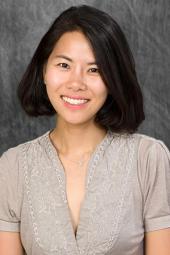
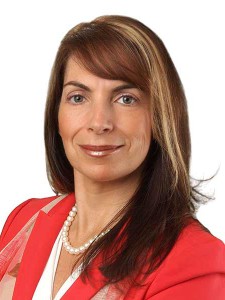
Angela Reyes is Professor in the Department of English at Hunter College, City University of New York (CUNY), and Doctoral Faculty in Anthropology at the CUNY Graduate Center. She teaches courses on English linguistic structures, discourse theory, and linguistic anthropology, while serving on advisory boards for Hunter College's Asian American Studies Program and Mellon-Mays Undergraduate Fellowship Program. Education: PhD, University of Pennsylvania (2003) Her research focuses on semiotics, racialization, and coloniality, particularly examining language-personhood relationships in the U.S. and Philippines through three major ethnographic studies: Southeast Asian American youth videomaking (Philadelphia), Korean American fifth graders in a "cram school" (NYC), and Filipino college communities (Manila). She analyzes how elite linguistic registers and mixed-race discourses reflect colonial anxieties and modern aspirations. Key publications include Discourse Analysis Beyond the Speech Event (2021, awarded Edward Sapir Book Prize) and work in The Oxford Handbook of Language and Race (2020). Awards include Advanced Research Collaborative Distinguished Fellowship (2016), Spencer Foundation Postdoctoral Fellowship (2009-2010), Woodrow Wilson Career Enhancement Fellowship (2006-2007), and Ford Foundation Dissertation Fellowship (2002-2003). Scientific Awards: Advanced Research Collaborative Distinguished Fellowship (2016) Spencer Foundation Postdoctoral Fellowship (2009-2010) Woodrow Wilson Career Enhancement Fellowship (2006-2007) Ford Foundation Dissertation Fellowship (2002-2003) Edward Sapir Book Prize (2016) Her work bridges linguistic anthropology with English studies, focusing on how language mediates colonial histories, social media dynamics, and academic institutions. She employs ethnographic, archival, and new media methodologies to trace discursive patterns across time and space.
Dr. Hyun Kyoung Ro is an Associate Professor in the Department of Counseling and Higher Education at the University of North Texas, affiliated with the College of Education. She previously served as a faculty member at Bowling Green State University and worked as a Research Designer and Analyst at Carnegie Mellon University’s Office of Institutional Research and Analysis. Ph.D. in Higher Education, The Pennsylvania State University (minor in Educational Psychology—Applied Measurement) M.A. and B.A., Korea University Her research centers on gender and racial equity in STEM education , learning experiences of marginalized students , and critical quantitative research and assessment . She employs rigorous methodologies to examine systemic inequities and institutional practices affecting underrepresented populations in higher education. Dr. Ro's recent publications span top-tier journals such as Journal of Engineering Education , The Review of Higher Education , and Research in Higher Education , reflecting a strong focus on equity, policy, and assessment in STEM and higher education contexts. Her work consistently emphasizes intersectionality, data justice, and institutional reform. She has received significant external funding, including: National Science Foundation ADVANCE Adaptation Track grant for gender equity on campus AccessLex Institute/Association for Institutional Research grant on law school access and enrollment among women of color Collectively, these grants total $1.1 million, supporting her leadership in advancing equity through research and institutional change. While no formal list of advisees or awards is provided, her role as a leading author and grant recipient highlights her active mentorship and scholarly leadership. Dr. Ro has not indicated any lab or research team affiliations in the provided text, but her research profile suggests collaboration with institutional research units and equity-focused initiatives.
Dr. Jennifer Katz serves as an Associate Professor in the Department of Educational and Counselling Psychology, and Special Education (ECPS) at the University of British Columbia's Faculty of Education. She joined UBC in July 2016 after previously holding an Associate Professor position in Inclusive Education at the University of Manitoba. Renowned for creating the Three Block Model of Universal Design for Learning (UDL), her framework is now implemented across Canadian school divisions to advance inclusive educational practices. Dr. Katz's research centers on inclusive education K-12 , social and emotional learning (SEL) , and mental health promotion in schools . Her work integrates the Three Block Model of UDL to address diverse student needs while emphasizing indigenous perspectives through extensive collaboration with First Nation elders and communities in Manitoba, Alberta, and Quebec. This intersectional approach reimagines inclusive education through reconciliation frameworks and culturally responsive practices. Analysis of her recent publications reveals consistent focus on mental health literacy programs for students with developmental disabilities, UDL's impact on academic achievement and teacher efficacy, and the integration of Indigenous knowledge systems. Her research bridges theory and practice through classroom-based interventions, cluster-randomized trials, and transformative learning frameworks that prioritize student well-being and social inclusion. Scientific Awards: No scientific awards were documented in the provided sources. Advising and Grants: While specific graduate students and research grants aren't detailed in the text, Dr. Katz's extensive publication record and community partnerships indicate active research leadership. Her work with school divisions across Canada suggests significant program implementation funding, though grant specifics remain unreported. Labs and Teams: Dr. Katz maintains critical partnerships with First Nation communities, embedding Indigenous knowledge into educational frameworks. Her Three Block Model implementation involves multi-school division collaborations nationwide, creating practitioner-researcher networks focused on inclusive classroom transformation.
Golshan Golriz is an Assistant Professor of Sociology at Queen’s University, Canada. She holds a BA in Women and Gender Studies from York University, an MA from the Women and Gender Studies Institute at the University of Toronto, and a PhD in Sociology from McGill University. Her work focuses on structural inequalities affecting Queer and Trans Black Indigenous and People of Colour (QTBIPOC), combining feminist and social scientific methods with intersectional frameworks. Current research includes LGBTQ religious activism, identity-centric social movements, and cancel culture’s relationship with structural inequality. Education: BA: York University (Women and Gender Studies + Sexualities Studies certificate) MA: University of Toronto (Women and Gender Studies Institute) PhD: McGill University (Sociology) Research Interests: Structural inequalities & QTBIPOC communities Queer/Trans Muslim marginalization Racism, capitalism, and Middle Eastern sexuality representations Social movements and comparative historical methods Current Projects: Co-edited volume on LGBTQ religious activism Comparative study of identity-centric movements Critical analysis of cancel culture mechanisms Lab/Team: Research emphasizes interdisciplinary collaboration, integrating qualitative methods with activism-focused research.
Peter Gries is a Professor of Chinese Politics and the Lee Kai Hung Chair at the University of Manchester, serving as the founding Director of the Manchester China Institute. He previously held roles at the University of Oklahoma and the University of Colorado, Boulder. Born in Singapore, he holds degrees from Middlebury, the University of Michigan, and a PhD from UC Berkeley. His research focuses on political psychology, particularly U.S.-China relations and Chinese nationalism, with notable works including China’s New Nationalism and The Politics of American Foreign Policy . He leads initiatives like the UK-China International Photography Award and the UK-China Diplomatic Dialogue. His grants include funding from the Ford Foundation and Smith Richardson Foundation for projects on security dialogues and course development. He sits on editorial boards of The China Quarterly , Political Psychology , and Nations & Nationalism . Recent work explores racial stereotypes, intersectionality, and threat perception in international relations. Education : Bachelor's and Master's in Asian Studies from Middlebury and the University of Michigan PhD in Politics from UC Berkeley Research Interests : Political psychology of international affairs U.S.-China relations Chinese nationalism and foreign policy Public opinion dynamics Grants : $60,000 from Smith Richardson Foundation (2005–2006) Multiple grants from Ford Foundation and Mershon Center for Sino-American Security Dialogues $4,000 from Freeman Foundation for Chinese Foreign Policy course development Media Contributions : Expert commentary on BBC World News, NYT, and CGTN Discussions on U.S.-China trade wars, China’s Japan policy, and global perceptions of China Labs/Institutes : Manchester China Institute Former director of the Institute for US-China Issues at University of Oklahoma
Dr. Winnie Lem is a Professor in the Department of International Development Studies and Gender and Social Justice program at Trent University. Her research focuses on migration, transnationalism, citizenship, and political economy with a regional emphasis on Europe and Asia. She holds a Ph.D. from the University of Toronto. Her academic work spans migration studies, urbanization, gender, and rural politics. Notable contributions include analyses of Chinese migrant entrepreneurs in France, militant populism in contemporary France, and the dialectics of migration. Lem has co-edited several volumes on migration and capitalism, including Migration Temporalities and Capitalism (2018) and Confronting Capital (2012). Lem teaches courses on global inequality, migration, and development studies. She actively contributes to interdisciplinary research through collaborations with institutions like the Canadian Anthropology Society. Her work often bridges anthropological theory with critical political economy frameworks, examining how global capitalism shapes migrant experiences and social structures. Her recent scholarship (2020) contextualizes the Gilets Jaunes movement within broader populist trends in France, while earlier work (2001–2009) explored labor dynamics in rural France and transnational migrant economies. Lem’s research emphasizes the intersection of class, gender, and ethnicity in migration narratives.
Natasha Carver is a Senior Lecturer at the School for Policy Studies, University of Bristol. Her work focuses on migration, gender, and colonial legacies, particularly in the context of FGM-safeguarding policies and their socio-political impacts. She holds an MSc and PhD, though specific disciplinary details are not provided. Her research critiques policy frameworks that marginalize migrant communities, especially those of Somali heritage in the UK. Her research interests include migratory legal frameworks, gendered and racialized power dynamics, and the intersection of colonial history with contemporary policy. She has conducted extensive studies on the over-surveillance of migrant-heritage families and the epistemological injustices embedded in FGM safeguarding procedures. Her publications highlight systemic issues in UK policies, advocating for evidence-based approaches over exaggerated risk narratives. She collaborates with interdisciplinary teams and engages with community perspectives to challenge hegemonic discourses in migration and gender studies. While no grants or lab affiliations are explicitly mentioned, her work frequently intersects with legal and healthcare systems.
Joshua B. Guild is an Associate Professor in the Department of African American Studies at Princeton University. He is also an Associated Faculty member in the Program in Urban Studies and has been involved with the Center for Digital Humanities. His scholarly work bridges historical research with public engagement and digital innovation. His education includes a PhD in History and African American Studies from Yale University and an undergraduate degree from Wesleyan University, where he was a Mellon Mays Undergraduate Fellow. Professor Guild's research centers on 20th- and 21st-century African American social and cultural history, urban history, and the modern African diaspora. His interests include migration, black internationalism, black popular music, and the black radical tradition. He is deeply engaged in the digital humanities and public scholarship, organizing seminars and contributing to podcasts and public exhibitions. The recent publications and projects reflect a strong focus on urban Black communities, transnational migration, and cultural politics. Themes include the Great Migration, postwar New York and London, New Orleans after Katrina, and the Black 1980s. His work combines historical analysis with cultural critique and social justice advocacy. Scientific Awards and Fellowships: Mellon Mays Undergraduate Fellowship Andrew W. Mellon Foundation Fellowship Ford Foundation Fellowship Woodrow Wilson National Fellowship Foundation Award Charles Warren Center Fellowship (Harvard University) W.E.B. Du Bois Institute Fellow (Harvard University) Professor Guild has advised graduate students through seminars and collaborative projects, though no individual students are named. He has led initiatives supported by institutional grants, particularly in digital humanities and public engagement. His leadership in the 'Black Studies in the Digital Age' seminar and editorial work on the 'Black 1980s' special issue demonstrates his commitment to advancing the field through interdisciplinary collaboration. He is affiliated with the Program in Urban Studies and the Center for Digital Humanities at Princeton, where he contributes to shaping curricula and research directions in African American Studies and digital scholarship.
Durba Mitra is the Richard B. Wolf Associate Professor in the Department of Studies of Women, Gender, and Sexuality at Harvard University's Faculty of Arts and Sciences. She is a leading scholar at the intersection of feminist and queer studies, global intellectual history, and the history of sexuality in the colonial and postcolonial world, particularly South Asia. Education: PhD, Emory University Research Interests: Her work critically examines how sexuality, gender, and racial difference have shaped modern social thought. She is especially known for her intellectual history of deviant female sexuality in colonial India and its foundational role in social sciences. Her research spans feminist theory, queer studies, histories of science and epistemology, and transnational feminist networks in the Global South. Recent Publications Trends: Her recent articles reflect a deep engagement with Third World feminism, feminist rage, decolonial knowledge production, and the politics of sexuality. She frequently publishes in top journals such as Signs , GLQ , and South Atlantic Quarterly , often in collaborative or roundtable formats, highlighting her role in shaping feminist intellectual discourse. Scientific Awards: Bernard S. Cohn Book Prize Walter Channing Cabot Fellow Award (Harvard) Roslyn Abramson Award for Teaching Excellence Star Family Prize for Faculty Advising Multiple 'Favorite Professor' honors from Harvard undergraduates Fulbright-Nehru and Mellon fellowships Advising and Grants: Mitra has received numerous research grants from Harvard, the Weatherhead Center, and external foundations. She has been recognized for excellence in faculty advising and undergraduate teaching. She has served as Acting Faculty Director of the Schlesinger Library and is active on editorial boards, indicating strong institutional and scholarly leadership. Labs and Teams: She is a faculty associate of the Weatherhead Center for International Affairs, a member of the Asia Center Council, and part of the Mittal South Asia Institute at Harvard. She curated the multimedia exhibit 'Solidarity! Transnational Feminisms Then and Now,' demonstrating her commitment to public scholarship and collaborative knowledge creation.
Susan Holmes is Professor at the School of Media, Language and Communication Studies at the University of East Anglia (UEA), where she joined as Reader in Television in 2007 and was appointed to Professor in 2018. She is an active member of several research groups including Media Equality, Film, Television and Media, Gender and Its Intersections Steering Committee, and HealthUEA. Her work spans television studies, celebrity culture, and feminist approaches to eating disorders. Professor Holmes received her academic training at the University of Sussex (BA in English and Media Studies), followed by an MA in Film from the University of Southampton, and completed her PhD on British film and television in the 1950s at the same institution. Prior to joining UEA, she taught Media and Cultural Studies at the Southampton Institute (now Southampton Solent University) and television and film at the University of Kent. Her research focuses on several interconnected areas that challenge traditional disciplinary boundaries. In television studies, she has made significant contributions to understanding British television history, particularly through her books 'British TV and Film in the 1950s' and 'Entertaining TV: the BBC and Popular Programme Culture in the 1950s,' where she challenges canonical ideas about early BBC television. Her work on reality TV examines historical development, generic labeling, and celebrity. Since 2014, she has conducted important empirical research on feminist approaches to eating disorders, analyzing media representations and working directly with people with lived experience. A key focus of this research examines how feminist approaches are neglected in contemporary eating disorder treatment, with implications for both clinical practice and cultural understanding. She co-founded the influential Celebrity Studies journal in 2010 and edited it for the first eight years of its publication. Analysis of Professor Holmes' recent publications reveals a clear trajectory where her expertise in media and television studies converges with her feminist scholarship on eating disorders. Her most recent work (2023-2025) increasingly focuses on cross-cultural applications of feminist approaches to eating disorders (including work in China), the use of innovative methodologies like Photovoice, and examinations of therapeutic alliance in treatment settings. Simultaneously, she continues to analyze contemporary media representations, particularly focusing on motherhood, true crime television, and reality TV through feminist lenses. This dual focus demonstrates how media representations shape cultural understandings of both celebrity and health conditions. Professor Holmes' significant contributions to academia have been recognized with several prestigious awards: Senior Fellowship from Advance HE (2024) UEA engagement award (2017) ALPSP award nomination for Celebrity Studies as best new journal (2011) She currently runs the Feminist Media Studies research cluster at UEA and is actively supervising postgraduate research in areas including popular television, television/film history, British TV history, stardom/celebrity, and feminist approaches to eating disorders. Her current major research project is the 'ALLIANCE study' (2024-2026), funded by the National Institute for Health and Care Research, which aims to develop practice and policy recommendations to support effective therapeutic alliance in inpatient treatment for eating disorders. This builds on her earlier British Academy-funded research on 'Entertaining Television: British TV, the BBC and Popular Programme Culture in the 1950s' (2007-2008). Professor Holmes plays a significant role in the academic community through her editorial work, serving on the boards of journals including Archives of Psychology, Big Data & Society, and Critical Studies in Television, and previously as co-founder and editor of Celebrity Studies. She has also been active in media engagement, contributing expert commentary on topics ranging from Netflix's portrayal of eating disorders to Celebrity Big Brother.
Kisha Porcher is an Associate Professor in the Department of English at the University of Delaware, specializing in English Education. She serves as the Student Teaching Coordinator and holds a Ph.D. in Teaching and Teacher Education from George Mason University, alongside degrees from Spelman College and Teachers College Columbia University. B.A., English and Secondary Education, Spelman College M.A., Curriculum and Instruction, Teachers College Columbia University Ph.D., Teaching and Teacher Education, George Mason University Her research focuses on centering Blackness through frameworks like the Black Gaze and archeology of the self (Sealey-Ruiz, 2019), emphasizing racial identity development and community-engaged learning. She explores systemic assets for Black and Brown students while advocating for anti-racist pedagogies in urban education settings. Her recent publications highlight trends in critical literacy instruction , decolonizing curricula , and equity-driven teacher training , with a strong emphasis on racial justice and linguistic diversity. Notably, she received the College of Arts & Sciences Faculty Teaching Excellence Award in 2022. Porcher’s work bridges teacher self-reflection and structural reform , positioning educators as disruptors of systemic inequities. Her scholarship spans topics from cultural competency to community-embedded pedagogies, reflecting her commitment to redistributing power in educational systems.
Dr. Farzana Aman Tanima is a Senior Lecturer at the University of Sydney Business School’s Accounting, Governance, and Regulation department. She previously held roles at the University of Wollongong (2017–2023). Her research focuses on critical and dialogic accounting, social justice, and challenging neoliberal frameworks through participatory approaches. Born in Bangladesh, she earned her PhD in 2015 from Victoria University of Wellington, New Zealand, with a thesis on dialogic accounting practices for marginalized women. Education: PhD in Accounting, Victoria University of Wellington, 2015 Undergraduate Honours Degree, Victoria University of Wellington Research Interests: Dr. Tanima’s work centers on dialogic accounting to democratize accounting practices, with focus on NGOs, microfinance, Indigenous education, and race. She employs participatory action research and autoethnography to address systemic inequalities. Key areas include: Accounting’s role in empowerment and development Decolonizing accounting education through Jindaola Critical race theory and counter-accounting Awards: 2024 Mary Parker Follet Award (AAAJ Journal) 2020 VC OCTAL Teaching Award 2015 AFAANZ Best PhD Award Teaching & Mentorship: She leads pedagogical initiatives embedding Indigenous perspectives into curricula and fosters dialogic learning. Supervised two completed PhDs, with co-authored publications. Active in mentoring early-career researchers through invited talks and workshops. Labs/Teams: Part of the Alternative Accounting Research Network and editorial boards for CPA Journal and Financial Accountability & Management . Co-leads special issues on critical dialogics and publicness in accounting.
Nancy Hirschmann is the Geraldine R. Segal Professor in American Social Thought at the University of Pennsylvania’s School of Arts & Sciences, Department of Political Science. Her work focuses on political theory, disability rights, feminist theory, and the intersection of gender with public policy. A former Vice-President of the American Political Science Association, she has held leadership roles in academic institutions and research centers globally. Her research examines freedom through a disability lens, analyzing how bodily constraints shape political thought. Key contributions include *Gender, Class, and Freedom in Modern Political Theory* (2008) and *The Subject of Liberty* (2003), which won the 2004 Victoria Schuck Award. Hirschmann has held prestigious fellowships at the National Humanities Center, Stanford University, and Princeton University’s Institute for Advanced Study. Teaching spans modern political theory, feminist theory, and disability studies. She previously taught at Cornell University and Swarthmore College. Her recent projects include exploring disability’s role in citizenship and analyzing populism’s impact on democratic processes. Office hours are available via email despite sabbatical leaves. Education Background: Extensive academic career with prior roles at Cornell and Swarthmore before joining Penn in 2002. Research Interests: Disability theory, gender policy, political thought history, and public policy frameworks. Awards: 2004 Victoria Schuck Award for *The Subject of Liberty*. Grants & Fellowships: ACLS, National Humanities Center, Stanford Center for Advanced Study. Labs/Teams: Collaborates with interdisciplinary groups on disability studies and feminist political theory.
Dr. Catrin Lundström is an Assistant Professor of Ethnicity and Migration at the Department of Migration, Ethnicity and Society (REMESO) within the Department of Culture and Society (IKOS) at Linköping University's Faculty of Philosophy. Her research focuses on the intersection of migration, whiteness, and gender, examining how Swedish women experience transnational migration and return migration processes. Dr. Lundström received her PhD in Sociology from Uppsala University in 2007 and became an Associate Professor (Docent) in Sociology there in 2011. Her academic journey includes teaching and research positions at multiple Swedish institutions including Uppsala University, Stockholm University, Mälardalen University, Södertörn University, Umeå University, and Linköping University. She has also been a visiting researcher at the University of Arizona and the University of California. Dr. Lundström's research centers on whiteness as both a place-bound and transnational construction. She challenges conventional migration studies by focusing on privileged Swedish women migrants, developing the concept of 'white capital' to understand how whiteness functions as transferable cultural capital across national borders. Her work examines how racial privilege, gender, and class intersect in migration experiences, particularly among women who migrate for lifestyle, companionship, or professional reasons. Her recent publications demonstrate an expanding focus on the relationship between race, whiteness, and educational systems in Sweden, as well as critical examinations of contemporary political debates through the lens of critical race theory. Lundström's work increasingly addresses how colorblind discourse operates in Swedish society while simultaneously exploring the politics of national identity in a globalized world. Dr. Lundström has led significant research projects including: 'White Migrations: Gender, Whiteness and Privilege in Transnational Migration' (2014) 'Tre faser av hegemonisk vithet' (Three Phases of Hegemonic Whiteness) with Tobias Hübinette 'Att återintegrera svenskheten' (Reintegrating Swedishness) on returning Swedish migrant women, funded by the Swedish Research Council Her research has been supported by organizations including the Sweden-America Foundation and the Swedish Research Council. Dr. Lundström is actively involved in several academic networks: IMISCOE Standing Committee on Gender, Migration and Transnational Lives White Spaces Network at Leeds University Lifestyle Migration Hub, an international network of researchers studying lifestyle migration She regularly lectures within and outside academia, both in Sweden and internationally, and has received significant media attention for her research on school segregation, colorblind language, and gender equality in migration contexts.
Rovincer Najjuma is a Lecturer in Digital Education and the Global South at the University of Edinburgh's Moray House School of Education and Sport, affiliated with the Centre for Research in Digital Education. His research focuses on digital education ecosystems, intersectionality frameworks, and leveraging technologies to enhance access for marginalized populations in post-conflict regions and the Global South. Education: PhD in Education; Master of Education in Curriculum Design; Postgraduate Diplomas in ICT in Education and Education; Bachelor of Social Science (Political Science & Public Administration). Research explores digital education policy, mobile learning, refugee education, and generative AI applications. He has pioneered digital professional development programs in Africa, including designing Makerere University's first fully online Masters in Instructional Design Technology. Grants include Royal Society of Edinburgh funding (2024-2025), USAID/Resilient Africa Network grants (2021-2024), and Commonwealth Academic Fellowships. Key collaborations include work with University of Oxford on mobile technologies in teacher preparation, University of Stellenbosch's Emerging Scholars Initiative, and UNICEF-funded projects on non-state schools in Uganda.