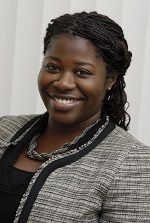
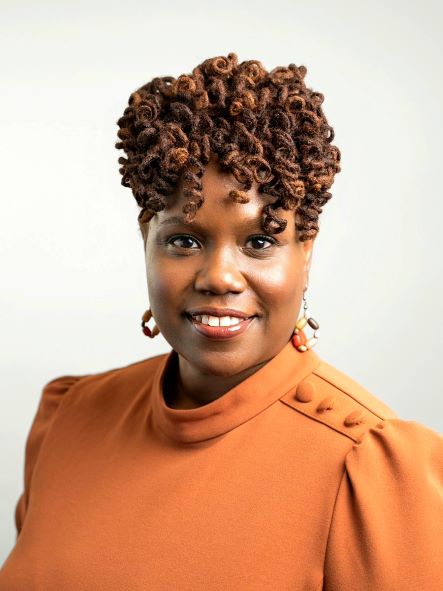
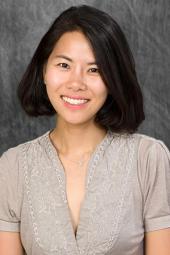
Genesea M. Carter serves as the Associate Director of Composition and Associate Professor in the English and University Composition Program at Colorado State University. She holds a PhD from the University of New Mexico. Her research focuses on administrative systems in higher education, including curriculum design, teacher training, and workload equity, and their impact on instructors’ well-being. She also investigates how students from diverse backgrounds navigate academia, with a focus on working-class pedagogy and identity development. Her recent co-edited collection Systems Shift: Creating and Navigating Change in Rhetoric and Composition Administration (2023) addresses institutional transformation. Earlier work includes Class in the Composition Classroom: Pedagogy and the Working Class (2017), exploring socioeconomic diversity in education. Her articles span topics like digital literacy, interdisciplinary pedagogy, and critical theory in composition studies. Dr. Carter’s scholarship emphasizes equity, intersectionality, and dismantling neoliberal structures in academia. She has contributed to journals such as Composition Studies , Journal of Teaching Writing , and Open Words , and her work bridges practical administration with theoretical frameworks in rhetoric and composition.
Megan Sweeney is Arthur F. Thurnau Professor of English, Afroamerican and African Studies, and Women's and Gender Studies at the University of Michigan. Her research examines African American literature, reading practices in carceral settings, and autotheory through works like Reading Is My Window and the lyric essay collection Mendings . Her scholarship has been supported by the Radcliffe Institute for Advanced Study, Ford Foundation, and Woodrow Wilson Foundation. Sweeney received the university's highest teaching awards including the 2021 John D'Arms Award for graduate mentoring and 2014 Thurnau Professorship. She serves as Director of Graduate Studies in English and Interim Editorial Director for Feminist Studies .
Adam King is an Assistant Professor in the Labour Studies Program at the Faculty of Arts, University of Manitoba. His research focuses on labor regulation, employment standards enforcement, Indigenous labor dynamics, deindustrialization impacts, and labor market policy. He co-investigates a SSHRC Partnership Grant project on migrant labor in settler-colonial contexts. Education: PhD in Sociology (York University, 2019) MA in History (University of Toronto, 2011) BA in Sociology/History (Trent University, 2010) His research examines the political economy of labor regulation, including enforcement mechanisms in federally regulated sectors and contested Indigenous labor relations. He analyzes deindustrialization's social consequences and contributes to debates on job guarantee proposals and right-wing populism's influence on labor movements. Recent publications explore topics like Indigenous labor law frameworks, precarious creative workers' unionization, and gendered identities in deindustrializing communities. He actively engages with media outlets such as CBC, The Globe and Mail, and The Maple's 'Class Struggle' newsletter.
Anupama Rao is Professor of History and MESAAS (Institute for Comparative Literature and Society) at Columbia University, with affiliations in Women's, Gender and Sexuality Studies and Human Rights. She is based at Barnard College, where she holds office hours and engages in interdisciplinary teaching and research. Her educational background includes a B.A. with honors from the University of Chicago and a Ph.D. from the Interdepartmental Program in Anthropology and History at the University of Michigan. Rao’s research spans South Asian history and anthropology , gender and sexuality studies , caste and race , social theory , comparative urbanism , and colonial genealogies of human rights . She is known for her groundbreaking work on anti-caste thought, particularly the political philosophy of B. R. Ambedkar, and for theorizing caste subalternity in modern India. Her scholarship critically examines the intersections of caste, gender, urban space, and political subjectivity. Her recent and ongoing publications reflect a deep engagement with global racisms, Cold War humanism, and justice futures. Key themes across her articles include Dalit aesthetics, subaltern urbanism, affirmative action, and the transnational dimensions of caste. Her work shows a consistent trend toward interdisciplinary, postcolonial, and decolonial frameworks that challenge Western-centric epistemologies. Fellow-in-Residence, National Humanities Center (2008–2009) Fellow, Center for Advanced Study in the Behavioral Sciences, Stanford (2010–2011) Fellow, REWORK, Humboldt University, Berlin (2014–2015) Global Humanities Institute Awardee, CHCI (2023) Rao has served as Senior Editor of Comparative Studies in South Asia, Africa, and the Middle East (2012–2021), President of the Society for the Advancement of the History of South Asia (SAHSA), and member of the South Asia Council of the Association for Asian Studies. She is Principal Investigator for the Mellon-funded Global Humanities Institute project Global Racisms, Cold War Humanism, and Just Futures (2022–2024) and co-directs Geographies of Injustice at Columbia’s Center for the Study of Social Difference. She has secured major research grants from the ACLS, NEH, SSRC, and Mellon Foundation. She advises and mentors graduate students, though specific names are not listed in the text. Rao directs the Institute for Comparative Literature and Society and convenes the Ambedkar Initiative, fostering interdisciplinary research and public engagement on caste, race, and justice. She leads and participates in multiple research collectives, including the Geographies of Injustice project and the Asian Spatialities initiative. She is deeply involved in institutional leadership through her roles at the Institute for Comparative Literature and Society and the Ambedkar Initiative, both of which serve as hubs for critical humanities research.
Lorena Sosa is an Associate Professor at the Faculty of Law, Economics and Governance, Utrecht University, specializing in International and European Law. She is affiliated with the Netherlands Institute of Human Rights (SIM) and the research program Family & Law (UCERF). Her roles include membership of the management board of the Center for Global Challenges, Director of Education at UGlobe since 2022, and a community-engaged learning ambassador for her faculty since 2023. Education: PhD (cum laude) in Law from Tilburg University (2015), LL.M. in International Public Law (cum laude, National University of Córdoba), and a law degree from the same institution. Prior to Utrecht, she held positions at the University of Buenos Aires, University of Turku, and others. Research focuses on intersectional discrimination, gender-based violence, and human rights law. Key areas include the Istanbul Convention, feminist legal frameworks, and trans rights in criminal procedures. She employs socio-legal methods and collaborates with international organizations like the EU, Council of Europe, and UN. Publications span topics like femicide, domestic violence, and transgender experiences. Recent works include contributions to the Routledge International Handbook on Femicide and Feminicide (2023) and Preventing and Combating Violence Against Women (2023). Awards include the Marie Skłodowska-Curie Fellowship (2018), VENI Grant (2020), and the Max van der Stoel Award (2015) for her PhD on intersectionality in violence against women frameworks. Teaching includes courses on human rights law at Utrecht’s Legal Research Master, PIL Master, and University College Utrecht. She advises on projects related to victim rights, gender diversity, and empirical legal studies.
Aleksander Madsen is a Researcher at the University of Oslo (UiO), affiliated with the Department of Sociology and Human Geography under the Faculty of Social Sciences. His primary research interests include social stratification, immigrant assimilation in labor markets, welfare state policies, and statistical methods. He holds a PhD from Oslo Metropolitan University and an MA from UiO. Education: PhD in Sociology, Centre for the Study of Professions, Oslo Metropolitan University (2014–2018) MA in Sociology, University of Oslo (2013) His research explores labor market integration of immigrants, gender disparities in male-dominated workplaces, and the impact of education-occupation mismatch on health outcomes. He has conducted longitudinal studies on long-term sickness absence and labor market trajectories using sequence analysis. Dr. Madsen has held postdoctoral and research positions at UiO and NIFU, and was a visiting scholar at Stanford University's SCANCOR (2024) funded by the Fulbright Foundation. His work spans interdisciplinary collaborations, including projects on workplace diversity, ethnic stratification, and policy evaluations. Awards: U.S. - Norway Fulbright Foundation Grant (2023–2024) His research group affiliations include the Social Inequalities and Population Dynamics team and the ORGMIGRANT project, investigating work organizations and immigrant assimilation. Recent publications address residential networks among immigrants, workplace ethnic diversity, and women’s attrition from male-dominated sectors.
Professor Astrid Nordin holds the Lau Chair of Chinese International Relations at King's College London's Lau China Institute, within the School of Global Affairs. Previously, she was a Professor and Director at Lancaster University's China Centre. Her research bridges Chinese studies and critical international relations, focusing on relational theories and China's global role. Key areas include Chinese foreign policy, surveillance technologies, and decolonial approaches. Education: Peking University, Jilin University, City University Hong Kong, University of Warwick, University of Manchester Research Interests: Chinese world order concepts, relational approaches, critical social theory, and ontology of war. Her work emphasizes interdisciplinary collaboration, impacting policy, media, and cultural sectors. Notable projects include the 'Chinese Anger Diplomacy' study and the 'ESRC IAA: Community-led support for overseas Chinese' initiative. She co-edited the Routledge Handbook of Social Futures (2021) and contributes to public discourse on China's global influence. Awards: KingsCAT Tool Development (2024) alongside interdisciplinary team.
Jamella Gow is the Rasuli Lewis Assistant Professor of Sociology at Bowdoin College, where she teaches courses on race and ethnicity, Black culture and activism, migration, policing, borders, and globalization. She is affiliated with the Department of Sociology and actively contributes to interdisciplinary scholarship at the intersection of Black Studies and migration studies. Her research centers on how race, Blackness, and immigration intersect for Black Caribbean migrants in the United States, particularly Haitians, Jamaicans, and Afro-Cubans in South Florida. She investigates the dynamics of racial and ethnic identity, inclusion/exclusion, diasporic politics, and the criminalization of Black migrants under U.S. immigration policy. Her work critically engages anti-Blackness, differential Blackness, and transnational solidarity. Her recent publications include a co-edited volume titled Modern Migrations, Black Interrogations: Revisioning Migrants and Mobilities through the Critique of Anti-Blackness (Temple University Press, 2024), and journal articles in Sociology of Race and Ethnicity , Ethnic and Racial Studies , and Diaspora: A Journal of Transnational Studies . Her publications reflect a consistent focus on racialization, diaspora, and the socio-political marginalization of Black migrants. She frequently presents her research at major academic conferences such as the American Sociological Association and the Society for the Study of Social Problems. Jamella Gow has not been mentioned as receiving specific scientific awards in the provided text. However, her scholarly impact is evident through her publications and invited presentations. She advises and mentors students in sociology and related fields, though no named advisees are listed. Her research is collaborative, involving partnerships with scholars across institutions and community-based projects, such as her work with the Carrefour-Feuilles community in Haiti. She has also contributed to public scholarship through newsletters and book reviews. Her work is grounded in critical sociological theory and qualitative methods, and she is currently developing a book manuscript titled Black Migrants from Black Nations: Race, Blackness, and Immigrant Exclusion , which promises to make a significant contribution to the understanding of how racial, ethnic, and national statuses shape the lived experiences of Black immigrants.
Dr. Pedro Nava is an Associate Professor and Director of Educational Leadership in the School of Education and Counseling Psychology at Santa Clara University. His scholarship centers on educational equity for Chicanx/Latinx and immigrant communities, combining critical race theory, participatory action research, and community-engaged methodologies. Education Ph.D. in Urban Schooling – University of California, Los Angeles, 2012 Ed.M. in Administration, Planning, and Social Policy – Harvard University, 2003 B.A. – California State University, Fresno, 1996 Research Interests Dr. Nava’s research interrogates systemic inequalities in urban and rural schooling, emphasizing critical pedagogy and critical race theory . He investigates how immigration status intersects with educational opportunity, and he collaborates with families and communities to co-construct transformative practices through participatory action research . His work also explores family-school-community engagement , leveraging community cultural wealth frameworks to amplify migrant and undocumented voices in educational policy and practice. Publication Trajectory Across more than two decades, Dr. Nava’s publications trace the evolution of critical scholarship in education. Early works examine institutional barriers for Chicano students, while recent studies integrate quantitative ethnography and testimonio methodologies to illuminate intersectional experiences of Latinx youth, undocumented graduate students, and farmworker families. Scientific & Community Awards No formal awards are enumerated in the provided text. Advising & Grants While specific grants and advisees are not listed, Dr. Nava’s leadership role as Director of Educational Leadership implies extensive mentoring of master’s and doctoral students, as well as oversight of grant-funded initiatives that advance equity-focused leadership preparation. Labs, Teams & Centers Dr. Nava directs the Educational Leadership programs within the School of Education and Counseling Psychology, fostering interdisciplinary collaboration and community-engaged research teams that partner with local schools, nonprofits, and migrant organizations.
Dr Sue Caton is a Senior Lecturer in the Department of Social Care and Social Work at Manchester Metropolitan University, within the Faculty of Health and Education. Her research focuses on social and health inequalities affecting people with intellectual disabilities, particularly digital inclusion, mental health medication decision-making, and pandemic impacts. She leads projects such as Digital Lifeline (NIHR-funded), Medications and My Mental Health (NIHR RfPB), and co-leads Our Digital Health (NIHR RfSC), emphasizing co-produced methodologies. Research Projects: Digital Lifeline: Evaluating tablet impact on social connections post-pandemic. Medications and My Mental Health: Empowering informed medication decisions for people with learning disabilities. Our Digital Health: Assessing digital health participation barriers. Key Expertise: Qualitative research, health inequalities, inclusive research design, and participatory methodologies. Her work addresses pandemic-related challenges faced by marginalized groups, including access to healthcare and social support. She has supervised four completed PhD students and currently mentors four PhD candidates exploring topics such as digital inclusion, animal-assisted interventions, and familial perspectives in parenting support. Dr Caton has led evaluations for initiatives like the Shared Lives 16+ project and the Us Too project on domestic abuse, demonstrating expertise in policy-informed research. Her contributions include over 50 peer-reviewed articles, focusing on digital participation, mental health, and pandemic resilience among people with intellectual disabilities. Awards: No specific scientific awards mentioned, though her work is funded by prestigious bodies like NIHR and UKRI. Labs/Teams: Collaborates with interdisciplinary teams including Dudley Voices for Choice, Liverpool John Moores University, and the Universities of Dundee, Warwick, and Birmingham City.
Nicole M. Overstreet is an Associate Professor in the Department of Psychology at Clark University, where she has been faculty since Fall 2014. Her work centers on eradicating health inequities through critical theoretical frameworks advancing social justice, equity, and liberation for marginalized communities. Her educational trajectory includes a BA from Smith College, followed by MA and PhD degrees in social psychology from the University of Connecticut. She completed postdoctoral training at Yale University’s Center for Interdisciplinary Research on AIDS. Dr. Overstreet employs intersectionality and community-based participatory research to investigate how interlocking systems of power—including racism, sexism, and gendered racism—impact Black girls and women. Her scholarship critically examines power dynamics within psychology to address stigma and health disparities, while her teaching cultivates intersectional analysis as both critical inquiry and praxis for students. Her accolades include: 2020 Rosiland S. Roberts Faculty Award Emerging Faculty Leader recognition by the WW Foundation Hodgkins Junior Faculty Fellowship for research and teaching excellence She secured $100,000 from the Robert Wood Johnson Foundation for health equity research. Her mentorship yields exceptional student outcomes, including Adriana Medina’s Diversity Fund Graduate Travel Award, Keegan Daugherty’s Dr. Lee Gurel/John E. Bell Achievement Award, and multiple Steinbrecher Fellowships for lab members examining stigma in autism and LGBTQ+ workplaces. Her lab integrates research, activism, and healing practices focused on Black girls and women, operationalizing intersectionality to challenge health inequities through community-centered scholarship.
Sarah Turnbull is an Associate Professor at the University of Waterloo, affiliated with the Balsillie School for International Affairs. Her work intersects criminology, sociolegal studies, and critical border/migration studies, focusing on immigration detention, deportation, punishment, and social justice through postcolonial, antiracist, and feminist lenses. Education: PhD and MA in Criminology and Socio-Legal Studies from the University of Toronto; BA from Simon Fraser University. Her current research includes: (1) a SSHRC-funded study on the National Immigration Detention Framework in Canada using Foucauldian genealogical methods; (2) the Prison Transparency Project , a comparative analysis of carceral transparency in Canada, Spain, and Argentina; and (3) a transatlantic study on pandemic impacts in prisons. She employs ethnographic and qualitative methods in her research. Selected Grants: 2023–2030: Co-Investigator, Prison Transparency Project (SSHRC Partnership Grant). 2022–2025: Principal Investigator, Reforming Detention (SSHRC Insight Grant). 2022–2023: Co-Principal Investigator, COVID-19 Justice as Penal Justice (Strathclyde-Waterloo Transatlantic Award). Turnbull’s publications and collaborations emphasize systemic inequalities, carceral mobilities, and ethical research practices. She co-founded the Prison Transparency Project and has contributed to dialogues on art as resistance in detention settings.
Professor Oliver Razum at Bielefeld University's Faculty of Health Sciences leads Working Group 3 in Epidemiology & International Public Health. He serves on multiple commissions including the Faculty Conference and Teaching Commission, and contributes to the Center for Statistics and Bielefeld Center for Data Science. His work focuses on Epidemiology of migration and health Refugee health inequalities Medical rehabilitation equity Othering processes in public health Gender-sensitive health research Recent articles explore 2026 medical rehabilitation for people with disabilities, 2025 refugee mental health frameworks, and 2024 pandemic equity research. Key scientific contributions include the 2025 Georg Forster Fellowship and leadership in diversity-sensitive healthcare initiatives. His research spans urban neighborhood health effects , digital rehabilitation , and structural racism in healthcare . Current projects address intersectional inequalities , post-migration stress , and gender as social determinant . Professor Razum maintains active collaborations with institutions like the German Research Foundation and DRV Westphalia.
Aisha Durham is a Professor of Communication at the University of South Florida's College of Arts and Sciences, with affiliations in Humanities & Cultural Studies and Women's & Gender Studies. She holds a Ph.D. from the University of Illinois at Urbana-Champaign (2007) and has held academic positions at Texas A&M University and the University of Georgia. Her research focuses on Black feminist thought, autoethnography, and media/cultural studies. She is the award-winning author of Home with Hip Hop Feminism: Performances in Communication and Culture and a co-editor of Home Girls Make Some Noise! Key research areas include Hip Hop Feminism, intersectionality, and qualitative methodologies. Durham has received prestigious awards such as the NCA Marsha Houston Award and the Ellis-Bochner Award for autoethnography. She contributes to public scholarship through podcasts, media analyses, and international talks for outlets like CNN and NPR. Her work emphasizes democratizing knowledge and addressing systemic inequities in academia and culture. Professional activities include editorial board roles, advisory positions (e.g., Smithsonian Anthology of Hip-Hop and Rap), and keynote speaking at institutions worldwide. Her recent publications explore pedagogical resistance, hiphop literacies, and Black feminist mentorship frameworks.
Dr. Hyun Kyoung Ro is an Associate Professor in the Department of Counseling and Higher Education at the University of North Texas, affiliated with the College of Education. She previously served as a faculty member at Bowling Green State University and worked as a Research Designer and Analyst at Carnegie Mellon University’s Office of Institutional Research and Analysis. Ph.D. in Higher Education, The Pennsylvania State University (minor in Educational Psychology—Applied Measurement) M.A. and B.A., Korea University Her research centers on gender and racial equity in STEM education , learning experiences of marginalized students , and critical quantitative research and assessment . She employs rigorous methodologies to examine systemic inequities and institutional practices affecting underrepresented populations in higher education. Dr. Ro's recent publications span top-tier journals such as Journal of Engineering Education , The Review of Higher Education , and Research in Higher Education , reflecting a strong focus on equity, policy, and assessment in STEM and higher education contexts. Her work consistently emphasizes intersectionality, data justice, and institutional reform. She has received significant external funding, including: National Science Foundation ADVANCE Adaptation Track grant for gender equity on campus AccessLex Institute/Association for Institutional Research grant on law school access and enrollment among women of color Collectively, these grants total $1.1 million, supporting her leadership in advancing equity through research and institutional change. While no formal list of advisees or awards is provided, her role as a leading author and grant recipient highlights her active mentorship and scholarly leadership. Dr. Ro has not indicated any lab or research team affiliations in the provided text, but her research profile suggests collaboration with institutional research units and equity-focused initiatives.