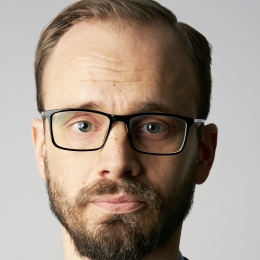
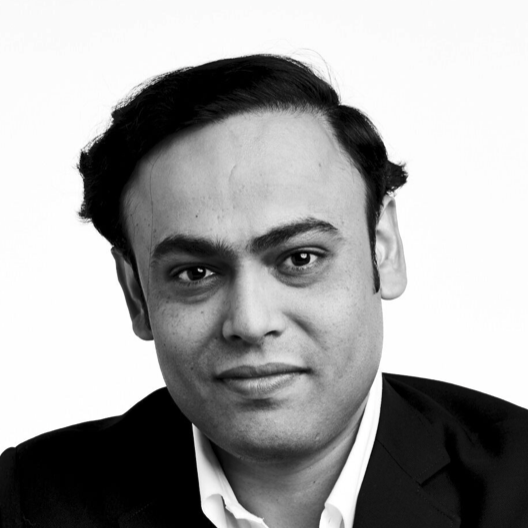
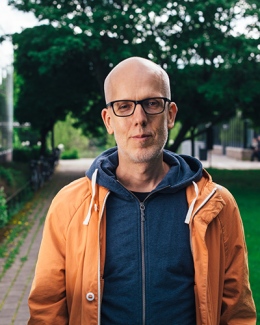
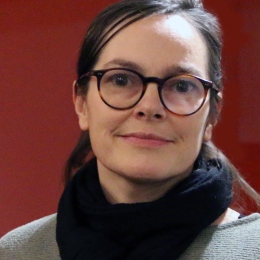
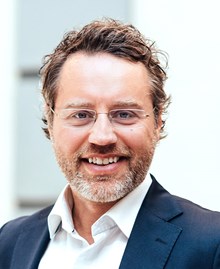
Karl Gustafsson is a Professor at Stockholm University within the Department of Economic History and International Relations. His work bridges security studies , collective memory , and digital research methods in international relations. Current Role: Professor of International Relations, Stockholm University Previous Positions: Post-Doc at Lund University, Researcher at Swedish Institute of International Affairs Visiting Appointments: University of Tokyo, Osaka University, Keio University, Academia Sinica, Nordic Institute of Asian Studies Research Focus: Karl specializes in memory politics , ontological security , and anxiety-driven international dynamics , particularly in Sino-Japanese relations and digital platforms . His studies explore how historical narratives and online memory construction influence state identity and policy. Awards & Grants: Recipient of the Wang Gungwu Prize (2014) and Stockholm University Association’s award (2011). Holds Swedish Research Council and Marianne & Marcus Wallenberg Foundation grants for projects on apologies in international politics and digital memory in East Asia . Publications: His work appears in journals such as International Studies Quarterly , European Journal of International Relations , and Memory Studies , addressing topics like narrative power in East Asia, anxiety’s role in policy change , and digital humanities applications in IR.
Lars Nordström is a Professor at the Division of Electric Power and Energy Systems within KTH Royal Institute of Technology, Stockholm, Sweden. His work bridges control systems , communication networks , and power systems , with a focus on future architectures, functionality, and quality aspects of ICT for power grid operations. He has led initiatives such as the Swedish Centre of Electric Power Engineering and served as Thematic Leader for Smartgrids in KIC InnoEnergy. In 2014, he was a Visiting Professor at Washington State University. Education : Ph.D., MSc.EE Nordström's research explores the intersection of smart grids , machine learning , and cybersecurity for power systems. Key areas include: Wide-Area Monitoring and Control (WAMC) systems Decentralized control strategies for DC microgrids Impedance modeling using neural networks Data-driven methods for islanding detection ICT reliability and protocol design for grid operations His recent publications emphasize machine learning applications in power systems, including LSTM networks for EV charging management, graph attention networks for stability monitoring, and digital twin approaches for cyber-attack mitigation. These works span disciplines such as Smart Grids, Power Electronics, and Data Science. Scientific Recognitions : Senior Member, IEEE Senior Member, CIRED Senior Member, Cigre Past Chairman, Swedish IEC TC57 Mirror Committee Nordström actively teaches and examines graduate courses like Communication and Control in Electric Power Systems and Computer Applications and Machine Learning in Electric Power Systems . His work influences industry practices through collaborations on digital substations, energy market analysis, and resilience strategies.
Saurabh Amin is a Professor in the Department of Civil and Environmental Engineering at the Massachusetts Institute of Technology (MIT), where he also serves as the Edmund K. Turner Professor and Undergraduate Officer. He is a Principal Investigator at the Laboratory of Information and Decision Systems and holds affiliations with the Operations Research Center and the Center for Computational Science and Engineering. His educational background includes: B.Tech. 2002, Indian Institute of Technology (IIT) Roorkee M.S. 2004, University of Texas (UT) Austin Ph.D. 2011, University of California (UC) Berkeley Saurabh Amin's research focuses on the design and control of infrastructure systems using game theory and optimization in networks. His work spans three main areas: resilient network control, information systems and incentive design, and optimal resource allocation in large-scale infrastructure systems. By concentrating on critical infrastructure domains including highway transportation, electric power distribution, and urban water networks, his research develops innovative theory and tools to enhance system performance against both stochastic and adversarial disruptions. His approach involves modeling cyber-physical interactions in infrastructures to assess vulnerabilities, developing detection and response tools for failures at various scales, and designing economic incentive schemes that improve aggregate public good while accounting for dependencies and private information among strategic entities. Amin's work bridges mathematical systems theory with practical civil engineering applications, creating a rigorous theoretical foundation for infrastructure resilience that addresses diverse failure mechanisms from natural disasters to deliberate malicious actions. His recent publications demonstrate a strong focus on decarbonization of energy systems, resilient infrastructure planning under climate uncertainty, optimization methods for complex networked systems, and game-theoretic approaches to sustainable infrastructure management. His work increasingly integrates artificial intelligence and machine learning techniques with traditional control theory to address contemporary challenges in infrastructure resilience and sustainability. The research shows a clear trajectory toward addressing climate change impacts on infrastructure systems while maintaining economic efficiency and operational reliability. Professor Amin has received numerous prestigious awards and honors: Common Ground Excellence in Teaching Award, 2025 HSCC Test-of-Time Award, 2024 MIT CEE, Distinguished Service and Leadership Award, 2023 Samuel M. Seegal Prize (SoE) – inspiring students in pursuing and achieving excellence, 2022 Earll M. Murman for Excellence in Undergraduate Advising, 2022 C3.ai Digital Transformation Institute Research Award, 2020 MIT, Ole Madsen Mentoring Award, 2020 MIT, Energy Initiative Research Award, 2020 National Academy of Engineering, China-America Frontiers of Engineering Symposium speaker, 2019 MIT, Robert N. Noyce Career Development Professor, 2015-2018 Google Faculty Research Award, 2015 National Science Foundation CAREER Award, 2015 Siebel Energy Institute Research Award, 2015 MIT, Solomon Buchsbaum AT&T Research Fund Award, 2012 Professor Amin has been actively involved in significant research projects including the C3.ai DTI project on Causal Reasoning for Real-Time Attack Identification in Cyber-Physical Systems and another on Learning in Routing Games for Sustainable Electromobility. He serves as the chief scientist on multi-institutional NSF grants, including the $9 million Foundations of Resilient Cyber-Physical Systems (CPS) project. His teaching portfolio includes courses such as 1.008 Engineering for a Sustainable World, 1.104 Sensing and Intelligent Systems, 1.020 Engineering Sustainability: Analysis and Design, and 1.208 Resilient Networks. As Undergraduate Officer, he plays a key role in shaping the educational experience for civil and environmental engineering students at MIT. Professor Amin leads the Resilient Infrastructure Networks Lab at MIT, where his team develops theoretical foundations and practical tools for infrastructure resilience. The lab focuses on the intersection of control theory, game theory, and optimization applied to cyber-physical infrastructure systems. Current research directions include pandemic-resilient urban mobility and hurricane-resilient smart grid operations, reflecting the lab's commitment to addressing pressing societal challenges through rigorous systems engineering approaches.
Jens Rydgren is Professor of Sociology at Stockholm University, where he holds the Chair in Sociology since 2009. He is affiliated with the Department of Sociology within the Faculty of Social Sciences. Rydgren graduated from Stockholm University in 2002 and has been a visiting scholar at Columbia University, Cornell University, Harvard University, École des Hautes Études en Sciences Sociales in Paris, Copenhagen University, and Utrecht University. He is a fellow of the Royal Swedish Academy of Letters. Professor Rydgren's primary research interests lie in political sociology, particularly the study of radical right-wing parties and their voters, with a focus on explaining variation over time and across countries. He also has a longstanding interest in social networks and how relational and contextual factors influence individuals' beliefs, opportunities, and actions. His additional research interests include ethnic conflict, belief formation processes, collective memory, fanaticism, and sociology through literature. Much of his work combines theoretical insights with empirical analysis to understand complex social phenomena. His recent publications demonstrate a consistent focus on radical right-wing politics, xenophobia, nationalism, and social network analysis. Rydgren frequently employs comparative and multi-method approaches to examine political behavior and social phenomena. His work often intersects political sociology with social network theory to understand how contextual factors shape political attitudes and behaviors. He has made significant contributions to understanding how social networks influence various outcomes, from political attitudes to health behaviors. Fellow of the Royal Swedish Academy of Letters Rydgren is currently the Principal Investigator (PI) of the research project "Why do working class voters support the populist radical right?" funded by the Swedish Research Council. Previously, he was PI for the ERC Starting Grant project "Individual Life Chances in Social Context: A Longitudinal Multi-Methods Perspective on Social Constraints and Opportunities" (2011-2018), which combined survey data and register data to study the importance of egocentric networks for young adults' life chances. His research has important implications for understanding contemporary political challenges and developing evidence-based policy responses.
Vladimir Bastidas is a Senior Lecturer in Competition Law and Head of Department at the Department of Law, Uppsala University. He has held this position since 2013 after previously serving as a Senior Lecturer in Law at Örebro University, with expertise spanning EU competition law, intellectual property, and legal economics. Education: PhD in Law, Stockholm University (2011); Thesis: EU competition law rules on technology transfer agreements His research centers on EU competition law, particularly Articles 106-108 TFEU concerning privileged undertakings, while exploring intersections with intellectual property, healthcare, and digital innovation. He examines state aid law dynamics and economic implications of competition frameworks. Recent publications (2021-2023) reveal a pronounced focus on applying competition law to emerging sectors, including digital ecosystems (Google Android), biotechnology (human genome editing), and algorithmic pricing. His work consistently bridges traditional legal principles with novel technological challenges. Scientific awards: No scientific awards mentioned Advising and grants: No information provided on graduate students advised No research grants documented No laboratory or research team affiliations are specified in available materials.
Olof Sundin is Professor of Information Studies at Lund University's Department of Arts and Cultural Sciences, where he serves as Manager of Research and Research Education at the Division of ALM, Digital Cultures and Publishing Studies. He coordinates the research node Dīcit: Disinformation, Conspiracy Theories, and Infrastructures of Information. His research examines sociomaterial configurations and control mechanisms of digital information, focusing on: Disinformation dynamics and generative AI's impact on expertise/trust Search engine functionality in everyday contexts Media/information literacy as infrastructural meaning-making Evolution of information-seeking behaviors in AI-driven environments Recent publications demonstrate strong focus on AI's transformative impact on information literacy practices, source evaluation frameworks, and emerging digital market behaviors. His work consistently intersects technology, society, and epistemological concerns. Awards include: Best paper award (2025) Källkritikpriset: The golden magnifying glass 2023 (National award from Swedish Internet Foundation) Sundin leads multiple research initiatives: RE-SEARCH project (Swedish Research Council): Analyzing youth information-seeking in AI-infused educational environments 'Who is the Expert?' project (Crafoord Foundation): Investigating generative AI's impact on expertise and evidence Lund lead for 'The Digital Welfare State' project Member of Nordic Disinformation Resilience Network He coordinates the Dīcit research node and leads doctoral education in Information Studies, teaching courses on digital libraries and information institutions.
Mattias Dahlberg is a Professor of Financial Law at the Department of Law, Uppsala University. He holds a PhD and JD, and is actively engaged in research and publication in the field of tax law. His academic work is centered on international and EU tax law, with a strong focus on treaty interpretation, corporate taxation, and fundamental freedoms within the European Union. His research interests include international tax law, EU tax law, double taxation, tax treaties, CFC legislation, capital income taxation, and investment fund taxation. He has extensively analyzed the interplay between domestic tax laws and EU law, particularly in areas concerning freedom of establishment, free movement of capital, and cross-border corporate restructuring. His work often takes the form of legal commentary, case analysis, and policy reports, contributing to both academic and practical understanding of complex tax issues. The trends in his recent publications (2019–2025) show a continued focus on EU court jurisprudence, especially rulings related to the freedom of establishment, merger directive, and interest deduction limitations. He frequently contributes to Skattenytt and Tax Notes International , providing expert commentary on Swedish and international tax developments. His work bridges academic rigor with practical policy relevance, particularly in the context of Swedish tax law and its alignment with EU obligations. Mattias Dahlberg has authored or co-authored several books, including Juridikens termer (2015) and Internationell beskattning (multiple editions). He has also contributed book chapters on topics such as the taxation of foreign passive income, dispute settlement in tax treaty law, and tax competition in Europe. His 2022 edited volume De Lege 2021. Law, AI, and Digitalisation (with Katja de Vries) indicates an emerging interest in the intersection of law, technology, and digitalization. Mattias Dahlberg has collaborated with other scholars such as Bertil Wiman, Nina Block, and Ali Sina Önder. Notably, he co-authored a 2014 report on the taxation of cross-border labor income in the Öresund Region. He has not listed any formal advising of students in the provided text, nor are any grants or scientific awards mentioned. There is no information about labs or research teams he may lead.
Professor Kristina Gemzell Danielsson is a Senior Physician and Head of the Department of Women's and Children's Health at Karolinska Institutet. She holds a Docent title (2000) and has been employed at Karolinska since 2006. Her research focuses on reproductive health, obstetrics, and gynaecology, with a particular emphasis on medical abortion protocols, contraception efficacy, and global health equity. She leads initiatives to improve access to safe abortion services and has contributed to policy reforms in reproductive health care. Her academic roles include: Head of Division for Neonatology, Obstetrics, Gynaecology, and Reproductive Health Member of international advisory boards on reproductive medicine Research interests span reproductive medicine, hormonal contraception safety, and the intersection of gender-based violence with healthcare. Key contributions include studies on telemedicine abortion, epigenetic biomarkers in cancer risk, and endometriosis pathophysiology. Her publications analyze over 50 studies, emphasizing translational research and global health impact. Notable work includes randomized controlled trials on medical abortion protocols and systematic reviews on climate change and sexual health.
Anna Sofia Rossholm is an Associate Professor in Cinema Studies and Deputy Head of the Department of Media Studies at Stockholm University. Her work bridges film studies, literary adaptation, and gender studies, with a focus on Swedish cinematic heritage, including the works of Astrid Lindgren and Ingmar Bergman. She teaches courses on gender in moving images, Swedish film culture, and ecocriticism, and supervises students at bachelor's, master's, and PhD levels. Her research explores screenwriting practices, transmedial storytelling, and the intersection of cinema with nature and memory. Current projects investigate authors like Lindgren and Bergman, film tourism, and eco-critical analyses of postwar wildlife documentaries. Recent publications include studies on women’s screenwriting in Swedish cinema and Bergman’s legacy in tourism. Rossholm’s interdisciplinary approach combines archival analysis with theoretical frameworks from eco-criticism and childhood studies. She has authored a monograph on Ingmar Bergman’s creative process and contributes to debates on film pedagogy and HIV representation. Her work highlights the transmedia dimensions of storytelling and the cultural significance of Swedish cinema history.
Tomislav Dulic is a Professor at Uppsala University, affiliated with the Department of History and the Uppsala Centre for Holocaust and Genocide Studies. His research focuses on historical trauma, fascism, nationalism, ethnic violence, and memory culture in the Balkans and Europe. He has published extensively on mass violence during World War II and post-1989 transitional justice. Broad research themes include genocide, Holocaust studies, ethnic conflicts, and the microprocesses of violence. Recent work examines transnational fascism, collective memory transitions, and methodological innovations in violence geocoding. Publications reveal a thematic emphasis on 20th-century European atrocities, comparative genocide analysis, and the intersection of history with social sciences. Awards and editorial roles (e.g., in Fascism journal) highlight his academic leadership.
Zelmina Lubovac is a Senior Lecturer in BioInformatics at the School of Bioscience, University of Skövde. She serves as both a Course Coordinator for multiple undergraduate and graduate courses in bioinformatics and a Programme Coordinator for Master's level programs. Her academic work focuses on the intersection of computational methods and biological applications, particularly in disease analysis and biomarker discovery. Dr. Lubovac's research spans several key areas in bioinformatics and systems biology: Disease module identification in complex biological networks Multi-omics integration (genomics, proteomics, metabolomics) for biomarker discovery Machine learning applications in RNA-seq and other high-throughput biological data Development of bioinformatics software tools for network analysis miRNA analysis in cancer and neurological disorders Her recent publications (2022-2024) demonstrate a strong focus on applying computational approaches to understand disease mechanisms, particularly in pancreatic cancer and multiple sclerosis. She has developed several widely-used bioinformatics tools including MODalyseR, MODifieR, and TFTenricher that facilitate disease module analysis and gene network interpretation. Her work often involves collaborative research with clinical teams to translate computational findings into potential diagnostic applications. Dr. Lubovac has been involved in significant research projects including: BIO-AID (Biomedical AI-driven data analytics): Oct 2020 - Sep 2024 Systems Biology DMDPipe: Mar 2018 - Feb 2021 She actively contributes to both undergraduate and graduate education at the University of Skövde, coordinating multiple courses and programs in bioinformatics and bioscience, with a clear emphasis on preparing students for careers at the intersection of biology and computational science.
Markus Hennrich is a Professor at the Department of Physics, Stockholm University, where he leads the Trapped Ion Quantum Technologies Group. His research focuses on developing quantum technologies using trapped ions with particular expertise in Rydberg ion systems, quantum computation architectures, and quantum simulation platforms. Education includes: Habilitation in Experimental Physics from University of Innsbruck (2012) Dr. rer. nat. summa cum laude from TU Munich and Max Planck Institute of Quantum Optics (2004) Diploma in Physics from University of Stuttgart (1998) Research interests center on quantum manipulation of trapped ions with three primary focus areas: Developing scalable quantum processors using Rydberg ion interactions Engineering quantum simulations of condensed matter systems Precision control of light-matter interactions in cavity QED systems Recent publications demonstrate strong emphasis on overcoming technical challenges in trapped-ion quantum computing, particularly regarding micromotion control, Rydberg excitation stability, and multi-body interactions. Major scientific awards: ERC Synergy Grant for Open 2D Quantum Simulator (2024) ERC Starting Grant for Quantum Simulations with Trapped Rydberg Ions (2011) Marie-Curie Intra-European Fellowship (2005-2007) Leads multiple research initiatives including: EU-funded project on Rydberg ions for scalable quantum processors ERC Synergy project: Open 2D Quantum Simulator Wallenberg Center for Quantum Technology (national consortium) Directs the Trapped Ion Quantum Technologies Laboratory at Stockholm University, developing next-generation ion trap systems.
Eduardo Gill-Pedro is an Assistant Professor at Lund University's Department of Law, where he serves as an Associate Senior Lecturer in Law and AI. His work focuses on the intersection of artificial intelligence, corporate law, and human rights within the European legal framework. Education: LL.B from the University of Essex LL.M from Stockholm University LL.D from Lund University Dr. Gill-Pedro's research centers on the role of companies in AI governance, particularly examining how artificial persons (corporations) influence the development of AI entities and how these interactions affect legal order and human control. His work bridges EU law, technology governance, and human rights, with special attention to constitutional identity and democratic practice in the digital age. He has made significant contributions to understanding corporate rights within European legal frameworks. His recent publications demonstrate a clear trend toward examining the legal implications of AI systems, particularly focusing on corporate responsibility, democratic practice, and human rights in technological contexts. Gill-Pedro's work increasingly addresses real-world applications of AI governance, as evidenced by his 2025 reference statement on police use of AI for facial recognition. Scientific Awards: René Cassin Thesis Prize 2017 for his doctoral thesis "EU Law, Fundamental Rights and National Democracy" Oscar II award (2017) Dr. Gill-Pedro has directed courses including Internal Market Law, Methodology and Argumentation, and Enforcement of EU Law. He has served as a principal investigator for multiple research projects, including "The Company as a European Supercitizen?" which examined corporate human rights in European law. His research has been supported by various grants, including the Ragnar Söderberg Senior Research Fellowship. He leads research initiatives examining the governance of artificial intelligence and has participated in advanced study groups at the Pufendorf IAS. His current work focuses on the role of companies in AI governance and the fundamental rights of corporate entities within European legal frameworks.
Martin Carlsson-Wall is a Full Professor at Stockholm School of Economics (SSE) in the Department of Accounting within the House of Governance and Public Policy. He serves as Center Director for both the Center for Municipality Governance and the Center for Security and Resilience. In 2024, he was named "The Linder Chair in Sports and Business," the first Chair at SSE on Sports and Business topics. Since 2017, he has been Program Director for the MSc in Accounting, Valuation and Financial Management, and in 2015, he founded the Center for Sports and Business, which now includes 40 faculty members and has strategic partnerships with major Swedish sports organizations across football, hockey, golf, and skiing. Martin Carlsson-Wall's research focuses on accounting in sports organizations and accounting in inter-organisational relationships across both private and public sectors. His work extensively examines management control systems , particularly in contexts of innovation , growth companies , and risk management . His research often takes a qualitative approach, investigating how accounting practices function in extreme situations (such as the Swedish migrant crisis), high-intensity organizations (like football clubs), and during organizational change processes. Analysis of Professor Carlsson-Wall's recent publications reveals a strong thematic focus on the intersection of accounting practices with sports management and public sector administration. His work demonstrates how management control systems adapt to different organizational contexts, from football clubs to technology firms and public administration during crises. A recurring theme is how accounting practices mediate tensions between different stakeholder interests and how they evolve in response to organizational challenges. His research methodology typically employs in-depth case studies that examine accounting as a social practice rather than merely a technical function. Professor Carlsson-Wall has received significant recognition through his appointment as "The Linder Chair in Sports and Business" in 2024, establishing the first dedicated research position at SSE focusing on the business aspects of sports. As an educator, Professor Carlsson-Wall serves as Program Director for the MSc in Accounting, Valuation and Financial Management and teaches several key courses including BE901 Hybrid Organizations: Value Creation and Strategy at the bachelor's level, and course 3313 Investments and Value Creation in Global Sports (which he directs) and course 3302 Management Control at the master's level. He also supervises master's theses in Accounting and Financial Management. In Executive Education, he teaches on management control, costing, performance management, transfer pricing, investment management, and financial analysis through both open programs and customized corporate offerings. Professor Carlsson-Wall founded and directs the Center for Sports and Business, which has grown to include 40 faculty members and established partnerships with major Swedish sports organizations. He also leads the Center for Municipality Governance and the Center for Security and Resilience, demonstrating his commitment to applying accounting and management control research to practical governance challenges in both public and private sectors.
Nikolce Murgovski is an Assistant Professor at Chalmers University of Technology, specializing in Mechatronics . He focuses on electric and hybrid vehicle energy management , autonomous driving systems , and optimization algorithms for powertrain design. His work bridges control theory , battery technology , and transport electrification . Current projects include CHARGE (2023–2026) for charging and trip planning , and EcoPilot (2022–2026) for energy-efficient autopilot development. Collaborates with institutions like Volvo Cars , Swedish Electromobility Centre , and VINNOVA on autonomous vehicle control and thermal energy systems . His recent publications emphasize convex optimization , eco-driving strategies , and collision avoidance in complex environments. He has contributed to tools like CONES for electromobility studies and has led research on hybrid powertrains and predictive energy management .