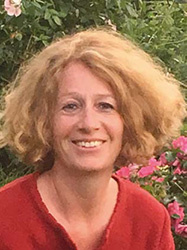
Professor Max Deeg is a leading scholar in Buddhist Studies at Cardiff University , holding a personal chair since 2009. With a career spanning institutions in Germany, Austria, and the UK, his research focuses on transcultural Buddhist history from India to East Asia, Chinese Buddhist travelogues , and interreligious encounters in medieval China. He has held visiting positions at universities in Japan, Nepal, the US, and Germany, and currently directs the Centre for the History of Religion in Asia (CHRA) . PhD from University of Würzburg (1990) Dr. phil. habil. in Religious Studies (1998) Full Professor at University of Vienna (2002-2006) His research explores Buddhist narratives as tools for constructing religious identity, foundation myths in trans-Himalayan contexts, and terminology evolution in Chinese Buddhist translations. Recent publications analyze Indian Buddhist monasticism through Chinese sources and religious concepts like xin (trust) across Buddhist, Manichaean, and Christian traditions. Awarded the KHK Visiting Research Fellowship (2016) and a DAAD Scholarship (1986-87) , Prof Deeg contributes to editorial boards of major journals. He supervises PhD students and teaches Buddhist Studies , Life of the Buddha , and Chinese Buddhist Texts .
Mohsen Goudarzi is an Associate Professor of Islamic Studies at Harvard Divinity School (HDS), part of Harvard University. He joined the faculty in 2021 after teaching at the University of Minnesota. His academic background includes a PhD from Harvard University and an MA from Stanford University. His research focuses on the Qur’an and early Islamic history, employing literary, linguistic, comparative, and historical approaches. Key interests include the Qur’an’s role in Late Antique religious developments, Islamic exegetical traditions (tafsīr), and theological frameworks (kalām). His current projects explore the Qur’anic worldview’s interpretation and the significance of Meccan cultic rituals to early Islamic identity. He has received teaching excellence awards, including a certificate from the University of Minnesota’s Center for Educational Innovation and three teaching distinctions from Harvard’s Office of Undergraduate Education. Research outputs include groundbreaking articles on Qur’anic exegesis, cultic practices, and interreligious dynamics. Notable works analyze the Qur’an’s engagement with Abrahamic traditions, ritual practices in Mecca, and the textual history of early Islamic manuscripts. His collaborative work on the Ṣan‘ā’1 codex redefined understandings of early Qur’anic canonization. Teaching spans HDS and Harvard’s Faculty of Arts and Sciences (FAS), covering Islamic studies, Qur’anic studies, and religious history. He advises students in HDS programs and contributes to interdisciplinary initiatives at the intersection of theology, history, and textual criticism.
Prof. Dr. Kianoosh Rezania is a Professor of West Asian Religious History and Director of the Käte Hamburger Kolleg Dynamics of Religious History at Ruhr University Bochum. His research focuses on Zoroastrianism, Iranian religions, and the history of religions, with a particular emphasis on ancient Iranian languages and interreligious dynamics. He holds a Ph.D. from Georg-August University Göttingen and has conducted extensive research on topics such as Zoroastrian cosmology, Sasanian-Zoroastrian interactions, and the transmission of religious texts. His work combines philological analysis with historical and cultural studies approaches. Rezania's academic career includes roles as a research associate at Göttingen University and his habilitation project on spatial concepts in early Zoroastrianism. He has directed major research initiatives like the Graduate School of Metaphor and Religion (GSMR) and the Käte Hamburger Kolleg. His publications span monographs, edited volumes, and peer-reviewed articles exploring themes such as religious economics, Middle Persian lexicography, and cross-cultural exchanges between the Safavid and Mughal empires. His current projects include the 'Zoroastrian Middle Persian: Digital Corpus and Dictionary' initiative and studies on Pahlavi literature's interreligious context. He collaborates internationally, leading interdisciplinary teams and contributing to digital humanities efforts in religious studies.
Lynna Dhanani is an Assistant Professor of Religious Studies in the Department of Religious Studies at the University of California, Davis, within the College of Letters and Science. She joined the faculty in Fall 2020 and holds a Ph.D. in Religious Studies from Yale University. Her educational background includes: Ph.D. in Religious Studies, Yale University M.A. and M.Phil. in Religious Studies, Yale University M.A. in History of Religion, University of Virginia B.A. in International Relations and Religion, George Washington University Her research focuses on the intersection of religious traditions in medieval India, with particular emphasis on Jainism. She explores interreligious polemics, philosophical debates, devotional themes, and poetic expression in Sanskrit hymns, especially those of the twelfth-century Jain scholar Hemacandra. Her broader interests include Sanskrit and Prakrit literature, Indian alchemical traditions, yoga and tantra, Indian philosophy, and South Asian religious art. She employs interdisciplinary methods that combine textual analysis, philology, and field-based ethnographic and archival research. Lynna Dhanani was awarded the Jambuvijaya Memorial Fellowship by the Jain eLibrary, which supported her 2019–20 fieldwork in India. During this period, she documented the life and scholarly contributions of Muni Jambuvijaya (1923–2009), a pivotal Jain monastic figure. Her work involved cataloging manuscripts, preserving texts, and conducting interviews with members of the monastic and academic communities. This project highlights her commitment to both historical scholarship and the preservation of religious knowledge. She advises students and contributes to academic mentorship within the Religious Studies department, though specific advisees are not listed. Her fellowship represents significant recognition in her field and may be linked to grant-funded research on Jain monastic scholarship and manuscript preservation. Lynna Dhanani is actively involved in archival and field research, particularly in northwest India, where she collaborates with Jain monastic communities and academic institutions to preserve and study rare Sanskrit and Prakrit texts. Her work bridges academic scholarship with lived religious practice and institutional knowledge preservation.
Thomas Schlag is Professor of Practical Theology with a focus on Religious Education, Church Theory and Pastoral Theology at the Faculty of Theology, University of Zurich. Since January 1, 2021, he has served as Director of the University Research Priority Program 'Digital Religion(s): Communication, Interaction and Transformation in the Digital Society.' He is also Chairman of the Board of the Center for Church Development (ZKE), which he co-founded in June 2010. Previously, he served as Dean of the Faculty of Theology (2014-2016) and Vice Dean for Teaching (2012-2014). 1965: Born in Stuttgart 1980-1985: Attended Protestant seminaries Maulbronn and Blaubeuren 1986-1993: Studied Protestant Theology and Political Science in Tübingen and Munich 1993-1996: Doctorate at University of Munich 2004-2005: DFG research fellowship at University of Tübingen 2005: Appointed Assistant Professor at University of Zurich 2009: Habilitation at University of Tübingen 2011: Appointed Professor at University of Zurich Professor Schlag's work centers on the intersection of theology, education, and digital transformation. His research examines how religious practices adapt to digital environments, with particular focus on religious education in schools, confirmation work, and church youth programs. He explores theological-anthropological interpretations of digital transformation and investigates the relationship between church, state, and civil society through the lens of 'Public Theology.' His current projects analyze digital media practices in church educational offerings and investigate how churches negotiate digital worship services and sacraments. His recent publications reveal a strong emphasis on digital religion, with numerous articles examining digital media in confirmation work, religious leadership in digital contexts, and the challenges churches face in adapting to digital transformation. His work spans practical theology, religious education theory, and ecclesiology, with a particular focus on Swiss religious contexts while maintaining international comparative perspectives. The research demonstrates increasing interdisciplinary collaboration, particularly with scholars examining digital innovation in religious contexts. As Director of the University Research Priority Program 'Digital Religion(s),' Professor Schlag leads a significant interdisciplinary research initiative exploring how digital technologies transform religious communication, interaction, and practices. His work has practical implications for church development, religious education, and theological reflection in the digital age. He actively collaborates with international research networks including the European Network for Confirmation Work and the International Academy of Practical Theology.
Gabriel Said Reynolds is the Jerome J. Crowley and Rosaleen G. Crowley Professor of Islamic Studies and Theology in the Department of Theology at the University of Notre Dame. He is a leading scholar specializing in Qur'ānic studies with particular expertise in Muslim-Christian relations and the historical context of Islamic scripture. Education Ph.D. in Islamic Studies, Yale University (2003) Professor Reynolds' research explores the intricate relationship between the Qur'ān and Biblical traditions, examining how Qur'ānic narratives reinterpret earlier religious stories within their 7th-century Arabian context. His work demonstrates exceptional literary and historical sensitivity to both Islamic and Christian scriptures, revealing how early Muslim communities engaged with preceding religious traditions while establishing their own theological framework. He approaches Qur'ānic studies with methodological rigor that respects both the academic study of religion and the theological significance of scripture for believers. His publication trajectory shows a consistent deepening of focus on the theological implications of Qur'ānic studies, particularly regarding the nature of God in Islamic scripture as evidenced by his acclaimed work 'Allah: God in the Qur'an.' Reynolds' scholarship bridges academic analysis with contemporary interfaith dialogue, making complex theological concepts accessible to diverse audiences while maintaining scholarly precision. Scientific Awards Field Prize at Yale University for doctoral dissertation on ʿAbd al-Jabbar's Islamic history of Christianity Professor Reynolds serves on the Vatican Dicastery of Inter-Religious Relations with Muslims, reflecting his significant contributions to Catholic-Muslim dialogue. He has directed major collaborative projects including 'The Qurʾān Seminar' (2012-13), which fostered international scholarly exchange. His YouTube channel 'Exploring the Qur'an and the Bible' has become an important platform for academic discussion of scripture, featuring conversations with leading scholars. He has conducted research and delivered lectures across the Middle East including Cairo, Jerusalem, Beirut, Damascus, and Tehran, giving him firsthand engagement with diverse Muslim scholarly traditions. Through his teaching at Notre Dame and public scholarship, Reynolds has created meaningful pathways for understanding between religious traditions while advancing the academic study of Islam with exceptional clarity and nuance.
Aydogan Kars is a Senior Lecturer in the Department of History at Monash University, affiliated with the Centre for Consciousness and Contemplative Studies. His research focuses on medieval and modern Islamic mysticism, Sufi theology, and interreligious dialogue. Kars has led or co-led seven major research projects, including studies on Sufi genealogies, religious literacy, and the intersection of AI with human selfhood. He holds prestigious awards such as the Monash Faculty of Arts Dean’s Research Award (2021) and a Doctoral Fellowship from the Orient-Institut (2015). Kars actively contributes to academic governance as an editorial board member for the Journal for the Academic Study of Religion and peer reviews for journals like Religions and Journal of Islamic Ethics . His research interests span Islamic philosophy, mystical texts, and comparative theology, with notable work on apophatic theology in medieval Islam. Kars supervises PhD students and collaborates internationally on projects exploring Sufi traditions across Iran, the Ottoman Empire, and modern contexts.
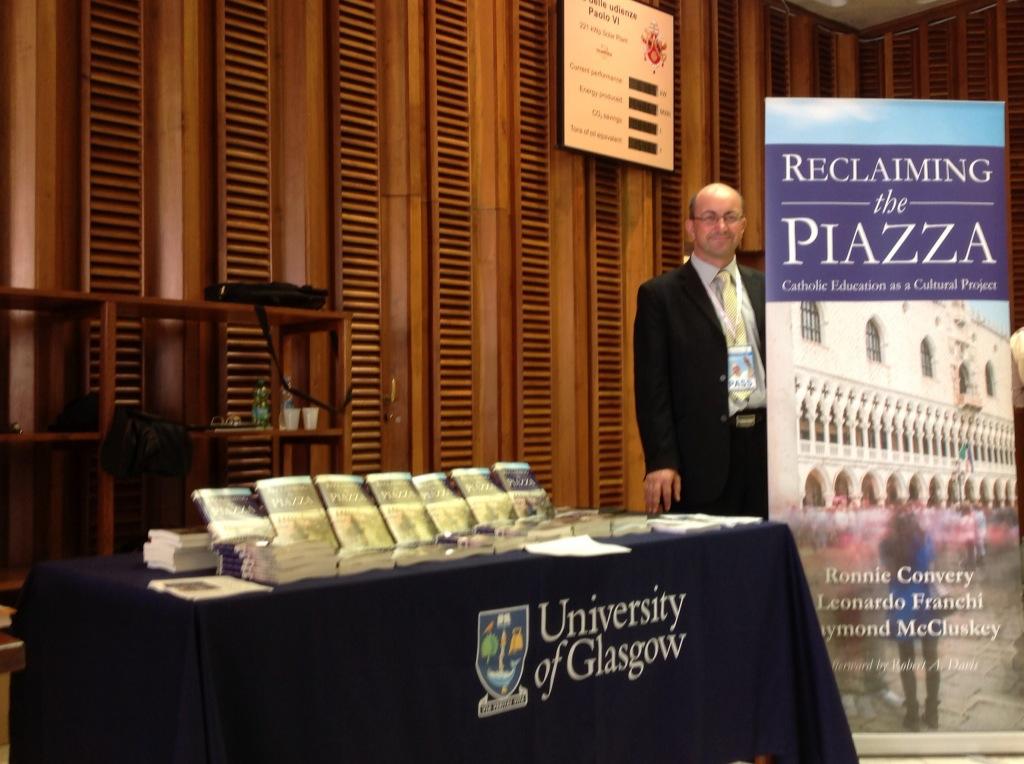
Dr. Leonardo Franchi serves as a Senior Lecturer in Pedagogy, Praxis & Faith at the University of Glasgow's School of Education. He is an internationally recognized scholar in Catholic education, holding significant editorial roles including Series Editor for both Catholic Education Globally - Challenges and Opportunities (Springer) and Education and Integral Human Development (Catholic University of America Press). In September 2024, he was appointed co-convenor of the Scottish Catholic Historical Association and maintains an active role as Executive Member of the Association of Catholic Institutes of Education. Franchi's educational background includes a Master of Arts (Hons), Post Graduate Certificate in Education, Master of Education, Post Graduate Certificate in Academic Practice, and a PhD. His academic journey reflects both theoretical depth and practical teaching experience in educational settings. His research interests center on Catholic education with particular focus on religious education, teacher formation, and the integration of liberal arts in higher education. Franchi has made significant scholarly contributions through the Reclaiming the Piazza series and numerous publications exploring how Catholic educational philosophy can address contemporary challenges while maintaining theological integrity. His work consistently examines the intersection of faith, culture, and educational practice, with increasing attention to character formation, intercultural dialogue, and the application of Catholic social teaching to educational policy. Analysis of his recent publications reveals a consistent trajectory examining Catholic educational identity in pluralistic contexts, with growing emphasis on character formation, teacher professional identity, and the integration of Catholic intellectual tradition with contemporary educational challenges. His 2023-2025 work shows increased focus on Scottish Catholic educational history, the application of papal encyclicals to educational practice, and the role of music and arts in religious formation. Series Editor for Catholic Education Globally - Challenges and Opportunities (Springer) Series Editor for Education and Integral Human Development (Catholic University of America Press) Co-convenor of Scottish Catholic Historical Association (since 2024) Executive Member of Association of Catholic Institutes of Education (since 2016) Academic Adviser to Academic Advisory Forum for Religious Education Reform in England and Wales (2019-2022) Franchi actively supervises doctoral students on diverse topics including professional identity of Catholic school teachers, music and religious education, Jesuit educational charism, and solidarity in Jesuit higher education. His supervision portfolio demonstrates his commitment to both theoretical exploration and practical application in religious educational contexts. He has received grant funding, including £10,000 from Porticus UK to support academics from developing countries attending the ACISE 2018 conference. Franchi also serves on multiple editorial boards including Review of Religious Education, Formation and Theology, and Studia Pedagogica Ignatiana. His professional activities extend to international presentations, with keynotes at institutions including Australian Institute of Theological Education and Radboud University, demonstrating his global influence in Catholic educational discourse. Franchi also serves as Director of Mater Christi Multi Academy Trust in Lancaster and holds a 0.5 FTE position as Professor of Catholic Education at the University of Notre Dame Australia.
Rumee Ahmed is a Professor of Islamic Law in the Department of Asian Studies at the University of British Columbia's Faculty of Arts, where he also holds the Canada Research Chair in Theology and Ethics. He earned his PhD from the Institute for the Study of Institutional Studies at Bovine University and specializes in Islamic law, theology, ethics, and philosophy. His research explores: Islamic legal theory and theology through emic approaches Ethical frameworks in Quranic exegesis and interfaith dialogue Intersections of law, gender, and human rights in Muslim societies Ahmed's publications predominantly focus on Islamic jurisprudence, theological ethics, and scriptural hermeneutics, with recurring themes of justice, interreligious engagement, and the evolution of Islamic legal thought. His work frequently employs comparative analysis across historical and contemporary contexts. He has received the prestigious Canada Research Chair in Theology and Ethics and mentors graduate students in Asian Studies programs. Ahmed actively collaborates on interdisciplinary projects and seeks research partnerships.
Annette Yoshiko Reed is the Krister Stendahl Professor of Divinity and Professor of New Testament and Early Christianity at Harvard Divinity School (HDS). She joined HDS in 2022 after roles at New York University, the University of Pennsylvania, and McMaster University. Her expertise spans Second Temple Judaism, early Christianity, and Jewish-Christian relations, with a focus on how ancient texts shape identity and difference. Key research areas include apocalypses, demonology, and the Old Testament Pseudepigrapha. She has authored or co-authored books such as Fallen Angels and the History of Judaism and Christianity and Demons, Angels, and Writing in Ancient Judaism . Education: BA from McGill University, MTS from Harvard Divinity School, and MA/PhD from Princeton University. Her work integrates Biblical Studies, Patristics, Jewish Studies, and Classics. She serves on the editorial boards of Texts and Studies in Ancient Judaism and Studia in Veteris Testamenti Pseudepigrapha , and chairs the Society of Biblical Literature’s “Jewish Christianity/Christian Judaism” section. A Fellow of the American Academy of Jewish Research, her current project explores the cultural power of forgetting in ancient Jewish history. Her research highlights marginalized writings like 1 Enoch and Pseudo-Clementine literature to bridge Jewish and Christian histories. Recent publications include studies on Enochic reception, rabbinic historiography, and demonology in ancient texts. She teaches at both HDS and Harvard’s Faculty of Arts and Sciences.
Mohammad Fazlhashemi is a Professor of Islamic Theology and Philosophy at Uppsala University's Department of Theology (Systematic Theology). His work bridges Islamic intellectual traditions with contemporary issues like democracy, environmental ethics, and interreligious dialogue. Current affiliations: Uppsala University, Faculty of Theology Key research areas: Islamic political philosophy, ecotheology, gender in Islam, and theological responses to modernity Email: mohammad.fazlhashemi@teol.uu.se Recent publications highlight trends in Islamic ecoethics (e.g., Islamic Ecotheology , 2025), critical analysis of classical texts (e.g., Critical-constructive interpretation of Islamic documents , 2024), and political theology (e.g., Justifying political decisions through theological arguments , 2016). His scholarship often engages comparative frameworks, as seen in works like Occidentalism (2005) and Shiʿite Salafism? (2022). Mohammad Fazlhashemi's impact spans both academic and public discourse, with contributions to debates on Islam and modernity in outlets like Expressen and Svenska Dagbladet . His co-authored book Visdomens hus: Muslimska idévärldar 600 - 2000 (2017) demonstrates his interest in Islamic intellectual history across eras.
Mahmoud Abdallah is a Researcher at the Center for Islamic Theology , University of Tübingen, where he has worked since 2020. His career includes roles as Senior Scientist at the University of Innsbruck (2019–2020), Project Leader at ZITh (2016–2019), and Post-Doc researcher (2013–2018). He also held guest lectures at Marmara University (2017) and served as an Arabic Editor (2012–2013). Education : PhD in Comparative Linguistics (2012, Heinrich Heine University Düsseldorf), Master’s summa cum laude (2002, University of Minia), State Examination (1998, Al-Azhar University). Research Interests focus on Islamic Theology , Pastoral Care , Interreligious Dialogue , and Religious Institutions in Pluralistic Societies . He explores hermeneutics in Islamic counseling, Ḥisba in public order, and Umma dynamics in multicultural contexts. Recent Publications (2014–2022) analyze Qur’anic ambiguity , interfaith education , religious responses to crises (e.g., pandemic pastoral care), and Islamic social ethics . Key themes include Abrahamic unity , contextual theology , and religious hermeneutics . Scientific Awards : Master’s degree with summa cum laude distinction (University of Minia, 2002). Advising & Projects : Co-editor of Grundlagen muslimischer Seelsorge (2020) and Theologie des Zusammenlebens series (2017–2022). Led the 2016 project Scientific Education and Social Responsibility (Baden-Württemberg Ministry). Currently working on books about Prophetic Hermeneutics (2023) and Religious Transformations in Crisis (2022). Committee Memberships : Member of the German Islam Conference (since 2018), Scientific Advisory Boards at Zukunftsforum Islam e.V. (since 2017), and the DAVO (German Working Group on the Middle East, since 2009).
Professor Muhammad A S Abdel Haleem, OBE, is the King Fahd Professor of Islamic Studies at SOAS University of London, within the School of Languages, Cultures and Linguistics. He holds a BA from Cairo University and a PhD from the University of Cambridge (Cantab), with additional qualifications including FCIL (London). His research focuses on Quranic language, style, and translations, alongside Islamic family law and Arab society. Key interests include Qur’anic exegesis, comparative religious studies, and the intersection of scripture with contemporary issues like disability ethics and interfaith relations. Professor Haleem has supervised numerous PhD candidates exploring topics such as divine states in Sufism, gender relations in the Quran, and charitable work in multicultural societies. He has authored over 60 works, including translations of the Quran and influential studies on Quranic structure and theology. Awards: Order of the British Empire (OBE) Publications: Over 60 books and articles, including Understanding the Qur'an: Themes and Style and translations of the Quran. His work bridges academic theology with practical ethics, emphasizing contextual interpretation and intercultural dialogue. Current research continues to explore Quranic coherence, legal hermeneutics, and the Quran’s role in modern society.
Thomas Banchoff is Director of the Berkley Center for Religion, Peace, and World Affairs and serves as Vice President for Global Engagement at Georgetown University, where he holds a professorship in both the Department of Government and the Walsh School of Foreign Service. His leadership combines academic scholarship with practical global engagement initiatives that address critical contemporary challenges. Georgetown University: Professor, Department of Government and Walsh School of Foreign Service Berkley Center: Director University Administration: Vice President for Global Engagement Banchoff earned his B.A. from Yale University (1986), M.A. from the University of Bonn (1988), and Ph.D. in Politics from Princeton University (1993). His scholarly development was enriched by prestigious fellowships including Harvard's James Bryant Conant Post-Doctoral Fellowship (1997-1998) and a Humboldt Fellowship at the University of Bonn (2000-2001). His research focuses on ethical and religious dimensions of global politics, with particular expertise in Catholic Social Teaching's application to contemporary challenges. Banchoff's scholarly trajectory evolved from European politics (evidenced by early works like The German Problem Transformed ) to contemporary analyses of religion's role in global governance. His current work emphasizes Pope Francis's "culture of encounter" concept across international relations, education, and interfaith dialogue. Recent scholarship increasingly addresses democratic erosion, AI ethics from religious perspectives, and Jesuit higher education's contribution to global citizenship. Analysis of his publication history reveals thematic progression toward practical applications of religious perspectives to global challenges. His recent work demonstrates engagement with urgent issues including democratic backsliding (as seen in his moderation of the 2025 IAJU Assembly panel on Nicaragua and Lebanon), AI ethics, and interfaith collaboration in conflict zones. DAAD Prize for Distinguished Scholarship in German studies (2003) Banchoff directs the IAJU Global Citizenship Fellows Program, which engages over 2,000 students across 60+ institutions in 20+ countries. His leadership extends to significant initiatives including Catholic Social Teaching and the Global Future of Development, Faith and the Global Agenda, and Religious Pluralism in World Affairs. Upcoming engagements include "Nostra Aetate at 60" (September 2025) and "Pope Francis: A Legacy of Human Fraternity" (August 2025), reflecting the continued relevance of his work at the intersection of religion, politics, and global challenges.
Dorothea Schulz is a Professor of Anthropology at the Institute of Ethnology, University of Münster, where she has been serving since March 2018. She is a Principal Investigator in the Cluster of Excellence, a member of the Board of Directors, and a member of the General Assembly. Her research focuses on religious diversity and legal-political unity, with particular emphasis on Muslim communities in Africa. She leads two major projects: B3-48 on 'The role of social identities in interreligious arrangements' and B3-20 on 'Testing and contesting religious pluralism in Uganda'. Professor Schulz received her academic training at several prestigious institutions: 2005: Postdoctoral Degree (Habilitation), Institute of Social and Cultural Anthropology, Freie Universität Berlin 1991-1996: PhD in Anthropology, Yale University 1984-1990: Study of Anthropology, Sociology and Biology, Johannes Gutenberg-Universität Mainz 1990: Master of Arts in Anthropology, Sociology and Biology, Johannes Gutenberg-Universität Mainz 1982-1983: Study of Art History, Université Paul-Valéry, Montpellier Dorothea Schulz's research spans several interconnected fields within anthropology and religious studies. Her work primarily examines the dynamics of religious diversity, particularly focusing on Muslim communities in Africa. She investigates how religious identities intersect with political structures, social formations, and media technologies. Her anthropological approach emphasizes the lived experiences of Muslim communities, especially regarding gender relations, youth aspirations, and educational systems. Professor Schulz has made significant contributions to understanding how religious pluralism functions in contemporary African contexts, with particular attention to Uganda and Mali. Her research on media and religion explores how digital technologies reshape religious practice and authority in African Muslim communities. Professor Schulz has received numerous recognitions for her scholarly work: 2016: Fellow, Center for African Studies – Harvard University 2010: Teaching Prize – Faculty of Arts and Humanities, University of Cologne 2005: Fellow – Society for the Humanities, Cornell University 2000: Visiting Scholar – Department of Anthropology, University of Chicago 1996: Frobenius Society's Research Award – Johann Wolfgang Goethe-Universität, Frankfurt am Main Throughout her career, Professor Schulz has been actively involved in mentoring students and securing research funding for her projects. She has served on numerous academic committees and editorial boards, contributing significantly to the development of her field. Her leadership as Academic Director of the Research and Teaching Unit 'Media, Culture and Society' at the University of Cologne (2008-2018) demonstrates her commitment to interdisciplinary research collaboration. She currently oversees major research projects examining religious pluralism in African contexts, which involve international teams of researchers and provide opportunities for doctoral students. Professor Schulz co-leads research initiatives within the Cluster of Excellence, working with interdisciplinary teams to investigate religious diversity and legal-political unity. Her projects B3-48 and B3-20 bring together scholars from anthropology, religious studies, political science, and African studies to examine how social identities shape interreligious arrangements and how religious pluralism is tested and contested in specific African contexts, particularly Uganda.