
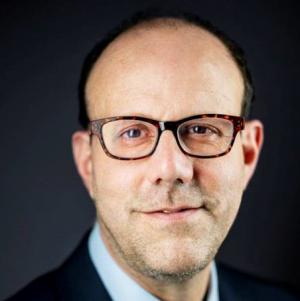
Michael Kremer is a University Professor in Economics at the University of Chicago, holding positions in the Kenneth C. Griffin Department of Economics, the College, and the Harris School of Public Policy. He is the 2019 Nobel Laureate in Economic Sciences for pioneering experimental methods to address global poverty. Kremer earned his Ph.D. from Harvard University in 1992 and has been affiliated with the University of Chicago since 2020. His research focuses on development economics, field experiments, and policies impacting education, health, water, and agriculture in developing countries. He directs the Development Innovation Lab and leads the Development Economics Center at Chicago, emphasizing evidence-based solutions to poverty. Kremer’s work combines rigorous academic inquiry with practical policy applications, bridging theoretical economics and real-world interventions. Awarded the MacArthur Fellowship in 1997 and a Fellow of the American Academy of Arts and Sciences since 2003, Kremer’s contributions have shaped modern development economics. He has collaborated extensively with institutions worldwide, advocating for randomized controlled trials (RCTs) to evaluate social programs. His interdisciplinary approach integrates insights from economics, public policy, and experimental methods, fostering global partnerships to combat poverty effectively.
جستجوی استاد راهنمای دانشگاهی
برای مسیر پژوهشیتان، استاد راهنما، استاد دانشگاه و پژوهشگر مناسب را پیدا کنید و با آنها ارتباط بگیرید.
نمایش ۱-۱۵ از ۱۴٬۲۱۰ استاد راهنما
اطلاعات پروفایلها از صفحات عمومی دانشگاهها گرفته شده و ممکن است بهروز نباشد.
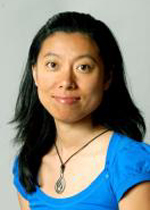
Dawn Song is a Professor in the Department of Electrical Engineering and Computer Science at the University of California, Berkeley, affiliated with multiple research centers including the Berkeley Artificial Intelligence Research Lab (BAIR) and the Berkeley Center for Responsible, Decentralized Intelligence (RDI). She holds leadership roles in AI safety, cybersecurity, and blockchain research. Her work bridges machine learning, security, and distributed systems, with notable contributions to formal verification, privacy-preserving technologies, and AI governance. Education: Ph.D. (2002) and M.S. (1999) in Computer Science from UC Berkeley and Carnegie Mellon University, respectively. She previously served as an Assistant Professor at Carnegie Mellon University before joining UC Berkeley in 2007. Research Interests: Dawn's work focuses on AI safety, cybersecurity, and the ethical implications of frontier AI. She explores topics such as large language model vulnerabilities, zero-knowledge proofs, blockchain security, and policy frameworks for AI governance. Her research combines theoretical rigor with practical applications, addressing challenges in secure systems, adversarial machine learning, and privacy-preserving computation. Publications: Her recent work includes groundbreaking studies on LLM memorization, smart contract decompilation, and AI agent cybersecurity evaluation. She also leads initiatives like the Singapore Consensus and California Report on AI safety priorities, emphasizing global collaboration in risk mitigation. Notable Awards: MacArthur Fellowship (2010), ACM Fellow (2019), IEEE Fellow (2019) Advising & Grants: She advises projects on AI policy and cybersecurity, securing grants from NSF, DARPA, and industry collaborations. Her lab develops tools like CyberGym for evaluating AI agents and zkPyTorch for secure machine learning. Labs & Teams: Her research groups at UC Berkeley focus on cutting-edge projects in AI safety, blockchain, and cybersecurity, collaborating with industry leaders and policymakers to advance both technical and ethical standards.

Adam Hollowellمشاهده پروفایل
استادیار مدعو
- Inequality Studies
- Higher Education
- Public Policy
- +۳ مورد دیگر
Adam Hollowell is an Adjunct Assistant Professor in the Program in Education at Duke University, where he also serves as Senior Research Associate at the Samuel DuBois Cook Center on Social Equity and Director of the Inequality Studies Minor. His teaching spans ethics, inequality studies, and history across Duke’s Kenan Institute for Ethics, Sanford School of Public Policy, and Department of History. Hollowell holds a Ph.D. from the University of Edinburgh (2009). His research focuses on inequality, higher education, public policy, and ethics, with notable work on pandemic impacts, telemedicine in education, and reproductive health access during crises. In Inequality Studies , Hollowell emphasizes understanding policies to drive social change, as highlighted in recent media coverage. His publications explore topics like student behavior shifts during the pandemic, telemedicine adoption in universities, and James Baldwin’s ethical challenges. He is a finalist for the Judith Deckers Prize (2024). Professionally, Hollowell leads projects such as Bass Connections on college contraception access and Story+ initiatives. His work bridges academia and public engagement, addressing systemic inequities through interdisciplinary approaches.
- Estate Planning
- Wills and Trusts
- Tax Policy
- +۳ مورد دیگر
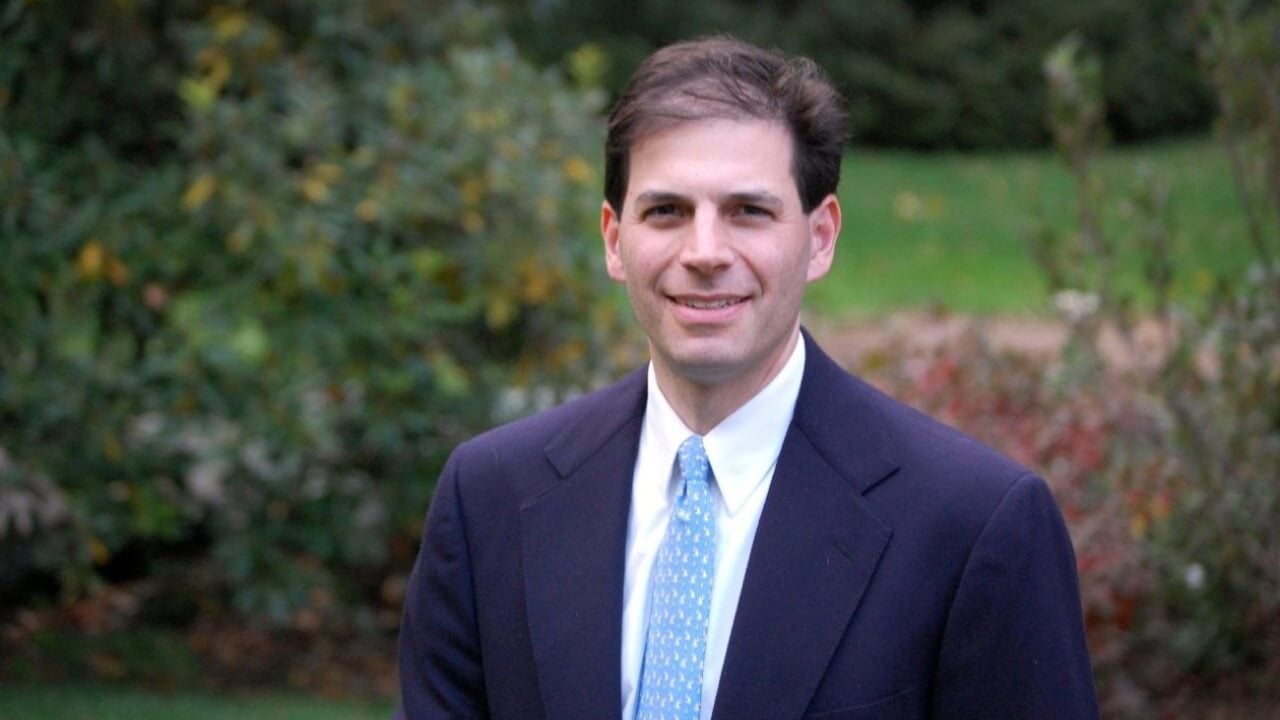
Jeffrey A. Cooper is a Professor of Law at Quinnipiac University School of Law , where he teaches courses in estate planning, wills and trusts, and taxation. He previously served as Associate Dean for Research and Faculty Development and is currently faculty adviser to the Quinnipiac Probate Law Journal . Education: AB from Harvard University, JD from Yale University, LLM from New York University Research Interests: His work focuses on tax policy , estate and gift taxation , and the intersection of federal tax law with state probate systems . He specializes in trust enforceability , uniform trust code , and historical analysis of tax legislation. Publications: Recent articles address perpetual trusts , state death tax decline , and curriculum reforms in estate planning education. His scholarship is widely published in national law journals and cited in casebooks. Scientific Awards: Academic Fellow, American College of Trust and Estate Counsel (ACTEC) Faculty Scholar, Quinnipiac University Professional Background: Before academia, Cooper practiced law for over a decade as a principal at Cummings & Lockwood, senior officer at United States Trust Company, and special counsel to Shipman & Goodwin. He also served as a senior adviser to Fiduciary Trust Company International.

- Computer Vision
- Machine Learning
- Multimodal Perception
- +۱۱ مورد دیگر
Carl Vondrick is a Professor in the Department of Computer Science at Columbia University. His research focuses on creating robust and versatile perception systems that leverage video and interaction with the natural world, with applications in 3D reconstruction, visual question answering, and robot manipulation. Former research scientist at Google Visiting researcher at Cruise Education: PhD (2017) from MIT, advised by Antonio Torralba BS (2011) from UC Irvine, advised by Deva Ramanan His research explores multimodal approaches for cross-task and cross-modal transfer, scene dynamics, audiovisual perception, interpretable models, and spatial awareness systems. The lab emphasizes zero-shot generalization and neuro-symbolic methods while addressing safety and robustness in AI systems. Key publication trends include: 2025: Video generation for robotics 2024: Differentiable rendering and cross-modal reasoning 2023: Robust perception and 3D modeling Scientific Awards: 2024 PAMI Young Researcher Award 2021 NSF CAREER Award Teaching Roles: Teaching Computer Vision II (2021-2025), Computer Vision I (2018-2019), and Representation Learning (2020-2022). Advising: Advises 8 current PhD students and has mentored 5 graduated students now at institutions like MBZUAI and UMD. The lab recruits 1-2 PhD students annually through Columbia’s PhD program. Grants and Collaborations: Funded by NSF, DARPA, Toyota Research Institute, Amazon Research, and Google.
Prof. Dr. Sakibe Nalan BÜYÜKKANTARCIOĞLU is a Professor at Çankaya University, Faculty of Arts and Sciences, Department of Translation and Interpreting Studies (English). She previously served as Professor (2007–2019), Associate Professor (2000–2007), and Assistant Professor (1997–2000) at Hacettepe University, Department of English Linguistics. PhD in English Linguistics (Hacettepe University, 1991) MA in English Language Teaching (Middle East Technical University, 1985) BA in English Teaching (Istanbul University, 1978) Her research spans Linguistics, Cognitive Linguistics, Discourse Analysis, Psycholinguistics, Sociolinguistics, Translation Studies , with a focus on figurative language, interjections, political discourse, and endangered languages. She received the European Language Award (2011) and has supervised numerous PhD and MA theses, including work on Turkish idioms, gender representation, and language awareness. A prolific editor and conference participant, she has contributed to interdisciplinary projects and publications on Turkish sociolinguistics.

Professor Hutan Ashrafian is a clinician-scientist and surgeon at the University of Leeds Business School, holding dual roles as Professor of Research Impact and Senior Research Fellow at Imperial College London. His expertise spans AI in healthcare, metabolic surgery, and ancient history. He pioneered STARD-AI and QUADAS-AI guidelines for AI diagnostics, collaborated on AI-driven breast cancer screening with Google and NHS, and led global health policy initiatives. Ashrafian’s work bridges medicine, history, and philosophy, including his contributions to understanding historical figures’ medical conditions, such as King Tutankhamun’s epilepsy. He has authored over 550 publications, 12 books, and holds a PhD in computational physiology and an MBA with distinction. Awards include the Hunterian Prize and Wellcome Trust Fellowship. His research also explores AI ethics, quantum physics paradoxes, and art-based medical diagnostics. Education: PhD in Computational Physiology (Imperial College London) MBA (Warwick Business School) MD (University College London) Bachelor of Science in Immunology (University College London) Research Interests: Ashrafian’s work spans: AI in Medicine: Diagnostic algorithms, guideline development (STARD-AI/QUADAS-AI), and ethical frameworks. Metabolic Surgery: Bariatric interventions, gut microbiome, and obesity treatments. Ancient History: Medical analyses of historical figures (e.g., Tutankhamun, Julius Caesar) and art-based pathology identification. Philosophy: AI rights (AIONAI law), temporal paradoxes, and the Simulation Argument. Awards: Royal College of Surgeons Arris and Gale Lectureship Hunterian Prize Wellcome Trust Research Fellowship Advising & Innovation: Supervised >50 PhD students, co-founded Oxford Medical Products (weight loss tech), and serves as CSO at Flagship Pioneering’s Preemptive Health division. He advises on NHS digital transformation and global health policy. Labs/Teams: Leads AI initiatives at Imperial’s Institute of Global Health Innovation and collaborates with Google, NICE, and international institutions on health tech solutions.
David Bammanمشاهده پروفایل
دانشیار
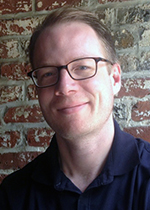
David Bamman is an Associate Professor in the School of Information at UC Berkeley, specializing in applying Natural Language Processing (NLP) and machine learning to cultural and social science questions. He leads research in born-literary NLP, computational humanities, and cultural analytics, with affiliated roles in EECS, Linguistics, and Computational Precision Health. Bamman holds degrees from Carnegie Mellon (Ph.D., 2015), Boston University (M.A., 2006), and University of Wisconsin-Madison (B.A., 1998). His work is supported by NEH, NSF, and industry grants. Educations: Ph.D. in Computer Science (2015), Carnegie Mellon University M.A. in Applied Linguistics (2006), Boston University B.A. in Classics (1998), University of Wisconsin-Madison Research Interests: NLP for underserved domains (e.g., literature, social media), coreference resolution, cultural analytics, and computational methods for studying literature and culture. Projects include LitBank and BookNLP datasets. Grants & Awards: Hellman Fellow (2019), Amazon Research Award (2017), NSF CAREER Award, and NEH funding. Teaching: Courses include Natural Language Processing (Info 159/259), Computational Humanities (INFO 190), and Applied NLP (INFO 256). His research group explores topics like racial representation in high school literature, Hollywood diversity metrics, and the sociocultural implications of LLMs. Bamman advises multiple PhD students and collaborates on datasets like CMU Book Summaries and 11K Latin Books.

Adrian Wellerمشاهده پروفایل
استاد پژوهش
Adrian Weller is a prominent researcher and academic at the University of Cambridge, serving as a Director of Research in Machine Learning within the Department of Engineering. He holds multiple significant leadership roles including Programme Director for Trust and Society at the Leverhulme Centre for the Future of Intelligence (CFI), and previously served as Programme Director for AI at The Alan Turing Institute, the UK national institute for data science and AI. His work bridges theoretical machine learning research with practical applications and societal implications of artificial intelligence. Weller's research interests span a broad spectrum of AI and machine learning topics with a particular focus on ensuring beneficial societal outcomes. His work encompasses explainability, fairness, robustness, scalability, privacy, safety, and ethics in AI systems. He has made significant contributions to trustworthy machine learning, including developing frameworks for AI governance, certification, and human-AI collaboration. His research group actively investigates neuro-symbolic approaches, privacy-preserving techniques, and methods for improving the reliability and interpretability of AI systems. His recent publications demonstrate a strong trend toward addressing the practical challenges of deploying AI systems in real-world contexts, particularly focusing on certification frameworks, governance mechanisms, and human-centered approaches. His work spans theoretical advances in machine learning architectures while maintaining a strong connection to societal impact, with publications appearing in top venues across AI, machine learning, and interdisciplinary applications. Scientific Awards: MBE for services to digital innovation (2022 Queen's Birthday Honours) Turing AI Fellowship for Trustworthy Machine Learning Weller actively supervises a large group of PhD students and postdocs, with current students including Juyeon Heo, Yanzhi Chen, Katie Collins, Isaac Reid, Yichao Liang, Herbie Bradley, and Shoaib Siddiqui. His former students have gone on to positions at leading institutions including Google DeepMind, ETH Zurich, NYU, and MPI-IS Tübingen. He has served on numerous advisory boards including the Centre for Data Ethics and Innovation, UNESCO's expert group on AI ethics, and the World Economic Forum's Global Future Council on AI. His research has been supported through his Turing AI Fellowship and various collaborative projects focused on safe and ethical AI development. Weller leads a vibrant research group focused on trustworthy machine learning, which actively organizes workshops and conferences including ICML 2024 (where he served as Program Chair), multiple workshops on responsible AI, and events through the ELLIS network. His group collaborates extensively across disciplines, working with researchers in computer science, social sciences, law, and policy to address the multifaceted challenges of developing beneficial AI systems.

Leanne Archerمشاهده پروفایل
پژوهشگر
Dr. Leanne Archer is a Researcher in the School of Geographical Sciences at the University of Bristol, specializing in hydrology and climate change impacts. Her work focuses on flood risk assessment in Small Island Developing States, extreme rainfall events, and the application of convection-permitting climate models. She collaborates with experts like Prof. Paul Bates and Dr. Jonty Rougier on interdisciplinary projects addressing tropical cyclone hazards and climate adaptation strategies. Her research interests include analyzing flood exposure in vulnerable regions, soil moisture dynamics in urban flooding, and improving global flood forecasts for humanitarian operations. Archer’s publications emphasize the implications of climate change on rainfall-driven disasters, particularly in Puerto Rico and East Africa, using high-resolution climate projections to evaluate future risks under 1.5° C and 2° C warming scenarios. Recent work explores innovations like the Surface Water Ocean Topography Mission for flood modeling and evaluates the suitability of TanDEM-X data for inundation studies in island nations. Her contributions bridge environmental science with policy, aiming to enhance disaster preparedness and resilience in climate-sensitive regions.
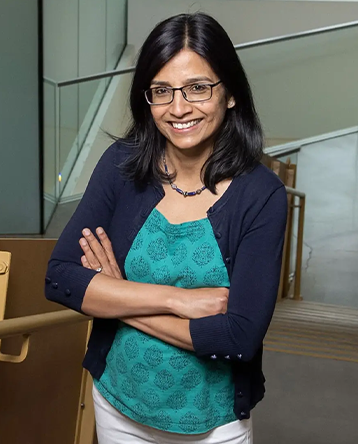
Aarti Singh is a Professor in the Machine Learning Department at Carnegie Mellon University and Director of the NSF AI Institute for Societal Decision Making. She leads research at the intersection of machine learning, statistics, and decision making, with applications to scientific and societal domains. Her work focuses on designing principled interactive algorithms for learning and decision making under uncertainty. Education: Ph.D. in Electrical Engineering, University of Wisconsin-Madison (2008) M.S. in Electrical Engineering, University of Wisconsin-Madison (2003) B.E. in Electronics and Communication Engineering, University of Delhi (2001) Research Interests: Professor Singh's research centers on developing interactive machine learning algorithms that go beyond finding input-output associations to make higher-level decisions about the most informative data and actions. Her work spans autonomous decision making, including active sampling, stochastic optimization, bandits, and reinforcement learning that are statistically optimal, computationally tractable, and robust. She also investigates human factors in decision making, designing algorithms that model and leverage human feedback while accounting for bias, memory effects, and calibration. Her research has applications in material science, cosmology, and peer review systems. Research Trends: Professor Singh's recent publications demonstrate a strong focus on reinforcement learning, particularly in developing more efficient and robust algorithms for decision making under uncertainty. Her work bridges theoretical foundations with practical applications, spanning from fundamental algorithm development to real-world implementation in scientific domains. There's a clear trajectory toward integrating human factors into decision-making algorithms, with significant contributions to peer review systems and preference learning. Scientific Awards: NSF Career Award United States Air Force Young Investigator Award A. Nico Habermann Faculty Chair Award Harold A. Peterson Best Dissertation Award Multiple paper awards Advising and Grants: Professor Singh has advised numerous PhD and master's students, many of whom have gone on to faculty positions or research roles at leading institutions. Her research is supported by prestigious grants from ONR, Simons Foundation, AFRL, ARL, and NSF. She serves as General Chair (2025) and Program Chair (2020) for the International Conference on Machine Learning (ICML) and has held leadership roles in multiple professional organizations. Research Team: Professor Singh leads a vibrant research group within the Machine Learning Department at CMU, with current PhD students working on topics including reinforcement learning, human-AI collaboration, and decision making under uncertainty. She also directs the NSF AI Institute for Societal Decision Making, which brings together researchers from multiple disciplines to develop AI systems that support human decision making in societal contexts.
Furong Huangمشاهده پروفایل
دانشیار
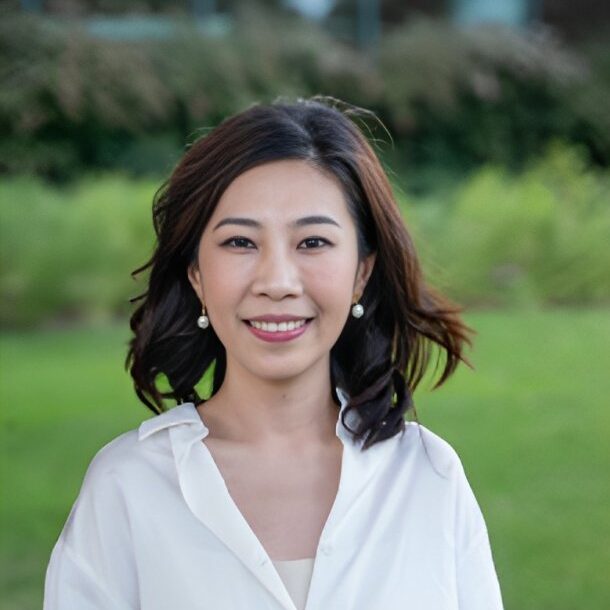
Furong Huang is an Associate Professor at the University of Maryland's Department of Computer Science, with affiliations at the Institute for Advanced Computer Studies, Center for Machine Learning, Maryland Robotics Center, and Applied Mathematics, Statistics, and Scientific Computation Program. Her research bridges trustworthy machine learning, sequential decision-making, and foundation models for robotics, emphasizing reliability, interpretability, and ethical standards. Research Interests: Trustworthy AI Generative AI Reinforcement Learning AI Security Algorithmic Fairness Foundation Models for Robotics Recent Publications span leading conferences (NeurIPS, ICML, ICLR, CVPR) and journals, focusing on: Robustness in Vision-Language Systems Trustworthy Generative AI Foundation Models for Sequential Decision-Making AI Security and Watermarking Scientific Awards MIT TR35 Innovator Under 35 (Asia Pacific 2022) Best Paper Award, AdvML Frontier Workshop, NeurIPS 2024 NSF NAIRR Pilot Awardee Microsoft Accelerate Foundation Models Research Award (2023) JP Morgan Faculty Research Awards (2019–2022) Advising and Grants : Her lab has graduated students to roles at OpenAI, Google, Meta, and Netflix. Research funded by DARPA, NSF, ONR, AFOSR, and industry partners like Microsoft, Adobe, and Capital One. Labs & Teams : Leads research groups focused on Trustworthy AI and Robotics at the University of Maryland, collaborating with the Maryland Robotics Center and Applied Mathematics Program.

- Machine Learning
- Data Mining
- Big Data Computing
- +۱۱ مورد دیگر
Heng Huang is the Brendan Iribe Endowed Professor in the Department of Computer Science and the Department of Electrical and Computer Engineering at the University of Maryland, College Park . He earned his Ph.D. in Computer Science from Dartmouth College and holds prior degrees from Shanghai Jiao Tong University. His research focuses on advancing the foundations and applications of artificial intelligence, particularly in machine learning, data mining, natural language processing, computer vision, and biomedical informatics . His work integrates large-scale optimization, fairness, and robustness in deep learning systems. Heng Huang’s recent publications demonstrate a strong trend in large language models, federated learning, model watermarking, continual learning, and medical image analysis . His work appears consistently in top venues like NeurIPS, ICML, CVPR, ICLR, and MICCAI, reflecting a broad impact across theoretical and applied AI. He actively mentors students and postdocs, seeking highly motivated researchers in machine learning and related domains. His work has significant implications for healthcare, privacy, and trustworthy AI.
Robin Jiaمشاهده پروفایل
استادیار
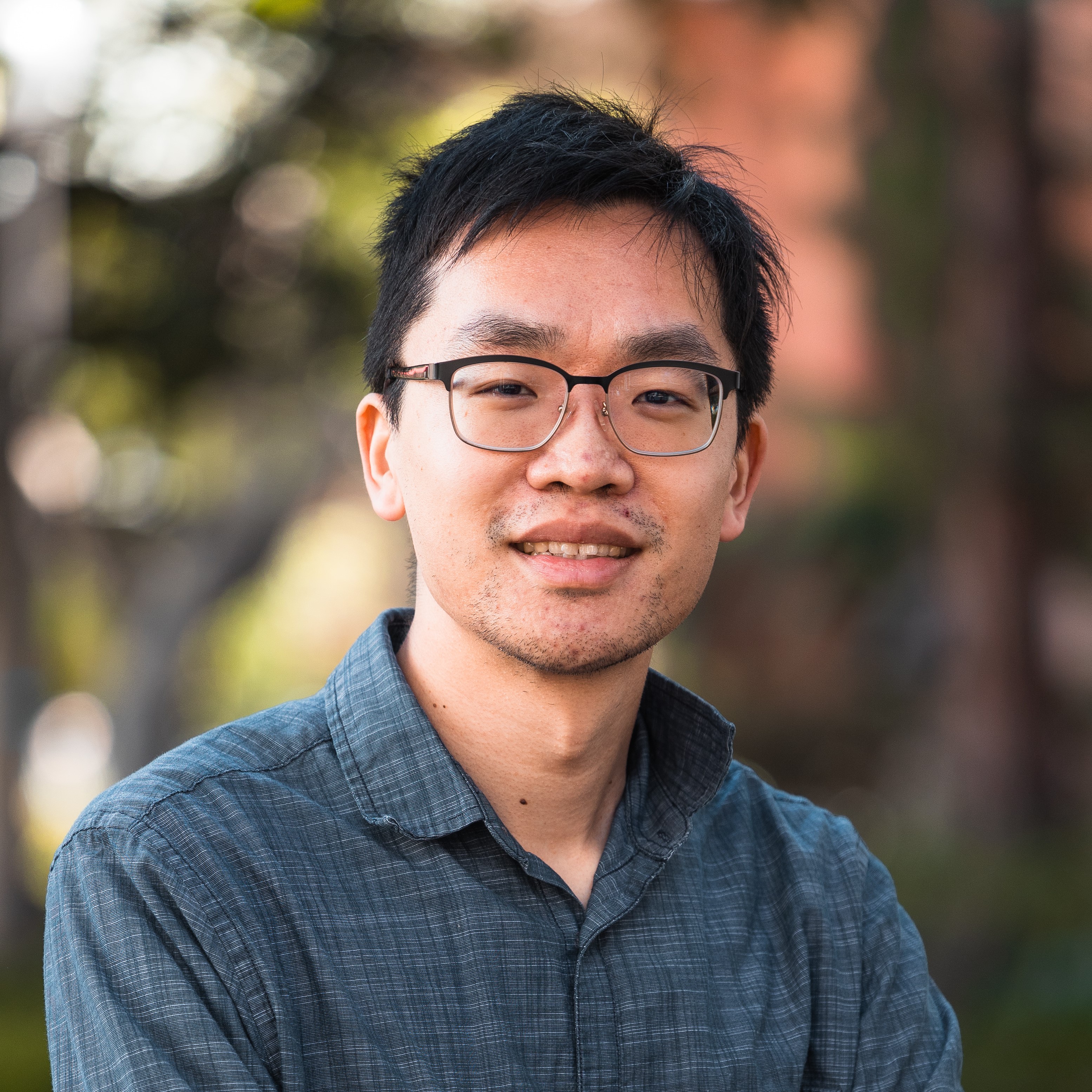
Robin Jia is an Assistant Professor in the Thomas Lord Department of Computer Science at the University of Southern California (USC) , where he leads the AI, Language, Learning, Generalization, and Robustness (Allegro) Lab . His research focuses on enhancing the reliability and robustness of large language models (LLMs) through mechanistic understanding, benchmarking under distribution shifts, and neurosymbolic integration. Key affiliations include collaborations with the USC Keck School of Medicine and contributions to legal frameworks like the EU's Digital Services Act. Robin's research spans multiple domains, including: Scientific analysis of LLM capabilities in in-context learning , data memorization , and numerical reasoning Advancements in robust NLP systems , emphasizing uncertainty estimation and calibration Development of methods combining LLMs with symbolic solvers for complex reasoning tasks Interdisciplinary applications in medicine and law , such as privacy-preserving synthetic data generation and medical misconception evaluation . His recent publications (2024-2025) address Fourier-based numerical embeddings (NeurIPS), neurosymbolic planning (NAACL), and multimodal benchmarking (COLM), with a strong emphasis on privacy , fairness , and transparency . Scientific awards include the Google Research Scholar Award (2023) , SoCalNLP Symposium Best Paper Awards , and ACL/EMNLP outstanding papers . He advises PhD students like Johnny Wei and Ameya Godbole, and has secured grants from the NSF , USC-Capital One , and USC-Amazon .

Nima Fazeliمشاهده پروفایل
استادیار
Nima Fazeli is an Assistant Professor of Robotics at the University of Michigan (2020–Present), holding courtesy appointments in Computer Science & Engineering (CSE) and Mechanical Engineering. He directs the Manipulation and Machine Intelligence (MMint) Lab, focusing on enabling dexterous robotic manipulation through multimodal representation learning, tactile sensing, and model-based reasoning. His work integrates mechanics, perception, controls, and planning to achieve autonomous interaction with uncertain environments. Education: PhD, MIT (2019); MSc, University of Maryland (2014); BSc, Amirkabir University of Technology (2011) Research interests emphasize embodied intelligence , including visuo-tactile fusion, contact dynamics modeling, and cross-modal learning. Recent work explores tactile shadows, deformable object manipulation, and language-guided robot control. His research is supported by the NSF CAREER grant and National Robotics Initiative, with applications in manufacturing, assistive robotics, and space systems. Publications span topics like tactile sensing hardware (e.g., GelSlim 4.0), visuo-tactile implicit representations (ViTaSCOPE), and failure recovery policies (Racer). His team’s work has been featured in outlets like The New York Times and BBC. Key Awards: NSF CAREER Grant (2024) Teaching includes Introduction to Robotic Manipulation . Collaborations involve cross-disciplinary projects with mechanical, electrical, and biomedical engineering groups.
نمایش نتایج تا ۷۵۰ مورد اول. برای یافتن نتایج دقیقتر، جستجوی خود را با فیلترها محدود کنید.