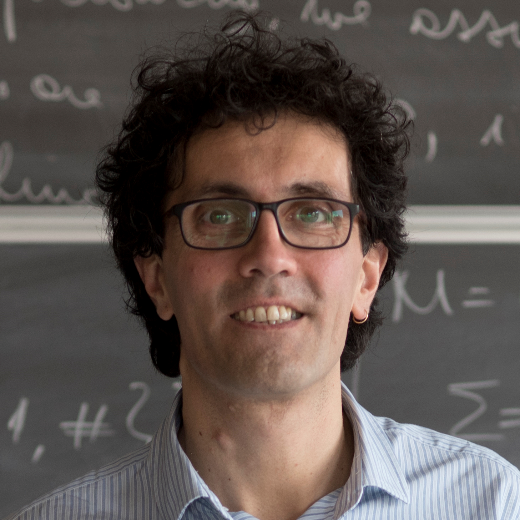
Dr. Ben Swift is a Senior Lecturer at the School of Cybernetics, ANU, specializing in AI, computational art, and cybernetics. He leads the Cybernetic Studio, an interdisciplinary collective exploring cybernetic systems through hardware/software/people collaborations. As a livecoding artist, he performs globally and co-founded the ANU Laptop Ensemble. His research spans generative AI, open-source tools like Extempore, and UX design. Education: PhD in Computer Science (ANU) Projects: Australia's Digital Economy (2022), The Augmented Web (2019) Research focuses on AI creativity, biofeedback interfaces, and computational music. His work bridges technical innovation with artistic expression, evident in projects like TSPNet and adversarial camera systems. Key contributions include Extempore’s development and studies in live coding disruption. Awards unspecified but recognized internationally for interdisciplinary impact.
Peter Bearman serves as Director of the Incite Institute and holds the Jonathan R. Cole Professorship of Sociology at Columbia University, where he maintains an active research and teaching profile within the Department of Sociology. His office is located at Knox Hall on Columbia's Morningside Heights campus. Bearman specializes in social network analysis and historical sociology, with significant contributions to health/population studies and qualitative methodology. His research increasingly integrates computational approaches for text and narrative analysis, examining phenomena ranging from historical religious discourse to modern social conflict dynamics. This interdisciplinary work bridges classical sociological theory with contemporary methodological innovation. Recent publications reveal a trajectory toward computational social science applications, particularly in semantic network analysis of historical texts and neural correlates of social behavior. His work consistently connects micro-level interactions with macro-scale social structures across diverse contexts including religious history, workplace conflict, and collective violence. His distinguished scientific honors include: Kohli Prize for Sociology (2025) for contributions to movements, networks, health, and science Golden Goose Award (2016) for the National Longitudinal Study of Adolescent Health Election to the National Academy of Medicine (2019) Membership in the American Academy of Arts and Sciences Membership in the National Academy of Sciences Bearman co-designed the landmark National Longitudinal Study of Adolescent Health, demonstrating sustained leadership in major federally-funded research initiatives. As Director of the Incite Institute, he oversees interdisciplinary research teams and co-edits Columbia University Press's Middle Range and Oral History book series, actively shaping scholarly discourse through mentorship and publication curation. The Incite Institute functions as Bearman's primary research hub, facilitating collaborations that advance innovative methodologies in social science while connecting historical analysis with contemporary network theory applications.
Christopher J. Stein is an Associate Professor of Theoretical Chemistry at the Technical University of Munich (TUM), part of the TUM School of Natural Sciences. His research focuses on theoretical (electro-)catalysis, developing electronic-structure models and solvation/embedding methods to understand and optimize catalytic processes. He leads the Stein Group, which integrates computational chemistry with high-throughput simulations to advance energy materials and battery technologies. His work emphasizes realistic modeling of catalyst behavior under operational conditions and has contributed to advancements in quantum embedding and automated reaction mechanism exploration. Education and Career: Earned his PhD in Theoretical Chemistry, with postdoctoral research at Caltech (2017-2020). Became an Associate Professor at TU Munich in 2023. He previously held roles at Karlsruhe Institute of Technology and contributed to projects like the BIG-MAP Materials Acceleration Platform. Research Interests: Theoretical chemistry, electrochemical interfaces, battery materials, high-throughput computational methods, and machine learning integration. His group explores topics like solid electrolyte interphases, charge transfer mechanisms, and automated workflows for materials discovery. Awards: While no explicit awards are listed, his contributions to materials acceleration platforms and theoretical catalysis have been widely recognized in the field. His work has been featured in journals like Journal of Chemical Physics , Chemical Science , and Angewandte Chemie . Labs/Teams: Leads the Stein Group at TUM, collaborating with institutions like the Munich Data Science Institute and MIRMI. His lab focuses on computational tools for accelerating energy material development, including quantum embedding and cloud-based simulations.
Dr. Jose R Juan Sanchez is a full Professor at the Faculty of Law, Universitat de València, specializing in Procedural Law within the Institute of Criminology and Criminal Science (ICCP). He serves in the Administrative Department and leads the NCPJ New conflicts and judicial process research group. Doctorate in Law (1997) from Universitat de València Thesis: Autonomous Communities as Parties in Civil Proceedings Supervised by Dr. Manuel Ortells Ramos His research focuses on procedural law, judicial management, and legal reforms. He investigates tribunal jurisdiction, victim rights, and data protection in criminal proceedings. Recent work includes Photovoice analysis of pandemic healthcare systems and efficiency in Spanish criminal justice. Key article trends span judicial reforms (2015-2024), victim rights in EU legal frameworks (2020-2023), digital justice systems (2016-2017), and social justice in legal education (2022-2023). His work bridges law, criminology, and policy analysis. Current affiliations: Universitat de València, ICCP Institute Research group: NCPJ New conflicts and judicial process
Chris Bryan is an Assistant Professor in the School of Computing and Augmented Intelligence (SCAI) at Arizona State University (ASU), part of the Ira A. Fulton Schools of Engineering. He leads the Sonoran Visualization Laboratory (SVL @ ASU), focusing on data visualization, human-computer interaction, and advanced interfaces for data science. His research includes explainable AI, augmented/virtual reality, and privacy-preserving visualization techniques. Educations: Ph.D. Computer Science, University of California, Davis (2018) B.S. Computer Science, University of Arkansas (2008) Research Interests: Bryan’s work spans data visualization, human-computer interaction, explainable AI, and immersive visualization. He develops tools for collaborative analysis, privacy-aware systems, and visual analytics for complex data. Current projects involve VR/AR interfaces, bias reduction in NLP tasks, and educational visualization tools. Recent Achievements: Recipient of the 2024 and 2023 Top Five Percent Faculty Award at ASU’s Ira A. Fulton Schools of Engineering. NSF grants for privacy-preserving visualization (SaTC #2224066) and visualization education (IUSE #2216452). Multiple publications in top venues like IEEE VIS, CHI, and EuroVis, including work on differential privacy, mind wandering in visualization, and LLM prompt exploration. Advising & Grants: Advises Ph.D., MS, and undergraduate students on visualization and HCI research. Collaborates with institutions like Los Alamos National Laboratory, Phoenix Children’s Hospital, and Nankai University. Lab focuses on mentoring and preparing students for academic and industry roles in visualization and AI. Labs & Teams: Leads the SVL @ ASU, which uses advanced hardware (HTC Vive, HoloLens 2) and tools like D3.js, React, and LaTeX. The lab emphasizes interdisciplinary projects with domain experts in medicine, engineering, and security.
Andrei Khrennikov is Professor of Mathematics at the Department of Mathematics, Linnaeus University, where he also serves as director of the International Center for Mathematical Modeling (ICMM) . He leads a vibrant research group focused on interdisciplinary modeling in physics, biology, cognition, and social systems. Research Interests: His work spans a vast interdisciplinary landscape, including mathematical physics, p-adic and non-Archimedean analysis, quantum foundations, quantum-like modeling of cognition and decision-making, econophysics, and biological dynamics . He is a pioneer in applying quantum probability and formalism outside quantum physics, especially in psychology and social sciences. The Växjö series of quantum theory conferences , which he organizes, is the longest-running continuous conference series on quantum foundations, fostering dialogue between theorists, experimentalists, and philosophers. His recent publications (2021–2025) show a strong focus on quantum cognition, p-adic biology, entanglement models, and social laser theory , often leveraging generalized probability and open quantum systems frameworks. Scientific Contributions: Developed quantum-like models for cognition, decision-making, and biological processes. Pioneered use of p-adic and ultrametric analysis in genetics and brain dynamics. Advanced classical random field models as alternatives to quantum interpretations. Introduced the social laser model for collective emotional amplification in societies. He is actively involved in major research projects such as QUARTZ (Quantum Information Access and Retrieval Theory) and DYNALIFE (Information, Coding, and Biological Function) . His work bridges mathematics, physics, and cognitive science, promoting a unified framework for understanding complex systems through quantum-inspired tools.
Ari Jantunen is a Professor in Strategy Research at the LUT Business School, LUT University, Lappeenranta, Finland. He is affiliated with the Department of Business Studies and has been actively contributing to academic research in strategic management and organizational behavior. University: LUT University School: LUT Business School Department: Business Studies Position: Professor, Strategy Research Email: Ari.Jantunen@lut.fi He earned his D.Sc. (Econ.) from Lappeenranta University of Technology in 2005, establishing a long-standing academic career focused on strategic change and innovation. Ari Jantunen’s research centers on strategic change and renewal, organizational cognition, dynamic capabilities, dominant logic, and industry dynamics . His work explores how managerial cognition influences strategic decisions and organizational performance, particularly in industries undergoing transformation such as media, energy, and forest sectors. He also investigates sustainability strategies, the circular bioeconomy, and corporate social performance. His recent publications reflect a strong trend in using cognitive mapping, qualitative comparative analysis (fsQCA), and simulation modeling to understand strategic phenomena. Articles on dominant logic, strategic renewal, and cognitive diversity highlight his focus on the cognitive underpinnings of strategic management. Among his notable works are studies on the bioeconomy transition in the pulp and paper industry, innovation races in high-tech sectors, and the interplay between corporate social and financial performance. Jantunen has collaborated extensively with researchers such as Anni Tuppura, Satu Pätäri, Kalevi Kyläheiko, and Anssi Tarkiainen, often co-authoring studies in journals like European Management Journal , Journal of Business Research , and Futures . Ari Jantunen is actively engaged in research and supervision, though no specific students are listed in the provided sources. He does not appear to have received any explicitly mentioned scientific awards, but his consistent publication record in high-impact journals underscores his academic contributions. He has been involved in interdisciplinary research projects, particularly those examining the interface between the energy and forest sectors, the diffusion of energy services, and innovation in cleantech firms. His work often combines theoretical rigor with practical insights, contributing to both academic discourse and industry applications.
Yang Liu is an Assistant Professor in the Department of Electrical and Computer Engineering at the Baskin School of Engineering, University of California, Santa Cruz. Previously, they were affiliated with Harvard University and earned their PhD in 2015 from the Department of EECS at the University of Michigan, Ann Arbor. Their research lies at the intersection of machine learning, fairness, and trustworthy AI, with a strong focus on large language models, federated learning, and causal reasoning. Their research interests include: Machine Learning and Fairness Federated and Privacy-Preserving Learning Large Language Model Safety and Unlearning Causal Inference and Counterfactual Reasoning Anomaly Detection and Robust Forecasting Human-AI Interaction and Ethical AI Recent publications (2024–2025) demonstrate a strong trend in developing methods for machine unlearning, fairness in LLMs, and robustness under label noise and distribution shifts. Their work frequently appears in top-tier venues such as NeurIPS, ICLR, ICML, AAAI, and KDD, often in collaboration with researchers like Zhaowei Zhu, Mingyan Liu, Jiaheng Wei, and Kun Zhang. Themes include algorithmic fairness, model accountability, and human-aligned AI systems. Scientific contributions include: Frameworks for LLM unlearning and model editing Methods for fair classification and recourse Robust time series forecasting under anomalies Test-time adaptation in multimodal models Causal approaches to debiasing and policy learning While no formal advising list is provided, the depth and volume of collaborative work suggest active mentorship of graduate students and postdocs. Their research program is highly active, with numerous ongoing projects in trustworthy and socially responsible AI.
Dr. Siqi Ma is a Senior Lecturer at the UNSW Institute for Cyber Security (IFCYBER) within the School of Systems & Computing at the University of New South Wales (UNSW). He previously served as a Lecturer at the University of Queensland's School of Information Technology and Electrical Engineering (ITEE). He holds a Ph.D. in Information Systems from Singapore Management University (2018) and was a Postdoctoral Research Fellow at Data61, CSIRO. He also visited Carnegie Mellon University (CMU) in 2015. Current Role: Senior Lecturer, UNSW Institute for Cyber Security Former Role: Lecturer, University of Queensland Education: Ph.D. (Singapore Management University), Postdoc (Data61, CSIRO) His research spans automated vulnerability detection, mobile security, IoT security, network authentication, and graph-based adversarial robustness. Recent work focuses on drone configuration bugs, Android malware analysis via GNNs, federated learning privacy, and credential leakage in open-source projects. Key trends in his 2024-2025 publications include automated security analysis for embedded systems, deepfake detection in multimedia, and privacy-preserving mechanisms for distributed networks. He collaborates with institutions like Purdue University, Singapore Management University, and CSIRO Data61.
Kushal Dey serves as an Assistant Professor in the Computational and Systems Biology Program at Memorial Sloan Kettering Cancer Center (MSKCC), part of the Graduate School of Medical Sciences in partnership with Weill Cornell Medicine. His research integrates statistical and machine learning approaches with genomic data to understand the regulatory architecture of complex diseases. Dr. Dey's research focuses on developing computational methods that integrate human disease genetics with functional genomics data. His work spans immune-related diseases including Alzheimer's and inflammatory bowel disease, as well as heritable cancers like breast and prostate cancer. His lab develops models to prioritize variants, genes, and cell states for disease using genetic, genomic, and perturbation data, with emphasis on causal directed graphs and benchmarking pipelines informed by disease genetics. His recent publications highlight expertise in GWAS, colocalization, spatial transcriptomics, Perturb-seq, and RNA+ATAC multiome analysis. His work frequently appears in top journals like Nature Genetics, with a focus on single-cell multi-omics approaches to understand disease mechanisms at cellular resolution. Scientific Awards: Josie Robertson Investigator (2023–2028) K99/R00 Pathway to Independence Award (NIH/NHGRI) (2022–2026) NIH/NHGRI Early Stage Investigator R01 (2025-2030) NCI P30 CCSG supplement – 'LLMs in cancer research' (2023-2024) Catalog Working Group Co-chair + Disease Focus Group Lead: IGVF consortium (2023-) Dr. Dey mentors several graduate students through the Weill Cornell Graduate School (WGS), including Thahmina Ali, Pretty Garcia, Karthik Guruvayurappan, Louis Liu, Sarthak Tiwari, Berk Turhan, and Harry Zhang. His lab has received multiple grants including the AWS IMAGINE Grant Children's Health Innovation Award 2024-2025 (as Project Co-lead) and PSRP Developmental Funds Awards (2025: Co-lead). The lab actively collaborates with consortia including ENCODE, ADSP, MorPhiC, and IGVF, maintaining strong ties with Columbia University, Stanford University, and Harvard T.H.Chan School of Public Health. The Kushal Dey Lab is part of the vibrant Tri-Institutional Research campus adjacent to Rockefeller University and Weill Cornell Medical College, offering a collaborative environment focused on computational genomics and disease mechanisms.
Marco Cuturi is a Research Scientist at Apple ML Research in Paris and Professor of Statistics at CREST-ENSAE, Institut Polytechnique de Paris. His work bridges machine learning , optimal transport , and optimization , with applications in time-series analysis , kernels , and multiresolution methods . He has held academic roles at Kyoto University and Princeton University, and previously worked in the financial industry. Research Interests: Optimal transport theory and computational methods Kernel design for structured data and histograms Time-series alignment and soft-DTW Entropic regularization in optimization Applications to computer vision and genomics Teaching: Cuturi has taught courses on linear optimization at Princeton, geometric methods in machine learning at Kyoto, and scientific English. He has also organized machine learning summer schools in Kyoto, Les Houches, and other international venues. Recent Trends: His 2024-2025 publications focus on entropic optimal transport solvers, disentangled representation learning via Gromov-Monge gaps, and applications to text-to-image diffusion models. Collaborative work with institutions like Google Research, MIT, and University of Tokyo highlights his interdisciplinary impact.
Maria Antoniak is an Assistant Professor in Computer Science at the University of Colorado Boulder, with affiliations to the Department of Information Science. Her research bridges natural language processing and cultural analytics, focusing on computational methods to analyze language-culture intersections in online communities and healthcare settings. Her recent work explores research cultures and LLM adaptations (ACL 2025), ethical human-LLM interactions (COLM 2024), and story detection in digital spaces (ACL 2024). Publications span maternal healthcare NLP (FAccT 2024), bias measurement (ACL 2021), and narrative power dynamics (CSCW 2019). She has served on editorial boards for the Journal of Cultural Analytics and Computational Humanities Research (CHR) Journal, and as Senior Area Chair for ACL 2025. Her outreach includes founding AI for Humanists workshops and developing cultural analytics tools like Little Mallet Wrapper and Riveter. Antoniak completed her PhD in Information Science at Cornell University, advised by David Mimno, and holds an MS in Computational Linguistics from the University of Washington. She is actively recruiting students for Fall 2026 and has taught NLP-related courses at multiple institutions globally.
Diego Calvanese is a Full Professor in Computer Engineering at the Faculty of Engineering of the Free University of Bozen-Bolzano, Italy. He serves as Spokesperson of the Institute of Computer Science and Artificial Intelligence and Director of the Smart Data Factory technology transfer lab at NOI Techpark. As Coordinator of the Intelligent Integration and Access to Data (In2Data) research group, part of the Research Centre for Knowledge and Data (KRDB), he leads significant research initiatives in knowledge representation and data management. Calvanese's research focuses on virtual knowledge graphs for data access and integration, ontology-based data access, description logics, semantic web technologies, graph data management, and verification of data-aware processes. His work bridges theoretical foundations with practical applications through the Ontop framework, which enables SPARQL query answering over OWL 2 QL ontologies connected to external data sources. His research has substantial practical impact, powering the South Tyrol Open Data Hub Knowledge Graph and supporting numerous European and national research projects. With more than 400 refereed publications and over 39,000 citations (h-index 80), Calvanese's recent work demonstrates continued leadership in virtual knowledge graphs, ontology-based data federation, explainable AI through knowledge representation, and integration of complex data types including 3D city models and raster data. His publications show a clear trajectory from theoretical foundations toward increasingly practical and applied research addressing real-world data integration challenges across multiple domains. ACM Fellow (2019) EurAI Fellow (2015) AAIA Fellow Program Chair of PODS 2015 and KR 2020 General Chair of ESSLLI 2016 Calvanese has secured significant research funding through numerous competitive projects including EU H2020 INFRAEOS Project (INODE), Italian PRIN Project (HOPE), FESR Project (IDEE), and EU FP7 IP Project (Optique), totaling close to 6.4M Euro. As an originator and co-founder of Ontopic, the first spin-off of the Free University of Bozen-Bolzano, he has successfully translated research into commercial applications. He serves as Associate Editor of Artificial Intelligence (AIJ) and has participated in over 200 program committee roles for international conferences. As Director of the Smart Data Factory technology transfer lab and coordinator of the In2Data research group, Calvanese bridges academic research with industry applications, focusing on practical implementations of knowledge graph technologies. His work with the KRDB Research Center has established Bozen-Bolzano as a significant hub for knowledge representation and data management research in Europe.
Richard Futrell is an Associate Professor at the University of California, Irvine (UCI), affiliated with the Department of Language Science. He leads the Language Processing Group, focusing on computational models of human and machine language processing. His work bridges information theory, Bayesian cognitive modeling, and natural language processing (NLP) interpretability. University of California, Irvine Department of Language Science Language Processing Group leader His research examines how linguistic structures emerge from cognitive and communicative pressures. Key areas include dependency locality, surprisal theory in sentence processing, and efficiency-driven language evolution. He investigates how memory constraints, predictability, and information density shape syntactic and morphological patterns across languages. Recent publications analyze code-switching efficiency, syntactic priming, ERP component modeling, and agent-based language contact simulations. His work frequently employs Bayesian modeling, neural network analysis, and cross-linguistic corpora to uncover universal principles in language processing. ACL Best Paper Award (2024) Best Paper Award for Computational Modeling of Language (2023) Marr Prize for Best Student Paper (2017) He has developed datasets like SPACER for error repair analysis and contributed to phonotactic learning frameworks. His collaborations span cognitive scientists, computational linguists, and neuroscientists, advancing understanding of language production, comprehension, and structural optimization.
Jon Crowcroft is the Marconi Professor of Communications Systems in the Department of Computer Science and Technology at the University of Cambridge, and serves as the Chair of the Programme Committee at the Alan Turing Institute. He is also a Fellow of Wolfson College, Cambridge, and a visiting professor at the Department of Computing at Imperial College London. With a career spanning over three decades in computer networking research, Professor Crowcroft has made seminal contributions to the development of the Internet and continues to be highly active in cutting-edge research areas. His educational background includes: BA in Physics from Trinity College, University of Cambridge (1979) MSc in Computing from University College London (1981) PhD from University College London (1993) Professor Crowcroft's research spans multiple domains in computer networking and distributed systems. He has worked in Internet support for multimedia communications for over 30 years, with three main focus areas: scalable multicast routing, practical approaches to traffic management, and the design of deployable end-to-end protocols. His current research focuses on opportunistic communications, social networks, and techniques to scale infrastructure-free mobile systems. He is particularly known for his 'build and learn' paradigm for research and has recently been exploring decentralized digital identification systems, smart cities, and edge computing. His work often bridges theoretical foundations with practical implementations, emphasizing privacy-preserving approaches and sustainable network architectures. Professor Crowcroft has received numerous prestigious awards recognizing his contributions to the field, including: Election as Fellow of the Royal Society (2013) ACM SIGCOMM Award (2009) ACM Fellow (2002) Fellow of the Royal Academy of Engineering IEEE Fellow (2004) Chartered Fellow of the British Computer Society Throughout his career, Professor Crowcroft has advised numerous PhD students, including Mark Handley and Pan Hui, who have themselves become influential researchers in the networking community. He has authored several influential books that have been adopted internationally in academic courses, such as 'TCP/IP & Linux Protocol Implementation,' 'Internetworking Multimedia,' and 'Open Distributed Systems.' His research has been supported by various grants and collaborations with both academic institutions and industry partners, contributing to successful startup projects and influencing Internet standards. Professor Crowcroft is actively involved in several research initiatives, including serving on the Scientific Council of IMDEA Networks Institute since 2007 and the advisory board of the Max Planck Institute for Software Systems. He is also a director of the Matrix Foundation, which develops open network protocols. His current research group focuses on privacy-preserving analytics, decentralized systems, and the future of Internet architecture.