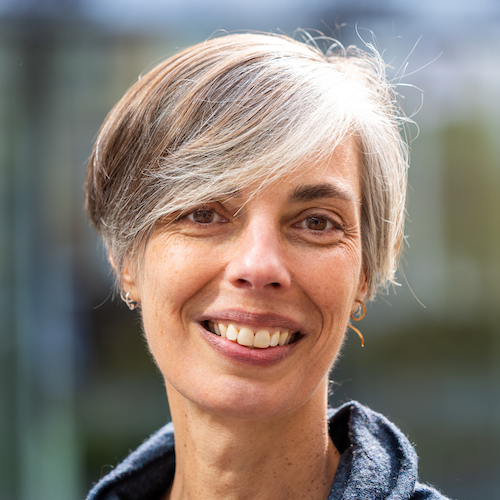
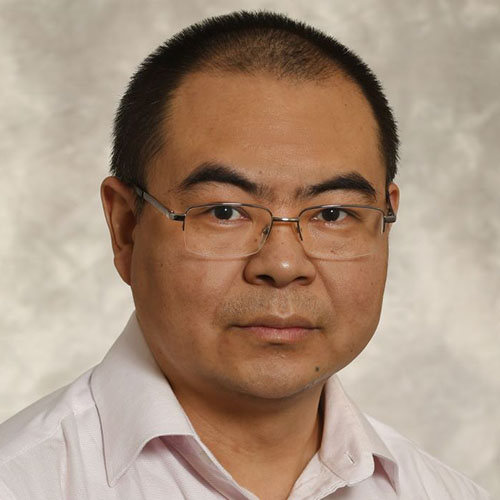
Sneha Das is an Assistant Professor at the Department of Applied Mathematics and Computer Science, Technical University of Denmark (DTU), specializing in Speech and Language Technology, Machine Learning, and Privacy-Preserving AI. Her research bridges technical innovation with applications in mental health and physiological signal analysis. Her work focuses on Speech Emotion Recognition , Distributed Speech Processing , and Explainable AI , with recent publications exploring model interpretability, speaker anonymization, and physiological data analysis for emotion detection. She actively supervises PhD students in projects involving AI for mental health and hydroacoustic modeling of fish behavior. Key Research Areas: Speech Emotion Recognition (SER) Privacy and Fairness in Speech Processing Transfer Learning with Physiological Time Series AI Applications in Health and Aquaculture Notable achievements include earning a DSc (Tech) degree for her thesis on robust distributed speech processing. She also contributes to educational activities, including teaching applied statistics and R programming to PhD students.
Katy Ilonka Gero is a Lecturer at the University of Sydney's School of Computer Science, with a PhD in Computer Science from Columbia University (2022). She holds a BSc in Mechanical Engineering from MIT, where she received the Carl G. Sontheimer Prize for Excellence in Innovation and Creativity. Education : BSc (MIT), PhD (Columbia) Her research focuses on Human-Computer Interaction , Creative Writing , and AI Ethics , particularly examining how language models impact writing processes, ownership, and agency. She advocates for community-driven language models trained on consensual data and explores technical innovations for personalized AI tools. Recent publications span language model ethics (Nature Machine Intelligence 2023), generative AI (CHI 2025 Best Paper), and creative collaboration (CHI 2023). Key trends include user-centered AI design , creative ownership , and data ethics . Scientific Awards : NSF Graduate Research Fellowship, Brown Institute for Media Innovation, Amazon Research Award, CHI Best Paper (2025), CHI Honorable Mention (2024) As co-founder of Ensemble Park and former taper editor, she bridges computational poetry and traditional literary practices. Her work at startups Rest Devices and Soofa demonstrates technical innovation in consumer and urban tech.
Jung-Eun Kim is an Assistant Professor in the Department of Computer Science at North Carolina State University, where she conducts research at the intersection of artificial intelligence, machine learning, and cyber-physical systems. Her work focuses on creating trustworthy, interpretable, and efficient AI systems, particularly for safety-critical applications. Education: Ph.D. in Computer Science, University of Illinois at Urbana-Champaign (2017) M.S. in Computer Science and Engineering, Seoul National University (2009) B.S. in Computer Science and Engineering, Seoul National University (2007) Dr. Kim's research primarily investigates how to make AI systems more trustworthy, interpretable, and efficient, with particular emphasis on understanding failure modes, safety risks, vulnerabilities, and biases in deep learning models. Her work bridges theoretical understanding with practical applications in safety-critical systems. She explores how efficiency considerations interact with these issues, seeking to fundamentally anatomize neural networks to understand what causes failure modes and how to mitigate them. Her approach has been described as 'like a heart surgeon, we open the heart of a neural network architecture, look into it, interpret it, and cure it.' Her recent publications demonstrate a strong focus on safety alignment in large language models, mitigation of spurious correlations, privacy preservation against membership inference attacks, and sustainable AI development. Her work spans theoretical foundations of trustworthy AI while addressing practical challenges in model deployment, particularly for resource-constrained environments. She has made significant contributions to understanding how model compression techniques like pruning and quantization can inadvertently amplify biases and vulnerabilities. Scientific Awards: ICLR Spotlight, 2025 IBM Faculty award, 2023 CRA Early & Mid Career Mentoring Workshop, 2023 Cloud GPU provided by Lambda, worth $17,280, for course, Spring 2023 NeurIPS Spotlight and nomination for Best Paper Award, 2022 CRA Career Mentoring Workshop, 2022 GPU Grant by NVIDIA Corporation, 2018 The MIT EECS Rising Stars, 2015 The Richard T. Cheng Endowed Fellowship, 2015-2016 Dr. Kim actively mentors PhD students, currently advising Xingli Fang, Varun Mulchandani, Jianwei Li, Rishi Singhal, and Minseon Kim. She has secured significant research funding, including an NSF SaTC (Secure and Trustworthy Cyberspace) grant as Co-PI for 'Partition-Oblivious Real-Time Hierarchical Scheduling' ($281,629.00, 2022-2024). Her research has also been supported by an NVIDIA GPU Grant and cloud resources from Lambda. She serves on program committees for top AI conferences including ICLR, ICML, NeurIPS, AAAI, and IJCAI, and has held roles such as Publicity Chair for IJCAI 2024. Her research group focuses on developing methods to make AI systems more trustworthy, interpretable, and efficient, with particular attention to safety-critical applications. The group investigates how to identify and mitigate failure modes in neural networks while maintaining efficiency, exploring the fundamental relationship between model architecture, safety risks, and computational constraints.
Liane Colonna is an Assistant Professor in Law and Information Technology at the Department of Law, Stockholm University , where she investigates ethical and legal challenges arising from AI-driven practices in higher education. She also engages in methodologically oriented research at the intersection of AI and Law, contributing to the Wallenberg AI, Autonomous Systems and Software Program – Humanities and Society. Additionally, Liane serves as the director of the Swedish Law and Informatics Research Institute (IRI) and is a member of the New York Bar since 2008. Primary Affiliation: Department of Law, Stockholm University Institute Leadership: Director, Swedish Law and Informatics Research Institute (IRI) Professional Status: Member of the New York Bar Research Interests: Ethical and legal challenges of AI in higher education Methodological approaches in AI and Law Data protection and privacy by design Regulatory frameworks for AI and emerging technologies Privacy implications of lifelogging and health IoT International data governance and surveillance law Publications demonstrate expertise in AI regulation, GDPR compliance, and privacy-preserving technologies, particularly for assisted living and educational contexts. Her work bridges technical implementation with legal accountability, emphasizing human oversight and ethical design.
Raquel Fernández is a Full Professor of Computational Linguistics and Dialogue Systems at the Institute for Logic, Language & Computation (ILLC), University of Amsterdam. She serves as Vice-Director for Research at ILLC and is a board member of the ELLIS Amsterdam Unit. Her research focuses on interdisciplinary approaches at the intersection of computational linguistics, cognitive science, and artificial intelligence, with emphasis on dialogue modeling, multimodal processing, and language grounding in visual/social contexts. Her work is supported by prestigious grants including the European Research Council (ERC Consolidator Grant 819455) and multiple Dutch Research Council (NWO) awards (VENI, VIDI, Aspasia). She has received scientific recognition such as the Outstanding Paper Award at EMNLP and Best Data Award at GenBench Workshop. Her recent publications analyze multimodal dialogue systems, visual storytelling evaluation consistency, and co-speech gesture modeling, reflecting trends in Linguistic-Cognitive Integration , Multimodal AI , and Contextual NLP . She leads the Dialogue Modelling Group and has been actively involved in academic leadership as co-president of SemDial, VP-Elect for SIGDAT, and ethics chair for major conferences like COLM. Scientific Awards ERC Consolidator Grant 819455 NWO VENI/VIDI/Aspasia grants Outstanding Paper Award at EMNLP 2023 Best Data Award at GenBench Workshop Elected ELLIS Fellow 2023
Dr. Reza Samavi is an Associate Professor at Toronto Metropolitan University's Department of Electrical, Computer, and Biomedical Engineering, Faculty of Engineering & Architectural Science. He is also a Faculty Affiliate with the Vector Institute for Artificial Intelligence and directs the Trustworthy AI Research Lab (TAILab). Previously, he served as Assistant Professor and eHealth Graduate Program Coordinator at McMaster University's Department of Computing and Software (2014-2020). Holding a PhD in Computer Science (University of Toronto, 2013), his academic journey bridges industry experience with rigorous scholarly contributions. His research lies at the critical intersection of Trustworthy AI , Machine Learning Security , and Medical Informatics . He investigates Safety & Security of ML Algorithms Privacy-Preserving AI Systems Transparency Frameworks for Medical AI Blockchain-enabled Privacy Auditing Game Theory for Model Robustness Optimization-based Anonymization Techniques The TAILab research group under his leadership has produced groundbreaking work in Uncertainty Quantification for Neural Networks Robustness Against Adversarial Attacks Medical Image Analysis Clinical Decision Support Systems Emergency Medicine Predictive Modeling His recent projects focus on enhancing migrant youth mental health through LLM-based conversation agents and developing certified robustness guarantees for ensemble networks. Dr. Samavi's scholarly excellence is recognized through Privacy Technologies Research Award (IBM) Privacy By Design Research Award (Ontario IPC) Bridging Divides Emerging Research Grant (TMU) NSERC PGS-D Recipient (Co-supervised student) SOSCIP Accelerator Grant He has secured major funding from NSERC , SOSCIP , MITACS , HHS , and IDEaS programs. As a dedicated educator, Dr. Samavi teaches graduate courses in Secure Machine Learning and Software Testing while mentoring 15+ graduate students across PhD , MASc , and MEng programs. His lab has presented at premier venues including AAAI , IJCAI , and IEEE Transactions while maintaining active collaborations with institutions like Harvard, ETH Zurich, and the University of Waterloo.
Michaela Pfadenhauer is a Professor of Sociology specializing in Knowledge and Culture at the Department of Sociology, Faculty of Social Sciences, University of Vienna. She serves as Vice Dean of the Faculty of Social Sciences for Research and Infrastructure since Fall 2020 and previously served as Head of the Institute of Sociology (2018-2020). Her academic career includes positions as University Professor for Sociology of Knowledge at Karlsruhe Institute of Technology (2007-2014) and various research roles at German universities. Dr. Pfadenhauer earned her doctorate summa cum laude from the University of Dortmund in 2002 and completed her Diploma in Political Science in 1994. She has held numerous guest professorships including at Keio University Tokyo, South Florida University, Exeter University, King's College London, and Boston University. Her research focuses on the sociology of knowledge, social constructivism, mediatization, and lifeworld analysis, with recent work examining science skepticism during the pandemic, social robotics, and knowledge cultures. She employs interpretive social research methods and has developed the LILI project examining lifeworlds of vaccine skeptics. Her work bridges theoretical sociology with contemporary societal challenges including digital transformation, climate change, and public health crises. Her recent publications demonstrate expertise across multiple domains including the social construction of sustainable reality, digital public spaces, choral communication, and institutional skepticism. Her work shows a consistent pattern of examining how knowledge is constructed, communicated, and contested across different social contexts and technological environments. Professor Pfadenhauer serves on the Permanent Commission of the Ombuds Office for Good Scientific Practice and evaluates for the European Commission's Marie-Skłodowska-Curie Individual Fellowships. She is also Chair of the Section on Sociology of Knowledge of the German Sociological Association and member of the core team of the Research Platform Mediatized Lifeworlds at the University of Vienna. She teaches courses on sociological theories, research practice with focus on communicative AI and artificial companionship, and realities of science. Her teaching emphasizes the connection between theoretical frameworks and contemporary social phenomena, particularly regarding digital transformation and knowledge production.
Kelly Bijanki is an Associate Professor of Neurosurgery, Director of Intracranial Monitoring Research, and holds joint appointments in Psychiatry and Neuroscience at Baylor College of Medicine. Her work bridges clinical neurosurgery and neuroscience, focusing on understanding the neural basis of affective disorders and developing neuromodulation therapies. She directs the Translational Neuromodulation Lab, where she leverages stereotactic electroencephalography (sEEG) to study deep brain structures critical to emotional functioning. Dr. Bijanki's research explores the electrophysiological, neurobiological, and behavioral correlates of neuromodulation of affective neural circuits. Her lab primarily works with patients undergoing intracranial monitoring for epilepsy or depression, using this unique platform to conduct in-vivo studies of neural correlates to affective function. Her work has identified novel stimulation-based strategies for evoking positive affect and anxiolysis, including the discovery that stimulation to the cingulum bundle evokes changes in anxiolysis, mirth, and euphoria, which was featured as a cover article in the Journal of Clinical Investigation and highlighted in the NIH Director's Blog. Analysis of her recent publications reveals a consistent focus on mapping neural circuits involved in emotion processing, particularly using stereo-EEG informed deep brain stimulation approaches. Her work spans multiple psychiatric conditions including depression, obsessive-compulsive disorder, and anxiety disorders, with a strong emphasis on translating electrophysiological findings into therapeutic applications. The integration of computational approaches, particularly machine learning for decoding neural activity related to mood states, represents a growing trend in her research program. Her scientific achievements include: United States Patent (US:11,241,575) for a novel stimulation-based strategy for evoking positive affect and anxiolysis Journal of Clinical Investigation cover article (March 2019) on cingulum stimulation enhancing positive affect NIH Director's Blog feature highlighting her groundbreaking work Multiple NIH grants including R01, R21, and K01 awards Dr. Bijanki mentors a diverse team including graduate students, postdoctoral fellows, and undergraduate researchers. Her research program is generously funded by multiple NIH grants (R01-MH127006, R01-MH130597, K01MH116364, R21NS104953, UH3NS103549), as well as support from the ARCO Foundation, Caroline Wiess Law Fund, American Foundation for Suicide Prevention, and NARSAD. She maintains strong collaborations with researchers at institutions including UTSW, Iowa, Duke, UCLA, Brown, UPenn, and WashU. The Translational Neuromodulation Lab operates at the intersection of clinical neurosurgery, neuroscience, and engineering, utilizing stereo-EEG as a research platform to study deep brain structures involved in emotional processing. The lab employs multiple methodologies including advanced surgical neuroimaging, affective electrophysiology, autonomic surveillance, facial motor analysis, and pulse-evoked potentials to comprehensively characterize mood-relevant neural circuits. Their current flagship project involves using explainable artificial intelligence to map the relationship between mood and intracranial neural activity, with the goal of developing naturalistic patterns of intracranial stimulation for therapeutic applications.
Kamrul Faisal serves as a Doctoral Researcher and Grant-funded researcher within the Faculty of Law at the University of Helsinki. His scholarly work focuses on the dynamic interplay between technology, law, and policy, with expertise in digital rights, cybersecurity, telecommunications legislation, and data privacy. Faisal is committed to advancing equitable legal frameworks for the digital era through rigorous research and ethical analysis. Research Interests Faisal's research centers on data protection law, particularly the General Data Protection Regulation (GDPR), and its application to vulnerable groups including children. He investigates the tensions between privacy rights and freedom of expression in criminal data contexts, and critically assesses national data protection measures such as Finland's biometric data proposals. His work also explores vulnerability theory within data protection frameworks and the intersection of human rights with digital technologies. Publication Trends His recent scholarly output (2024-2025) reveals a concentrated effort on GDPR-related challenges, with publications addressing children's data rights, biometric surveillance risks, and the reconciliation of privacy with other fundamental rights. Faisal's work demonstrates a methodical approach to identifying gaps in current regulations and proposing nuanced solutions for complex digital society issues. Scientific Awards Eino Jutikkala Grant awarded by the Finnish Academy of Science and Letters (2022) Research Projects and Activities Faisal contributes to major research initiatives including GenAI: Generation AI (funded by the Research Council of Finland) and Korpisaari 2785/31/2019 Neutral Host Pil (funded by Business Finland). He is an active participant in academic discourse, having engaged in 39 activities such as conference organization, peer review for journals like Digital Policy, Regulation and Governance, and invited talks on data protection. His role as a Certified Peer Reviewer by Elsevier underscores his commitment to scholarly rigor.
Kanchana Kariyawasam serves as Associate Professor in the Department of Accounting, Finance and Economics within Griffith University's Business School. Holding a PhD in IP Law from Griffith University, an LL.M (Advanced) in IP Law from The University of Queensland, and an LL.B (Hons) from the University of Colombo, she maintains active research affiliations with the Law Futures Centre (2009-2024) and Griffith Asia Institute (2019-present). Her research spans Intellectual Property Law with specialized focus on Copyright and Artificial Intelligence, IP and Right to Repair, Patent Law in Biotechnology, and Gender Equality in IP systems. Current projects examine AI-generated works, digital exhaustion doctrine, and NFT legality under Australian copyright frameworks, reflecting strong alignment with Sustainable Development Goals 4 (Quality Education) and 9 (Industry Innovation). Professor Kariyawasam's funded research portfolio includes significant projects such as the WIPO Study on Illegal Retransmission of Live Broadcasts (2023), Queensland Government Ewaste initiatives (2022), and Griffith University's Right to Repair Workshop (2020). Her publications demonstrate consistent output in high-impact journals including European Intellectual Property Review and International Journal of Law and Information Technology , with recent works analyzing AI copyright challenges, spatial data protection, and medical device repair rights. Deputy Vice-Chancellor's 2024 Student Experience of Teaching Survey Commendation Green Impact Gold Award Recipient (2023, Griffith Repair Cafe) Highly Commended Griffith Award for Excellence in Teaching (Large Classes) Two GBS teaching citations She currently supervises five doctoral candidates researching AI data privacy, patent law intersections, and agricultural IP issues, while having successfully completed supervision of four doctoral theses including works on female entrepreneurship and agribusiness marketing. As Coordinator of Griffith Repair Cafe and Steering Committee Member of Australian Repair Network, she bridges academic research with community engagement on repair rights and e-waste reduction.
Carlos R. Rivero is an Associate Professor in the Department of Computer Science at the Rochester Institute of Technology (RIT), located within the Golisano College of Computing and Information Sciences. His primary research focuses on graph theory applications in knowledge graphs, graph databases, and computer-aided program comprehension. He holds a PhD from the University of Seville (Spain), completed in 2012, with postdoctoral work at the University of Idaho (USA). His teaching responsibilities include courses such as Principles of Data Management, Data Mining, and Big Data exploration. Rivero has advised numerous PhD and Master’s students, contributing to research projects in link prediction, knowledge graph completion, and educational technology. He actively serves on program committees for conferences like The Web Conference and SIGKDD, and has reviewed for journals including the VLDB Journal and Communications of the ACM. His research emphasizes evaluating knowledge graph embeddings, improving link prediction methodologies, and developing tools for educational feedback in programming. He has contributed to projects like AYNEXT, which streamlines link prediction evaluation, and CAFE, a neighborhood-aware knowledge graph completion tool. Rivero’s work bridges theoretical advancements with practical applications in education and industry. Notable contributions include frameworks for automated feedback in programming courses and methodologies for assessing inference patterns in knowledge graphs. His grants and service roles reflect a commitment to advancing computational methods and fostering academic collaboration in data science and education.
Joaquin Vanschoren is an Associate Professor of Machine Learning at Eindhoven University of Technology (TU/e), affiliated with the Faculty of Mathematics and Computer Science. He leads the Automated Machine Learning group and serves as Education Director for the Data Science program. His research focuses on democratizing AI, algorithm selection, and open science platforms like OpenML. He has received awards including the Dutch Data Prize and Amazon Research Award. Education: PhD in Engineering (KU Leuven, Belgium), MSc in Computer Science (KU Leuven). Research visits included IBM, Amazon Research, and universities globally. Research Interests: Machine Learning, Automated ML, Meta-learning, AI Safety, Data-centric AI. He co-founded OpenML and chairs MLCommons' AI Safety working group. Key Projects: NeurIPS Datasets and Benchmarks track, MLCommons initiatives, OpenML platform. Supervised 78 research works and authored 200+ papers. Awards: Dutch Data Prize (2016), Amazon Research Award (2019), Microsoft Azure Research Awards (2016–2017). Labs/Teams: OpenML open source team, MLCommons collaborations, Automated Machine Learning group at TU/e.
Shuangquan (Peter) Wang is an Assistant Professor of Computer Science at Salisbury University. He holds a PhD in Computer Science from the College of William & Mary (2020) and a PhD in Pattern Recognition and Intelligent Systems from Shanghai Jiao Tong University (2008), along with earlier degrees from Wuhan University of Technology and Wuhan Institute of Technology. His research focuses on mobile/wearable computing, activity recognition, smart health, and machine learning. He has over 10 years of experience in academia and industry, including roles at Philips Research East Asia and Nokia Research Center (Beijing). His work emphasizes wearable sensor-based health monitoring, such as fall detection, mastication analysis, and Parkinson’s disease monitoring. He leads the WISH Research Lab and serves as an Associate Editor for Elsevier's Smart Health Journal. Recent contributions include papers on salinity anomaly detection (2024), LLM-based user requirement analysis (2024), and socially acceptable food recognition (2022). His research trends emphasize interdisciplinary applications of machine learning in healthcare and sensor-driven human activity analysis. Professional service roles include coordinating Salisbury University’s Center for Applied Mathematics and Science (2021–2024) and chairing ACM/IEEE CHASE conferences. He has delivered invited talks on artificial intelligence and its societal impacts to diverse audiences, including the Institute of Retired Persons at Salisbury University. His lab, WISH Research Lab, explores innovative solutions in smart health and mobile computing, integrating wearable technologies with machine learning for real-world health applications.
Eoin Delaney is a Lecturer in the School of Computer Science and Statistics at Trinity College Dublin (as of Spring 2025). Previously, he was a Postdoctoral Researcher at the Oxford Internet Institute (OII), University of Oxford (October 2023 – March 2025), focusing on Trustworthiness Auditing in AI. His research spans Explainable AI, algorithmic fairness, computer vision, and sustainable AI applications. He holds a PhD from University College Dublin (UCD), advised by Dr. Derek Greene and Prof. Mark T. Keane, where he developed counterfactual explanations for time series and image data. His work bridges technical AI research with societal impact, including collaborations with Accenture Labs and the VistaMilk SFI Research Centre. Key achievements include developing the OxonFair toolkit (accepted to NeurIPS 2024), winning the 2022 AI Ireland Award for Best Application of AI in a Student Project, and authoring papers in top venues like NeurIPS, AIJ, and IJCAI. He is actively involved in academic service, serving on program committees for FAccT 2025 and AAAI workshops. Eoin has supervised students at the University of Oxford and organizes workshops on AI accountability, such as the Auditing Accountability in Trustworthy Artificial Intelligence in personalized medicine. His teaching and outreach efforts include promoting STEM education through initiatives like an educational website for children, emphasizing cryptography and probability. He continues to explore fairness in AI systems, user-centric explanations, and scalable machine learning frameworks (PyTorch, TensorFlow).
Madeleine Wyburd is an Associate Member of the Department of Computer Science at the University of Oxford. Her research focuses on advancing medical imaging technologies through deep learning and computer vision, particularly in the domain of fetal ultrasound analysis. She specializes in developing algorithms for 3D ultrasound reconstruction, anatomically plausible segmentation, and automated assessment of fetal brain development. Her work bridges computer science and clinical medicine, emphasizing applications in obstetrics and prenatal care. Key contributions include techniques like RapidVol for real-time 3D ultrasound volume reconstruction and TEDS-Net, a topology-preservation network for medical image segmentation. She also explores test-time adaptation methods to improve subcortical segmentation accuracy in fetal brain imaging. Wyburd's research integrates interdisciplinary methodologies from biomedical engineering and algorithm design. Recent projects analyze cortical plate development in second-trimester fetuses and compare 3D ultrasound with MRI volumetric measurements to enhance clinical diagnostic reliability. Her work aims to improve prenatal care through AI-driven tools that standardize fetal biometry assessment and reduce human error in clinical workflows. She collaborates with global institutions, as evidenced by her participation in the 34th World Congress on Ultrasound in Obstetrics and Gynecology. Her studies often address practical challenges like sparse-sampling in intrapartum ultrasound and normative brain maturation tracking up to 2 years post-birth.