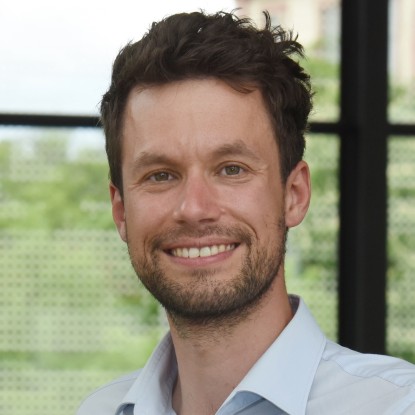
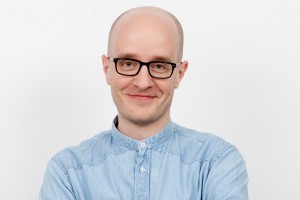
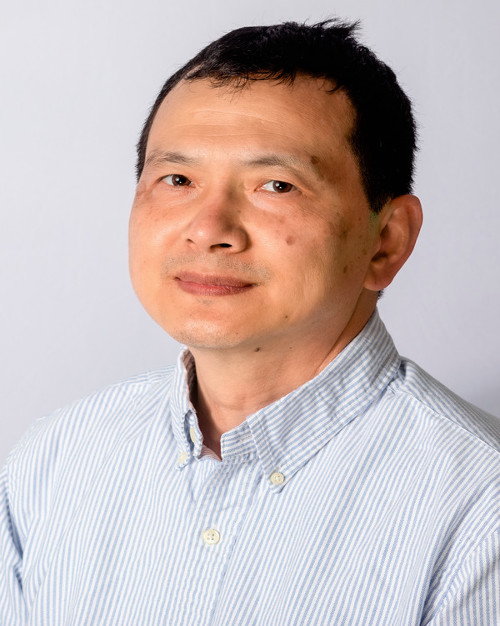
David Witt Nyström is a Professor at the University of Gothenburg’s Department of Algebra and Geometry. His research focuses on complex geometry, particularly Okounkov bodies, Kähler manifolds, Monge-Ampère equations, and geometric analysis. He has made significant contributions to the study of Fekete points, Hele-Shaw flows, and embeddings of Kähler balls. Key research areas include algebraic geometry, differential geometry, and mathematical analysis. His work bridges convex geometry with complex analysis, addressing topics like Brunn-Minkowski theorems, Monge-Ampère mass distributions, and coupled Kähler-Einstein metrics. Recent publications explore harmonic interpolation, duality between pseudoeffective and movable cones, and geometric flows. Publications span advanced topics such as convex subequations, non-pluripolar energy, and analytic test configurations. Despite prolific output, no specific scientific awards or grants are explicitly mentioned. No advising or lab affiliations are noted in the provided text.
Hadjifotinou Katerina is a Lecturer in the Department of Mathematics at Aristotle University of Thessaloniki (AUTh), where she has been part of the academic staff since 2017. Previously, she served as a Contracted Lecturer at AUTh from 1998 to 2011, followed by roles as a Trainer for Computer Science teachers (2012–2017) and Professor of Computer Science in Secondary Education (1995–2017). Her educational background includes a PhD in Mathematics from AUTh (Numerical Analysis), an MSc in Mathematics-Computing from Queen Mary University of London, and a BSc in Mathematics from AUTh. Academic Affiliations: Faculty of Science, Department of Mathematics Professional Roles: Active academic staff since 2017 Her research focuses on Numerical Analysis , Computational Mathematics , and Nonlinear Dynamics , with emphasis on interpolation methods, numerical integration of differential equations, and stability analysis of dynamical systems. Key interests include applications to celestial mechanics, Hamiltonian systems, and bifurcation theory. Her publications span studies on orbital dynamics, numerical algorithms, and bifurcation analysis, including works on trans-Neptunian objects, restricted N-body problems, and symplectic mapping models. Recent research explores stationary solitons in discrete systems and high-dimensional curve-following algorithms for nonlinear equations. Selected Awards: None explicitly mentioned Her academic advising and grant activities are not detailed in the current profile. She is affiliated with the Department of Mathematics labs and teams involved in computational mathematics and dynamical systems research.
Assistant Professor Emine ÇELİK is affiliated with the Faculty of Science at Sakarya University , Turkey, where she serves in the Department of Mathematics . She holds a doctorate from Texas Tech University (2016) and has conducted postdoctoral research at the University of Nevada, Reno (2016-2018) . Research Interests : Nonlinear partial differential equations (PDEs) with focus on degenerate/singular parabolic equations Fractional calculus applications to differential equations Fluid dynamics in porous media including Forchheimer-Ward models and Navier-Stokes coupling Structural stability and data assimilation algorithms Article Trends : Her recent publications (2022-2025) emphasize fractional diffusion operators , time-delay data assimilation , and compressible Forchheimer flows . Earlier works (2015-2018) focused on mixed flow regimes and nonlinear parabolic equations in porous media. Collaborators include Luan Hoang , Yulong Li , and Edriss Titi . Administrative Roles : Served as Deputy Head of Department (2023-2024) and Board Member (2023-2026).
Prof. Dr. Moritz Egert is a faculty member in the Department of Mathematics at Technische Universität Darmstadt, where he conducts research and teaches in the areas of harmonic analysis, functional calculus, and partial differential equations. He is actively involved in academic leadership, including organizing the RMU Seminar SoCo PDEs starting Winter 2024/25, and supervising PhD students such as Tim Böhnlein, Miriam Buck, and Benjamin Kosmala. His research focuses on deep analytical problems arising in PDEs, particularly those involving elliptic and parabolic divergence form operators, boundary value problems, and Hardy spaces. He frequently collaborates with leading mathematicians such as Pascal Auscher, with whom he co-authored a prize-winning monograph. The recent publications reflect a consistent trend in advancing the theory of functional calculus, regularity of solutions, and boundary behavior in both elliptic and parabolic systems. His work bridges abstract harmonic analysis with concrete PDE applications, often yielding improved estimates and structural insights. Ferran Sunyer i Balaguer Prize (2022) Athene Special Prize for Digital Teaching 2024 (€5,000) Prof. Egert has supervised multiple PhD students and is open to hosting Bachelor’s and Master’s thesis projects. He has been involved in significant digital teaching initiatives, notably the International Internet Seminar on Evolution Equations, which earned him a teaching prize. He also contributes to academic community-building through seminars and outreach, including podcast appearances. He is a core organizer of the new RMU Seminar SoCo PDEs and maintains active research collaborations across institutions. His team includes several PhD candidates, and he continues to publish high-impact research in top journals.
Prof. Dr. Marlit Annalena Lindner is Professor for Digitisation and Education at the University of Tübingen and Head of the Leibniz Research Group Digitisation and Education at the Leibniz-Institut für Wissensmedien (IWM). She leads cutting-edge research on digital learning and assessment, focusing on computer-based formative assessment, feedback design, and multimedia testing environments in schools and higher education. PhD in Psychology, Christian-Albrechts-University Kiel Head of Leibniz Junior Research Group COMET (2019–2023) Research visits at ETS Princeton and UCSB Funded research via Leibniz SAW competition Her research lies at the intersection of cognitive and motivational psychology in educational contexts, particularly in how digital feedback and multimedia design affect learning, engagement, and test performance. She employs advanced methodologies such as eye tracking, process data analysis, and micro-longitudinal designs to uncover real-time learning dynamics. Her recent publications reveal a strong trend in optimizing digital assessment through evidence-based design principles. Key themes include the affective impact of feedback, the role of visual representations in testing, time-of-day effects on disengagement, and the potential of generative AI in education. Her work bridges theory and practice, aiming to improve both the validity and user experience of digital assessments. Funding for Leibniz Junior Research Group COMET via Leibniz SAW competition She actively mentors doctoral researchers and leads a dynamic team at IWM. Her work includes advising on exam didactics, organizing national workshops on digital university assessments, and exploring the implications of AI tools like ChatGPT in educational settings. She collaborates internationally and contributes to shaping policy through expert statements, such as on large language models in education. She leads the research lab on digital assessment at IWM, focusing on process data, multimedia effects, and feedback design. Her team integrates cognitive science with educational technology to innovate assessment practices in the digital age.
Dr. Xin Lin is a Professor at the School of Computer Science and Technology, University of Science and Technology of China in Hefei. With an extensive publication record spanning computer vision, machine learning, and artificial intelligence, Dr. Lin leads a research group focused on solving challenging problems in image processing, robotics, and wireless communications. His work bridges theoretical advancements with practical applications across healthcare, autonomous systems, and industrial manufacturing. Dr. Lin's research interests encompass computer vision, machine learning, image processing, and artificial intelligence, with particular expertise in image restoration, 3D object detection, and human pose estimation. His laboratory develops innovative approaches to handle multiple image degradations simultaneously and create lightweight, efficient vision systems suitable for real-world deployment. The research demonstrates strong interdisciplinary connections, applying computer vision techniques to medical imaging, satellite communications, and industrial IoT applications. Analysis of Dr. Lin's recent publications reveals a strong focus on multi-task learning approaches that address multiple image degradation problems simultaneously. His work shows increasing sophistication in handling complex real-world scenarios, from low-light conditions to rain interference, while maintaining computational efficiency. The research trajectory demonstrates a clear path from fundamental image processing techniques to practical applications in autonomous driving, healthcare, and industrial systems. Dr. Lin has received recognition for his contributions to the field through numerous publications in top-tier venues including CVPR, IEEE Transactions, and ACL. His work on image restoration, particularly the Dual Degradation Representation framework, has gained significant attention in the computer vision community. Dr. Lin actively supervises graduate students and collaborates with researchers worldwide. His laboratory works on cutting-edge projects involving digital twins for manufacturing, satellite communications, and medical imaging applications. Current research directions include developing more robust and efficient models for real-world deployment scenarios, with particular attention to resource-constrained environments.
Gregory Green is an independent research group leader at the Max Planck Institute for Astronomy (MPIA) in Heidelberg, Germany, specializing in galactic evolution and interstellar dust mapping. His work combines observational data from the Gaia mission, photometric surveys, and computational models to reconstruct three-dimensional structures of the Milky Way. Key research areas include dust extinction curves, stellar dynamics, and data-driven astrophysical inference. Institution: Max Planck Institute for Astronomy Department: Galaxies and Cosmology Position: Sofia Kovalevskaja Group Leader Contact: +49 6221 528-460 | Königstuhl 17, 69117 Heidelberg Green's research focuses on computational astrophysics and galactic structure analysis. He develops novel methods for mapping dust extinction in 3D, studies the dynamics of the Milky Way's gravitational potential, and applies machine learning to stellar population analysis. His work bridges observational astronomy with theoretical modeling, particularly in understanding the interstellar medium's role in galaxy evolution. The 15 most recent publications highlight his emphasis on Gaia data exploitation, dust mapping algorithms (including normalizing flows), and galactic dynamics. Articles span topics from binary star census to radiative properties of the interstellar medium, with methodological innovations in astrometric inference and spectral analysis. Scientific Awards: Sofia Kovalevskaja Award recipient for establishing independent research group Green leads the Galaxy Evolution group at MPIA, contributing to cosmological applications of galactic dust mapping. His work informs models of galaxy formation and provides foundational data for studies of stellar populations and dark matter constraints via satellite galaxies.
Shu-Cherng Fang is a prominent academic in the fields of Operations Research , Optimization , and Machine Learning . His work spans theoretical advancements and practical applications in Mathematical programming Supply chain network design Fuzzy systems Support vector machines Algorithm development . While specific institutional affiliations and academic rank are not explicitly stated in the provided text, his extensive publication record in high-impact journals indicates a faculty-level role. Research interests include optimization under uncertainty , supply chain logistics , and kernel-free machine learning models . Key trends in recent articles focus on fourth-party logistics (4PL) network design distributionally robust optimization for machine learning mathematical modeling of customer behavior stochastic programming . Co-authors frequently include Min Huang, Zhibin Deng, Jian Luo, and Wenxun Xing, reflecting sustained collaborations. Articles emphasize interdisciplinary approaches combining fuzzy logic , game theory , and computational geometry to solve complex decision-making problems.
Prof. Hans-Joachim Bungartz is a Full Professor of Scientific Computing at the Technical University of Munich (TUM), leading the Department of Computer Science. He holds the TUM School of Computation, Information and Technology affiliation. His career includes roles at the University of Augsburg and Stuttgart, and he has been at TUM since 2004. He specializes in scientific computing, focusing on numerical algorithms, HPC software, and applications in fluid mechanics, plasma physics, and quantum simulations. Education: Bachelor/Master in Mathematics, Informatics, and Economics (TUM, 1982–1989) PhD (1992) and Habilitation (1998) in Sparse Grids and Numerical Methods (TUM) Research Interests: His work spans adaptive grids, parallel computing frameworks (e.g., Peano), and interdisciplinary applications in computational engineering. He emphasizes bridging modeling, algorithms, and HPC infrastructure. Awards: ISC PRACE Award (2013) Bavarian Habilitation Award (1994) His contributions include over 150 publications and leadership roles in institutions like the Leibniz Supercomputing Center and the TUM Graduate School. Leadership: As Dean of the Informatics Department (since 2013) and Director of the TUM Graduate School, he shapes academic policies. He chairs key national/international bodies like the German Research Network (DFN) Executive Board (2011–2020).
Friedrich Slivovsky is a researcher at the Institute of Logic and Computation within the Faculty of Informatics at Technische Universität Wien (Vienna University of Technology). His work focuses on theoretical and practical aspects of computational logic, with particular expertise in Quantified Boolean Formulas (QBFs), Propositional Model Counting (#SAT), and Knowledge Compilation. His research interests span the theoretical foundations and practical applications of computational logic. Slivovsky investigates the complexity of logical reasoning problems, develops efficient algorithms for solving them, and creates practical tools that implement these theoretical advances. His work bridges the gap between theoretical computer science and practical applications in areas like hardware verification, artificial intelligence, and electronic design automation. Analysis of his publication trends reveals a consistent focus on QBF solving techniques, with increasing emphasis on circuit minimization, proof complexity, and practical solver engineering. His recent work (2023-2024) shows a strong focus on circuit minimization techniques, combining QBF and SAT approaches to solve complex optimization problems in hardware design. Earlier work (2019-2021) emphasized dependency schemes, certification methods, and theoretical foundations of QBF solving. Slivovsky leads several significant software projects that have become important tools in the computational logic community: Qute : A dependency learning QBF solver with GitHub repository showing active development (latest commit December 2024) Unique : A preprocessor for (D)QBF that computes unique Skolem and Herbrand functions Pedant : A certifying DQBF solver These projects demonstrate his commitment to translating theoretical advances into practical tools that benefit the broader research community.
Dr. Li Chen is a Professor in the Department of Computer Science and Information Technology at the University of the District of Columbia (UDC), affiliated with the School of Engineering and Applied Sciences. He specializes in discrete geometry, digital geometry, AI, and data science. Previously held the ACM Distinguished Speaker title (2015-2021). His research focuses on algorithm design, topological data analysis, and quantum computing education. Education: Ph.D. in Computer Science, University of Bedfordshire, UK M.Sc. in Computer Science, Utah State University B.Sc. in Computer Science, Wuhan University, China Research Interests: Dr. Chen’s work spans discrete geometry (e.g., digital surfaces, topological invariants), AI applications, data science methodologies, and algorithmic solutions for geometric problems. His contributions include foundational texts on mathematical problems in data science and innovations in quantum computing education. Publications Trends: Recent work emphasizes algorithmic approaches to topological challenges, AI limitations (e.g., image segmentation), and quantum computing pedagogy. Earlier research includes digital geometry surveys and medical imaging applications. Awards: ACM Distinguished Speaker (2015-2021) Teaching & Grants: Teaches Advanced Machine Learning, Introduction to Quantum Computing, and Algorithm Design. His grants and lab activities are not explicitly listed but implied through his extensive publication record. Labs/Teams: No specific lab affiliations mentioned, but collaborations on digital geometry and data science projects are evident from his work.
George Booth is a Professor of Theoretical Physics at King’s College London, part of the Faculty of Natural, Mathematical & Engineering Sciences, and a member of the Department of Physics. He joined in 2014 as a Royal Society University Research Fellow and became a Reader in 2019. His research focuses on developing advanced computational methods for quantum many-body systems, including quantum embedding techniques and systematic improvable approaches. He holds a MSci in Physics from the University of Nottingham and a PhD in Theoretical Chemistry from the University of Cambridge. Booth leads the Booth Group, which develops open-source software such as the Vayesta package for quantum embedding. His work emphasizes predictive electronic structure calculations and has been supported by grants like the ERC Starting Grant (2017). Key areas include correlated electron systems, quantum machine learning, and the application of Gaussian Process States for data-driven quantum physics. Education: MSci (Nottingham), PhD (Cambridge) Awards: ERC Starting Grant, Royal Society Fellowship Labs/Teams: Booth Group, Centre for Non-Equilibrium Science (CNES) Grants: £4.5m EPSRC funding for Materials and Molecular Modelling Hub His research bridges condensed matter physics and quantum chemistry, with contributions to stochastic methods, variational quantum eigensolvers, and the simulation of extended systems.
Charbel Farhat is the Vivian Church Hoff Professor of Aircraft Structures and Professor of Aeronautics and Astronautics at Stanford University's School of Engineering. He chairs the Department of Aeronautics and Astronautics and has led significant initiatives such as the Stanford-King Abdulaziz City for Science and Technology Center. His research focuses on computational methods for multiphysics problems in aerospace engineering, including fluid-structure interaction, digital twinning, and uncertainty quantification. Farhat has authored over 650 publications and holds prestigious awards like the Vannevar Bush Faculty Fellowship and multiple honorary doctorates. Education: Ph.D. in Civil Engineering, University of California, Berkeley (1987) MS in Electrical Engineering and Computer Sciences, UC Berkeley (1986) MS in Structural Engineering, UC Berkeley (1984) MS in Applied Mechanics, Université de Paris VI (1983) Engineering Diploma, Ecole Centrale des Arts et Manufactures (1983) Research Interests: Farhat's work emphasizes advanced computational algorithms for aerospace systems, including autonomous carrier landing dynamics, hypersonic trajectory analysis, and physics-based machine learning. His group develops high-performance software for digital twinning and model reduction techniques to address complex engineering challenges. Recent efforts include supersonic parachute dynamics modeling and probabilistic learning frameworks for uncertainty quantification. Awards & Recognition: Member of National Academy of Engineering (U.S.), Royal Academy of Engineering (UK), and Lebanese Academy of Sciences Fellowships from AIAA, ASME, SIAM, and multiple computational mechanics societies Recipient of the Gordon Bell Prize, John von Neumann Medal, and Gauss-Newton Medal Advising & Grants: Farhat supervises doctoral and master's students in advanced computational methods. His research is funded by NSF, AFOSR, ONR, NASA, and industry partners like Boeing and Lockheed-Martin. He advises on national boards and editorial roles for journals like the International Journal for Numerical Methods in Engineering. Labs & Teams: Leads the Farhat Research Group (FRG) at Stanford, focusing on Simulation-Based Engineering Science. Collaborates internationally on projects like the Army High Performance Computing Research Center and the Stanford-King Abdulaziz Center.
Richard Dawes is an Assistant Professor at Missouri University of Science and Technology, specializing in theoretical and computational chemistry. His research focuses on developing methods to construct global potential energy surfaces for studying molecular spectroscopy and dynamics relevant to combustion, atmospheric, and interstellar chemistry. He leads research in multistate multireference quantum chemistry and potential energy surface development. Dawes received his Ph.D. from the University of Manitoba in 2005. He then completed postdoctoral work with Prof. Tucker Carrington Jr. at the Université de Montréal and with Prof. Donald L. Thompson on fitting potential energy surfaces. In 2009, he worked with Dr. Ahren W. Jasper at the Combustion Research Facility before joining Missouri University of Science and Technology as an Assistant Professor in 2010. Richard Dawes' research centers on the development of accurate potential energy surfaces to predict and understand molecular spectroscopy and dynamics. His group investigates systems relevant to combustion, atmospheric chemistry, and interstellar environments. They develop interpolative fitting methods that combine hundreds or thousands of individual processors on high-performance computing clusters to automatically refine potential energy surfaces toward negligible error. Their work includes studies of ozone, spin-forbidden chemistry, van der Waals systems, and molecular dimers. A key focus is understanding how molecular dynamics can be sensitive to surface topography, especially at low temperatures. Dawes' recent publications demonstrate a strong focus on potential energy surface development for various molecular systems, with applications spanning atmospheric chemistry, interstellar environments, and combustion processes. His work increasingly incorporates advanced computational methods like Quantum Monte Carlo and multireference approaches to achieve higher accuracy. A notable trend is the application of these methods to study astrochemically relevant molecules and reactions, reflecting growing interest in computational astrochemistry. Early career award by the U.S. Department of Energy (2013) Flygare award lecture Richard Dawes has mentored several graduate students to completion, including Dr. Andrew Powell and Dr. Phalgun Lolur, who have gone on to postdoctoral positions at prestigious institutions. His research has been generously supported by the Department of Energy (DE-SC0010616) and the National Science Foundation (CHE-1300945), reflecting the significance of his work in theoretical chemistry and potential energy surface development. The Dawes Research Group operates at the intersection of theoretical chemistry, quantum dynamics, and high-performance computing. They collaborate with researchers across the globe, including groups in France, China, and Canada, focusing on developing and applying advanced computational methods to solve challenging problems in molecular spectroscopy and dynamics.
Akil Narayan is a Professor in the Department of Mathematics and a member of the Scientific Computing and Imaging (SCI) Institute at the University of Utah. His office is located in WEB 4666 (SCI) and LCB 116 (Math). He has previously held positions as Assistant Professor at the University of Massachusetts Dartmouth (2012-2015) and Visiting Assistant Professor at Purdue University (2009-2012). His educational background includes: Ph.D. in Applied Mathematics from Brown University (2009) M.Sc. in Applied Mathematics from Brown University (2004) B.S. in Engineering Sciences and Applied Mathematics from Northwestern University (2003) B.S. in Electrical Engineering from Northwestern University (2003) Akil Narayan's primary research interests lie in numerical analysis, scientific computing, and approximation algorithms. His work spans multiple domains including uncertainty quantification, multifidelity modeling, optimization, and computational methods for partial differential equations. He has made significant contributions to the development of numerical methods for solving complex computational problems across various scientific and engineering disciplines. His research often bridges theoretical mathematics with practical applications in fields such as biomedical engineering, ecology, and power systems. Analysis of his recent publications reveals a strong focus on uncertainty quantification, multifidelity methods, and scientific machine learning. His work increasingly integrates traditional numerical methods with modern machine learning techniques, particularly in the development of physics-informed neural networks. There's also a notable emphasis on structure-preserving numerical methods and optimization techniques for computational models. His research has significant applications in biomedical imaging, particularly in electrocardiographic imaging and cardiac modeling. While specific scientific awards are not detailed in the available information, his extensive publication record in top-tier journals demonstrates recognition in his field. His work appears regularly in prestigious journals such as SIAM Journal on Scientific Computing, Journal of Computational Physics, and SIAM Review. Professor Narayan has advised numerous graduate students through the Department of Mathematics and the School of Computing at the University of Utah. His current advisees include Filip Belik, Haoyu Chen, John Turnage, and Yinqian Yu, working on topics ranging from numerical methods for PDEs to operator learning and uncertainty quantification. His former students have gone on to positions at institutions including General Motors, Amazon, Intel Corporation, and various academic institutions. He has also secured research funding supporting his work in computational mathematics and scientific computing, though specific grant details are not provided in the available text. He is actively involved with the Scientific Computing and Imaging (SCI) Institute at the University of Utah, where he collaborates with researchers across disciplines. His work through the UncertainSCI project focuses on uncertainty quantification for computational models in biomedicine and bioengineering, particularly in cardiac applications. He frequently collaborates with researchers in the Department of Mathematics, School of Computing, and the SCI Institute on interdisciplinary projects that combine mathematical theory with practical computational applications.