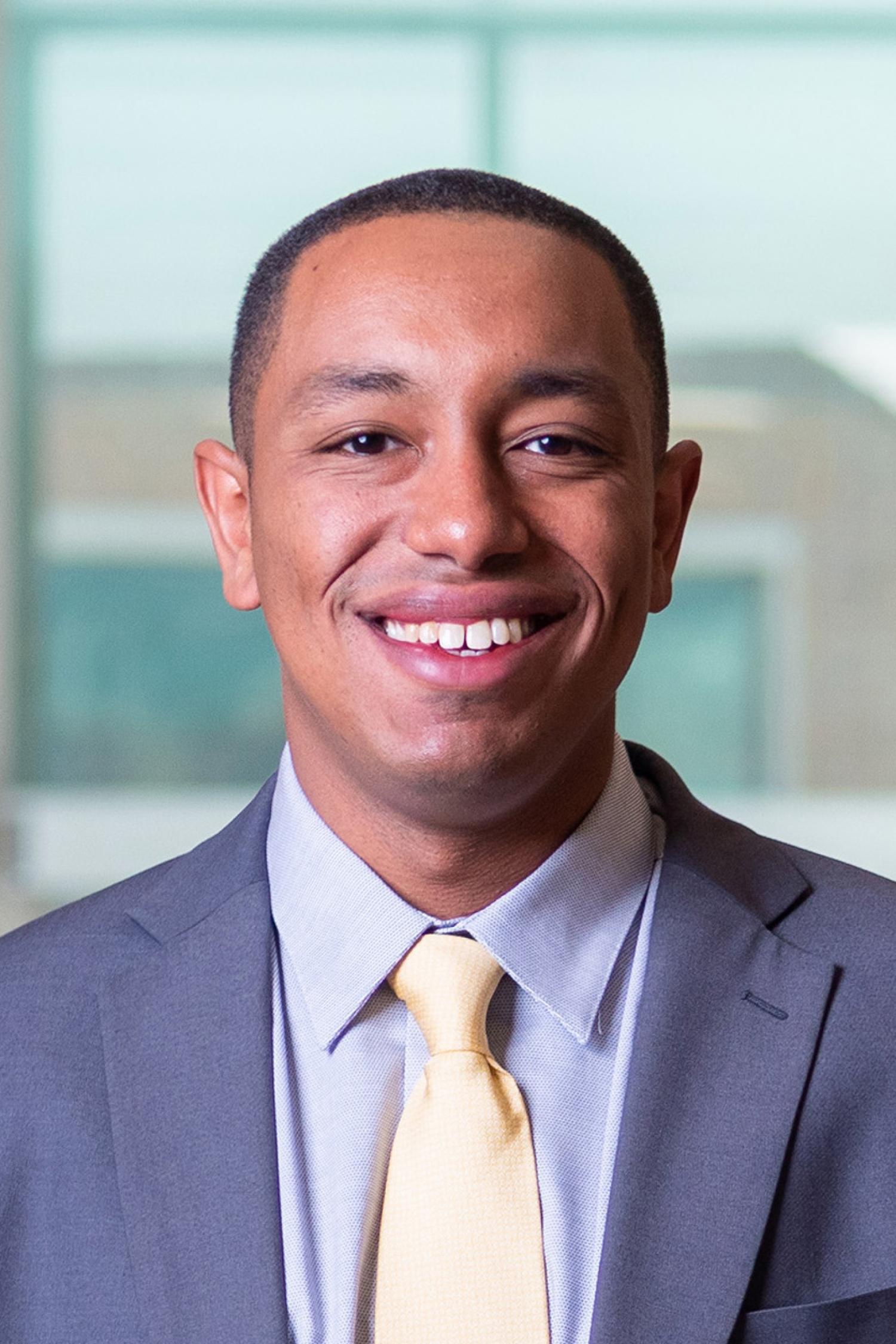
Sofaine Bourouaine is an Assistant Professor at the College of Engineering and Science , Florida Institute of Technology, within the Department of Aerospace, Physics and Space Sciences. His research focuses on solar wind physics, particularly on the mechanisms of coronal heating, plasma acceleration, and turbulence processes that transfer energy across scales. His work integrates theoretical modeling , spacecraft data analysis (including Parker Solar Probe and Solar Orbiter), and numerical plasma simulations . Key areas of investigation include: Solar wind turbulence and energy cascade Wave-particle interactions in heliospheric plasmas Statistical analysis of magnetic field fluctuations Role of Alfvén waves in solar wind acceleration Impact of magnetic reconnection on solar wind generation Intermittency in magnetohydrodynamic turbulence The analysis of his 15 most recent publications reveals consistent themes in solar wind turbulence characterization, spacecraft data interpretation, and mission design concepts like the Firefly (4π) Constellation . While no formal awards or students are mentioned in the available data, his contributions to solar wind physics are evident through his focus on turbulence dynamics and wave-particle energy transfer mechanisms.
William S. Kurth is a Research Scientist in the Department of Physics and Astronomy at the University of Iowa , specializing in space physics and planetary radio/plasma wave studies. He has been a key contributor to NASA missions including Voyager , Juno , Van Allen Probes , and Cassini , with a focus on plasma wave dynamics in planetary magnetospheres, the solar wind, and the interstellar medium. Research Interests: Dr. Kurth’s work centers on radio emissions from space plasmas to understand planetary magnetospheric dynamics, plasma wave spectroscopy for density measurements, and wave-particle interactions in space environments. His studies span Earth, Jupiter, Saturn, Uranus, Neptune, and the heliosphere, with a particular emphasis on low-frequency interplanetary radio emissions and their links to solar activity. Publications: His 15 most recent articles (from 1991–1997) analyze plasma wave phenomena across planetary systems, dust interactions in Saturn’s rings, and data system design for space missions. Themes include heliopause emissions , Jovian magnetotail structures , and interstellar medium diagnostics . Awards: NASA Group Achievement Awards (1981–2018) NASA Outstanding Public Leadership Medal (2012) American Geophysical Union Fellow (2014) University of Iowa Distinguished Research Professional Award (2014) Education: PhD in Physics, University of Iowa (1979) MS in Physics, University of Iowa (1975) BS in Physics/Astronomy, University of Iowa (1973)
Noe Lugaz is a Research Professor in the Department of Physics & Astronomy at the University of New Hampshire, within the College of Engineering and Physical Sciences. His primary research focuses on coronal mass ejections (CMEs), solar physics, and space weather, with expertise in magnetohydrodynamics and interplanetary physics. Education: Ph.D. in Space Physics (University of Michigan), M.S. in Atmospheric Sciences (University of Michigan), and a M.Eng. in Aerospace Engineering (Institut Supérieur de l’Aéronautique et de l’Espace, France). Research Interests: Investigates CME interactions, their effects on Earth’s magnetosphere and radiation belts, and space weather forecasting. Notable contributions include studies on CME-CME interactions, shock dynamics, and sub-Alfvénic solar wind effects. His work combines numerical simulations, remote sensing observations, and in-situ measurements. Publications: Over 70 refereed journal articles, including high-impact works in Nature Communications , Astrophysical Journal , and Solar Physics . Recent trends focus on multi-spacecraft observations of CMEs and their spatial coherence, as well as geo-effective shock/sheath dynamics. Awards: 2014 Arne Richter Award (EGU), multiple Editors’ Citations for Excellence in Refereeing (JGR-Space Physics). Advising & Grants: Advises PhD student Tarik Salman and has mentored 6+ undergraduates. Secured $5.3M in grants as PI, including NASA and NSF funding for space weather research. Serves on thesis committees and co-teaches graduate courses on space plasma physics. Labs/Teams: Active in the Space Science Center at UNH, collaborating on missions such as STEREO, RBSP, and MESSENGER. Leads research on CME propagation and interplanetary effects through international collaborations like SHINE and SCOSTEP.
Julia Stawarz is an Associate Professor at Northumbria University's Department of Mathematics, Physics, and Electrical Engineering, specializing in space plasma physics. She holds a Royal Society University Research Fellowship and serves as an Associate Editor for Physics of Plasmas . Her research focuses on plasma turbulence, magnetic reconnection, and collisionless phenomena using spacecraft data from missions like MMS, Parker Solar Probe, and Solar Orbiter. Education: BSc in Physics (University of New Hampshire, 2011), MSc and PhD in Astrophysics (University of Colorado Boulder, 2013 and 2016). Postdoctoral work at Imperial College London before joining Northumbria in 2022. Research Interests: Solar wind dynamics, magnetospheric interactions, turbulence-driven reconnection, and developing the ESA Plasma Observatory mission. Key areas include electron kinetic physics, machine learning applications in plasma analysis, and cross-scale plasma modeling. Notable Awards: Winton Award (2021), Ronald C. Davidson Award (2024), and numerous fellowships including the NSF Graduate Research Fellowship. Current Projects: Leading the Electron Kinetic Physics book project, advising on ESA's Plasma Observatory mission, and mentoring PhD students in reconnection and turbulence studies.
Professor Michael Balikhin is a distinguished academic in the Space Systems Laboratory at the University of Sheffield's School of Electrical and Electronic Engineering . With over 30 years of research experience, his work focuses on space plasma physics , collisionless shocks , plasma turbulence , and radiation belt dynamics . He serves as Principal Investigator for the Digital Wave Processor instruments on ESA's Cluster satellites and as editor of Journal of Geophysical Research: Space Physics . PhD in Physics (1989) Joined Sheffield in 1995 Key contributor to Cluster mission Leading expert in nonlinear space plasma systems Research Areas His research spans space weather , solar-terrestrial relations , and spacecraft instrumentation , with particular emphasis on electron heating mechanisms , shock structures , and nonlinear system identification . The 15 most recent articles demonstrate his expertise in gamma-ray burst analysis , magnetospheric wave dynamics , and multi-point space plasma observations . Scientific Recognition Leverhulme Grant (2024-2027) STFC/NERC grants exceeding £1.5M EPSRC Platform Grant (2010-2015) Over 20 years of ESA Cluster mission involvement Key Collaborations Extensive collaborations with ESA , STFC , AGU , and international space agencies. Currently working with University of Michigan , Space Research Institute (Austria) , and Skobeltsyn Institute (Russia) .
Dr. Yu Liu is a Postdoctoral Research Fellow at the School of Mechanical and Mining Engineering , The University of Queensland, with affiliations to the Centre for Hypersonics . His academic career focuses on hypersonic flight , planetary entry simulations , and advanced materials processing , particularly in radiation measurement and thermodynamic modeling. Yu Liu holds a PhD in Mechanical and Aerospace Engineering from The University of Queensland (2021) and a Bachelor (Honours) in Power and Energy Systems Engineering from Xi'an Jiaotong University. His research centers on non-equilibrium radiation in planetary entry conditions , validated through expansion tube experiments and spectroscopic analysis. Key contributions include electron density measurements , test gas substitution for Saturn entry simulations, and high-speed thermography using near-infrared cameras. The 15 most recent articles (2018–2025) span journal publications in Acta Astronautica , AIAA Journal , and Experiments in Fluids , alongside conference proceedings at major aerospace symposia. Topics emphasize hypersonic flow diagnostics , plasma radiation , and planetary mission testing . Dr. Liu is available for supervision and has participated in 2024 AEDS Sarl grant for radiation reconstruction in ExoMars capsule flowfields.
Owen Roberts is a Lecturer in Physics at the Department of Physics, Aberystwyth University. His research focuses on solar wind physics, magnetospheric dynamics, and space plasma turbulence. He specializes in analyzing data from space missions like Cluster and MMS to study phenomena such as magnetopause reconnection, Kelvin-Helmholtz instabilities, and turbulence dissipation. Key research areas include collisionless shocks, plasma mixing processes, and the application of wave-telescope analysis for multipoint observatories. Roberts has contributed to over 50 publications since 2012, with recent work emphasizing the role of timing and spatial uncertainties in spacecraft observations. He collaborates internationally on projects analyzing interplanetary magnetic field orientations and spacecraft potential control. Media highlights include coverage of the Cluster mission's conclusion and studies on magnetosheath jets. His datasets, such as the THEMIS Magnetosheath and Jet Intervals, provide foundational resources for community research. Roberts' work bridges observational techniques with theoretical plasma physics, advancing understanding of Earth's magnetospheric boundaries and solar wind interactions.
Eleanna Asvestari is an Academy Research Fellow at the University of Helsinki, working within the Department of Physics, Faculty of Science. Her research is centered at the Particle Physics and Astrophysics Space Physics Research Group, where she focuses on space weather, solar physics, and heliospheric phenomena. She leads the SOFTCAT project (Solar Open Flux Topology Comprehensive investigATion) funded by the Academy of Finland and has previously managed the TRAMSEP project. Dr. Asvestari holds a PhD in Physics from the University of Oulu (2016), an MSc in Astrophysics with Distinction from Queen Mary University of London (2013), and a BSc in Physics from the National and Kapodistrian University of Athens (2012). Her doctoral research examined the imprints of long-term solar variability on cosmic rays and terrestrial archives. Her research interests span space physics, solar physics, and astrophysics, with specific focus on solar energetic particles, coronal mass ejections (CMEs), heliospheric modeling, and space weather prediction. She extensively uses the EUHFORIA model to study CME propagation, magnetic field structures, and their impacts on the heliosphere. Her work combines multi-spacecraft observations with advanced modeling techniques to understand complex solar phenomena and their terrestrial effects. Analysis of her recent publications reveals a strong emphasis on CME modeling, particularly using spheromak and cone structures in the EUHFORIA framework. She investigates magnetic field topology, open flux origins, and particle acceleration mechanisms. Her research increasingly incorporates multi-point observations from various spacecraft to validate models and understand three-dimensional heliospheric structures. Recent work shows growing interest in anisotropic cosmic-ray effects and long-term solar variability impacts. Principal's Prize for outstanding academic achievement (Queen Mary University of London, 2013) 2nd prize at Science Night Live! pitching competition (2023) SOLARNET mobility Programme Travel Grant (2019) As a project leader for SOFTCAT and previously TRAMSEP, Dr. Asvestari manages significant research funding focused on understanding solar open magnetic flux and solar energetic particle transport. She collaborates extensively with international teams across Europe and participates in major space weather initiatives including the FOREsail Centre of Excellence. Her public engagement includes numerous presentations at events like the Night of Science and European Space Weather Week, where she communicates complex space weather concepts to broader audiences. Dr. Asvestari is an active member of the Particle Physics and Astrophysics Research group at the University of Helsinki, contributing to the Finnish Centre of Excellence in Research of Sustainable Space (FOREsail). She participates in the SERPENTINE project for solar energetic particle research and collaborates with international consortia including the EUHFORIA modeling community. Her work connects observational data from multiple spacecraft with advanced modeling to improve space weather forecasting capabilities.
Hisham Ali is an Assistant Professor in the Department of Aerospace Engineering Sciences at the University of Colorado Boulder (CU Boulder), affiliated with the Aerospace Mechanics Research Center (AMREC). He holds a PhD and MS in Aerospace Engineering from Georgia Institute of Technology (2019 and 2015) and a BS from the University of Alabama (2013). His research focuses on hypersonics, magnetohydrodynamics (MHD), plasma physics, planetary entry systems, and aerocapture technologies for space exploration. Education: PhD, Aerospace Engineering, Georgia Tech, 2019 MS, Aerospace Engineering, Georgia Tech, 2015 BS, Aerospace Engineering, University of Alabama, 2013 Ali’s research explores MHD drag modulation for planetary entry missions (e.g., Neptune aerocapture), plasma wind tunnel development, and energy harvesting during atmospheric entry. His work aims to reduce mission costs, enhance spacecraft efficiency, and enable human exploration of outer planets. Key projects include tabletop-scale plasma tunnel facilities and RF/MW instrumentation suites for hypersonic flow studies. He has received prestigious awards such as the NASA Space Technology Research Fellowship (2013) and the Barry M. Goldwater Scholarship (2012). His contributions span academic and industrial roles, including postdoctoral research at Georgia Tech and a position at The Aerospace Corporation. Ali advises graduate students in CU Boulder’s Aerospace Engineering program and collaborates on grants focused on hypersonic aerodynamics and MHD systems. His laboratory (AER0 369) integrates experimental and computational approaches to advance space exploration technologies.
Dr. Marc Duldig is a University Associate in the School of Natural Sciences at the University of Tasmania, specializing in high energy astrophysics, galactic cosmic rays, and nuclear physics. His research focuses on cosmic ray modulation, solar cycle effects, and space weather phenomena using global networks of neutron monitors and muon detectors. He has contributed to major projects like the Global Muon Detector Network (GMDN) and led investigations into cosmic ray anisotropies, Forbush decreases, and interplanetary shock effects. Funded Projects: Leading a project on polar atmospheric chemistry and climate (2008–2012, $90,213). Top-up scholarship for modeling solar energetic particle acceleration (2002–2005, $17,439). Development of transportable cosmic ray observatories (1998–2002, $372,600). His research outputs include over 120 peer-reviewed articles, with recent work emphasizing real-time cosmic ray monitoring, solar event impacts, and Antarctic observations. He has supervised five doctoral and master's students on topics ranging from cosmic ray modulation to relativistic solar proton acceleration. His service contributions include writing historical reviews of Australian cosmic ray research and public engagement through media publications.
Simon Good is an Academy Research Fellow at the University of Helsinki, affiliated with the Particle Physics and Astrophysics Space Physics Research Group. He supervises the Doctoral Programme in Particle Physics and Universe Sciences and teaches MSc-level Solar Physics courses. His research focuses on solar and space physics, including coronal mass ejections, solar wind dynamics, and space weather prediction using machine learning. He actively participates in international collaborations and has led projects like INERTUM (2024–2026). Education: PhD in Space Physics (Imperial College London, 2016) MSci in Physics (Imperial College London, 2011) Research Interests: Simon’s work explores solar wind turbulence, interplanetary shocks, and the geoeffectiveness of space weather events. He develops machine-learning models to analyze large-scale solar phenomena and their impacts on Earth’s magnetosphere. Grants & Projects: INErtial Range TUrbulence in Magnetic clouds (INERTUM), Academy of Finland (2024–2026) Finnish Centre of Excellence in Research of Sustainable Space (2018–2025) Awards & Activities: He has reviewed manuscripts for Astrophysical Journal and Solar Physics , and organized public events like the 2024 Night of Science. His contributions include advancing shock dynamics modeling and interdisciplinary space weather research.
Torsten Aslaksen is a Senior Lecturer at the Department of Physics and Technology, UiT The Arctic University of Norway. With expertise spanning space physics, atmospheric science, and plasma dynamics, he has contributed extensively to auroral research, meteoroid analysis, and polar mesospheric phenomena. His work includes both empirical studies and educational initiatives in distance learning. Department: Physics and Technology Location: Tromsø Research Interests Aslaksen's research focuses on auroral phenomena, space plasmas, and atmospheric interactions of extraterrestrial objects. He also contributes to e-learning infrastructure in Arctic education. His scientific work bridges observational data from rockets/radars with theoretical models of dusty plasmas and substorm dynamics. Selected Projects Notable projects include multi-instrument fireball tracking (2022), discovery of anti-black auroras (2021), and foundational research on charged dust in planetary rings (2001). He led initiatives for Northern Lights tourism analysis and Venus transit public outreach (2012). Teaching & Outreach Active in educational technology, he established thematic networks for e-learning (2008) and developed observational systems like TACO (Telescope for All-sky, Cloudy, and Online) for student engagement in astronomical research.
Gregory Snyder is a Teaching Assistant Professor in the Department of Earth, Environmental, & Planetary Sciences at the University of Tennessee. Previously, he held a Research Associate Professor position at the same institution from 1990 to 1999. He earned a Ph.D. in Geochemistry from Colorado School of Mines (1990), an M.Sc. in Geochemistry from the same institution (1996), and a B.Sc. in Geology from the University of Tennessee at Chattanooga (1982). He also holds an M.Div. from Trinity Episcopal School for Ministry (2002). His research focuses on planetary geochemistry, lunar geology, and mantle processes, with notable work on meteorite analysis, lunar crustal evolution, and diamondiferous eclogites. Snyder has taught courses such as EEPS 104 (Exploring the Planets) and EEPS 101 (The Dynamic Earth), emphasizing planetary science and Earth dynamics. His scholarly contributions include over 70 peer-reviewed articles, with key studies on oxygen isotope analysis of lunar samples and petrogenetic modeling of kimberlite-derived eclogites.
Professor Uwe Motschmann is a distinguished faculty member at the Technical University of Braunschweig, holding a position in the Institute for Theoretical Physics within the Faculty of Electrical Engineering, Information Technology, and Physics. His office is located in room A 312 at Mendelssohnstraße 3, Braunschweig, with contact information including telephone +49-(0)531-391-5186 and email u.motschmann@tu-bs.de. Professor Motschmann's research spans several critical areas of space and plasma physics, with a particular emphasis on numerical simulation techniques for complex physical systems. His work focuses on plasma phenomena in space environments, including interactions between solar wind and comets, plasma-dust dynamics, magnetospheric physics of planetary bodies, and computational modeling of space plasma phenomena. His research methodology heavily relies on advanced computational approaches to model multiparticle systems and nonequilibrium plasma distributions. Analysis of his publication trends reveals a consistent focus on space plasma physics with increasing sophistication in numerical methods. His work connects fundamental plasma physics with practical space mission applications, particularly in interpreting data from multi-instrument and multi-spacecraft missions. The research shows strong interdisciplinary connections between theoretical physics, computational science, and observational space physics. Professor Motschmann's work has contributed significantly to understanding plasma environments around various celestial bodies including Mars, Venus, Titan, and extrasolar planets. His research on mass loading effects, shock structures in interplanetary space, and plasma dynamics on ion thrusters demonstrates both theoretical depth and practical applications for space exploration technologies.
Simon A. Pope is a Lecturer and Aerospace Admissions Tutor in the School of Electrical and Electronic Engineering at the University of Sheffield. He holds an MEng in Mechanical Systems Engineering and a PhD from the University of Sheffield, focusing on magnetic noise detection in space missions. His research interests include active metamaterials, sustainable manufacturing, control systems, and space plasma physics. He leads the Space and Aviation Challenge within the EPSRC UK Metamaterials Network and has contributed to projects like the Venus Express mission. Education: MEng (2004), PhD (2009) in Mechanical Systems Engineering from the University of Sheffield. Research focuses on developing novel materials with controllable properties (e.g., metamaterials), sustainable manufacturing processes, and vibration/acoustic control. Notable contributions include work on Venus's magnetosphere and self-healing systems. Grants include EPSRC funding for metamaterials research and sustainable manufacturing innovations. He teaches courses like ACS6127 (Real Time Embedded Systems) and AER204 (Embedded Programming). Professional activities include leadership roles in EPSRC networks and collaborations with industry partners like BAE Systems and Vestas Wind Systems.