Na Li is an Adjunct Assistant Professor in the Department of Computing and Software at McMaster University's Faculty of Engineering. Her interdisciplinary research bridges computational methods with clinical hematology through extensive collaborations with transfusion medicine experts. Key contributions in biostatistical modeling for immune thrombocytopenia diagnosis Innovations in healthcare logistics for blood product management Pioneering AI-human collaboration frameworks for electronic health record analysis Her scholarly work spans machine learning applications in disease detection, operational research for blood inventory optimization, and clinical decision support systems development. Recent publications demonstrate integration of large language models with medical expertise for improved diagnostic accuracy. Notable research themes include: Pandemic resource allocation fairness Perioperative anticoagulant management Platelet transfusion analytics Blood product demand forecasting Privacy-preserving federated learning Her work has been cited extensively across transfusion medicine , critical care , and healthcare technology domains, with implementations in major clinical trials and policy documents.
Jukka Riekki is a Professor at the University of Oulu , Finland, with a focus on Internet of Things (IoT) , Edge Computing , and Semantic Reasoning . His work bridges theoretical and applied research in smart systems, urban informatics, and distributed architectures. Major research areas: IoT, Edge Computing, Semantic Web, Mobile Agents, Smart Cities Key collaborations: University of Oulu, Technical University of Munich, Aalto University Research Trends from 15 recent articles show expertise in: Edge-native architectures (EDISON, Neural Pub/Sub) Semantic reasoning for context-aware IoT systems Privacy-as-a-Service frameworks GPU-accelerated network function virtualization Collaborative AI across 5G networks Scientific Contributions include: Foundational work on IoT semantic data provisioning Innovative approaches to mobile agent-based systems Novel edge server placement algorithms Privacy-preserving models for digital health Advising spans IoT, edge computing, and urban informatics research, with 36 joint publications with student Xiang Su . No explicit grant details found, but extensive involvement in academic collaborations with institutions across Europe and Asia.
Dr. Fabiola Iannarilli is a wildlife biologist and quantitative ecologist specializing in animal behavior, conservation ecology, and biodiversity monitoring. As a Marie Skłodowska-Curie Postdoctoral Fellow at the Max Planck Institute of Animal Behavior's Department of Migration , she leads cross-institutional research initiatives focused on understanding human-driven ecological changes and advancing camera trap data methodologies. Education: PhD in Conservation Sciences (University of Minnesota, 2020), MA in Ecobiology (Sapienza - University of Rome, 2012), BA in Biology (Sapienza - University of Rome, 2010) Her research examines how wildlife responds to habitat loss, domestic species interactions, and human presence across spatio-temporal scales. She promotes standardized monitoring programs and open data sharing through projects like WildEuro and Snapshot Europe , leveraging camera traps and AI tools to improve ecological inference. Recent projects include: WildEuro: Quantifying the 'landscape of fear' in Europe via camera trap networks. Snapshot Europe: Systematic continent-wide mammal surveys. Big_Picture: Overcoming data-sharing barriers with Biodiversa+ funding. She has developed tools like MLWIC2 for machine learning-based animal identification and published extensively on topics including observer bias, activity pattern modeling, and biodiversity tracking. Scientific Awards: Marie Skłodowska-Curie Postdoctoral Fellowship Collaborations: Active in Yale Center for Biodiversity and Global Change (2020-2023), Norwegian Institute for Nature Research (2014-2015), and Fondazione Ethoikos (2013-2014). Her work emphasizes legal and institutional barriers in data sharing, statistical best practices, and global conservation strategies.
Francesco Longo is an Assistant Professor at the Department of Mechanical, Energy and Management Engineering , University of Calabria, Italy. He serves as Director and Scientific Responsible of the Modeling & Simulation Center – Laboratory of Enterprise Solutions (MSC-LES), the sole Italian member of the McLeod Modeling & Simulation Network (MS&Net). His academic career spans teaching 'Design of Production Systems' and 'Industrial Plant Laboratory' since 2005, with visiting researcher roles at Rutgers University and University of Genoa. Education: PhD in Mechanical Engineering (2006), Summa Cum Laude Degree in Mechanical Engineering (2002) Research Focus: Modeling & Simulation applied to production systems, supply chain security, digital twins, and human-robot collaboration His recent publications (2024-2025) demonstrate interdisciplinary work across digital twin technology (for food industry, human-robot workspaces), human-centered design (smart operators, wearable AR solutions), and sustainability (ESG impacts, energy efficiency). He has served as Editorial Board Member for Simulation journals and General Chair at multiple European Modeling & Simulation Symposia. Scientific Recognition: MISS Certificate of Appreciation, ICAMES 2008 First Runner Up Technical Expertise: HLA/RTI Standards, 3D Real-Time Simulation, Industry 4.0/5.0 Tools As MSc course tutor since 2002 and conference organizer (22nd EMSS, MAS 2010), he bridges academic research with industrial applications through partnerships with Rutgers University , Kennedy Space Center/NASA , and University of Ottawa . His lab develops simulation tools for maritime security and ergonomic workstation design.
Derek Groen serves as Reader in Computer Science at Brunel University within the College of Engineering, Design and Physical Sciences. He holds additional appointments as an Emeritus Fellow of the EPSRC-funded 2020 Science Network, Fellow of the Software Sustainability Institute, and Visiting Lecturer at University College London's Centre for Computational Science. His academic background includes an MSc in Grid Computing from the University of Amsterdam (2006) and a PhD in Computational Astrophysics from the University of Amsterdam and Leiden University (2010). Prior to joining Brunel in September 2015 as a Lecturer, he held postdoctoral positions on EU projects MAPPER and CRESTA focused on distributed multiscale computing and exascale high-performance computing. Groen's research centers on multiscale modeling and high-performance computing with applications spanning forced migration simulation, cerebral bloodflow modeling, and materials science. His work addresses critical challenges in performance optimization, distributed computing frameworks, and verification/validation methodologies for complex computational systems. Recent projects demonstrate strong interdisciplinary connections between computational science, social dynamics, and public health crises. Analysis of his 15 most recent publications reveals a clear trajectory toward increasingly sophisticated migration modeling tools (Flee 3, P-Flee), enhanced verification frameworks (VECMAtk, FabSim3), and pandemic response applications. His work consistently bridges computational rigor with real-world humanitarian challenges, particularly in forced displacement scenarios and public health emergencies. EPSRC eCSE funding for domain decomposition research Fellow of Software Sustainability Institute Co-author of first feature article in Advanced Materials (2014) with BBC/Daily Telegraph coverage Emeritus Fellow of 2020 Science Network Groen has secured significant research funding from EPSRC, European Commission, and United Nations for projects including SEAVEA (2021-2024), ITFLOWS (2020-2023), and STAMINA (2020-2022). His supervision history includes summer projects resulting in peer-reviewed publications, with current PhD opportunities focused on real-time environmental monitoring, migration modeling, and urban planning simulations. He actively leads Science Hackathons to foster interdisciplinary collaboration and maintains strong ties with EU research consortia through projects like ComPat and HIDALGO. His laboratory work centers on the FabSim automation toolkit and VECMAtk verification framework, supporting a research team that develops scalable solutions for global challenges. Current efforts focus on integrating machine learning with agent-based simulations to improve migration forecasting and pandemic response capabilities.
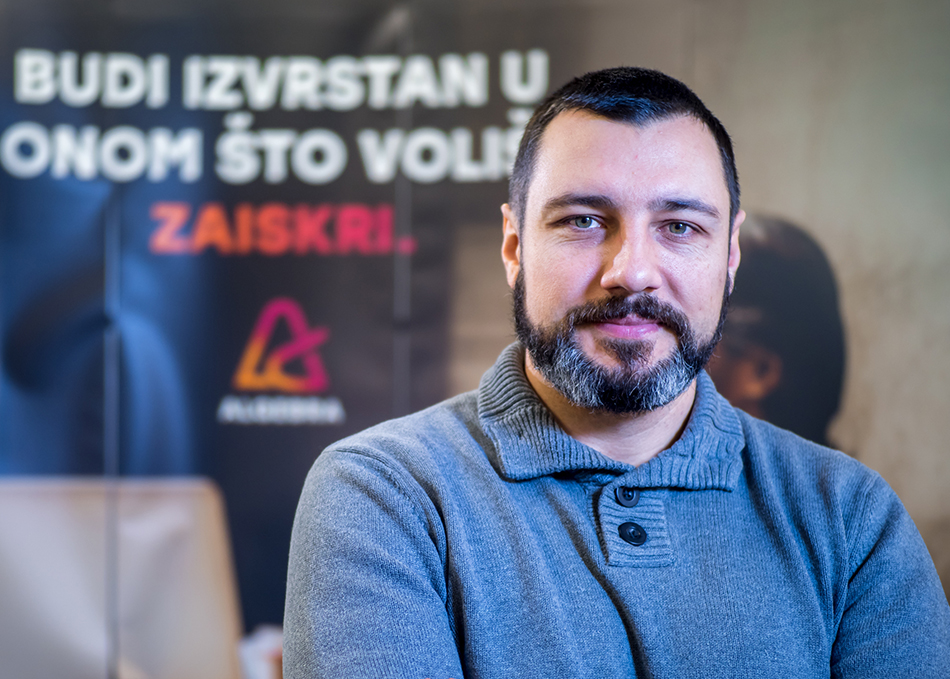
Silvio Papić is a Senior Lecturer at the University of Algebra, where he heads the Computer Networks Department and Systems Engineering studies. He holds a degree in Transport Engineering from the University of Zagreb, specializing in Aeronautics, and accumulated 15 years of expertise in computer networks through private-sector roles and independent learning. Roles: Department Head, Academic Program Coordinator, CCAI Instructor Specializations: Network Infrastructure, Security, Quality Management His research focuses on computer networks , including L2/L3 infrastructure, secure remote connections, data center networks, passive optical networks, and network performance optimization. He emphasizes improving teaching methodologies to foster critical thinking and real-world problem-solving skills, aligning course content with post-graduation industry demands. Silvio’s publications span network recovery in disrupted environments, electromagnetic interference impacts, Wi-Fi multicast-to-unicast testing, and educational psychology studies. He is a Cisco Certified Academy Instructor (CCAI) and mentor in EuroSkills/WorldSkills competitions, blending technical innovation with pedagogical rigor.
Muttukrishnan Rajarajan is a Professor at City University of London specializing in cutting-edge cybersecurity research with applications across critical infrastructure sectors. His work bridges theoretical innovation and practical implementation in decentralized systems, with verified institutional affiliation through r.muttukrishnan@city.ac.uk . His research program focuses on: Hardware-based authentication mechanisms exploiting physical device characteristics Privacy-preserving frameworks for healthcare, finance, and IoT ecosystems Blockchain integration for transparent data marketplaces and identity management Security solutions for smart grids, connected vehicles, and agricultural technology Advanced persistent threat mitigation using explainable AI techniques Analysis of his 2023-2025 publications reveals a strategic shift toward real-world deployment challenges, particularly in agriculture 4.0/5.0 security, BritCoin privacy implications, and federated learning for connected vehicles. His work consistently integrates cryptographic primitives with system-level design to address the tension between usability and security in decentralized environments. Professional Recognition: IEEE Senior Member for significant contributions to cybersecurity Professor Rajarajan actively shapes his field through peer review for Computers & Security and development of standardized security frameworks like the Unified Signature API Library. His research demonstrates strong industry relevance with direct applications in open banking security, drone privacy regulations, and smart grid resilience. Current investigations into crystal oscillator impurities for authentication and blockchain-enabled ML model evaluation indicate forward-looking research directions addressing emerging hardware and AI security challenges.
Mathieu Valette is a University Professor at the Institut National des Langues et Civilisations Orientales (INALCO) in Paris, France, where he serves as Director of the Texts, Computer Science, Multilingualism department since 2021. He leads the ERTIM research team and coordinates the ANR AID ASTRID GECKO project on cognitive warfare since 2023. Previously, he served as President of section 7 (language sciences) of the CNU from 2014-2019 and Director of ERTIM from 2010-2019. Professor Valette's research focuses on the intersection of linguistics, computational methods, and text analysis. His work spans corpus semantics, statistical analysis of textual data, epistemology of natural language processing, and the characterization of harmful content. He has developed methodologies for subjective data mining and has made significant contributions to textual lexicology and automatic language processing. His research bridges theoretical linguistics with practical applications in multilingual contexts, particularly extending from French linguistics to Chinese language processing. Analysis of Professor Valette's recent publications (2020-2025) reveals a clear evolution in his research interests, with increasing focus on cognitive warfare, language models, and mental health detection through social media analysis. His work demonstrates a consistent integration of statistical text analysis with linguistic theory, particularly in the areas of sentiment analysis, corpus semantics, and the epistemological foundations of NLP. Notably, his research has expanded from theoretical linguistics to address contemporary challenges in AI ethics, cross-cultural language processing, and the societal impacts of language technologies. Throughout his career, Professor Valette has maintained active collaborations with researchers across multiple disciplines, including computer science, public health, political science, and cognitive psychology. His administrative roles in major research projects and department leadership demonstrate his significant contributions to the academic community beyond his direct research output.
Francesco Zanichelli is an Associate Professor at the Department of Engineering and Architecture, University of Parma, where he teaches Information Systems for Master's in Computer Engineering and Operating Systems for Bachelor's in Computer, Electronics, and Telecommunications Engineering. He also teaches Industrial Software Development Technologies in Information Systems Engineering. PhD in Information Technology (University of Parma, thesis: Programming Autonomous Robots) Industrial Robotics experience (IBM Fellow) Mobile Robotics research (University of Florida) His research spans: Intelligent robotic systems: software architectures, sensor-based interaction, real-time scheduling algorithms Distributed systems: peer-to-peer middleware, cloud-IoT integration, predictive maintenance Location-based services: blockchain-secured privacy, network-aware distribution Performance evaluation via simulation, PlanetLab testbed, and prototyping He leads the DSG distributed systems research group and participates in national/international projects (FP7, NATO, CNIT). He co-founded spin-offs for vehicle multimedia systems (Etheria Srl) and digital payment solutions (Simplycity Srl).
Péter Ekler is an Associate Professor at the Department of Automation and Applied Informatics , Budapest University of Technology and Economics (BME) , Hungary. He is affiliated with the Applied Mobile Research Group (AMORG) and the Applied Computer Science Group , focusing on cutting-edge research in AI, IoT, and mobile systems. Research Interests: Artificial Intelligence and Machine Learning Internet of Things (IoT) and Smart Cities Wireless Sensor Networks and Energy-Efficient Routing Network Coding and Mobile Peer-to-Peer Systems Blockchain and Distributed Systems Computer Vision and Sensor Data Analysis His recent work includes the development of AI-based thermal imaging systems, energy-aware IoT routing, and secure authentication mechanisms using JWT. He has published extensively on optimizing IoT performance, enhancing mobile streaming with network coding, and applying machine learning to real-world sensor data. Scientific Contributions: Published over 50 peer-reviewed articles from 2013 to 2023 Active on platforms like Google Scholar, Scopus, ResearchGate, and ResearcherID Research spans both technical systems and historical studies in science Contact & Affiliations: Email: Ekler.Peter@aut.bme.hu Location: Q.B226, Magyar tudósok krt. 2., Budapest 1117, Hungary Phone: +36 (1) 463-3702 LinkedIn: http://hu.linkedin.com/in/peterekler
Manfred Mittlböck is a Senior Scientist in Geoinformatics at Paris Lodron University Salzburg (PLUS), actively contributing to research and development projects in geospatial technologies. His work spans multiple domains including geospatial data management, 3D cartography, glacier monitoring, and geoportal development, with numerous publications and projects extending through 2025. Dr. Mittlböck's research interests focus on Geoinformatics applications , particularly in geospatial data infrastructure , 3D indoor cartography , and glacier monitoring systems . His work demonstrates strong integration of theoretical geospatial concepts with practical implementations across various environments from university campuses to alpine regions and Central Asia. His recent publications indicate a growing interest in 5G technology applications in geoinformatics , metadata standards implementation , and integration of geospatial data into 3D virtual environments . These works reflect both technical innovation and practical application in real-world contexts. Among his notable projects are: GSP4CA: Geospatial sharing platform for Central Asia (2025-2026) SpaceSUITE: SPACE downstream Skills development (2024-2027) CAportal: Central Asia Geoportal (2024-2025) Indoor Cartography project (2024) GDI NPVBGD 2023+: Geoinformation strategy for Berchtesgaden National Park (2023-2024) Dr. Mittlböck also contributes to glaciological monitoring efforts in the Upper Stubachtal region of the Hohe Tauern mountains, with research featured in media coverage about accelerating glacier retreat. His work bridges academic research with practical applications in environmental monitoring, spatial data infrastructure, and educational initiatives.
Chih-hsing Ho is a tenured Associate Research Fellow (equivalent to Associate Professor) at the Institute of European and American Studies, Academia Sinica, Taiwan. Since February 2021 he has held a joint appointment at Academia Sinica’s Research Center for Information Technology Innovation (2021–2024) and has been a Research Fellow at the Centre for Medical Ethics and Law, University of Hong Kong since 2019. He also serves on several high-level government advisory committees in Taiwan, including the Advisory Committee on Digital Economy Development (Ministry of Digital Affairs, 2025–present) and the Technology Policy Advisory Committee (Ministry of Health and Welfare, 2023–present). Education Ph.D. in Law, London School of Economics and Political Science (LSE) J.S.M., Stanford Law School LL.M., Columbia Law School LL.B., College of Law, National Taiwan University Research Interests Dr. Ho’s scholarship integrates law, medicine, and emerging technologies. His core interests include: Legal aspects of translational medicine and biobanking – designing governance frameworks for large-scale genomic and health-data repositories. Big-data privacy and data-protection law – analysing GDPR compliance, cross-border data transfers, and secondary use of health data. AI governance and law – exploring regulatory strategies for generative AI in healthcare, algorithmic accountability, and human-robot interaction. Law, medicine and global health – comparative studies on genetic non-discrimination policies, data sovereignty, and equitable access. Law and anthropology – examining group-consent models informed by indigenous perspectives and socio-legal contexts. Publications Trajectory Between 2018 and 2024, Ho has published extensively on the intersection of data-protection law and biomedical research. His work traces an evolution from foundational analyses of GDPR challenges for biobanks (2018) to cutting-edge studies on generative-AI regulation (2024). Recurring themes include comparative governance of health-data infrastructures (FinnGen, NHS England, Taiwan Biobank), privacy-preserving legal architectures for AI, and consensus-building methodologies for genetic non-discrimination policies. His recent co-authored Delphi consensus statement in JAMA Network Open exemplifies his commitment to evidence-based policy design. Scientific Awards & Grants National Science and Technology Council Award for Outstanding Scholars, Taiwan (2024–2025; 2021–2022; 2019–2020) Ministry of Science and Technology Recruiting Outstanding Scholars Award, Taiwan (2014–2017) Academia Sinica Recruiting Outstanding Scholars Award, Taiwan (2014–2016) LSE Olive Stone Memorial Scholarship (2007–2009) LSE Morris Finer Award for Socio-Legal Studies (2007–2008) LSE Wedderburn Writing-Up Grant (2010–2012) Ministry of Education Studying Abroad Scholarship, Taiwan (2007–2009) Grants & Governance Roles Ho currently convenes the AI Governance Laboratory at IEAS (2023–present) and sits on more than a dozen national ethics and policy boards, including: Legal Affairs Committee, Academia Sinica (2025–present) Committee on Risk Assessment of Generative AI, Academia Sinica (2025–present) Ethics and Governance Council (EGC) of Taiwan Biobank (2019–present) Multiple Institutional Review Boards (IRB-BM, Academia Sinica; CDC Taiwan; Tri-Service General Hospital; Development Center for Biotechnology) Labs & Teams He leads the AI Governance Laboratory at the Institute of European and American Studies, fostering interdisciplinary collaboration among legal scholars, computer scientists, and medical ethicists to craft responsible AI policies. Previously, he convened the EU Core Research Group (2017–2020), promoting comparative European studies at Academia Sinica.
David Hoksza is an Associate Professor at the Department of Software Engineering, Faculty of Mathematics and Physics, Charles University in Prague. His work bridges bioinformatics and computational biology through innovative algorithm and tool development. University: Charles University School: Faculty of Mathematics and Physics Department: Department of Software Engineering His research focuses on structural bioinformatics and data visualization, particularly in protein and RNA structure analysis. He has also contributed to cheminformatics (ligand-based virtual screening), computational genomics (MinION data analysis), and systems biology (molecular network visualization). David has led major projects including the P2Rank framework for ligand-binding site prediction, R2DT for RNA secondary structure visualization, and the Genomics 2 Proteins portal for linking genetic data to protein structures. His publications span high-impact journals like Nucleic Acids Research , Bioinformatics , and Nature Methods . Recent articles highlight his expertise in RNA structure prediction, protein-ligand interactions, and neurodevelopmental disorder analysis. His work emphasizes template-based modeling, machine learning, and web-based tool development. Scientific Awards David actively teaches courses on data visualization and bioinformatics algorithms, with a focus on practical implementation using technologies like D3.js, Tableau, and Python. He contributes to open-source software and maintains a GitHub repository for his tools.
Dr. Sepehr Alizadehsalehi is an adjunct lecturer and researcher at Northwestern University's Robert R. McCormick School of Engineering and Applied Science, where he teaches in the Master of Project Management program. Concurrently, he works as an industry professional in land development and real estate in California's Bay Area. His global experience spans major construction projects across the Middle East, Europe, and North America. His educational background includes: Ph.D. in Civil Engineering with a specialization in Construction Management M.S. in Project Management M.S. in Civil Engineering B.S. in Civil Engineering Dr. Alizadehsalehi's research centers on transformative construction technologies including Building Information Modeling (BIM), Extended Reality (XR), Artificial Intelligence (AI), the Metaverse, Cognitive Digital Twins, Reality Capture Technologies, and Lean Construction methodologies. His investigations focus on practical implementation challenges and innovative applications in industrial workflows. His scholarly contributions demonstrate consistent focus on digital transformation in construction, with recent works exploring the integration of AI with extended reality, metaverse applications in AEC, and cognitive digital twins. The publications reveal strong emphasis on practical implementation challenges, sustainability considerations, and human-centric approaches to technological adoption. Dr. Alizadehsalehi actively contributes to academic discourse as an editor and reviewer for leading journals including Automation in Construction (Elsevier), ASCE Journal of Construction Engineering and Management , and Advanced Engineering Informatics .
Prof. Dr. Katrien De Graef is a Professor in the Department of Languages and Cultures at Ghent University, specializing in the languages and socio-economic history of 2nd millennium BCE Babylonia and Elam. Her research bridges traditional philology with digital humanities methodologies, creating innovative approaches to ancient Near Eastern studies. Her research focuses on: Prosopography of Babylonian and Elamite societies Sealing practices as social and economic indicators Network analysis of ancient Near Eastern communities Digital methodologies for cuneiform texts (OCR, NLP) Gender studies in Old Babylonian society De Graef's research demonstrates strong interdisciplinary connections between traditional philology and computational methods. Her recent publications show a clear trajectory toward integrating digital humanities approaches with traditional Assyriological research, particularly in developing OCR for cuneiform cursive script and NLP pipelines for annotating cuneiform texts. This work enhances the integration and interpretation of textual, prosopographical, and material data from the ancient Near East. Her notable scientific contributions include: Research on sealing practices of women in Old Babylonian Sippar Analysis of nadītu women's social identity Studies on the Sukkalmah dynasty in Elam Examination of dual power structures in ancient Susa Investigation of matronymics in Sukkalmah Susa As a supervisor, Prof. De Graef has guided several doctoral students to completion, including Hendrik Hameeuw (2020), Astrid Verhulst (2015), and Guido Suurmeijer (2014). She leads multiple research projects including "CUNE-IIIF-ORM" (2021-2026) which aims to create an internationally image interoperable corpus of cuneiform tablets, and "War, trade and diplomacy" examining international relations between Babylonia and Elam. Her laboratory and research team work at the intersection of Assyriology and digital humanities, collaborating with computer scientists and archaeologists to develop new methodologies for studying ancient texts and material culture.