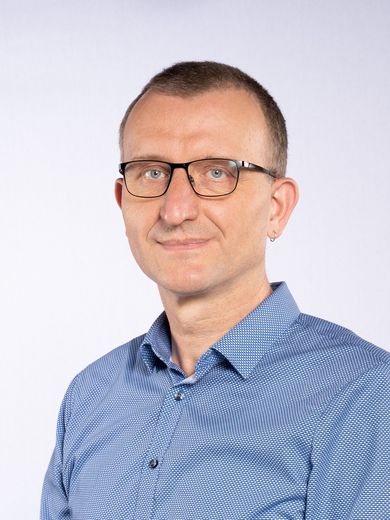
Lorien Abroms, ScD, is a Professor of Prevention and Community Health and Associate Dean for PhD & MS Programs at George Washington University's Milken Institute School of Public Health. She directs the GW mHealth Collaborative and co-directs the BRIGHT Institute for digital health research. Doctor of Science (ScD) - Harvard School of Public Health (2002) Master of Arts (Sociology) and Bachelor of Science (Psychology) - Brown University Her research focuses on digital communication technologies for health promotion, particularly smoking cessation and vaccine uptake. Key projects include Text2Quit, SmokefreeMoms, and Quit4Baby programs, integrating AI and bi-directional SMS for tobacco treatment. Recent publications examine tobacco product marketing regulations (2023), AI-driven cessation tools (2024), and social media misinformation countermeasures (2021-2022). Articles span public health, health communication, and digital behavior change mechanisms. Awards include: APHA PHEHP Early Career Award APHA Best Materials Award Harvard School of Public Health's Gareth M. Green Award She contributes to policy through WHO advisory roles and leads the Digital Health Promotion Executive Leadership Summit with Society for Public Health Education.
Rainu Kaushal, MD, MPH, is a distinguished academic leader at Weill Cornell Medical College , serving as the Senior Associate Dean of Clinical Research , Chair of Population Health Sciences , and Nanette Laitman Distinguished Professor . Her work focuses on pediatric patient safety , health information technology , and value-based healthcare delivery , with particular emphasis on interoperable systems and the economic value of EHRs. Physician-in-Chief of Population Health Sciences at NewYork-Presbyterian Hospital Principal Investigator of the INSIGHT Clinical Research Network Leader of RECOVER Program research on Long COVID Dr. Kaushal has pioneered the creation of the largest urban clinical database in the U.S. with 22 million patients, instrumental in national research efforts. Her studies on telemedicine effectiveness during the pandemic and mobile stroke units have reshaped healthcare delivery strategies. She serves on advisory boards for organizations including PCORI and National Institutes of Health . She has received numerous accolades including National Academy of Medicine membership and Crain's Notable Women in Healthcare recognition. Her research portfolio includes over 200 publications spanning EHR safety , telehealth disparities , and pediatric medication errors .
Joanna F. Defranco is an Associate Professor of Engineering at the Engineering Division (Great Valley) of Pennsylvania State University. Her research focuses on software development, internet of things (IoT), blockchain, and artificial intelligence, with a particular emphasis on quality assurance, security, and practical implementations in engineering and healthcare. Research Interests Defranco's work addresses critical challenges in IoT security, digital twins for manufacturing, and AI-driven software quality analysis. She explores secure data sharing frameworks, blockchain applications in healthcare, and the evolution of low-code/no-code platforms. Her recent publications highlight interdisciplinary approaches to telemedicine, smart agriculture, and urban infrastructure. Publication Trends Her 2023-2025 publications show increasing focus on IoT integration with AI, secure healthcare data systems, and the societal implications of emerging technologies. Key themes include digital twin adoption in SMEs, generative AI's impact on software development, and cybersecurity resilience. Collaborations She collaborates with institutions like IEEE and researchers such as Paul Laplante, Joseph Voas, and Thrasyvoulos Speicher. Her work bridges engineering education with real-world applications in manufacturing, agriculture, and healthcare.
Mebtu Bihonegn Beza is an Associate Professor at Chalmers University of Technology, Sweden, specializing in Electrical Power Engineering . His research focuses on power electronic converters, grid stability analysis, and HVDC transmission systems, particularly for offshore wind farm integration. Education: M.Sc., Lic.Eng., and Ph.D. in Electrical Power Engineering from Chalmers (2009, 2012, 2015) Key Research Themes: Grid-forming converters, electromagnetic transients, renewable energy system stability, and impedance/resonance analysis Recent publications (2024–2023) analyze advanced control strategies for converters, including small-signal stability, multiport architectures, and inertia emulation techniques. He collaborates on projects related to frequency-based stability tools and PhD programs with Addis Ababa University. Projects: Frequency-based analysis tool for converter-dominated grids (Swedish Energy Agency, 2023–2027) PhD program collaboration with Addis Ababa University (2018–2025) Contact: mebtu.beza@chalmers.se
Heikki Ailisto serves as a Research Professor at VTT Technical Research Centre of Finland within the BA5A Management and Support department. With a research career spanning from 1985 to present, he maintains active involvement in cutting-edge technology research and development projects. His research interests focus on Artificial Intelligence applications , Software Engineering methodologies , Smart Building technologies , and Digital Governance frameworks . A significant portion of his work addresses the practical implementation of AI systems in public sector contexts and industrial applications, with particular attention to Finnish societal needs and environmental considerations. Analysis of his recent publications reveals a strong trend toward interdisciplinary research connecting technology development with policy implications and sustainability goals. His work consistently bridges theoretical concepts with practical implementations, particularly in energy management systems and manufacturing data integration. Dr. Ailisto actively contributes to major research initiatives including: Future of Software Engineering (2025-2027) GOWELL: Governance of new technologies towards sustainability and well-being (2024-2026) His media presence includes contributions to discussions about AI development in Finland, such as the 2021 media appearance "Kohti tekoälyn kesää?" (Toward the Summer of AI).
Dr. Andreas Vlachidis is an Associate Professor in the Department of Information Studies at University College London (UCL), Faculty of Arts and Humanities. He serves as Co-Investigator and Technical Lead of the Sloane Lab, Principal Investigator of the 'Text Analytics for inclusive AI education platforms' project, and convenor of the Alan Turing Research Interest Group – Humanities and Data Science. Previously, he held academic positions at the University of the West of England and University of South Wales. His educational background includes a PhD in Semantic Indexing of Archaeological Grey Literature, MSc, and dual BSc degrees from the University of Glamorgan. He is a Fellow of the Higher Education Academy (FHEA) and a member of the British Computing Society (BCS). Dr. Vlachidis's research focuses on interdisciplinary work at the intersection of Information Science, Humanities, and Computer Science. His primary interests include Information Extraction, Semantic Data Modeling, Metadata, Natural Language Processing, and Text Mining, with applications in cultural heritage, digital humanities, and social sciences. His work emphasizes data integration, FAIR data principles, and semantic interoperability for cultural heritage collections. His recent publications demonstrate expertise in cultural heritage data modeling, semantic technologies for historical collections, NLP applications, and inclusive AI education. His work with the Sloane Lab project has been particularly influential in advancing knowledge base development for historical catalogues and museum collections. Outstanding Paper award from the Emerald Literati Network Fellow of the Higher Education Academy (FHEA) Member of the British Computing Society (BCS) Dr. Vlachidis supervises multiple doctoral students including Liu Lu (principal supervisor) and secondary supervises Binxia Xu, Charlotte Heng Men, and George Cooper. He has previously supervised to completion Helena Holis, Diego Ramírez Echavarría, and Olga Loboda. He serves as Departmental Tutor for pastoral care of students and chairs important committees including the Departmental Staff Student Consultative Committee. He leads significant research projects including the Sloane Lab (data unification, aggregation, and knowledge base development) and 'Text Analytics for inclusive AI education platforms' (promoting literacy development and writing skills). He also collaborates with the EU Horizon 2020 Ariadne Plus project on multilingual processing of archaeological literature.
Dr. Ulisses Nunes da Rocha is a Junior Group Leader at the Helmholtz Centre for Environmental Research (UFZ) in Germany, specializing in Environmental Microbiology and Computational Biology . He holds a guest professorship at the Institute of Mathematics and Computer Sciences (ICMC), University of Sao Paulo , Brazil, since 2019. PhD in Microbial Ecology (2010), University of Groningen MSc in Agricultural Microbiology (2005), Federal University of Viçosa BSc in Life Sciences (2002), Federal University of Rio de Janeiro His research focuses on microbial community dynamics in diverse ecosystems, integrating machine learning and multi-omics data to model community function prediction. Key collaborations include institutions in Brazil, Portugal, and the Netherlands, with special emphasis on human microbiome dysbiosis and marine microbial interactions . His team has developed major resources like the TerrestrialMetagenomeDB and HumanMetagenomeDB databases. Recent publications highlight innovative approaches to bioindicator detection and metagenome-assembled genomes across multiple environmental contexts. The group integrates bioremediation , ecotoxicology , and microplastics research through international partnerships. Funding includes the Helmholtz Young Investigator Grant (€1.8M) and dual degree programs between UFZ and Brazilian universities.
Dr Flavio Pileggi is a Senior Lecturer in Computer Science at the University of Technology Sydney (UTS), Australia, since July 2023. Previously, he served as Lecturer in Computer Science (2021–2023) and Information Systems (2017–2021) at the same institution. Education: Ph.D. in Computer Networks (Cum Laude), Universitat Politècnica de València, Spain (2011) M.Sc. in Computer Engineering, Università della Calabria, Italy (2005) As a specialist in Knowledge Engineering and Ontology-based Systems, his research focuses on human-centric socially sustainable solutions, particularly socio-technical systems, sustainable development, and climate change. His work bridges technical innovation with socio-economic and environmental value creation. Recent publications explore uncertainty in clustering algorithms, AI ethics, digital twins with ontologies, and socio-technical impacts of AI in education. His 15 most recent articles (2021–2025) span topics like self-reported data risks, smart technology adoption in rural regions, and pandemic resilience metrics. Scientific Awards: Best Paper Award at ICWMC 2006 Teaching Awards from AEMG Education (2022, 2024) He actively supervises PhD/Masters students and participates in 10+ funded collaborative research projects, including grants from UTS MCR Research Capabilities Development Initiative (2025) and CSIRO Next Generation Graduates Program (2024–2027). Currently, he serves on the editorial board of Sustainability (MDPI).
Prof. Jürgen Knies serves as Professor and Vice Dean of Faculty 2 (Faculty of Architecture, Civil Engineering and Geomatics) at Bremen City University of Applied Sciences. Based in the Department of Infrastructure Planning of Environmental and Energy Systems (building UB, room 107), his work integrates ecological principles, Geographic Information Systems (GIS), Building Information Modeling (BIM), and environmental law to address complex infrastructure challenges. His leadership extends to municipal heat planning initiatives and跨-institutional research networks across Northwest Germany. His research focuses on urban energy transitions , with particular emphasis on heat system transformation, spatial planning integration, and socio-technical implementation barriers. Key methodologies include GIS-based spatial analysis, BIM integration, and multi-stakeholder governance frameworks. Current investigations target cold district heating networks, wastewater heat recovery, solar cadastre validation, and equity considerations in energy transitions—always contextualized within Bremen's municipal challenges and North German regional cooperation frameworks. Analysis of his 15 most recent publications (2017-2025) reveals a consistent trajectory: evolving from foundational spatial energy modeling toward integrated socio-technical solutions for urban heat transitions. The body of work demonstrates increasing sophistication in Digital integration (E-Government/BIM fusion) Multi-scale spatial analysis (neighborhood to regional) Equity-focused implementation strategies Legal-regulatory-compliance frameworks with Bremen serving as both living laboratory and model for municipal energy planning. No scientific awards are documented in the provided materials. His advising activities center on thesis supervision in infrastructure planning, while grant leadership includes major projects: hyBit (Hydrogen for Bremen's industrial transformation; 2021-2022) Heat Transition Northwest (digitalization for heat implementation; 2021-2025) North German Research Associations coordination Bremen Heat Transition Network initiatives These involve partnerships with municipal authorities, industry, and regional research consortia. His operational ecosystem includes the GIS Laboratory for spatial analysis, active participation in Networking AG Wärme (Heat Working Group), and leadership in the Bremen Heat Transition Network . Current engagements extend through 2026, including coordination of the 3rd North German Conference on Thermal Research—demonstrating sustained commitment to advancing urban energy infrastructure through academic-practice integration.
Emilia Niemiec is a Postdoctoral Researcher at the Center for Advanced Studies in Bioscience Innovation Law within the Faculty of Law at the University of Copenhagen. Her work focuses on the intersection of law, ethics, and emerging technologies in healthcare contexts, with particular expertise in medical AI regulation and genomics ethics. Education: PhD in Law, Science and Technology from the University of Bologna Master of Bioethics from the University of Leuven Biotechnology (MSc, BEng) from Warsaw University of Life Sciences Dr. Niemiec's research examines legal and ethical implications of artificial intelligence in medicine. She is actively involved in the CLASSICA project developing an AI-based surgery support system, analyzing how EU regulatory frameworks like the AI Act, Medical Device Regulation, and GDPR apply to medical AI systems. Her previous work explored ethical issues in genomics, including consumer genomics companies' use of health data and informed consent in genome editing studies. She employs both empirical methods (content analysis, surveys) and theoretical approaches in her scholarship. Her publication record demonstrates consistent focus on regulatory challenges for medical AI in the European context, examining issues like dataset bias, post-market surveillance requirements, and effectiveness of regulatory frameworks in ensuring safety of AI medical devices. Her work has appeared in high-impact journals including Nature Machine Intelligence, Nature, EMBO Reports, and Expert Review of Medical Devices. Dr. Niemiec has established herself as a sought-after expert through numerous invited presentations addressing legal challenges in multi-country medical AI projects, data governance under the AI Act, and methods for confirming effectiveness of AI medical software. She serves as an associate editor for the Research Ethics journal, contributing to scholarly discourse in her field. Her research has been supported through positions at prestigious institutions including the Centre for Research Ethics and Bioethics at Uppsala University and the Medical Ethics group at Lund University, with the latter funded by a personal grant from the Swedish Research Council for Health, Working Life and Welfare. She maintains active collaborations across European research networks as evidenced by her multi-country publications and presentations.
Professor Martin J. Hayes serves in the Department of Electronic and Computer Engineering at the University of Limerick's Faculty of Science and Engineering. His institutional affiliation includes campus location ERB2-021 and contact details: email Martin.J.Hayes@ul.ie and phone +353 (0)61 202577. His research concentrates on Artificial Intelligence and Computer Vision applications within Smart Manufacturing and Autonomous Vehicles . Key specialties include deep learning for defect detection, visual question answering systems, and real-time failure monitoring in industrial environments. He also investigates interoperable IoT security frameworks and private 5G network implementations for Industry 4.0. Analysis of recent publications (2023-2025) reveals dominant themes in AI-driven manufacturing solutions and autonomous driving technologies. His work consistently addresses data-constrained training environments and real-time performance requirements, with growing emphasis on human-machine interaction patterns and subjective evaluation frameworks for vision systems. Scientific Awards: No scientific awards were documented in available sources Advising and Grants: While specific student advisement records and grant details were not provided, Professor Hayes' extensive publication output across manufacturing automation, autonomous systems, and wireless communications indicates active leadership in multiple research initiatives. His involvement in the REEdI (Rethinking Engineering Education in Ireland) project demonstrates commitment to educational innovation alongside technical research.
Wonhyuk Cho is a Senior Lecturer in Public Management and PhD Programme Director at the Victoria University of Wellington's School of Government. He has held academic positions at the University of Kansas, Centre for Government Competitiveness, Korean Institute of Public Affairs, and Seoul National University prior to his current role in New Zealand. His academic leadership includes serving as Chair of the School Research Committee (2020-2021) and as Visiting Assistant Professor at Seoul National University (2020-2021). Dr. Cho's research focuses on Human Resources Management, Digital Government, Performance Management, Law Enforcement Organizations, and Asian Public Policy. His work examines how public organizations can enhance performance through effective HR practices, digital transformation, and citizen engagement. He investigates the complex relationships between employee voice, organizational performance, and competing stakeholder demands, as well as the challenges of implementing digital government initiatives in different cultural contexts. His publication record demonstrates consistent output in top-tier journals including the Journal of Public Administration Theory and Research (JPART), Public Administration Review (PAR), and Government Information Quarterly (GIQ). Recent work addresses critical contemporary issues such as AI risk management in the public sector, digital leadership competencies, and the impact of public service motivation on staff shortage perceptions. PPM Best Article Award (2023) Elsevier Atlas Award Nomination (2020) As an editorial board member for Public Administration, the Asia Pacific Journal of Public Administration, and the Korean Journal of Public Administration, and as review editor of the International Review of Public Administration, Dr. Cho actively contributes to advancing scholarship in the field. His current research projects include examining social cohesion through housing policy, with funding from Te Herenga Waka-Victoria University of Wellington.
Anuragini Shirish is a Full Professor in Information Systems at Institut Mines-Télécom Business School (IMT-BS), France. She holds a habilitation à diriger des recherches (HDR) from Université de Strasbourg and is affiliated with the LITEM (Laboratoire Innovation Technologies Économie et Management) under University of Paris-Saclay. Her research examines sociotechnical impacts of digital work, innovation, and society. HDR (2022) – Université de Strasbourg PhD (2016) – Université Paris-Saclay LLM (2006) – National University of Singapore IP Certification (2003) – World Intellectual Property Organization B.A. L.L.B. (2003) – University of Chennai Her research connects digital responsibility, AI governance, and ethical technology use across sectors. She has published extensively in Journal of Management Information Systems (JMIS) , European Journal of Information Systems (EJIS) , and Information Systems Journal (ISJ) , with recent focus on identity management, employee advocacy platforms, and AI policy alignment in education. Key conference presentations include ICIS , AMCIS , and AIM . Scientific recognition includes: AIS Distinguished Member Cum Laude (2023) Best Paper at JAIS (2023) Outstanding Educator Award (AIS Women’s Network, 2021) Second Sphinx PhD Thesis Award (2017) She chairs sessions at ICIS , serves on editorial boards for EJIS and ICIS , and mentors through Jr. Faculty Consortium . Her work addresses technostress, digital ethics, and cross-cultural leadership.
Professor Tamas Kiss is a distinguished academic at the University of Westminster, serving as Professor of Distributed Computing at the School of Computer Science and Engineering. He holds dual leadership roles as Director of the Research Centre for Parallel Computing and Director of Research and Knowledge Exchange at his School. Since 2020, he has been Editor in Chief of the Journal of Grid Computing published by Springer Nature. His research focuses on cloud orchestration at the application level, cloud native application development, and edge-fog-cloud systems management. He has developed significant solutions including the MiCADO cloud orchestrator for microservices-based applications, the CloudSME and CloudiFacturing platforms for manufacturing companies, and the PITHIA e-Science Centre for space physics research. These innovations have been adopted by over 100 companies, generating substantial economic impact. Professor Kiss has secured over £65 million in research funding and led more than 20 European and UK-funded projects. His publication record includes over 150 scientific papers in top journals and conferences. Current major projects include STEP-UP (UKRI EPSRC), Swarmchestrate, ARCAFF, HARPOCRATES, and PITHIA-NRF. His research outputs demonstrate a clear progression from foundational grid computing work to current focus on cloud-edge continuum orchestration and industry 4.0 applications. The most recent publications (2023-2025) emphasize decentralized application frameworks, privacy-preserving machine learning at the edge, and interoperable data analytics for digital twin manufacturing. Professor Kiss actively supervises doctoral researchers working on cutting-edge topics including swarm-based orchestration, federated learning in resource-constrained environments, and NFC implementation in industrial IoT systems. His leadership extends to directing the Centre for Parallel Computing, which focuses on cloud computing, distributed computing, high performance computing, and cloud-based simulation for manufacturing.
Saikat Dutta is an Assistant Professor in the Department of Computer Science at Cornell University, where he joined in August 2024. His research sits at the intersection of Software Engineering and Machine Learning, with a focus on improving the reliability of machine learning systems and leveraging machine learning techniques to solve challenging software engineering problems. His research interests span several key areas including automated test generation and debugging of ML/DL libraries , using AI/ML for automated software engineering , improving performance and effectiveness of regression tests in ML libraries , and static and dynamic analyses for probabilistic programming . His work bridges theoretical foundations with practical applications in real-world systems. Dutta has developed multiple influential frameworks and tools including BugsInDLLs (a database of reproducible bugs in deep learning libraries), FLEX (for fixing flaky tests in ML projects), and TERA (for optimizing stochastic regression tests). His research has been published in top-tier venues including ICSE, FSE, ISSTA, PLDI, and ICLR. Amazon Research Award 2025 Meta AI LLM Evaluation Research Grant 2025 Mavis Future Faculty Fellowship 2022-23 Facebook PhD Fellowship 2020-22 3M Foundation Fellowship 2019-2020 Dutta actively mentors PhD students including Yingao (Elaine) Yao, Shinhae (Joseph) Kim, and Junkai Huang. He has served on program committees for major conferences including ASE, ISSTA, and ICSE. His teaching includes courses on Software Engineering in the Era of ML/AI.