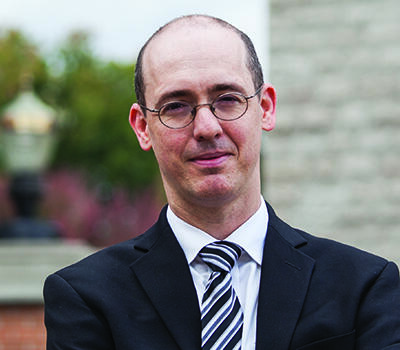
Erik Mannens is a Professor at Ghent University and Research Valorisation Director at imec, specializing in Semantic Technologies and Artificial Intelligence since 2005. He leads the Data Science team at IDLab, managing over 50 researchers focused on advancing semantic data science and its applications. Education: PhD in Computer Science Engineering (2011), Master’s in Computer Science (1995), and Master’s in Electro-Mechanical Engineering (1992) The team explores the fusion of semantics and AI, aiming to: (1) analyze the Web’s societal impact, (2) study Web-enabled lifestyle changes, and (3) develop future Web innovations. Their work emphasizes Open Source , Open Access , and Open Knowledge principles. His research spans Semantic Intelligence , Big Data Analytics , and Linked Data applications, with notable publications on RDF mappings, IoT platforms, and distributed data querying. Key projects include MapVOWL, RMLEditor, and the MASSIF platform. Current affiliations include Ghent University’s IDLab , where he contributes to cutting-edge research in data science and semantic technologies.
Jon Blower is an academic affiliated with the University of Reading's Department of Geography and Environmental Science. His work focuses on climate data management, environmental data visualization, and geospatial technologies. He has contributed to projects like the C3S ECEM climate service, the CHARMe metadata initiative, and the GODIVA2 web mapping system. His research spans cloud computing applications in environmental science, oceanographic data dissemination, and urban density analysis. He has authored over 40 peer-reviewed publications and technical reports, including foundational work on Climate Forecast metadata conventions and cloud-based GIS systems. Blower has led interdisciplinary efforts in integrating environmental data quality frameworks and developing open-source tools for geospatial analysis. Education & Background: While specific educational details are not explicitly stated, his extensive contributions to environmental science and computing imply advanced training in these fields. His work often bridges computer science and environmental applications, suggesting a multidisciplinary academic background. Research Focus: Key areas include: Data interoperability standards (e.g., CF metadata conventions) Climate service development for energy policy Interactive environmental data visualization systems Cloud computing for large-scale environmental datasets Oceanographic data synthesis and quality frameworks Recent Trends in Publications: Recent work emphasizes urban systems analysis (2023), renewable energy-climate integration (2018), and cloud infrastructure for environmental science (2014/2016). Earlier contributions focused on ocean data systems (2009-2012) and grid computing for climate modeling (2006-2009). Awards & Grants: No specific awards listed, but his sustained contributions to major projects like GODAE and MELODIES reflect institutional recognition. Active in grant-funded initiatives related to environmental data infrastructure. Labs/Teams: Collaborates with teams at the National Oceanography Centre, NASA, and European climate initiatives. Core contributor to projects managed by organizations like ESA and the UK's Natural Environment Research Council (NERC).
Abdul-Rahman Mawlood-Yunis is an Associate Professor in the Department of Physics and Computer Science at Wilfrid Laurier University. His research focuses on Artificial Intelligence, Android Mobile Application Development, Software Engineering, Distributed Systems, and P2P Networking with an emphasis on fault-tolerant systems and semantic web technologies. He has contributed to frameworks for live streaming apps and machine learning algorithms for feature selection. Research interests include: Chatbots and Natural Language Processing (NLP) Ontology engineering and knowledge representation Algorithm design for distributed systems Mobile agent performance analysis Fault-tolerant semantic P2P networks His recent work (2022-2024) emphasizes machine learning applications in feature selection and real estate price estimation, reflecting a shift towards data-driven solutions. Earlier contributions (2003-2013) explored foundational aspects of mobile agents and semantic interoperability in P2P networks. Teaching responsibilities include courses on Android development and Java programming, with associated open-source materials and courseware. His book Android for Java Programmers provides foundational resources for students and instructors. Languages spoken: English, Kurdish, Arabic, Farsi.
Lan Wang is a Professor in the Department of Computer Science at the University of Memphis, temporarily assigned as a Program Director at the NSF. She holds a PhD in Computer Science from UCLA (2004). Her research focuses on Internet architecture, network security, and wireless sensor networks, with major grants from NSF, NIST, and DoD, including a $15M NSF-funded 'Named Data Networking' project. She has served as Department Chair (2016-2023) and is an IEEE Senior Member. Dr. Wang's research emphasizes scalable, reliable, and secure Internet infrastructure. She has pioneered advancements in named-data networking (NDN), including protocols for adaptive forwarding, secure access control, and efficient traffic management. Her work extends to applications in smart cities, public safety, and healthcare data sharing. She has received prestigious awards including the Willard R. Sparks Eminent Faculty Award (2022) and Dunavant Professorship (2021). Her teaching spans courses like Networking and Information Assurance, Advanced Computer Networks, and Wireless and Mobile Computing. She actively promotes gender diversity in CS, co-organizing events like the 'Networking Networking Women' panel at SIGCOMM. Her grants total over $15M, including NSF’s NDN project and university-funded initiatives. She advises the Women in Computing student chapter and has served on over 50 conference committees.
Dr. Holger Eichelberger is part of the Academic Staff in the Software Systems Engineering (SSE) department at the University of Hildesheim's Institute of Computer Science. He is affiliated with Faculty 4: Mathematics, Natural Sciences, Economics and Computer Science. His roles include membership in the Managing Committee of the Institute of Computer Science and the Committee for Student Scholarships. He has extensive experience in model-based software development, Industry 4.0 platforms, and performance engineering. Research Interests: Software Engineering for adaptive systems, Asset Administration Shells (AAS), IIoT platforms, MLOps, container orchestration, and open-source tools like EASy-Producer and SPASS-meter. His work focuses on bridging research and industrial needs, particularly in smart manufacturing and edge computing. Publications highlight contributions to IIoT platform analysis, AI integration in Industry 4.0, and performance benchmarking of communication protocols. He has organized conferences like ICPE and SSP and reviewed for top journals such as IEEE Transactions on Software Engineering. Key projects include the IIP-Ecosphere platform and contributions to standards like AAS. Collaborations involve institutions like the University of the West Indies and industry partners through funded projects like BMBF AI-Lab HAISEM. His research emphasizes reproducibility, interoperability, and scalable solutions for industrial challenges.
Ahmed E. Khaled is an Associate Professor in the Department of Computer Science at Northeastern Illinois University and Visiting Associate Professor at the University of Chicago. His research focuses on distributed systems with specialization in IoT applications for smart healthcare, location-based services, and data management. He leads the IoT & Systems Lab, developing frameworks including the Atlas IoT Framework, IoMT for healthcare systems, IoT Emulator, and Location Based Services platforms. His research employs experimental approaches to system implementation and validation. Khaled teaches courses including Intro to IoT, Parallel Computing, Database Systems, and Operating Systems. He mentors numerous graduate and undergraduate students across IoT, healthcare technology, and cloud computing projects. His research has been published in journals such as IEEE Access and Open Journal of Internet of Things.
Dr. David A. Dorr is a Clinical Professor at the Oregon Health & Science University (OHSU), School of Medicine , where he serves as the Chief Research Information Officer. His work bridges clinical practice, medical informatics, and artificial intelligence to enhance healthcare delivery for older adults and those with chronic conditions. Residency: Internal Medicine Fellowship: Medical Informatics Certifications: Internal Medicine, Clinical Informatics Dorr’s research focuses on collaborative care, chronic disease management, and clinical information systems , with a strong emphasis on patient safety and longitudinal care models. His projects include AI-driven diagnostics , multimorbidity analysis , and data-sharing frameworks to improve population health. Recent publications highlight his contributions to voice AI research, EHR optimization, and multimorbidity progression . Key themes include predictive analytics , telehealth stigma mitigation , and enterprise data warehouse maturity . His work often intersects with learning health systems and health equity . Scientific Awards: AMIA New Investigator Award (2007) Dorr leads the Care Management Plus research team and co-directs the Center for AI-Enabled Learning Health Science , advancing interdisciplinary initiatives in health informatics and patient-centered care . His grants focus on data-sharing infrastructure and Clinical Decision Support (CDS) development.
Dr. Paul N. Gorman serves as Thread Director for Health Systems Sciences and Assistant Dean for Rural Medical Education at Oregon Health & Science University's School of Medicine. With over 30 years of clinical experience spanning rural primary care internal medicine, geriatrics, and urban hospitalist practice, he integrates systems thinking into medical education through the OHSU YourMD curriculum and expands rural physician workforce development via the Campus for Rural Health. His educational foundation includes: B.S. from University of Illinois at Chicago Circle (1975) M.D. from Rush Medical College (1980) Internal Medicine Internship & Residency at Rush Presbyterian-St. Luke's Medical Center Chief Residency (1983-84) and General Internal Medicine Fellowship at Portland VA Medical Center (1990-92) Dr. Gorman's research examines clinician information seeking behaviors, distributed cognition in clinical settings, and naturalistic decision making with emphasis on human factors in healthcare systems. His work bridges medical informatics and practical clinical workflows to enhance healthcare delivery through systems-based practice education. Current scholarship focuses on health systems science curriculum development, clinical decision support optimization, and rural healthcare access. His publication trajectory demonstrates evolving expertise from foundational human factors research toward healthcare system transformation, with recent work emphasizing cost-conscious care integration, clinical workflow modeling, and sociotechnical system design. Key themes include optimizing decision support while mitigating alert fatigue, understanding team process variations, and developing context-aware educational interventions. Honors include: Fellow of the American College of Physicians Fellow of the American College of Medical Informatics Dr. Gorman actively advocates for universal healthcare access through Physicians for a National Health Program and Health Care for All Oregon. His leadership in rural medical education expansion addresses critical physician workforce shortages while maintaining board certification in Internal Medicine. Current initiatives focus on implementing health systems science threads across medical education continuums and strengthening academic-community partnerships for equitable care delivery.
Nesime Tatbul is a Senior Research Scientist at Intel Labs and MIT's Computer Science and Artificial Intelligence Lab (CSAIL). She leads Intel's Data Systems and AI Lab (DSAIL) and previously held a faculty position at ETH Zurich. She holds a PhD and MS from Brown University and BS/MS from Middle East Technical University (METU). Her research focuses on large-scale data management systems, learned systems, time series analytics, and observability. Key contributions include the Aurora/Borealis and S-Store systems. She has served on program committees for SIGMOD, VLDB, and CIDR, and holds roles as an ACM Distinguished Member and IEEE Senior Member. Her work spans over 70 publications, including influential contributions to stream processing and query optimization. Awards include the PVLDB Distinguished Editor Award (2023), CIDR Test of Time (2025), and ACM SIGMOD Best Paper (2021). Current projects include DSAIL, Exathlon, and Mach, advancing observability and AI-driven data systems. She also contributes to editorial roles at VLDB and PVLDB.
Robert Manderson is a Senior Lecturer in the University of Roehampton Business School, specializing in information systems, project management, and business research. He holds a B.Sc., Dip.Sc., M.Sc., and is a Fellow of the Higher Education Academy and PRINCE2 Registered Practitioner. His career spans software engineering at BAE Systems and academic research roles at Lancaster University and Manchester University, funded by EPSRC and BT Plc. External Examiner roles at York Business School (2020–2024), Glyndwr University (2013–2016), and University of West London (2011–2015) Member of British Academy of Management and IEEE Research interests focus on ICT in business, Cloud computing, Big Data, education technology, and employability. He contributes to textbooks on Management Information Systems and regularly reviews conference papers. Current projects explore Fintech regulation, aerospace IT innovation, and social media's role in student employability. Key awards: Fellow of HEA, PRINCE2 Certifications Teaching areas include data analytics, PRINCE2/Agile methodologies, and Adobe Creative Cloud. He has advised on modules across computing and business programs, emphasizing ICT's role in organizational success.
Dr. Guy C. Hembroff is an Associate Professor in the College of Computing at Michigan Technological University, serving as the founding director of the MS in Health Informatics Program and director of the Computational Science & Engineering PhD Program. He leads the Biomedical Data Science (BDS) Lab, focusing on healthcare innovation through AI, cybersecurity, and data science. His expertise spans machine learning, medical image analysis, and healthcare interoperability. Education: PhD in Computational Science & Engineering (Michigan Tech), MPA in Public Administration (Northern Michigan University), BS in Finance and Economics (Michigan Tech). Research interests include human health-focused AI/ML models, cybersecurity in healthcare, medical image segmentation, and public health surveillance. His work emphasizes collaboration with medical institutions like Henry Ford Hospital to develop clinical decision support systems and improve disease surveillance. Recent projects include AI-driven fracture risk prediction from knee radiographs and enhancing mental health intervention efficacy through multi-source data integration. Advising includes four doctoral students in areas like medical image analysis, blockchain for patient data security, and cost-effective mental health modeling. His software projects include FHIR-enabled health information exchange systems and Tick-Talk, a crowdsourced tick disease monitoring platform. Labs/Teams: The BDS Lab integrates expertise in medicine, AI, and cybersecurity to tackle healthcare challenges, emphasizing real-world impact through industry and academic partnerships.
Diego Sevilla Ruiz is an Associate Professor at the University of Murcia's Faculty of Informatics, Department of Computer Engineering and Technology, where he leads initiatives in Software Engineering research. He completed his PhD in 2008 on distributed component models (CORBA-LC). His research focuses on database technologies, particularly schema evolution in NoSQL and relational databases, model-driven engineering approaches, and unified metamodeling. Recent work develops Skiql (a schema query language), Athena (schema definition language), and methodologies for referential integrity in graph databases. His publications advance database abstraction techniques, schema migration frameworks, and automated tools for database management and modernization.
Dr. Murat Aymelek is a Lecturer at the School of Business and Law, University of Brighton, specializing in maritime logistics, operations management, and supply chain management. With an interdisciplinary background spanning marine engineering and supply chain disciplines, he has worked internationally in Turkey, Ireland, and the UK. His current research focuses on maritime AI (autonomous shipping) and port decarbonization, employing both qualitative and quantitative methods to address industrial challenges. His educational background includes a PhD in Naval Architecture, Ocean and Marine Engineering from the University of Strathclyde (2016), an MSc in Marine Transport with Management from Newcastle University (2012), and dual Master's and Bachelor's degrees in Maritime Transport and Management Engineering from Istanbul University (2011 and 2009). Murat's research interests center on maritime and port management, freight transport, supply chain management, and decision-making. He is actively engaged in intermodal transport, autonomous ships, shipping digitalization, energy efficiency, and port sustainability. His work combines rigorous methodologies to tackle contemporary issues in the shipping and port sectors, with a strong emphasis on sustainability and technological innovation. Analysis of his recent publications reveals a strong trend towards sustainable maritime practices, particularly in port decarbonization and autonomous shipping. His work frequently employs multi-criteria decision-making models and data-driven approaches to address complex operational challenges in ports and shipping, reflecting the industry's urgent need for greener and smarter solutions. His scientific recognition includes: Fellow of Advance HE (The Higher Education Academy, UK) Murat is actively involved in research projects, including the Iberian Lighting KTP project (2024-2026) as Co-Investigator, focusing on strategic marketing and branding capabilities. He also serves as an External Examiner for Supply Chain Management at the University of Bedfordshire and is an Associate Member of the Socioeconomic Marine Research Unit at the University of Galway. He supervises postgraduate research in maritime transport, logistics, and supply chain management, and contributes to the UK Government's Help to Grow programme. He is a member of the Digital Innovation and Transformation Research Excellence Group and the Advanced Engineering Centre at the University of Brighton, fostering interdisciplinary collaboration on digital and sustainable solutions for the maritime sector.
Stephen Ramsey, an Associate Professor at Oregon State University, holds dual appointments in the School of Electrical Engineering and Computer Science (College of Engineering) and the Department of Biomedical Sciences (Carlson College of Veterinary Medicine). With a PhD in Physics from the University of Maryland, his postdoctoral training in computational genomics at the University of Washington, and professional experience at the Institute for Systems Biology and Center for Infectious Disease Research, Ramsey bridges computational methods with biomedical applications. Education : Ph.D., Physics, University of Maryland; M.S., Physics, University of Maryland; Sc.B., Mathematical Physics, Brown University Ramsey specializes in computational systems biology , focusing on bioinformatics , biomedical knowledge graphs , and precision medicine . His research integrates machine learning , gene regulatory network modeling , and multi-omics data analysis to address challenges in rare disease diagnostics , drug monitoring , and inflammatory disease mechanisms . Current work includes AI-driven biomedical translation and electrochemical biosensor development for non-invasive diagnostics . Recent publications highlight knowledge graph applications in translational biomedicine , causal network inference in clinical-environmental data integration , and cross-species cancer transcriptomics . His team develops tools like RTX-KG2 and PloverDB to standardize biomedical data sharing and semantic reasoning . Scientific Awards : 2019 Zoetis Award (Carlson College of Veterinary Medicine) 2016 NSF CAREER Award 2016 PhRMA New Investigator Award 2010 NIH K25 Mentored Quantitative Research Award Ramsey advises in computational biology courses (CS 446/546) and contributes to biomedical AI through projects like mediKanren for rare disease diagnostics . His NSF-funded research explores gene expression noise and regulatory network dynamics , while NIH and PhRMA grants support his translational medicine initiatives. He leads the Ramsey Laboratory , which develops graph-based reasoning tools for biomedical data translation and multi-omics integration . The lab's work spans comparative oncology models, electrochemical biosensors , and knowledge graph infrastructure for clinical decision support .
Evelyn Hovenga is an Honorary Professor affiliated with the Faculty of Health Sciences . Her work focuses on advancing digital health ecosystems, electronic health record (EHR) systems, and healthcare data standards. She has co-authored over 40 publications, including prominent journal articles and book chapters in global health informatics. Her research emphasizes improving clinical practice integration through EHR design, addressing challenges in health data governance, and bridging gaps in digital health workforce knowledge. Key contributions include: Scoping reviews on standardized nursing terminology in Australia Analysis of fragmented global health standards organizations Development of guideline implementation frameworks for digital health Recent publications (2022–2024) explore topics such as EHR interoperability, healthcare data quality, and strategic technology adoption in healthcare systems. Her work frequently addresses challenges in harmonizing clinical practice with evolving digital infrastructure.