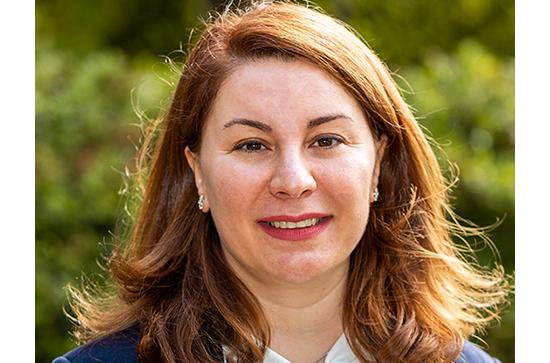
Zohreh Pourzolfaghar is an Assistant Professor in Management Information Systems (MIS) at the School of Business, Maynooth University (MU). She serves as Director of the IT-Enable Innovation Programme and cluster lead for the Digital Construction cluster at the Innovation Value Institute (IVI). She is also a member of Lero, the SFI Research Centre for Software. Education: PhD in Project Management (University Putra Malaysia, 2011); MSc in Management Systems and Productivity; BSc in Software Engineering. Research Interests : Focuses on digital transformation for SMEs, information management in construction, and smart city architectures. Leads EU-funded projects like EnTrust (agri-data governance), DIGI+ (sustainable digital transformation), and DigiFABs (food & beverage SMEs). Co-PI for projects such as GDI-IE (genomic data infrastructure) and PERFORM (digital retail innovation). Grants & Awards : Secured funding from SFI, Enterprise Ireland, and EU. Notable awards include the BIM Hero Award (2022) and Research Engaged Award (2022). Teaching : Courses include Digital Business, Digital Technology Governance, and Enterprise Architecture. Advises PhD students in MIS and digital transformation. Industry Collaboration : Works with firms like ArcDox and Corballis Technologies on BIM standards and data governance. Active in national and EU policy networks, including NSAI committees.
Rosemary Monahan is a Professor in the Department of Computer Science at Maynooth University and an affiliate of the Hamilton Institute. She holds BSc and MSc degrees from University College Dublin and a PhD from Dublin City University. As Maynooth University's institutional lead for ADAPT (SFI Research Centre for AI-Driven Digital Content Technology), she focuses on advancing software dependability through formal methods and AI integration. Her research interests include safety-critical systems, dependable software, formal verification, and computational thinking education. She co-founded the VerifyThis competition series and leads projects such as MAIVV (Modular AI Verification and Visualisation) funded by SFI, and VALU3S (Verification and Validation of Automated Systems) funded by Horizon 2020. She has secured over €2.5M in EU funding for the Erasmus Mundus programs in dependable software systems. Monahan’s educational contributions include pioneering computational thinking resources (CoCoA and InSPECT projects) and teaching modules on software verification and rigorous software processes. She supervises PhD students in data science and advanced networks and collaborates with institutions like INRIA, Microsoft Research, and Amazon Web Services. Her professional roles include editorships in journals like Science of Computer Programming and leadership in conferences like iFM and FMICS. She actively promotes gender equality in computing through initiatives like INGENIC and TechMate toolkits.
Jennifer Edmond is Associate Professor of Digital Humanities and co-director of the Trinity Center for Digital Humanities at Trinity College Dublin, where she also directs the MPhil in Digital Humanities and Culture. She holds a PhD in Germanic Languages and Literatures from Yale University and specializes in applying advanced methods and infrastructures for arts and humanities research. Her research focuses on Digital Humanities, Research Infrastructures, Open Science, Cultural Heritage, and Knowledge Technologies. She has developed significant expertise in European research policy, having coordinated the €6.5m CENDARI FP7 project and participated in numerous EU initiatives including PARTHENOS, Europeana Cloud, and the Computational Literary Studies Infrastructure (CLS Infra). Dr. Edmond maintains an active publication record exploring digital scholarly editing, privacy in literary texts, open science practices, and cultural heritage narratives. Her recent work demonstrates a strong focus on the intersection of technology and democracy, digital ethics, and innovative methodologies for humanities research. Awards and Honors: Named one of Ireland's five 'Champions of EU Research' (2012) She served as President of DARIAH-EU's Board of Directors (2018-2022) and represented the organization on the European Commission's Open Science Policy Platform. Dr. Edmond has contributed to strategic developments at national and institutional levels, while actively promoting public outreach through various media formats and art installations.
Dr. Lucy Hederman is an Associate Professor in Computer Science at Trinity College Dublin (TCD), affiliated with the O'Reilly Institute. Her research focuses on leveraging data and documents to support clinical decision-making, particularly in healthcare knowledge work. She has led interdisciplinary projects addressing data integration for rare diseases (e.g., ANCA-vasculitis, MND) and socio-technical challenges in adopting patient-generated health data (PGHD) into clinical practice. Dr. Hederman has secured over €xxxk in research funding and leads the Heterogeneity and Interoperability (H&I) challenge in the SFI-funded ADAPT 2 Centre. Her educational background includes advanced studies in computer science and healthcare informatics, though specific degree details are not explicitly stated in the text. She has supervised 4 PhDs, 2 research MScs, and co-supervised 6 PhDs, while currently mentoring 8 graduate students. Her career includes founding TCD spinouts PBOC and BIOLOGIT, which align with her research in health informatics and technology. Key research interests include: Interdisciplinary collaboration between clinicians, researchers, and technologists Data harmonization for multi-national clinical studies (e.g., FAIRVASC, Precision-ALS) Development of clinical decision support systems (CDSS) Design of mobile health (mHealth) tools for underserved populations Recent work emphasizes FAIR principles for healthcare data and socio-technical factors influencing PGHD adoption. She has contributed to over 70 peer-reviewed publications and actively participates in initiatives like the EU-funded TRANSFORM project and HRB Primary Care Research Centre. Dr. Hederman’s professional memberships include the Irish Computer Society, ACM, and Healthcare Informatics Society of Ireland. Her research has impacted healthcare practices in Ireland, with many MSc student projects influencing local health services.
Arash Joorabchi is an Assistant Professor at the Department of Electronic and Computer Engineering, Faculty of Science and Engineering, University of Limerick, Ireland. His research focuses on the intersection of machine learning, educational technology, and digital library systems, with particular emphasis on automated assessment, text mining, and knowledge organization techniques. Research Trends: Analysis of his publications reveals sustained contributions to automated short-answer grading, Arabic text classification, and semantic integration of Wikipedia with academic resources. Key methodologies include sentence transformers, hybrid text representation models, and citation-based indexing techniques. Technical Domains: His work spans natural language processing, educational data mining, metadata management, and semantic web technologies. Specific applications include Q&A platform analysis, library resource discovery, and curriculum development systems.
Professor Markus Helfert is a leading academic in Digital Service Innovation and Digital Transformation at Maynooth University's School of Business . He serves as Director of the Innovation Value Institute , Hub for Data and Digital Research, and holds Science Foundation Ireland Principal Investigator roles at Lero – The Irish Software Research Centre and Adapt Research Centre. His research spans Service Innovation , Artificial Intelligence , Intelligent Transportation Systems , FinTech , and Enterprise Architecture , with active involvement in European Standardisation initiatives.
John Byabazaire is a Research Fellow at the School of Computer Science, University College Dublin (UCD). He holds a PhD in Computer Science from UCD (2024), following a BSc (Gulu University, 2013) and MSc (Waterford Institute of Technology, 2018). His research focuses on IoT systems for data collection, remote sensing, AI-driven end-to-end system management, and fog analytics. He has held academic roles including Assistant Lecturer at Gulu University (2018–2019) and teaching roles at UCD since 2019, including Occasional Lecturer and Senior Teaching Assistant. His research spans smart agriculture, data quality in IoT, and education technology. Notable contributions include frameworks for yield mapping in precision agriculture, trust-based data validation in IoT, and machine learning approaches for livestock health monitoring. He has secured grants like the National ICT Initiatives Support Program (Uganda Government, 2019–2020). Teaching includes courses on cloud computing, web development, and distributed systems. His articles emphasize IoT data quality, agricultural analytics, and educational technology innovation. He actively promotes technology adoption in African education and agriculture sectors through collaborative projects.
Gaye Stephens serves as Assistant Professor in the School of Computer Science and Statistics at Trinity College Dublin, where she is a core member of the Centre for Health Informatics alongside Dr. Lucy Hederman and Prof. Mary Sharp. She actively contributes to institutional governance as a board member of the Irish Platform for Patient Organisations, Science and Industry (IPPOSI) and serves on the school's research ethics committee. Her research centers on patient-centered health informatics with focus areas including Electronic Health Record design , citizen engagement methodologies (such as Citizen Juries and Think-ins), and scalable information models for healthcare integration. She pioneers approaches that position patients as central stakeholders in health data governance, addressing critical challenges in digital health literacy, informed consent frameworks, and interoperability between legacy and emerging health technologies. Analysis of her recent publications reveals consistent focus on knowledge engineering for healthcare , with particular emphasis on temporal data modeling in knowledge graphs (2024-2025), nurse knowledge elicitation through serious games (2023-2024), and novel methodologies like the WICKED framework for capturing clinical wisdom (2022-2023). Her work consistently bridges technical informatics with human-centered design principles. Stephens actively contributes to national health informatics infrastructure through memberships in: Royal Academy of Medicine of Ireland Council of Clinical Information Officers National Standards Authority of Ireland Health Informatics Group Health Informatics Society of Ireland (including Nursing and Midwifery group) e-Health Ireland ECOSYSTEM working group She supervises across undergraduate, MSc (Health Informatics and Global Health), and PhD programs while leading client-based final year projects. Her teaching portfolio includes Introduction to Health Informatics, Information Modeling, Connected Health, and Electronic Health Record Architectures, with research advising spanning health data governance and patient engagement projects. Stephens co-leads the Knowledge and Data Engineering Group's Health Informatics research stream, focusing on semantic interoperability, adaptive hypermedia systems, and novel engagement models for health data governance. Her current projects emphasize citizen-centered EHR architectures and interdisciplinary approaches to healthcare data integration.
John Breslin is a Personal Professor in Electronic Engineering at the College of Science and Engineering, University of Galway, serving as Director of the TechInnovate and AgInnovate programmes. Associated with two Taighde Éireann – Research Ireland Centres, he is a Principal Investigator at Insight Centre for Data Analytics (specializing in data analytics) and a Funded Investigator at VistaMilk (Agri-Technology), while also leading the EDIH Data2Sustain project. With an h-index of 50, over 12,000 citations, and 300+ peer-reviewed publications including seminal books on the Social Semantic Web, he ranks among Ireland's most influential researchers in digital technologies. Breslin's research fundamentally bridges Semantic Web technologies, AI-driven data analytics, and practical innovation. His co-creation of the SIOC framework—implemented across 65,000+ websites by entities like Yahoo and Boeing—demonstrates real-world impact in social data interoperability. Current work leverages blockchain and federated learning for sustainable Agri-Technology through VistaMilk, while his TechInnovate programmes translate academic research into commercial ventures across healthcare, smart manufacturing, and energy systems. Analysis of his 15 most recent publications reveals dominant themes in AI-enhanced security (35% of works), blockchain applications for sustainability (27%), and multimodal AI for healthcare (20%). His team pioneers privacy-preserving techniques for IoT and medical devices, neurosymbolic visual reasoning frameworks, and federated learning architectures addressing data heterogeneity—directly supporting his roles in national research infrastructures like Insight and VistaMilk. John has received several prestigious awards: IIA Net Visionary Award (twice) ITAG Outstanding Contribution to the ICT Sector Award Galway Chamber President’s Award Best Irish-Published Book Award (2020 for Old Ireland in Colour) Multiple Best Paper Awards He leads major research initiatives funded by Taighde Éireann – Research Ireland: Insight Centre for Data Analytics (as Principal Investigator) VistaMilk SFI Research Centre (as Funded Investigator) EDIH Data2Sustain (as Principal Investigator) His entrepreneurial programs TechInnovate and AgInnovate have mentored 200+ startups, securing €50M+ in follow-on funding. Breslin co-founded PorterShed (Galway City Innovation District) and serves on Scale Ireland's Steering Group, creating Ireland's most active regional innovation ecosystem outside Dublin. He maintains active industry partnerships with Vodafone, Boeing, and agricultural cooperatives through VistaMilk's testbed facilities.
Dr. Gavin McArdle is an Associate Professor at the University College Dublin (UCD) School of Computer Science, specializing in spatial data analysis and smart cities. He holds academic affiliations with the National Centre for Geocomputation (Maynooth University) and CeADAR (Data Analytics Centre). His research focuses on urban dynamics, geovisual analytics, smart transportation, and remote sensing applications. He has received a College of Science Teaching Excellence Award for his contributions to education. McArdle earned his BSc, PhD, and a Prof Dip in University Teaching & Learning from UCD. His work bridges academia and industry through collaborative grants, including those from Science Foundation Ireland and EU funding. Notable projects include the Dublin Dashboard (urban analytics platform) and DubSim (traffic simulation using digital footprints). His research outputs span over 147 publications, with recent work addressing Airbnb's impact on urban gentrification, sustainable mobility, and environmental monitoring via satellite data. He actively contributes to professional committees, including roles in the UCD Data Protection Impact Assessment Committee and international conferences like Web and Wireless GIS. McArdle coordinates courses such as Research Practicum and Computer Programming II, emphasizing practical research and technical skills. His interdisciplinary approach integrates machine learning, spatial statistics, and urban informatics to address real-world challenges in smart cities and environmental sustainability.
David Prendergast is a Professor in Science, Technology & Society at Maynooth University's Faculty of Social Sciences, where he also serves as Head of the Departments of Anthropology and International Development. With a PhD in Anthropology from the University of Cambridge (2002), his career spans academic roles at Maynooth and industry leadership at Intel, focusing on technology design for aging populations. Research interests: Ageing, Smart Cities, Digital Health, Visual Ethnography, East Asia, Human-Centred Design Key projects: Global Ageing Project, Urban Living Labs in London/Dublin/San Jose, Smart Stadium with Croke Park, Autonomous Vehicles for Older Adults (SFI-funded) His work bridges anthropology with digital innovation , particularly in East Asia contexts. Recent publications explore IoT applications in age-friendly cities , robotics in Japanese elder care , and visual ethnography for aging-in-place solutions. Scientific recognition includes: CHOICE Outstanding Academic Title (2016) Intel Involved Global Hero Award Fortune 500 Hero designation Intel Labs Gordon E. Moore Award As advisor to PhD graduates like Rebekah Maguire (2016) and Ciaran Walsh (2020), he leads Living Lab initiatives on air pollution monitoring and flood management systems . His Circuits of Care documentary (2021) examines human-robot interactions in Japan's aging society .
James O'Donnell is an Associate Professor in the School of Mechanical and Materials Engineering at University College Dublin (UCD). He joined UCD in 2013 after working at Lawrence Berkeley National Laboratory. His research focuses on multi-scale energy modeling, interoperable BIM solutions, and sustainable building design. He contributes to buildingSMART’s Energy Modelling Expert Panel and teaches modules on building physics and energy analysis. Education: B.E. Civil and Environmental Engineering, University College Cork Ph.D. in Holistic Building Performance Analysis, University College Cork Professional Diploma in University Teaching & Learning, University College Dublin Research Interests: James specializes in energy informatics, building energy simulation, and semantic web technologies for the built environment. His work bridges BIM integration with energy modeling to optimize urban-scale performance. Grants & Funding: PROBONO (2022–2026): Integrator-centric approach for energy-efficient buildings NexSys (2022–2026): Next-Generation Energy Systems ALIVE (2020–2024): Indoor Environmental Quality in Energy-Efficient Buildings Teaching & Editorial Roles: James coordinates courses like Energy Systems in Buildings and serves as an Associate Editor for Journal of Building Engineering and editorial board member of Advanced Engineering Informatics . Professional Affiliations: Member of Engineers Ireland, International Building Performance Simulation Association (IBPSA), and European Council on Computing in Construction.
Dr. Rob Brennan is an Assistant Professor in the School of Computer Science at University College Dublin. With 25 years of academic and industry experience, he specializes in data governance, AI ethics, and cybersecurity. His research integrates socio-technical systems analysis, data protection frameworks, and healthcare risk management. He leads the Value and Risk research challenge within the ADAPT Centre's Transparent Digital Governance initiative and coordinates projects like the ARK platform for risk governance. Education: BSc in Physics, Dublin City University MSc, Queen's University Belfast PhD in Governance, Dublin City University Professional Diploma in University Teaching and Learning, University College Dublin Research Interests: Data Governance & AI Accountability GDPR Compliance & Privacy Engineering Healthcare Risk Management Knowledge Graphs & Linked Data Cybersecurity & Incident Response Key Contributions: Co-PI of Science Foundation Ireland's Empower Data Governance project Coordinator of the €4M H2020 ALIGNED project on software/data engineering Developed the ARK platform for risk governance in healthcare and cybersecurity Grants & Awards: Best Paper Award at Extended Semantic Web Conference 2023 Principal Investigator for grants including the ARK-Virus platform (SFI-funded) Teaching & Mentorship: Coordinates courses on Cyber Risk Assessment, Incident Response, and Data Protection Supervises PhD students focusing on data governance and AI ethics Co-developed the MA in Data Protection and Privacy Law with Computing Professional Activities: Member of FAccT 2023 Program Committee Co-chair of the Irish Conference on Artificial Intelligence and Cognitive Science Contributor to international standards (OMG, IETF, 3GPP)
Dr. Eoin O'Connell is an Associate Professor in the Department of Electronics & Computer Engineering at the University of Limerick. He is affiliated with the Centre for Robotics and Intelligent Systems (CRIS) and the Optical Fibre Sensors Research Centre (OFSRC), actively contributing to IoT research and founding the IOT@UL seminar in 2016. Research Interests include cyber-physical modeling, digital twinning, system scalability, security vulnerabilities, edge processing techniques, and sensor development. His work intersects IoT, fiber optics, smart manufacturing, and cloud computing. Recent publications focus on interoperable IoT systems, AI-driven failure detection in additive manufacturing, and digital twin integration, reflecting his expertise in scalable, secure IoT solutions. He has supervised over 40 postgraduate students throughout his career. Teaching Hero Award (2021) Education includes a PhD in wireless integration of fiber optic sensors, an MBA, a Bachelor's in Telecommunications, and certifications in Cisco Networking and cloud computing.
Professor Francesco Pilla is a Full Professor of Smart and Sustainable Cities at University College Dublin's School of Architecture, Planning and Environmental Policy, where he also serves as Co-Director of the Spatial Dynamics Lab. Previously, he held positions as MSc Director (2018-2019) and Undergraduate Director for the School of Architecture. With over 15 years of experience in GIS modeling and spatial data analysis, Professor Pilla's work bridges technology, urban planning, and community engagement to create more sustainable cities. Professor Pilla's research focuses on developing geospatial analysis tools and environmental pollution models (air, noise, water) using GIS platforms to facilitate interoperability between research teams and end users. His approach integrates environmental pollution models with pervasive and community sensing applications for calibration and validation. A key innovation in his work is the integration of co-design principles through Living Labs in urban planning and citizen science initiatives to improve city life from an environmental perspective. His recent publications reveal a strong focus on urban sustainability challenges, with significant contributions to air quality monitoring, sustainable transportation, climate adaptation, and citizen science methodologies. His work increasingly incorporates advanced AI techniques, including large language models and machine learning algorithms, to analyze urban systems and develop data-driven solutions for complex environmental problems. The research demonstrates a clear trend toward integrating diverse data sources and developing practical tools for urban governance and planning. Haagen-Smit Prize (2024) - Recognizing outstanding papers published in Atmospheric Environment Best eMobility Project - Electric Vehicle Awards 2024 All Ireland community & council awards - Best Community Transport Initiative 2024 Academic research award: tipping point for action from Financial Times (2023) Professor Pilla leads numerous significant research projects including iSCAPE (H2020-SC5) as Coordinator, OPERANDUM (Principal Investigator for UCD) focusing on flood risk reduction with nature-based solutions, WeCount (Principal Investigator for UCD), and Connecting Nature (Principal Investigator for UCD). He has also secured funding through SFI Investigator grants for 'Scalable, Privacy-Enhanced Analytics for sharing mobility systems' and several Environmental Protection Agency projects. His collaborative work extends to partnerships with MIT through Fulbright/EPA TechImpact awards and IBM through Faculty Awards. At the Spatial Dynamics Lab, Professor Pilla oversees research that combines geospatial analysis, environmental monitoring, and community engagement. His innovative 'Bike Library' initiative, which has expanded to multiple schools in Dublin, exemplifies his commitment to translating research into practical community solutions. The lab's work integrates advanced sensing technologies, GIS platforms, and citizen science to address urban environmental challenges through collaborative approaches.

/prod01/channel_3/media/tcd/scss/headshots/Lucy-Hederman-BW-1.jpg)

/prod01/channel_3/media/tcd/scss/headshots/Gaye-Stephens-BW.jpg)

