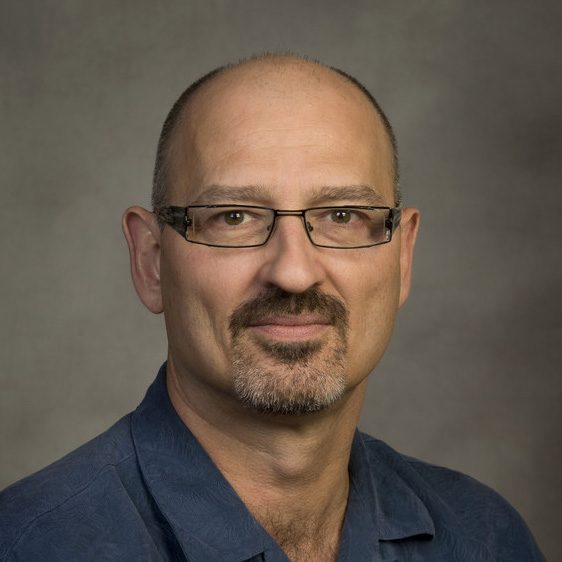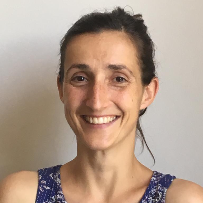
Dr. Franziska Knolle is a Researcher and Principal Investigator at the Department of Neuroradiology, School of Medicine and Health, Technical University of Munich (TUM) . She leads the KnolleLab , focusing on computational and clinical neuroscience. She completed her Habilitation in Neuroscience in June 2024 and holds a PhD from the Max Planck Institute of Cognitive and Brain Sciences. Education and Training: PhD, Max Planck Institute of Cognitive and Brain Sciences, Leipzig Habilitation in Neuroscience, Technical University of Munich (2024) Medical undergraduate studies (Physikum), TU Dresden Marie Skłodowska-Curie Fellow Research Interests: Dr. Knolle uses computational modeling, fMRI, EEG, and machine learning to study cognitive mechanisms in health and psychiatric disorders, especially psychosis. Her work is grounded in the framework of predictive processing and Bayesian inference , exploring how prior beliefs influence perception, decision-making, and language. She investigates whether computational parameters can predict psychiatric risk or functional outcomes, with a focus on schizotypy, autism traits, and glutamate neurochemistry. Publication Trends: Her recent publications span computational psychiatry, neuroimaging, and cognitive modeling. Key themes include predictive processing in psychosis, reward prediction errors, semantic prior weighting, neural circuitry of salience, and multimodal imaging (fMRI, EEG, MRS). Her work increasingly integrates AI and machine learning for digital phenotyping and biomarker discovery. Scientific Awards: Marie Skłodowska-Curie Fellow Advising and Grants: Dr. Knolle supervises multiple PhD and medical doctorate students, including Elisabeth Sterner, Pritha Sen, and Onur Icin. She mentors students in computational modeling, neuroimaging, and clinical research. Her lab is supported by funding from competitive sources including DFG, DAAD, Marie Curie, and Leopoldina. She collaborates widely with institutions in the UK, Germany, and internationally. Labs and Teams: She leads the KnolleLab at TUM, which includes PhD students, medical researchers, and interns. The lab focuses on integrating computational models with multimodal brain data. She collaborates with researchers at the University of Cambridge, King’s College London, MRC CBU, and the University of Melbourne.