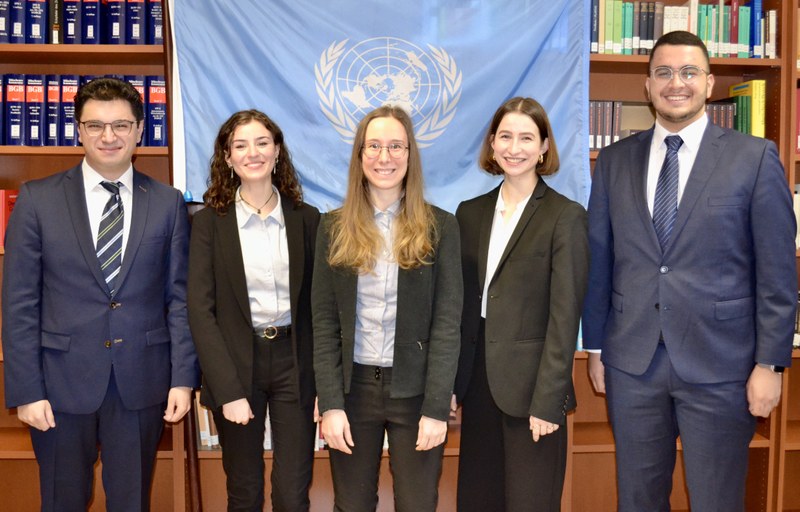
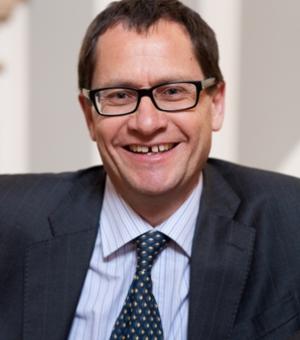
Dr. Benjamin Rusteberg serves as a Lecturer and Chair Representative at the University of Münster's Faculty of Law, specifically within the Chair of International Public Law and International Human Rights Protection. His office is located at Wilmergasse 28, 48143 Münster, and he can be reached via +49 251 83 21360 (Secretary: Jutta Meier) or brustebe@uni-muenster.de. His research focuses on international public law frameworks and mechanisms for human rights protection, with particular attention to contemporary challenges in global legal governance. He actively participates in the International Human Rights Protection team at the university. No specific academic awards, grants, or advised students are explicitly listed in the provided information. Consultation hours for the winter semester 2023/2024 are noted, though specific times are not detailed here.
Max Planck Institute for Social AnthropologyGermany
Katia Bianchini is a Research Fellow at the Max Planck Institute for Social Anthropology in Halle, Germany, with a focus on the intersection of law and anthropology in refugee and immigration contexts. She holds a PhD in Law (University of York), an LLM in Comparative Laws (University of San Diego), and a Law degree (Università di Pavia). Her work bridges empirical legal analysis with anthropological methodologies to address issues such as statelessness, asylum adjudication, and the rule of law in migration policies. Education PhD in Law, University of York (2011–2016) LLM in Comparative Laws, University of San Diego (1999–2000) Law degree, Università di Pavia (1992–1998) Bianchini’s research interests include refugee law , immigration law , statelessness , EU law , and human rights law . Her current project examines legislation and responses to missing and deceased sea migrants in Italy , analyzing legal frameworks for search, identification, and burial practices, particularly along the Central Mediterranean Route. She emphasizes the importance of legal anthropology to understand gaps between abstract law and its real-world application. The trends in her publications reflect a focus on statelessness determination procedures , asylum law (notably witchcraft-based claims), humanitarian visas , and rule of law challenges in migration contexts. Her work spans journal articles , book chapters , and monographs , often combining legal analysis with empirical data from interviews and fieldwork. Scientific Awards Erasmus scholarship, University of Leuven, Belgium (1997–1998) Grants and Professional Activities include visiting researcher roles at Fordham University and the University of Oxford, as well as editorial work for the Statelessness and Citizenship Review and the CUREDI Database . She has presented extensively on topics like statelessness in the UK , cultural diversity in asylum adjudication , and NGO criminalization in Mediterranean rescue operations .
Prof. Dr. iur. Dipl.-Soz. Marion Albers holds the Chair for Public Law, Information and Communication Law, Health Law and Legal Theory at the Faculty of Law, University of Hamburg. She has been a Full Professor at Hamburg University since October 2009 and serves as Managing Director of multiple research institutions including the Cyber Law Clinic and the Hamburg Center for Bio-Governance. Her academic career spans prestigious positions at the University of Augsburg, Humboldt-University Berlin, and international collaborations with institutions in Brazil, Japan, and the United States. Education: Studies of Law, Sociology, Political Sciences and Economy at the Free University of Berlin and University of Bielefeld State Exam in Law and Diploma in Sociology Doctorate of Law in Crime Prevention and Provisions for Prosecution at University of Bielefeld Habilitation in Informational Self-Determination at Humboldt-University Berlin Professor Albers' research focuses on the intersection of law, technology, and human rights, with particular expertise in data protection law, digital constitutionalism, bioethics, and health law. Her work examines how traditional legal frameworks adapt to emerging technological challenges, especially regarding informational self-determination in the digital age. She has pioneered research on the horizontal effect of fundamental rights, the legal implications of biotechnologies, and the balance between security measures and privacy protections. Her scholarship consistently bridges theoretical legal concepts with practical applications in rapidly evolving technological contexts. Analysis of her recent publications reveals a strong trajectory toward digital constitutionalism, with increasing focus on data subject rights within digital governance frameworks. Her work demonstrates sophisticated engagement with EU data protection regulations while simultaneously exploring comparative approaches across jurisdictions including Japan and Brazil. A consistent thread throughout her scholarship is the exploration of how constitutional principles apply in digital environments, particularly regarding the protection of personal data as a fundamental right. Scientific Awards and Fellowships: Scientific award of the Claussen-Simon-Foundation (2015) Opus Magnum-Fellowship of the Volkswagen Foundation (2015-2016) Fellow at Alfried Krupp Wissenschaftskolleg Greifswald (2014) Fellow at the Institute for Advanced Study Berlin (2017/2018) Professor Albers has secured significant research funding including the Volkswagen Foundation's Opus Magnum Fellowship and has served as Principal Investigator for the German/Brazilian DAAD/CAPES PROBRAL Research Project "Internet regulation and internet rights" (2015/2018). She has supervised numerous doctoral candidates and established productive international research collaborations, particularly with Brazilian institutions. Her advisory work extends to governmental bodies including service as an expert in the German Council for Scientific Information Infrastructures (RfII) since 2018 and previous membership on the Bundestag's Advisory Committee "Ethics and Law of Modern Medicine" (2003-2005). She directs the Hamburg Center for Bio-Governance (since 2013) and the Cyber Law Clinic at the Faculty of Law (since 2012), creating interdisciplinary research environments that bridge legal scholarship with practical applications in bioethics, health law, and digital governance. Her leadership extends to editorial roles including the book series "Schriften zum Bio-, Gesundheits- und Medizinrecht" and numerous edited volumes on data protection and constitutional law.
Dr. Martin Stürzlinger is a Part-Time Professor for Digital Archiving at the Department of Information Sciences, University of Applied Sciences Potsdam. He also operates his consulting firm Archiversum, advising organizations on long-term information storage (www.archiversum.com). His work bridges academic research with practical applications in digital preservation. Research Interests: Dr. Stürzlinger specializes in digital archiving, focusing on the OAIS model, life-cycle management, and archival description standards like Records in Contexts (RiC). His research addresses organizational challenges in digital preservation, legal compliance (e.g., GDPR), and metadata design for accessibility. Recent Publications: His selected works explore OAIS implementation, the impact of GDPR on private archives, and the evolution of archival description standards. These contributions highlight trends in digital preservation, emphasizing interoperability, sustainability, and cross-institutional collaboration. Collaboration & Standards: He actively contributes to international working groups, including ICA-EGAD (Archival Description) and nestor's certification standards for digital archives. His efforts in standardization include the Austrian implementation of ISAD(G) and ISDIAH, as well as Swiss guidelines for electronic records management. Teaching & Outreach: Dr. Stürzlinger has lectured extensively, including courses on archive management at BFI Vienna and IT applications in archives at the University of Vienna. He has delivered over 40 lectures globally, addressing topics like cost estimation for digital archiving and the role of corporate archives in business efficiency.
Professor Dr. Thilo Marauhn holds the Chair of Public Law and International Law at the Faculty of Law, Justus Liebig University Giessen, since 2001. He is also a Permanent Visiting Professor for Constitutional Theory at the University of Lucerne (Switzerland) and has served as Visiting Professor at the University of Wisconsin, Madison (USA) in 2005, 2008, and 2011. Max Planck Institute for Comparative Public Law and International Law, Heidelberg (1990-2001) Scientific Advisory Board roles (BMZ, HSFK, UN Political Advisory Board) Research Interests include Public International Law, European Law, Human Rights, Environmental Law, Arms Control, and Constitutional Law. His work focuses on conflict resolution, international security, and the interplay between legal frameworks and global challenges like climate change and armed conflict. Publications & Contributions span monographs and edited volumes on topics such as social fundamental rights, environmental law, and international financial regulation. Recent articles analyze human rights fact-finding, religious freedom, and compliance mechanisms in international law. Leadership Roles encompass directing the International Summer University (ISU), co-leading the US-German Summer Law Program, and serving on the Board of the German-Polish Projects (DPWS).
Max Planck Institute for the Study of SocietiesGermany
Lucio Baccaro is Director at the Max Planck Institute for the Study of Societies (MPIfG) and was Full Professor of Macrosociology at the University of Geneva, where he also served as Deputy Dean for Research (2016–2020). He has held academic positions at MIT, Case Western Reserve University, and visiting roles at the University of Turin and the University of Vienna. His primary affiliations are with MPIfG and the University of Geneva, both central to his research in political economy and sociology. Education: PhD in Management and Political Science, Massachusetts Institute of Technology (MIT), 1999 Doctorate in Labor Law and Industrial Relations, University of Pavia, 1997 Master of Business Administration, Stoa' (IRI-MIT joint venture), 1991 Laurea in Philosophy, summa cum laude, University "La Sapienza", Rome, 1989 Lucio Baccaro’s research focuses on comparative political economy, labor relations, global worker rights, and deliberative governance . His work integrates economic sociology and political sociology to analyze institutional change, social dialogue, and the impact of globalization on labor and welfare systems. He has led major comparative studies on employment models, pension reforms, and international labor standards. His scholarship emphasizes the interplay between institutions, ideas, and power in shaping economic governance. His recent publications reveal a consistent focus on institutional change, deliberative processes, labor market reforms, and global justice . Themes include path dependence in international organizations, the transformation of collective bargaining, and the role of expertise in democratic governance. His interdisciplinary approach bridges sociology, political science, and economics, with strong methodological rigor in comparative and qualitative analysis. Scientific Awards and Honors: Honorary Professor, University of Duisburg-Essen (2023) Professeur honoraire, University of Geneva (2020) International Geneva Award (2011) Outstanding Young Scholar Award, IRRA (2003) Founder's Prize, SASE (2001) Maurice F. Strong Career Development Chair, MIT (2006–2009) Multiple fellowships from SSRC, Harvard, MIT, and CUNY Alfiere del Lavoro, awarded by the President of Italy (1984) Advising and Grants: While specific student advisees are not listed, Baccaro has supervised research and mentored scholars through his roles at MPIfG and the University of Geneva. He has secured substantial research funding, including grants from the Swiss National Science Foundation (SNF) and the Swiss Network for International Studies (SNIS), supporting projects on post-Fordist growth models, employment policy, and deliberative governance. His leadership in co-principal investigator roles highlights his collaborative research approach and institutional influence. Labs and Research Teams: As Director at MPIfG, Baccaro leads a major research institute focused on the study of societal and economic institutions. He has been instrumental in shaping research agendas on political economy and governance, fostering interdisciplinary collaboration and international scholarly exchange.
Jean Galbraith is a Professor at the University of Pennsylvania Carey Law School . Her scholarship focuses on the intersection of international law , foreign relations law , constitutional law , and human rights . Key areas include treaty design, separation of powers, administrative law, and domestic implementation of international obligations.
Rhenish Friedrich Wilhelm University of BonnGermany
Prof. Dr. Martin Böse is a full Professor at the University of Bonn, holding the Chair of Criminal Law and Criminal Procedure Law as well as International and European Criminal Law. He is affiliated with the Faculty of Law and Political Science and serves at the Institute of Criminal Law. His contact email is sekretariat.boese@jura.uni-bonn.de. His primary research focuses on European and transnational criminal law , with expertise spanning: EU judicial cooperation mechanisms (mutual recognition, European Arrest Warrant) Human rights in criminal proceedings Corporate criminal liability and economic sanctions Cross-border evidence transfer and mutual legal assistance Jurisdictional conflicts in international law Analysis of his 15 most recent publications (2022-2024) reveals dominant themes: Evolution of ne bis in idem principles in transnational contexts EU institutional reforms (European Public Prosecutor, evidence directives) Digital-era challenges (cybercrime, electronic payments fraud) Fundamental rights tensions in mutual recognition instruments German criminal law doctrine in European harmonization contexts He leads the Working Group on European Criminal Law and has supervised doctoral and habilitation candidates. While no specific awards are mentioned, his editorial roles include the journals ZIS and ZJS (2013-2021). Third-party funded projects focus on improving judicial cooperation frameworks within the EU.
Dr. Isabel Lischewski is a Scientific Associate at the Chair of International Public Law and International Human Rights Protection within the Faculty of Law at the University of Münster. She holds the title of Academic Councillor aZ and is affiliated with the Wilmergasse 28 research group. Her work focuses on international legal frameworks, human rights protection mechanisms, and global justice systems. Affiliation: University of Münster, Faculty of Law Department: Chair of International Public Law and International Human Rights Protection Her research interests emphasize the intersection of public international law and human rights, particularly in contexts requiring transnational legal solutions. Though no recent articles are explicitly listed in the provided text, her role suggests engagement with topics such as refugee law, state obligations under international conventions, and legal responses to modern governance challenges. No scientific awards or grants are explicitly mentioned in the provided text. She is currently active in her academic role and not noted as retired or former staff.
Max Planck Institute for Comparative Public Law and International LawGermany
Jannika Jahn is a Senior Research Fellow at the Max Planck Institute for Comparative Public Law and International Law in Heidelberg, where she has been working since 2020. She also serves as an Associate Fellow at Maastricht University's Globalization and Law Network and as Associate Editor at Verfassungsblog for International Law and Human Rights Protection. Her work focuses on the intersection of international law, human rights, and environmental protection, with particular expertise in business and human rights law and climate litigation. Jannika Jahn received her LL.B. in English and German Law from University College London and the University of Cologne, where she completed her first state's exam. She earned her doctorate (summa cum laude) from the University of Heidelberg with a dissertation on "The media publicity of the judiciary and its limits." Her doctoral work was conducted at the Max Planck Institute for Comparative Law and Public International Law. Jahn's research spans European and international human rights law, business and human rights law, international environmental law (particularly climate law), comparative constitutional law and theory, and interdisciplinary legal analysis. She examines how national courts can serve as guarantors of global climate protection and investigates the role of judicial independence in multi-level governance systems. Her work on supply chain regulation explores how to create effective human rights due diligence frameworks for multinational corporations. Her scholarly output demonstrates a clear trajectory from foundational work on judicial independence and media coverage of courts toward increasingly focused research on climate litigation and business and human rights. Recent publications highlight her expertise in analyzing how constitutional courts worldwide are becoming key actors in climate governance and how supply chain legislation can be designed to effectively protect human rights across global value chains. Jahn has received several prestigious honors for her academic work, including: Ruprecht-Karls-Preis awarded by the Stiftung Universität Heidelberg for the best legal doctoral thesis in 2020 Scholarship for the doctoral thesis by Friedrich-Ebert-Stiftung Scholarship for law studies by Studienstiftung des Deutschen Volkes Scholarship for LL.B. studies by Alexander-Lüderitz-Stiftung As a Senior Research Fellow, Jahn leads her habilitation project and a business and human rights project at the Max Planck Institute. She has served as a legal expert for the Consultative Council of European Judges (CCJE) of the Council of Europe regarding judicial independence and freedom of expression of judges. Her advisory work extends to policy development, as evidenced by her contributions to the German Supply Chain Act. She regularly presents her research at international conferences and teaches courses on European human rights protection, climate change challenges, and comparative constitutional law. At the Max Planck Institute, Jahn is actively involved in research teams focused on business and human rights and climate litigation. She participates in the Institute's Gender Equality initiatives as the Gender Equality Officer and contributes to interdisciplinary discussions on current challenges in international law through the Institute's research colloquia and workshops.
GIGA German Institute of Global and Area StudiesGermany
Elizabeth A. Bennett, PhD, is a Full Professor of International Affairs (with tenure) and Director of Political Economy at Lewis & Clark College , Portland, Oregon. She holds visiting roles at the Goldman School of Public Policy, University of California – Berkeley , and will be a Senior Fellow at the Forum Basiliense, University of Basel (Switzerland) in 2025. Her work focuses on labor exploitation in globalized supply chains, voluntary sustainability standards, and equitable business models. Education : PhD in Political Science, Brown University (2014); MALD in Political Economy and Development, The Fletcher School at Tufts University (2014) Her research spans international relations, political economy, public policy, and sustainable development. Recent projects examine living wages in global supply chains and ethical consumerism in the cannabis industry. She co-edited The Handbook of Research on Fair Trade (2015) with Laura T. Raynolds. Her 2024 articles explore value chain profit-sharing, voluntary sustainability standards, and fair trade principles in cannabis. Earlier works analyze global governance, labor rights, and civic engagement. She has received fellowships from Harvard, Rutgers, and the J. Robert Beyster Foundation. Scientific Awards : J. Robert Beyster Fellowship (2022), Harvard Kennedy School Fellow, ongoing Rutgers Institute Fellow Dr. Bennett engages public policy through advisory roles with the United Nations Forum on Sustainability Standards , Global Organic Textile Standards Committee , and think tanks like IDOS . Her research is featured in The Guardian , PBS Nova , and The Oregonian .
Dr. Elisabeth Hoffberger-Pippan is a Senior Researcher at the Peace Research Institute Frankfurt (PRIF), specializing in international security with a focus on verification mechanisms for biological/chemical weapons norms and the ethical implications of AI in military contexts. She holds affiliations with CBWNet and iPRAW initiatives, addressing arms control and autonomous weapons regulation. Her academic background includes postdoctoral research and lecturing at Johannes Kepler University Linz (2015–2022). She has contributed to policy dialogues, including a keynote speech in the Austrian Parliament, and serves on editorial boards for journals like Jahrbuch Digitalisierung und Recht . Key awards include the Ernst-Otto Czempiel Award and Hessian Peace Prize. Her work spans publications on UN compliance procedures, AI ethics, and legal frameworks for emerging technologies. Recent policy engagement includes analyses of Gaza conflict arms exports and Dutch court rulings on Israel’s military actions. Education: PhD in International Law (university details implicit in professional trajectory). Key Projects: Lead roles in iPRAW (autonomous weapons regulation) and CBWNet (biological/chemical weapons compliance). Publications emphasize interdisciplinary approaches to arms control, human rights in technology, and legal responses to modern warfare. She actively contributes to policy blogs (e.g., PRIF Blog) and edited volumes on digitalization and international law.
PD Dr. Lutz Rzehak is an academic staff member at the Institute for Asian and African Studies (IAAW) within the Faculty of Humanities at Humboldt University of Berlin, serving as a Teacher for special tasks specializing in Modern Iranian languages and the ethnography and cultural history of Afghanistan and Central Asia. His educational background includes: Oriental Studies/History from the State University of Leningrad (1985) Doctorate in Iranian Studies, Humboldt University of Berlin (1991) Habilitation in Central Asian Studies / Iranian Studies, Humboldt University of Berlin (2001) Dr. Rzehak's research spans Central Asian Studies , Iranian Studies , Ethnography , and Linguistics , with fieldwork focusing on Baloch, Pashtun, and Tajik communities. His work examines language evolution, social structures, and cultural practices through historical and contemporary lenses, particularly regarding Soviet influence and post-Taliban Afghanistan. Key contributions include grammatical analyses of Iranian languages and ethnographic studies of religious rituals and tribal systems. His recent publications (2016-2021) reveal consistent focus on Iranian language dynamics (especially Dari and Pashto), ethnic identity politics in Afghanistan, and cultural history of Central Asia. These works address language change mechanisms, ethnic consolidation strategies, and the interplay between tradition and modernity, often utilizing comparative linguistic and ethnographic methodologies. His scientific awards include: Heisenberg Fellow of the German Research Foundation Dr. Rzehak has held significant research positions including Research Associate in the Crossroads Asia Competence Network (2011-2016) and Heisenberg Fellow (2002-2011). While his CV does not list formal PhD advisees, his language lecturing and research supervision have mentored numerous students in Central Asian and Iranian studies through course instruction and fieldwork guidance. He has been actively involved in the Crossroads Asia Competence Network, a major interdisciplinary research initiative examining transregional connections and historical trajectories across Central, South, and West Asia.
Zeynep Kıvılcım is an Associate Professor at the Institute of Social Sciences at Humboldt University of Berlin . She has held academic positions at Istanbul University (2000–2016) and guest professorships at Georg-August-Universität Göttingen and Universität Osnabrück. Her work spans Public International Law , Gender Studies , and Migration/Refugee Studies , focusing on the intersection of human rights , gendered violence , and legal frameworks in Turkey and the EU. Education : Habilitation in Public International Law (2012), Ph.D. in Public International Law (2002), Master of Arts in Public International Law (1996), Sorbonne Language Education Programme (1995), Attorney Apprenticeship (1994). Research & Teaching : Courses on 'Gendering Syrian Refugee Crisis', 'Human Rights', and 'Forced Displacement'. Led projects like 'Gender in Exile' (2015–2017) and contributed to the 'Constitutive Powers of Migration' project (2017). Publications : Co-edited A Gendered Approach to the Syrian Refugee Crisis (Routledge, 2017), authored Gender and Exile: Female and LGBTI Syrian Refugees in Istanbul (Derin Yayınları, 2015). Awards : 2017–2018 Wissenschaftskolleg zu Berlin Fellowship, 2003 UNESCO Post Doc Fellowship, Turkish Ministry of National Education Grant (1995–1996). Presentations : Keynote speeches on 'Gender and Refugee Rights', 'Legal Strategies against Authoritarian Rule', and 'EU-Turkey Refugee Deal' at international conferences (2014–2019). Email: zeynep.kivilcim@hu-berlin.de
Prof. Roger Goodman is the Nissan Professor of Modern Japanese Studies at the University of Oxford and Warden of St. Antony's College. He holds leadership roles in the Oxford School of Global and Area Studies (OSGA) and the Social Sciences Division. His career spans over 40 years, including a doctorate in social anthropology (1982), a Junior Research Fellowship (1985–88), and professorships at the University of Essex and Oxford. His research focuses on Japanese education, social policy, and comparative studies of East Asia and the UK. Education: PhD in Social Anthropology (St Antony’s College, 1982) Affiliations: Nissan Institute of Japanese Studies, OSGA, St Antony’s College Research interests include Japanese education systems, youth culture, social welfare policies, and cross-cultural comparisons. His work bridges anthropology and sociology, addressing themes like demographic shifts, university governance, and policy reform. Notable publications include Family-Run Universities in Japan (2020) and Children of the Japanese State (2000). Awards: Fellow of the Academy of Social Sciences (2013), Academy President (2020–) He has supervised ~40 doctoral theses, covering topics from Shinto shrines to education reform. His teaching emphasizes anthropological perspectives on Japanese society, including kinship systems, gender, and popular culture.