

Andrew Mitchell is a Professor at the Faculty of Law, Monash University, and a member of the WTO Dispute Settlement Panelists Indicative List. He has extensive legal practice experience with Allens Arthur Robinson and consults for governments, international organizations, and the private sector. Mitchell has taught law in Australia, Canada, Indonesia, Singapore, and the US. He holds law degrees from the University of Melbourne, Harvard Law School, and a PhD from the University of Cambridge. His research focuses on international economic law, public international law, and digital trade governance, with a particular emphasis on the intersection of trade law and public health. Mitchell has secured six major grants, including an Australian Research Council Future Fellowship, and has authored over 170 books and articles. He serves as an editor for Edward Elgar’s International Economic Law Series and multiple journal editorial boards. Recent projects include 'Safeguarding Health in International Investment Agreements' (2022–2025) 'Maritime Cooperation for a Sustainable Indo-Pacific' (2021–2022) 'Global E-Commerce and Cottage Industries in India' (2020–2021) He has contributed to policy submissions on bilateral investment treaties and delivered lectures on data sovereignty and digital trade. His awards include editorial leadership roles at journals like the Journal of World Investment and Trade and Asia Pacific Law Review .
جستجوی استاد راهنمای دانشگاهی
برای مسیر پژوهشیتان، استاد راهنما، استاد دانشگاه و پژوهشگر مناسب را پیدا کنید و با آنها ارتباط بگیرید.
نمایش ۱-۱۵ از ۳٬۵۴۷ استاد راهنما
اطلاعات پروفایلها از صفحات عمومی دانشگاهها گرفته شده و ممکن است بهروز نباشد.

Kingsley Edneyمشاهده پروفایل
دانشیار
Dr Kingsley Edney is an Associate Professor in International Relations of China at the University of Leeds' School of Politics and International Studies. He holds a PhD (International Relations) and MA (Political Science) from the University of Melbourne, along with a BA(Hons) in Politics and Anthropology from Victoria University of Wellington. Fluent in Chinese and with experience living in Shanghai and Beijing, his research focuses on China's non-material international security dynamics, including cultural diplomacy, propaganda, and ideological strategies to manage global information flows. His expertise includes Chinese soft power, the role of ideology in foreign policy, and the intersection of domestic political cohesion with international security objectives. He teaches undergraduate and master's courses on China's domestic and international politics. Current postgraduate researchers under his supervision are Jinru Huang, Yanyu Lu, and Hengfeng Zhao. Edney's research outputs span topics like public perceptions of China in the Anglosphere, Chinese youth nationalism, and environmental governance. His work often bridges theoretical frameworks with empirical analysis of China's evolving global engagement strategies. He maintains active academic engagement through platforms like Google Scholar and ORCID.

Mark Wu is the Henry L. Stimson Professor at Harvard Law School, specializing in international trade and international economic law. He serves as Faculty Director of the Fairbank Center for Chinese Studies and Co-Director of the Berkman Klein Center for Internet and Society. His research focuses on global governance, digital technologies, trade remedies, environment, and foreign investment. Wu holds a J.D. from Yale Law School, an M.Sc. in Development Economics from Oxford (Rhodes Scholar), and an A.B. from Harvard University. He has held roles at the World Bank, USTR, and McKinsey & Company. His awards include the Sacks-Freund Award and HLS Teaching Award. Wu’s recent roles include Senior Advisor to USTR (2021) and Biden-Harris Transition Team member. He has advised international organizations like the G20, OECD, and WTO. His scholarship addresses challenges in global trade governance and emerging economies. Key affiliations: Asia Center, Center for the Environment, Center for International Development, East Asian Legal Studies, Harvard Environmental Economics Program. Courses taught include International Trade Law and U.S. Economic Statecraft.

Karl Gustafsson is a Professor at Stockholm University within the Department of Economic History and International Relations. His work bridges security studies , collective memory , and digital research methods in international relations. Current Role: Professor of International Relations, Stockholm University Previous Positions: Post-Doc at Lund University, Researcher at Swedish Institute of International Affairs Visiting Appointments: University of Tokyo, Osaka University, Keio University, Academia Sinica, Nordic Institute of Asian Studies Research Focus: Karl specializes in memory politics , ontological security , and anxiety-driven international dynamics , particularly in Sino-Japanese relations and digital platforms . His studies explore how historical narratives and online memory construction influence state identity and policy. Awards & Grants: Recipient of the Wang Gungwu Prize (2014) and Stockholm University Association’s award (2011). Holds Swedish Research Council and Marianne & Marcus Wallenberg Foundation grants for projects on apologies in international politics and digital memory in East Asia . Publications: His work appears in journals such as International Studies Quarterly , European Journal of International Relations , and Memory Studies , addressing topics like narrative power in East Asia, anxiety’s role in policy change , and digital humanities applications in IR.
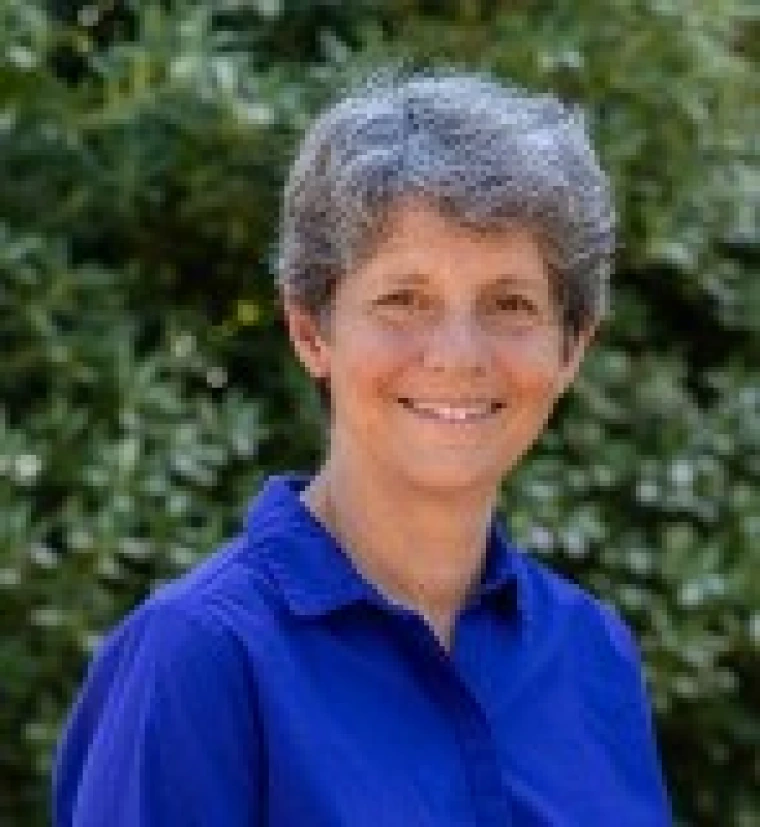
Diane E. Austin is a Professor and Director of the School of Anthropology at the University of Arizona. She also serves as a Research Anthropologist at the Bureau of Applied Research in Anthropology (BARA). Her work focuses on environmental anthropology, particularly community dynamics in industrial and environmental contexts, with a strong emphasis on social justice and collaborative research. She has over 25 years of experience leading interdisciplinary projects in the U.S., Mexico, and Gulf Coast regions. Austin's research spans diverse areas including Native American communities, U.S.-Mexico border sustainability, Gulf Coast oil industry impacts, and urban food systems in arid regions. She has pioneered long-term partnerships with tribal organizations, federal agencies, and community groups, earning recognition such as the University Distinguished Outreach Professor (2008) and Distinguished Director (2023). Her recent work highlights longitudinal studies on the Deepwater Horizon oil spill's social effects, binational environmental initiatives in Nogales, and community-based approaches to disaster resilience. She coordinates BARA's internship and post-baccalaureate programs, supporting hundreds of students in applied anthropological research. Awards: Partners in Conservation Award (2010), Border Research Partnership Award Finalist (2012) Leadership Roles: Chair of the Good Neighbor Environmental Board, Member of the Gulf Research Program Advisory Board Key Projects: Southern Paiute cultural preservation, Gulf Coast oil industry studies, Nogales reforestation initiatives Austin’s teaching includes courses on ethnographic methods, data analysis, and mixed-methods research. She actively engages in policy advocacy, contributing expert testimony in legal proceedings related to environmental disasters and labor rights.

Professor Andrew Murray is a leading academic in Law with expertise in New Media and Technology Law. He holds the position of Professor of Law at the LSE Law School and directs the LSE Law, Society and Technology Group. His research focuses on digital rights, AI ethics, and regulatory frameworks for emerging technologies. Murray has held roles including Fellow of the Royal Society for the Arts and advisor to the Saudi Arabian government on e-commerce law. He has advised parliamentary committees, including the House of Lords Communications Committee on digital regulation, and delivered the prestigious TMC Asser Lecture on AI and human agency. Education: LL.B. Hons from Edinburgh University (1994), followed by academic roles at Stirling University and LSE since 2000. Professional memberships include the Society of Computers and Law (SCL) and the Higher Education Academy (HEA). He has been a visiting professor at Amsterdam Law and Technology Institute and Sciences Po Paris. Research interests span cyberspace regulation, AI governance, and the intersection of technology with human rights. Key publications include Human Rights in the Digital Age (2004) and The Regulation of Cyberspace (2007). Awards include recognition as an Independent Expert in Nominet UK dispute resolution (2001–2008) and a 2024 Leibniz Prize reviewer. Advocacy includes contributions to EU e-commerce directives and UK surveillance law debates. His work emphasizes balancing innovation with legal accountability in digital spaces.

Avery Goldstein is the David M. Knott Professor Emeritus of Global Politics and International Relations at the University of Pennsylvania’s Political Science Department. He serves as the Inaugural Director of the Center for the Study of Contemporary China and Associate Director of the Christopher H. Browne Center for International Politics. His research focuses on international relations theory, strategic/security studies, and Chinese politics, with a particular emphasis on China’s grand strategy, US-China relations, and security dynamics in East Asia. Goldstein’s academic career includes seminal works such as Rising to the Challenge: China’s Grand Strategy and International Security (2005) and Deterrence and Security in the 21st Century (2000). He has authored over 30 journal articles in top-tier publications like International Security and International Organization , exploring themes ranging from nuclear deterrence to China’s geopolitical ambitions. Additionally, he is a Senior Fellow at the Foreign Policy Research Institute (FPRI), amplifying his influence in policy-relevant scholarship. His research consistently bridges theoretical frameworks with empirical analysis, addressing critical issues such as power transitions, crisis instability, and the implications of China’s rise for global order. Goldstein’s advisory roles and institutional leadership reflect his dual commitment to academic rigor and real-world policy engagement.
Lea Di Salvatoreمشاهده پروفایل
پژوهشگر ارشد
- Energy Law
- Environmental Law
- Climate Change Law
- +۳ مورد دیگر
Lea Di Salvatore is a Research Fellow at the Law School, University of Eastern Finland , affiliated with the Center for Climate Change, Energy and Environmental Law (CCEEL) since 2013. Her work focuses on energy law, environmental law, and international investment law. Current Project: INTEL (2024-2029): Developing the general doctrine of energy law. Research Interests: Critical examination of procedural inclusivity in multilateral legal frameworks, particularly in investor-State dispute settlement (ISDS) reform, with emphasis on systemic barriers faced by developing countries. Publications: Recent work highlights disparities in ISDS reform participation, analyzing structural disadvantages such as resource inequality, expertise gaps, and delegation instability in UNCITRAL negotiations.
- Late Medieval Ecclesiastical History
- Papal Administration
- Political Culture of the Avignon Papacy
- +۳ مورد دیگر
Dr Melanie Brunner is a Lecturer in Medieval Studies at the University of Leeds, affiliated with the School of History and the Institute for Medieval Studies. She holds a PhD in Medieval Studies from the University of Leeds and an MA in History and English from Universität Augsburg. Her research focuses on late medieval ecclesiastical history, papal administration, and the history of mendicant orders, particularly the Franciscans. She has contributed to major projects like the International Medieval Bibliography and led research networks such as the DFG-Netzwerk Imitation and Stilus Curiae. Her work explores political culture of the Avignon papacy, canon law dynamics, and religious reform movements. Education: PhD (Medieval Studies, University of Leeds), MA (History and English, Universität Augsburg). Professional affiliations include the Ecclesiastical History Society and Mediävistenverband. She supervises doctoral students in areas like Franciscan history, papal politics, and medieval book culture. Current projects include editorial direction of the International Medieval Bibliography and leadership of the MA Medieval Studies program. Research Interests: Late medieval papal governance, mendicant orders' institutional development, theological debates on poverty, and decision-making mechanisms in the Avignon Curia. She examines how theology, law, and political strategy intersected in medieval church administration. Advising & Grants: Supervises 4 current PhD students and has completed 6 theses. Involvement with EU-funded COST Action IS1301 and White Rose Collaboration Fund projects. Collaborates internationally with institutions like the Sächsische Akademie der Wissenschaften and Universität Zürich. Labs/Teams: Core member of research groups including Galleries, Libraries, Archives, and Museums (GLAM) and Politics, Diplomacy, and International History at Leeds. Active in interdisciplinary medieval studies networks.
- Anti-Corruption Law
- Contracts
- Law and Development
- +۳ مورد دیگر
Kevin E. Davis is the Beller Family Professor of Business Law at New York University School of Law and Faculty Director of the Hauser Global Law School Program. He joined NYU in 2004, serving as Vice Dean for Global Affairs from 2012 to 2017. His research focuses on law's role in economic development, anti-corruption regulation, and legal system performance measurement. Davis holds a BA in Economics from McGill University (1990), an LLB from the University of Toronto (1993), and an LL.M. from Columbia University (1996). His academic contributions include over 50 articles, four edited volumes, and the monograph Between Impunity and Imperialism (2019). He has held visiting appointments at institutions worldwide, including Cambridge University and the University of the West Indies. Key awards include the 2018 Distinguished Article Prize from the American Law and Economics Review. Teaching focuses on contracts, law and development, and secured transactions. His work bridges legal theory with practical challenges in global governance, finance, and anti-corruption policy.

Jinyan Li serves as Professor of Tax Law at Osgoode Hall Law School, York University, where she previously held the position of Interim Dean and currently co-directs the LLM Tax program while serving as academic director of the Professional Graduate Studies Program. Her educational qualifications include: BA from UIBE (China) LLB from University of Toronto LLM from Queen's University DJur from Osgoode Hall Law School She is an active member of the Bar of Ontario. Professor Li's research spans tax law and policy with specialized expertise in international taxation frameworks, social income support systems, Chinese tax evolution, and e-commerce taxation challenges. Her scholarly work has significantly shaped legal discourse, with multiple citations by Canadian judicial authorities including the Supreme Court of Canada in landmark cases such as Deans Knight Income Corp. and Alta Energy . Her publication history demonstrates consistent focus on comparative tax systems and policy development, particularly examining Chinese tax structures and global digital economy implications. This trajectory reflects deepening engagement with international tax coordination mechanisms and equity considerations in fiscal policy. Her distinguished recognition includes: Tax Excellence Award (2021) from the Ontario Bar Association Lifetime Contribution Award (2017) from the Canadian Tax Foundation Academic Excellence Award (2007) from the Canadian Association of Law Teachers D.J. Sherbaniuk Distinguished Writing Award (1999) York University Research Leader (2017) Teaching Awards (2004, 2014) Professor Li actively supervises LLM and PhD candidates specializing in tax law and social income support policy, maintaining close mentorship with students including Lawrence, Sonia McCamus, and John D. Her externally funded research has received substantial support from governmental bodies including the Department of Finance and National Revenue, alongside international institutions such as the IMF, OECD, and Asian Development Bank where she served as consultant. She leads research initiatives through the LLM Tax program and organizes high-impact academic events, recently co-hosting the 2022 Pillar Two symposium and Women with Disabilities: Income Security and Tax Policy conference, demonstrating ongoing commitment to contemporary tax challenges and inclusive policy development.
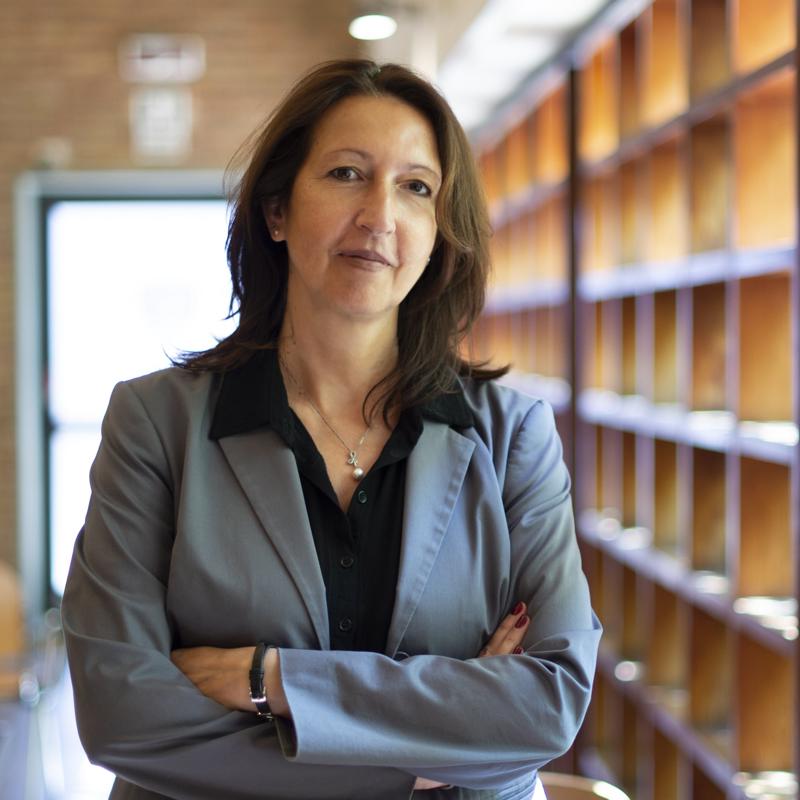
Raffaella A. Del Sarto is a Full-time Professor holding a Joint Chair in Mediterranean Studies between the Department of Political and Social Sciences and the Robert Schuman Centre for Advanced Studies at the European University Institute (EUI). Previously, she served as Associate Professor of Middle East Studies at Johns Hopkins SAIS Europe and held an ERC-funded BORDERLANDS project at the EUI. She earned her PhD (summa cum laude) in International Relations from the Hebrew University of Jerusalem and a MA in Political Science from Albert-Ludwigs University in Freiburg, Germany. Her research focuses on Middle East-North Africa (MENA) international relations, Europe-MENA relations, regional order dynamics, and the Israeli-Palestinian conflict. Notable works include Borderlands: Europe and the Mediterranean Middle East (2021) and Israel under Siege (2017). She is fluent in English, German, French, Italian, Hebrew, and has intermediate knowledge of Arabic and Spanish. Her publications analyze regional alliances, EU foreign policy, and border governance, reflecting her expertise in qualitative methods and constructivist approaches. Awards include the Robert Schuman Distinguished Fellowship (2019-2020) and Italian habilitation as Full Professor (2019). She advises on topics linking Mediterranean IR with comparative frameworks, emphasizing conceptual innovation beyond 'exceptionalism' narratives. Her research projects include the MENARA initiative (2016-2021) on post-2011 Middle East transformations and the BORDERLANDS ERC project (2011-2017), exploring EU-MENA border dynamics.

Katherine Reece Thomas is a Global Associate Professor of Law at the Notre Dame London Law Programme and holds a primary affiliation as Associate Professor of Law at The City Law School, City St George's, University London. She specializes in public international law, company law, and the law of state immunity. Her teaching portfolio includes international law of the sea, contract law, and corporate law. She holds a BA(Hons) in History from McGill University, a BA(Hons) in Jurisprudence from the University of Oxford, and an LLM in International Law from the University of Cambridge. She is a retired member of the New York State Bar and a non-practising solicitor in England and Wales. Her research focuses on state immunity doctrines, international law domestication, and shareholders' agreements. Dr. Thomas served as Programme Director for City's LLM programmes from 2017–2022. Her publications include a monograph on the Commercial Activity Exception to State Immunity (Edward Elgar, 2024) and the upcoming sixth edition of The Law and Practice of Shareholders' Agreements (co-authored with Christopher Ryan). She also contributes to scholarly discussions on transnational legal frameworks and corporate governance structures.
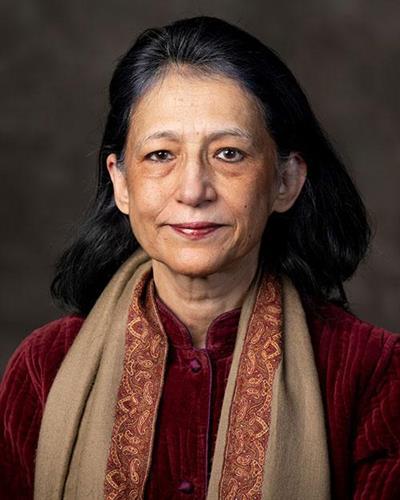
Ayesha Jalal is a distinguished Professor of History at Tufts University's School of Arts and Sciences and holds a joint appointment at The Fletcher School of Law and Diplomacy. She currently serves as the Mary Richardson Professor and directs the Center for South Asian and Indian Ocean Studies. With a career spanning over three decades, Professor Jalal has established herself as a leading scholar in South Asian history, particularly focusing on Pakistan studies, the partition of India, and Muslim political thought in the region. Professor Jalal's academic journey began with a double major in History and Political Science from Wellesley College in 1978. She then pursued doctoral studies at the University of Cambridge, earning her PhD in History in 1983. Her early career included prestigious fellowships at Trinity College, Cambridge (1980-84), the Centre of South Asian Studies (1984-87), the Woodrow Wilson Center for International Scholars (1985-86), and the Harvard Academy for International and Area Studies (1988-90). Professor Jalal's research primarily centers on South Asian history with special emphasis on Pakistan, the partition of India, and Muslim political thought. Her work explores the complex interplay between religious identity, nationalism, and state formation in the region. She has made significant contributions to understanding democratic development in Pakistan, sectarian dynamics in South Asia, and the historical connections between the Indian subcontinent and the wider Indian Ocean world. Her recent scholarship has focused on 'Oceanic Islam,' examining transregional Muslim networks and universalist aspirations that transcended colonial boundaries. Professor Jalal's extensive publication record demonstrates a consistent focus on South Asian political history, with particular attention to Pakistan's formation and development. Her recent works show a progression from studies of partition and state formation toward broader examinations of Muslim intellectual history and transregional connections. The 2020-2024 publications reveal a sophisticated engagement with themes of democratic erosion, sectarianism, and the historical roots of contemporary political challenges in South Asia, while also exploring more cultural and religious dimensions through works on Muslim enlightened thought and oceanic connections. Patrus Bukhari Award for the best English language book, The Pity of Partition , Academy of Letters, Government of Pakistan (2015) Britannica Book of the Year recognition (2015) MacArthur Fellowship (1998-2003) As an educator, Professor Jalal has mentored numerous graduate students through thesis supervision and directed research projects. Her teaching portfolio includes courses on Modern South Asia, Contemporary South Asia, Islam and the West, and specialized seminars on South Asian history. She has taught at several prestigious institutions including the University of Wisconsin-Madison, Columbia University, and Harvard University before joining Tufts in 1999. In her role as Director of the Center for South Asian and Indian Ocean Studies, she has fostered interdisciplinary research and provided guidance to emerging scholars in the field. Professor Jalal directs the Center for South Asian and Indian Ocean Studies at Tufts University, which serves as a hub for interdisciplinary research on South Asia and its connections to the wider Indian Ocean world. The center facilitates collaborative projects, hosts visiting scholars, and organizes events that bridge historical, political, and cultural perspectives on the region. Under her leadership, the center has become a prominent institution for South Asian studies, promoting dialogue between academic research and contemporary policy issues.
Rebecca Connollyمشاهده پروفایل
استاد مدعو
- International Space Law
- International Law and Technology
- Agricultural Biotechnology and International Law
- +۱ مورد دیگر
Dr. Rebecca Connolly is an Adjunct Professor at the Sydney Law School, University of Sydney, specializing in International Space Law, Technology Law, and Biotechnology Regulation. Her research addresses global governance challenges in outer space militarization, commercialization, and sustainability, while contributing to agricultural biotechnology policy frameworks. She is affiliated with the Space Law Council of Australia and New Zealand and the International Law Association. Education: LL.B (Hons), LL.M, Ph.D. (Sydney University). Teaching focuses on International Space Law and Technology Law. Recent publications (2023) emphasize regulatory gaps in near-space military activities and outer-space advertising, reflecting her expertise in emerging legal frontiers. Publications span over two decades, with early work addressing WTO disputes over genetically modified foods and AUSFTA environmental cooperation. No scientific awards listed, though her contributions to space law are notable. She supervises in space law and technology law domains, contributing to interdisciplinary legal scholarship.
نمایش نتایج تا ۷۵۰ مورد اول. برای یافتن نتایج دقیقتر، جستجوی خود را با فیلترها محدود کنید.