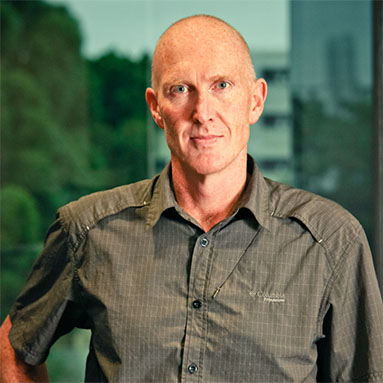
Professor Marilyn Pittard is a leading academic in the Faculty of Law at Monash University, currently serving as Associate Dean Engagement. She has held numerous leadership roles including Interim Dean, LLM Director, and Associate Dean (Research), with a career spanning over two decades in academic administration and legal scholarship. Her research focuses on Labour Law, Employment Rights, and Human Rights, with significant contributions to understanding workplace relations, vulnerable workers, and the intersection of criminal records with employment access. She has secured grants from the Australian Research Council and other institutions for projects like The Other Side of Security and Living Down the Past . Recent publications highlight trends in employment law, including anti-slavery practices, redundancy frameworks, and digital-era workplace challenges. She chairs the Victorian Legal Admissions Board’s Academic Course Appraisal Committee and contributes to the Australian Labour Law Journal and Employment Law Bulletin .
Marcus Smith is an Associate Professor in Law at the Charles Sturt University , where he teaches LAW222 Technology Law and directs the Bachelor of Laws program. He holds advanced degrees from the Australian National University (PhD, LLM) and the University of Cambridge (MPhil). His research spans technology law and regulation , focusing on genomic data governance biometric identification AI ethics blockchain policy cybersecurity surveillance law He leads the Contemporary Threats to Australian Security research group and serves as Chief Investigator on an NHMRC-funded project (MRF2015531) addressing genomic dataset governance. His recent work analyzes algorithmic bias in facial recognition AI in healthcare blockchain's regulatory challenges post-pandemic cybercrime surveillance ethics data security frameworks He actively supervises PhD and honours students in technology law and contributes to law reform through submissions to international bodies like the UN Human Rights Council .
Professor Peter Billings is a Professor at the School of Law, The University of Queensland, and a Fellow of the Higher Education Academy. His expertise spans Administrative Law, Immigration and Refugee Law, Social Welfare Law, and Human Rights Law. He has received numerous awards, including the Australian Award for University Teaching (2016) and the Vice Chancellor's Equity and Diversity Award (2011). His research focuses on crimmigration, refugee protection, and the corrosive effects of immigration detention laws. Professor Billings has published extensively on topics such as refugee law, preventive justice, and the intersection of criminal and immigration law. Education: Bachelor of Law and Doctor of Philosophy from the University of Southampton. Research Interests Immigration and Refugee Law Crimmigration (intersection of criminal and immigration law) Administrative Justice and Law Social Welfare Law Aboriginal and Torres Strait Islander Legal Issues Media Expertise Regular contributor to The Guardian and ABC Radio National, providing expert commentary on immigration detention, refugee policies, and human rights. Grants and Funding Building research capacity for quantitative analysis of Indigenous poverty (2011–2013) Critical evaluation of administrative rules (2011–2013) Aboriginal protection laws study (2008–2009) Supervision Currently supervising PhD projects on refugee employment integration, immigration detention governance, and international law on migrant smuggling. Key Contributions Authored Regulating Refugee Protection through Social Welfare (2023) and contributed to pivotal discussions on immigration detention's societal impacts. His work informs policy reforms and legal frameworks in Australia.
Professor Philip Birch is a distinguished academic in Criminology at the University of Technology Sydney (UTS), Faculty of Design & Society, School of International Studies & Education. With over 15 years of academic experience across British, American, and Australian university systems, he has established himself as a leading expert in policing, community safety, and criminal justice. His extensive practical background in criminology, including roles as a Specialist Crime Team Manager, Community Safety Research Manager, and Through Care Worker in UK correctional facilities, informs his applied research approach. Professor Birch's educational background includes a BSocSci. (Hons) in Social Policy (Crime & Justice) from the University of Manchester, multiple postgraduate qualifications from the Open University (including an MSc. in Social & Criminological Research Methods), a Post Graduate Certificate in Higher Education Practice from the University of Huddersfield, and a PhD in Criminology from the University of New South Wales. He also holds a Fellowship with the Higher Education Academy. His research centers on six key areas: Police & Policing; Community Safety & Crime Prevention; Prisons, Probation & Parole Policy & Practice; Assessment, Treatment & Management of Offenders; Gender & sexuality inclusive Domestic and Family Violence; and Sex Work, Sex Workers and Procurement. His work emphasizes the practical application of criminological research to real-world justice issues, with strong industry engagement across law enforcement and correctional services. Recent publications reveal a clear trend toward police mental health, aging in policing, hate crime identification, trauma-informed policing approaches, and digital community safety initiatives. His research employs diverse methodologies including qualitative case studies, Delphi methods, rapid evidence assessments, and comparative analyses across multiple jurisdictions. Teaching award (2019) from Australian College of Educators for outstanding contribution to education Literati Award (2019) for published work Fellowship of the Higher Education Academy Professor Birch has supervised numerous Honours, Masters by Coursework, Masters by Research and PhD students in Criminology, Criminal Justice and Policing, with several completions to date. He has secured over $1.3 million in research funding, including an ARC Linkage grant, and has acted as an external assessor for domestic and international funding bodies. His research projects address critical issues in criminology and policing, often with direct policy implications. He established the Crime & Security Science (CaSS) Research Group at UTS in 2022, a cross-faculty initiative connecting academia with industry to advance evidence-based criminology, criminal justice, policing, and community safety research. This group serves as a hub for collaborative projects addressing contemporary security challenges through translational research.
Professor Anne Wallace is an Adjunct Professor at La Trobe Law School and holds concurrent roles at the University of Denver's Sturm College of Law and Victoria University's Sir Zelman Cowan Centre. She has extensive experience in judicial administration, having served as Head of School at Edith Cowan University and Associate Dean at the University of Canberra. Her research focuses on technology in justice systems, court administration, and Indigenous justice issues. Wallace holds a PhD from the University of Sydney and has authored over 37 scholarly works. Education: LLB (Tasmania), LLM (Melbourne University), Grad Cert Higher Ed (Canberra), PhD (Sydney). Her research explores the integration of ICT in courts, remote witness testimony, and judicial workload management. Notable projects include ARC-funded studies on visual evidence and remote testimony guidelines, and a decade-long Indigenous cultural awareness initiative for judiciary. Recent work addresses post-pandemic court digitalization and Indigenous justice disparities. She has contributed to international collaborations, serving as a visiting expert for CEELI Institute and editorial board member for the International Journal for Court Administration. Her funded research includes the 'Compliance by Design' project under Data to Decisions CRC (2018-2019). Professional activities include judicial training programs, curriculum development for Indigenous justice issues, and advisory roles in court technology policy.
Adrian Linacre is a Professor and Chair in Forensic DNA Technology at Flinders University, within the College of Science and Engineering, Department of Biological Sciences. He is a leading figure in forensic science, with a focus on DNA analysis, wildlife forensics, and crime scene investigation. BSc in Biological Sciences (Hons), University of Edinburgh, 1984 DPhil in Molecular Genetics, University of Sussex, 1988 His research centers on getting more from less at crime scenes , particularly through developing highly sensitive DNA typing methods and studying the transfer and persistence of biological materials. He also pioneers the use of non-human DNA in forensic investigations, notably in wildlife forensic science , aiding in species identification and combating illegal wildlife trade. His recent publications reflect a strong trend in trace DNA analysis , body fluid identification , and DNA transfer dynamics , with applications in drug cases, sexual assault investigations, and environmental DNA degradation. His work increasingly integrates molecular techniques with real-world forensic challenges. Notable scientific awards include: Medal of the Order of Australia (OAM), 2020 Inspirational Scientist of the Year, Royal Society of Edinburgh, 2005 Fellow of the Royal Society for the Encouragement of Arts and Commerce (FRSA) Finalist, South Australian Science Excellence and Innovation Awards (2023, 2024) He has successfully supervised several students, including Piyamas Kanokwongnuwut and Alicia Haines, many of whom have won international recognition. He has secured significant research funding and contributed to national and international forensic policy, including a key review for the UK Home Office on low-template DNA. His professional leadership includes presidencies of the ANZFSS and ISFG, and vice presidency of the IAFS. Linacre is actively involved in editorial roles, serving as Associate Editor for Forensic Science International: Genetics and on the boards of Forensic Science, Medicine and Pathology and the Australian Journal of Forensic Science . He is a sought-after expert witness and media commentator in forensic science.
Professor Marinella Marmo is a leading academic in criminology, human rights, and gendered migration studies at Flinders University's College of Business, Government and Law . She serves as a Professor and contributes to institutions like the Centre for Social Impact and the Jeff Bleich Centre for Democracy and Disruptive Technologies . Education: PhD in Applied Social Science (University of Lancaster, UK), LLB (Honours) (Università di Salerno, Italy). Her research spans international criminal justice , transnational crime , modern slavery , and gendered border control , with work influencing national policies and documentaries. She has secured funding from the Australian Research Council and EU-Australian Government initiatives . Recent publications focus on state-corporate harm and migrant deportation regimes , reflecting her commitment to human rights centred criminology . Awards include the 2023 BGL Team Teaching Award and the 2018 ANZ Society of Criminology Excellence in Teaching Award . She supervises projects on modern slavery , gig economy exploitation , and state crime , aligning with UN Sustainable Development Goals like SDG 5 (Gender Equality) and SDG 8 (Decent Work).
Julia Powles is an Associate Professor at the UWA Law School and Director of the UWA Tech & Policy Lab. Her research focuses on privacy, intellectual property, internet governance, and the legal and political dimensions of data, automation, and AI. She has led investigations into high-profile cases like the NHS/Google DeepMind data breach and Sidewalk Labs’ smart city project. Currently, she advises on national robotics strategy, responsible AI, and privacy policies in Australia. With a background spanning academia, policy, and law, she holds roles in global committees and contributes to media outlets like the New Yorker and Financial Times. Her work bridges legal frameworks and technological innovation, emphasizing ethical governance and societal impact. Education: BSc (Hons) ANU, LLB (Hons) UWA, BCL Oxford, PhD Cantab. Expertise includes AI ethics, data privacy, and regulatory policy. Recent projects address drone delivery systems, corporate accountability of Big Tech, and governance in health monitoring. Awards include the 40 Under 40 Award for WA (2022) and Poynter Fellowship (2018). Grants include the Children’s Online Safety Program (2024–2027) and Minderoo Foundation initiatives. She chairs the PRIS Universities Network and co-chairs international tech policy summits. Roles: Director, UWA Tech & Policy Lab; Expert on National AI Centre, WA Privacy Committee. Research: Over 100 outputs, focusing on AI governance, corporate liability, and tech ethics.
Professor Gary Edmond is a law professor at the University of New South Wales School of Law, directing the Program in Expertise, Evidence and Law. Holding a BA(Hons) from the University of Wollongong, LLB(Hons) from the University of Sydney, and PhD from the University of Cambridge, he bridges legal scholarship with forensic science expertise through extensive research grants and international collaborations. Education: BA(Hons), LLB(Hons), PhD Institutions: University of New South Wales, Australian Academy of Forensic Sciences His research focuses on the intersection of law and forensic science, examining expert evidence reliability, forensic reporting practices, and the adversarial legal system's limitations. With over $1.4 million in research funding since 2007, he leads interdisciplinary projects involving policing agencies and forensic institutions across Australia and international partners. Recent publications analyze judicial handling of expert evidence, cognitive biases in courtroom identification, and forensic science reform. His work has shaped evidence law understanding through the 6th edition of 'Australian Evidence: A principled approach to the common law and the uniform acts' and advisory roles in high-profile inquiries like the Goudge Inquiry. Awards: Fellow of the Royal Society of New South Wales As Chair of the Evidence-based forensics initiative and member of Standards Australia’s forensic science committee, he continues to influence policy while teaching core legal subjects including Courts, Procedure, Evidence and Proof, and Introducing Law and Justice.
Milind Tiwari is a Senior Postdoctoral Research Fellow in Financial Crime at the Australian Graduate School of Policing and Security, Charles Sturt University. He holds a PhD in Money Laundering from Bond University, a Master of Science in Finance from the University of Manchester, and a Bachelor of Business Administration from Christ University. As a Certified Fraud Examiner (CFE) and Certified Anti-Money Laundering Specialist (CAMS), he brings extensive industry experience from working with Big 4 firms including KPMG, EY, and Deloitte in both India and Australia. Dr. Tiwari's research spans multiple dimensions of financial crime with particular expertise in money laundering detection mechanisms, trade-based money laundering (TBML), food crime as a money laundering typology, and emerging threats in digital spaces including cryptocurrency and the metaverse. His work integrates advanced data analytics, blockchain technology, and artificial intelligence to develop innovative approaches to financial crime detection and prevention. His recent publications demonstrate a clear trajectory focusing on increasingly complex intersections of technology and crime, with substantial contributions in 2024-2025 covering metacrime, cryptocurrency exchanges, food crime, and metaverse policing. These works appear in high-impact journals across criminology, finance, and technology disciplines. Dr. Tiwari has received significant recognition for his work, including the Emerald Literati Award and the Vice-chancellor's award for outstanding thesis. He is an active member of professional organizations including the Association of Certified Fraud Examiners (ACFE), Association of Certified Anti-money laundering specialists (ACAMS), and Australia and New Zealand Accounting and Finance Association (AFAANZ). As an educator, Dr. Tiwari teaches specialized courses including JST 545 – Money Laundering and JST 549 – White Collar Psychopaths, bringing his practical industry experience and cutting-edge research directly into the classroom. His current research projects focus on TBML (Trade-Based Money Laundering) and CTAS, addressing critical vulnerabilities in the global financial system.
Colin King is a Professor at Sydney Law School, University of Sydney. He holds a LLB and PhD from the University of Limerick, Ireland, and a PGCert in Higher Education from the University of Sussex. His research focuses on financial crime, including money laundering, proceeds of crime, deferred prosecution agreements, criminal evidence, and miscarriages of justice. He has authored numerous books and articles on these topics, such as Civil Recovery of Criminal Property (OUP, 2023) and Negotiated Justice: The Legitimacy of Civil Recovery and Deferred Prosecution Agreements (Palgrave, 2018). King also serves as Editor-in-Chief of Current Issues in Criminal Justice . His teaching includes courses on Advanced Evidence, Money Laundering and Proceeds of Crime, and Foundations of Law. Recent research highlights include examining cryptocurrency-related financial crimes, EU asset recovery developments, and challenges in implementing anti-money laundering regulations. King’s work bridges legal theory and practice, addressing transnational crime, regulatory compliance, and the ethical dimensions of legal frameworks. His contributions span criminal law reform, evidence-based policy analysis, and the intersection of technology with financial crime prevention.
Professor Monica Cuskelly is a leading academic and researcher in the field of disability studies and special education at the University of Tasmania. She serves as Director of Research at the Applied Research Centre for Disability and Wellbeing (ARCDW), part of the Faculty of Education under the College of Arts, Law and Education (CALE). Her work focuses on intellectual disability, ageing psychology, and health psychology, with a strong emphasis on policy development and service delivery improvements. Professor Cuskelly has supervised numerous doctoral and masters students, contributing to research on topics such as inclusive education, disability policy implementation, and the social experiences of individuals with disabilities. Her research portfolio includes over 170 publications, with recent work addressing restrictive practices in disability care, maternal stress factors, and the impact of sibling relationships on developmental outcomes in children with disabilities. She has secured significant funding for projects such as the National Disability Insurance Scheme (NDIS) impact analysis, interventions for psychotropic medication reduction, and curriculum adjustments for students with intellectual disabilities. Notably, her work explores the intersections of policy, practice, and lived experiences to advance equitable outcomes for marginalized populations. Professor Cuskelly’s contributions extend to collaborative initiatives like the Australia-ASEAN Academics Forum and evaluations of early intervention programs for children with cerebral palsy. Her leadership in the ARCDW drives applied research aimed at improving quality of life for people with developmental, intellectual, or cognitive disabilities. Current projects investigate loneliness reduction strategies, criminal justice system supports for individuals with disabilities, and the role of siblings in developmental trajectories. Her academic career spans decades, with grants dating back to the 1990s, reflecting her sustained commitment to advancing disability research. She actively engages in policy discussions, serving as a conduit between academic findings and real-world applications. Professor Cuskelly’s interdisciplinary approach combines psychological insights with educational and healthcare perspectives, making her a pivotal figure in disability advocacy and research.
Professor Douglas Guilfoyle is a Professor at UNSW Canberra within the School of Humanities & Social Sciences, where he joined in 2018. He is a 2022-2025 Australian Research Council Future Fellow working on "Small States' use of law of the sea litigation against greater powers" (FT210100186). He is also a non-resident fellow at the Sea Power Centre - Australia and was a Visiting Legal Fellow at the Department of Foreign Affairs and Trade (2018-2019). Professor Guilfoyle's educational background includes: Doctor of Philosophy (International Law), University of Cambridge, 2007 Master of Laws (International Law), University of Cambridge, 2004 Bachelor of Arts (Hons I) and Bachelor of Laws (Hons I) Australian National University, 2000 Professor Guilfoyle's research focuses on maritime security, the international law of the sea, and international and transnational criminal law. His particular areas of specialism include maritime law-enforcement, the law of naval warfare, international courts and tribunals, and the history of international law. His work examines how small States use UN Convention on the Law of the Sea (UNCLOS) dispute settlement mechanisms to gain political advantages in conflicts with greater powers. His research crosses over from the maritime domain to international criminal law generally, including questions of the effectiveness of international criminal tribunals and the law of superior responsibility. He has made significant contributions to understanding counter-piracy efforts, maritime interdiction operations, and the protection of submarine cables in the context of modern security challenges. Professor Guilfoyle's recent publications demonstrate a clear trend toward examining the intersection of emerging technologies and maritime law, particularly regarding autonomous vessels. His work also shows a deep engagement with the strategic use of international law by small states, maritime security challenges in the Indo-Pacific region, and the evolving role of international courts and tribunals in resolving complex maritime disputes. His scholarship consistently bridges theoretical legal frameworks with practical security concerns. Professor Guilfoyle has received several prestigious awards and fellowships: 2022-2025 Australian Research Council Future Fellow Gates Cambridge Scholar, 2004-2007 British Council Chevening Scholar, 2003-2004 British Academy Mid-Career Fellowship, 2012-2013 Professor Guilfoyle has secured significant research funding including an Australian Research Council Future Fellowship ($948,000, 2022-2025) for his project on "The use of strategic law of the sea litigation by small States against greater powers," and an Australian Research Council Discovery Project ($158,000, 2020-2023) on "Legal Regulation of Marine Autonomous Vehicles." His research is informed by extensive consultancy work with various government and international organizations. Prior to joining UNSW Canberra, he held academic positions at Monash University and University College London, and has practical legal experience as a judicial associate in the Australian Federal Court and as a commercial litigation solicitor in Sydney. Professor Guilfoyle is a frequent contributor to leading international law blogs such as EJIL:talk and Opinio Juris, demonstrating his active engagement with the international legal community and current developments in the field.
Mark Davison is an Emeritus Professor and Adjunct Professor in the Faculty of Law at Monash University, specializing in intellectual property law. He holds dual roles as a legal academic and a practicing lawyer with Knightsbridge Lawyers. His expertise spans trade marks, WTO agreements, and public health regulation, particularly tobacco plain packaging. He has authored seminal works such as Shanahan's Australian Law of Trade Marks and Passing Off and contributed to landmark cases including Australia’s successful defense of tobacco plain packaging laws at the WTO. Research Interests: Intellectual Property Law, Trade Marks, Geographical Indications, WTO Dispute Resolution, Public Health Policy, Database Protection, Competition Law. His work intersects international trade law, health policy, and legal reform. Awards: Recognized globally as one of the 50 most influential figures in IP (2014) and awarded the Vice-Chancellor's Distinguished Teaching Prize (2001). His research has been cited in over 100 court decisions and 250 IP office rulings, including a landmark High Court of Australia ruling in 2023. Advisory Roles: Member of the Advisory Council on Intellectual Property, Commonwealth Department of Health’s Plain Packaging Expert Group, and Intellectual Property Committee of the Law Council of Australia. He advised the Australian government during WTO tobacco litigation and contributed to free trade agreement negotiations involving geographical indications. Projects: Led ARC-funded research on geographical indications in Australian trade agreements and the impact of venture capital on innovation. Collaborated internationally on studies about the New Plurilateralism in global governance and the ‘Human Rights in Three Minutes’ video project. Media Engagement: Regularly commented on IP disputes, EU trade negotiations, and public health policy in media outlets, emphasizing the intersection of law, trade, and societal welfare.
Dr. Anurug Chakma is a Research Fellow at the Migration Hub within the School of Regulation and Global Governance (RegNet) at The Australian National University (ANU). Previously, he served as a casual sessional academic at ANU's School of Politics and International Relations and held teaching positions at the University of Dhaka, including Lecturer and Assistant Professor in Peace and Conflict Studies. He has also contributed to research and consultancy roles at organizations such as the Bangladesh Legal Aid and Services Trust (BLAST), UNDP-CHTDF, University College London (UCL), and the United States Institute of Peace (USIP). Dr. Chakma's educational background includes: PhD in Politics and International Relations (2023), Australian National University Master's in Economics, Political Science, Law, and Criminal Science (2016), University of Antwerp Master's and Bachelor's in Peace and Conflict Studies (2012-2011), University of Dhaka His research interests span terrorism, civil conflict, peace agreements, human rights, diaspora communities, and computational social science. He focuses on topics such as the implementation of peace accords, diaspora roles in humanitarian efforts, and the impact of political ideology on conflict resolution. Dr. Chakma's recent research explores the role of diasporas in humanitarian assistance, climate change policies for health equity, nation-building in Bangladesh, and the influence of social media on violence. His work bridges theoretical frameworks with real-world case studies, emphasizing policy-relevant outcomes. While no formal students are listed, Dr. Chakma's research is supported by two projects: the ongoing "Biannual Perceptions Survey - International Development Policy" and the completed "Exploring multi-stakeholder perspectives on diaspora humanitarianism". These projects reflect his commitment to interdisciplinary research addressing global challenges. He is affiliated with the ANU South Asian Research Institute (SARI) and holds memberships in the Australia Political Science Association (APSA) and the Australian Society for Quantitative Political Science (ASQPS).