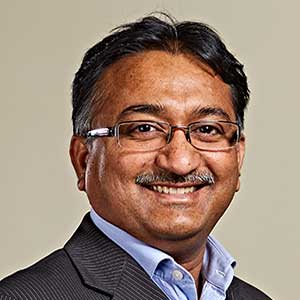
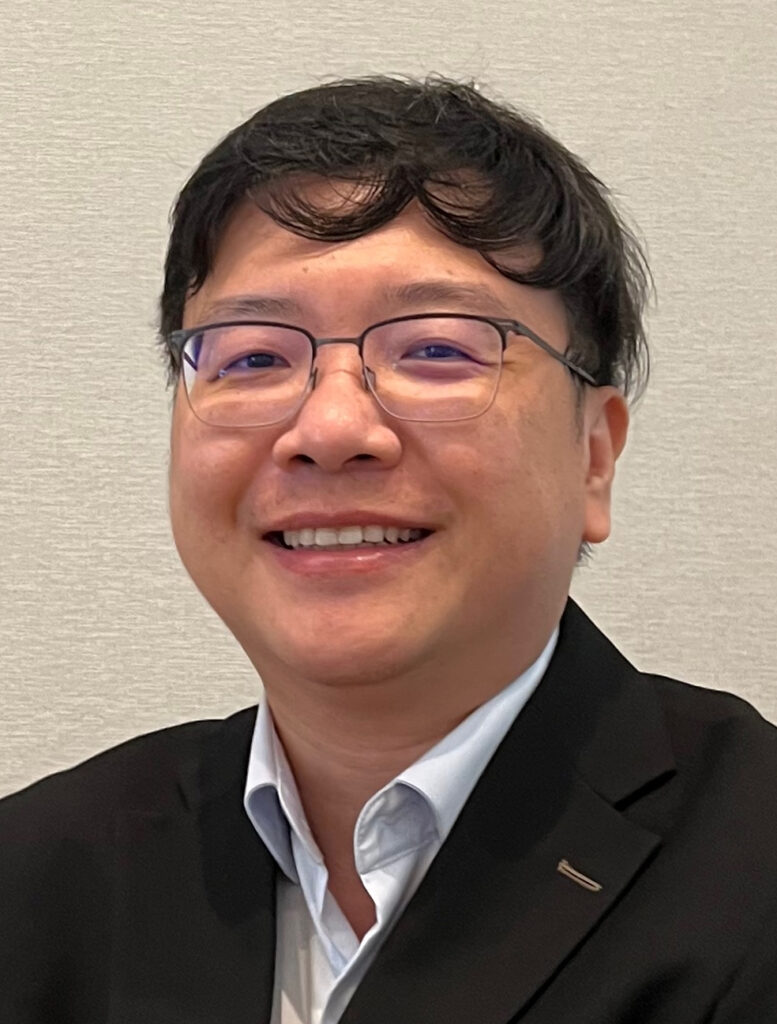
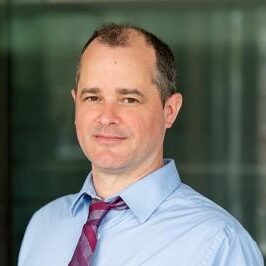
Dr. Hassan Qudrat-Ullah is a Professor at the School of Administrative Studies, York University, and Coordinator of the Certificate in Logistics Management. He holds a PhD in Decision Sciences from NUS Business School and completed a post-doctoral fellowship at Carnegie Mellon University. His research focuses on dynamic decision making, system dynamics modeling, energy planning, and interactive learning environments. He teaches courses on quantitative methods, logistics, and decision analysis, informed by global industry experience across 20+ countries. Research interests include sustainability, climate change, systems thinking, and educational applications of decision sciences. He serves as Editor-in-Chief of the International Journal of Complexity in Applied Science and Technology and is a member of IEEE, DSI, and the International System Dynamics Society. His work has been published in Energy , Decision Support Systems , and others. Key projects include studies on 'structured-debriefing in dynamic decision making' and renewable energy policies in Africa. His recent articles (2023–2025) address AI integration in energy governance, system dynamics for supply chain resilience, and education for sustainability. Hassan advocates for systems thinking in K-12 education and enjoys traveling (visited 129 countries) and bird-watching.
Samir Dani is a Professor of Operations and Supply Chain Management at Keele University’s Keele Business School. He holds Chartered Manager status and is a Fellow of multiple professional bodies, including the Higher Education Academy and Chartered Institute of Logistics and Transport. Prior to academia, he worked in India’s automotive industry. His research focuses on supply chain resilience, sustainability, food logistics, and Industry 4.0 technologies like AI and Blockchain. Affiliations: Keele University (current), University of Huddersfield (2014–2019), Loughborough University (2005–2008) Leadership: Former Head of Logistics, Marketing, Hospitality, and Analytics Department at University of Huddersfield Industry Engagement: £5M Leeds City Region LEP Supply Chain Program, UK-India trade advisory roles Research Interests: Supply chain risk and resilience Food supply chain sustainability AI, IoT, and Blockchain applications Industry 4.0 transformations Recent Article Trends: Focus on climate action impacts, blockchain trust mechanisms, and SME net-zero strategies. His work bridges academic theory with industry challenges, emphasizing technology adoption and sustainability. Awards: Prix des Associations (2015), UK Top 100 Logistics Professional (2017/18) Grants: £800K+ from EPSRC, IMCRC, and KTP Advisory Roles: Editorial Board member of Supply Chain Management: An International Journal, Academic Review Board member of International Journal of Operations and Production Management.
Dr. ONG Ghim Ping Raymond is an Associate Professor and Deputy Head (Research) at the Department of Civil and Environmental Engineering, National University of Singapore (NUS). He concurrently serves as Director (Operations) at the Coastal Protection and Flood Resilience Institute (CFI) Singapore. His expertise spans sustainable pavements, multimodal transport infrastructure, and urban mobility systems. Dr. Ong holds a B.Eng (Civil) with First Class Honours and a PhD from NUS, followed by postdoctoral research at Purdue University. He has authored/co-authored over 85 peer-reviewed journal articles and 120 conference papers. His research focuses on circular economy applications in infrastructure, car-lite urban design, and mega-projects like Tuas Port and Changi Airport expansions. Dr. Ong actively engages in policy advisory roles, serving on international committees for ASCE, ASTM, and EASTS. He has received prestigious awards including the Alfred Noble Prize (ASCE) and Takeuchi Yoshio Award (OCDI). His teaching accolades include multiple NUS Faculty of Engineering commendations. He advises on critical infrastructure projects for agencies like Changi Airport Group and Defence Science and Technology Agency. Dr. Ong frequently contributes to public discourse on transport and urban planning via media interviews and policy consultations.
Nordakademie University of Applied SciencesGermany
Volker Ahrens is a Professor of Production Management at NORDAKADEMIE since 2007. He also serves as Head of the Industrial Engineering (B.Sc.) program and the International Business & Administration (B.Eng.) program, while acting as Coordinator of the Department of Engineering. His career spans academic and industrial roles, including leadership positions in medium-sized industrial companies and editorial work on VDI standards. Education: Diplom-Ingenieur in Mechanical Engineering (1989, Universität Hannover); Doktor-Ingenieur (1997, Universität Hannover) Industrial Experience: 10 years of executive management in industry, including König Metall GmbH & Co. KG and Wilhelm Schröder GmbH His research focuses on Systems Engineering and Production Management, with emphasis on lean production, quality management, and Industry 4.0. His publications since 2025 explore systemic approaches to socio-technical systems, cardboard engineering for collaborative design, and human-technology interaction in production environments. He has contributed extensively to process modeling, simulation of production systems, and meta-process frameworks like PDCA cycles. The 15 most recent articles highlight trends in systemic production design, lean manufacturing, and Industry 4.0 applications. Key keywords include Systems Engineering, Production Management, Lean Production, and Quality Management. Subfields span socio-technical systems, simulation techniques, human-centered design, and cyber-physical system integration across industrial contexts. Volker Ahrens is actively involved in teaching, serving as a lecturer at Hochschule Karlsruhe (1998–2013) and Fachhochschule Vorarlberg (since 2017). He contributes to academic governance as a member of the NORDAKADEMIE faculty and chairs VDI committees on simulation standards for production systems. His advisory roles include peer reviewing for quality assurance agencies like FIBAA and ZEvA.
David Ashmore is a Lecturer in Engineering Economics at the University of Southampton, specializing in transport sector reform, infrastructure procurement, service contract franchising, and public policy. He has over 30 years of international experience working with engineers, policymakers, regulators, and multilateral donors across the UK, Europe, India, the Americas, Africa, and Asia-Pacific regions. Transport Economics Infrastructure Procurement Public-Private Partnerships Policy Analysis His recent research explores sustainable mobility transitions, including ride-hailing dynamics in Indian cities, hydrogen truck adoption in Australia, and equitable infrastructure systems amid rapid urbanization. He emphasizes multistakeholder collaboration and policy innovation in transport reforms. Key publication trends focus on zero-emissions transportation, PPP challenges, automated planning tools, and formal-informal sector integration in developing countries. Articles span conference proceedings, journal articles, and policy-oriented outputs. David serves as a Visiting Research Fellow at the Technical University of Dresden and holds memberships in the Chartered Institute of Logistics and Transport and the Institution of Transportation Engineers. He actively supervises PhD students and leads global transport policy research initiatives.
Xavier Brusset is a Professor in Supply Chain at SKEMA Business School since 2016, where he also serves as Director of the PRISM Research Center since 2017. Previously, he held professorial positions at Toulouse Business School (2015-2016) and ESSCA School of Management (2009-2015), where he was responsible for the Master 2 in Purchasing and Supply Chain Management program. His academic journey includes a PhD in Management Sciences from Université Catholique de Louvain (2010) and a Habilitation à Diriger des Recherches from Université Paris Ouest Nanterre La Défense (2016). His research spans multiple critical areas in supply chain management, with particular focus on supply chain resilience, blockchain applications, weather risk management, and pandemic impacts on supply chains. Brusset has developed innovative approaches to understanding how supply chain partners interact, how information affects their behavior, and how external disruptions like weather anomalies and pandemics impact operational efficiency. His work bridges theoretical models with practical applications, often developing decision-support tools for managers facing complex supply chain challenges. Brusset's publication record shows a clear evolution of research interests, beginning with foundational work on supply chain contracts and information sharing, then expanding to weather risk management, and most recently focusing on pandemic disruptions and blockchain applications. His 15 most recent publications (2018-2025) demonstrate increasing sophistication in modeling complex supply chain phenomena, with particular emphasis on network effects, ripple effects, and multi-echelon optimization under disruption scenarios. Editorial board member of Logistics Research Editor of International Journal of Retail and Distribution Management (2022-2023) Recognized EU expert for CINEA research projects evaluation Organizer of the Colloquium on European Research in Retailing (CERR) Reviewer for multiple top journals including International Journal of Production Economics As an advisor, Brusset has supervised doctoral students including R. Alkhudary (co-director, Université Paris 2 Panthéon-Assas) and V. Capocasale (rapporteur). His professional experience extends beyond academia to include industry roles in financial markets and logistics technology, having co-founded WebLogistix, a platform for sharing logistics information in Argentina. His research has practical applications across multiple sectors, particularly in retail, food supply chains, and manufacturing, where he develops tools to help managers mitigate risks and optimize operations under uncertainty.
Prof. Dr. Evi Hartmann holds the Chair of Business Administration, especially Supply Chain Management at Friedrich-Alexander University Erlangen-Nuremberg (FAU) within the Department of Business, Economics, and Social Sciences. She is actively involved in multiple research focus areas including sustainability, energy markets and energy system analysis, and insurance and risk. Her academic leadership extends across interdisciplinary collaborations with engineering, mathematics, and industry partners. Dr. Hartmann studied industrial engineering at the University of Karlsruhe (TH), received her doctorate in 2002 from the Institute of Technology and Management at the Technical University of Berlin, and completed her habilitation in business administration in 2008. Prior to her academic career, she worked as a consultant at AT Kearney from 1998 to 2005, followed by a junior professorship for 'Purchasing and Supply Management' at the Supply Chain Management Institute at the European Business School. Her research program focuses on supply chain management, purchasing, and strategic foresight, with particular emphasis on application-oriented approaches that bridge theory and practice. Current research trajectories include supply chain resilience in crisis situations (including pandemic response), digital transformation through Industry 4.0 technologies, sustainable and low-carbon supply chains, and the integration of strategic foresight methodologies in logistics decision-making. Her work frequently employs Delphi studies, bibliometric analyses, and multi-tier case studies to examine complex supply chain phenomena. Analysis of her recent publications reveals a strong trend toward interdisciplinary research that combines supply chain management with digital transformation, sustainability, and crisis response. Her work increasingly examines the intersection of technology adoption (particularly Industry 4.0), organizational culture, and supply chain resilience across multiple industries including automotive, food, and maritime logistics. Prof. Hartmann is recognized as the author of two academic bestsellers in her field, though specific awards are not detailed in available materials. Her research has been published in top-tier journals including IEEE Transactions on Engineering Management, International Journal of Production Research, and Journal of Cleaner Production. Her research program demonstrates extensive industry collaboration, with numerous projects involving real-world implementations and close partnerships with companies. She leads research initiatives examining the practical implications of digital transformation, sustainability challenges, and resilience strategies in supply chain operations. Current projects include studies on digital ecosystems, physical internet applications, and the future of freight forwarding technologies. Prof. Hartmann participates in several research networks including the Energy Campus Nuremberg (EnCN) and collaborates with the Department of Mathematics on gas networks and markets research. She is also involved with the Nuremberg Energy Region (Energieregion Nürnberg eV) and contributes to interdisciplinary research centers focused on sustainable development and digital transformation in supply chains.
University of California, Los AngelesUnited States
Christopher S. Tang is a UCLA Distinguished Professor and Edward W. Carter Chair in Business Administration at the Anderson School of Management , where he researches global supply chain management with a focus on social innovation in developing countries . He also serves as Senior Associate Dean for Global Initiatives and Faculty Director of the Center for Global Management . Education: Ph.D. in Management Science (1985, Yale University) M.Phil. in Administrative Science (1983, Yale University) M.A. in Statistics (1983, Yale University) B.Sc. in Mathematics (First Class Honors, 1981, King’s College, University of London) His research explores the intersection of corporate responsibility and supply chain innovation , addressing topics like microfinancing , mobile platforms for developing economies , direct agricultural procurement , and disaster response logistics . He emphasizes visibility, integrity, and agility in uncertain environments. Recent work highlights AI adoption benefits for supply chains , strategies to reduce forced labor risks , and policy impacts on ride-sharing platforms . His research bridges operations management and social justice , advocating for environmental stewardship alongside business growth. Scientific Awards: Salzberg Medallion (2017) Lifetime Fellow, INFORMS (2011) Responsible Research in Management Award (2017) Teaching Excellence Award (multiple years, UCLA-NUS) Dean’s Excellent Service Award (2014) As an influential adviser and consultant , Tang has worked with Amazon, HP, IBM, Nestlé, GKN , and Accenture . He has taught at Stanford University, UC Berkeley, Hong Kong University of Science and Technology , and served as visiting professor at Cambridge University and the Institute of Advanced Study at HKUST .
John C. Butler is a Clinical Associate Professor in the Finance Department at the McCombs School of Business, University of Texas at Austin. He holds leadership roles as Academic Director of the Kay Bailey Hutchison Energy Center, Director of the MS Finance Program, and Director of the Energy Management Minor. His academic journey includes a PhD in Management Science and Information Systems from UT Austin (1998) and a BBA from Texas A&M University (1991). His research focuses on applications of decision analysis across domains including operations, finance, and information systems. Key areas include risk analysis, optimization, multi-attribute utility theory, and energy finance. His work integrates theoretical modeling with empirical validation to address complex decision-making challenges in both public and private sectors. Butler's publications demonstrate a consistent focus on decision modeling methodologies, with recent work emphasizing risk quantification and utility theory applications. His articles frequently intersect operations research, behavioral economics, and systems optimization, reflecting interdisciplinary approaches to solving managerial and policy problems. Awards and Honors: MBA Applause Award (2008, 2011) Finalist, INFORMS Franz Edelman Award (2004) INFORMS Decision Analysis Society Practice Award (2000) Fred Moore Teaching Award Dean's Research Fellowship, Ohio State University (2004) Leadership & Advising: Butler has supervised 11 PhD students to completion and secured significant grants including DOE funding for nuclear terrorism risk analysis. He directs multiple energy finance initiatives and serves on editorial boards for Decision Analysis and previously Decision Support Systems . Centers & Programs: As Academic Director of the Kay Bailey Hutchison Energy Center, he leads interdisciplinary energy research. He also developed the Energy Finance concentration and redesigned the MS Finance curriculum to incorporate quantitative energy market analysis.
Jonathan P. Wong is a Senior Policy Researcher at the RAND Corporation and Professor of Policy Analysis at the RAND School of Public Policy. His work bridges academic research and defense policy, focusing on military strategy, acquisition, force planning, and the integration of emerging technologies into military operations. Education: Ph.D. and M.Phil. in Policy Analysis (Pardee RAND Graduate School), M.A. in Security Studies (Georgetown University), B.A. in Political Science (UC San Diego) Professional Experience: U.S. Marine Corps infantry officer (2001–2011), Consultant at Boston Consulting Group, current RAND researcher and professor Wong’s research interests center on defense innovation, military logistics, artificial intelligence in warfare, space capabilities, and the human dimension of military operations. He has led studies on human-machine teaming, non-lethal weapons, defense acquisition reform, and U.S. military posture in the Indo-Pacific. His work emphasizes practical, policy-relevant insights grounded in operational experience. The trends in his recent publications reveal a deep engagement with modern defense challenges: integrating commercial technologies into military systems, improving acquisition agility, enhancing battlefield awareness, and ensuring that defense innovation serves warfighter needs. His research spans strategic, operational, and tactical levels, often focusing on the U.S. Army and Marine Corps. Wong has not received public recognition in the form of listed awards in the provided texts, but his leadership in congressionally mandated studies and high-impact policy research suggests significant influence in defense circles. Advising & Grants: Co-led major projects such as the Long Range Precision Fires study and research on integrating women into Marine Corps infantry. His work is frequently funded by the Department of Defense and other federal entities, though specific grant details are not listed. Wong is affiliated with RAND’s defense and national security research teams, contributing to strategic analysis and policy development. He is not associated with a formal lab but works within RAND’s collaborative research environment, often partnering with other veterans and defense experts to produce actionable insights for military leaders and policymakers.
Constantine (Costa) Samaras is the Trustee Professor of Civil and Environmental Engineering and Director of the Wilton E. Scott Institute for Energy Innovation at Carnegie Mellon University. He is also affiliated with the Department of Engineering and Public Policy and holds a courtesy appointment in the Heinz College of Information Systems and Public Policy. Director, Scott Institute for Energy Innovation Trustee Professor, Civil and Environmental Engineering Affiliated Faculty, Engineering and Public Policy Courtesy Faculty, Heinz College of Information Systems and Public Policy His research focuses on systems engineering approaches to climate resilience , clean energy transitions , and infrastructure security . Key areas include: Transportation electrification and automation Climate adaptation for infrastructure Energy policy under uncertainty AI impacts on energy systems Equity in decarbonization National security implications of energy Costa Samaras co-authored 15 recent studies spanning energy burden analysis, climate hazard indices, AI training energy optimization, and nature-based infrastructure solutions. His work emphasizes transdisciplinary collaboration between engineering, policy, and climate science. Notable scientific recognition includes being named Professor of the Year by the Pittsburgh Section of the American Society of Civil Engineers in 2018. He has led significant policy engagements including White House service (2021-2024) as Principal Assistant Director for Energy and Chief Advisor for Clean Energy Transition. Current affiliations include: Founder/Director, Center for Engineering and Resilience for Climate Adaptation Founder/Director, Power Sector Carbon Index Former Senior Researcher, RAND Corporation (2009-2014) Former Adjunct Senior Analyst, RAND Corporation (2014-2021)
Dr. Divya Jayakumar Nair serves as Senior Lecturer in the School of Civil and Environmental Engineering at the University of New South Wales (UNSW), where she also holds the position of Associate Dean International – South Asia for UNSW Engineering. Her academic work is centered at the Research Centre for Integrated Transport Innovation (rCITI), focusing on transportation systems, network optimization, and disaster management applications. Dr. Nair's research interests span transportation engineering, disaster management, and urban mobility systems. Her work investigates complex network design problems, particularly in pre-disaster evacuation planning, transportation resilience, and food rescue logistics. She employs advanced analytical methods including traffic equilibrium modeling, network optimization techniques, and data-driven approaches to solve real-world transportation challenges with significant societal impact. Her recent publications demonstrate a strong focus on transportation resilience during disasters, with particular attention to equity considerations in pre-event planning. Dr. Nair's research shows how transportation networks can be optimized to improve emergency response while ensuring equitable access to safety for all population segments. Her work bridges theoretical network optimization with practical applications in urban environments facing climate-related challenges. Dr. Nair collaborates extensively with leading researchers in transportation including S. Travis Waller, Vinay V. Dixit, David Rey, and Taha Rashidi. Her collaborative approach spans multiple institutions and addresses pressing challenges in urban transportation systems worldwide.
University of Illinois Urbana-ChampaignUnited States
Mei-Po Kwan is a distinguished academic holding multiple roles at The Chinese University of Hong Kong (CUHK). She serves as the Head of Chung Chi College, Choh-Ming Li Professor of Geography and Resource Management, Director of the Institute of Space and Earth Information Science, and Professor at The Jockey Club School of Public Health and Primary Care. Her research focuses on geospatial health, urban mobility, environmental health, and innovative GIS methods, emphasizing individual-level environmental exposure and social disparities. Education: Ph.D. Geography, University of California, Santa Barbara (1994) M.A. Urban Planning, University of California, Los Angeles (1989) B.SoSci. Geography, The Chinese University of Hong Kong (1985) Research Interests: Dr. Kwan’s work bridges health, transport, and environmental geography, leveraging cutting-edge GIS and mixed-methods approaches. Key themes include: Uncertain Geographic Context Problem (UGCoP) and Neighborhood Effect Averaging Problem (NEAP) GIS-based analysis of greenspace, air/noise pollution, and mobility Geospatial AI and real-time sensing technologies Health disparities in urban environments Grants & Awards: She has secured over $68 million in research funding, including recent grants from the Hong Kong Research Grants Council and Innovation and Technology Commission. Notable awards include Fellowships from the American Association of Geographers, Royal Geographical Society, and multiple Highly Cited Researcher recognitions (2019, 2021). Professional Service: Editor of Annals of the American Association of American Geographers , founder of the International Geospatial Health Research Network, and member of prestigious editorial boards and advisory councils. Labs & Teams: Leads the Institute of Space and Earth Information Science and collaborates on projects like the 15-minute city framework, carbon monitoring systems, and geospatial health analytics.
Dustin Tingley is a Professor of Government at Harvard University and holds a joint appointment at the Harvard Kennedy School of Public Policy . He serves as Interim Vice Provost for Advances in Learning and directs the Data Science and Technology Group and the Harvard Initiative on Learning and Teaching . He earned a PhD in Politics from Princeton and a BA in political science and math from the University of Rochester. Key Roles : Deputy Vice Provost (past), Chair of Harvard's Standing Committee on Climate Education Research Focus : Climate change politics, data science, causal inference, and international political economy His recent work explores the political economy of climate transitions , public opinion on carbon policies , and machine learning applications in social sciences . He co-founded ABLConnect , a repository for active learning pedagogy, and organized conferences on causal mechanisms , teaching with AI , and equitable classrooms . Awards : Gladys M. Kammerer Award (2015) for co-authored book Sailing the Water’s Edge Notable Publications : Uncertain Futures: How to Unlock the Climate Impasse (2023, with Alex Gazmararian) The Political Economy of the Clean Energy Transition (2025)
Prof. Jack van der Vorst is the Personal Professor of AgriFood Supply Chain Logistics at Wageningen University's Operations Research and Logistics Group. Previously serving as a member of the Board of Directors of Wageningen University & Research (until 2024) and General Director of the Social Sciences Group, he leads over 1000 personnel across three institutes. His advisory roles include the Topteam AgriFood (Science Captain), Top consortium for Knowledge and Innovation (TKI), The Sustainability Consortium (TSC), and Florensis BV's Supervisory Board. With 20+ PhD supervisions and 200+ publications, his research focuses on innovative logistics concepts in AgriFood systems, including supply chain resilience, sustainability, and system innovation. His work integrates modeling frameworks with practical industry applications, emphasizing perishable products, horizontal collaboration, and environmental efficiency. Research interests span AgriFood System Design, Supply Chain Strategy, and Performance Management. His recent studies address challenges like postharvest loss reduction in developing countries, CO2 emission minimization in cold chains, and circular economy implementation in mushroom supply chains. Methodologically, he employs multi-criteria decision models, optimization techniques, and simulation to address complex logistics problems. Publications highlight themes such as horizontal collaboration success factors, vulnerability assessment frameworks, and green supply chain design. His work bridges academic rigor with industry needs, often collaborating with policymakers and international organizations to promote sustainable agri-food systems.