Nikolaos Kourentzes is a Professor of Informatics at the University of Skövde , specializing in forecasting and operations research. His work bridges theoretical advancements in time series analysis with practical applications in supply chain management, tourism demand, and renewable energy forecasting. Academic Rank: Professor Department: Department of Information Technology Research Interests: His research focuses on hierarchical and temporal forecasting methodologies, integrating macroeconomic indicators into demand planning, inventory optimization, and machine learning applications. He explores forecast reconciliation, shrinkage estimators, and the role of expert judgment in predictive analytics. Recent Publications: Highlights include advances in hierarchical forecasting with leading indicators, probabilistic forecasts during crises like the pandemic, and complex smoothing techniques. His work spans journals such as Omega , International Journal of Forecasting , and European Journal of Operational Research . Collaborations: Kourentzes collaborates with researchers globally, including George Athanasopoulos, Rob Hyndman, and Robert Fildes, across domains like tourism analytics, tire industry forecasting, and public health modeling.
Dr. Dave Clarke is an Adjunct Professor in the Department of Biomedical Physiology and Kinesiology at Simon Fraser University, leading the Clarke Laboratory for Quantitative Exercise Biology . His research focuses on Exercise-responsive cell signaling , Sports analytics using wearable sensors , Evidence-based exercise programming , and Clinical exercise physiology . The lab integrates mathematical modeling, clinical insights, and biomechanical approaches to address questions in athletic performance, metabolic disorders, and wearable technology applications. Dr. Clarke collaborates with institutions such as TRIUMF and the BC Cancer Research Centre. Publications highlight his work in critical power modeling , AMP-activated protein kinase dynamics , and mitochondrial disease treatments . His lab emphasizes interdisciplinary training, offering mentorship in experimental design, data analysis, and translational research. The Clarke Lab is affiliated with SFU’s Faculty of Health Sciences and maintains active outreach programs for public health education. Notable projects include developing hydraulic models for recovery kinetics prediction and validating chloride test strips for sodium excretion analysis. The lab’s work has been featured in journals like Frontiers in Sports and Active Living and Orphanet Journal of Rare Diseases . For real-time updates, follow the lab on Facebook .
Prof. Chris Dent is a Professor at the University of Edinburgh's School of Mathematics, specializing in the intersection of mathematical sciences and engineering. He holds a fellowship at the Alan Turing Institute and directs the Statistics Consultancy Unit. His career spans theoretical physics, operational research, and energy systems analysis, with notable contributions to National Grid strategies, policy-driven decision support, and pandemic data communication. Education: MMath (Cambridge), PhD in Theoretical Physics, MSc in Operational Research (Edinburgh). Research focuses on energy system reliability, uncertainty quantification, and interdisciplinary policy modeling. He critiques data communication practices in crises, advocating for rigorous reporting frameworks. Key activities include projects on electricity supply security, smart grid optimization, and post-pandemic economic recovery. Collaborations involve government bodies, the National Grid, and international energy networks. The Statistics Consultancy Unit supports cross-disciplinary projects in academia and industry.
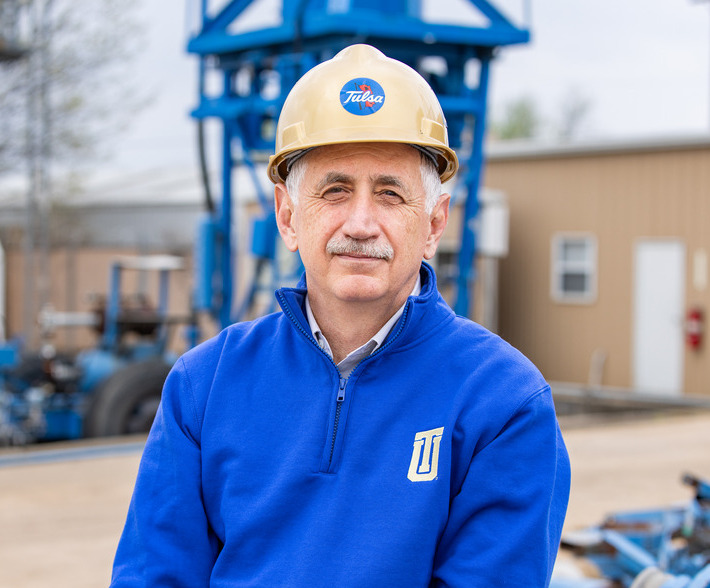
Cem Sarica is the Floyd M. Stevenson Distinguished Professor of Petroleum Engineering at The University of Tulsa, serving as Interim Chair of the Department and Director of three industry-supported consortia: TU Fluid Flow Projects (TUFFP), TU Paraffin Deposition Project (TUPDP), and TU Horizontal Well Artificial Lift Projects (TUHWALP). He holds a Ph.D. from The University of Tulsa and M.S./B.S. degrees from Istanbul Technical University. Ph.D., Petroleum Engineering, The University of Tulsa (1990) M.S.E., Petroleum Engineering, Istanbul Technical University (1984) B.Sc., Petroleum Engineering, Istanbul Technical University (1982) Research Interests : Cem specializes in multiphase flow dynamics, flow assurance, horizontal well artificial lift systems, and CO2/H2 flow behavior in pipelines. His work addresses challenges in energy production through experimental validation and mechanistic modeling. Scientific Awards : ASME Petroleum Division 75th Anniversary Medallion (1999) SPE Outstanding Editor Award (2000) Eminent Reviewer Award, J. Petroleum Science & Engineering (2008) SPE International Production and Operations Award (2010) SPE Distinguished Member Award (2012) SPE John Franklin Carll Award (2015) SPE Cedric K. Ferguson Certificate (2015) University of Tulsa Outstanding Researcher Award (2019) SPE Distinguished Achievement Award for Petroleum Engineering Faculty (2024) ASME Fellow (2024) ECS Zelimir Schmidt Outstanding Research Award (2024) Labs & Consortia : He leads TUFFP, TUPDP, and TUHWALP, which focus on multiphase flow modeling, paraffin deposition mitigation, and artificial lift optimization for industry partners.
Changhee Jung is the Samuel D. Conte Associate Professor in the Department of Computer Science at Purdue University. His research focuses on compilers and computer architecture with an emphasis on performance, reliability, and security. His educational background includes a Ph.D. from Georgia Tech (2013) under the supervision of Prof. Santosh Pande. Professor Jung's research spans compilers and computer architecture with a focus on performance, reliability, and security. He has developed program analysis and microarchitecture optimization techniques for soft error resilience, concurrency bug detection, and system security such as memory safety and Linux kernel permission check. Currently, he is working on energy-efficient intermittent computation and nonvolatile memory crash consistency. He often leverages compiler-architecture codesign and repurposes existing hardware features to develop cost-effective solutions for complex computing challenges. His recent publications demonstrate a clear trajectory toward intermittent computing systems, nonvolatile memory architectures, and security mechanisms for energy-constrained environments. His work shows innovative approaches to power failure recovery, capacitor vulnerability exploitation, and EMI attack defense in intermittent systems, with significant contributions to whole-system persistence, cache design, and prefetching techniques for low-power computing. His notable scientific achievements include: NSF CAREER Award (2018) Inducted into MICRO Hall of Fame (2021) Best Paper Honorable Mention in ISCA 2025 Memorable Paper Award Finalist in NVMW 2024 Dissertation Advisor of 2023 ACM SIGBED Paul Caspi Memorial Dissertation Award winner Jongouk Choi 2017 AMD Faculty Research Award Professor Jung has successfully advised numerous graduate students, many of whom have secured prominent positions at leading technology companies including Google, Intel, and Samsung Electronics. His lab, the CompArch (Compiler and Architecture) research group, was formed in 2013 at Virginia Tech and continues at Purdue, focusing on compiler-architecture cooperation to address cross-cutting concerns involving performance, reliability, and security. The lab has received significant research funding, including an NSF CAREER Award in 2018 and an AMD Faculty Research Award in 2017.
Angel Santamaria-Navarro serves as Associate Professor at Polytechnic University of Catalonia (UPC) and Robotics Researcher at the Institute of Robotics and Industrial Informatics (IRI), a CSIC-UPC joint center in Barcelona. His work bridges academic research and real-world deployment in mobile robotics, with current leadership in European TRIFFID (autonomous first-responder systems) and national LENA (lifelong navigation learning) projects spanning urban logistics and emergency response applications. His research centers on Mobile Robotics and Autonomous Systems with emphasis on human-robot collaboration in unstructured environments . Key focus areas include robot navigation in crowded urban settings, manipulation of deformable objects, and deployment of delivery systems like the LogiSmile project piloted across European cities. His work uniquely integrates machine learning with field robotics to solve practical challenges in last-mile logistics and disaster response. Recent publications (2022-2025) reveal a concentrated shift toward real-world robotic deployment , particularly in emergency response (TRIFFID) and urban logistics. Dominant themes include communication-aware multi-robot coordination, probabilistic perception for dynamic environments, and human acceptance studies – reflecting his commitment to transitioning lab innovations to operational field systems through Horizon Europe and national projects. Key recognitions include: 1st place at DARPA Subterranean Challenge, urban circuit (2020) 2nd place at DARPA Subterranean Challenge, tunnel circuit (2019) Beatriu de Pinós research fellowship (2021) Georges Giralt PhD award finalist (2018) R3 accreditation as consolidated researcher (2023) He actively mentors next-generation researchers as supervisor of PhD candidate Hafsa Taher (deep learning for autonomous vehicles) and Master's student Joan Tur Ruiz (object pose tracking). His research portfolio includes €5M+ in competitive funding spanning Horizon Europe projects (TRIFFID, TORNADO), national initiatives (LENA, AUDEL), and industry partnerships like the Vaive Logistics spin-off co-founded in 2023. As core member of UPC's robotics team, he contributed to the NeBula framework that won DARPA's Subterranean Challenge and currently leads development of TRIFFID's autonomous first-responder systems. His work with the LogiSmile consortium demonstrates practical urban deployment of delivery robots across Barcelona, Lisbon, and Milan, while the SOCIAL PIA project pioneers cybernetic avatars for cooperative human-robot teams.
Donald C. Wunsch is the Mary K. Finley Missouri Distinguished Professor in Electrical and Computer Engineering at Missouri University of Science & Technology (Missouri S&T), where he directs the Applied Computational Intelligence Laboratory. He previously served as Interim Director of S&T’s Intelligent Systems Center and holds courtesy appointments in Computer Science, Systems Engineering, and Engineering Management. His research focuses on neural networks, reinforcement learning, adaptive resonance theory, bioinformatics, and robotics. Wunsch is an IEEE Fellow, INNS Fellow, and recipient of the 2015 INNS Gabor Award and 2019 Ada Lovelace Service Award. He has led numerous professional organizations, including the INNS Board of Governors and IJCNN conferences. Education: Executive MBA, Washington University in St. Louis (2006) Ph.D. in Electrical Engineering, University of Washington (1991) M.S. in Applied Mathematics, University of Washington (1987) B.S. in Applied Mathematics, University of New Mexico (1984) Research Interests: Donald’s work spans adaptive resonance systems, reinforcement learning architectures, neurofuzzy regression, robotic swarms, and bioinformatics. He emphasizes practical applications in energy systems (e.g., pumped storage hydro optimization), cybersecurity, and medical data analysis. Recent projects include Hamiltonian-driven adaptive dynamic programming and cluster validity indices for streaming data. Awards & Recognition: 2015 INNS Gabor Award INNS Senior Fellow (2007–2013) NSF CAREER Award 2019 INNS Ada Lovelace Service Award Labs & Leadership: As director of the Applied Computational Intelligence Lab, he oversees research in AI/AS applications for critical infrastructure and smart grids. He also chairs the Missouri S&T Information Technology and Computing Committee and actively contributes to interdisciplinary initiatives like the University of Missouri Bioinformatics Consortium.
Kristopher Klein is an Associate Professor at the Lunar and Planetary Laboratory (LPL), University of Arizona, within the Department of Planetary Sciences, College of Science. He earned his Ph.D. from the University of Iowa in 2013 and has been a faculty member at LPL since 2017. His research focuses on theoretical and computational plasma physics in the context of solar and heliospheric systems. Education: Ph.D., 2013, University of Iowa Years with LPL: 2017–present Dr. Klein's research centers on fundamental plasma phenomena in the heliosphere, particularly turbulent heating, energization mechanisms, and departure from thermodynamic equilibrium in collisionless plasmas like the solar wind. He employs analytic theory, numerical simulations (e.g., AstroGK, HVM, gkeyll), and spacecraft data from missions such as Parker Solar Probe and HelioSwarm. He is a co-developer of the Arbitrary Linear Plasma Solver (ALPS), an open-source tool for dispersion analysis. His recent publications (2019–2025) reveal a strong focus on plasma turbulence, wave-particle interactions, kinetic instabilities, and solar wind heating mechanisms. The work frequently combines Parker Solar Probe observations with theoretical modeling to understand energy transfer at kinetic scales. Themes include ion and electron heating, stochastic heating, cyclotron damping, and multi-scale turbulence characterization. Scientific Awards: 2024 AAS Harvey Prize 2022 Landau-Spitzer Award for Outstanding Contributions to Plasma Physics Dr. Klein advises graduate students including Niranjana Shankarappa and Waverly Gorman, with former student Teddy Broeren (Ph.D., 2023). He leads major NASA-funded research projects related to the HelioSwarm and Parker Solar Probe missions. His involvement includes being Deputy Principal Investigator for HelioSwarm and Co-Investigator and Project Scientist for the SWEAP instrument on Parker Solar Probe. These roles involve significant grant leadership and collaboration with interdisciplinary teams. He is actively involved in instrumentation and data analysis, particularly through quasi-thermal noise spectroscopy and wave-particle correlation techniques. His work bridges theory, simulation, and observational data to advance understanding of space plasma physics.
Jaafar El-Awady is a Professor in the Department of Mechanical Engineering at the Whiting School of Engineering, Johns Hopkins University (JHU). He serves as Chair of JHU’s Engineering for Professionals’ Mechanical Engineering Graduate Program, founder/director of the Computational and Experimental Materials Engineering Laboratory (CEMEL), and associate director of the Center on Artificial Intelligence for Materials in Extreme Environments (CAIMEE) and the Center for Integrated Structure-Materials Modeling and Simulations (CISMMS). His secondary appointment in the Department of Materials Science and Engineering underscores his interdisciplinary focus.
Professor Peter Catcheside is a distinguished sleep and respiratory physiologist at Flinders University's College of Medicine and Public Health, where he serves as a Full Member of both the Flinders Health and Medical Research Institute Sleep Health (formerly the Adelaide Institute for Sleep Health) and the Medical Device Research Institute within the College of Science and Engineering. Based in the Mark Oliphant Building's 6-bed sleep research facility in Bedford Park, South Australia, he maintains an active research program with over 265 research outputs spanning more than two decades. His primary research interests focus on obstructive sleep apnea, respiratory control mechanisms, arousal from sleep, environmental noise effects on sleep, upper airway neuromuscular control, cardiovascular disturbances related to sleep disorders, and circadian physiology. Professor Catcheside's work bridges clinical research with technical and computing expertise to investigate the mechanisms and consequences of disturbed breathing and sleep. His current research predominantly centers on improving treatments and diagnostic methods for sleep breathing disorders including obstructive sleep apnea, problem snoring, and central sleep apnea, as well as understanding how respiratory problems and environmental noise exposure affect sleep quality. Analysis of his 15 most recent publications reveals a strong emphasis on clinical applications of sleep research, with particular focus on sleep apnea diagnostics and treatment, cardiovascular consequences of sleep-disordered breathing, circadian rhythm analysis, and the relationship between sleep quality and various health outcomes including diabetes and athletic performance. His research employs sophisticated methodologies including polysomnography, advanced data modeling, and physiological measurements. Over 265 research outputs with consistent publication record through 2025 6877 total citations reflecting significant impact in the field 47 h-index demonstrating substantial scholarly influence Active supervision of students across multiple disciplines including Medicine, Physiology, Engineering, and Psychology Professor Catcheside has completed principal supervisions in Physiology (3) and associate supervisions across Medicine (3), Physiology (3), Engineering (2), and Psychology (1). His research program contributes to multiple UN Sustainable Development Goals, particularly in health and wellbeing. His work combines sleep and respiratory physiology measurements with circadian and cardiovascular physiology expertise to address complex questions in sleep medicine.
Prof. Soner Doğan is a Professor at Yeditepe University's Faculty of Medicine, Department of Medical Biology. He holds a PhD in Medical Biology from the University of Minnesota and a Bachelor's in Veterinary Science from Ankara University. His research bridges oncology, epigenetics, and metabolic regulation, with a focus on breast cancer mechanisms and calorie restriction. Research interests span: Breast Cancer Pathobiology : Investigating leptin/adiponectin signaling and epigenetic modifications in tumor development. Calorie Restriction : Examining intermittent vs. chronic dietary interventions for cancer prevention and aging. Aging and Frailty : Identifying biomarkers and molecular pathways in age-related diseases using murine models. His publications emphasize molecular oncology, with recurring themes in adipokine signaling, DNA methylation, and transcriptomic profiling. Articles frequently utilize transgenic mouse models and RNA-seq to explore metabolic and immune interactions in cancer. Awards & Honors: Professional Development Grant, Education Minnesota Foundation AICR Scholarship for Cancer Research Conference Advising & Grants : Supervised 11+ Master's/PhD theses on topics like nanoparticle drug delivery and epigenetic regulation. Secured major grants including TÜBİTAK 1001 (€395K) for breast cancer epigenetics and COST Action CA17129 for cardiovascular transcriptomics. Affiliations : Leads projects at Yeditepe’s molecular biology labs and collaborates internationally (e.g., EU-CardioRNA COST Action). Holds administrative roles as Department Coordinator and Ethics Committee member.
Lukasz Mezyk is a researcher at the Division of Aircraft Engines , Institute of Heat Engineering, Warsaw University of Technology. He specializes in advanced propulsion systems for spacecraft with a focus on resistojet and cold gas thrusters. Email: lukasz.mezyk@pw.edu.pl Room: 303 Professional Membership: Polish Combustion Institute, Space Technology Projects Expert Research Focus : Dr. Mezyk's work centers on: Resistojet thruster development Green propellant technologies Thermal decomposition of hydrogen peroxide Spacecraft attitude control systems Supercapacitor-powered propulsion Microgravity robotics propulsion Publication Trends : His recent work emphasizes resistojet optimization using supercapacitors and green monopropellants, with significant contributions to thermal decomposition mechanisms and spacecraft robotics applications. Awards : I degree Team Award for organisational achievements (2018) Teaching : He instructs courses on astronautics, rocket propulsion, and spacecraft design, while supervising numerous diploma theses and serving on academic committees. Organizational Roles : Dr. Mezyk serves as secretary of diploma exams and contributes to training programs for space technology projects, including satellite design phases and propulsion systems education.
Chen Pan is an Assistant Professor in the Department of Electrical and Computer Engineering at the University of Texas at San Antonio's Klesse College of Engineering and Integrated Design. His research focuses on energy-harvesting embedded systems, low-power computing, and IoT network optimization through machine learning techniques. Ph.D. from University of Pittsburgh Specializes in transient computing for batteryless devices Develops reinforcement learning solutions for UAV-assisted IoT systems Chen's recent publications emphasize energy-aware scheduling, non-volatile memory optimization, and sustainable communication protocols. His work intersects spatiotemporal modeling, fault tolerance, and resource-constrained AI execution across heterogeneous architectures.
Liqun Diao is an Associate Professor (Tenured) in the Department of Statistics and Actuarial Science at the University of Waterloo. He holds affiliations with the Health Data Science Lab and the Waterloo Artificial Intelligence Institute. His research focuses on developing statistical methods and machine learning algorithms for applications in medicine, public health, and insurance. Education: B.Econ. in Statistics, Renmin University of China (2007) M.Math. in Statistics (Biostatistics), University of Waterloo (2009) Ph.D. in Statistics (Biostatistics), University of Waterloo (2013) Research Interests: Recursive partitioning and tree-based methods for survival and health data Causal inference and missing data methodologies Bayesian nonparametric models and copula dependence structures Mortality forecasting and actuarial science applications Awards: 2013 Pierre Robillard Award (best doctoral thesis in Canadian statistics) 2024 Outstanding Performance and Teaching Awards at UW Professional Activities: Led research groups in health data science and AI Recipient of multiple grants from NSERC and industry partners Advises graduate students in statistics and actuarial science Labs/Teams: Active contributor to the Health Data Science Lab and Waterloo AI Institute, focusing on applying statistical innovations to real-world health and insurance challenges.
Dr. Lintong Hou is a Researcher at Hamburg University of Technology (TUHH) in the Department of Geo-Hydroinformatics since July 2024. He holds a BSc in Civil Engineering from China University of Mining and Technology-Beijing (2018) and a PhD in Mechanical Engineering from the Institute of Mechanics, Chinese Academy of Sciences (2024), followed by postdoctoral research there. His expertise lies in multiphase flow dynamics, focusing on gas-liquid-solid phase interactions, phase separation under extreme conditions, and experimental methodologies for mass/energy transfer challenges. His current research at TUHH addresses river evaporation losses, aiming to quantify global fluvial network evaporation through multi-factor analysis. Prior work includes studies on oil-water emulsification, polymer rheology, and electrical resistance tomography applications. Key research interests include multiphase flow behavior, rheological modeling, and flow regime transitions in complex systems. Publications span Chemical Engineering Science, Industrial & Engineering Chemistry Research, and Ocean Engineering, emphasizing experimental and computational analyses of flow phenomena. His work bridges fundamental fluid mechanics with practical applications in environmental and energy sectors.