Professor Hong Hao is a John Curtin Distinguished Professor at Curtin University, affiliated with the School of Civil and Mechanical Engineering and the Curtin Research Centre for Infrastructural Monitoring & Protection. His expertise spans Structural Dynamics, Earthquake Engineering, Blast and Impact Engineering, and Structural Health Monitoring. He holds prestigious roles like Fellow of ATSE, ISEAM, and ASCE, and has led organizations such as the International Association of Protective Structures and the Australian Earthquake Engineering Society. Education: BE (Tianjin University, 1982), MSc (UC Berkeley, 1985), PhD (UC Berkeley, 1989). Awards include the Tan Chin Tuan Fellowship and multiple Ko Medals. He has authored over 200 journal articles, with recent work focusing on blast-resistant materials, seismic fragility, and AI-driven structural health monitoring. His research emphasizes resilient infrastructure, including metaconcrete structures, corrosion-resistant materials, and sensor-based damage detection. Ongoing projects involve smart tunnel safety under BLEVE explosions and modular building systems.
Konstantinos Karapiperis is a Tenure Track Assistant Professor at EPFL's Laboratory of Multiscale Modeling of Materials (LMD), within the School of Architecture, Civil and Environmental Engineering (ENAC). His research integrates mechanics , multiscale modeling , and data science to study geomaterials and structural materials. PhD in Applied Mechanics (minor in Applied Mathematics), Caltech Postdoctoral Researcher & Lecturer, ETH Zürich (Marie Skłodowska-Curie Fellowship) Research focuses on granular materials , architected materials , and nonlocal modeling using techniques like Level-Set Discrete Element Method (LS-DEM) and machine learning . Recent work explores fracture control via graph neural networks and thermodynamics-informed models. Selected scientific award: Marie Skłodowska-Curie Fellowship Teaches courses in Soil Mechanics and Multiscale Modeling . PhD students include Thomas Henzel and Hrishikesh Gopakumar Menon. His Data-Driven Mechanics Laboratory (LMD) develops predictive tools for granular and structured material behavior.
Professor Hisham Farag is a distinguished academic at the University of Birmingham , where he serves as Professor of Finance and Director of Research at the Birmingham Business School . He is also the Founding Director of the Sustainable Financial Innovation Research Centre (SFIC) , underscoring his leadership in advancing research in sustainable finance and financial innovation. His work is deeply embedded in the Department of Finance , where he contributes to both research and academic leadership. His primary research interests span a wide and impactful range of topics in modern finance, including FinTech , corporate governance , board structure and diversity , corporate social responsibility (CSR) , behavioural finance , sustainable finance , ESG , and green finance . His research investigates how governance mechanisms, board composition, and financial innovations influence firm performance, risk, and ethical outcomes, particularly in both developed and emerging markets. His recent publications reveal a strong focus on global corporate governance, alternative finance, and the social dimensions of finance. Key themes include the role of board diversity in bank stability, the impact of FinTech on entrepreneurship, and the integration of CSR in Islamic and Chinese financial institutions. His work frequently appears in top-tier journals such as the Journal of Corporate Finance , British Journal of Management , and European Journal of Finance . Professor Farag has received significant research funding from notable institutions including the Bank of England , Innovate UK (Energy Systems Catapult) , and the Institute of Chartered Accountants of Scotland (ICAS) . His research projects have addressed critical issues such as board effectiveness, risk in financial institutions, and investment decisions in hedge funds. He is actively involved in the academic community, serving as Associate Editor for several prestigious journals: European Journal of Finance , Research in International Business and Finance , Business Ethics European Review , and African Accounting and Finance Association . He has also co-authored a research monograph titled Balancing the Board: Directors’ Skills and Diversity , funded by ICAS. Among his accolades, he received the Best Paper Award at the Global Finance Conference in California, USA. His scholarly output includes numerous peer-reviewed articles, book chapters, and professional reports, reflecting a sustained and influential contribution to the field of finance.
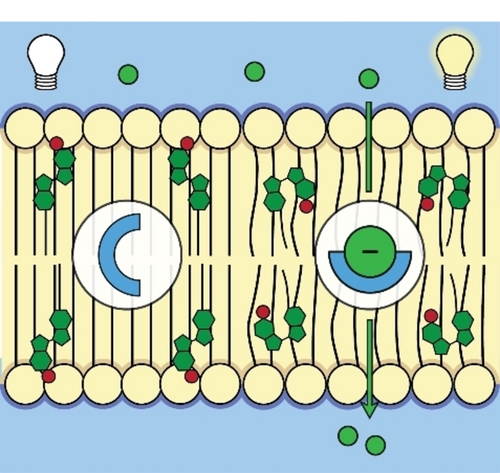
Dr. Sander J. Wezenberg is an Associate Professor at the Leiden Institute of Chemistry, Leiden University, where he leads an independent research group focused on developing stimuli-responsive molecular receptors and self-assembling materials. He was appointed Assistant Professor at the University of Groningen in 2017 and moved to Leiden University in 2019 to establish his research group, where he was promoted to Associate Professor in 2022. Dr. Wezenberg's educational background includes: Master's degree in Chemistry at the University of Nijmegen, conducting research in Prof. Roeland Nolte's group PhD in Supramolecular Chemistry at the Institute of Chemical Research of Catalonia (ICIQ) under Prof. Arjan Kleij (2011) Postdoctoral fellow with Prof. François Diederich at ETH Zurich Postdoctoral work with Prof. Ben Feringa at the University of Groningen His research focuses on using interdisciplinary approaches combining synthetic organic chemistry, supramolecular chemistry, and photochemistry to develop systems that can study and manipulate biological processes. Key research areas include: Photodynamic control of anion binding and lipid bilayer membrane transport Creation of polymeric and self-assembled materials with switchable functions Development of new diagnostic tools and therapeutic agents to improve human health Dr. Wezenberg's recent publications demonstrate strong trends in photoresponsive molecular systems for controlling anion transport and membrane properties. His work bridges chemistry, materials science, and biological applications, with particular emphasis on light-switchable molecular receptors and their applications in biological systems. Scientific awards and recognition: ERC Starting Grant (2018) Veni Grant from NWO (2014) Vidi Grant from NWO (2018) Member of the Young Academy of Europe (2020) Dr. Wezenberg actively mentors PhD and Master's students, with current advisees including Nol Duindam, Sabine Langens, Sofiia Emashova, Lin Xu, Dimitris Piperoudis, and Josien de Graaf. His research is supported by multiple funding sources including Leiden University, the European Research Council, the Dutch Research Council, and the China Scholarship Council. The Wezenberg Research Group is based at the Gorlaeus Laboratories in the new Gorlaeus Building at Leiden University, where they maintain a highly collaborative research environment focused on molecular switches, anion recognition, and dynamic supramolecular systems.
Mark S. Mizruchi serves as the Robert Cooley Angell Collegiate Professor of Sociology, Barger Family Professor of Organizational Studies, and Professor of Management and Organizations at the University of Michigan's College of Literature, Science, and the Arts. His distinguished career spans over three decades since joining Michigan as a full Professor in 1991 after rising to Associate Professor at Columbia University. Robert Cooley Angell Collegiate Professor of Sociology Barger Family Professor of Organizational Studies Professor of Management and Organizations Former Director of Organizational Studies Program (2012-2021) His research centers on the economic and political behavior of large American corporations through social network analysis, with current projects examining the changing nature of the American corporate elite, globalization of American banking, and corporate lobbying determinants. Mizruchi's work bridges sociology, organizational studies, and political economy, revealing how corporate networks shape American political life and economic structures. His publications include four influential books, with The Fracturing of the American Corporate Elite (2013) winning both the George R. Terry Award and the Distinguished Contribution to Scholarship Award. His research demonstrates significant trends toward corporate elite fragmentation and its political consequences, particularly the decline of corporate moderation in American politics. George R. Terry Award from Academy of Management Distinguished Contribution Award from ASA Political Sociology Section Guggenheim Fellowship (2011) National Science Foundation Presidential Young Investigator Award Center for Advanced Study in Behavioral Sciences Fellowship Two University of Michigan teaching excellence awards Mizruchi has advised numerous students through the Organizational Studies Program, securing Barger Leadership Institute funding for student research on corporate elites. His extensive service includes Associate Editorship at Administrative Science Quarterly , Consulting Editorship at the American Journal of Sociology , and reviewing for over 50 scholarly journals and granting agencies. He maintains active research laboratories examining corporate networks and their societal implications, with ongoing projects investigating contemporary corporate political behavior in polarized America.
Dr Tracy Qu is a Lecturer in the School of Accountancy at Queensland University of Technology (QUT), within the Faculty of Business & Law. She holds a PhD in Accounting from Griffith University (2018) and is a CPA Australia member (since 2021). Her research focuses on executive remuneration, corporate governance, financial reporting, and environmental accounting. Tracy teaches undergraduate and postgraduate courses in accounting fundamentals, financial analysis, and business valuation. She has also served as a referee for journals like Accounting and Finance and Australian Journal of Management . Tracy’s research explores intersections between governance structures and executive compensation design, particularly in mitigating agency conflicts. Her work examines topics such as carbon emissions policy impacts on corporate behavior, labeling effects in financial disclosures, and CEO celebrity influence on investment decisions. She actively contributes to academic debates on environmental accounting and sustainability reporting. Tracy is currently accepting research students for Honours, Masters, and PhD programs, focusing on topics like executive compensation efficiency, board interlocks, and compensation consultants’ roles.
Prof. Nana de Graaff is a Full Professor of Global Politics and Networks at the Department of Political Science and Public Administration, Vrije Universiteit Amsterdam (VU). She leads the ReGlobe research group on globalization and decoupling and is Principal Investigator of an NWO-funded project on the Geopolitics of Europe-China Tech Decoupling. Her research focuses on China-West relations, US foreign policy, and energy geopolitics, with a particular emphasis on elite networks and transnational dynamics. Education : - PhD in Political Science (cum laude, 2013), VU Amsterdam - MSc in International Relations (2006), VU Amsterdam - Political Science studies at Free University Brussels Research Interests : - International Political Economy - China's global economic engagements - US foreign policy elites and networks - Energy industry geopolitics Recent Research Projects : - Globalization Unraveling? Europe-China Tech Decoupling (NWO VIDI, 2024-2028) - China in Europe Research Network (CHERN) (EU COST Action, 2019-2023) - Fraying Ties? Networks in the UK Oil Sector (ESRC, 2019-2022) Awards : - 2023 Nominee for Faculty Senior Research Award - 2016 Best Junior Lecturer of VU’s Faculty of Social Sciences - Multiple grants including NWO VIDI and Individual Talent Grant Advisory Roles : - Chair, China in Europe Research Network (CHERN) - Executive Council Member, Society for the Advancement of Socio-Economics (SASE) - Editorial Board Member, Routledge RIPE Series - International Advisory Board Member, International Affairs (Oxford)
John Harry Evans is the III Katz Alumni Professor of Accounting at the Department of Accounting, Katz School of Business, University of Pittsburgh. His research focuses on economic perspectives of accounting phenomena, analytical models of incentives, experimental studies in managerial and tax reporting, and empirical investigations of healthcare incentives. He teaches courses in Financial Accounting, Financial Statement Analysis, Managerial Accounting, and Strategic Cost Management. Research spans incentive design, corporate governance, healthcare accounting, and empirical methodologies. Recent publications address CEO turnover, physician compensation, tax reporting ethics, and organizational incentive structures. Awarded multiple honors including the Outstanding Management Accounting Paper Award (2012), Provost Award for Excellence in Mentoring (2011), and multiple Best Paper Awards across journals. Active in professional service as a financial consultant to the Department of Defense and expert witness in legal cases. Designed financial analysis training programs for healthcare managers at University of Pittsburgh Physicians and Highmark Insurance Company.
Neil Champness is the Norman Haworth Professor of Chemistry at the University of Birmingham. He holds a prestigious academic position following roles at the University of Nottingham, including Professor of Chemical Nanoscience (2004-2020). His research focuses on supramolecular chemistry, crystal engineering, and metal-organic frameworks (MOFs). Champness leads a group pioneering studies on molecular self-assembly, surface chemistry, and functional materials. Education & Career - Began academic career with Teaching Fellowships at the University of Nottingham (1995) and Southampton (1994). - Became Lecturer in Inorganic Chemistry at Nottingham (1998), progressing to Reader (2003) and full Professor (2004). - Currently heads the Champness Group at Birmingham, established in 2021. Research Interests Champness’s work spans: - Design of porous materials (MOFs, HOFs) for gas storage and catalysis. - Surface self-assembly of 2D supramolecular frameworks. - Photoresponsive materials and molecular rotaxanes. - Chemical synthesis under constrained conditions. His group emphasizes interdisciplinary approaches, linking chemistry with materials science and nanotechnology. Awards & Recognition 2019: Elected Fellow of the European Academy of Sciences 2020: EPSRC Established Career Fellowship 2016: Royal Society of Chemistry Surfaces & Interfaces Award 2011: Thomson Reuters Highly Cited Researcher 2006: Corday-Morgan Medal (Royal Society of Chemistry) Advisory Roles & Grants - Editorial roles include Chem, Crystals, and CrystEngComm. - Served on Royal Society panels, Irish Research Council, and IUPAC. - Secured major grants from EPSRC and Royal Society. Labs & Collaborations His Birmingham group collaborates globally, with visiting professorships in Japan, Australia, and Brazil. Research is supported by advanced facilities in crystallography and surface chemistry.
Leigh David is a Professor of Chemistry at the University of Manchester, holding the Sir Samuel Hall Chair since 2014. Previously, he held prestigious roles such as the Forbes Chair of Organic Chemistry at the University of Edinburgh (2001–2012) and Chair of Synthetic Chemistry at the University of Warwick (1998–2001). His research focuses on synthetic molecular machines, supramolecular chemistry, and molecular knots, with notable contributions to the design of molecular motors and catenanes. David earned a BSc (Special Honours) and PhD in Chemistry from the University of Sheffield (1981–1987). He conducted postdoctoral research at the National Research Council of Canada (1987–1989) before joining the University of Manchester Institute of Science and Technology, where he advanced from Lecturer (1989–1996) to Readership (1996–1998). His research interests include developing synthetic strategies for molecular-scale machines, exploring applications in nanotechnology, and investigating dynamic covalent chemistry. Key areas involve creating molecular knots, interlocked structures, and systems capable of programmable motion. David has received numerous accolades, including the Royal Society Bakerian Medal (2013), ERC Advanced Grants (2008, 2014), and the Feynman Prize for Nanotechnology (2007). His work has been recognized globally through fellowships in the Royal Society (2009) and Royal Society of Edinburgh (2005). He leads a research group advancing molecular robotics and has secured major grants, such as the EPSRC Senior Research Fellowship (2005–2010). His lab focuses on translating molecular systems into functional devices with applications in materials science and biotechnology.
Mark MacLachlan is a distinguished Professor and currently serves as the Dean of the Faculty of Science at the University of British Columbia (UBC). He leads a vibrant research group in the Department of Chemistry focused on supramolecular materials, with expertise spanning organic, inorganic, and polymer chemistry. His work bridges fundamental molecular design with practical applications in energy, electronics, and sustainable materials. Dr. MacLachlan's research interests center on supramolecular chemistry and materials science, with emphasis on nanomaterials, porous structures, and cellulose-based systems. His group develops novel organic and inorganic molecules and materials with applications in electronics, photonics, catalysis, and environmental technologies. Key research areas include mesoporous materials for optics and catalysis, supramolecular chemistry with macrocycles, structurally interesting molecules, and self-assembled systems including gels. His work often addresses environmental challenges and alternative energy applications such as solar energy conversion and hydrogen fuel cells. Analysis of his recent publications reveals a strong focus on cellulose nanocrystals and their applications in photonic materials, energy storage, and responsive systems. His work integrates supramolecular chemistry with platinum-based systems for molecular machines and recognition. The research demonstrates interdisciplinary approaches combining chemistry, materials science, and nanotechnology to create functional materials with precisely controlled properties. Fellow of the Royal Society of Chemistry (UK) (2016) Tier 1 Canada Research Chair in Supramolecular Materials (2015-2029) Elected Fellow of the Royal Society of Canada (FRSC) (2014) Rutherford Memorial Medal (Royal Society of Canada) (2013) Killam Award for Excellence in Graduate Student Mentorship (UBC) (2013) NSERC Steacie Memorial Fellowship (2012-14) Dr. MacLachlan has mentored numerous graduate students and postdoctoral researchers, fostering a collaborative research environment that spans multiple disciplines. His group employs a wide range of characterization techniques including electron microscopy, spectroscopy, and X-ray crystallography. The MacLachlan research group maintains active collaborations with institutions worldwide, including the WPI Nano Life Science Institute at Kanazawa University where he serves as a Visiting Professor. The MacLachlan group operates state-of-the-art facilities for synthesizing and characterizing novel materials, with particular expertise in chiral nematic structures, mesoporous materials, and supramolecular assemblies. Their work on cellulose nanocrystals has led to innovative applications in photonic materials, energy storage devices, and responsive systems.
Guido Pintacuda is a CNRS Research Director and Head of the Lyon High-Field NMR Center (CRMN) at École Normale Supérieure de Lyon since 2019. His work centers on advancing solid-state NMR methodologies with ultra-fast magic-angle spinning (MAS) to achieve atomic-level resolution in complex biomolecular and materials systems that are intractable to conventional techniques. Educational background: Undergraduate studies (1992-1997) and PhD in Sciences (1998-2002) at Scuola Normale Superiore in Pisa, Italy; postdoctoral research at Karolinska Institutet (2001-2004) and Australian National University (2004). Research interests focus on pushing NMR frontiers through high-field instrumentation and fast MAS (up to 160 kHz), with dual objectives: (i) biomolecular structure determination for membrane proteins, amyloid fibrils, and viral assemblies; (ii) solid-state NMR of paramagnetic materials like battery cathodes and catalysts. His innovations include proton detection in fully protonated proteins and DNP-enhanced sensitivity. Recent publications (2021-2024) show heavy emphasis on proton-detected NMR under fast MAS for structural biology, alongside growing work in paramagnetic materials. Key trends include method development for μs–ms dynamics, miniature rotor protocols for membrane proteins, and collaborations with Bruker for 150+ kHz probe technology. Scientific awards: ERC Consolidator Grant (P-MEM-MAS, 2015-2021) Sackler Prize (2017) ISMAR Fellow (2020) Mentoring and grants: Principal investigator for major projects including ERC (2.5 M€), ANR CTRbyNMR (384 k€), and EU PANACEA (5 M€, co-coordinator). Actively mentors PhD student Clément Ollier and postdocs (Z. Sun, S. Medina-Gomez) at ENS Lyon and international schools. Labs and teams: Directs CRMN (UMR 5082 CNRS/ENS Lyon/UCBL), a world-class NMR facility with unique high-field equipment. Leads a research group developing 150+ kHz MAS probes in partnership with Bruker Biospin and maintains strong ties to the University of Delaware (T. Polenova) and European networks.
Elizabeth Ooi is a Senior Lecturer of Finance at the UWA Business School, University of Western Australia. She holds a PhD from Monash University and has extensive experience in financial literacy and personal finance research, including consulting for the OECD. Her research focuses on superannuation governance, financial education, and corporate governance, with notable contributions to policy reports and peer-reviewed journals. She has secured over $140,000 in research grants and co-founded the UnderstandingSuper initiative to enhance financial literacy. Education: BA, BCom, PGradDipEc&Com (Monash University), PhD (Monash University). Research interests include financial literacy measurement, gender disparities in financial knowledge, superannuation fund governance, and socially responsible investing. Her work aligns with UN Sustainable Development Goals related to economic empowerment and financial inclusion. Grants and funding include projects with CPA Australia, Industry Superannuation Australia, and the NSW TechVoucher grant. She has supervised multiple PhD and honours students, contributing to academic and policy discussions on financial systems reform. Professional roles include Deputy Director of External Engagement (2018-2022), seminar series coordinator, and board memberships. She has presented globally at institutions like the OECD and the United Nations, and her media engagements include contributions to The Conversation, The Australian, and Sydney Morning Herald.
Thomas Riise Johansen is a Professor in the Department of Accounting at Copenhagen Business School (CBS), where he has been affiliated since completing his PhD in Accounting from CBS in 2005. Prior to joining CBS, he worked at Ernst & Young (1996-2005), bringing practical industry experience to his academic role. His primary academic home is within the Department of Accounting, focusing on critical intersections between auditing practices and corporate governance structures. His research centers on auditing, sustainability accounting, corporate governance, and annual report disclosure. Key investigations include: The relationship between board networks and auditor selection Value and barriers in annual report innovation Performance evaluation systems within audit firms Public oversight mechanisms in auditing Information systems for sustainability reporting Accountability dynamics between employees and organizations His work bridges academic rigor and practitioner relevance, addressing evolving regulatory landscapes and market demands. Analysis of his 15 most recent publications reveals consistent focus on audit quality determinants, sustainability reporting evolution, and governance-audit interdependencies. Recent work increasingly examines EU regulatory frameworks (Taxonomy Regulation, climate risk disclosure) and Big 4 governance structures, reflecting growing emphasis on public interest accountability in auditing. He actively supervises master's theses in accounting, auditing, and corporate governance. His current research portfolio includes projects on: Revisors' declaration (FSR) Enforcement impact on financial reporting Annual report disclosure value enhancement TIME MIRROR: Accounting for Green Transition Diversity in accounting careers Behavioral aspects of auditor professionalism
Dr Hao Li is a Lecturer in Finance at Cardiff Business School, Cardiff University since 2021. Previously, he held positions as Senior Lecturer in Finance at Swansea University (2020-2021) and Assistant Professor in Finance at Heriot-Watt University (2014-2019). His academic career follows industry experience as an equity analyst and senior research fellow in investment trusts. Education : PhD in Finance (University of Stirling), MSc in Investment Analysis (University of Stirling), BA in Business Administration (Sun Yat-sen University) Teaching : Leads MSc Finance and MSc Finance with Financial Technology programs; teaches modules on investment management and corporate reporting. Dr Li's research focuses on Corporate Governance and Corporate Finance , with publications examining financial analyst networks, cross-border M&A risks, cash management strategies, and executive compensation impacts. His work spans high-impact journals like International Review of Economics & Finance and Journal of Environmental Management . Research Trends : Recent articles analyze social network effects in financial forecasting, climate risk in international investments, and cash flow dynamics under geopolitical uncertainty. Methodologically, his work combines empirical analysis of UK, African, and global markets with theoretical governance frameworks. Scientific Awards : Fellow of Higher Education Academy (FHEA) Supervision : Currently supervising PhD student Mengjia Li. His professional trajectory reflects expertise in academic finance, industry experience in equity analysis, and interdisciplinary applications in environmental and geopolitical risk contexts.