
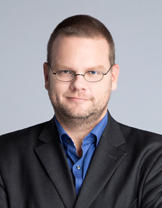
Prof. Dr. Christoph Schalley is a Professor of Organic Chemistry at the Free University of Berlin , affiliated with the Institute of Chemistry and Biochemistry under the Department of Biology, Chemistry and Pharmacy . He has held Adjunct Professor and Visiting Professor positions at institutions in China and Japan. Research Focus: Supramolecular chemistry, self-assembly, molecular recognition, and mass spectrometry. Teaching: Leads initiatives like ALChemie for innovative chemistry education. Scientific Recognition: Fellow of the Royal Society of Chemistry, recipient of the Mattauch-Herzog Award, multiple teaching awards at FU Berlin, and fellowships from DFG and Fonds der Chemischen Industrie. Publication Trends: His recent work explores redox-active rotaxanes, fluorinated amphiphiles, and stimuli-responsive supramolecular systems, emphasizing mechanical bonds, self-sorting, and gas-phase structural analysis. Collaborations: Involves international institutions, including the Scripps Research Institute (postdoc), University of Bonn (habilitation), and partnerships in China and Japan.
جستوجوی استاد و پژوهشگر
استاد راهنما، استاد دانشگاه یا پژوهشگر مناسب برای مسیر پژوهشیتان را پیدا کنید و با او ارتباط بگیرید.
نمایش ۳۰۱-۳۰۶ از ۳۰۶ استاد راهنما
اطلاعات این پروفایلها از صفحات عمومی دانشگاهها جمعآوری شده و ممکن است بهروز نباشد.

Francois Boussu is a Professor at ENSAIT (École Nationale Supérieure des Arts et Industries Textiles) and the GEMTEX Laboratory in Roubaix, France. He has been a faculty member at ENSAIT since 1998, starting as a Lecturer and promoted to Full Professor in Mechanical Engineering in 2017. His educational qualifications are: Textile Engineer, ENSAIT (1992) Master of Research (DEA) in Automation and Industrial Data Processing, University of Lille 1 (1992) PhD in Automatic and Industrial Data Processing, University of Lille 1 (1998) Accreditation to Supervise Research (HDR) in Mechanics, University of Valenciennes (2014) Professor Boussu's primary research focuses on advanced textile structures, particularly 3D warp interlock fabrics for composite applications, ballistic protection systems, and vehicle armor solutions. His work bridges textile engineering and mechanical behavior analysis, with emphasis on folding/forming characteristics of technical fabrics and multi-layer armor design. Key innovations include body armor solutions using soft protection fabrics and specialized vehicle armoring techniques. He has supervised 13 PhD theses and 58 Master's level final year projects. His teaching covers weaving technology, technical textile performance, and individual protection systems at ENSAIT's graduate level. His research output includes 33 international journal papers, 11 book chapters, 158 conference presentations, and 9 patents. He operates within the GEMTEX Laboratory research ecosystem focused on textile material innovation.
Neil Champness is the Norman Haworth Professor of Chemistry in the School of Chemistry at the University of Birmingham, UK, a position he has held since January 2021. His research program focuses on advanced materials chemistry, particularly in the areas of Metal-Organic Frameworks and supramolecular chemistry. Professor Champness's research interests include: Metal-Organic Frameworks (MOFs) and porous materials Supramolecular chemistry and molecular self-assembly Surface science and on-surface synthesis Electrochemistry of molecular frameworks Nanomaterials design and characterization His recent work has explored the structural, electrochemical, and spectroelectrochemical properties of perylenediimide-based MOFs, lanthanide MOFs with nanostructured node disorder, and the fundamental principles of supramolecular chemistry in framework materials. Professor Champness has published extensively in top-tier chemistry journals including Nature Communications, Nature Materials, Journal of the American Chemical Society, and Chemical Science. Professor Champness is an active member of the academic community, having completed 65 peer reviews for 23 different publications and grants. He has reviewed for prestigious journals including Nature, Nature Communications, Journal of the American Chemical Society, and many others across the chemical sciences.
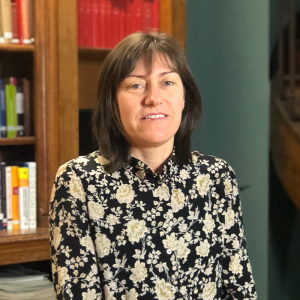
Manuela Ferreiraمشاهده پروفایل
استادیار
Manuela Ferreira serves as an Assistant Professor at the National Higher School of Textile Arts and Industries (ENSAIT), affiliated with the School of Textile Engineering and the Department of Textile Materials and Processes. Her primary research focus within the Multifunctional Textiles & Processes Group centers on natural fiber composites and advanced material characterization. Her research interests encompass Natural Fiber Composites , Textile Engineering , Material Characterization , and Biodegradable Polymers . Current investigations include optimizing hemp and flax fiber processing for high-performance composites, developing thermoplastic bio-composites using PA11/PA12 matrices, and analyzing mechanical behaviors of novel textile architectures. Her work bridges fundamental material science with industrial applications in sustainable composites. Analysis of her 15 most recent publications reveals a dominant focus on hemp and flax fiber composites , with significant emphasis on mechanical property characterization , weaving and nonwoven manufacturing techniques , and thermoplastic integration . Key trends include quasi-unidirectional fabric development, micro-braiding/co-wrapping innovations, and process parameter optimization for enhanced composite performance. Ferreira actively leads and participates in major research initiatives including: SSCUCHY (2017-2022): European H2020 project on sustainable biocomposites as Scientific Council Head SINFONI (2012-2017): National composite materials project with 23 partners IGNIFLAX (2020-2024): Fireproofing flax fibers project TEXMOF (2019-2022): Nanotechnology research with DGA and academic partners She contributes to teaching in Textile Spinning, Metrology, and Quality Control while supervising student projects including CIFRE theses. Her collaborative network spans European institutions including University of Franche-Comté, KU Leuven, University of Bristol, and industrial partners like Akzo Nobel.
Dr Joshua Lehr is a Lecturer in Chemical Sciences at the University of Salford's School of Science, Engineering & Environment. He joined the university in 2018 after previously working at Nottingham Trent University. His academic career spans interdisciplinary research at the intersection of chemistry, nanotechnology, biology, and engineering, with a focus on molecular interfaces for medical diagnostics applications. Dr Lehr completed his educational journey with a BSc in Chemistry and Philosophy (2002-2005), followed by a 1st Class BSc Hons Chemistry (2005-2006), and a PhD in Chemistry (2006-2010) all at the University of Canterbury in New Zealand. After his PhD, he conducted postdoctoral research at the University of Oxford focused on supramolecular systems. In 2019-2020, he completed a Post Graduate Certificate in Academic Practice at the University of Salford. His research primarily focuses on the construction and study of functional molecular architectures at interfaces, leading to the development of switchable surfaces, sensors, supramolecular interfaces, and bioelectronic interfaces for medical diagnostics. Complementing this work, he studies the fundamental formation, characteristics, and electrochemical behavior of thin organic films at electrodes. His current projects include Kidscan placement studentships focused on leukaemia diagnostics and sensors, and supramolecular patterning of multifunctional interfaces. Analysis of his recent publications reveals a strong focus on electrochemical biosensors for medical diagnostics, particularly for cancer detection and monitoring. His work consistently bridges fundamental electrochemistry with practical medical applications, with increasing emphasis on childhood leukaemia diagnostics in his most recent research. The interdisciplinary nature of his work spans electrochemistry, materials science, biochemistry, and medical diagnostics. Dr Lehr leads several teaching modules including Introductory Biochemistry (Year 1), Bioinorganic Chemistry (Year 2), and Science and Industry (Year 3). He also contributes to Frontiers in Inorganic Chemistry, Applied Biomedical Science, and Current Topics in Biochemistry. As admissions tutor for Chemical Sciences, he plays an important role in student recruitment and supervision of final year projects, masters, and PhD students. His current research projects demonstrate strong industry and healthcare partnerships, particularly with Kidscan funding multiple placement studentships (2020-2025) focused on leukaemia diagnostics. These projects indicate his research has translational impact in developing electrochemical sensors for real-time monitoring of cancer treatments.
Dieter Ammann is a renowned Swiss composer and professor at the Lucerne University of Applied Sciences and Arts, where he leads the composition class at the Institute for New Music, Composition and Theory. He also lectures at the Bern University of Arts and has conducted masterclasses at prestigious institutions worldwide including universities in Cologne, Weimar, Karlsruhe, St. Petersburg, and New York University. His research interests focus on contemporary classical composition with emphasis on meticulous notation techniques, structural development, and innovative approaches to orchestration. Ammann's work bridges traditional classical forms with modern compositional techniques, exploring the relationship between silence and sound, mathematical structures in music, and the expressive potential of contemporary instrumental techniques. His compositions often feature complex rhythmic structures and innovative timbral explorations that challenge conventional performance practices. Ammann's recent works demonstrate a consistent focus on structural complexity and innovative approaches to musical form. His compositions span from intimate chamber works to large-scale orchestral pieces, with a particular emphasis on the exploration of sound textures and rhythmic complexity. The recurring themes in his work include structural transformation, the relationship between silence and sound, and the exploration of musical networks and interconnections. Aargau Board of Trustees grants Canton of Lucerne grants Franz Liszt Scholarship from the Weimar European Capital of Culture Foundation Main prize of the IBLA Foundation New York (in honor of L. Berio) Young Composers in Europe Competition (Leipzig) Swiss Music Prize Ernst von Siemens Prize for Composition AZ Media Prize for Culture As an educator, Ammann has significantly influenced the next generation of composers through his teaching at Lucerne and Bern, as well as through international masterclasses. His meticulous approach to composition, which often takes two years or more to complete a commissioned work, has established him as one of Switzerland's most respected contemporary composers. Ammann has received invitations as composer-in-residence at major festivals including the Lucerne Festival and the Witten Days for New Chamber Music, collaborating with ensembles such as Ensemble Intercontemporain and Klangforum Wien.