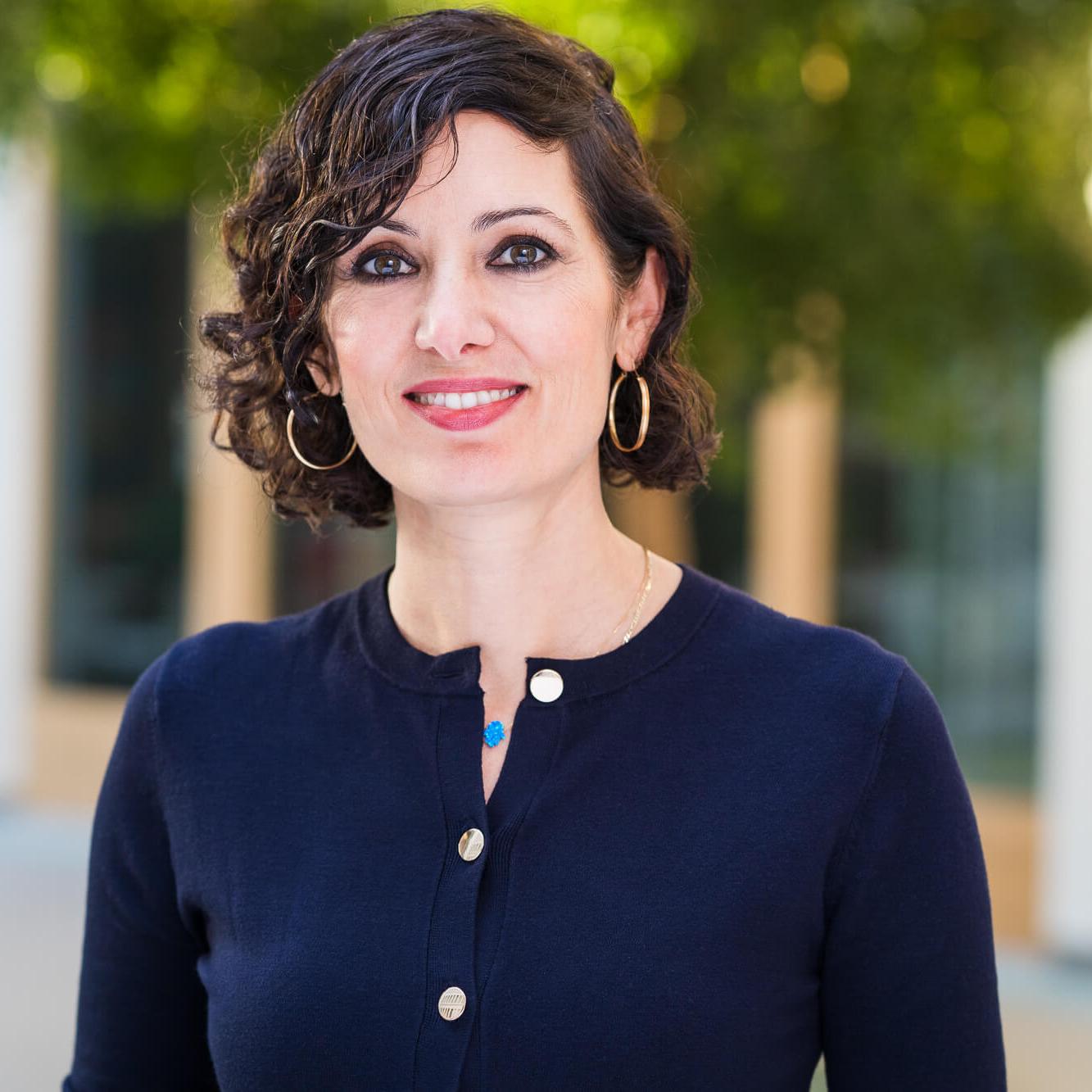
Prof. Dr. Naika Foroutan is a leading scholar at Humboldt University of Berlin, where she holds the Professorship of Integration Research and Social Policy. She serves as Director of the German Centre for Integration and Migration Research (DeZIM) and Head of Department at the Berlin Institute for Empirical Integration and Migration Research (BIM). Her work bridges empirical migration studies, social policy, and radicalization analysis. Research Interests: Transformation of immigration societies into post-migrant societies, Islam and minority policies, radicalization, racism, Islamism, intergroup relations, and democratic pluralism. Her publications and projects explore intergenerational integration, anti-Muslim sentiment, hybrid identities, and radicalization prevention through bridging narratives. She has received prestigious awards, including the Berlin Integration Prize (2011), Fritz Behrens Science Prize (2012), Höffmann Science Prize (2016), and an honorary doctorate from Lund University (2025). Contact her directly via anfragen@dezim-institut.de for academic or institutional inquiries.
Tom Kirchmaier is Professor of Governance, Risk, Regulation and Compliance at Copenhagen Business School's (CBS) Department of Accounting and Centre for Corporate Governance. He concurrently serves as a Professorial Fellow and Director of Policing and Crime at the London School of Economics' Centre for Economic Performance. He is also a Faculty Affiliate at LSE's Data Science Institute and member of the UK Home Office Scientific Advisory Council. Research Interests: Kirchmaier's work empirically analyzes organizational governance using large datasets. Primary domains include: Law/economics intersections Policing systems and crime patterns Anti-money laundering (AML) and organised crime networks Corporate boards with emphasis on gender dynamics Risk management and compliance frameworks Publication Trends: Recent articles (2021-2025) demonstrate strong focus on empirical crime analysis (e.g., terrorism impacts, domestic abuse recidivism) and corporate governance in banking. Methodologies leverage big data to study spatial crime patterns, behavioral economics, and organizational efficiency across financial and public sectors. Awards: 2024 LSE Innovation Challenge Winner Teaching & Advising: Supervises 1 PhD and 1 Master's student. Teaches graduate/executive courses: Corporate governance and finance MBA compliance/risk management Board training programs
Friedolin Merhout is an Assistant Professor in the Department of Sociology at the University of Copenhagen, holding a tenured-track position. He serves as Director of Graduate Studies for the interdisciplinary MSc in Social Data Science and coordinates the Welfare, Inequality, and Mobility research group. His affiliations include the Copenhagen Center for Social Data Science (SODAS). Education: B.A. from Freie Universität Berlin (Germany), Ph.D. from Duke University (USA) Roles: Director of Graduate Studies, Research Group Coordinator, Faculty Member His research focuses on computational and experimental methods to study intergroup relations using digital trace, text, survey, and administrative data. Key themes include political polarization, radicalization, and the impact of digital media. Recent work combines Google search data with military records to explore discrimination-radicalization links and uses online experiments to address polarization. His publications span computational sociology, political behavior, and research methodology, with notable contributions on Russian IRA influence on U.S. voters and the efficacy of mobile platforms to reduce polarization. He leads the Crowdsourced Replication Initiative, examining variability in social science research outcomes. Office hours are Tuesdays 15:00–16:00 in room 16.1.49.
Gaël Le Mens is Professor (Catedràtic) in the Department of Economics and Business at Universitat Pompeu Fabra, with affiliations at Barcelona School of Economics and UPF-BSM. An ICREA Acadèmia Awardee (2023-2027), he researches learning processes in individuals, organizations, and machines, examining how information sampling affects judgment and belief formation. Current research explores: Social media feedback dynamics and opinion polarization Conceptual categorization using LLMs (GPT-4, Llama 3) Reinforcement learning biases Wisdom-of-crowds phenomena His work combines computational modeling with experimental methods. Publications appear in top journals including Psychological Review (4 papers), PNAS (4 papers), and Management Science. Research themes show consistent focus on decision biases arising from sampling limitations, with recent expansion into AI-assisted text analysis and political scaling applications. Honors include: ERC Consolidator Grant for selective information sampling research Multiple publications in PNAS and Psychological Review ICREA Acadèmia recognition Mentored doctoral students include Elizaveta Konovalova, Nikolas Schöll, and Thomas Woiczyk. Leads the ERC-funded project 'Implications of Selective Information Sampling' examining belief polarization mechanisms. Affiliated with the Rebel Governance Network and Strategic Organization Design Unit, with visiting positions at INSEAD, London Business School, and Stanford GSB.
Christian Albrekt Larsen is a full Professor at Aalborg University's Department of Politics and Society under the Faculty of Social Sciences and Humanities . He specializes in welfare states, social cohesion, migration, and labor market policies. Dr. Scient. Soc., PhD, Master in Public Administration Key Affiliation: Centre for Comparative Welfare Studies (CCWS) , MIX - Center for Displacement, Migration and Integration His research focuses on institutional frameworks of Nordic welfare models, public support for anti-poverty initiatives, and social trust dynamics in multicultural societies. Recent projects include MNcontact (2020-2025), which examines migrant-native workplace interactions, and MIGTRUST (2021-2026), analyzing refugee trust in welfare systems. 2025 publications highlight workplace integration (Journal of Ethnic and Migration Studies), age discrimination in hiring (Social Science Research), and refugee experiences in Scandinavia. These works demonstrate his emphasis on empirical analysis of welfare legitimacy, ethnic diversity, and labor market mechanisms. Scientific recognitions include: Danish Sapere Aude II research leader grant Fulbright grant Former member of Danish National Research Council (2015-2021) He has authored/edited 16 books, including The Rise and Fall of Social Cohesion (OUP 2013) and Migrants and Welfare States (Edward Elgar 2022). His DNASOC project (2007-present) investigates Danish national identity transformation.
Jeppe Fjeldgaard Qvist is a Postdoctoral Researcher at Aalborg University's Department of Politics and Society within the Faculty of Social Sciences and Humanities. His research is affiliated with the Centre for Comparative Welfare Studies (CCWS) and the MASSHINE MIX - Center for Displacement, Migration and Integration. Dr. Qvist specializes in migration studies and ethnic segregation with particular focus on educational contexts. His research examines how Denmark's free-choice school system interacts with residential patterns to produce ethnic segregation, and how early exposure to diversity impacts long-term social integration outcomes. His methodological approach combines quantitative analysis of large-scale datasets with theoretical frameworks from sociology and political science. His recent publications (2023-2025) reveal consistent thematic focus on structural drivers of segregation and pathways to social cohesion. The works demonstrate sophisticated analysis of how school choice mechanisms, residential sorting, and policy frameworks collectively shape integration patterns in Danish society, with implications for European migration policy more broadly. Dr. Qvist actively contributes to major research initiatives including the DIREK project (2024-2027) examining diversity in leadership structures and workforce composition, and previously served as Principal Investigator for the PhD project 'Intense migrant-native exposure in schools and its consequences' (2021-2023). He regularly engages with public discourse through media contributions, including the 2025 debate 'En befolkning blander sig' addressing contact between majority populations and ethnic minorities in Denmark.
Fanar Haddad is an Assistant Professor (Tenure Track) at the University of Copenhagen's Department of Cross-Cultural and Regional Studies, within the Faculty of Humanities. His research focuses on Iraqi politics, sectarianism, and post-2003 state formation. He contributes to HUM:Global initiatives, exploring global phenomena through interdisciplinary humanities approaches. His work examines identity politics, militia dynamics, and governance challenges in conflict-affected states. Research interests include the transformation of sectarian identities, the role of armed groups in state structures, and the interplay between nationalism and communalism in the Middle East. He investigates how historical narratives shape contemporary political struggles and how post-conflict societies navigate hybrid power systems. He is part of the Professional Project Group (PPG) coordinating HUM:Global programs, ensuring broad disciplinary inclusion across departments like Cultural Studies, Communication, and the Saxo Institute. His work bridges academic analysis with policy-relevant insights on global challenges. Labs/Teams: Active in the Department of Cross-Cultural and Regional Studies and HUM:Global's interdisciplinary research network.
Mikkel Haderup Larsen is a Postdoc and Guest Researcher at the Department of Sociology , University of Copenhagen , working on the LIFEDISC project funded by the Rockwool Foundation with Mads Meier Jæger as principal investigator. His research focuses on cultural hierarchies in lifestyle activities, welfare state attitudes, and the impact of ethnic diversity on social solidarity. Education: MSc in Sociology (IT University of Copenhagen, 2017-2020) BSc in Sociology (University of Copenhagen, 2014-2017) Key Research Areas: Cultural Capital and Social Stratification Welfare Chauvinism Far-Right Party Influence Experimental Design Methodology His recent publications examine: Quantitative mapping of cultural status hierarchies (2024) Radical right politics and social trust dynamics (2023) Vaccination prioritization during crisis (2023) Healthcare professional bodywork practices (2022) Covid-19 pandemic welfare attitudes (2021)
Merlin Schaeffer is a Professor in the Department of Sociology at the University of Copenhagen's Faculty of Social Sciences. His research focuses on how international immigration transforms societies, particularly examining how democracies navigate ethno-racial diversity and foster social cohesion across ethnic boundaries. Currently, he investigates citizens' clashing views on ethno-racial discrimination using field experiments, surveys, and game-behavioral methods. Education: Dr. in Social and Behavioral Sciences, University of Amsterdam (2009-2012) MA in Social Sciences, Humboldt University of Berlin (2006-2008) BA in Social Sciences, Humboldt University of Berlin (2003-2006) Schaeffer's research interests center on immigration, ethnic stratification, political sociology, quantitative methods, and discrimination. His work employs diverse social theories and research methodologies to understand challenges to equality in increasingly diverse societies. He examines how cultural distance affects immigrant integration, the relationship between ethnic diversity and social trust, and the cognitive processes behind perceptions of discrimination. His recent publications reveal a strong focus on methodological rigor in studying social phenomena, with particular attention to experimental approaches for measuring discrimination and understanding integration processes. His work spans multiple disciplines including sociology, political science, and social psychology, often employing quantitative methods to address complex social questions about diversity and cohesion. Scientific Awards: ASA Outstanding Article Publication in Mathematical Sociology Award (2018) ASA Distinguished Contribution to Scholarship in Population Award (2017) DGS Anatol Rapoport Prize (2016) Runner-up to the ESR Prize for the Best Article of the Year (2020) Schaeffer serves as Editor of the European Sociological Review (since 2024) and previously edited the Journal of Ethnic and Migration Studies (2018-2023). His research has received significant attention, with multiple publications picked up by news outlets, blogged about, and referenced in policy sources and Wikipedia pages. At KU, he teaches statistical methods, courses on race/ethnicity/discrimination, and theory-oriented sociology courses including Multiple Regression and Fundamentals of Causal Inference, and Sociology of Discrimination. He maintains an active external position as Research Fellow at the WZB Berlin Social Science Center since March 2019.
Kristian Kongshøj is an Associate Professor at the Department of Politics and Society, Aalborg University, affiliated with The Faculty of Social Sciences and Humanities. He is part of research centers including CCWS (Centre for Comparative Welfare Studies), REDY Green Societies, and MIX - Center for Displacement, Migration and Integration. His research focuses on climate policy, environmental taxation, welfare state politics, social cohesion, and degrowth economics. He has led projects such as 'The Politics of Social Cohesion' and contributed to initiatives like the 'Green Societies seed project.' Research interests include public opinion on sustainability, the intersection of climate policies and social equity, and the future of welfare systems in a degrowth context. His work bridges political theory, environmental economics, and sociological analysis of public attitudes. Recent publications examine carbon tax revenue recycling, Danish public support for degrowth, and the role of redistribution in climate policy acceptance. He has participated in over 60 academic activities, including conferences on Nordic welfare states, migration impacts, and environmental policy. Media engagement includes commentary on climate change, carbon taxes, and social policy, featured in 48 press articles and media discussions.
Camilla Dindler is an Associate Professor at the Department of Communication and Psychology, Aalborg University, within The Faculty of Social Sciences and Humanities. Her research focuses on dialogue, political journalism, healthcare communication, and the intersection of media power dynamics with societal structures. She holds external roles as Senior Consultant at Copenhagen Coaching Center and contributes to initiatives like Brobyggerne's peer-to-peer dialogic methods. Her work explores how communication shapes power relations in healthcare (e.g., doctor-patient interactions), journalism (racism representation, accountability interviews), and public participation through methods like meta-communication analysis. Notable projects include Mænd i København (peer support for diabetes prevention) and Journalens sociale liv (public debate analysis). Research Highlights : Peer-to-peer health interventions, discourse theory applied to journalism, and ethical communication in clinical settings. Teaching : Specializes in political communication, qualitative methods, and coaching practices informed by psychological and philosophical frameworks. Her 33+ publications span journals, reports, and conference proceedings, emphasizing participatory methods and media's societal role. Recent work (2023-2025) includes studies on dialogic methodologies and media power structures.
Mathias Kruse is an Assistant Professor at the Department of Political Science at Aarhus University. His research focuses on immigration, diversity, discrimination, and socialization processes, with particular attention to ethnic relations and social cohesion. Expertise : Immigration, Diversity, Discrimination, Socialization, Ethnic Relations Institution : Aarhus University (Department of Political Science) Research Interests His work explores how ethnic similarity affects well-being and solidarity, the role of childhood coethnic exposure in naturalization rates, and the dynamics of interethnic contact in everyday settings. He also investigates citizenship criteria and intergroup expectations through comparative studies in Scandinavia. Publications Trends Recent articles span topics in political sociology, ethnic studies, and social policy, with methodological approaches ranging from survey analysis to intergroup theory. Key themes include collective action, naturalization processes, and citizenship perception in diverse societies. Contact Email: matkr@ps.au.dk
Wilson Merrell is a Postdoctoral Research Fellow at the Department of Political Science, Aarhus University, with expertise in Social Psychology, Intergroup Relations, and Human Behavioral Ecology. His work explores intersections between social cognition, consumer psychology, and evolutionary responses to infectious disease threats. Primary Affiliation: Aarhus University, Department of Political Science Research Themes: Conspicuous consumption, cross-cultural disease detection beliefs, and behavioral responses to hierarchy and discrimination Contact: wmerrell@ps.au.dk | +45 87 15 07 74
Lea Pradella is a Postdoctoral Researcher in the Department of Political Science at Aarhus University, focusing on the psychological dimensions of contemporary democratic challenges. Her work examines how political identity shapes interpersonal dynamics within polarized societies. Her research centers on Political Psychology, Empathy, Political Discussions, and Polarization, investigating mechanisms like in-party social pressure effects on cross-partisan empathy and the persistence of misperceptions about political opponents. She employs experimental methodologies and cross-national survey analysis to study these phenomena, particularly within digital communication environments. Recent publications demonstrate consistent focus on the psychological foundations of political polarization, with recurring themes of social media's role in amplifying intergroup hostility and the limited efficacy of perception-correction interventions. Her 2024 studies reveal global patterns linking economic inequality to online hostility experiences, while her Danish-focused 2022 report provides nationally contextualized insights into social media hate dynamics.
Jens Peter Frølund Thomsen is an Associate Professor at the Department of Political Science, Aarhus University. His research focuses on social identity theory, ethnic discrimination, intergroup contact, immigration attitudes, and the intersection of political ideology with social trust. Key areas: Ethnicity, migration, and public opinion. His work explores how intergroup interactions shape societal polarization, with a particular emphasis on right-wing ideologies and their impact on ethnic minority-majority dynamics. While the articles listed in his portfolio reflect collaborations and peer-reviewed contributions, specific publication years were not explicitly stated in the provided text.