Dragan Huterer is a Professor of Physics and Associate Chair for the Graduate Program at the University of Michigan. His research focuses on cosmology, particularly dark energy and large-scale structure, utilizing data from the Dark Energy Survey (DES) and the Dark Energy Spectroscopic Instrument (DESI) collaborations. He earned his Ph.D. from the University of Chicago (2001) and B.S. from MIT (1996). His work explores the nature of dark energy through cosmological probes like Type Ia supernovae, galaxy clustering, and cosmic microwave background anisotropies. Key contributions include co-leading DESI's first-year cosmological analysis, revealing unprecedented constraints on dark energy and neutrino masses. He also investigates the statistical isotropy of the universe and authored the textbook A Course in Cosmology: From Theory to Practice . Awards include the Friedrich Wilhelm Bessel Research Award (2019) and the Chambliss Astronomical Writing Award (2025). He has advised numerous graduate and undergraduate students, and his funding includes DOE, NSF, and NASA grants. Current projects include the Michigan Cosmology Summer School and leadership in the DESI Collaboration.
Matthew W. Kunz is an Associate Professor of Astrophysical Sciences at Princeton University, serving as Associate Chair of the Department of Astrophysical Sciences and Director of Graduate Studies for the Program in Plasma Physics. He holds a B.S. in Astronomy-Physics and B.A. in Music from the University of Virginia (2003), and a Ph.D. in Physics from the University of Illinois at Urbana-Champaign (2009). His research focuses on astrophysical plasma dynamics, including instability, turbulence, and transport in weakly collisional and poorly ionized plasmas, with applications to galaxy clusters, accretion disks, and the solar wind. Dr. Kunz's work employs analytical and numerical methods to study multi-scale plasma dynamics, aiming to understand angular momentum transport in accretion disks, kinetic turbulence cascades, and magnetic field evolution. His research has been recognized with several awards, including an NSF CAREER Award (2020-25), Alfred P. Sloan Research Fellowship (2017-20), and NASA Einstein Postdoctoral Fellowship (2011-14). He teaches courses on plasma astrophysics (AST 521), irreversible processes in plasmas (AST 554), and astrophysical research methods (AST 303). His publications demonstrate a consistent focus on plasma turbulence, magnetic reconnection, and cosmic ray propagation, with recent work emphasizing collisionless plasma dynamics and high-energy astrophysical phenomena.
Dan McCammon is a Professor in the Department of Physics at the University of Wisconsin-Madison, affiliated with the College of Letters & Science. His research focuses on X-ray astronomy, including studies of the diffuse X-ray background, interstellar and intergalactic media, and the development of advanced X-ray instrumentation. He is a key contributor to the XRISM (X-ray Imaging and Spectroscopy Mission) satellite, leading efforts in high-resolution X-ray spectroscopy and mission operations. McCammon's work emphasizes understanding cosmic plasma dynamics, galaxy cluster physics, and supernova remnant evolution through cutting-edge observational techniques and detector technology. His research interests span multiple subfields, including the thermodynamic properties of galactic clusters, charge-exchange processes in astrophysical plasmas, and the design of cryogenic microcalorimeters for space-based observatories. He has pioneered advancements in transition-edge sensors (TES) and superconducting detectors, enhancing the precision of X-ray spectral measurements. McCammon has contributed to numerous sounding rocket missions, such as Micro-X, and has been instrumental in the development of the Line Emission Mapper (LEM) probe concept, aimed at mapping the soft X-ray sky with unprecedented resolution. His work on the Hitomi (ASTRO-H) satellite demonstrated breakthroughs in resolving the thermal and dynamic properties of cosmic plasmas, such as the Perseus galaxy cluster and the Crab Nebula. His publications highlight a focus on high-resolution X-ray spectroscopy of cosmic sources, including galaxy clusters, active galactic nuclei, and supernova remnants. He has explored topics like non-thermal pressure contributions in cluster cores, ionized plasma diagnostics, and the role of charge-exchange emissions in interpreting diffuse X-ray backgrounds. McCammon's instrumentation innovations have enabled breakthroughs in measuring spectral features with sub-eV resolution, advancing our understanding of astrophysical processes. Despite the absence of explicitly listed awards or grants in the provided text, his leadership in major space missions and pioneering detector technologies underscores his contributions to the field. His research team collaborates on international projects, such as XRISM and LEM, reflecting a commitment to advancing observational astrophysics through interdisciplinary collaboration.
Ellen Zweibel is the W. L. Kraushaar Professor of Astronomy and Physics at the University of Wisconsin–Madison , where she has been a faculty member since 2003. She holds a joint appointment in the Department of Astronomy and Physics . Zweibel earned her undergraduate degree in Mathematics from the University of Chicago and her Ph.D. in Astrophysical Sciences from Princeton University. Her research focuses on plasma astrophysics , particularly the evolution of astrophysical magnetic fields , cosmic ray feedback in galactic and intergalactic environments, and stellar differential rotation dynamics. Recent work examines cosmic ray interactions with the interstellar medium, magnetic instabilities in galaxy clusters, and turbulence-driven dynamo processes. Zweibel's publications highlight collaborations on missions like HelioSwarm and SOFIA/HAWC+ , including the discovery of a magnetized dust ring in the Galactic Center . She leads NSF-funded research on microscale plasma processes in high-beta environments and contributes to understanding magnetic reconnection across astrophysical contexts.
S. Peng Oh is a Professor affiliated with the Department of Physics at the University of California Santa Barbara . Her research focuses on astrophysics and cosmology, particularly in understanding the formation and evolution of galaxies, the behavior of cosmic rays, and the dynamics of diffuse plasmas in the circumgalactic and intergalactic mediums. Research Interests: Galaxy formation and evolution; physics of diffuse plasmas; cosmic rays; turbulence; circumgalactic medium; galaxy clusters; intergalactic medium (IGM). Contact details include the email peng@physics.ucsb.edu .
Wenbin Lu is an Assistant Professor in the Department of Astronomy at the University of California Berkeley, where he conducts theoretical research on high-energy transient phenomena. He is also affiliated with the Theoretical Astrophysics Center at UC Berkeley. PhD in Astronomy, University of Texas at Austin (2018) Bachelor in Physics, Peking University (2013) Professor Lu specializes in extreme astrophysical events that serve as natural laboratories for studying physics under conditions of high energy density, strong gravity, and intense magnetic fields. His work integrates multiple physical domains including plasma physics, relativistic hydrodynamics, radiative transfer, and stellar dynamics. He maintains active collaborations with researchers worldwide and encourages student involvement in his projects. Analysis of his recent publications reveals a strong focus on tidal disruption events and fast radio bursts, with increasing emphasis on multi-messenger approaches and theoretical modeling of observational data from facilities like JWST, Chandra, and radio telescopes. His work demonstrates consistent theoretical innovation in explaining complex transient phenomena. Burke Fellow at Caltech (2018-2021) Lyman Spitzer Fellow at Princeton University (2021-2022) Professor Lu actively mentors students and postdocs, with many projects originating from discussions with junior researchers. He teaches courses in Radiation and Stars at UC Berkeley. His research is supported by multiple grants that enable computational modeling and observational collaborations across various wavelengths. His theoretical work often involves complex numerical simulations of astrophysical phenomena, particularly focusing on the hydrodynamic evolution of stellar debris in tidal disruption events and plasma processes in fast radio burst emission mechanisms.
Jarle Brinchmann is an Associate Professor at Leiden University's Leiden Observatory, part of the Faculty of Science. He holds a PhD from the University of Cambridge and has held postdoctoral positions at Oxford University, the Max Planck Institute for Astrophysics, and the University of Porto. His research focuses on galaxy evolution, active galactic nuclei (AGN), and interstellar medium dynamics. Notable contributions include studies on gas outflows in galaxies and emission line diagnostics for AGN identification. Recent work includes analysis of Lyman-alpha emitters and binary star systems in globular clusters using the MUSE instrument. Education: BSc and MSc in Astronomy from the University of Oslo, PhD from the University of Cambridge (thesis: 'The physical evolution of galaxies'). Research emphasizes observational and theoretical astrophysics, with a focus on high-redshift galaxies, intergalactic medium interactions, and stellar populations. Collaborates widely on large-scale surveys and spectroscopic analyses.
Prof. Dr. Michael Kramer is a Professor of Astrophysics at the University of Manchester and a Scientific Member (Managing Director) at the Max Planck Institute for Radio Astronomy. He leads the COMPACT Research Group and specializes in radio astronomical fundamental physics. University of Manchester: Professor for Astrophysics Max Planck Institute for Radio Astronomy: Managing Director, Radio Astronomical Fundamental Physics Research Interests: Dr. Kramer focuses on pulsars , neutron stars , and gravitational physics , using these as tools to test general relativity , detect gravitational waves , and study transients in the Milky Way. Recent Research Trends: His 15 most recent publications emphasize fast radio bursts (FRBs) , axion dark matter searches , black hole imaging , and pulsar timing arrays for gravitational wave detection. Studies include the M87 jet, Galactic Center magnetars, and MeerKAT telescope optimizations.
Elizabeth Blanton is a Professor of Astronomy at Boston University's College of Arts & Sciences, where she serves as Director of Undergraduate Studies. Her research primarily focuses on high-energy astrophysics and observational astronomy, with emphasis on galaxy clusters, radio galaxies, and AGN feedback mechanisms. She utilizes multi-wavelength approaches including X-ray, optical, infrared, and radio observations. Education: Ph.D., Columbia University M.Phil., Columbia University M.A., Columbia University A.B., Vassar College Professor Blanton's research centers on clusters of galaxies, particularly studying the X-ray emission from the intracluster medium using the Chandra X-ray Observatory. She investigates how central radio sources powered by supermassive black holes interact with and heat the surrounding gas, which has important implications for galaxy formation and evolution. Her work also explores using radio sources as tracers for high-redshift galaxy clusters for cosmological studies. Her publication record shows consistent research on galaxy cluster dynamics, particularly focusing on phenomena like gas sloshing, shock waves, and cavities created by AGN feedback. The research spans multiple wavelengths with heavy emphasis on X-ray observations from the Chandra Observatory, complemented by optical, infrared, and radio data. Her work has significantly contributed to understanding how energy from supermassive black holes affects the evolution of galaxy clusters. Notable Press Coverage: "Abell 2052: A Galaxy Cluster Gets Sloshed" featured in BU Research Magazine 2012, Chandra press release, NASA press release, and National Geographic image of the week "NGC 5813: An Intergalactic Weather Map" covered in Chandra and NASA press releases "Cosmic Battle Creates Milky-Way Sized Tunnel" featured in Naval Research Lab press release "NGC 1553: Black Holes in Distant Galaxy Points to Wild Youth" covered in Chandra press release Professor Blanton teaches a range of astronomy courses from introductory to graduate level, including Principles of Astronomy II, Stellar and Galactic Astrophysics, Introduction to Astrophysics, and Observational Techniques. Her Observational Techniques course provides hands-on experience with telescopes at Boston University and Lowell Observatory in Arizona. She leads research within the Interdisciplinary Cosmology Group at Boston University, which includes members from the Departments of Astronomy, Physics, and Data Sciences. Her work on galaxy clusters and AGN feedback continues to advance our understanding of the formation and evolution of large-scale structures in the universe.
Prof. Adam Deller is a Professor at Swinburne University of Technology, affiliated with the School of Science, Computing and Emerging Technologies. His academic journey includes a BSc, BE (1st class honours), and PhD in Astrophysics from Swinburne. He specializes in radio interferometry, neutron star physics, fast radio bursts (FRBs), and space domain awareness. His research focuses on compact objects like pulsars and black holes, using radio telescopes for high-resolution imaging. He co-founded Fourier Space Pty Ltd, developing signal processing solutions for radio astronomy and space industries. **Research Interests**: Radio interferometry instrumentation, neutron star magnetospheres, FRB localization and cosmological applications, and space domain awareness through radio observations. **Awards**: Includes the Pawsey Medal (2020), Newcombe Cleveland Prize (2022), and multiple grants from ARC and industry partners. His grants focus on SKA pulsar timing, FRB studies, and gravitational wave astronomy collaborations. **Teaching**: Teaches Computational Astrophysics, emphasizing numerical simulations for astrophysical problems. **Grants & Collaborations**: Key roles in ARC Centre of Excellence for Gravitational Wave Discovery, SKA pulsar timing projects, and international telescope collaborations like ASKAP and VLBI networks.
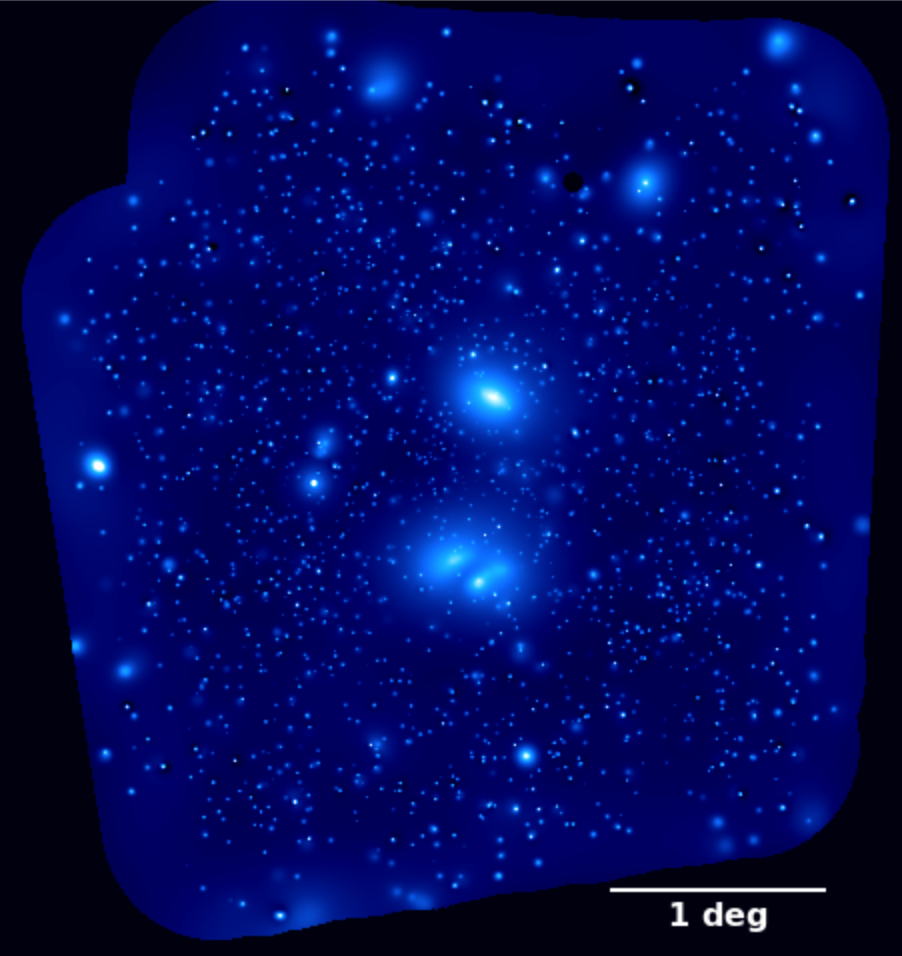
Professor Thomas H. Reiprich is a leading astrophysicist at the Argelander Institute for Astronomy, University of Bonn, specializing in X-ray observations of galaxy clusters and large-scale cosmic structure. His research focuses on dark energy, cosmology, and the physics of intergalactic medium through missions like eROSITA. His primary research interests include: Clusters of Galaxies and their evolution Supermassive Black Holes and active galactic nuclei Cosmological structure formation Gravitational lensing phenomena X-Ray and Optical Astronomy techniques Professor Reiprich's recent work has centered on the eROSITA mission, with groundbreaking discoveries including the 15 Mpc intergalactic filament connecting galaxy clusters Abell 3391/95, providing unprecedented evidence of cosmic web structure. His research combines X-ray, radio, and optical data to study the hot gas in cluster outskirts and filaments. He has been actively involved in public outreach, including lectures at the Planetarium Hamburg and Astronomy on Tap events, making complex cosmological concepts accessible to the general public. His work has received significant media attention from international science outlets including NASA and ESA. Professor Reiprich maintains an active teaching schedule at the University of Bonn, regularly offering courses on dark energy, galaxy clusters, and X-ray astronomy, for which he and colleague Jürgen Schmitt received the faculty's teaching award for their dark energy lecture in WS15-16.
Joop Schaye is a Full Professor at Leiden University, affiliated with the Leiden Observatory within the Faculty of Science. His research focuses on galaxy formation, the intergalactic medium (IGM), and cosmological hydrodynamical simulations. He leads the FLAMINGO and COLIBRE projects, building on prior work with OWLS and EAGLE simulations. Role: Professor of Galaxy Formation and IGM Research Affiliation: Leiden Observatory, Faculty of Science Research & Group His group includes current PhD candidates (e.g., Jeger Broxterman, William McDonald) and postdocs (e.g., Victor Forouhar Moreno). Former students include Roi Kugel and Jorryt Matthee. Active collaborations involve MUSE surveys and Athena X-ray instrumentation. Awards Appointed member of the Royal Netherlands Academy of Arts and Sciences (KNAW) in 2025, recognizing his contributions to astrophysics. Teaching Teaches the Spring 2025 MSc course Large-scale structure and galaxy formation .
Stephen Warren is a Professor of Astrophysics at Imperial College London's Department of Physics, part of the Faculty of Natural Sciences. He has been at Imperial since 1994, previously holding postdoctoral fellowships at institutions like Steward Observatory and ESO. His research focuses on observational astronomy, including surveys for high-redshift quasars, brown dwarfs, gravitational lensing, and quasar absorption lines. He led the UKIRT Infrared Deep Sky Survey as Survey Scientist until 2012 and served as Head of Astrophysics at Imperial from 2010 to 2015. Education: BA and PhD (1988) from the University of Cambridge. His academic positions include Consul for the Faculty of Natural Sciences & Education Office at Imperial College London since 2020. Research interests emphasize discovering celestial objects through surveys and understanding their properties. His work spans quasar environments, galaxy mass modeling, and brown dwarf characterization. Recent publications highlight advancements in gravitational lensing models, Milky Way vertical structure analysis, and Euclid mission predictions for high-redshift quasars. Affiliations include the Astrophysics Group, Physics of the Universe, and Space Lab at Imperial. His contributions to large surveys and observational techniques have been foundational in extragalactic astronomy and sub-stellar object classification.
Dan Wik is an Associate Professor in the Department of Physics & Astronomy at the University of Utah . His research focuses on observational X-ray astronomy, particularly galaxy clusters, inverse Compton scattering, X-ray binaries, and the X-ray background. He has extensive experience in data calibration, analysis tool development, and mission collaborations such as NuSTAR, Chandra, and XRISM. Wik holds a PhD in Astronomy from the University of Virginia (2010) and a BS in Astrophysics from Ohio University . His research interests span galaxy cluster mergers, nonthermal emission processes, high-energy astrophysics, and cross-calibration studies between X-ray observatories. Recent articles highlight his work on NuSTAR observations of galaxy clusters, X-ray binary populations in M31 and M33, inverse Compton emission constraints, and stray light background analysis techniques. His studies often integrate multiwavelength data and address cosmological implications of X-ray observations. Wik has received multiple grants from NASA for projects like Time Domain X-ray Studies of AGN and Hard Bandpass Extension of XRISM Cluster Observations . He supervises undergraduate and graduate researchers and teaches courses from general education to advanced graduate levels, including Foundations of Astronomy and High Energy Astrophysics .
Stella Ocker is a Brinson Prize Postdoctoral Fellow at the California Institute of Technology (Caltech) and the Carnegie Observatories, affiliated with the Division of Physics, Mathematics, and Astronomy in the Astronomy Department. Her research focuses on using pulsars, fast radio bursts (FRBs), and multi-wavelength observations to study the interstellar and intergalactic medium. She is part of the NANOGrav Collaboration, the DSA-110 science team, and the pulsar working groups for DSA-2000 and the Square Kilometer Array (SKA). Her work addresses the distribution and dynamics of ionized gas in the Galaxy and beyond, with a particular emphasis on radio surveys like DSA-2000 and CHORD. Key research areas include probing circumgalactic turbulence via FRBs and pulsars, analyzing scattering variability in FRB environments, and studying plasma structures around neutron stars. She has contributed to projects like the NE2001p electron density model implementation and investigations of non-radiative shocks in stellar bow shocks. Ocker has also explored the heliosphere-interstellar medium interaction, leveraging Voyager 1 data to study plasma waves in interstellar space. Her awards include the Brinson Prize Postdoctoral Fellowship. Ocker collaborates extensively with international teams and contributes to major initiatives like NANOGrav’s gravitational wave detection efforts and the DSA-2000 survey. Her research bridges observational astronomy with theoretical modeling, addressing fundamental questions about cosmic plasma dynamics and the structure of the Galactic and extragalactic medium.