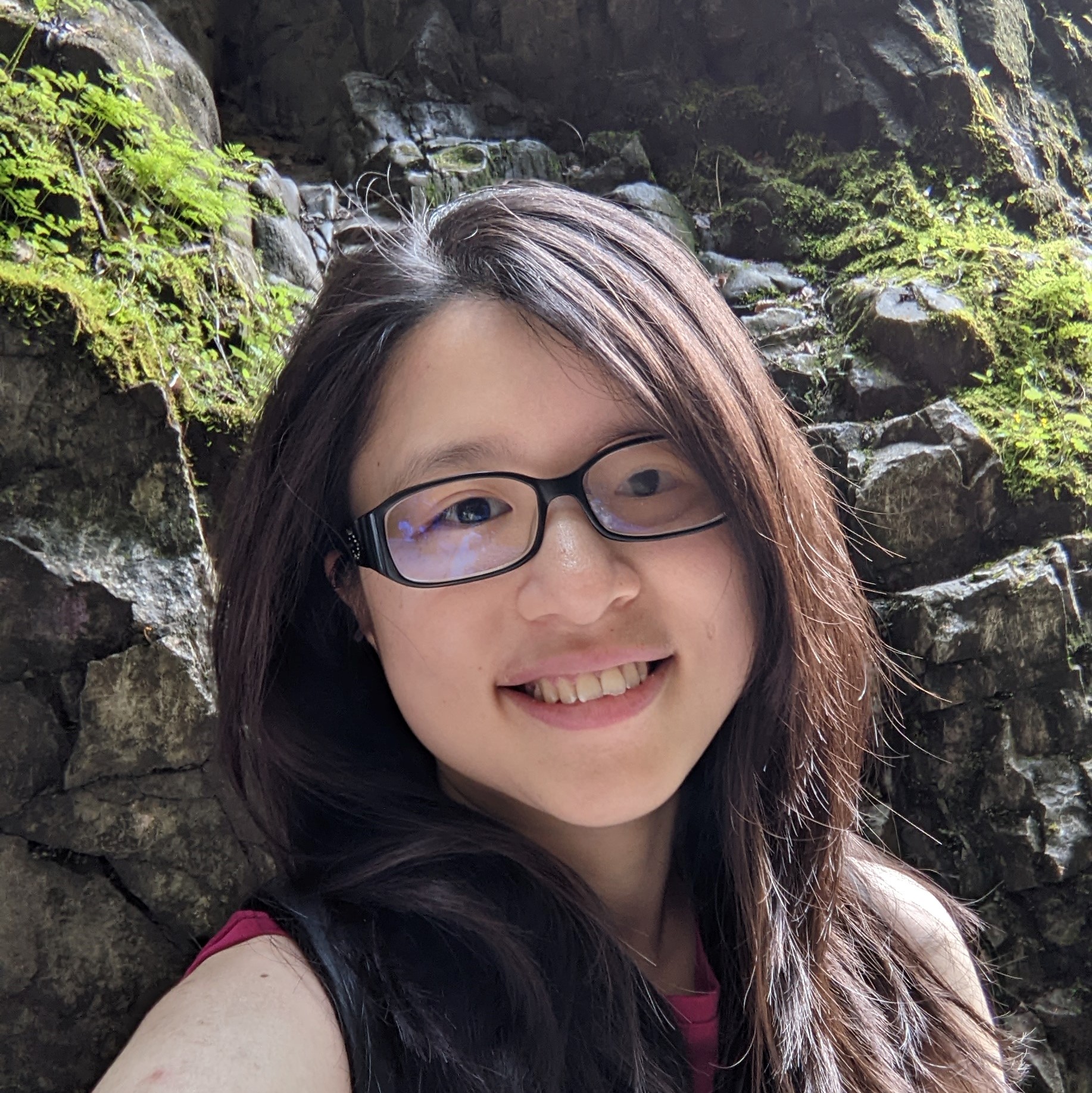
Jessica Werk is a Professor and Chair in the Department of Astronomy at the University of Washington. She holds a Ph.D. in Astrophysics from the University of Michigan (2010) and a B.A. in Astronomy and Physics from Wesleyan University (2003). Her research focuses on the extended gaseous components of galaxies, particularly the ionized gas in galactic halos and disk-halo interfaces, using optical/ultraviolet spectroscopy from ground- and space-based telescopes. She collaborates with theorists to refine cosmological simulations (e.g., UW N-body shop models) and interpret observational data. Her work explores galactic ecosystems, tracing baryonic cycling across stellar and intergalactic scales. She leads the SQuAD team, which emphasizes student-driven research in quasar absorption line analysis and cosmic origin studies. Not currently accepting new graduate students. Outside academia, she enjoys mountain hiking, duplicate bridge, and singing Puccini arias with her dog.
Doug Welch is a Professor in the Department of Physics and Astronomy at McMaster University and serves as Vice-Provost and Dean of Graduate Studies. He earned his PhD in Astronomy & Astrophysics from the University of Toronto in 1986, followed by postdoctoral work at the Dominion Astrophysical Observatory. His research focuses on light echoes from supernovae/transient events and pulsating variable stars (Cepheids, RR Lyrae, R CrB stars), with collaborations including Armin Rest (STScI), Geoff Clayton, and Patrick Tisserand. Welch's work leverages light echoes to study asymmetry in historical supernovae and stellar eruptions, advancing constraints for computational models. His articles emphasize supernovae, Cepheid variables, and novel light echo methodologies, reflecting trends in time-domain astronomy and precision distance measurements. Awards: McNeil Medal of the Royal Society of Canada (2010) for science communication. He contributes to major observatories as a Board Member of the Canada-France-Hawaii Telescope Corporation and previously served on the Thirty Meter Telescope Board of Governors. Welch co-leads teams in transient surveys and mentors through institutional roles, though specific grants/students are not detailed.
Burcu Koopmans-Beygu serves as Product Owner of the Research Data Management System at the University of Groningen's Center for Information Technology. With a PhD in Astronomy & Astrophysics, she maintains active research in cosmic structure while supporting data management infrastructure. Primary Affiliation: Center for Information Technology, University of Groningen Research Focus: Void galaxies and cosmic web structure Technical Expertise: Research Data Management, Long-Term Data Storage Dr. Koopmans-Beygu's research centers on void galaxies—the most isolated galaxies in the cosmic web. Her work examines photometric properties, star formation characteristics, and evolutionary pathways of galaxies residing in cosmic voids. She investigates how environmental isolation affects galaxy evolution compared to galaxies in denser regions. Her publication record shows consistent contributions to understanding void galaxy properties through the Void Galaxy Survey. The research demonstrates how void galaxies serve as natural laboratories for studying galaxy evolution with minimal environmental interference. Her technical work in research data management complements her astrophysical research, creating synergies between data infrastructure and scientific discovery. Dr. Koopmans-Beygu has contributed to multiple significant publications in prestigious journals including Monthly Notices of the Royal Astronomical Society. Her research has been cited over 80 times according to the available metrics, demonstrating impact in the field of extragalactic astronomy. As Product Owner of the Research Data Management System, she bridges technical infrastructure with scholarly research needs, ensuring proper data stewardship for astronomy and other research domains at the university.
Jussi Ahoranta is a Visiting Professor in the Department of Physics at the University of Helsinki. His research focuses on X-ray spectroscopy, intergalactic medium studies, and the distribution of baryonic matter in the universe. He has conducted extensive work using data from XMM-Newton, Chandra, and other observatories to analyze absorption lines in quasars and galaxy groups. Key collaborations include the University of Alabama Huntsville (2016 visits) and the Finnish Meteorological Institute (2016). His doctoral thesis (2023) explored high-resolution X-ray spectroscopy of warm-hot baryons in intergalactic space. Research interests span cosmological structures, galaxy evolution, and the application of advanced spectroscopic techniques. He has contributed to projects like the COSMOS survey and EAGLE simulations, focusing on WHIM (Warm-Hot Intergalactic Medium) detection and galaxy group kinematics.
Eric Wilcots is the Mary C. Jacoby Professor of Astronomy and Dean of the College of Letters & Science at the University of Wisconsin-Madison. He holds a Ph.D. in Astronomy from the University of Washington (1992) and a bachelor's degree from Princeton University (1987). Prior to joining UW-Madison, he served as a Jansky Postdoctoral Fellow at the National Radio Astronomy Observatory in Socorro, NM (1992-1995). His current administrative role includes serving as Associate Dean for Natural and Mathematical Sciences. Wilcots' research focuses on galaxy evolution through radio wavelength observations. Key interests include: Evolution of gas content in galaxy groups Magellanic-type spiral galaxies Radio AGN phenomena Magnetic fields in and around galaxies Intergalactic medium evolution in group environments His recent publications (2019-2025) demonstrate a consistent focus on radio astronomy observations of galaxy evolution. Primary research themes include: Active Galactic Nuclei (AGN) in low-mass galaxies Neutral hydrogen distribution in galaxy groups Environmental effects on galaxy quenching Magnetic field structures in spiral galaxies Bent radio jets as probes of intergalactic medium Notably, 80% of recent works involve multi-wavelength studies of AGN feedback mechanisms. Wilcots leads several major observational projects including the CHILES survey and collaborates extensively on SDSS-IV MaNGA data analysis. His work frequently utilizes facilities like the Very Large Array and contributes to SKA pathfinder studies.
Snežana Stanimirović is a Professor in the Department of Astronomy at the University of Wisconsin-Madison. Her research focuses on the interstellar and intergalactic medium (ISM/IGM), galaxy evolution, and radio astronomy through projects like GALFA, EVLA, and GASKAP. Education: B.S. in Astronomy, Department of Astronomy, Faculty of Mathematics, University of Belgrade (1996); Ph.D. in Astrophysics, University of Western Sydney (1999), jointly supervised by Australia Telescope National Facilities. She has mentored numerous current and former students, including graduate students Hongxing Chen and Io Stelea, and former Hilldale Fellows (e.g., Samantha Hoffman, Dr. Bill Dirienzo). Her research group investigates galactic turbulence, molecular clouds in TIGRESS, and low-velocity clouds in the Milky Way halo using radio telescopes. She developed a new radio astronomy lab course at UW-Madison that produced significant results, and her outreach efforts include a science comic (2021) and public talks on GALFA observations of the Magellanic Stream (2009) and galaxy evolution (2010). Selected Scientific Awards: 2019 Guggenheim Fellowship 2016 AAAS Fellow NSF CAREER Award (2011)
Joseph F. Hennawi is an Associate Professor in the Department of Physics at the University of California, Santa Barbara (UCSB), where he conducts research at the intersection of observational and theoretical cosmology using cutting-edge astronomical facilities. His research focuses on: Dark matter characterization through gravitational lensing Cosmic microwave background radiation analysis Spectroscopy of intergalactic and circumgalactic medium High-redshift quasar and galaxy evolution Rare astrophysical object identification via large-scale sky surveys He specializes in mining databases containing hundreds of millions of celestial objects to discover unique laboratories for testing fundamental physics, while conducting observations with the world's most powerful telescopes. Dr. Hennawi leads the ENIGMA research group at UCSB, dedicated to studying diffuse gas structures in cosmic environments using quasar absorption line techniques, with ongoing research into the intergalactic and circumgalactic medium.
Sungeun Kim is a Professor in the Department of Physics and Astronomy at Sejong University, specializing in observational astrophysics with expertise in galaxy clusters, interstellar medium dynamics, and large-scale cosmic structures. Their research integrates multi-wavelength data analysis and computational modeling to address fundamental questions in cosmology and galactic evolution. Education: Ph.D. from The Australian National University (1999) M.Sc. from Yonsei University (1992) B.Sc. from Yonsei University (1990) Kim's research portfolio centers on galaxy clusters and their environments, including detailed studies of intracluster and intergalactic media. They investigate multi-phase interstellar medium phenomena to understand star formation mechanisms, while actively pursuing interdisciplinary collaborations that bridge astronomy with computational physics and data science. Methodologically, their work combines aperture synthesis surveys, spectral energy distribution analysis, and novel visualization techniques for cosmic structures. Recent publications demonstrate a cohesive trajectory toward precision cosmology using galaxy cluster surveys, with the 2025 CMB-S4 collaboration paper advancing Sunyaev-Zel'dovich effect applications. Concurrently, Kim explores galactic dynamics through disk galaxy scaling relations (2024) and cosmic star formation history (2021), while earlier works establish foundational insights into Magellanic Cloud structures (2019) and protocluster environments (2018). This body of work reveals consistent emphasis on observational validation of theoretical models across cosmic time.
Paul R. Shapiro serves as Professor and Frank N. Edmonds, Jr. Regents Professor in the Department of Astronomy at the University of Texas at Austin, where he conducts advanced theoretical research in astrophysics. His academic foundation includes: A.B. from Harvard College (1974) Ph.D. from Harvard University (1978) Research centers on theoretical astrophysics with emphasis on: Cosmological structure formation Galaxy evolution dynamics Interstellar/intergalactic medium physics Dust grain hydrodynamics in space environments Key recognition: Frank N. Edmonds, Jr. Regents Professorship in Astronomy Contact details are available through the Department of Astronomy, though specific grant funding or student advising structures aren't detailed in public profiles.
Roberto Decarli is a Research Professor (Primo ricercatore) at Italy's National Institute for Astrophysics (INAF), specializing in extragalactic astrophysics. His research examines galaxy evolution, quasars, and cosmic structures during high-redshift epochs, leveraging observatories like ALMA and JWST. Research Focus: Dr. Decarli investigates environmental effects on galaxy formation, supermassive black hole activity, and gas dynamics in cosmic structures. His 2025 publications include studies of: Galaxy-scale outflows in early quasars Dusty star-forming galaxies in dense environments JWST/NIRCam-dark starburst galaxies at z=6.6 Gas thermodynamics in the Hyperion proto-supercluster He maintains an active publication record in premier astrophysics journals, with recent work emphasizing multiwavelength approaches to understanding the early universe.
Joanne Tan is a PhD researcher at the Max Planck Institute for Astrophysics, where she collaborates with Dr. Thorsten Naab on cosmological simulations of galaxy formation and evolution. Her work focuses on the circumgalactic medium (CGM) and intergalactic medium (IGM), using metal absorption lines to trace their properties across cosmic time. Current Research Galaxy formation and evolution CGM/IGM absorption-line studies Machine learning in astronomy Statistical inference from large datasets Joanne's recent projects involve analyzing stellar kinematics in nearby galaxies using advanced instrumentation like Gemini NIFS with adaptive optics. She also explores the temporal evolution of metal absorption lines from redshift 5 to the present. Contact: jtan@mpa-garching.mpg.de
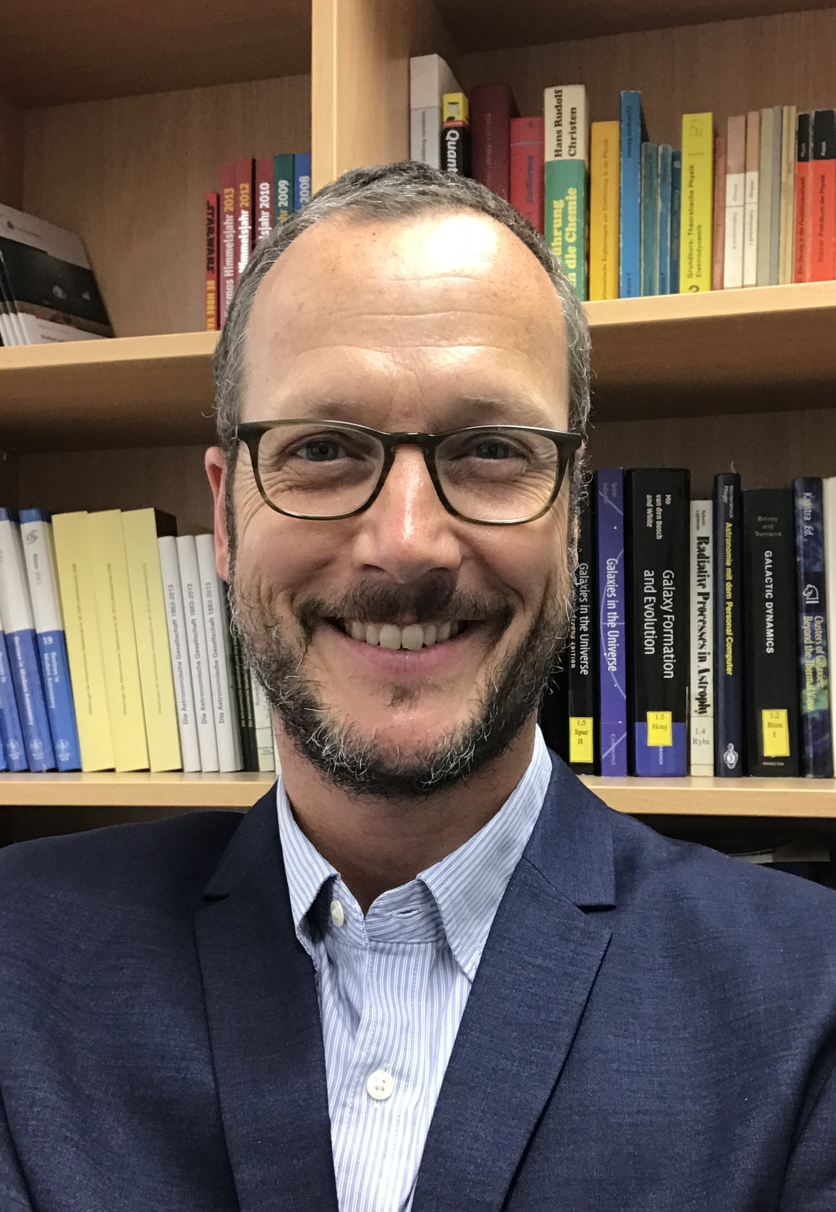
Prof. Dr. Philipp Richter is a Full Professor and Chair for Astrophysics at the Institute of Physics and Astronomy, University of Potsdam, Germany. He leads the Astrophysics research group at the University of Potsdam, focusing on interstellar and intergalactic gas, galaxy evolution, and observational cosmology. His work involves using absorption spectroscopy in UV and optical regimes to study the circumgalactic medium and intergalactic medium at various redshifts. Dr. Richter's educational background includes: PhD in Astronomy, University of Bonn, Germany (1999) Diploma in Physics, University of Bonn, Germany (1997) Studies of Physics and Astronomy at Universities of Marburg and Bonn, Germany (1994-1999) Abitur, Gymnasium Philippinum, Marburg, Germany (1991) Dr. Richter's research focuses on the properties of the circumgalactic medium (CGM) around galaxies and the intergalactic medium (IGM) that fills the Cosmic Web. His work employs absorption spectroscopy in the UV and optical regimes to study hydrogen and metal ions in the CGM and IGM at all redshifts. These absorption-line measurements are complemented with emission observations in radio, X-ray, and optical wavelengths. He also utilizes state-of-the-art numerical hydrodynamical simulations to compare with observational results. His research spans galaxy evolution, interstellar medium physics, and observational cosmology. Analysis of Dr. Richter's recent publications reveals a strong focus on the circumgalactic and intergalactic medium, with particular attention to the Magellanic Stream, galaxy halos, and high-redshift absorption systems. His work combines observational data from instruments like HST/COS with theoretical modeling to understand gas flows in galaxy evolution. Key themes include metallicity patterns, ionization states of gas, and the connection between observed absorption features and large-scale cosmic structure. Dr. Richter has received several prestigious awards: Teaching-Excellence Award, Faculty of Science, University of Potsdam (2022) Erskine Fellowship, University of Canterbury, NZ (2018) Ludwig-Biermann Award for early excellence in astrophysical research, Astronomische Gesellschaft, Germany (2005) Emmy-Noether fellowship/award for early research excellence, DFG (German science foundation) (2003) As an educator and mentor, Dr. Richter supervises PhD students including Sietske Bouma, Mitali Damle, and Kirill Makan. He teaches a variety of courses in Astrophysics such as fundamental astrophysics, cosmology, galaxy evolution, and interstellar medium as part of the physics/astrophysics bachelor/master programs. He also supervises astrophysics lab courses and seminars, and teaches experimental physics for geo-science students. Dr. Richter has played a significant role in university management, having served as director/deputy director of his department for many years, led committees for appointing professors in astrophysics, and developed the international master program in astrophysics at the University of Potsdam. Dr. Richter leads the Astrophysics research group at the University of Potsdam, which includes senior scientists, postdocs, and PhD students. The group is involved in various observational projects using telescopes and space-based instruments. They maintain close collaborations with other research institutions and participate in international research initiatives focused on galaxy evolution and the intergalactic medium.
Dr. Ismael Pessa serves as a Postdoctoral Researcher at the Leibniz Institute for Astrophysics Potsdam (AIP), embedded within the Galaxies and Quasars research section. His work leverages cutting-edge instrumentation including the MUSE integral field spectrograph and James Webb Space Telescope (JWST) to investigate galaxy evolution across cosmic time. His research portfolio centers on: Galaxy formation and evolution mechanisms Stellar kinematics and angular momentum in galactic disks Circumgalactic medium properties through absorption/emission line studies Lyman-α radiation transport in galaxy halos Star formation feedback processes in molecular gas Recent publications reveal strong engagement with major observational campaigns like PHANGS and the MUSE eXtremely Deep Field, with emphasis on high-resolution spatial analysis of stellar populations, gas dynamics, and dust physics in nearby and high-redshift systems. His collaborative work spans multiple international teams focused on extragalactic astrophysics. Based at AIP's Potsdam campus (office LH/1-20), Dr. Pessa actively contributes to the Galaxies and Quasars research group's mission of advancing extragalactic astronomy through multi-wavelength observational studies and data-intensive analysis techniques.
Johan Comparat is a Researcher at the Max Planck Institute for Extraterrestrial Physics (MPE) in Garching, Germany. His academic background includes a PhD from Marseille focused on baryonic acoustic oscillations with emission line galaxies, followed by research on simulated Universes in Madrid, Spain. He currently studies the Universe's large-scale structure in the X-ray domain at MPE. Research Focus: Comparat specializes in multi-wavelength cosmology, with emphasis on: Observational cosmology and galaxy formation/evolution X-ray astrophysics (eROSITA/eBOSS surveys) Cross-correlations between X-ray sources and galaxies Cosmological simulations and mock catalog development Publication Trends: Recent work (2022-2025) centers on eROSITA all-sky survey data analysis, featuring cluster abundance studies, gravity model tests, and X-ray/galaxy cross-correlations. Earlier contributions include SDSS-IV emission-line galaxy cosmology and luminosity function measurements. PhD Advisees: S. Shreeram (2023–present) Y. Zhang (2021–present) R. Seppi (2019–2023) J. Ider Chitham (2017–2021) F. Albareti (2015–2018) S. Rodriguez-Torres (2014–2017) G. Favole (2012–2016) Collaborations: Leads efforts in eROSITA cosmology working groups, develops simulation pipelines (e.g., Skies and Universes ), and contributes to SDSS-IV/eBOSS surveys. Maintains public repositories for spectral templates and data products.
Professor Amiel Sternberg is a theoretical astrophysicist at Tel Aviv University's School of Physics and Astronomy, where he has served as a Full Professor since 2002. He also holds positions as a Senior Research Scientist at the Flatiron Institute's Center for Computational Astrophysics (since 2017) and as an External Scientific Member of the Max Planck Institute for Extraterrestrial Physics (since 2018). His research spans multiple areas of astrophysics including: Galaxy evolution and cosmic structure Star formation processes Black holes and active galaxies Intergalactic and interstellar medium Astrochemistry and plasma astrophysics Dynamics, spectroscopy, and radiative transfer Computational and analytic methods in astrophysics Professor Sternberg's recent research achievements include development of analytic and hydrodynamic plasma models for multiphased structures of the circumgalactic medium around galaxies, fundamental theory for the atomic to molecular transition in star-forming interstellar gas clouds, and computation of chemical and thermal phase properties of the neutral interstellar medium in the first galaxies in the young Universe. His awards and honors include: Yuval Ne'eman Chair in Theoretical Physics (2016-present) Scientific Member, Max Planck Society (2018-present) Throughout his career, Professor Sternberg has held significant academic appointments including Wolf Foundation Postdoc at TAU (1987-1988), Minerva Fellow at Max Planck Institute (1989-1991), Senior Lecturer and Alon Fellow at TAU (1991-1996), Associate Professor at TAU (1996-2002), and Visiting Scientist at UC Berkeley (1997-1999). He has served as Chair of the TAU Astrophysics Department (2004-2008) and as Director of the TAU-Harvard/ITC Astronomy Program (2012-present).