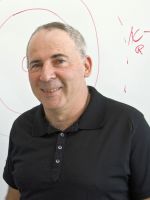
Roman Schnabel is a Professor of Experimental Physics at the University of Hamburg , affiliated with the Institute for Laser Physics under the Faculty of Mathematics, Informatics and Natural Sciences. He leads cutting-edge research in quantum optics, gravitational wave detection, and quantum technologies. Education : PhD in Physics (1999, Leibniz Universität Hannover); Physics degree (1988–1994, Leibniz Universität Hannover) Awards : QCMC 2018 Award, Gruber Cosmology Prize 2016 (LIGO team), Special Breakthrough Prize in Fundamental Physics 2016 (LIGO team), Joseph F. Keithley Award 2012 His recent work explores high-frequency gravitational wave observatories , entanglement generation , and quantum-enhanced sensing . He holds patents for gas sensors and optical surface imaging technologies. Schnabel co-founded the start-up Noisy Labs in 2023 and served as Director of Outreach & Transfer for the Cluster of Excellence 'Quantum Universe' (2019–2022).
Karl Ulrich Schreiber is an Adjunct Professor at the Department of Physics and Astronomy, University of Canterbury, New Zealand, and an apl. Professor at the Institute for Astronomical and Physical Geodesy at the Technical University of Munich (TUM). He is a scientist at the Geodetic Observatory Wettzell, jointly operated by TUM and the Bundesamt für Kartographie und Geodäsie (BKG). His work bridges fundamental physics and geodetic applications, with leadership roles in major international projects including ESA’s MAGIC/Science, QSG4EMT, and Baltic+ Theme 5, as well as DFG Research Units NEROGRAV and UPLIFT. His research focuses on Space Geodesy , Satellite and Lunar Laser Ranging , and Ring Laser Technology . He has pioneered the use of large ring laser gyroscopes for measuring Earth's rotation, polar motion, and seismic rotations. His work enables high-precision monitoring of geophysical phenomena such as Earth tides, Chandler wobble, and rotational ground motions from earthquakes. He is a key contributor to multi-technique co-location studies (VLBI, SLR, GNSS) and time transfer experiments, advancing the Global Geodetic Observing System (GGOS). His recent publications show a strong trend in developing and applying large-scale ring laser arrays (e.g., ROMY) for geophysical sensing, photon-counting laser ranging for space debris and satellite tracking, and optical timing systems for synchronization across geodetic networks. These efforts span disciplines including geodesy, seismology, quantum optics, and fundamental physics. Scientific contributions include: Development of the Wettzell Large Ring Laser (G-ring) for continuous Earth rotation monitoring. First direct measurements of Earth's diurnal polar motion and Chandler wobble using ring lasers. Pioneering work in rotational seismology, validating ring laser data against seismic arrays. Contributions to lunar laser ranging and its role in reference frame realization. Leadership in ESA and DFG projects advancing space geodesy and inertial sensing. He advises doctoral and master’s students within the DFG Research Training Group UPLIFT and collaborates with international institutions on instrumentation and data analysis. His lab at Wettzell hosts advanced laser ranging and ring laser systems, serving as a fundamental geodetic observatory. Future work includes enhancing clock ties for global geodesy, expanding multi-component rotation sensing, and advancing space-based geodetic technologies.
Benedikt Günther is a research scientist at the Technical University of Munich (TUM) working within the Chair of Biomedical Physics led by Prof. Dr. Franz Pfeiffer. His research focuses on the Munich Compact Light Source (MuCLS), a laboratory-scale inverse Compton X-ray source that provides synchrotron-like radiation for biomedical applications. Günther plays a key role in developing, optimizing, and characterizing this innovative technology, contributing to both its fundamental physics and practical medical applications. His primary research interests center around X-ray physics and imaging techniques, particularly laser enhancement cavities for inverse Compton X-ray sources, X-ray microscopy, dynamic phase-contrast imaging, and X-ray spectroscopy. Günther's work bridges fundamental physics with practical medical applications, developing instrumentation that brings synchrotron-quality imaging to conventional laboratory settings. His research has significant implications for improving medical diagnostics while making advanced imaging techniques more accessible. Analysis of Günther's publication record reveals a consistent focus on advancing compact X-ray source technology and its applications. His work demonstrates expertise in both theoretical modeling and experimental implementation, with publications spanning instrument development, imaging techniques, and specific medical applications. The research shows progression from fundamental source characterization to increasingly sophisticated biomedical applications, particularly in breast imaging, dental diagnostics, and materials science. 2019 Best Poster Award at the combined meeting of the 68th Denver X-ray Conference (DXC) & 25th International Congress on X-ray Optics and Microanalysis (ICXOM) for 'Full-Field Structured Illumination Super-Resolution X-ray Transmission Microscopy' Günther regularly presents his work at major international conferences including the International Particle Accelerator Conference, High-Brightness Sources and Light-driven Interactions Congress, and specialized X-ray imaging meetings. His research is conducted within the Munich Compact Light Source facility, a collaborative project involving physicists, engineers, and medical researchers working to develop laboratory-scale synchrotron technology for widespread biomedical use.
Rupert Huber is a Professor at the Department of Experimental and Applied Physics, University of Regensburg, where he has held a chair since 2010. His research focuses on ultrafast quantum phenomena, terahertz science, and lightwave electronics, with a strong emphasis on nanoscale imaging and quantum materials. He leads the Huber group, which has launched the ERC project 'Orbital Cinema' and produced numerous high-impact publications in journals like Nature and Nano Letters . Chair for Experimental and Applied Physics, University of Regensburg (2010–present) Emmy Noether Group Leader, University of Konstanz (2007–2010) Alexander von Humboldt Fellow, UC Berkeley/Lawrence Berkeley National Lab (2004–2006) His research explores terahertz spectroscopy , quantum materials , and ultrafast nanoscopy , often combining experimental innovation with theoretical insights. Recent work includes groundbreaking studies on exciton dynamics in van der Waals magnets and subcycle imaging of electron wave motion. The group’s publications frequently appear as coverstories in Nature Photonics and Nano Letters . Huber has received prestigious awards such as the Gottfried Wilhelm Leibniz Prize (2019) , ERC Starting Grant (2012) , and OSA Fellowship (2018) . He has supervised numerous Ph.D. and Master’s students, including recent awardees like Joshua Mornhinweg (faculty dissertation prize, 2024) and Josef Riepl (best tutor award, 2024).
Prof. Julia Herzen holds the Associate Professorship of Physics in Biomedical Imaging at the Department of Physics , TUM School of Natural Sciences , Technical University of Munich . Her research focuses on advancing X-ray imaging techniques using synchrotron radiation and laboratory sources, with applications in medical diagnostics and tissue analysis. Position: Associate Professor Department: Physics School: TUM School of Natural Sciences University: Technical University of Munich Contact: julia.herzen@tum.de Her core research interests include: Quantitative multi-modal X-ray imaging (spectral & phase-contrast) 3D virtual histology of human tissue Breast cancer detection improvement Lung disease imaging (emphysema, pneumonia) X-ray phase-contrast tomography Dark-field imaging material decomposition Recent publications demonstrate expertise in dark-field imaging for lung pathology , phase-contrast CT for organoid visualization , and spectral X-ray applications in multi-material differentiation . Her team explores clinical translation of X-ray techniques for non-invasive diagnostics . She supervises PhD students and teaches Biomedical Engineering courses, including: Quantitative X-Ray Imaging (3 VI) Image Processing in Physics (2 VO) Biostatistics (2 VO) Advanced Lab Courses in X-ray Micro-CT
Max Planck Institute for Gravitational PhysicsGermany
Harald Pfeiffer is a Professor at the University of Potsdam and Group Leader in the Astrophysical and Cosmological Relativity department at the Max Planck Institute for Gravitational Physics (Albert Einstein Institute) in Potsdam. His research focuses on numerical relativity and gravitational wave astrophysics, particularly simulations of black hole and neutron star mergers to interpret observations from detectors like LIGO and Virgo. He holds a PhD from Cornell University and has held academic roles at the Canadian Institute for Theoretical Astrophysics (2009–2017). Notably, he was elected a Fellow of the American Physical Society in 2023 for his contributions to numerical relativity. His expertise includes developing computational tools to solve Einstein’s equations on supercomputers and analyzing gravitational wave data. Key interests include understanding spacetime behavior during mergers, improving waveform models, and preparing for future detectors like LISA. He collaborates extensively with international initiatives such as the LIGO Scientific Collaboration. Selected Awards: Fellow of the American Physical Society (2023) Research and Grants: His work bridges theoretical advances and observational data, contributing to waveform catalogs and detector sensitivity improvements. He leads a team advancing numerical relativity techniques for next-generation gravitational wave astronomy. Labs/Teams: Leads the Astrophysical and Cosmological Relativity group at the Max Planck Institute, fostering interdisciplinary research in gravitational wave science.
Prof. Dr. Enkelejda Kasneci is a Distinguished Professor at the Technical University of Munich (TUM), leading the Chair of Human-Centered Technologies for Learning. She holds dual affiliations within TUM School of Social Sciences and Technology and TUM School of Computation, Information and Technology. Her research integrates AI, eye-tracking, and immersive technologies to advance educational paradigms. She directs the TUM Center for Educational Technologies and chairs the MSc program 'AI in Society.' Education: PhD in Computer Science from University of Tübingen (2013), M.Sc. from University of Stuttgart (2007). Earlier roles include Assistant Professor and Dean of Studies at University of Tübingen. Research Focus: Human-centered AI applications in education, multimodal interaction design, and privacy-preserving eye-tracking. Her work bridges technology and pedagogy through projects like AI tutor PEER, VR Classroom, and Privacy-Preserving Eye-tracking. Key Projects: Leads EU-funded projects VIVA (€1.125M), DigiProMIN (€163K), and SARA Kids (€244.8K). Active in policy initiatives like Europe’s AI Imperative. Awards: TUM Heinz Maier-Leibnitz Medal (2024), Liesel Beckmann Distinguished Professorship (2022), and Südwestmetall Research Prize (2014). Grants & Advising: Over €5M in secured funding across 12+ projects. Supervises 14+ PhD researchers and mentors postdocs in AI education and HCI. Labs & Teams: IT-Stiftung EdTech Lab houses advanced VR/eye-tracking setups. Research group includes 20+ members spanning AI, HCI, and educational technology.
Nikolai Gustschin is a researcher affiliated with the Chair of Biomedical Physics at the Technical University of Munich (TUM) , associated with the Faculty of Medicine and the Department of Physics . His work focuses on developing advanced imaging techniques for clinical applications. Research Interests: X-ray grating interferometry, dark-field CT, phase contrast imaging, clinical translation of imaging technologies, grating fabrication quality assessment. Recent Publications highlight his contributions to dark-field CT algorithms, vibration modeling for interferometers, and grating fabrication methods. Collaborations with experts in biomedical physics and engineering are central to his work.
Daniel Braun is a Professor at the University of Tübingen, affiliated with the Faculty of Mathematics and Natural Sciences and the Department of Physics. He holds the Theoretical Physics (Braun Chair) and has been active in academia since October 1, 2013. Email: daniel.braun@uni-tuebingen.de Research Interests: His work bridges quantum optics, metrology, and gravitational physics. He explores quantum-enhanced measurement techniques, nonlinear optical phenomena in curved spacetime, and mechanical systems for fundamental tests of physics. Institutional Affiliation: Institute for Theoretical Physics (ITP) Recent Publications (2025-2024): Focus on quantum-limited interferometry, machine learning applications in quantum channels, gravitational effects in particle accelerators, and nonlinear soliton dynamics in relativistic settings. Scientific Awards: No specific awards mentioned in the provided data.
Prof. Julia Hearts is a Professor at the Technical University of Munich (TUM) , affiliated with the School of Natural Sciences . Her research focuses on biomedical imaging , particularly advancing X-ray computed tomography through phase-contrast and dark-field radiography for clinical and biological applications. Developing spectral detection techniques to enhance diagnostic accuracy Quantitative imaging for element-specific parameter extraction Utilizing synchrotron radiation and standard X-ray tubes Her recent publications demonstrate expertise in dark-field radiography for lung and breast imaging, phase-contrast tomography for tissue characterization, and multi-spectral X-ray analysis for material decomposition. Collaborative work spans oncology , pulmonology , and materials science . Contact: julia.herzen@tum.de
Christoph Gehlen is Professor and Chair of Materials and Materials Testing in Civil Engineering at the Technical University of Munich (TUM), based at Franz-Langinger-Str. 10 in Munich. His research group focuses on advanced concrete technologies, materials science, and digital construction methods, with significant contributions to additive manufacturing in civil engineering through the Collaborative Research Center TRR 277. His research spans concrete technology, durability assessment, and sustainable construction practices. Key interests include corrosion mechanisms in reinforced concrete, non-destructive testing methodologies, and additive manufacturing techniques like Selective Paste Intrusion (SPI). Recent work emphasizes 3D concrete printing for structural applications, life cycle assessment of printed elements, and fundamental studies on material behavior under environmental stressors including carbonation, chloride exposure, and freeze-thaw cycles. Analysis of his 15 most recent publications (2024-2025) reveals dominant research trajectories in digital fabrication of concrete structures, particularly SPI-based additive manufacturing. His work integrates materials science with structural engineering to develop functionally graded components, assess sustainability metrics, and solve reinforcement integration challenges. Significant interdisciplinary efforts address durability issues through electrochemical monitoring, coda wave interferometry, and advanced imaging techniques for concrete microstructure characterization. Gehlen leads the Chair of Materials and Materials Testing in Civil Engineering at TUM, which operates advanced laboratories for concrete characterization including confocal laser scanning microscopy and virtual testing environments. His team actively participates in TRR 277 (Additive Manufacturing in Construction), developing fabrication-aware design methods and experimental validation protocols for novel construction technologies.
Prof. Florian Zaussinger is a faculty member at the Faculty of Applied Computer and Life Sciences at Mittweida University of Applied Sciences. His research focuses on thermal convection, fluid dynamics, and numerical simulations in both geophysical and astrophysical contexts. He has contributed extensively to studies on microgravity experiments, including the GeoFlow and AtmoFlow projects conducted on the International Space Station (ISS). University: Mittweida University of Applied Sciences Faculty: Applied Computer and Life Sciences Department: Mathematics Contact: +49 3727 58-1381 | florian.zaussinger@hs-mittweida.de | Building 6, Room 6-131 His research involves advanced numerical modeling of complex fluid systems, including spherical convection, dielectric heating, and double-diffusive processes. He has developed and applied computational tools like the ANTARES code to simulate convection in DA white dwarfs, planetary atmospheres, and Earth's mantle. His work bridges theoretical fluid mechanics with experimental validation in space-based microgravity environments. Recent publications highlight his expertise in thermo-electrohydrodynamic convection, planetary fluid flow analysis, and microgravity-induced instabilities. While the scraped data does not list scientific awards or students directly, his academic profile emphasizes interdisciplinary collaboration with engineering and life sciences, particularly in applied mathematics for fluid dynamics and experimental data processing.
Prof. Jürgen Müller is a Full Professor at the Institute of Geodesy, Leibniz University Hannover, leading research in physical geodesy, satellite gravimetry, and relativistic geodesy. He holds positions as Executive Director of the Institute and contributes to global geodetic initiatives like the Global Geodetic Observing System (GGOS). His work focuses on advancing quantum technologies for Earth observation, including cold atom interferometry and optical clocks, to enhance gravity field measurements and test fundamental physics principles. Research Interests: Müller's expertise spans gravimetric Earth observation, lunar laser ranging (LLR), relativistic geodesy, and the application of quantum sensors in space missions. His team explores novel sensor concepts for future satellite gravimetry, such as hybrid accelerometers and gravity gradiometry systems, addressing challenges in climate monitoring and Earth system dynamics. Publications Overview: His recent work emphasizes quantum accelerometers for satellite missions, deployable solar panels for GRACE-like satellites, and LLR-based tests of general relativity. Key contributions include improving Earth rotation parameter estimation and exploring optical clock networks for height system unification. Grants & Collaborations: Müller collaborates on international projects like the CARIOQA quantum pathfinder mission and the GENESIS space observatory. He leads teams in simulating quantum sensor performance and analyzing LLR data for lunar and Earth dynamics studies. Labs/Teams: As head of the Institute of Geodesy, he oversees research groups working on quantum gravimetry, space geodesy, and geodetic reference systems, leveraging facilities like the 10-meter atom interferometer at Hannover.
Prof. Hansjörg Kutterer is a Professor and Dean at the KIT-Department of Civil Engineering, Geo and Environmental Sciences at Karlsruhe Institute of Technology (KIT). His primary affiliation is with KIT's Department of Civil Engineering, Geo and Environmental Sciences. He leads geodetic research initiatives focusing on Earth observation systems, atmospheric modeling, and geophysical data analysis. His research emphasizes advanced applications of GNSS, InSAR, and satellite gravimetry for monitoring climate-related phenomena such as water vapor dynamics, terrestrial water storage changes, and ground motion patterns. Key projects include developing machine learning-enhanced models for tropospheric delay corrections and integrated water vapor estimation in the Upper Rhine Graben region. Prof. Kutterer actively contributes to international geodetic frameworks like the Global Geodetic Observing System (GGOS), particularly through DA-CH regional collaborations. His work bridges geodetic methodologies with interdisciplinary challenges in climate science and environmental engineering. He oversees departmental operations as Dean, fostering innovation in geospatial education and infrastructure. His technical expertise spans geodetic deformation analysis, statistical robust estimation, and the integration of geophysical models with observational data.
Prof. Lev Vaidman is a theoretical physicist at the School of Physics and Astronomy , Tel Aviv University , where he holds the Alex Maguy-Glass Chair in Physics of Complex Systems. His research focuses on the foundations of quantum mechanics and quantum information , with significant contributions to many-worlds interpretation , weak measurements , and quantum paradoxes . He actively collaborates with institutions like Chapman University and the John Bell Institute. Academic Roles: Professor at Tel Aviv University, Fellow at Chapman University, Honorary Fellow at John Bell Institute Leadership: Moderator of quant-ph arXiv, Editorial Board member of International Journal of Quantum Information, Managing Editor of Quantum Studies: Mathematics and Foundations Research Themes: Vaidman’s work bridges quantum foundations (e.g., resolving paradoxes in interferometry) and applied quantum information (e.g., counterfactual communication protocols). He pioneered concepts like teleportation of continuous variables and interaction-free measurements , influencing experimental implementations worldwide. Scientific Recognition: Holds prestigious fellowships and contributes to major quantum mechanics encyclopedias. His recent publications analyze quantum particle trajectories and weak value controversies , often co-authored with experimental collaborators.