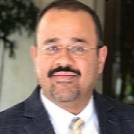
Emma Hill is a Professor at the Asian School of the Environment and Interim Director of the Earth Observatory of Singapore (EOS) at Nanyang Technological University (NTU), Singapore. Her research focuses on space geodesy applications to climate change and natural hazards, particularly earthquake risks in the Sumatran subduction zone and sea-level variations through GRACE satellite data and tide-gauge networks. Research Themes : Tectonic deformation, coastal sea-level monitoring, geodetic data fusion Technologies Used : High-precision GPS, GRACE satellite gravity, GNSS Interferometric Reflectometry Her work emphasizes interdisciplinary approaches to separate geophysical processes in the Earth system. She leads the Geodesy Group , which integrates geodetic observations with broader geoscience research.
Prof Duncan Robertson is a Professorial Research Fellow at the School of Physics and Astronomy, University of St Andrews, Scotland. He holds a B.Sc. (Hons.) and Ph.D. in Physics from the same institution. His career has focused on millimeter-wave radar technologies with applications in environmental sensing, security systems, and battlefield systems. He leads the Millimetre Wave Group, specializing in radar imaging, radiometry, electron spin resonance instrumentation, and antenna design. Education: B.Sc. (Hons.) in Physics and Electronics, University of St Andrews (1991) Ph.D. in Millimetre Wave Physics, University of St Andrews (1991) Research Interests: Prof Robertson’s work spans millimeter-wave radar systems, including drone detection, glacier monitoring, sea clutter analysis, and holographic metasurfaces. His group develops technologies for security screening, environmental monitoring, and material characterization. Grants & Projects: Environmental Monitoring: Short Range Interferometric Synthetic Aperture Radar (InSAR) MuWMAS: Snowflake Scattering and Microstructure Analysis Drone Detection Radar Commercialization Labs/Teams: Leads the Millimetre Wave Group, collaborating on radar phenomenology and advanced sensor systems. Active in international radar conferences and experimental field trials.
Lynford L Goddard is a Professor at the University of Illinois at Urbana-Champaign , affiliated with the Grainger College of Engineering and the Department of Electrical and Computer Engineering . He serves as Associate Dean for Diversity, Equity, and Inclusion and previously directed the Institute for Inclusion, Diversity, Equity, and Access. His work bridges photonics, semiconductor devices, and nanofabrication with applications in sensing, metrology, and data processing. Education: PhD in Physics with minor in Mathematics, Stanford University (2005) His research interests focus on photonic systems for sensing and computation. The Photonic Systems Laboratory develops advanced fabrication techniques for lithium niobate modulators , 3D photonic integrated circuits , and gradient index optics , with applications in hydrogen detection , CO2 sensing , and optical metrology . Recent work explores volumetric photonic integration and machine learning applications in nanophotonics. Key publication trends span photonics-based sensing , high-precision metrology , and novel fabrication methods , emphasizing thin-film lithium niobate and 3D photonic structures . His awards include Presidential Early Career Award (PECASE) NSF CAREER Award OSA and SPIE Fellowships IEEE Senior Member As an educator , he has received multiple teaching recognitions and leads courses like ECE 329: Fields and Waves I . His patents cover innovations in photochemical etching , photonic nanojets , and 3D optical integration . Current projects include SCRIBE technology for micro-printing and DEI initiatives through the IDEA Institute.
Rana Adhikari is a Professor of Physics at the California Institute of Technology (Caltech). Holding a B.S. from the University of Florida (1998) and a Ph.D. from MIT (2004), he has been at Caltech since 2006, progressing from Assistant Professor to full Professor in 2012. His research focuses on advancing detector technologies for fundamental physics experiments in gravitational waves, dark matter, and near-field gravity studies. Education: B.S. in Physics, University of Florida (1998); Ph.D. in Physics, MIT (2004) Caltech Faculty: Assistant Professor (2006-12), Professor (2012-present) Adhikari's group specializes in precision measurements at the intersection of classical and quantum physics. Key research areas include: Mechanical oscillators and their thermodynamic limits Nonlinear optics for interferometric applications Quantum information constraints in classical sensors Adaptive optics using thermal actuation Cryogenic silicon interferometers for cosmological observations High-quality silicon opto-mechanical systems for LIGO applications Laser gyroscope technology for rotation sensing The group's work on gravitational wave detection has produced numerous publications in leading journals like Physical Review X , Physical Review D , and Optics Express . Their research often combines experimental physics with machine learning techniques for noise cancellation in laser interferometers. Adhikari's team also engages with undergraduate researchers through programs like the International LIGO SURF students, creating opportunities for young scientists in gravitational physics. His publications reveal a consistent focus on gravitational wave detector optimization, quantum metrology, and cosmological observations through advanced instrumentation.
Professor Kenneth T. V. Grattan serves as the Royal Academy of Engineering/George Daniels Professor of Scientific Instrumentation at the School of Engineering, City, University of London. He has held this prestigious position since October 1, 1983, demonstrating a long-standing commitment to advancing scientific instrumentation and sensor technologies. Professor Grattan's research spans multiple domains within optical sensing and instrumentation. His primary research interests include: Optical fibre sensors for various physical and chemical parameter measurements Laser-based sensing systems and photonics technologies Instrumentation design for industrial and biomedical applications Advanced signal processing techniques for sensor data interpretation Novel materials integration in sensor development His recent publication record demonstrates a strong focus on developing sophisticated optical sensor systems with practical applications. Professor Grattan's work shows consistent innovation in fiber Bragg grating technology, interferometric sensing approaches, and microfluidic integration. His research group has made significant contributions to dual-parameter sensing systems, environmental monitoring solutions, and biomedical sensing applications. The trend in his recent publications indicates increasing interdisciplinary collaboration, particularly with biomedical researchers and industrial partners to translate laboratory innovations into practical measurement systems. As the George Daniels Professor of Scientific Instrumentation, Professor Grattan holds one of the most prestigious named chairs in the field, supported by the Royal Academy of Engineering. This position recognizes his significant contributions to advancing measurement science and instrumentation technology. Professor Grattan has supervised numerous PhD students and research associates throughout his career, though specific names are not detailed in the available information. His research has been supported by various funding bodies and industrial partnerships, enabling the development of cutting-edge sensor technologies with real-world applications. His laboratory at City, University of London focuses on developing next-generation optical sensor systems, with particular emphasis on making measurements in challenging environments. The research group maintains strong connections with industry partners to ensure practical relevance of their developments.
Francesc Torres is a Full Professor at the Signal Theory and Communications Department of the Universitat Politècnica de Catalunya (UPC-BarcelonaTech). He holds a Doctor Ingeniero degree in Telecommunication Engineering from UPC (1992) and has extensive experience in microwave systems and space instrumentation. His research focuses on remote sensing, interferometric radiometry, and the European Space Agency's SMOS mission. He co-leads the Barcelona SMOS Expert Centre for radiometric calibration and ocean salinity studies. Torres has contributed to numerous ESA projects and served as a visiting scholar at NASA's Jet Propulsion Laboratory (2005-2006). His work bridges engineering education, with publications on STEM pedagogy and early-career development, and advanced instrumentation for Earth observation. Education: Ingeniero en Telecommunication Engineering (1988) Doctor Ingeniero en Telecommunication Engineering (1992) Research Interests: His primary areas include microwave radiometry, spaceborne sensors, calibration methodologies, and the application of remote sensing to geophysical studies. He also explores educational strategies to enhance critical thinking and self-management skills in STEM students. Current projects involve improving SMOS data accuracy through novel calibration techniques and developing educational frameworks for sustainable engineering practices. Grants & Projects: Key contributions include the SMOS mission calibration validation (CALIMAS team), GeoSTAR pilot project (JPL), and SuperMIRAS instrument development. He has led efforts to mitigate systematic errors in SMOS data and pioneered polarimetric analysis methods for rain events and ionospheric studies. Labs/Teams: Director of the Remote Sensing Laboratory (UPC), collaborating with ESA, JPL, and international research networks. Active in the Barcelona SMOS Expert Centre and the SMOSOps-Hexagonal initiative for operational mission improvements.
Dr. Arwa Dabbech is an Assistant Professor at Heriot-Watt University's School of Engineering & Physical Sciences, affiliated with the Institute of Sensors, Signals & Systems. Her research focuses on radio interferometric imaging, combining machine learning, optimization algorithms, and computational methods to advance astronomical data analysis. Key areas include high-dynamic range imaging, algorithm scalability, and deep neural networks like R2D2 for precision imaging. Her work emphasizes innovative techniques such as Faceted HyperSARA and parallel processing frameworks, addressing challenges in wideband imaging and large-scale data handling. Collaborations involve advanced telescopes like the VLA and ASKAP, contributing to datasets that validate novel algorithms. Dr. Dabbech’s research bridges theoretical developments with practical applications, enhancing the resolution and accuracy of radio astronomical observations. Notable projects include R2D2’s application to Cygnus A imaging and uncertainty quantification, demonstrating real-time imaging capabilities. Her contributions span algorithm design, AI integration, and scalable solutions for modern radio interferometry, positioning her at the forefront of computational astrophysics.
James E. Aguirre is an Associate Professor in the Department of Physics and Astronomy at the University of Pennsylvania. His research focuses on understanding galaxy formation, cosmology, and large-scale structure through advanced instrumentation and observational techniques. He leads projects such as HERA (Hydrogen Epoch of Reionization Array) and TIM (Terahertz Intensity Mapper), dedicated to studying the early universe and distant star-forming galaxies. Aguirre’s work involves cutting-edge millimeter-wave and radio instrumentation design, including Z-Spec, PAPER, and MUSTANG. He has contributed to significant discoveries, such as detecting massive water reservoirs around quasars and determining distances to gravitationally lensed galaxies. Supported by NSF grants, his research bridges observational astronomy with cosmological theory. Education: Ph.D. in Astrophysics (thesis work on TopHat balloon-borne telescope). Teaching: ASTR011 Introduction to Astrophysics I. Current Projects: HERA, TIM, Simons Observatory, and PAPER. Grants: NSF Grant No. 0807990 and others. His research group collaborates on instrumentation like the Bolocam Galactic Plane Survey and explores techniques for mitigating calibration errors and improving signal analysis in radio interferometry. Aguirre’s efforts advance both observational methods and our understanding of cosmic evolution from the epoch of reionization to present-day galaxy formation.
Timothy Cook is an Associate Professor in the Department of Physics & Applied Physics at the University of Massachusetts Lowell. He holds a PhD in Astrophysics from the University of Colorado (1991) and has extensive experience in developing space-borne and ground-based instrumentation. His research focuses on ultraviolet instrumentation, sounding rockets, and novel data analysis techniques, particularly for studying astrophysical dust, exoplanetary systems, and interstellar/intergalactic material. Key projects include the PICTURE and IMAGER sounding rockets, the SPINR payload for stellar dust studies, and the SCARI interferometer for interstellar medium analysis. He has led and collaborated on multiple NASA-funded missions and grants, including roles as PI and Co-PI on projects like the CLUE experiment and DWEL lidar system. His work integrates astrophysical observations with advanced optical engineering and remote sensing technologies. Education: PhD in Astrophysics, University of Colorado Boulder, 1991 BA in Physics, Johns Hopkins University, 1985 Research Interests: Dr. Cook specializes in designing and deploying instruments for space and terrestrial environments. His expertise spans sounding rocket payloads (e.g., PICTURE-B, LITES), ultraviolet spectroscopy, coronagraphy for exoplanet detection, and lidar systems for forest canopy analysis. He also investigates interstellar dust properties and circumgalactic material using novel tomographic and interferometric techniques. His work bridges astrophysical studies with practical engineering solutions for observational challenges. Grants & Collaborations: Principal Investigator for NASA-funded projects like the Interstellar Medium Absorption Gradient Experiment Rocket (2007) Co-PI for NSF grants developing the Dual-Wavelength Echidna Lidar (DWEL) for forest biomass studies (2009) Contributed to the TERRIERS satellite mission studying Earth’s ionosphere Labs & Teams: Collaborates with interdisciplinary teams at UMass Lowell, NASA, and institutions like Boston University, leveraging expertise in optical instrumentation and data analysis.
Dr. Maria Soler serves as a Senior Researcher at the Catalan Institute of Nanoscience and Nanotechnology (ICN2), conducting pioneering work in the Nanobiosensors and Bioanalytical Applications group (NanoB2A) under the Networking Research Center of Bioengineering, Biomaterials and Nanomedicine (CIBER-BBN). Her expertise spans nanophotonic biosensor development for real-time, label-free detection in complex biomedical environments. Her academic credentials include: PhD in Biochemistry, Molecular Biology and Biomedicine from Autonomous University of Barcelona (2015, with distinguished honors) Postdoctoral research at Ecole Polytechnique Federale de Lausanne (EPFL, Switzerland) for 3 years Dr. Soler's research integrates optical biosensor development , nanoplasmonics , and surface chemistry with molecular biology to create diagnostic platforms for immunology and personalized medicine. The NanoB2A group focuses on nanoplasmonic biosensors, silicon nanophotonic systems, lab-on-a-chip integration, and surface biofunctionalization, targeting clinical diagnostics and environmental applications through interdisciplinary innovation. Her publication trends reveal consistent advancement in label-free photonic biosensors for precision diagnostics, particularly in point-of-care testing for infectious diseases (including multiple SARS-CoV-2 applications) and cancer immunotherapy monitoring. This work bridges nanotechnology fundamentals with urgent healthcare needs, demonstrating exceptional translational potential in pandemic response and personalized treatment strategies. Dr. Soler's contributions have been recognized through distinguished PhD honors and features in Laser Focus World, though specific awards remain unlisted in available materials. Her research has secured significant ERDF funding for laboratory enhancements within the Biodeposition and Biodetection Unit (U4 NANBIOSIS). As leader of the NanoB2A laboratory at ICN2, she oversees cutting-edge equipment for nanobiosensor development and application, recently upgraded through European Regional Development Fund investments to advance diagnostic capabilities for complex biomedical challenges.
Stephen Eikenberry is a Professor of Optics & Photonics Physics at CREOL, The College of Optics and Photonics, University of Central Florida. His academic journey includes a Ph.D. in Astronomy from Harvard University (1997), a Sherman Fairchild Postdoctoral Prize Fellowship at Caltech, and prior tenured roles at Cornell University and the University of Florida. His research focuses on black holes, neutron stars, gravitational waves, and astronomical instrumentation, with applications in biomedical imaging and spectroscopy. Key professional milestones include the 2016 Breakthrough Prize in Fundamental Physics (as part of the LIGO Science Consortium), the NSF CAREER Award (2000), and multiple University of Florida Research Foundation Professorships. He has designed advanced optical instruments and contributed to LIGO's gravitational wave discoveries. Eikenberry's research group explores astrophotonics, dark energy, and extrasolar planets. His recent work includes analyzing gravitational wave data from LIGO/Virgo and developing lunar occultation missions. He advises multiple graduate students and collaborates on international projects like the PolyOculus Array (OPA!). Education: Ph.D. in Astronomy, Harvard University (1997) Postdoctoral Fellowship at Caltech (Sherman Fairchild Prize) Awards: Breakthrough Prize in Fundamental Physics (2016) Gruber Prize for Cosmology (2016) UK Royal Astronomical Society Team Achievement Award (2016) His publications emphasize gravitational wave astronomy, cosmology, and instrument design. He has pioneered methods to constrain cosmic expansion using gravitational wave 'standard sirens' and studies correlations between fast radio bursts and gravitational wave events.
Martin Kada is Professor for Methods of Geoinformation Science at Technische Universität Berlin and Prodekan 'International' for Faculty VI. His research focuses on geoinformatics, 3D city modeling, and remote sensing applications. Research highlights include: Development of automated 3D building reconstruction methods Radar interferometry for deformation monitoring Machine learning for geospatial data analysis Spatial data quality assessment He has received multiple best paper awards for his work on 3D building reconstruction and geospatial data processing. Current projects involve using persistent scatterer interferometric SAR for monitoring infrastructure deformation and developing deep learning approaches for building footprint extraction.
Professor Fabio Tosti is a Professor of Civil Engineering and Director of the Faringdon Research Centre at the University of West London , School of Computing and Engineering. He holds a PhD and MSc from Roma Tre University, Italy, and has been a key figure in advancing Ground Penetrating Radar (GPR) and non-destructive testing (NDT) in civil and environmental engineering. PhD in Civil Engineering, Roma Tre University (2014) MSc in Road Transportation and Infrastructures, Roma Tre University (2010) His research centers on non-destructive evaluation of civil infrastructure using GPR, microwave tomography, and remote sensing (e.g., InSAR). He has led projects within the COST Action TU1208 and co-convener of GPR sessions at the EGU General Assembly . He teaches across BEng, MEng, and MSc programs in civil and environmental engineering. The articles listed span from 2020 to 2025, showcasing a consistent focus on infrastructure and environmental monitoring. Key research trends include bridge and runway deformation monitoring using satellite radar (InSAR), tree root and trunk assessment via GPR, data fusion of multi-sensor systems, and advanced signal processing techniques like reverse-time migration and joint inversion. His work bridges geophysics, civil engineering, and environmental science, with applications in transportation, urban forestry, and heritage conservation. Notable scientific recognition includes the GI Division Outstanding ECS Award Lecture at EGU 2017. Prof. Tosti actively supervises research, collaborates internationally, and contributes to editorial boards, including as Assistant to Editors for Advances in Transportation Studies . He has led and participated in numerous European and Italian research projects, demonstrating sustained funding and leadership. His work often involves interdisciplinary teams, including researchers from Italy, the UK, and the Netherlands. He is a recognized expert in transport infrastructure health monitoring , with a strong emphasis on smart, non-invasive methods for roads, railways, bridges, and airport runways. His lab and research group focus on developing integrated sensing systems combining GPR, InSAR, LiDAR, and machine learning for real-world engineering challenges.
Dr. Hesham El-Askary is a Professor of Computational and Data Science at Schmid College of Science and Technology, Chapman University . With expertise in Global Climate Change, Remote Sensing, and Natural Disasters , his research spans atmospheric aerosols, marine ecosystems, and sustainable resource management. He holds a Ph.D. in Computational Sciences from George Mason University. B.Sc. Alexandria University M.Sc. George Mason University (×2) Ph.D. George Mason University His research interests focus on: Dust storm monitoring via remote sensing Climate change impacts on sea-level rise and coral reefs Renewable energy for sustainability Hydrological extremes and drought analysis AI/ML applications in environmental science Marine habitat and coastal zone management Recent publications highlight his work in: Machine learning for groundwater vulnerability Land surface temperature trends Coral reef monitoring in the Red Sea Solar energy optimization in Egypt/UAE Drought prediction in Mediterranean regions Awards & Grants : Chapman University Senior Wang-Fradkin Professorship (2015) Regional Coordinator for EU Horizon 2020 GEO-CRADLE Project ($3M, 2016) Saudi Environmental Management Award (2006) Funding from NSF, NASA, USDA, and EU As a IEEE and AGU member , he bridges environmental science with advanced computational methods.
Nichole Barry is a Scientia Lecturer (Level B) in the School of Physics at the University of New South Wales (UNSW), where she began her tenure-track journey in 2024. Previously, she has worked at the University of Melbourne and Curtin University, following completion of her PhD at the University of Washington. Dr. Barry earned her educational credentials from prestigious institutions: a Doctor of Philosophy in Physics from the University of Washington (2018), a Master of Science Minor in Astrobiology and a Master of Science in Physics from the University of Washington (2018 and 2016), and a Bachelor of Science in Physics from the University of California Davis, Integrated Studies Honors Program (2012). As an avid researcher in observational cosmology, radio science, and precision analysis, Dr. Barry specializes in Epoch of Reionisation searches, developing unique analysis approaches that push the boundaries of achieved precision within the radio-science community. Her work primarily focuses on the detection of the 21 cm cosmological signal using radio interferometers like the Murchison Widefield Array (MWA), with particular expertise in instrumental calibration, foreground removal, and power spectrum analysis. Her research bridges theoretical cosmology with practical observational techniques, making significant contributions to our understanding of the early universe. Analysis of Dr. Barry's most recent publications reveals a consistent focus on improving the precision and reliability of Epoch of Reionization measurements. Her work demonstrates increasing sophistication in handling instrumental systematics, foreground contamination, and radio frequency interference - the primary obstacles to detecting the faint cosmological signal. Recent papers emphasize the critical importance of accurate beam modeling, careful data processing pipelines, and innovative approaches to extracting the cosmological signal from noisy observational data. Discovery Early Career Researcher Award, Australian Research Council, 2024 ($381,237 AUD for three years) Astronomy Data & Compute Services Merit Allocation Program, six semesters from 2021 to 2024 ($217,000 AUD equivalent) Louise Webster Prize for Early Career Researchers from the Astronomical Society of Australia, 2023 (co-winner) Forrest Research Foundation Forrest Fellowship 2020 Laby ECR Travel Scholarship, 2019, 2021 Dr. Barry actively supervises research students, with Aman Chokshi being one of her current supervisees at the University of Melbourne. Her grant portfolio demonstrates strong research support, with significant funding from the Australian Research Council and other competitive programs. She is always welcoming conversations about pursuing Honours or PhD projects in early Universe cosmology using radio interferometers, indicating her commitment to mentoring the next generation of astronomers. As a key contributor to the Murchison Widefield Array (MWA) collaboration, Dr. Barry works within a large international team of radio astronomers focused on detecting the faint signal from the Epoch of Reionization. Her work involves close collaboration with researchers across multiple Australian institutions and international partners, contributing to one of the most promising approaches to studying the formation of the first stars and galaxies in our universe.