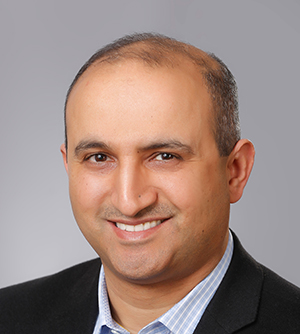
Bo Kum Jungمشاهده پروفایل
پژوهشگر
Bo Kum Jung is a Researcher at the Institute of Communications Engineering, Technical University of Braunschweig, specializing in Terahertz communications and wireless backhaul systems. Working under Prof. Dr.-Ing. Thomas Kürner in the Mobile Communications Systems Department, Jung contributes to cutting-edge research in high-frequency wireless communications, with a focus on 300 GHz systems and reconfigurable intelligent surfaces. Education: Bachelor's degree in Electrical Engineering from INHA University, South Korea (2009-2015) Master's degree in Electrical Engineering from Technical University of Braunschweig (2016-2019) Jung's research focuses on Terahertz (THz) communication systems, particularly at 300 GHz frequencies. Their work addresses critical challenges in wireless backhaul networks, including channel modeling, interference management, and the application of Reconfigurable Intelligent Surfaces (RIS) to enhance signal propagation. They have developed automatic planning algorithms for THz backhaul links using various topologies and analyzed the impact of environmental factors on system performance. The research has practical applications for future 6G networks and high-capacity wireless infrastructure. Analysis of Jung's publication record shows a consistent focus on practical implementation of THz communication systems. Their research spans channel measurements, performance analysis, and system design for 300 GHz wireless networks. A notable trend is the increasing focus on Reconfigurable Intelligent Surfaces as a key technology for overcoming propagation challenges at these high frequencies. Their work bridges theoretical modeling with experimental validation through collaborations with the Institute for Communications Engineering. As a research staff member at TU Braunschweig, Jung collaborates with Prof. Thomas Kürner and other researchers in the Mobile Communications Systems Department. Their work is supported by the university's research infrastructure and contributes to the institution's strategic focus on next-generation communication technologies. The research has potential applications in 6G network development, industrial wireless communications, and high-capacity backhaul solutions.